
Veel tabletfabrikanten en kopers van apparatuur worden met dezelfde puzzels geconfronteerd: “Mijn tablets blijven cappen,” of “De hardheid van de tablet is niet consistent.” Een natuurlijke gok zou kunnen zijn “Verhoog gewoon de compressiekracht.” In de praktijk, de echte boosdoener is vaak de pre-compressie fase (de lichte samendrukking vóór de laatste compressie). Veel tabletpersen bevatten een voorbereidende stap voor het aanstampen die operators soms over het hoofd zien. Als de voorcompressie te laag is ingesteld, ingesloten lucht blijft in het poeder en veroorzaakt defecten; te hoog ingesteld, het kan breuken veroorzaken. In dit artikel leggen we het uit wat voorcompressie is, waarom moderne tabletmachines het allemaal gebruiken, en hoe de juiste pre-compressiekracht dramatisch is verbetert de tabletkwaliteit (betere hardheid, uniform gewicht) en voorkomt defecten zoals afdekken en lamineren. We bespreken ook hoe u de pre-compressie correct afstemt op uw pers.
Bij de productie van tablets, de compressiecyclus bestaat uit verschillende fasen: het vullen van de matrijs met poeder, pre-compressie (een lichte initiële aanstampen), belangrijkste compressie (de laatste hogedrukknijp), en uitwerpen. Op een roterende tabletpers, Bijvoorbeeld, de lagere stoot gaat aanvankelijk omhoog om de dobbelsteen te vullen, en de torentjenokken brengen dan de stoten bij elkaar. Tijdens pre-compressie, een zachte kracht (vaak via kleine rolnokken) wordt op het poederbed aangebracht. Het doel is niet om de uiteindelijke tablet te vormen, maar gewoon naar consolideren het poeder en verwijder lucht vóór de grote compressie. Eén bron uit de sector merkt op: “Tijdens de voorcompressie, een lichte kracht uitgeoefend door de onderste stoot consolideert het poeder en minimaliseert luchtbellen. In de hoofdcompressiefase, de bovenste stempel wordt met grote kracht naar beneden gedrukt… om de korrels tot een tablet samen te smelten”. Kortom, pre-compressie is de voorbereidende stap in de tabletpers, terwijl de belangrijkste compressie de volledige verdichting met hoge kracht is die de tablet zijn uiteindelijke vorm geeft, hardheid en dichtheid.
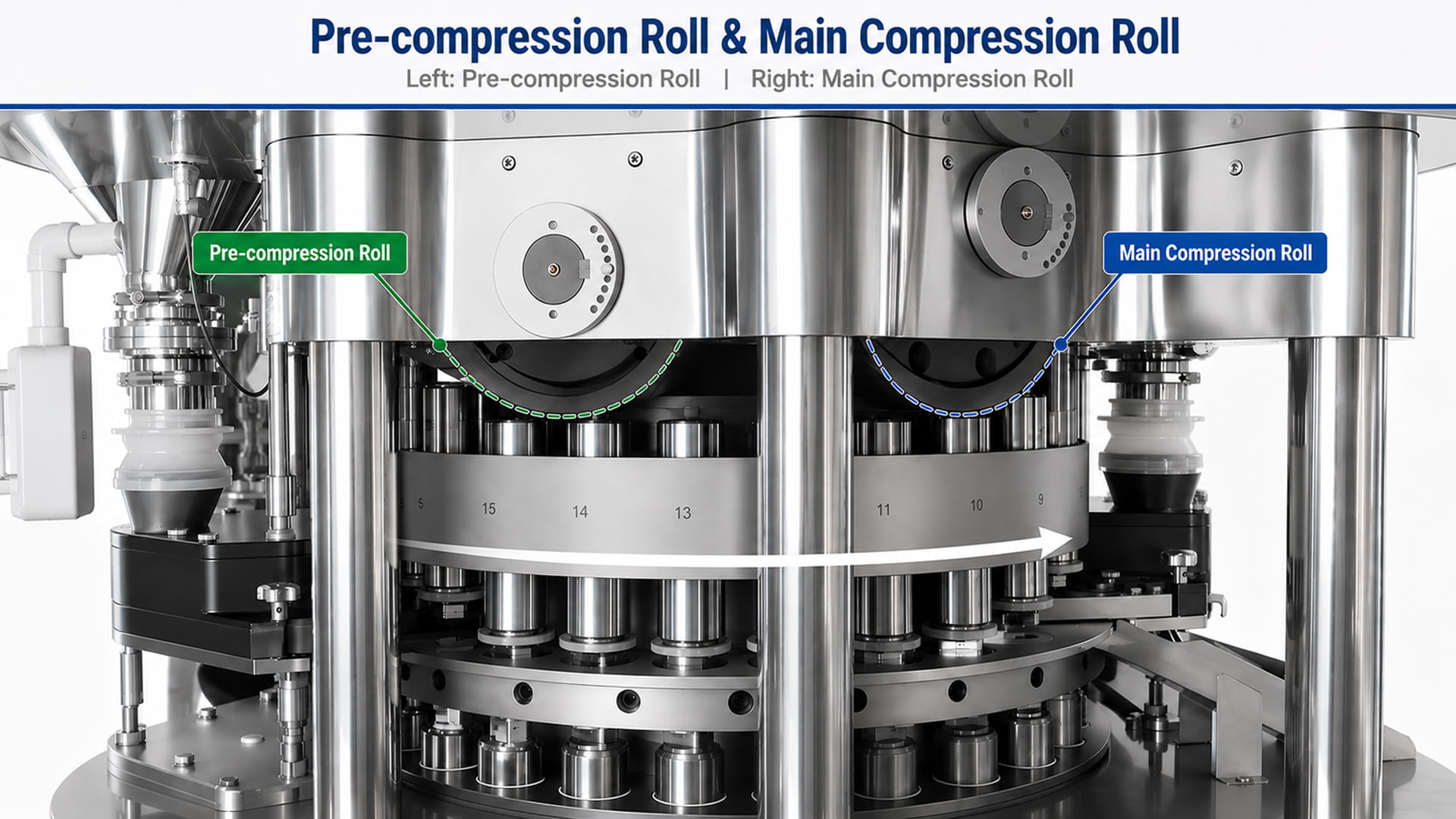
Moderne tabletpersen hebben dat vaak voorcompressierollen of camstations die speciaal voor deze stap bedoeld zijn. Deze voorcompressierollen “stampen het mengsel aan om de ingesloten lucht uit het mengsel te verwijderen en zo uiteindelijk afsluiting te voorkomen”. Met andere woorden, voorcompressie is in wezen a ontluchting fase: het verdrijft lucht zodat de hoofdcompressie op vast poeder kan werken, niet schuim. Bijvoorbeeld, een handboek voor farmaceutische apparatuur legt uit dat precompressierollen worden meegeleverd “om poeder te verdichten vóór de uiteindelijke compressie”. Zonder voorcompressie, het poeder is losjes gevuld en bevat holtes. Met voorcompressie, de poederdeeltjes zijn lichtjes voorverpakt en een groot deel van de lucht wordt eruit geperst. De daaropvolgende hoofdcompressie kan dan een robuust resultaat opleveren, consistente tablet zonder plotselinge luchtexpansie.
Een handige manier om de cyclus te visualiseren is:
Poedervulling → Pre-compressie (lichte aanstamping) → Hoofdcompressie (hoge kracht) → Tablet uitwerpen
In de pre-compressiestap, de stoten in wezen aanstampen het poeder net genoeg om lucht te verdrijven en de vulling waterpas te maken. Slechts een klein deel (soms ~10-20%) van de uiteindelijke kracht wordt gebruikt bij het voorcomprimeren – genoeg om het bed te stabiliseren, om de hardheid niet af te ronden. De hoofdcompressiestap past dan de volledige hoge kracht toe (vaak honderden kilonewtons) om de uiteindelijke tablet te produceren.
Voorcompressie werkt door de pers kort in lagedrukmodus te activeren. Terwijl de toren draait, de onderste stempel stijgt naar ongeveer de uiteindelijke vulpositie in de matrijs. Vervolgens zorgt de voorcompressierol of nok ervoor dat de ponsen elkaar onder een zachte kracht ontmoeten. Deze lichte kracht duwt de bovenste en onderste stoten iets naar elkaar toe, het poeder net voldoende samendrukken om opgesloten lucht langs de randen te laten ontsnappen. Na voorcompressie, het poederbed is uniformer en minder ‘pluizig’. De pillen die uit de pre-compressiezone komen, zijn erg zwak (ze vallen gemakkelijk uit elkaar) maar ze hebben minder luchtspleten.
Volgende, de hoofdcompressiefase begint onmiddellijk (meestal slechts één station later). Nu ontmoeten de stoten elkaar met volle kracht, het produceren van de uiteindelijke tablet. Omdat de lucht al is verwijderd en de deeltjes al gedeeltelijk zijn uitgelijnd, de hoofdcompressie is effectiever. In praktische termen, operators kunnen de pre-compressie-nokken zo afstellen dat a “duimtest” tablet is bijna gevormd en nauwelijks samenhangend. Het doel is letterlijk om lucht te verwijderen – nog niet om een sterke tablet te produceren. Als u de voorcompressie te hoog instelt, je loopt het risico het poeder te vroeg te verdichten; te laag, en de lucht blijft gevangen.
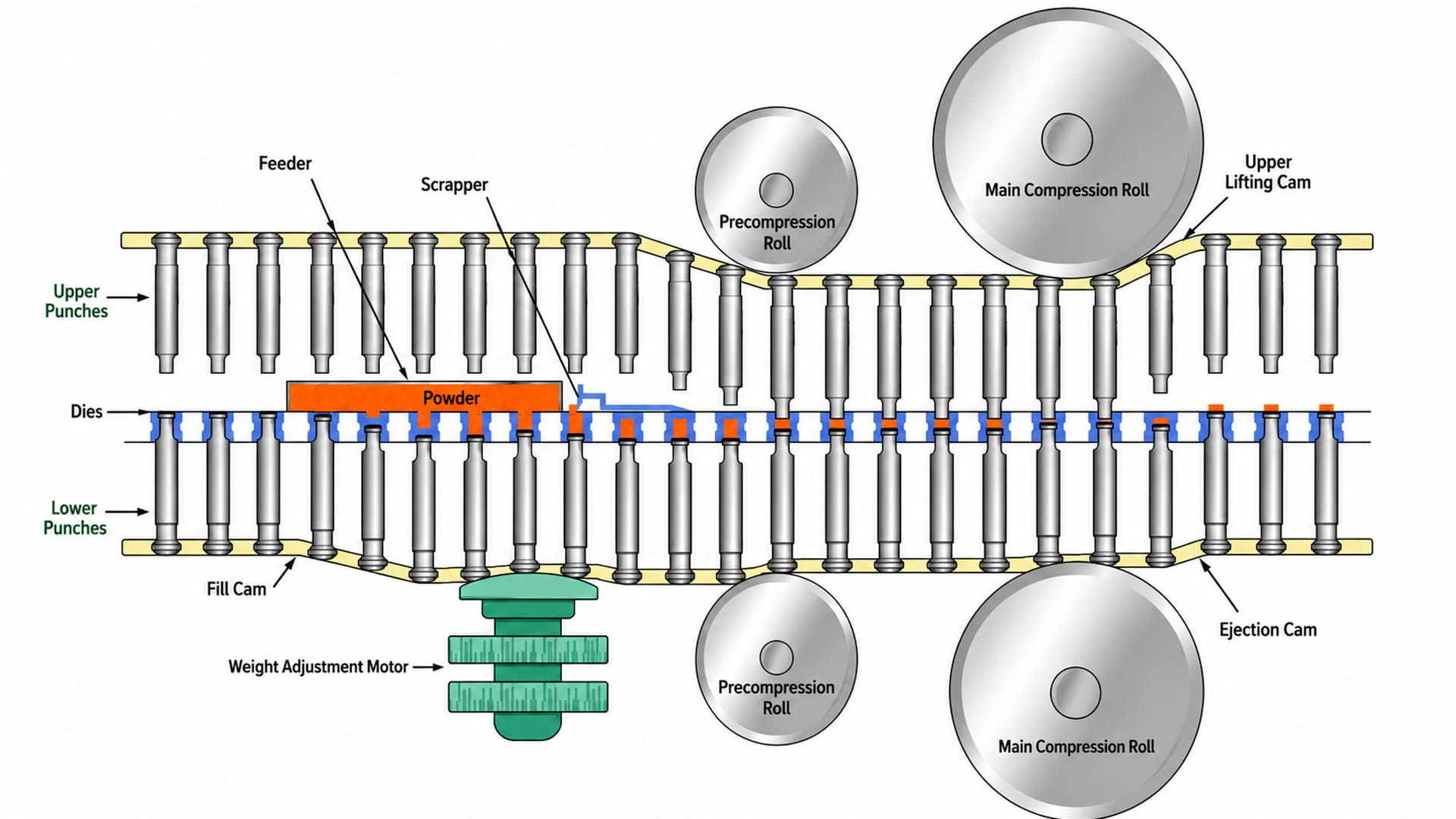
In bedrijf, je zult zien dat de bovenste stoot het poeder nauwelijks raakt tijdens de voorcompressie. De slagbeweging is kort, maar genoeg om luchtbellen eruit te persen. In een diagram: Bovenste stempel ⇓ (lichte druk) Poeder → Lucht ontsnapt → deeltjes bezinken → Hoofdcompressie ⇓ (hoge druk) Afgewerkte tablet. Deze tweetrapscompressie (pre- en hoofdgerecht) is nu standaard op de meeste farmaceutische rotatiepersen, en zelfs veel single-punch-persen bevatten een eenvoudige voorlaadfase om het poeder voor te stampen.
Pre-compressie is absoluut cruciaal omdat hiermee veel van de grondoorzaken worden aangepakt tabletdefecten. Op zichzelf, de pre-compressiefase voorkomt de meest voorkomende problemen:
Poedermengsels bevatten van nature luchtbellen tussen de deeltjes. Als u direct comprimeert zonder deze lucht te verwijderen, de opgesloten lucht zal uitzetten wanneer de stoot wordt losgelaten, of ongelijkmatige hechting veroorzaken. Het primaire doel van voorcompressie is lucht evacuatie. Zoals een farmaceutisch ingenieur uitlegt, “Het doel van precompressie is om ingesloten lucht uit de gevulde tabletmatrijsholte te verwijderen. Deze taak helpt bij de belangrijkste compressiestap bij het produceren van een robuuste tablet.”. Kortom, precompressie is de poederontluchtingsstap. Met goede voorcompressie, die luchtbellen ontsnappen als eerste en zetten niet uit in de vormtablet. Dit leidt tot een nauwer deeltjescontact tijdens de hoofdcompressie en tot sterkere tabletten.
Aftappen treedt op wanneer de bovenkant van de tablet (de “dop”) barst en scheidt. Opgesloten lucht is vaak de oorzaak: tijdens de plotselinge hoge kracht van de hoofdcompressie, lucht probeert te ontsnappen en kan letterlijk de dop van de tablet schieten. Zonder voorcompressie, het grootste deel van deze lucht bevindt zich nog in de matrijs. Door het poeder voor te stampen, Door de voorcompressie kan de lucht zachtjes ontsnappen, zodat hij de dop er niet afgooit. Zoals een bron opmerkt, “Een lage hoeveelheid voorcompressiekracht zal het verwijderen van lucht tussen de deeltjes mogelijk maken, waardoor het capping-potentieel afneemt.”. In werkelijkheid, Studies tonen het dramatische effect aan: één experiment ontdekte dat zonder voorcompressie, 80% van de tablets had last van capping, terwijl waarbij zelfs 20-50% voorcompressie is toegevoegd, geen van de tabletten heeft een dop voordat de doelhardheid wordt bereikt. Met andere woorden, een goede voorcompressie kan luchtgedreven afdekking vrijwel elimineren. (Daarentegen, onvoldoende voorcompressie is een klassiek capping-probleem: de handleiding van de JinLu-tabletpers waarschuwt dat “onvoldoende voorcompressie …[leidt] tot meer luchtinsluiting”, waardoor de tabletdop loskomt.)
Lamineren is vergelijkbaar met afdekken, maar de tablet splitst zich in lagen in plaats van alleen de bovenkant te verliezen. Het is in wezen een geavanceerde afdekking: nadat één laag afbladdert, verdere lucht of spanning kan de lagen splijten. Opnieuw, opgesloten lucht en ongelijkmatige compressie zijn de belangrijkste boosdoeners. Door vroegtijdig lucht te laten ontsnappen, voorcompressie verkleint de kans op het vormen van lagen aanzienlijk. Als de voorcompressie te laag is, een klein, opgesloten zakje kan eerst de dop laten knappen (aftappen) en dan nog meer splitsen (lamineren). Bronnen wijzen erop dat lamineren vaak het gevolg is van hetzelfde probleem als capping: “lucht die opgesloten zit in de tabletformulering…kan gelokaliseerde zwakke plekken creëren die ervoor kunnen zorgen dat de tablet loskomt of delamineert.”. Goede voorcompressie minimaliseert deze zwakke punten, dus lamineren wordt zeldzaam.
Door het poeder voor te persen, pre-compressie vergroot het deeltjescontactoppervlak vóór de laatste samendrukking. Dit resulteert in een betere hechting tijdens hoofdcompressie en uiteindelijk in een hogere treksterkte. In de praktijk, tabletten gevormd met een effectieve pre-compressiefase hebben de neiging gemakkelijker hun beoogde hardheid te bereiken. In het Medelpharm-onderzoek hierboven, Door pre-compressie toe te voegen, konden tabletten dit bereiken 40 N doelhardheid zonder te breken, terwijl zonder voorcompressie de meeste tabletten vroegtijdig hun dop bereikten. In het algemeen, voorcompressie betekent minder luchtspleten en een dichter startbed, dus elke extra eenheid hoofdcompressiekracht levert een hardere tablet op. (Natuurlijk, overmatige voorcompressie kan het poeder voortijdig te verdichten, die we later zullen bespreken.)
Omdat pre-compressie het poeder gelijkmatiger over alle matrijzen bezinkt, De gewichtsvariatie wordt verminderd. Als de ene dobbelsteen meer lucht bevat dan de andere, het zou kunnen worden gevuld met een iets ander volume poeder. Voorcompressie egaliseert de vulling door het poeder mechanisch te verdelen en lucht naar buiten te duwen, zodat elke matrijs op dezelfde manier wordt verpakt. Het eindresultaat is een betere controle over het tabletgewicht, van shot tot shot. (Omgekeerd, Het overslaan van voorcompressie komt vaak tot uiting in een grotere gewichtsvariatie in productieruns.)
Tabletten die op de juiste manier zijn voorgecomprimeerd, stoten doorgaans minder fijn stof uit. Door de verdichting te bevorderen, pre-compressie zorgt ervoor dat de tabletten een hogere algehele dichtheid en minder oppervlakteholtes hebben, waardoor ze sterker worden en minder vatbaar zijn voor chippen of brosheid. In de praktijk, Operators van tabletpersen zien vaak een daling % brosheid wanneer de voorcompressie wordt geoptimaliseerd.
Alle bovengenoemde factoren dragen bij aan mooiere tablets. Een goede voorcompressie helpt bij het produceren van tabletten met gladde oppervlakken, scherpe randen, en geen scheuren of chips. Gebreken zoals chips, kraters of gebroken randen zijn vaak het gevolg van plotseling vrijkomen van lucht of ongelijkmatige verdichting; pre-compressie helpt veel om deze gebreken te elimineren. Samengevat, een goed afgestemde pre-compressiefase leidt tot tablets die er uniformer en professioneler uitzien en aanvoelen.
Om dit gedeelte samen te vatten: zonder voldoende voorcompressie, je krijgt precies de problemen die je probeert op te lossen. De onderstaande tabel illustreert typische defecten en hun oorzaken (vaak gekoppeld aan slechte voorcompressie):
| Probleem | Waarschijnlijke oorzaak (vaak gekoppeld aan onvoldoende voorcompressie) |
| Aftappen | Opgesloten lucht in het poeder die tijdens compressie naar buiten barst |
| Lamineren | Interne lagen splijten door ingesloten lucht/ongelijke compressie |
| Lage hardheid | Zwakke deeltjesbinding (onvolledige compressie) |
| Hoge brosheid | Slechte verdichting (losse poeder) |
| Gewichtsvariatie | Ongelijkmatige vulling (luchtzakken of inconsistente dosering) |
| Gebroken tabletten | Elastisch terugveren van materiaal of spanning (terugveren) |
Zoals je kunt zien, capping en laminering traceren rechtstreeks naar ingesloten lucht (welke pre-compressie-adressen). Andere problemen zoals zachtheid of broosheid komen ook voort uit “onvoldoende verdichting,”wat een betere voorcompressie helpt voorkomen.
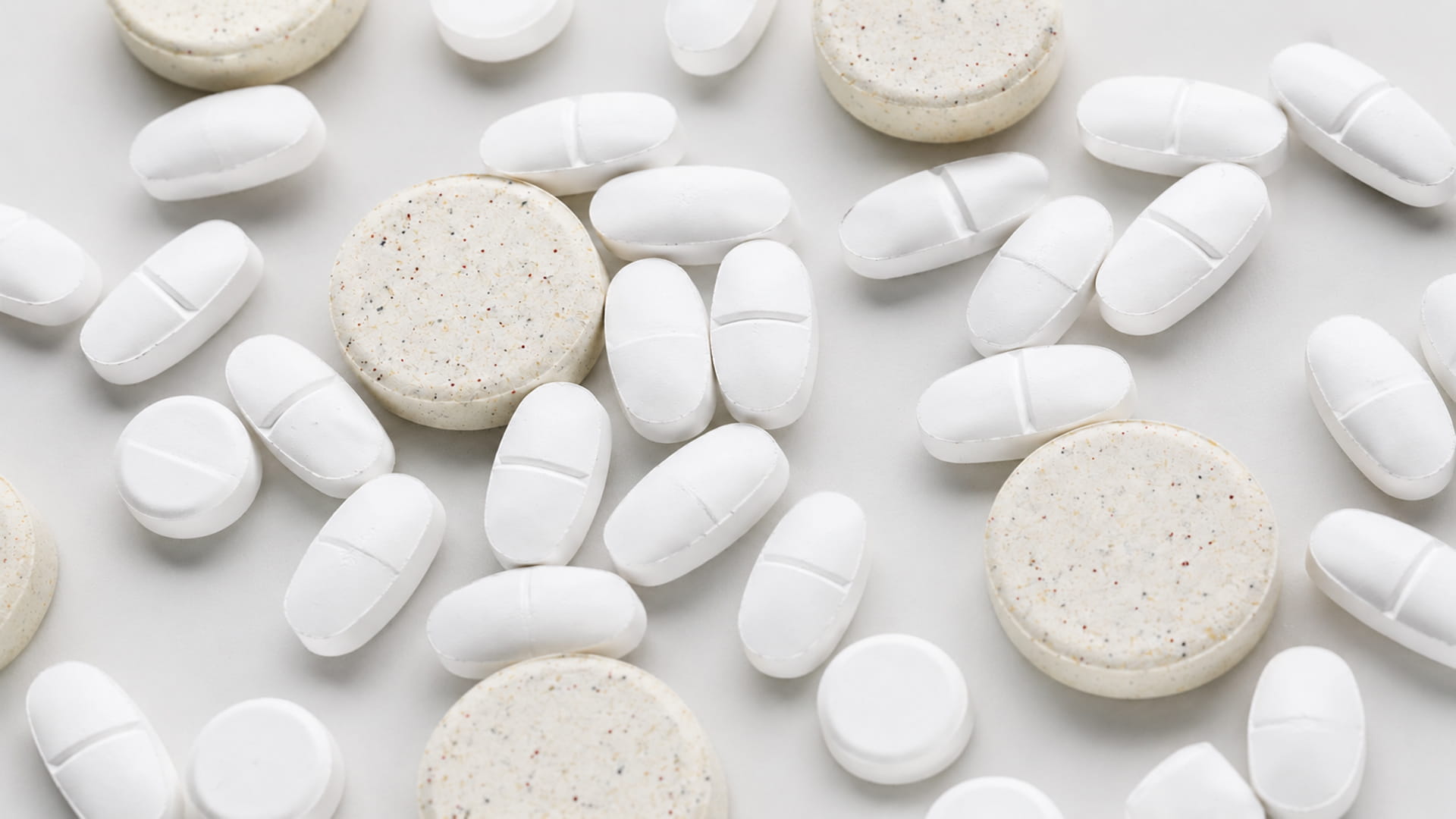
Om het belang van pre-compressie te versterken, bedenk wat er misgaat als je het overslaat. Zonder voorcompressie, lucht blijft in de dobbelsteen tot de laatste squeeze. Wanneer de stoot op volle kracht komt, die lucht kan nergens anders heen dan door het poeder. De opgesloten lucht probeert uit te zetten, wat tot tabletdefecten leidt. In de praktijk, dit manifesteert zich in een veel hogere incidentie van afdekken en lamineren, de belangrijkste zichtbare symptomen van luchtinsluiting. Zelfs als er niet onmiddellijk wordt afgetopt, de tabletdichtheid zal ongelijkmatig zijn: randen kunnen dichter zijn dan de kern, waardoor later interne scheuren ontstaan. Uit bovenstaande tabel blijkt dat de meeste tabletcompressieproblemen optreden (aftappen, lamineren, laag hardheid, brosheid, gewichtsvariaties, enz.) kan worden teruggevoerd op het kernprobleem van slechte verdichting of ingesloten lucht.
In werkelijkheid, Operators weten dat uit ervaring het toevoegen van slechts een beetje pre-compressie lost vaak de capping op. Als de tabletten afbrokkelen of het lamineren aanhoudt, dit betekent meestal dat het poeder niet goed is ontlucht. In de praktijk, het verbeteren van de voorcompressiekracht of het aanpassen van de timing elimineert veel van deze problemen vrijwel volledig.
Om het verschil tussen de twee compressiefasen te verduidelijken, hier is een snelle vergelijking:
| Functie | Pre-compressie | Hoofdcompressie |
| Kracht/druk | Laag (een zachte tamp, vaak 5–20% van de uiteindelijke kracht) | Hoog (de volledige verdichtingskracht) |
| Doel | Verwijder lucht & poeder gedeeltelijk verdichten | Vorm de uiteindelijke vorm van de tablet, hardheid, en dichtheid |
| Tabletvorm | Tijdelijk; het poederbed zit los (geen laatste tablet) | Finale; de vaste tablet wordt gevormd |
| Resulterende hardheid | Zeer laag (de “tabletten” vallen gemakkelijk uit elkaar) | Volledige doelhardheid |
| Dichtheid na fase | Gedeeltelijk (poeder is enigszins gecomprimeerd) | Vol (tablet met specificatiedichtheid) |
| Pons/roller | Meestal een kleine voorcompressierol of nok | Grotere rollen of nokken met langere verblijftijd |
| Verblijfstijd | Heel kort (snel aanstampen) | Langer (punch houdt het poeder langer onder druk) |
Bijvoorbeeld, technische analyses merken dat op voorcompressierollen zijn kleiner en zorgen voor een korte aanstamping, terwijl de hoofdcompressierollen groter zijn en de pons langer ingeschakeld houden. De belangrijkste compressiefase bepaalt uiteindelijk de tablethardheid en uiteindelijke afmetingen. De taak van pre-compressie is alleen maar om “de weg vrij te maken” voor de grote druk.
Er is geen one-size-fits-all getal voor pre-compressiekracht. De optimale instelling is afhankelijk van de formulering (Flow -eigenschappen, korrelgrootte, vochtinhoud, smeermiddelen, bindmiddelen, enz.) en de uitrusting (druk op snelheid, formaat torentje, gereedschap). Bijvoorbeeld, een poeder dat slecht vloeit of zeer poreus is, heeft mogelijk meer voorcompressie nodig om te ontgassen dan een goed stromend korrelig mengsel. Belangrijke factoren zijn onder meer:
Veel operators beginnen bijvoorbeeld met een ‘vuistregel’, waarbij ongeveer 10–20% van de hoofdcompressiekracht als voorcompressie wordt gebruikt. Echter, deskundigen waarschuwen dat zelfs dit 10% regel “werkt niet altijd”. De veiligste aanpak is empirische afstemming. In de praktijk, je past de voorcompressiekracht aan op basis van proeven:
De handleiding van de One Tablet Press adviseert een ingenieuze aanpak: Stel de voorcompressie eerst hoger in dan nodig is (zodat de stoten bijna niet meer bewegen), verlaag het vervolgens totdat de voorgecomprimeerde slak nauwelijks coherent is. De sleutel is: “Het doel is om overtollige lucht te verwijderen… niet om een tablet te maken.”. Met andere woorden, pas aan totdat de voorgecomprimeerde cake net bij elkaar blijft, dan een beetje achteruit. Deze methode zorgt ervoor dat u maximale ontluchting krijgt zonder overmatige verdichting.
Factoren zoals de snelheid van de toren en de formule vereisen mogelijk iteratieve tests. Samengevat, begin laag en verhoog langzaam de pre-compressiekracht terwijl u de tabletkwaliteit bewaakt. Er is geen vaste ‘doelkracht’ die u voor alle producten kunt kopiëren; elke formulering heeft zijn eigen optimale instelling.
Als voorcompressie verkeerd is, er doen zich verschillende problemen voor. De onderstaande tabel belicht veel voorkomende symptomen en oplossingen:
| Probleem | Waarschijnlijke oplossing (gerelateerd aan pre-compressie) |
| Aftappen | Voorcompressie te laag – Verhoog de voorcompressie om de ontluchting te verbeteren |
| Lamineren | Er blijft ingesloten lucht achter – Verbeter de voorcompressie (of de verblijftijd verlengen) |
| Zachte tabletten | Zwakke hechting – zorg ervoor dat de hoofdcompressie voldoende is na juiste voorcompressie |
| Hoge brosheid | Slechte verdichting – Controleer de voorcompressie en algehele compressie; pas de formulering aan indien nodig |
| Gewichtsvariatie | Ongelijkmatige vulling – gebruik geforceerde invoer of verbeter de poederstroom; consistente voorcompressie helpt het gewicht te stabiliseren |
| Plukken (plakken) | Stempelwrijving – meestal een probleem met gereedschap/smering, maar bekijk pre-compressie- en startnokken (soms kan het verminderen van de voorcompressie het kleven verminderen) |
In de praktijk, “verhoog de voorcompressie” is vaak het eerste advies als je hoort over capping of mild lamineren. Inderdaad, Door een beetje meer vooraanstampen toe te voegen, worden deze defecten vaak verholpen. (Wees gewoon voorzichtig, zoals we hieronder zullen bespreken: te veel voorcompressie kan zijn eigen problemen veroorzaken.)
Ja – meer is niet altijd beter. Het overdrijven van pre-compressie kan nieuwe problemen introduceren. Als de voorcompressiekracht te hoog is, je loopt het risico het poeder te veel te ‘voorinstellen’ vóór het hoofdknijpen. Dat kan ertoe leiden:
Kortom, je kunt overdrijven. In de regel, voorcompressie moet net voldoende zijn om lucht te verwijderen; “licht aanstampen verdient de voorkeur boven hoge voorcompressiekracht”. Veel ingenieurs adviseren om vanaf de onderkant van de schaal te beginnen. Als u merkt dat u de voorcompressie tot het uiterste drijft en nog steeds aftopt, het betekent waarschijnlijk een ander probleem (formulering of voedingssnelheid) is schuldig, niet alleen het krachtniveau.
Vandaag, vrijwel alle moderne tabletpersen met meerdere stations worden geleverd met een speciale pre-compressiefase. Echter, sommige zijn beter uitgerust voor fijne controle. Bij JinluPacking bieden we tabletmachines aan die zijn ontworpen voor optimale pre-compressieprestaties. Bijvoorbeeld, ons HZP-serie persen (zoals de HZP-26/40D, HZP-15/20D modellen) hebben onafhankelijke voorcompressierollen op elk station die via het bedieningspaneel kan worden aangepast. Deze machines zijn voorzien van PLC-gebaseerde krachtcontroles en sensoren waarmee u de exacte pre-compressiebelasting kunt instellen en bewaken. Deze kant op, zelfs bij hoge snelheden, het systeem handhaaft een consistente voorbelasting en verblijftijd.
Bijvoorbeeld, de HZP-15/20D Roterende tabletpersmachine (in staat tot 90,000 tabbladen/uur) omvat een verbeterde force feeder en onafhankelijke pre-compressie-aanpassing. Hogesnelheidsversies zoals de HZP-26D-40D Roterende pers (tot 160.000–260.000 tabbladen/uur) ondersteunen eveneens pre-compressiecontrole (bijv. de voordruk is instelbaar tot 20 kN in één model). Deze machines bieden ook realtime drukbewaking en geautomatiseerde aanpassing, wat helpt bij het optimaliseren van de pre-compressie zonder giswerk van de operator.

Kortom, als u betrouwbare voorcompressie nodig heeft, zoek een pers met onafhankelijke voorcompressienokken (niet slechts een vast percentage) en digitale controles. Onze persen zijn voorbeelden van deze aanpak: ze combineren een robuust mechanisch ontwerp (kwaliteitsgereedschap en rollen) met moderne elektronica. Dit zorgt ervoor dat de door u gekozen pers nauwkeurig kan worden afgestemd op de pre-compressiebehoeften van elke formulering, wat leidt tot consistentere tablets.
Gebruik de volgende checklist bij het instellen of oplossen van pre-compressie op uw machine:
Door het methodisch bijsturen en vastleggen van resultaten, je vindt de zoete plek waarbij lucht wordt verwijderd zonder de tablet te verdichten.
Samengevat, pre-compressie is niet optioneel – het is een essentieel onderdeel van de werking van moderne tabletpersen. Een goed ingestelde pre-compressiefase verwijdert ingesloten lucht en stampt het poeder voor, leidend tot sterker, uniformere tabletten met veel minder defecten aan de capping of laminering. Als uw tabletten een gewichtsinconsistentie hebben of een inconsistentie vertonen, Controleer uw pre-compressie-instellingen nogmaals voordat u de formulering of de hoofdcompressie de schuld geeft. Het gebruik van zelfs een gematigde pre-compressiekracht kan de tabletkwaliteit dramatisch verbeteren.
Voor fabrikanten en inkoopingenieurs, de afhaalmaaltijd is duidelijk: Kies of configureer altijd een tabletpers die een goede pre-compressiecontrole biedt. Allemaal gerenommeerde rotatiepersen (van R&D-modellen tot volledige productiemachines) deze functie opnemen, maar modellen met onafhankelijke, verstelbare voorcompressierollen geven u de meeste flexibiliteit.
Als u meer begeleiding nodig heeft of persen wilt zien die zijn ontworpen voor optimale voorcompressie, ons JinluPacking tabletpersopstelling kan helpen. Bekijk onze [Tabletpersmachine productpagina] voor details over modellen zoals de HZP-45D, en voel je vrij om neem contact op met ons team voor hulp bij het selecteren van de juiste pers of het afstemmen van uw instellingen. Een goede voorcompressie is het geheim van betere tablets – doe het goed, en je zult veel productieproblemen oplossen voordat de definitieve compressie zelfs maar begint.
Klaar om tabletdefecten te elimineren en de opbrengst te verbeteren? Ontdek onze krachtige roterende tabletpersmachines of neem contact op met de experts van JinluPacking voor een oplossing op maat.
Pre-compressie is de initiële, lichte compressiefase in de tabletperscyclus. Er wordt een kleine kracht uitgeoefend (meestal via een voorcompressierol) om het poeder voorzichtig aan te stampen vóór de hoofdcompressie. Dit helpt het poeder te ontgassen door ingesloten lucht te verwijderen.
Omdat het de tabletintegriteit aanzienlijk verbetert. Door lucht te verdrijven, voorcompressie voorkomt defecten zoals afdekken en lamineren, en leidt tot sterker, uniformere tabletten. Het bereidt het poeder in wezen voor op de uiteindelijke compressie met hoge kracht.
De meeste moderne rotatiepersen doen dat wel. Zelfs eenvoudige persen met één station hebben vaak een handmatige invoertamp. Pre-compressie is zo nuttig dat het tegenwoordig standaard is op bijna alle farmaceutische tabletmachines.
Voorcompressie is weinig kracht (een zachte tamp) en het comprimeert het poeder slechts gedeeltelijk om lucht te verwijderen. De hoofdcompressie is met hoge kracht en vormt de uiteindelijke tablet (hardheid en dikte bepalen). Pre-compressie levert een zeer zwakke pre-tablet op; hoofdcompressie voltooit de tablet.
Het zal formuleringsproblemen op zichzelf niet oplossen, maar het vermindert de luchtgerelateerde afdekking aanzienlijk. Een goed ingestelde voorcompressie kan vrijwel alle luchtinsluitingen verwijderen, afdekking door lucht wordt dus grotendeels voorkomen. Echter, als de limiet wordt veroorzaakt door andere factoren (zoals slecht bindmiddel of te hoge snelheid), die moet je ook aanpakken.
Er is geen eenduidig antwoord – het hangt af van uw materiaal en pers. Een gebruikelijke praktijk is om met ongeveer te beginnen 10% van de hoofdcompressiekracht en pas vanaf daar aan, maar zelfs die ‘regel’ kan mislukken. De beste aanpak is om te beginnen met een lichte voorcompressie, verhoog dit vervolgens geleidelijk tijdens het proefdraaien totdat de tabletten niet meer afsluiten, maar voordat ze te hard of te belastend worden.
Ja. Te veel voorcompressie kan ervoor zorgen dat de tablet barst of lamineert in plaats van zich netjes te vormen. Het kan de tabletten ook te hard maken of ervoor zorgen dat ze aan de stoten blijven plakken. Het is meestal beter om een beetje te weinig aangedrukt te kiezen dan te veel aanstampen. In één onderzoek werd opgemerkt dat “een lichte aandrukkracht de voorkeur verdient boven een hoge voorcompressiekracht”.
Indirect, Ja. Door lucht te verwijderen en het poeder te verpakken, pre-compressie zorgt ervoor dat de hoofdcompressie effectiever werkt, zodat tabletten gemakkelijker een hogere hardheid bereiken. In één experiment, tabletten hadden voorcompressie nodig om de beoogde hardheid te bereiken zonder afdekking. In het algemeen, Tabletten die met de juiste voorcompressie zijn gemaakt, hebben een hogere treksterkte dan tabletten die zonder deze zijn gemaakt.
Zeker. Hogesnelheidspersen (honderden RPM) hebben zeer korte verblijftijden, waardoor luchtinsluiting erger wordt. In zulke persen, een robuuste pre-compressiefase (vaak met ontluchtingsfeeders en nokken) is essentieel om te voorkomen dat er te snel wordt afgetopt. In werkelijkheid, Veel hogesnelheidsmodellen vertrouwen op onafhankelijke voorcompressierollen en forcefeeders om de tabletkwaliteit bij topdoorvoer te behouden.
Volg de bovenstaande tips: begin laag, langzaam aanpassen, en de resultaten monitoren. Controleer tabletten altijd op doppen, laminering of gewichtsproblemen als u de voorcompressie wijzigt. Gebruik uw persbediening (PLC-instellingen, koppelknoppen, enz.) te verfijnen. En zorg ervoor dat u ook de hoofdcompressie tegelijkertijd optimaliseert – soms is een lichte verhoging van de hoofdcompressie nodig wanneer u de pre-compressie verhoogt. Uiteindelijk, proefdraaien met uw daadwerkelijke formulering is de beste manier om deze in te voeren.
Referenties:
1.Een ontwerp van experimenten voor tabletcompressie —— PharmTech.com
2.QbD-aanpak: Optimalisatie van het compressieproces van tablets met behulp van het ontwerpen van experimenten —— OnderzoekGate
3.Invloed van de snelheid waarmee kracht wordt uitgeoefend tijdens compressie op de tabletafdekking —— WetenschapDirect
4.De rol van precompressie bij het beperken van capping: Een casestudy —— WetenschapDirect
5.Verblijftijd bij tabletteren: verblijftijd volgens kracht versus geometrische verblijftijd —— tandfonline.com
6.Compressietools voor tablets – Impact van wijziging van de rand van de stempel —— Nationale Bibliotheek voor Geneeskunde