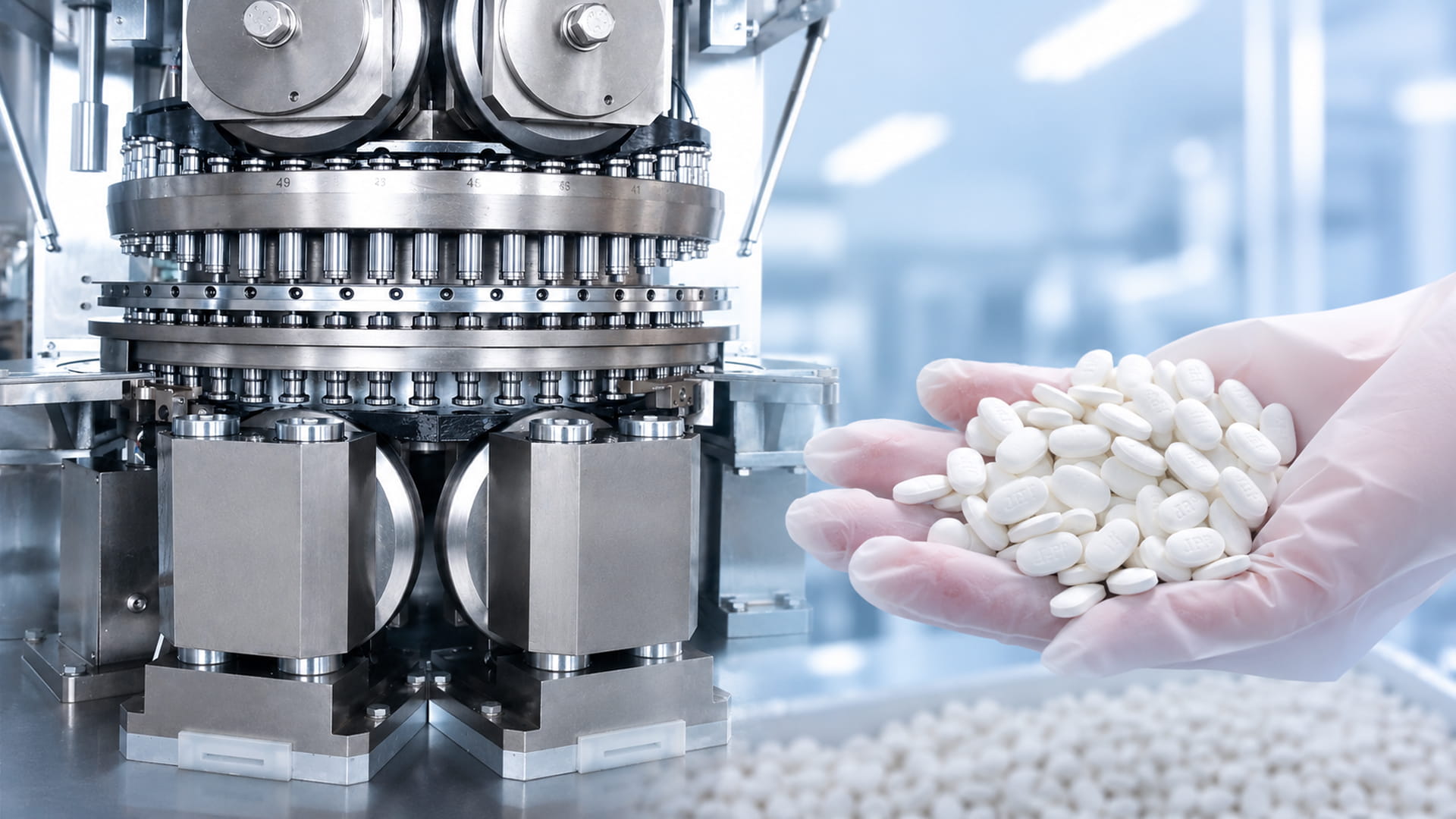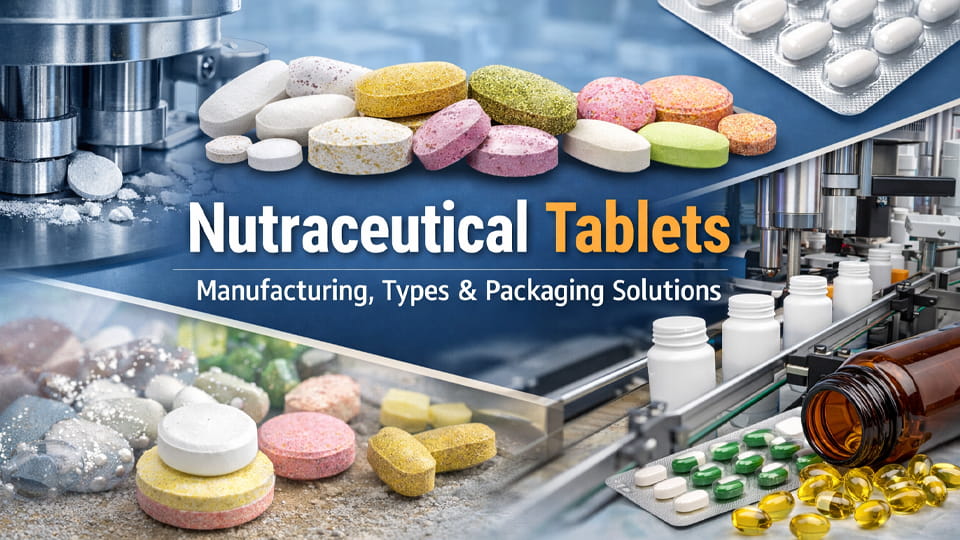

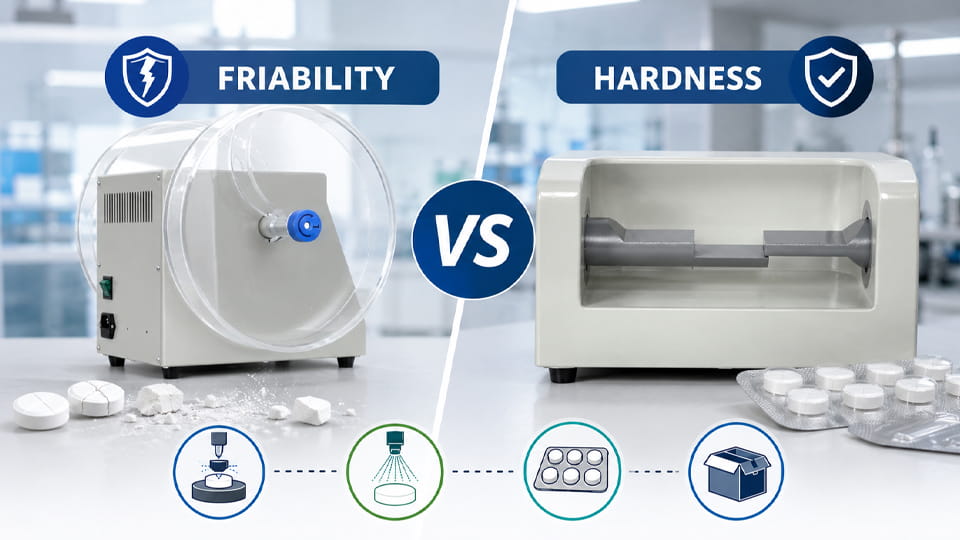
In productie van tablets, hardheid En brosheid zijn twee belangrijke kwaliteitsmaatstaven. Hardheid (breekkracht) vertelt ons hoeveel druk een tablet kan verdragen voordat deze barst. Brosheid meet hoe gemakkelijk het oppervlak van een tablet afbrokkelt of erodeert wanneer het wordt getuimeld of gehanteerd. Met andere woorden, hardheidscontroles interne kracht, terwijl de broosheid wordt gecontroleerd duurzaamheid van het oppervlak. Beide eigenschappen zijn van invloed op de verdere verwerking – van de manier waarop tabletten worden gecomprimeerd tot de manier waarop ze worden gecoat en uiteindelijk verpakt. In dit artikel wordt uiteengezet waarom brosheid versus hardheid ertoe doet, hoe elk wordt getest, en hoe ze de tabletcompressie beïnvloeden, coating, en verpakkingskwaliteit in echte productielijnen.
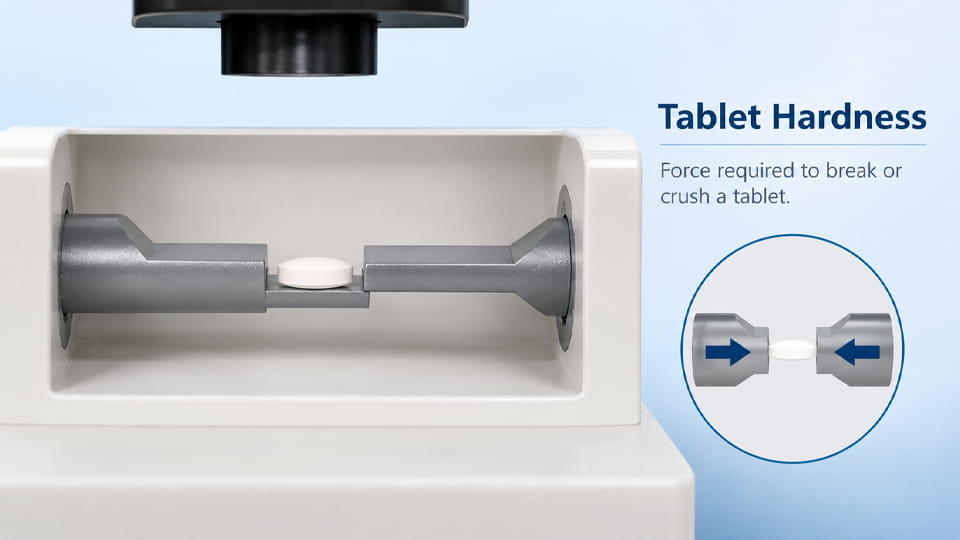
Hardheid van de tablet (technisch gezien “tabletbreekkracht”) is de kracht die nodig is om een tablet door compressie te breken. In de praktijk, De hardheid wordt gemeten door de tablet tussen twee aambeelden of platen te plaatsen en kracht uit te oefenen totdat deze breekt. Moderne hardheidstesters (handmatig of digitaal) meet de piekkracht in kilogram of newton. De breekkracht van de tablet is van cruciaal belang kwaliteitscontrole: een tablet moet sterk genoeg zijn om hantering te kunnen weerstaan, verpakking, en verzending zonder te breken. De VS. en Europese farmacopees specificeren gestandaardiseerde methoden voor hardheid (breekkracht) testen. Sommige vakliteratuur geeft de voorkeur aan de term “breekkracht” over “hardheid,” aangezien in de materiaalkunde ‘hardheid’ doorgaans weerstand tegen indeuking van het oppervlak betekent, terwijl tablettesten de compressiesterkte meten.
De tablethardheid wordt beïnvloed door formulerings- en procesparameters. Hoger compressie kracht levert over het algemeen hardere tabletten op, terwijl formuleringsfactoren zoals bindmiddel en smeermiddelen ook de hardheid beïnvloeden. Bijvoorbeeld, een bindmiddel vergroten (bijv. PVP of HPMC) verhoogt gewoonlijk de sterkte van de tablet, terwijl te veel glijmiddel (magnesiumstearaat) kan de binding tussen deeltjes verzwakken. Het formaat van de tablet, vorm, en porositeit spelen ook een rol: dikkere of dichtere tabletten vereisen vaak meer kracht om te breken.
Een te lage hardheid (ondercompressie) veroorzaakt tabletten scheur, verkruimelen of schilferen gemakkelijk. Een te hoge hardheid, Echter, kan nadelen hebben: zeer harde tabletten kunnen langzaam uiteenvallen of te langzaam in het lichaam oplossen. Een tablet die te hard is, kan dat ook zijn moeilijk voor patiënten om te slikken. Dus, Het tabletontwerp moet een balans bieden tussen mechanische sterkte en prestaties. In de praktijk, fabrikanten stellen een acceptatiebereik vast (bijv. 4–10 kg of zo) voor breekkracht tijdens productie.
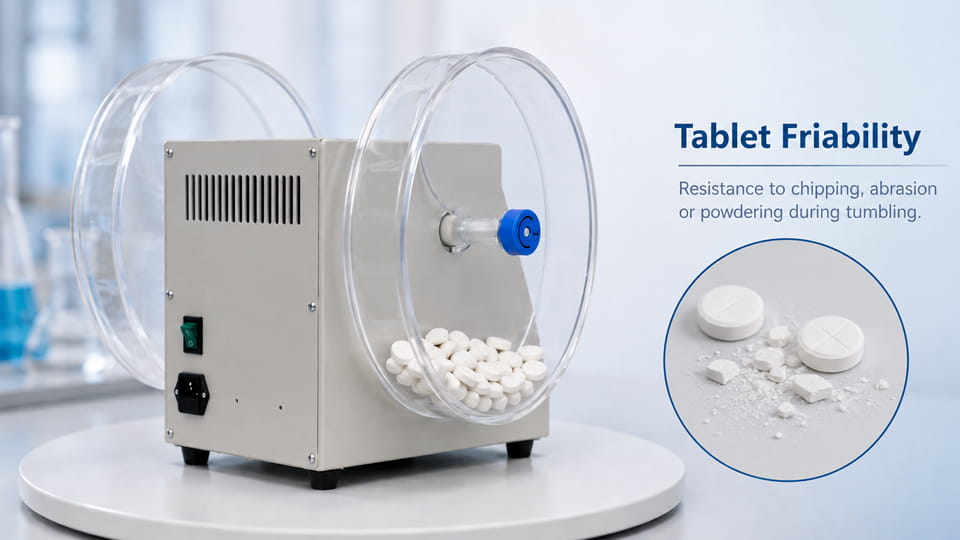
De brosheid van tabletten is een maatstaf voor hoe gemakkelijk een tablet afbrokkelt of massa verliest bij blootstelling aan mechanische belasting, zoals vallen of stoten. Brosheid testen omvat het plaatsen van ontstofte tabletten in een roterende trommel (Roche brokkelig), meestal bij 25 tpm, en ze onderwerpen 100 revoluties. Elke omwenteling tuimelt en laat de tabletten op een vaste hoogte vallen om stress tijdens het hanteren en transport te simuleren. Na de proef, tabletten worden verzameld, en al het losse stof wordt verwijderd. De tabletten worden voor en na gewogen om het gewichtsverliespercentage te bepalen, waarvan wordt gerapporteerd als brosheid. Bijvoorbeeld, de USP <1216> en Ph.Eur. monografieën beschrijven deze procedure.
Hoe lager de brosheid, hoe beter de tablet bestand is tegen schuren of afbrokkelen. Een aanvaardbare brosheidsgrens is conventioneel ≤1,0% gewichtsverlies. Tablets die meer verliezen dan deze drempel, of die tijdens de test zichtbaar barsten of breken, niet voldoen aan het broosheidscriterium. De broosheid van tablets wordt specifiek aangepakt duurzaamheid na compressie – het simuleert de fysieke stress die tabletten tegenkomen in coatingpannen, transportbanden, flessenvullers, blaar lijnen, en verpakking. Hoge brosheid manifesteert zich als chips op de tabletranden, zichtbare scheuren, of overtollig stof. Brosheid is dus een kwaliteitskenmerk dat nauw verbonden is met de robuustheid van verpakking en hantering.
Deze tests klinken hetzelfde, maar onderzoeken verschillende spanningen. In eenvoudige bewoordingen:
Stel je twee tabletten voor: één getest bij 20 kP (kiloponden) van verpletterende kracht (heel moeilijk) en één bij 5 kP (zacht). Je zou misschien denken de 20 kP-tablet is onverwoestbaar, maar als de randen broos zijn, het kan nog steeds 2 à 3% massa verliezen in een brosheidstrommel – tweemaal de aanvaardbare limiet. In de praktijk, een tablet kan zijn "extreem hard - er is aanzienlijke kracht voor nodig om te verpletteren - en toch verrassend broos.". Dit laat zien waarom beide testen zijn nodig. Onderstaande tabel vat het verschil samen:
Kortom: hardheid weerstaat verpletteren, terwijl broosheid zich verzet chippen. Een robuust tabletontwerp brengt beide in evenwicht: het moet de pers en machines overleven zonder te verstoffen, maar toch goed oplossen.
| Parameter | Tablethardheid (Brekende kracht) | Brosheid van tabletten |
|---|---|---|
| Wat het meet | Weerstand tegen een enkele uitgeoefende kracht (compressie of spanning) breuk veroorzaken | Weerstand tegen herhaaldelijk schuren, invloed, en chippen (gewichtsverlies bij het tuimelen) |
| Typisch stresstype | Eenmalige grote druk- of driepuntsbuigbelasting tot bezwijken | Meerdere valpartijen/valpartijen (gebruikelijk 100 rotaties) het simuleren van het omgaan met schokken |
| Hoofddoel | Evalueer de breeksterkte van de tablet (robuustheid van de formulering onder compressie) | Evalueer de duurzaamheid tijdens het transport, coating, en verpakking |
| Testuitvoer | Breekkrachtwaarde (bijv. in Newton of kp) | Percentage gewichtsverlies na de test (en visuele inspectie op schade) |
| Link naar kwaliteit | Stelt compressieparameters in; zorgt ervoor dat tablets niet onder geweld barsten | Stelt de instellingen van de verpakkingslijn in; zorgt ervoor dat tabletten het coaten/transport overleven |
| Vervangbaar door andere test? | Nee. Verschillende spanningen; heeft zijn eigen meting nodig. | Nee. Verschillende testredenen; kan de hardheidstest niet vervangen. |
De tabel hierboven onderstreept dat hardheid en brosheid meten verschillende aspecten. Hardheid (breekkracht) is een eenmalige stresstest, terwijl broosheidstests herhaalde schokken op laag niveau waren. Belangrijk, een tablet kan zijn hard en toch kwetsbaar of omgekeerd. Bijvoorbeeld, een tablet met een hoge breekkracht kan nog steeds niet slagen voor de brosheidstest als de randen gemakkelijk afbrokkelen of als de interne hechting ongelijkmatig is. Kortom, hardheid en brosheid zijn gerelateerd maar niet uitwisselbaar – beide moeten worden geëvalueerd.
Tablethardheidstesters oefenen een gecontroleerde kracht uit op een enkele tablet totdat deze breekt. In een typische tester, twee platte aambeelden (plaat) pak de tablet vast – één vast, één beweegt. De tester registreert de kracht bij breuk. Handmatige testers (lente-gebaseerd zoals Monsanto) en moderne digitale testers (met loadcellen en elektronische uitlezingen) zijn gebruikelijk. Elektronische testers bieden nauwkeurige, herhaalbare metingen en meten vaak tegelijkertijd diameter en dikte. Tijdens het testen, factoren zoals tabletoriëntatie (voor platte tabletten) of speciale armaturen (voor ongebruikelijke vormen) worden zorgvuldig gecontroleerd om consistente resultaten te garanderen. De gemeten breekkracht informeert de kwaliteitscontrole: batches worden alleen geaccepteerd als de hardheid binnen het gedefinieerde bereik voor die formulering valt.
A brokkelig of brosheidstester laat een monster tabletten in een transparante trommel tuimelen om het hanteren ervan te simuleren. Belangrijke stappen (per USP/Ph.Eur.) Zijn: 1. Ontstof en weeg een tabletmonster (bijv. 6.5 g of 10 tabletten). 2. Plaats de tabletten in een roterende trommel met een lipje erin. 3. Draai met 25 tpm voor 100 revoluties (4 notulen). 4. Tabletten verwijderen, verwijder los stof, opnieuw wegen. 5. Berekenen % gewichtsverlies: .
Als elke tablet is gebarsten of gebroken na het tuimelen, de batch mislukt onmiddellijk. Anders, als totaal gewichtsverlies >1%, de test wordt in drievoud herhaald en er wordt een gemiddelde gebruikt. In de praktijk, passerende tabletten vertonen minimale chips of stof. Brosheidsresultaten zijn leidend bij beslissingen vóór het coaten en verpakken: hoge verliezen leiden tot herformulering of procesverandering.
Testmethoden gaan uit van ongecoate tabletten. Gecoate tabletten kunnen ook worden getest, maar ze hebben vaak een lagere brosheid, simpelweg vanwege de schaal. Omgekeerd, bruistabletten of zeer poreuze tabletten vereisen mogelijk een speciale vochtigheidscontrole tijdens het testen. Vorm en grootte van de tablet tuimelgedrag beïnvloeden; voor onregelmatige vormen, de drumbasis kan ~10° worden gekanteld om willekeurige beweging te garanderen. In alle gevallen, compendiale standaarden (USP, Ph.Eur.) specificeer apparatuur en procedure. De moderne laboratoriumpraktijk controleert ook de kalibratie van hardheids- en brosheidstesters en voert regelmatig QC uit met standaard referentietabletten.
Beide eigenschappen zijn afhankelijk van de formulering en verwerking. Belangrijke factoren zijn onder meer het type/concentratie van het bindmiddel, compressie kracht, en tabletvorm. Bijvoorbeeld:
Omdat zoveel variabelen ertoe doen, fabrikanten stellen doelbereiken vast in plaats van afzonderlijke waarden. Er is geen universele “perfecte” hardheid; het hangt af van het product doseringsvorm, bedoeld gebruik, en verpakking. Een kauwbare vitamine en een filmomhuld pijnstillers kunnen zeer verschillende optimale hardheidsniveaus hebben, ook al wegen ze hetzelfde.
De compressiefase op de tabletpers bepaalt grotendeels de hardheid. In de praktijk:

Kortom, het optimaliseren van compressieparameters en formuleringen is essentieel. Zoals de handleiding voor het oplossen van problemen van JinluPacking aangeeft, “als tabletten te zacht zijn, ze kunnen chippen, pauze , of vertonen een hoge brosheid. Als het te moeilijk is, ze kunnen resistent zijn tegen coating of langzaam oplossen.. Door de compressiekracht en het bindmiddelgehalte af te stemmen, fabrikanten kunnen streven naar tablets die bestand zijn tegen procesbelastingen zonder de hardheid te overschrijden.
Tabletcoating (filmpje of suikercoating) is erg gevoelig voor de sterkte van de kerntablet. Tijdens het coaten, tabletten tuimelen in een roterende pan en spuiten er oplossing op. Dit tuimelen veroorzaakt mechanische spanning en vocht. Hier ziet u hoe hardheid en broosheid een rol spelen:
Zodra de tabletten zijn geperst en gecoat, zij verhuizen naar verpakkingslijnen – Blister Machines, karton, of flessenvullijnen. Tabletsterkte is ook hier cruciaal:

Om tabletten van topkwaliteit te realiseren die voldoen aan de eisen op het gebied van coating en verpakking, houd deze punten in gedachten:
In de praktijk, het doel is een tablet “hard genoeg om de behandeling te overleven, maar niet zo moeilijk dat het de ontbindingstests niet doorstaat.”. Veel fabrikanten brengen de compressiekracht in kaart, hardheid, en broosheid in realtime om trends vroegtijdig te ontdekken (Bijvoorbeeld, Een plotselinge verandering in de hardheid kan wijzen op een verandering in de poedertoevoer of de vochtigheid).
Samengevat, hardheid en broosheid zijn twee kanten van dezelfde medaille voor tabletkwaliteit. Hardheid zorgt voor de kernsterkte van een tablet onder druk, terwijl brosheid de robuustheid van het oppervlak tegen slijtage meet. Goed uitgebalanceerd, zij garanderen dat tabletten door coatingpannen en verpakkingsmachines gaan zonder te chippen of te breken. Tabletten die te zacht zijn, veroorzaken stof- en coatingdefecten, terwijl tabletten die te hard zijn, coatingoplossingen kunnen weerstaan of een slechte patiëntervaring kunnen opleveren.
Voor farmaceutische fabrikanten en verpakkingsingenieurs, Aandacht besteden aan beide tests is van cruciaal belang. Zorg ervoor dat u brosheids- en hardheidstesten in uw kwaliteitscontrolepunten integreert, en pas de formulering/compressie indien nodig aan. Door dit te doen, U minimaliseert kostbare afkeuringen en zorgt voor een soepele werking van uw machine blisterverpakkingslijnen, kartonneermachines, of bottellijnen.
Klaar om uw tabletproductie- en verpakkingslijn te optimaliseren? Het team van JinluPacking heeft tientallen jaren ervaring met farmaceutische compressie en verpakking. Of u nu een nodig heeft snelle tabletpers, ontstoffing, of een op maat gemaakte blisterverpakkingsoplossing, wij kunnen ervoor zorgen dat uw tabletten intact blijven, van pers tot patiënt. Neem contact met ons op om te bespreken hoe onze machines en expertise uw productiedoelstellingen kunnen ondersteunen.
Nee. Hardheid (breekkracht) meet de kracht die nodig is om een tablet onder één enkele belasting te breken. Brosheid meet de duurzaamheid van de tablet bij herhaaldelijk schuren, uitgedrukt als % gewichtsverlies in een trommeltest. Ze beoordelen verschillende eigenschappen.
Ja. Een tablet kan een hoge breekkracht hebben (moeilijk) maar nog steeds chip aan de randen als de deeltjesbinding slecht is. Zo'n tablet kan gemakkelijk breken als hij valt, waardoor een hoge brosheid ontstaat. Omgekeerd, een tablet met een gemiddelde hardheid kan broos worden als deze vormrobuust is. Beide tests zijn dus nodig.
De algemene industrienorm is ≤1,0% gewichtsverlies na brosheidstesten. Veel fabrikanten stellen 0,5–1% als specificatie voor gewone tablets. Sommige producten (bijv. zeer grote of ongebruikelijke tabletten) kunnen speciale criteria hebben, Maar 1% is een typische richtlijn.
Hardheid kan het oplossen aanzienlijk beïnvloeden. Een te harde tablet kan langzaam uiteenvallen, het vertragen van de afgifte van medicijnen. Regelgevende tests hebben aangetoond dat tablets erg hard zijn (samengedrukt bij hoge krachten) kan buiten de oplossingsspecificaties vallen omdat de tabletmatrix te strak is. Omgekeerd, een zeer zachte tablet kan snel uiteenvallen, maar kan voortijdig uit elkaar vallen. Optimale hardheid zorgt voor tijdige desintegratie zonder breuk.
Veelvoorkomende oorzaken zijn onder meer onvoldoende bindmiddel, onjuist granulatievocht, onvoldoende compressie, overtollig smeermiddel, en broze hulpstoffen. Bijvoorbeeld, Tabletten met te weinig bindmiddel of te gedroogde korrels hebben de neiging brosser te zijn. Een typische oplossing is het aanpassen van de formulering (bijv. effectiever bindmiddel) of optimaliseer het natte granulatie- en droogproces.
Niet altijd. Een hogere compressie verhoogt over het algemeen de hardheid en kan aanvankelijk de brosheid verminderen, maar het heeft grenzen. Overmatige kracht kan tot aftopping leiden, lamineren of gewijzigde oplossing. Ook, als de formulering gebrekkig is (bijv. slechte binding), het eenvoudigweg opvoeren van de druk lost de broosheid mogelijk niet op. Het is het beste om zowel de formulering als de kracht samen te optimaliseren.
Omdat ze verschillende mechanische spanningen aanpakken. De hardheid zorgt ervoor dat de tablet een enkele verpletterende kracht kan overleven (belangrijk voor compressie en snijden), terwijl de brosheid ervoor zorgt dat het herhaalde stoten kan overleven (belangrijk voor coating, afhandeling, en verpakking). Alleen door beide te evalueren kunnen fabrikanten erop vertrouwen dat tablets de integriteit gedurende de gehele productie- en leveringsketen zullen behouden.
Het ontwerp van apparatuur is van cruciaal belang. Bijvoorbeeld, hogesnelheidskartonmachines gebruiken sensoren en gedempte goten om de tabletten voorzichtig te vertragen (het voorkomen van breuk bij impact). Vacuümtransporteurs met vloeiende bochten verminderen schokken. Bottellijnen hebben vaak flexibele buizen en langzame overgangen. Goed ontworpen tablethanteringssystemen verminderen trillingen, druppels, en wrijving, waardoor breuk en stofontwikkeling direct worden verminderd.
Referenties:
1.Testen van de hardheid van tablets —— Wikipedia
2.I 4 QB-bijlage 9 Brosheid van tabletten – Wetenschappelijke richtlijn —— Europees Geneesmiddelenbureau
3.Q4B bijlage 9: Tablet Brosheid Algemeen Kapittel -- ONS. Voedsel- en Geneesmiddelenadministratie
4.Afhankelijkheid van brosheid van mechanische eigenschappen van tablets en een voorspellende aanpak voor binaire mengsels —— Experts@Minnesota
5.Effect van vocht en breeksterkte op de brosheid van de tablet en het in vitro oplossen —— Wiley onlinebibliotheek