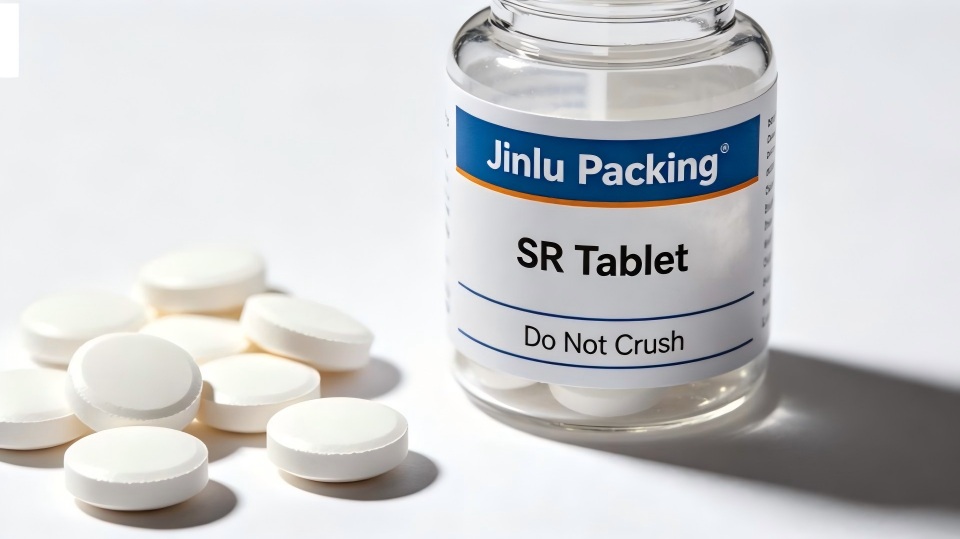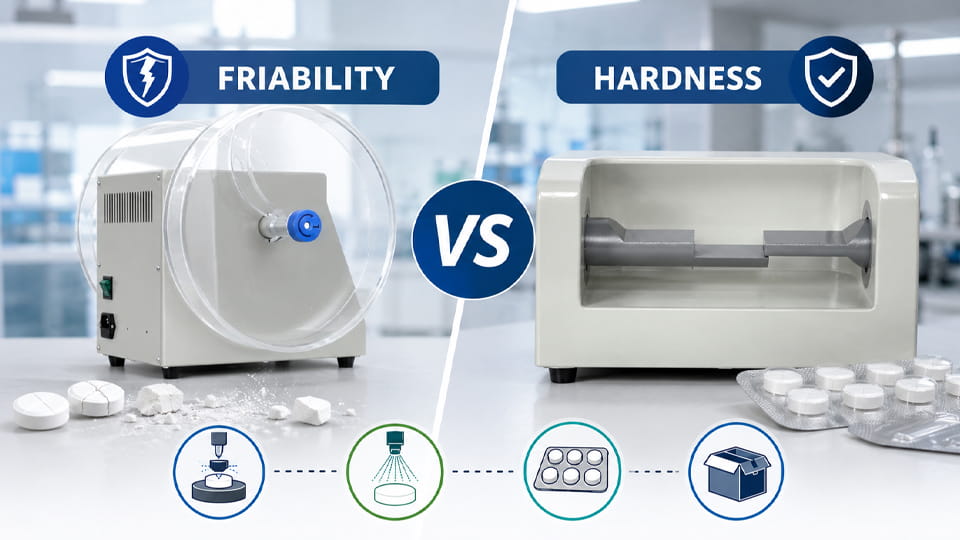

Tabletdoseringsvormen zijn er in twee basistypen: gecoat En ongecoat. Een ongecoate tablet is een eenvoudige samengeperste pil zonder extra omhulsel – alleen de samengeperste ingrediënten (actief medicijn plus hulpstoffen). A omhulde tablet, in tegenstelling, heeft een dunne buitenlaag of schaal aangebracht na compressie. Deze coating kan een polymeerfilm zijn (filmomhuld), op suiker gebaseerde schaal (met suiker bedekt), enterische laag, of andere functionele film. De coating heeft functies die verder gaan dan het uiterlijk: het kan het medicijn beschermen, masker smaak, controle vrijgave, of de slikbaarheid verbeteren.
Bijvoorbeeld, Figuur 1 laat zien hoe een filmcoatingmachine een uniforme polymeerfilm op tabletten aanbrengt, glad creëren, glanzende pillen. Deze coating kan het slikken gemakkelijker maken en de tabletkern beschermen tegen vocht en lucht. Daarentegen, gewone, ongecoate tabletten zijn mat, vaak kalkachtig, en kwetsbaarder voor het milieu.
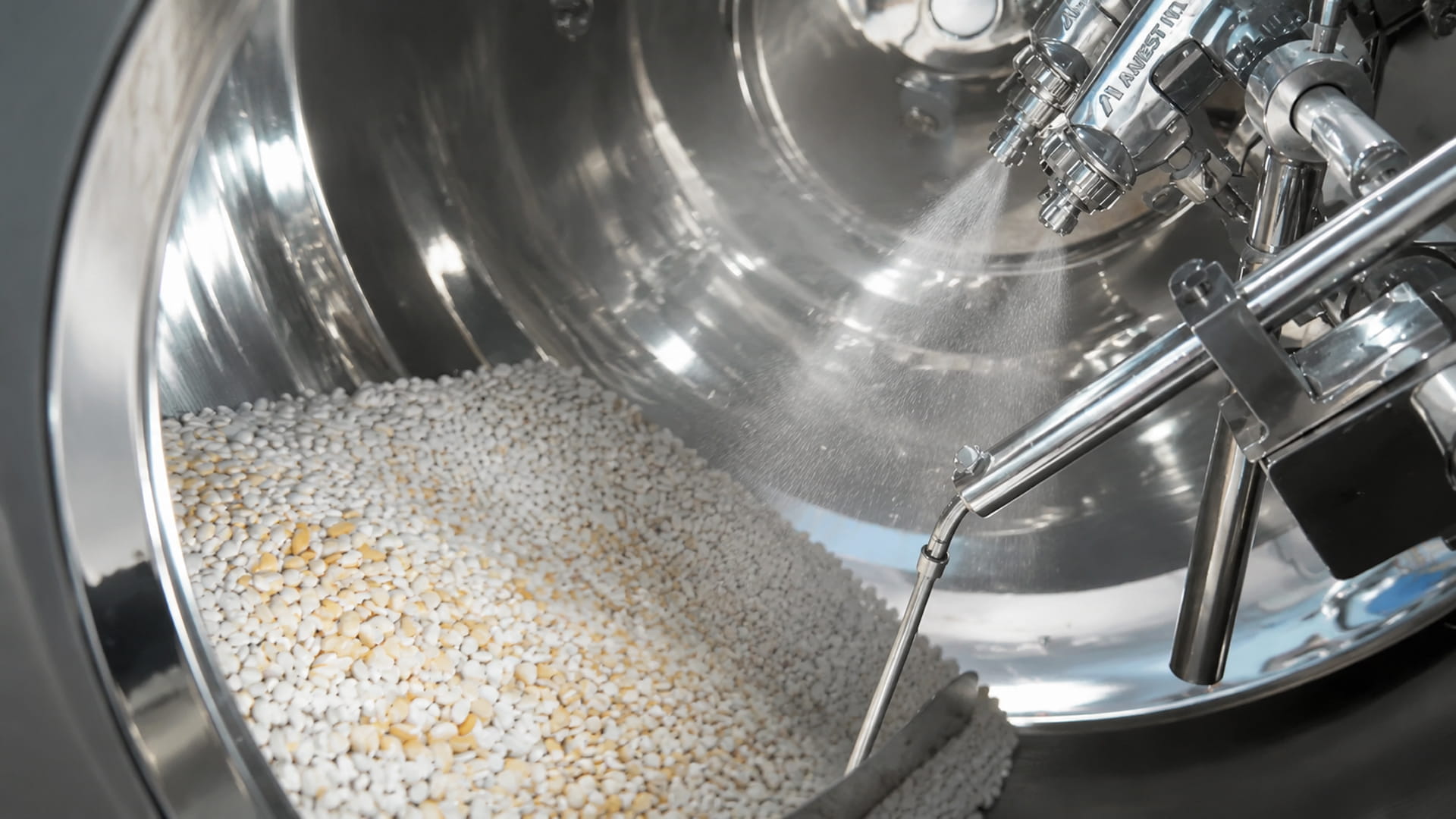
Figuur 1. Een snelle tabletcoatingmachine die een filmcoating aanbrengt. De coating voegt een bescherming toe, gladde laag op elke tablet, verbetering van het uiterlijk en de stabiliteit.
Bijvoorbeeld, A filmomhulde tablet heeft een dunne polymeerfilm (gewoonlijk hydroxypropylmethylcellulose of iets dergelijks) dat maakt de pil niet groter. A met suiker omhulde tablet heeft een dikke, zoete siroopschelp – arbeidsintensiever om te maken en veel zwaarder. Een maagsapresistente tablet maakt gebruik van pH-gevoelige polymeren, zodat het door de maag gaat en oplost in de darm. Elke coatingsoort heeft zijn eigen voor- en nadelen (zie onderstaande tabel).
| Coatingtype | Beschrijving | Primaire toepassingen |
| Ongecoat | Geen coating; tabletkern blootgelegd | Snelle release, kostengevoelig, stabiele medicijnen |
| Filmjas | Dunne polymeerfilm (bijv. HPMC) | Smaak maskeren, bescherming tegen vocht/licht, gemakkelijk slikken, branding |
| Suikerlaag | Dikke suikersirooplagen | Sterke smaakmaskering, gladde glanzende afwerking, vaak in de kindergeneeskunde |
| Enterische vacht | pH-gevoelige polymeren (Eudragit) | Bescherm maag of medicijn; vertraagde darmafgifte |
| Anderen | Gespecialiseerde/gecontroleerde afgifte | Aanhoudende afgifte, doelgerichte levering, enz. |
Tafel 1. Vergelijking van ongecoate versus gecoate tabletten en veel voorkomende coatingtypen.
Coating is niet alleen voor het uiterlijk – het is een functionele stap op het gebied van tabletproductie. Vragen farmaceutische ingenieurs, “Kan de tablet presteren zonder coating??'Zo ja, een ongecoate tablet is eenvoudiger en goedkoper. Maar coatings worden toegevoegd wanneer er een technisch voordeel is. Belangrijke redenen om tabletten te coaten zijn onder meer:
Kortom, coating voegt functionaliteit toe. Het gebeurt niet willekeurig, maar wanneer smaak, stabiliteit, of controlekwesties loslaten. Zoals een branchegids opmerkt, “coating wordt alleen geïntroduceerd als het een duidelijk functioneel voordeel oplevert”.
Gecoate tabletten combineren duurzaamheid en gebruiksvriendelijkheid. Belangrijkste voordelen zijn onder meer:
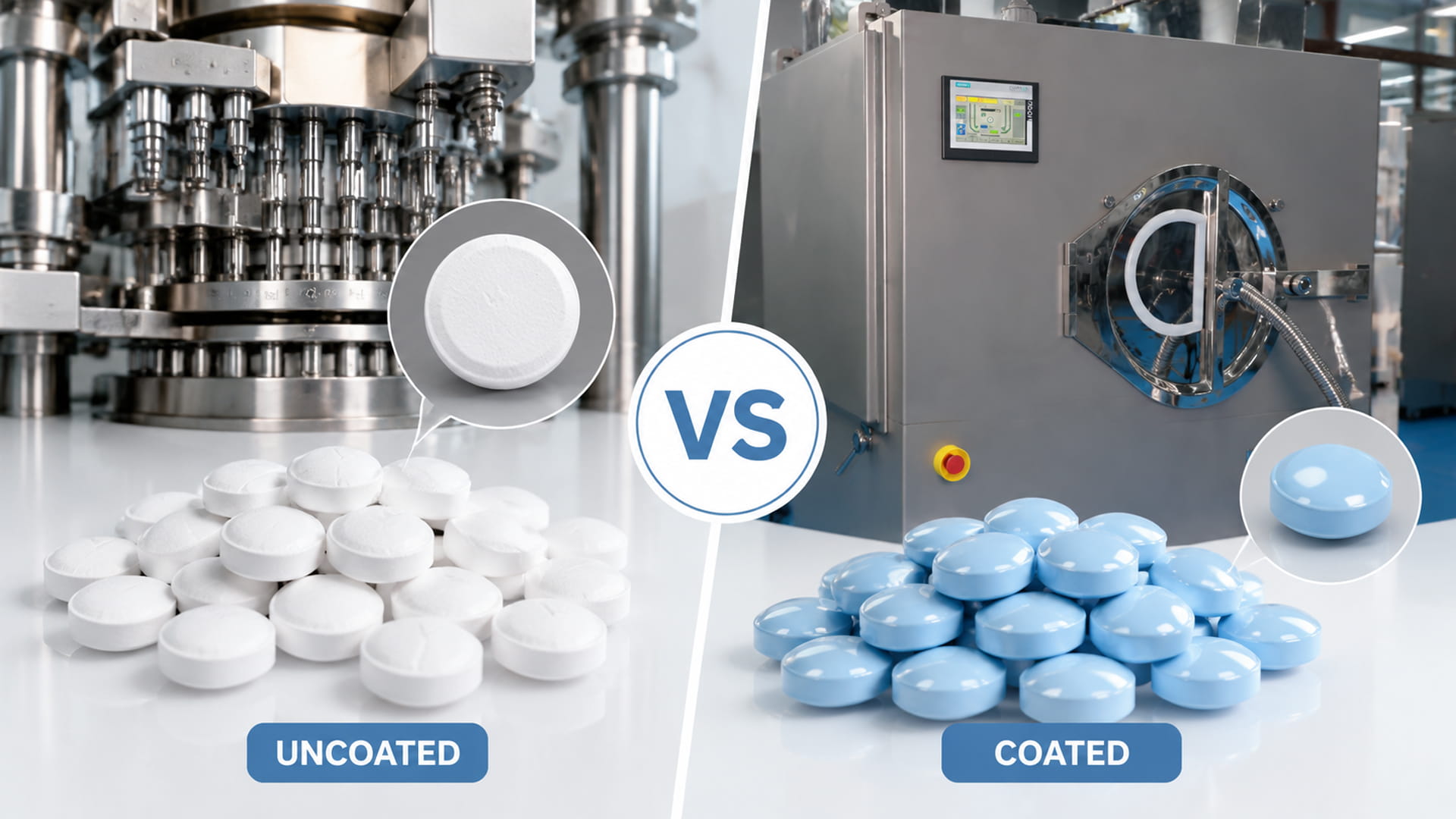
Figuur 2 vergelijkt een ongecoate tablet met een filmomhulde tablet. De gecoate tablet (rechts) heeft duidelijk een gladde, glanzende buitenkant die elke afdruk of ruwheid op de kern maskeert.
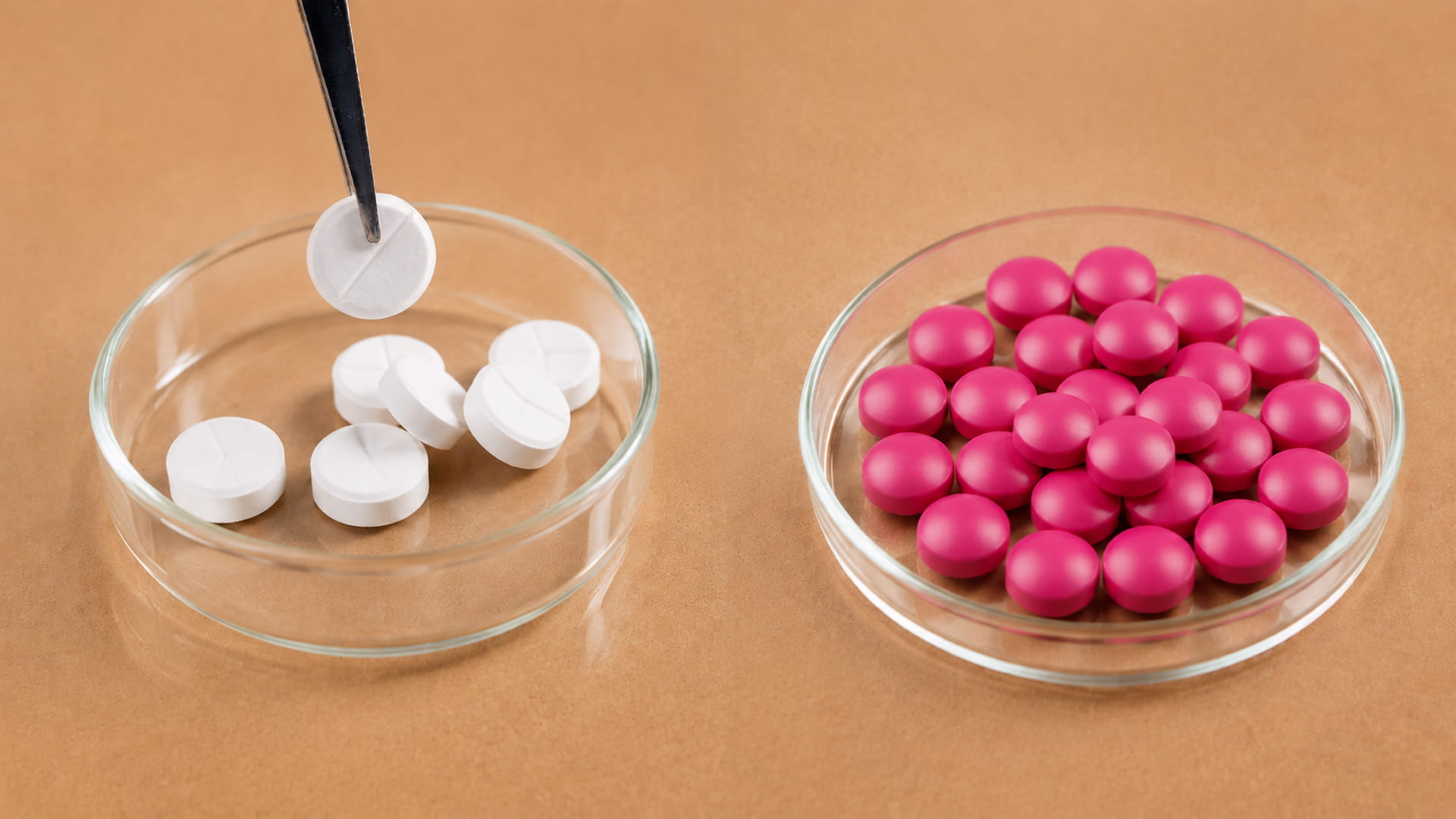
Figuur 2. Ongecoat (links) versus filmomhuld (rechts) tabletten. De filmomhulde tablet is glad, uniforme afwerking die de kleur en textuur van de kern maskeert. Dergelijke coatings verbeteren de slikbaarheid en beschermen het medicijn erin.
De voordelen van coatings zijn eenvoudig uit te leggen: omhulde tabletten “zien er vaak beter uit”., gaan langer mee, en gemakkelijker naar beneden gaan” dan gewone pillen. Deze voordelen betekenen dat, hoewel coating stappen en kosten met zich meebrengt, het kan problemen later verminderen (schade, klachten, vervroegde vervaldatum). Een CMO voor voedingssupplementen merkt op dat “omhulde tabletten weliswaar extra materialen bevatten, arbeid en tijd, coating kan het aantal afgewezen batches verminderen, klachten van klanten, en kwaliteitsproblemen na het op de markt brengen”. Op de lange termijn, gecoate tabletten besparen vaak geld gedurende de gehele levenscyclus van het product.
Natuurlijk, gewone tabletten hebben nog steeds hun plaats. Ongecoate tabletten bieden eenvoud en kosteneffectiviteit:
Simpel gezegd, een ongecoate tablet is “makkelijk en goedkoop te maken”. Het is een goed startpunt voor haalbaarheidsstudies. De apothekerblog merkt ook op dat ongecoate tabletten goedkoper en minder tijdrovend zijn om te produceren, en ze lossen sneller op, waardoor het medicijn sneller vrijkomt.
Echter, deze winsten gaan gepaard met afwegingen: een ongecoate tablet “laat de kern van het medicijn kwetsbaar” voor milieuschade, en kan voor patiënten minder aanvaardbaar zijn. Dus fabrikanten wegen deze factoren af: als coating niet nodig is, ze zullen het waarschijnlijk overslaan.
Coatings zijn niet one-size-fits-all. De industrie maakt gebruik van verschillende belangrijke coatingtypen, elk met specifieke toepassingen en voordelen:
Filmomhulde versus met suiker omhulde tabletten: Kortom, filmcoatings zijn dun, duurzaam, en geschikt voor productie op hoge snelheid. Ze hebben suikercoatings grotendeels vervangen omdat ze minimale bulk toevoegen en snel aan te brengen zijn. Echter, suikercoatings zorgen nog steeds voor een superieure smaakmaskering en een klassieke uitstraling, Daarom komen ze voor in producten als kauwbare vitamines, waarbij smaak cruciaal is.
Filmomhulde versus maagsapresistente tabletten: Het belangrijkste verschil is de releaselocatie. Een filmcoating met onmiddellijke afgifte lost op in de maag en verbetert vaak alleen maar de slikbaarheid of stabiliteit. Een enterische coating vertragingen oplossen tot pH in de darm. Bijvoorbeeld, een medicijn tegen brandend maagzuur kan een maagsapresistente laag gebruiken om de maag te vermijden, terwijl een dagelijkse vitamine een gewone filmlaag zou kunnen gebruiken..
Hoe omhullen fabrikanten tabletten eigenlijk? Het is een zorgvuldig gecontroleerde sproei- en droogoperatie. De basisstappen zijn:
Moderne tabletproductie maakt gebruik van apparatuur zoals roterende tabletdrukken (voor het vormen van kernen) En coatingmachines met hoge snelheid (voor het aanbrengen van folie of suikerschelpen). Een tabletpers kan honderdduizenden uniforme kernen per uur produceren. Vervolgens brengt een gespecialiseerde coatingmachine – in feite een roestvrijstalen trommel met sproeikoppen en nauwkeurige luchtstroom – de coatingoplossing aan op de bewegende tabletten.
Elk van deze stappen moet streng worden gecontroleerd. Te veel spray of te hete lucht kan dit veroorzaken defecten zoals “sinaasappelschil”-textuur of afbladderende film. Daarom zijn er geavanceerde coatermachines (zoals die van JinluPacking) beschikken over automatische PLC-besturingen, nauwkeurige sproeikoppen, en zelfs realtime monitoring om parameters aan te passen. Op het einde, precisie is de sleutel: elke tablet moet de juiste laagdikte hebben voor consistente prestaties.
[jl_youtube src=”https://www.youtube.com/embed/LFJJ-cEpfCk”]
Bij de overstap van laboratoriumontwikkeling naar commerciële tabletproductie, het kiezen van de juiste tabletcoatingmachine wordt een cruciale beslissing. Productiemanagers beoordelen apparatuur meestal op basis van coatinguniformiteit, capaciteit, automatiseringsniveau, schoonmaak eisen, en onderhoudskosten. De meest voorkomende apparatuur voor het coaten van tablets omvat::

Figuur 3. Jinlu's industriële snelle tabletcoatingmachine. Tabletten tuimelen naar binnen terwijl de coatingoplossing wordt besproeid en gedroogd. Functies zoals roerwerken van het schottype en materiaalcirculatiesystemen zorgen voor een uniforme dekking en efficiënte coating.
De belangrijkste kenmerken waar u op moet letten bij een coater zijn onder meer::
Investeren in kwaliteitsapparatuur loont: een goede coater bereikt een hoge coatinguniformiteit, minimale gebreken, en kan op hogere snelheden draaien. Dit vermindert de productietijd en arbeid. Zoals een blog opmerkt, moderne filmcoating “is sneller en consistenter dan ooit tevoren,Dankzij geautomatiseerde besturingen en verbeterde machines.
Om samen te vatten, hier zijn de belangrijkste contrasten tussen gecoate en ongecoate tabletten:
Tafel 2 (onderstaand) benadrukt deze verschillen. Houd er rekening mee dat gecoat niet over de hele linie ‘beter’ is – het is beter wanneer coating nodig is. Zoals een FAQ antwoordt: “Zijn gecoate tabletten altijd beter dan ongecoate tabletten? Nee – omhulde tabletten worden gebruikt als er een functionele reden voor is, zoals smaakmaskering of bescherming. Wanneer een formulering stabiel en smakelijk is, ongecoate tabletten hebben vaak de voorkeur vanwege de eenvoud en kosten”.
| Functie | Ongecoate tabletten | Gecoate tabletten |
| Oppervlak | Mat, zichtbare poeder/korrels | Zacht, glanzende of gekleurde film |
| Smaak/geur | Bitter of onaangenaam kan merkbaar zijn | Coating maskeert onaangename smaken/geuren |
| Slikgemak | Vaak moeilijker, vooral grote | Makkelijker door glad oppervlak |
| Bescherming (Vocht/licht) | Vereist een sterke verpakking | Film voegt barrière toe, verbetert de stabiliteit |
| Drugsstabiliteit | Kwetsbaarder voor vocht, warmte | Betere stabiliteit en houdbaarheid |
| Verwerkingscomplexiteit | Eenvoudiger proces, minder stappen | Extra coatingstap vereist |
| Tijd/kosten | Lagere productiekosten | Hogere initiële kosten, maar potentieel lagere levenscycluskosten |
| Release Control | Alleen onmiddellijke vrijlating | Kan vertraagde of gecontroleerde vrijgave mogelijk maken (enterisch, gestaag) |
| Merk/uiterlijk | Beperkt (effen kleur) | Kan kleurrijk zijn, bedrukt voor branding |
Tafel 2. Gecoate versus ongecoate tabletten: een vergelijking van de belangrijkste kenmerken.
In de praktijk, samenstellers en fabrikanten beslissen op basis van de behoeften van het product. Enkele algemene richtlijnen:
Soms komt de beslissing neer op de verpakking: gecoate tabletten doen het over het algemeen beter in flessen of potten omdat ze minder stof afgeven. In blaarpakketten, beide vormen werken, maar coating kan een eenvoudiger verpakking mogelijk maken. Contractfabrikanten (CMO's) vraag het vaak: “Kunnen we deze tablet ongecoat maken??” en voeg alleen een coatingstap toe als dat nodig is.
Een veel voorkomende vraag is of een omhulde tablet doormidden of gemalen kan worden. Algemeen, Nee: het splitsen of pletten van een omhulde tablet doet het doel van de schaal teniet. Een polymeercoating is bedoeld om de afgifte te controleren of het medicijn te beschermen. Als je het verplettert, wordt het medicijn in één keer blootgelegd, die de absorptie kunnen veranderen of irritatie kunnen veroorzaken. Gecoate tabletten (vooral maagsapresistente medicijnen of medicijnen met verlengde afgifte) intact moeten blijven. Als een kleinere dosis nodig is, controleer of de tablet een breukstreep heeft (sommige tabletten met onmiddellijke afgifte doen dat wel) of vraag het aan een apotheker. Zoals een expertnota zegt: “Meestal niet; verpletteren kan de beschermende laag vernietigen en de afgifte van medicijnen veranderen. Raadpleeg altijd eerst een apotheker”.
Op het einde, gecoate versus ongecoate tabletten is een afweging tussen eenvoud en functionaliteit. Ongecoate tabletten zijn goedkoper en sneller te maken, maar laat de medicijnkern bloot liggen. Gecoate tabletten zorgen voor extra complexiteit en kosten, maar duidelijke voordelen opleveren: betere stabiliteit, smaak maskerend, slikbaarheid, en merkdifferentiatie. In de moderne farmaceutische productie, de meeste pillen voor dagelijks gebruik (vitamines, OTC -medicijnen, nutraceutica) zijn voorzien van een filmcoating omdat ze de juiste balans bieden tussen bescherming en efficiëntie.
Echter, wanneer de formulering dit toelaat, Bedrijven kunnen om kostenredenen de voorkeur geven aan ongecoate tabletten. De sleutel is om Zorg ervoor dat het tablettype overeenkomt met de behoeften van het medicijn. Als uw product smaakmaskering of gecontroleerde afgifte vereist, een coating is vaak essentieel. Zo niet, een gewone tablet kan voldoende zijn.
Voor vragen over tabletcoating of om de uitrustingsopties te verkennen, reiken! Ons team bij JinLuPacking is gespecialiseerd in tabletpersen, coatingmachines, en complete tabletproductielijnen. Of u nu een snel coatingsysteem voor film nodig heeft, suiker, of enterische toepassingen, of advies over het optimaliseren van uw tabletformulering, We zijn hier om te helpen. Neem contact met ons op voor een offerte of meer informatie, en laten we ervoor zorgen dat uw tablets de juiste afwerking en prestaties krijgen.
Omhulde tabletten hebben een extra laag (film, suiker of functioneel polymeer) aangebracht over de samengedrukte kern, terwijl ongecoate tabletten gewone, samengeperste pillen zijn zonder enige buitenlaag. De coating dient functionele doeleinden: het kan smaak maskeren, bescherm de API tegen vocht/licht, en controlevrijgave. Ongecoate tabletten lossen onmiddellijk op en zijn goedkoper te maken, maar ze stellen het medicijn bloot aan het milieu en smaken vaak bitter.
Tabletten zijn gecoat om de stabiliteit te verbeteren, aanvaardbaarheid van de patiënt, en prestaties. Een coating beschermt vocht- of lichtgevoelige API's, maskeert onaangename smaken, en maakt de tablet gemakkelijker door te slikken. Gespecialiseerde coatings (zoals enterische films) kan de afgifte uitstellen tot in de darm, het voorkomen van maagirritatie. Kortom, coating verbetert het uiterlijk en de houdbaarheid van de tablet, en kan gecontroleerde medicijnafgifte en betere therapietrouw door de patiënt mogelijk maken.
Geen van beide is universeel ‘beter’ – het hangt af van de toepassing. Gecoate tabletten hebben het voordeel van bescherming en aantrekkelijkheid voor de patiënt, maar ze kosten meer en vereisen extra verwerking. Ongecoate tabletten zijn eenvoudiger, sneller, en goedkoper te produceren, en ze geven het medicijn snel vrij. Voor een stal, geneesmiddel met onmiddellijke afgifte waarbij de kosten prioriteit hebben, ongecoat zou ideaal kunnen zijn. Voor een bitter of vochtgevoelig medicijn waarbij smaakmaskering en stabiliteit prioriteit hebben, gecoat is de betere keuze.
De drie belangrijkste methoden voor het coaten van tabletten zijn::
• Filmcoating: Dunne polymere laag (meestal op waterbasis) aangebracht door middel van sprayen; tegenwoordig het meest voorkomend. Biedt vochtbescherming en branding met minimale gewichtstoename.
• Suikercoating: Dikke suikerschil opgebouwd uit meerdere sirooplagen; geeft een glanzende afwerking en maskers smaken goed, maar voegt bulk toe en vereist langdurige verwerking.
• Enterische coating: Een pH-gevoelige film die maagzuur weerstaat en oplost in de darmen. Technisch gezien is dit een soort filmcoating met speciale polymeren, gebruikt voor zuurlabiele medicijnen of om maagirritatie te voorkomen.
Filmomhulde tabletten profiteren van de meeste voordelen van de coating dankzij een dunnere schaal. Een goede waterige filmlaag beschermt het medicijn (vocht/lichtbarrière), maskeren smaak en geur, en de esthetiek verbeteren zonder de tabletgrootte aanzienlijk te vergroten. Filmcoatings drogen snel in moderne coaters, waardoor een hoge doorvoer mogelijk is. Ze kunnen ook worden geformuleerd voor specifieke afgifteprofielen (enterisch of aanhoudend) door keuze van polymeer.
Algemeen, Ja. Ongecoate tabletten vallen doorgaans sneller uiteen en lossen op omdat er geen barrièrelaag is. De API wordt onmiddellijk blootgesteld aan maagsappen, wat leidt tot een sneller begin. Daarentegen, zelfs een filmlaag met onmiddellijke afgifte zorgt voor een kleine vertraging (omdat de vacht eerst moet oplossen). Echter, het verschil kan klein zijn, afhankelijk van de samenstelling en dikte van de coating.
Gemeenschappelijke coatingapparatuur omvat:
• Geperforeerde pancoaters (Coaters met hoge snelheid): Industriestandaard machines met roterende geperforeerde trommels. Verwarmde lucht stroomt door de trommel, waardoor een hoge droogefficiëntie en uniforme coating mogelijk zijn.
• Wervelbedcoaters: Tabletten worden aan een luchtstroom gesuspendeerd en van onder of boven besproeid. Goed voor pellets of kleine tabletten met zeer uniforme dunne lagen.
• Traditionele coatingpannen: Grote open pannen die voornamelijk worden gebruikt voor het coaten van suiker (arbeidsintensief en grotendeels achterhaald in de moderne farmaceutische industrie).
Elk machinetype wordt gekozen op basis van batchgrootte, tabletgrootte/vorm, en coatingmateriaal. Voor grootschalige filmcoating, geperforeerde pannen (zoals de tabletcoatingmachine van Jinlu) komen het meest voor.
Coating kan de afgifte van geneesmiddelen vertragen of wijzigen. Een enterische laag voorkomt de afgifte van maagzuur, het medicijn komt dus alleen in de darm vrij. Andere speciale coatings (films met aanhoudende release) bevatten polymeren die de penetratie van vloeistoffen vertragen, de release over uren uitstrekken. Zelfs niet-functionele filmlagen (voor onmiddellijke vrijlating) kan de afgifte enigszins vertragen in vergelijking met een ongecoate kern, omdat de barrière eerst moet verdwijnen. Dus, coatings bieden een hulpmiddel om nauwkeurig af te stemmen waar en hoe snel de API wordt geleverd.
Filmcoatings zijn veelzijdig en efficiënt. Ze beschermen het medicijn en verbeteren de smaak/uiterlijk met minimale verwerkingstijd. Moderne waterige filmlagen drogen snel, wat essentieel is voor productie met hoge doorvoer. Ze maken ook de toevoeging van kleuren en identificaties mogelijk, helpt merkdifferentiatie. Omdat ze kunnen worden ontworpen voor verschillende releaseprofielen, filmcoatings zijn een werkpaard voor farmaceutische bedrijven die zowel kwaliteit als prestaties willen leveren in hun tablets.
Bedrijven beoordelen meerdere factoren. Als het medicijn instabiel is, bitter, of heeft maagbescherming nodig (enterische afgifte), ze kiezen voor gecoate tabletten. Als de formulering al stabiel is, smaak is acceptabel, en het minimaliseren van de kosten is een prioriteit, ze gaan met ongecoat. Zoals een branchegids samenvat: gebruik omhulde tabletten als “u smaakmaskering nodig heeft,” “bescherming tegen vocht, licht of oxidatie,” of “gecontroleerde/vertraagde vrijgave”; kies voor non-coated als uw formule stabiel is en er geen extra bescherming nodig is. In wezen, de beslissing wordt bepaald door productvereisten (API-chemie, release, marketingbehoeften) versus productieoverwegingen (kosten, beschikbaarheid van apparatuur).
Referenties:
1.Farmaceutische toepassing van tabletfilmcoating —— Nationale Bibliotheek voor Geneeskunde
2.Tabletcoating —— Chemische Technologie Universiteit van Michigan
3.Tabletcoating: Processysteemtechniek voor farmaceutische productie —— WetenschapDirect
4.Farmaceutische coating en zijn verschillende benaderingen, een recensie —— Nationale Bibliotheek voor Geneeskunde
5.Een uitgebreid overzicht van farmaceutische filmcoating: Verleden, Cadeau, en Toekomst —— Nationale Bibliotheek voor Geneeskunde
6.Farmaceutische toepassing van tabletfilmcoating —— MDPI
7.Vooruitgang in tabletproductietechnologieën: Hoofdstuk 10 – Technologieën voor gecoate tabletten —— WetenschapDirect