×

온라인 서비스

💬 왓츠앱: +86 1801179332
💡
  • 블로그
  • 약물 대 의학: 의약품 제조 및 포장의 주요 차이점

약물 대 의학: 의약품 제조 및 포장의 주요 차이점

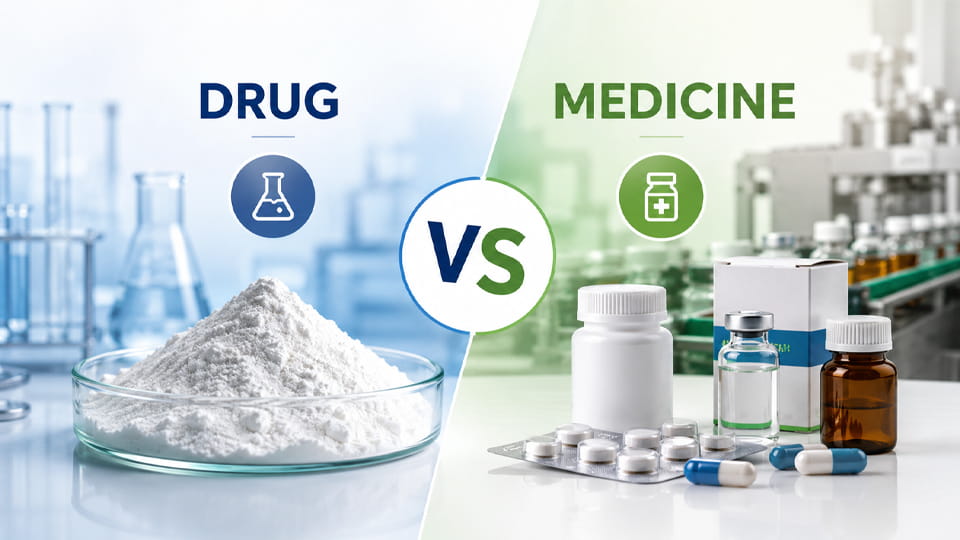
In everyday language “drug” 그리고 “medicine” are often used interchangeably. In the pharma industry, 하지만, they usually imply different stages of the product lifecycle. 에이 의약품 is generally the active pharmacological substance (API) that provides therapeutic effects. 에이 (때로는 medicinal product) is the finished product – the drug formulated and packaged for patient use. This distinction affects how products are developed, 제조, 그리고 포장. 간단히 말해서, every medicine begins with a drug (활성 성분), but not every drug ends up as a marketable medicine. The differences in these terms can influence 제형 설계, regulatory status, 그리고 choice of packaging machinery.

약물 대 의학의 주요 차이점


What Is a Drug?

In pharmaceutical terms, 에이 의약품 is an active chemical or biological substance used to diagnose, 치유법, 완화시키다, 대하다, 질병을 예방하거나. The FDA defines a drug broadly as “A substance intended for use in the diagnosis, 치유법, 완화, 치료, 또는 질병 예방” in humans or animals. 실제로, “drug” often refers to the pure active ingredient (API) itself. 예를 들어, ibuprofen or amoxicillin as a powder would be called a drug substance before it’s made into a tablet or capsule.

Key points about 약제 in pharma manufacturing:

  • 활성 성분 (API): A drug is usually the pharmacologically active component (the API). This API is what actually produces the desired effect in the body. 예를 들어, 아세트아미노펜 (파라세타몰) is the drug substance that relieves pain or reduces fever.
  • Regulatory Definition: Per FDA, a drug includes any substance recognized in official pharmacopeia or intended to affect body structure/function. The EPA/EMA have similar definitions. It explicitly includes therapeutics (and excludes most foods).
  • Broad Usage: Beyond medicinal use, “drug” can be broader. One source explanation notes that drugs may have non-therapeutic contexts (예를 들어. experimental or recreational). 하지만, in pharma manufacturing we focus on drugs with medical intent.
  • Early in Lifecycle: In R&D and production, we talk about a drug when referring to APIs or experimental compounds. 이 단계에서, it may not be in final form or fully regulated.

요약, 에이 의약품 is the raw therapeutic substance or API – the “what” that gives a medicine its effect. This term is common in formulation development and regulation.

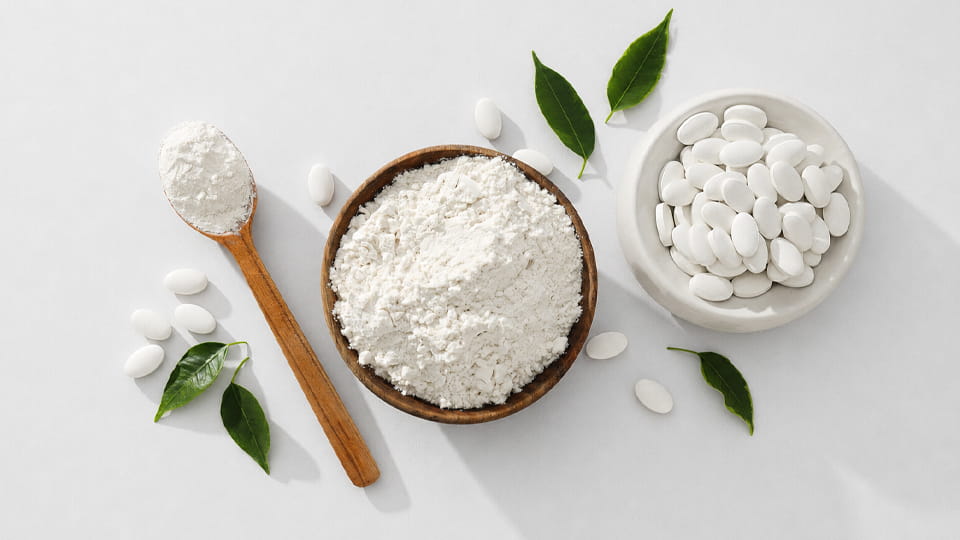
drug powder and tablets with a spoon


What Is a Medicine?

에이 (또는 medicinal product) 는 finished pharmaceutical product intended for patient use. It contains one or more drugs (아피스) plus inactive components (부형제) and is packaged for safe dispensing and use. 다시 말해서, once a drug is formulated into a dosage form (태블릿, 캡슐, 액체, 등.) and labeled in a container, it becomes a medicine ready for sale.

  • Finished Dosage Form: A medicine is the end-product such as a tablet, 캡슐, 시럽, or injectable vial. It usually includes the active drug + 바인더, 필러, 코팅, stabilizers (부형제). 예를 들어, a 500 mg paracetamol tablet (with starch, 셀룰로오스, 등.) is a medicine, whereas pure paracetamol powder is a drug substance.
  • Regulatory Term – Medicinal Product: In the EU/UK, 용어 “medicinal product” is defined by law as any substance presented for treating/preventing disease. The EMA further describes a medicinal product as a completed pharmaceutical product (예를 들어. 태블릿, 캡슐, 주입). This aligns with “medicine” being the regulated product given to patients.
  • Designed for Use: Medicines are rigorously tested for safety and efficacy, formulated in precise doses, and manufactured under Good Manufacturing Practices (GMP). They are designed to restore or maintain health when used properly.
  • Packaging and Labeling: Unlike a raw drug, a medicine comes with packaging (병, 수포, box) and a label or leaflet. The packaging contains dosage information, 만료, 지침, 규제 데이터. The medicine is what patients or pharmacies handle.

간단히 말해서, 에이 is the packaged, patient-ready product used to diagnose or treat a condition. It includes the drug as the star ingredient, but also all the other stuff (부형제, 컨테이너, 상표).

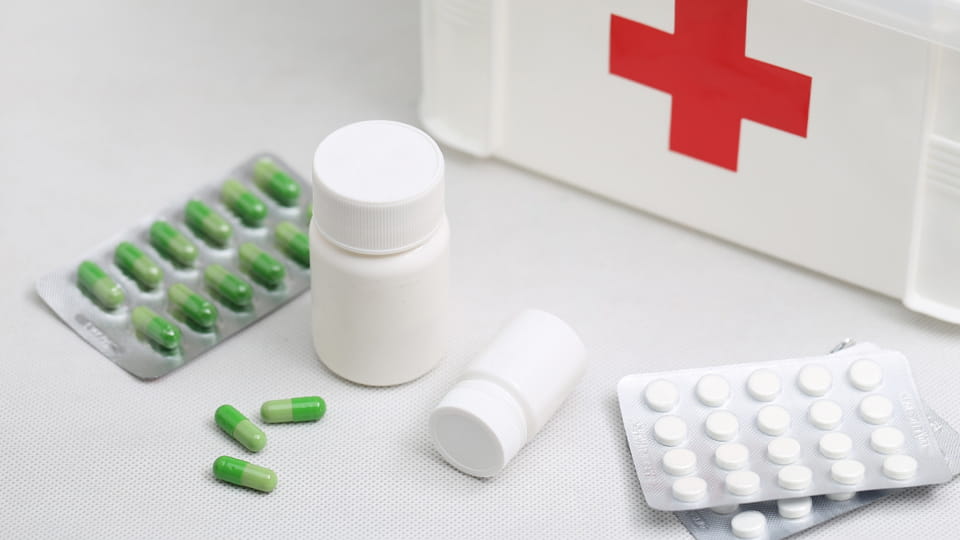
 a medicine is the packaged, patient-ready product used to diagnose or treat a condition


약물 대 의학: 주요 차이점

Below is a summary of the key distinctions between a drug and a medicine. The differences are subtle in plain language but important in manufacturing and regulatory contexts:

측면 의약품 Medicine (Medicinal Product)
Basic meaning Active substance (API) with therapeutic effect Finished product containing the drug, ready for patient use
단계 Often refers to early-stage ingredient or research compound Refers to the final dosage form once formulated and packaged
구성 The pure active ingredient (예를 들어. aspirin powder) Includes API + 부형제, 컨테이너, 상표 (예를 들어. aspirin tablet in blister)
Use context 조작, 아르 자형&디, 규제 (approval process) Clinical use, prescribing, dispensing (in healthcare settings)
규제 Broad FDA “drug” definition includes APIs Strictly regulated finished products (FDA/EMA approvals, GMP)
Ibuprofen API, insulin protein (bulk substance) Ibuprofen tablets, insulin injections in vials

일반 용어로: 에이 의약품 is the active chemical/biological substance with a pharmacological effect. 에이 is that drug plus formulation and packaging, intended for safe use by patients. As one pharma source put it, “Every medicine begins as a drug, but not every drug becomes a medicine”. 예를 들어, pure morphine is a drug substance; once formulated into injectable doses with saline and sealed in vials, it becomes a medicine (a pain relief product).

The crucial point is that implies a regulated, consumable product, 반면 의약품 can mean just the raw active substance or a broader class of compounds. The table above highlights these differences.


의약품, 원료의약품, Drug Product, and Medicine

To fully understand “drug vs medicine,” it helps to clarify related terms often used in pharma:

  • 원료의약품 (Active Pharmaceutical Ingredient – API): The pure active component (molecule) that produces the drug’s effect. The FDA defines an API as “any substance intended for incorporation into a finished drug product and intended to furnish pharmacological activity”. 실제로, 약물 물질 = API. 예를 들어, acetaminophen powder or recombinant insulin protein are drug substances.
  • Drug Product (Finished Dosage Form): The complete, final form that contains one or more drug substances and other ingredients, ready for distribution. The FDA defines drug product as “the finished dosage form that contains a drug substance” (with other active/inactive ingredients as needed). 예: a 250 mL vial of ceftriaxone injection, a bottle of cough syrup, a blister of aspirin tablets.
  • Medicine (Medicinal Product/Pharmaceutical Product): Essentially synonymous with drug product in many regulations. The EU’s definition of “medicinal product” closely matches a drug product: “any substance … presented as having properties for treating or preventing disease”. 미국에서는, medicines are just the approved drug products (brand-name or generic) dispensed to patients.
  • Pharmaceutical Product: A broad term covering any marketed drug or medicine, including prescription and over-the-counter(OTC). It emphasizes the commercial and regulatory aspect of the product.

결론: In pharma manufacturing, “drug substance” is the API, “drug product” is the formulated dosage form (정제, 캡슐, 주입, 등.), 그리고 “medicine” is what you call the drug product once it is a market-ready therapeutic product. 예를 들어, metformin is a drug substance, a 500 mg metformin tablet is the drug product, and that tablet (in its packaging) is the medicine the patient takes.

Understanding these terms is vital: once we know a drug product’s dosage form, we can select the right 포장라인 to turn it into a stable medicine.


Why the Difference Matters in Manufacturing

공식화 & Dosage Form Development: A raw 약물 물질 by itself isn’t patient-ready. It must be formulated into a suitable dosage form (태블릿, 캡슐, 시럽, 주입, 등.) – this is a major part of manufacturing development. Each dosage form requires specific excipients and processing (혼입, 육아, 멸균) to become a drug product. 예를 들어, sensitive APIs for injectable biologics need aseptic processing, whereas a stable API for a pill goes through drying and tablet compression.

규제 승인: Agencies like the FDA or EMA review data on the drug substance 그리고 the drug product/medicine. They assess the API’s safety and the final formulation’s efficacy. The finished medicine must meet strict standards (GMP, 안정, 라벨링). FDA의 CGMP rules explicitly cover packaging processes and equipment – so how you package a medicine (even more than a raw drug) is highly regulated.

Packaging and Labeling: The distinction dictates packaging needs. A drug substance typically has minimal packaging (드럼, vials for storage). A medicine, 하지만, 필요하다 1차 포장 that protects dosage (예를 들어. 물집 팩, 병, 바이알) 그리고 2차 포장 (상자) for information and traceability. 예를 들어, 정제 (finished product) need moisture-proof blister packs or bottle-and-closure systems to ensure shelf-life. An injectable medicine needs sterile glass vials or ampoules plus tamper-evident seals. Each combination of API and dosage form has a matching packaging solution.

장비 선택: If you only think of APIs, you might consider reactors or mixers. But once a substance is a drug product needing packaging, you need the right packaging line. 블리스 터 포장 기계, 캡슐 충전 기계, 액체 충전제, 바이알 충전 라인, 카톤 기계 – all become relevant. Recognizing “medicine” means packaged product prompts procurement of these machines.

요컨대, understanding “drug vs medicine” helps project teams know when and how to integrate packaging into the production workflow. It ensures that the drug product is not just formulated, but properly protected and presented to the market.


How Packaging Turns a Drug Product Into a Market-Ready Medicine

Packaging is the last critical step that transforms a formulated drug into a medicine patients can use safely. ~ 안에 의약품 포장, 1차 포장 is in direct contact with the dosage (the drug product) and provides the first barrier to degradation. 예를 들어, hard gelatin capsules and tablets often go into aluminum–plastic 물집 팩, while liquid syrups go into 플라스틱 (PET/HDPE) 병. Injectable drugs are filled into sterile glass vials or ampoules. Each primary container is chosen for its inertness and barrier properties.

Once primary packaging is sealed, 2차 포장 (상자, 라벨, 전단지) provides patient information and batch data. 예를 들어, blister packs or vials are grouped into branded cardboard cartons with instruction leaflets, 배치 번호, and barcodes – crucial for compliance and patient safety.

At JinLuPacking, our machines automate these steps. An automatic 물집 포장기 can seal thousands of tablets into blisters per hour; 에이 캡슐 충전 기계 doses the drug into capsules; 에이 bottle filling and capping line counts tablets or fills syrups into bottles; 그리고 포장 기계 wraps and boxes the finished products. All these stages – filling, 캡핑, wrapping – ensure the final medicine is accurately dosed, 안전한, and ready for distribution.

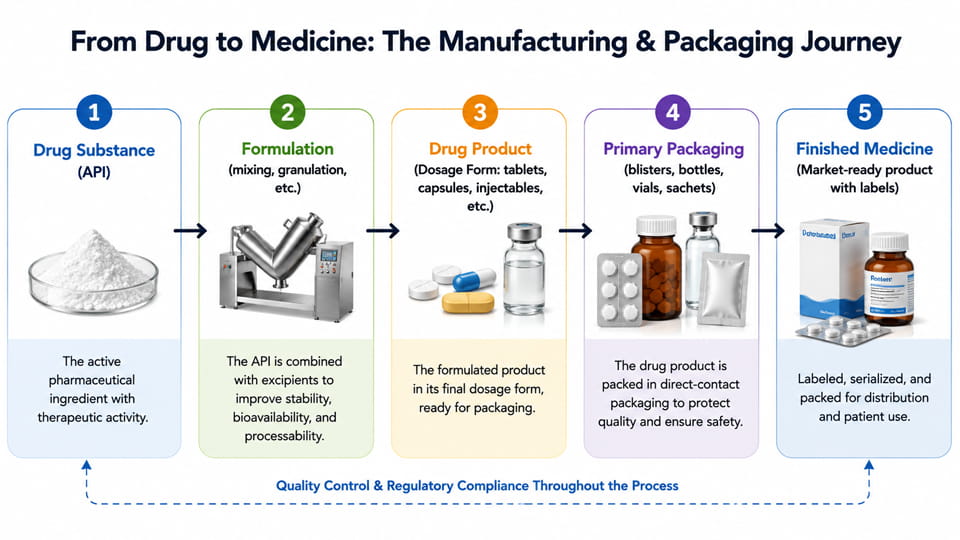
Flowchart of Drug to Medicine

수치: Flowchart of Drug → Medicine: The active 약물 물질 (API) is formulated into a drug product (specific dosage form). Then it moves into 1차 포장 (예를 들어. blister packs for tablets, bottles for syrups, glass vials for injectables). 마지막으로, it becomes a finished medicine with secondary packaging (cartons/labels) for patient use.

Common Dosage Forms and Packaging

Different dosage forms require different packaging solutions. The table below summarizes typical pairings:

복용 형태 Common Primary Packaging Example JinLuEquipment
정제 (Solid Oral) 물집 팩 (PVC/PVDC foil), 아니면 플라스틱 스크류 캡 포함 블리스 터 포장기; 정제 계산 & 병입 라인
캡슐 (경구) 물집 팩, or bottles similar to tablets 자동 캡슐 충전 기계; 물집 기계
Oral Liquid (시럽) 플라스틱 (PET/HDPE) with child-safe caps Liquid Filling and Capping System; 병 스크램블러
가루 / 향낭 Single-dose sachet packs (foil or laminate pouches) Sachet/Stick Pack Packing Machine; Premade Pouch Line
주사제 (Sterile) 유리 바이알, 앰플, or prefilled syringes, plus foil seals Vial/Ampoule Filling & Stoppering Line; 인덕션 실러
Ointments/Creams Laminated tubes (aluminum or plastic) Tube Filling and Sealing Machine
소프트젤 캡슐 병 (애완 동물) 아니면 블리스 터 팩 Softgel Capsule Blister Machine; Counting Line

The choice depends on factors like dose form stability, 불임, 그리고 환자의 편의. 예를 들어, 정제와 캡슐이 자주 사용됩니다. 물집 기계 또는 병 충전 라인, while liquids need bottle rinsers, 충전재, and capping machines. Injectable drugs require sterile filling systems under cleanroom conditions. Each solution is supported by specialized packaging machinery to ensure the drug product becomes a protected, 라벨이 붙은 that meets GMP 표준.


Drug vs Medicine Examples

To make it concrete, here are a few examples showing how specific drugs turn into medicines:

  • Tablet Example: The drug substance 아세트아미노펜 (파라세타몰) is mixed with excipients and compressed into tablets. These tablets are primary-packaged in aluminum–plastic blister packs or PET bottles with screw caps. The final packaged product (with labeling) is a medicine for fever or pain relief. JinLuPacking’s 정제 블리스 터 포장 기계 is designed for this exact scenario.
  • Capsule Example: 오메프라졸 (a drug) can be filled into 젤라틴 캡슐. The capsules are sealed in blister packs to protect from moisture. A machine like 자동 캡슐 충전 기계 fills the drug and the 블리스 터 포장기 seals them into packs. The packed capsules become the medicine for acid reflux (예를 들어. ulcer treatment).
  • Syrup Example: An antibiotic drug (예를 들어. 아목시실린) might be formulated as a syrup. The liquid medicine is filled into PET bottles with child-resistant caps. JinLuPacking’s bottle filling line can rinse, 채우다, 캡, and label bottles to turn the bulk syrup into packaged medicine bottles.
  • Injectable Example: A drug like ceftriaxone is dissolved and sterilized. The sterile solution is filled into glass vials or ampoules in a cleanroom. These are sealed and labeled. The final cartons of vials/ampoules are the injectable medicine for hospital use. 에이 vial filling & stoppering line from JinLu would handle this process.
  • Powder Sachet Example: A drug for oral rehydration (like electrolytes) can be in powder form. The powder is measured into 단일 용량 향 주머니 (스틱 팩). 에이 향 주머니 포장 기계 packages each dose. Patients then mix the 향낭 contents with water at home.

Each example shows: 의약품 (API) → 공식화 (정제, 충전재, 등.) → 포장 (수포, 병, 약병, 향낭) → Medicine (end product with label).


Is Every Drug a Medicine?

꼭 그런 것은 아니다. Every medicine starts from a drug, but not every drug becomes a medicine. Many chemical or biological compounds (약제) never reach patients. Some drugs remain in R&D or are only used for research, and others are used outside medical settings (예를 들어. recreational drugs). Only when a drug is formulated, 테스트를 거쳤습니다., and approved does it become a medicine.

  • Not all drugs are medicines: Substances like cocaine or methamphetamine are drugs by the broad definition, but they are not legal medicines in normal practice. They have abuse potential and no accepted therapeutic approval (except rare exceptions under strict control).
  • Investigational drugs: Many drug candidates fail clinical trials or are not pursued. They never turn into medicines.
  • Dual-use drugs: Some substances can be both a medicine and an illegal drug depending on context. 예를 들어, morphine is a potent drug substance, but when formulated into painkiller injections or tablets, it’s a regulated medicine. When misused illicitly, it’s called a narcotic drug.

As one FAQ answer notes, “Aspirin is both a drug and a medicine. It is a drug in its chemical form (acetylsalicylic acid) and becomes a medicine when formulated and used to treat fever, pain, or inflammation”. The key is the intended use and presentation: use as a patient-ready product makes it a medicine.

요약, only approved, patient-intended products are medicines. Understanding this helps manufacturers and regulators distinguish between experimental substances and real market products.


결론

요약, “drug” usually refers to the active ingredient or any pharmaceutical agent, ~하는 동안 “medicine” (medicinal product) refers to the finished, patient-ready product containing that drug. This distinction is important for pharmaceutical manufacturing: it guides R&디, regulatory status, and packaging choices. Understanding these terms helps ensure we move a drug substance through formulation and 포장 properly to become a stable, compliant medicine.

언제 developing a new dosage form, 기억하다: the right packaging line (블리스 터 패커, 캡슐 필러, 병 라인, vial filler, 카토너, 등.) is essential for protecting the medicine and meeting GMP. 예를 들어, tablet manufacturers rely on 물집 포장 기계 그리고 라인 계산/채우기, while injectable products require vial/ampoule filling and capping machines and secure secondary packing. 진루패킹 offers a full range of pharma packaging machinery tailored to each dosage form – from 태블릿 & capsule blistering 에게 sachet packing 그리고 포장.

Ready to turn your drug into a market-ready medicine? Explore our solutions: 태블릿 & capsule blister packaging machines for solid doses, capsule filling machines for powder/액체 캡슐, 향낭 & premade pouch machines 분말용, and cartoning machines for final boxing. Our equipment helps protect product quality, ensure patient safety, and streamline your production line from drug to finished medicine.


FAQs on Drug vs Medicine

Is a drug the same as a medicine?

Not exactly. In casual conversation they overlap, but technically a drug often means the active ingredient or any pharmacological substance, whereas a medicine is the finished product given to patients. One can say “every medicine contains a drug, but a drug by itself may not be a medicine until formulated”.

What is the difference between a drug product and a medicine?

They are essentially the same concept in most pharmaceutical contexts. A drug product is the completed dosage form (태블릿, 캡슐, 주입) ready for sale. A medicine is what the drug product is called when it’s packaged for patient use. 실제로, approved drug products (with labeling) are medicines.

What is a drug substance vs a drug product?

A drug substance (또는 API) is the pure active ingredient – the chemical or biologic that has the therapeutic effect. A drug product is the final formulation containing that substance, plus excipients, in a dosage form (알약, 해결책, 등.). Think of salt and saltshaker: the salt (약물 물질) is the ingredient; the salt with anti-caking agent in a bottle (drug product) is the usable product.

How does packaging matter for drugs vs medicines?

Packaging is crucial for turning a drug into a medicine. As the JinLuPacking resources note, 의약품 포장 (물집 팩, 바이알, 병) protects the drug product’s stability and dosage, and ensures compliance with regulations. Proper packaging and labeling transform a loose drug substance into a safe, user-friendly medicine.

Can the same compound be both a drug and a medicine?

예. A compound like ibuprofen or acetaminophen is a drug substance. When it is made into an OTC tablet with instructions, it is also a medicine. It depends on form and use. 위에서 언급한 바와 같이, aspirin is chemically a drug but is called medicine once it’s in tablets for pain relief. It’s the same with many pain relievers, 항생제, 등.

Why do doctors say “drug” instead of “medicine”?

Doctors often use “drug” in the neutral sense of any pharmaceutical agent. In clinical jargon and law (like the FDA Act), “drug” is the official term for a therapeutic substance. It covers everything from cough syrup to chemotherapy. 그 동안에, “medicine” is more patient-friendly. So a doctor might prescribe ibuprofen (의약품) as a pain reliever (약).


참고자료:
1.Drugs@FDA Glossary of Terms -- 우리를. 식품의약품안전청
2.Classification of Products as Drugs and Devices and Additional Product Classification Issues -- 우리를. 식품의약품안전청
3.어휘 (P terms: pharmaceutical product, 부형제, starting material) -- WHO
4.Prequalification Glossary -- WHO
5.투여 형태 | FDA -- 우리를. 식품의약품안전청
6.Q7A 활성 의약품 성분에 대한 우수제조관리기준(GMP) 지침 -- 우리를. 식품의약품안전청

이 기사를 공유하세요:
사진 사소한 푸
사소한 푸

사소한 푸, 진루패킹 창업자, 가져오다 20 제약 기계 부문에 대한 다년간의 전문 지식. 그의 리더십 아래, Jinlu는 디자인을 통합하는 신뢰할 수 있는 공급업체로 성장했습니다., 생산, 그리고 판매. Petty는 고객이 제약 포장의 복잡성을 헤쳐나갈 수 있도록 깊은 산업 지식을 공유하는 데 열정을 갖고 있습니다., 장비뿐만 아니라 제품도 받을 수 있도록 보장, 생산 목표에 맞춘 진정한 원스톱 서비스 파트너십.

목차

문의 보내기

관련 게시물

답장을 남겨주세요

귀하의 이메일 주소는 공개되지 않습니다. 필수 입력란이 표시되어 있습니다 *

무료 견적 받기

*우리는 귀하의 기밀성을 존중하며 모든 데이터는 보호됩니다. 귀하의 개인정보는 JL 솔루션을 위해서만 사용 및 처리됩니다..