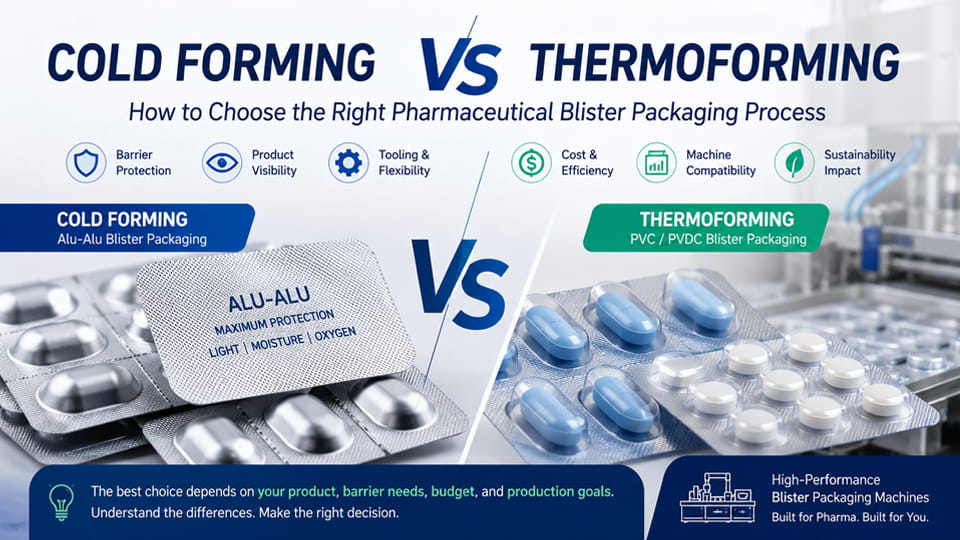
医薬品はブリスターパックに封入されることが多い 単位用量の保護と棚アピール用. ブリスター包装で, 主な成形方法は 2 つあります。 熱成形 そして コールドフォーミング. 熱成形はプラスチックウェブを加熱します (PVCやPETのような) 柔らかくなるまで真空引きするか、型に押し込みます。. コールドフォーミング, 対照的に, 室温で多層アルミニウムベースのラミネートに高圧スタンピングを使用します。. 各方法では異なる材料が使用され、結果も大きく異なります。: 熱成形ブリスターは透明で低コストです, 冷間成形しながら (アルアル) ブリスターは不透明ですが、はるかに高いバリア保護を提供します. このガイドでは、それらがどのように機能するかを詳しく説明します, 主な違い (バリア, 料金, スピード, 等), 製品に適した方法と機械を選択する方法.
熱成形とは?
熱成形 ブリスター包装では、プラスチックシートが柔らかくなるまで加熱し、真空または圧力によって空洞を形成します。. 温度制御ユニット (多くの場合 150 ~ 180°C) PVC または他の熱可塑性フィルムを加熱します, それを金型の上で成形します. フィルムが冷えたら, 形成された空洞に製品を充填し、ホイルまたは紙の蓋で密封します。.
このプロセスは適応性が高い: 一般的な成形フィルムには PVC が含まれます, ペット, PP, またはコポリマー, 場合によってはバリアコーティングが施されることもある (PVDC, COC, PCTFE, 等). 熱成形により設計の柔軟性が高まり、ブリスターの形状が深くなったり複雑になったりする可能性があります。 (プラグアシストを使用する) 基材を変えずに. 大規模な実行でもコスト効率が高くなります: 熱可塑性フィルムは安価で、機械は高速で動作します. ある情報筋によると、主な利点は手頃な価格とスループットです。, 「PVC の主な利点は、低コストと熱成形の容易さです。」.
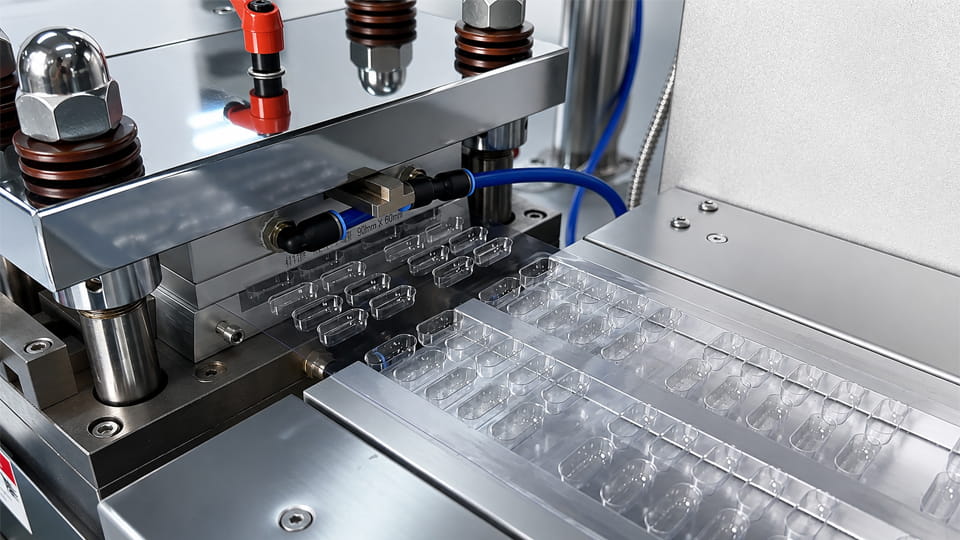
熱成形の利点
- 材料費の削減: プラスチックフィルム (バリアコーティングを施しても) 多層金属箔よりもはるかに安価です. これにより、大規模生産の単価が低くなります.
- 高速化: 熱成形機は通常、サイクルが速くなります. 例えば, 最新の熱成形ブリスターラインは、それをはるかに超えることができます 150 パック/分, 一般的な冷間成形速度よりも高い.
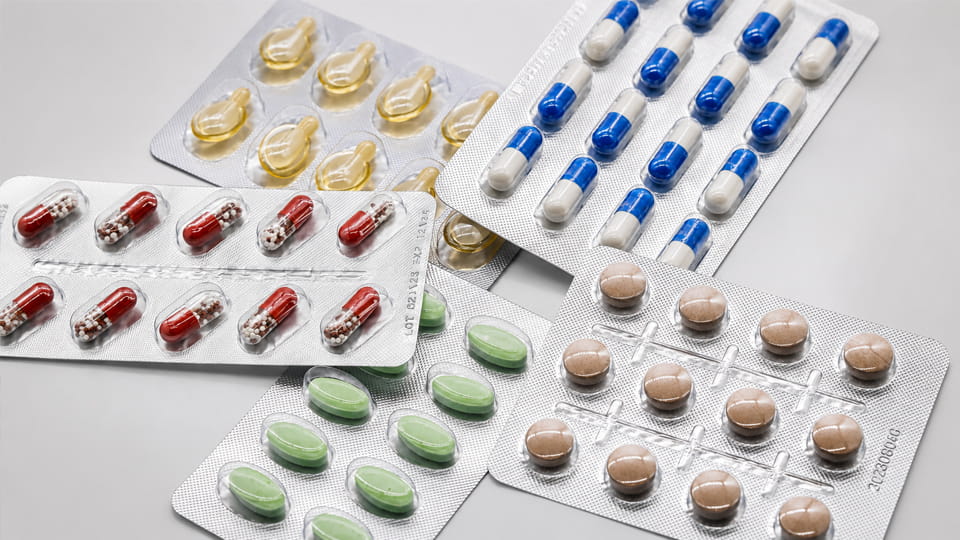
- 製品の可視性: 透明な PVC/PET パックにより、ユーザーは中の錠剤や錠剤を確認できます。. この透明性は消費者にとって魅力的です (例えば. 小売ビタミン) そして目視検査用.
- 設計の柔軟性: 加熱フィルムを使用すると、複雑なキャビティ形状や深絞りを実現できます (多くの場合、バキュームまたはプラグアシストを利用します). また、高速充填および高速シールプロセスと簡単に統合できます。.
熱成形の制限
- バリア保護: 普通の PVC フィルムは、 適度 湿気と酸素のバリア. コーティングされていないPVCは水蒸気透過率が高い (例えば. 90%RH で ~3g/m²・日). 保存期間を改善するには, サーモパックは高価な多層フィルムを使用する必要がある (例えば. PVC/PVDC または PVC/PCTFE ラミネート) または厚いフィルム. それでも, 通常、バリアはアルミホイルが達成するレベルよりも低いままです.
- 光感度: 透明なフィルムは紫外線と可視光を透過します。. つまり、熱成形ブリスターパックは ない 光に敏感な薬剤に最適 – UV ブロック添加剤を添加しない限り、実質的に UV 保護はありません。.
- 賞味期限が限られている: 湿気に非常に敏感な API または反応性の API 向け, 熱成形パック (コーティングをしていても) 多くの場合、安定性が短くなります. ウィキペディアのメモ: 「デメリット [PVCの] 湿気の侵入や酸素に対するバリアとしては不十分です。」.
- 精密な工具のコスト: 機械は一般的に安価ですが、, 深絞り熱成形には精密な金型とプラグアシストダイが必要になる場合があります, 工具費用の増加.
冷間成形とは?
コールドフォーミング (よく呼ばれる アルアル ブリスターパッケージ) 成形ウェブとしてアルミニウムベースの多層フィルムを使用. 典型的な冷間成形ラミネートは PVC/アルミニウム/ポリアミドです。, 外側にアルミニウム層がある. この過程で, 映画は ない 加熱された. その代わり, 堅牢な高圧パンチが室温で箔をキャビティに押し込みます。. アルミニウムは伸びるが塑性変形する, スタンプを剥がした後もキャビティの形状を保持します。. 充填された各キャビティは密閉されます。 (多くの場合、アルミニウムまたはホイルで裏打ちされた紙製の蓋が付いています).
冷間成形は材料を加熱しないため、, 敏感な薬剤に対する熱ストレスを回避します。. その結果、完全に不透明な水疱ができます (中身が見えない) しかし、 素晴らしい バリア. アルミホイルはほぼすべての湿気を防ぎます, 酸素, 薬物に到達する光, 保存期間を大幅に延ばすことができます.
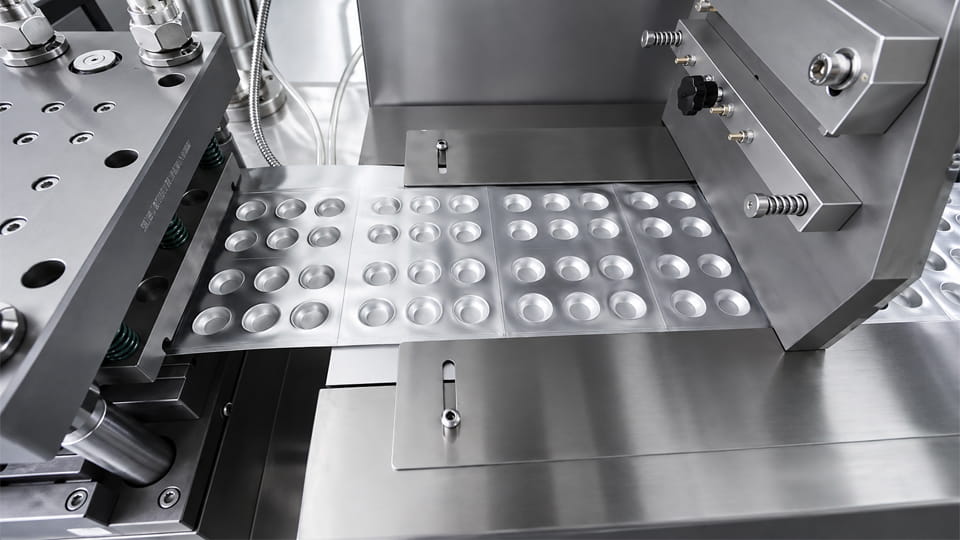
冷間成形の利点
- 優れたバリア性: アルミニウム層によりブリスターはほとんど浸透しません。. ウィキペディアによると: 「コールドフォームフォイルブリスターの主な利点は、アルミニウムの使用により水と酸素に対するほぼ完全なバリアが提供されることです。, 製品の使用期限の延長が可能になります」. これが、Alu-Alu ブリスターが吸湿性の目的で使用される理由です。, 酸素に敏感な, または光に敏感な医薬品.
- 湿気と光からの保護: 冷たく形成された水疱が湿気を保つ, 酸素 そして 消灯. 例えば, 多層ホイルが紫外線/可視光を完全に遮断し、各用量の周囲に気密シールを形成します。. これにより、湿った空気や明るい光の中で急速に分解する薬剤の効力が閉じ込められます。.
- 素材の柔軟性: 形成されるウェブ (PVC/アルミ/PA) まだPVC面が残っています, ポケットの形状を維持し、ある程度の弾力性を提供します。, アルミニウムが保護を提供する一方、. これにより、キャビティが強くて浅くなります, ほとんどの錠剤やカプセルではこれで十分です.
冷間成形の限界
- 材料費が高くなる: アルミラミネートはプラスチックフィルムよりもはるかに高価です. ホイルには複数の層があります (例えば. 9–15μmのAlと80~100μmの他の層) および特殊な構成, そのため1パックあたりの原材料費が高くなります. 情報源は特に次のように述べています 「ブリスターパックの冷間成形のコストは、熱成形よりも高くなる傾向があります。」.
- 速度が遅い: スタンピング工程と箔の取り扱いが必要なため (プラスチックのように伸縮性がないので、), 冷間成形機は低速で動作します. ある要約が指摘するように, 冷間成形フォイルのブリスターは「熱成形に比べて生産速度が遅い」という問題があります。.
- 視認性がない: ブリスターの両面はアルミニウムです (または上部はアルミニウムです), そのため、ユーザーは製品をまったく見ることができません. これにより、棚上での目視確認を必要としない製品への使用が制限されます。. (また、コンプライアンスパックには適切な印刷ラベルが必要であることも意味します, 中身を目視で確認できないので。)
- 機械の摩耗: 冷間成形ツールと金型には大きな負荷がかかります, したがって、機械は非常に堅牢でなければなりません. パンチとカウンターダイは正確に作られる必要があり、多くの場合、より厚い鋼が必要になります。, メンテナンスの追加.
- より大きなパックサイズ: アルミはプラスチックほど伸びないので、, 冷間成形されたキャビティは通常、より浅いか、周囲の境界がより大きくなります. ウィキペディアによると、Alu-Alu パックは通常、最終的には次のようになります。 「ブリスターカードの大きいサイズ」 傾斜の少ないポケット壁.
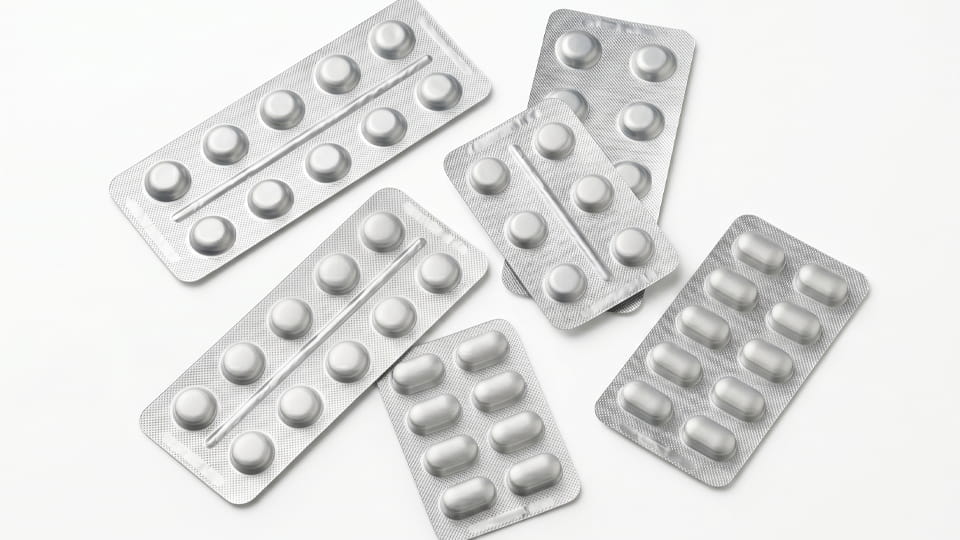
冷間成形と熱成形: 重要な違い
以下の表は、熱成形ブリスター包装と冷間成形ブリスター包装の主な違いを示しています。:
| 要素 |
熱成形 |
コールドフォーミング (アルアル) |
| 成形工程 |
プラスチックフィルムを柔らかくなるまで加熱します, 次に真空/加圧成形してキャビティを形成します. |
金属ラミネートの室温スタンピング. |
| 梱包材 |
プラスチックフィルム (PVC, ペット, PP, 多くの場合、PVDC などのバリアコーティングが施されています). |
多層アルミ箔ラミネート (例えば. アルミ/PVC/PA). |
| バリア (湿気/空気) |
適度 (PVC単体では透過性がある; PVDC コーティングされたフィルムによりバリア性が向上). |
優れています - アルミホイルは水と酸素をほとんど透過しません。. |
| 光の保護 |
限定的 – 透明プラスチックには UV/光バリアがありません (顔料が添加されていない限り). |
完全 – 不透明なホイルがすべての光を遮断します. |
| 可視性 |
透明 – 顧客が製品を見ることができます. |
不透明 – 製品が内側に隠れます. |
| 生産速度 |
一般に高い (高出力ライン). |
一般に遅い (機械的スタンピングでは速度が制限される). |
| 材料 & 機械コスト |
下位 – プラスチックフィルムの方が安価です, 機械はもっと単純です. |
高い - アルミニウムラミネートのコストが高くなります, そして機械には堅牢なプレスが必要です. |
| 典型的な使用例 |
大量のOTC薬, ビタミン, 標準タブレット; 視認性が高いとき & コストの問題. |
水分- または光に敏感な薬物 (抗生物質, 生物製剤), 長い保存期間が必要. |
上記の各要素は、2 つの方法間のトレードオフを反映しています。. 熱成形はより安価な材料を使用し、より速く実行される傾向があります, 一方、冷間成形では最上位の保護のために高価な金属箔が使用されます。.
詳細な比較: 8 重要な要素
要約すると, 熱成形と冷間成形を区別する 8 つの主要な要素を次に示します。:
- 形成方法:
- 熱成形: プラスチックシートは 加熱された, その後、金型上で真空/加圧成形されます。.
- コールドフォーミング: メタルラミネートは、 スタンプされた冷たい 高圧で; アルミニウムは形状を保持します.
- 材料:
- 熱成形: のようなフィルムを使用します PVC, ペット, PP (多くの場合、バリアコーティング PVDC/COC/COP が使用されます). 例えば, 多くのブリスター ラインは非可塑化 PVC を使用しています (RPVC) 形成されるウェブとして.
- コールドフォーミング: を使用します。 アルミニウムベースのラミネート (通常はPVC/アルミニウム/ナイロン). この「コールドフォームフォイル」は、高バリア成形用に特別に設計されています。.
- 水分 & ガスバリア:
- 熱成形: 裸の PVC フィルムはバリア性が低い (WVTR ~3g/m²・日, OTR ~20mL/m²・日). 多層PVCフィルム (PVDC でコーティングまたは PCTFE/COC と共押出) これを改善できる, しかし 一度もない 金属箔レベルまで. Wikipedia によると、PVC の欠点は次のとおりです。 「湿気や酸素に対するバリアが弱い」.
- コールドフォーミング: 素晴らしい. アルミホイルはほぼ不浸透性のバリアを作成します. 指摘したように, 冷たく形成された水疱は 「水と酸素をほぼ完全に遮断」, 有効期限を大幅に延長.
- 光の保護:
- 熱成形: 透明なフィルムはすべての光を透過します (特殊な着色フィルムを使用したり、UV ブロック剤を添加したりしない限り、). これが、透明な PVC ブリスターが存在する理由です。 ない 光に敏感な薬剤に推奨.
- コールドフォーミング: 完了. 不透明なフォイルブロック 100% 光の, 感光性 API の保護.
- 生産速度:
- 熱成形: 通常はより高い. プラスチックフィルムの送りが速く、成形サイクルが速いため, これらのラインは 150 ~ 200 パック/分を超えることがよくあります (ハイエンドのロータリーマシンで).
- コールドフォーミング: 一般に遅い. 箔のスタンピングと取り扱いによりスループットが制限される. トップクラスの冷間成形機でも、通常は以下のレベルに達します。 100 深い Alu-Alu デザインのパック/分.
- 料金 (材料 & 装置):
- 熱成形: プラスチック生フィルムは、3 層フォイルよりも直線メートルあたりのコストがはるかに低くなります. 機械はもっとシンプルです (加熱プレートと真空ステーションのみ), そのため、初期のマシンコストが一般的に安くなります. ある情報源が要約すると、, PVC の「主な利点」は、低コストと成形の容易さです。.
- コールドフォーミング: より高い. 特殊ホイルは高価です, そして機械はもっと強力でなければなりません. 研究ノート 「コールドフォームブリスター包装装置…湿気に敏感な製品に特に適しています」,」 ただしプレミアムコストがかかる.
- 製品の可視性:
- 熱成形: はい – 製品は透明なプラスチックを通して見えます. 小売店の陳列や簡単な用量チェックに最適.
- コールドフォーミング: いいえ – 完全に不透明.
- 代表的な用途:
- 熱成形: 高いバリア性が重要ではない標準的な OTC および処方箋の錠剤/カプセル (例えば. 鎮痛剤, ビタミン). 原薬, サプリメント, または迅速な高速回線を必要とする製品. にも使用されます 医療用ブリスターパッケージ 非滅菌装置の.
- コールドフォーミング: プレミアムまたは重要な医薬品 (例えば. 抗生物質, 機密性の高い API, 真空パックされた酵素) 最大限の湿気/光保護と長い保存寿命を必要とするあらゆる製品. PTPでよく見られる (押し通す) 非常に安定した投与のためのパック, または気候が変動する世界中に流通する製品の場合.
これらの違いは次のことを示しています 熱成形 スピードに優れる, コストと可視性, その間 コールドフォーミング 保護性と安定性に優れています. 実際に, 設計者はこれらの要素を製品の要件と比較検討します.
適切な方法の選択: 製薬機械の購入者向けのガイダンス
冷間成形か熱成形かを選択する場合 (そして対応する ブリスター包装機), 聞く:
- 製品の安定性のニーズ: あなたのですか API または湿気に非常に敏感な製剤, 酸素か光か? もし はい, 冷間成形 (アルアル) 通常は水疱が必要です. 製品が比較的安定している場合 (例えば. 標準タブレット), おそらく熱成形で十分でしょう.
- 望ましい保存期間: 製品の有効期限を延長する必要がありますか (18+ 数ヶ月)? コールドフォームパックは優れたバリア性により、保存期間を大幅に延長できます。. 賞味期限が短い場合 (<1 年) 製品, PVC パックは多くの場合許容されます.
- 生産量とスピード: 非常に高いスループットが必要ですか? 熱成形ラインは一般に高速に稼働します, 大規模生産に適している. 非常に貴重な医薬品を少量生産する場合, より遅い冷間成形法が許容される場合もあります.
- コストの制約: 予算が厳しく、バリア要件が中程度の場合, 熱成形はより経済的です. 例えば, Jinlupacking は、「冷間成形ブリスター パックのコストは熱成形よりも高くなる傾向がある」と述べています。. TCO 分析では材料費と設備費の両方を考慮します.
- 規制 / 市場のニーズ: 一部の市場または製剤では、 必要とする 特定の梱包. 例えば, 規制仕様により、特定の抗生物質に対して Alu-Alu フォイルの使用が義務付けられる場合があります, または、マーケティングではブランドのビタミンのシースルーパッケージが好まれるかもしれません.
- マシンの互換性: 両方のメソッドに 1 台のマシンが必要か、それとも別々のラインが必要かを検討してください。. いくつかの最新のマシン (ジンルさんのように DPP-180PRO ブリスターマシン) どちらのサーモに対しても設定可能- または冷間成形, しかし、多くの企業は専用ラインを使用して各プロセスを最適化しています.
 カプセルタブレット用のDPP-180Proブリスターマシン
簡単な経験則: 顧客の可視性とコストが重要な標準医薬品に熱成形を使用する; 保護が最重要である高バリアのニーズには冷間成形を使用します.
熱成形を選択する場合
- あなたの製品はそうではありません 非常に 水分- または光に敏感な (基本的なOTC錠剤, ビタミン).
- 高い生産速度と低コストが優先されます.
- 商品が見えるように透明な包装をしたい.
- 予想される保存期間は比較的短いか中程度です.
- 標準的なプラスチックフィルムを使用する予定である (PVC, PVDC/PVDC コーティング, COC, 等).
- ブリスター包装機は加熱成形ステーション用にセットアップされています.
冷間成形を選択する場合
- あなたの製品は 非常に 湿気/酸素に敏感または光に敏感 (例えば. 吸湿性錠剤, ステロール, 特定の生物製剤).
- 絶対的に最高のバリアと最長の保存期間が必要です.
- 走行距離が少ない場合、または保護のためにスピードを犠牲にすることをいとわない場合.
- 不透明な梱包も承ります (または区別するために大量のラベルを使用する).
- 予算の都合上、材料費が高くなります (アルミ箔ラミネート).
- あなたの機械 (またはサプライヤー) 頑丈な金型で冷間成形プロセスをサポート.
例えば, 多くの医薬品コールドフォームブリスターパックには「」というラベルが付いています。アルアル” ホイルに. これらはまさに次のような場合に選択されます。 薬物の安定性を最大限に高める が目標です.
コスト比較
コストは重要な考慮事項です. 材料費: PVCフィルム (PVDCコーティングが施されていても) 3層アルミラミネートよりもはるかに安価です. ユニットごと, 熱成形されたパックの材料はわずか数セントかもしれません, 一方、同等の Alu-Alu フォイル パックはその倍数になる可能性があります。. ある業界関係者はこう認めている。 「ブリスターパックの冷間成形のコストは、熱成形よりも高くなる傾向があります。」.
機械コストとOEE: 熱成形機は一般にシンプルです (加熱ユニットと真空チャンバー) そして多くの場合、維持費が安くなります. 冷間成形機には重いパンチが必要であり、場合によってはデュアルフィードが必要です (内側と外側のフォイル用), 資本コストが増加する可能性がある. しかし, 冷間成形により製品の損失が防止される場合 (例えば. 腐敗から), 初期費用が高くても正当化されるかもしれない. 常に考慮する 総所有コスト, ダウンタイムを含む, メンテナンス, および材料廃棄物, 回線速度だけじゃない.
機械の選択および包装ライン
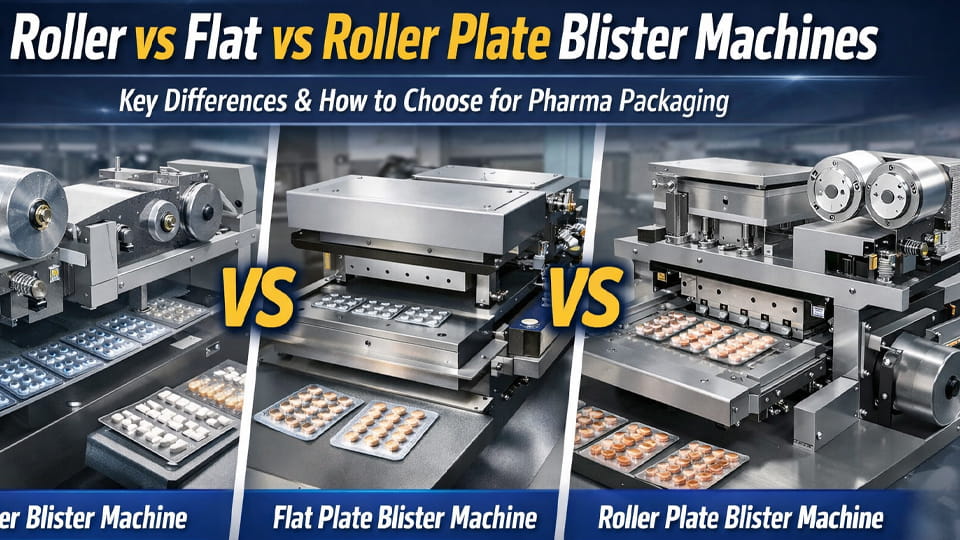
あなたの選択によって包装ラインも決まります. ブリスター包装機 いずれかのプロセス向けに設計されている. a 熱成形ブリスターマシン 加熱ステーションと真空ステーションが設置されます; ある 冷間成形ブリスターマシン 大型のプレス機とフォイルフィーダーを備えます. 一部のハイブリッドマシン (多くの場合、研究または小規模な使用で使用されます) モードを切り替えることができます, ただし、特定の行は通常、1 つのメソッドに対して最適化されます.
例えば, ジンルー DPH-270MAXローラーブリスターマシン 両方の方法が可能です, ただし、ほとんどの生産ラインは専用になります. 熱成形を選択した場合, あなたの ブリスター包装装置 あなたの選んだ映画をサポートします (PVCの厚さ, コーティングタイプ) 十分な温度管理が可能です. 冷間成形を選択した場合, お使いの機械が Alu-Alu フォイル ロールを処理できること、および必要なスタンピング力を備えていることを確認してください。.
サプライヤーと話すとき, 製品のニーズについて言及する: たとえば、「Alu-Alu ブリスター包装用のブリスター包装機」または「PVC/PVDC フィルム用の熱成形ブリスター包装機」が必要かどうかを考えてください。
決定方法: 簡単なチェックリスト
- 製品の感度を評価する: 薬剤を湿気から保護する必要があるかどうかを確認してください, 酸素, または光. もし どれでも そのうち重要なものは, 冷間成形が必要になる可能性が高い.
- 保存期間の目標: 有効期限の延長は必要ですか? のために 2+ 年の保存期間, Alu-Alu バリアが最も安全な選択です.
- ビジュアル要件: お客様に商品を見てもらいたいですか? はいの場合, 熱成形を好む (透明).
- 生産量 & 料金: 非常に大量生産およびコスト重視の場合, 通常は熱成形が成功します. 生産量が少なく、製品コストが高い場合, 冷間成形の遅い速度は許容できるかもしれない.
- マシンの能力: 確認してください ブリスターマシン 選択された素材を扱うことができます. 多くのメーカーが両方のタイプを提供できます, ただし、適切なツールとライン設定が必要です.
疑問がある場合, 専門家に相談する: 包装技術者は、さまざまな材料における特定の薬物の安定性をモデル化することがよくあります。. しかし、優れたヒューリスティックは、 コールドフォーミング (いらっしゃいませ) より高いコストで最高の保護を提供します, そして熱成形 (プラスチック) 低コストで最高の可視性とスループットを実現.
結論
冷間成形と熱成形にはそれぞれ明確な長所と短所があります. 熱成形 (PVCベース) 速いです, 透明, 費用対効果が高い, 多くの常用医薬品に最適です. コールドフォーミング (いらっしゃいませ) 遅くて高価です, しかし、それは比類のない潤いを提供します, 高価値のための酸素と光の保護, 敏感な薬物. 実際に, 熱成形パックは標準的な錠剤に使用されます, ビタミンおよびOTC製品, 一方、コールドフォームパックは湿気に敏感な薬や有効期限の長い薬に選択されます。.
最終的に, あなたの決断は、 製品要件. 究極のバリアが必須の場合, おそらく、冷間成形ブリスター包装機での alu-alu ブリスター パックを選択するでしょう。. スピードが必要な場合, 可視性とコスト削減, 熱成形ブリスターマシンの PVC 熱成形パックで十分と考えられます。.
お気軽に 当社の梱包専門家にお問い合わせください 指導のため. 適切なものをお勧めします 自動ブリスター包装機 製品のプロセスとプロセス - 高速熱成形ブリスターラインが必要か冷間成形が必要か (いらっしゃいませ) ブリスターマシン.
ブリスター包装を適切に選択することで、コンプライアンスを遵守し、コスト効率を高めます。!
冷間成形と熱成形ブリスター パックに関するよくある質問
冷間成形と熱成形の違いは何ですか?
熱成形では、熱を使用してプラスチック フィルムをブリスター キャビティに成形します。, 一方、冷間成形では、熱を加えずにアルミニウムベースのラミネートを機械的にプレスして成形します。. 通常、熱成形はより速く、よりコスト効率が高くなります。, 冷間成形により、より強力なバリア保護が提供されます。.
冷間成形は熱成形よりも優れています?
必ずしもではありません. 冷間成形は湿気からの強力な保護が必要な製品に適しています, 酸素, または光, 一方、安定した製品には熱成形が好まれることが多く、コストがかかります。, スピード, 製品の可視性が優先事項です.
どちらが安いですか, 冷間成形または熱成形?
熱成形は一般に安価です. プラスチック成形材料は、通常、冷間成形 Alu-Alu ブリスター包装に使用されるアルミニウムベースのラミネートよりも安価です。, ただし、総コストはマシンの速度にも依存します, ツーリング, および生産要件.
より優れた湿気保護を提供します?
冷間成形は通常、より優れた湿気保護を提供します. アルミニウムベースのラミネートは非常に強力なバリアを提供します。, 湿気に敏感な医薬品に適しています. 実際の要件は、製品の安定性と包装の研究を通じて確認する必要があります。.
どちらが速いですか, 冷間成形または熱成形?
熱成形は一般に冷間成形よりも高速です. 成形プロセスは大量生産に適しています, 一方、アルミニウムラミネートは機械的な成形が必要なため、冷間成形は通常低速で実行されます。.
Alu-Alu ブリスター包装がデリケートな医薬品に使用される理由?
Alu-Alu ブリスターパッケージは湿気に対する優れた保護を提供します, 酸素, そして光. したがって、一般に、環境への曝露に対する感度が高い、または有効期限要件が厳しい医薬品について考慮されます。.
熱成形は医薬品のブリスター包装に適していますか?
はい. 熱成形は、製品に最高レベルのバリア保護が必要ない場合、錠剤やカプセルに広く使用されています。. PVC や PVC/PVDC などの材料は、配合やパッケージの仕様に応じて、さまざまなレベルの湿気保護を提供できます。.
Alu-Alu ブリスター パックと熱成形ブリスターの違いは何ですか?
Alu-Alu ブリスターパックはアルミニウムベースの成形ラミネートを使用しており、不透明です, 一方、熱成形ブリスターは通常プラスチックフィルムを使用し、透明にすることもできます。. Alu-Alu はより強力なバリア保護を提供します, 一方、熱成形は一般的に視認性が高く、コストが低くなります。.
1 台のブリスター包装機で冷間成形と熱成形の両方に対応できますか?
通常、特定のマシン設計や構成がなければそうではありません. 2 つのプロセスには異なる成形システムが必要です, ツーリング, そしてマテリアルハンドリング. 両方の形式が必要な場合, 機械メーカーは購入前に互換性を確認する必要があります.
冷間成形ブリスター マシンと熱成形ブリスター マシンのどちらを選択すればよいですか?
製品の感度から始める, 必要な保存期間, 梱包材, 生産量, そして目標コスト. 高いバリア保護が重要な場合は冷間成形を選択してください; 速度を重視する場合は熱成形を選択してください, 可視性, コスト効率の方が重要です.
参考文献:
1.ブリスターパッケージの品質に対するヒートシールラッカーの厚さの影響 —— サイエンスダイレクト
2.ヒト用医薬品および生物製剤を包装するための容器閉鎖システム —— 私たち. 食品医薬品局
3.湿気に敏感な化合物の安定性に対する包装の影響 —— サイエンスダイレクト
4.フィルム状の医薬品用ブリスターを冷間成形するための成形装置 —— 欧州特許
5.固形医薬品のブリスター包装設計の最適化 —— サイエンスダイレクト
6.医薬品ブリスター包装, 一部 1 理論的根拠と材料. —— ゲイル