×
オンラインサービス
✉️メール: 💬WhatsApp: +86 18011793320
💡
  • ブログ
  • PVC と PVDC の比較: あなたの医薬品包装に最適なものはどれですか? (2026 ガイド)

PVC と PVDC の比較: あなたの医薬品包装に最適なものはどれですか? (2026 ガイド)

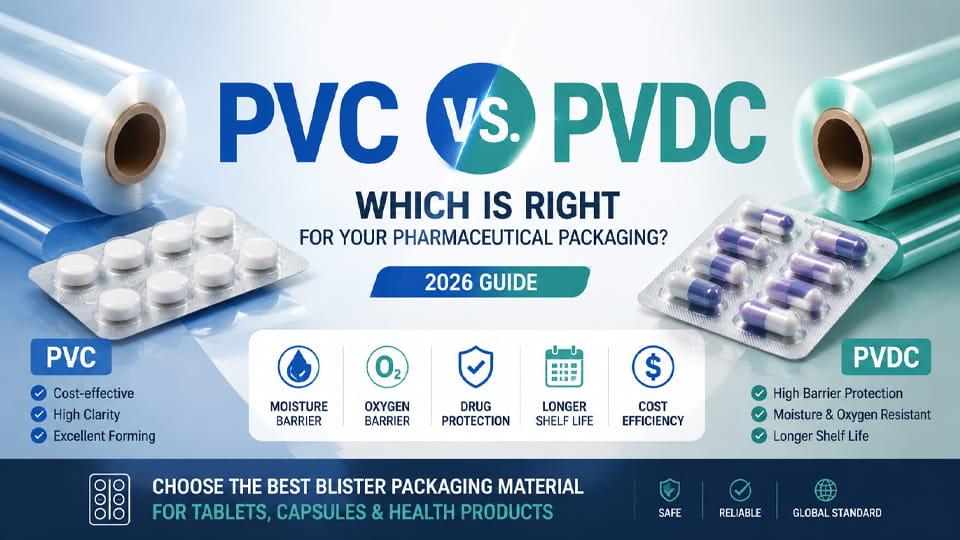
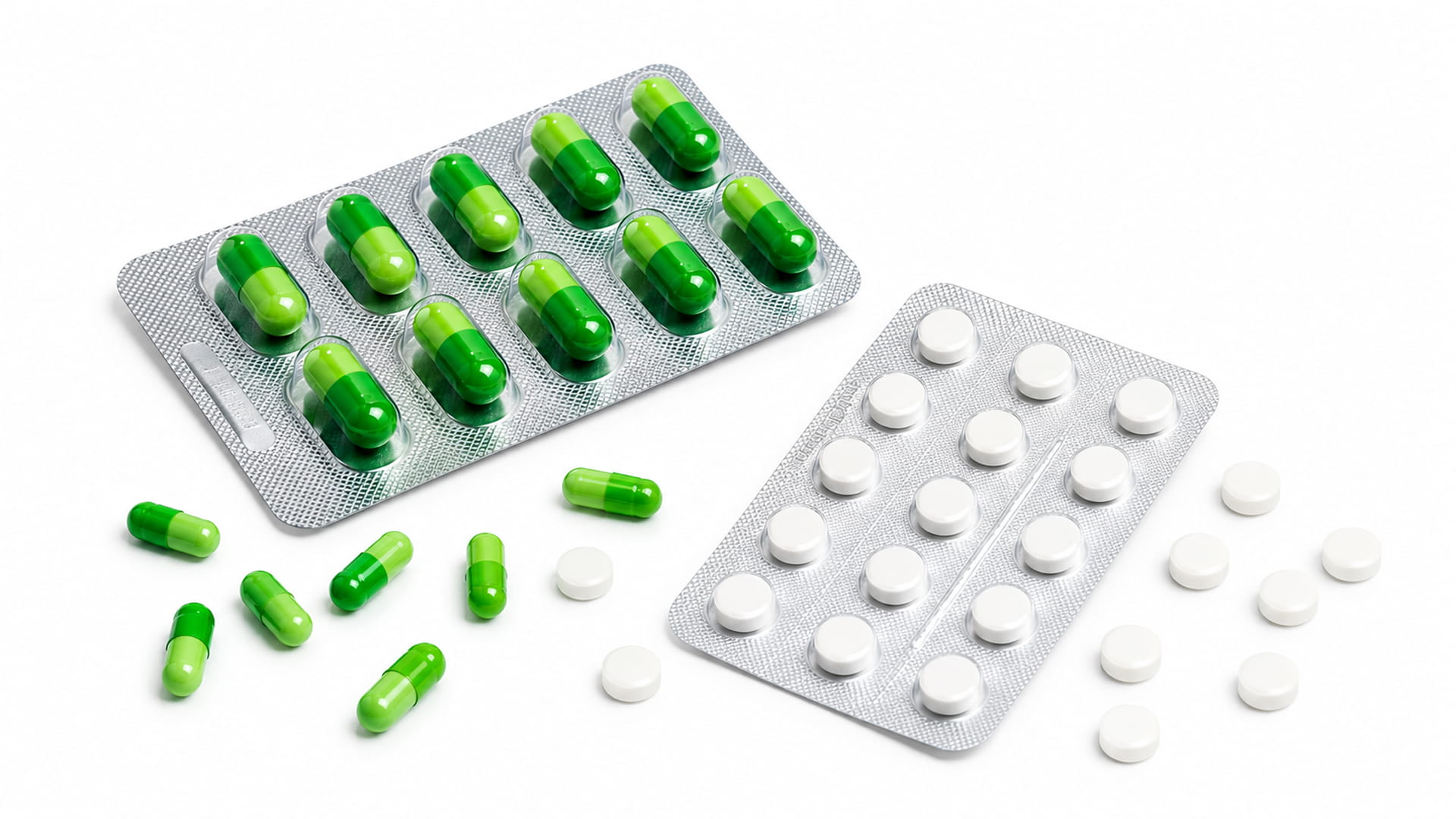
医薬品ブリスター包装 (例えば. 錠剤とカプセル) commonly uses clear PVC or PVC/PVDC films sealed with foil. 正しい選択 blister film is a big decision for any pharma producer. PVC and PVDC may look alike, but their moisture and oxygen barrier properties, 貯蔵寿命 , cost and processing needs are very different. If you’re working in pharma manufacturing or procurement, you’ve likely asked: Is PVC or PVDC the better choice for our 薬のブリスターパック? This friendly guide compares PVC and PVDC head-to-head for pharmaceutical packaging. We’ll cover what each material is, how their barrier and cost properties differ, and practical advice on choosing the right blister film. 最後までに, you’ll know whether plain PVC or PVDC-coated PVC (sometimes called PVC/PVDC) suits your product’s needs – or if a hybrid solution makes the most sense.

PVC と PVDC の医薬品ブリスター包装材の比較


What Is PVC in Pharmaceutical Packaging?

PVC (ポリ塩化ビニル) is a clear, flexible plastic, の most common blister material 錠剤とカプセルの場合. In pharma blisters, “PVC” always means non-plasticized, rigid PVC. Typical PVC film is 200–300 μm thick (often 250 μm). It serves as the formable base layer of the blister. The principal advantages of PVC are its low cost and ease of thermoforming. It’s clear (excellent transparency), 耐久性のある, and molds quickly on a thermoforming line. Manufacturers love PVC for ordinary products like over-the-counter tablets, vitamins and stable generics.

PVC blister film provides good structure and visibility. You can see and count the pills through the pack, and push them out easily. PVC is also chemically stable against many 賦形剤 and has been approved in pharmacopeias (博士. Eur. and USP) for medicine contact. 要するに: PVC is a reliable, “workhorse” blister film for コスト重視の, moisture-tolerant products.

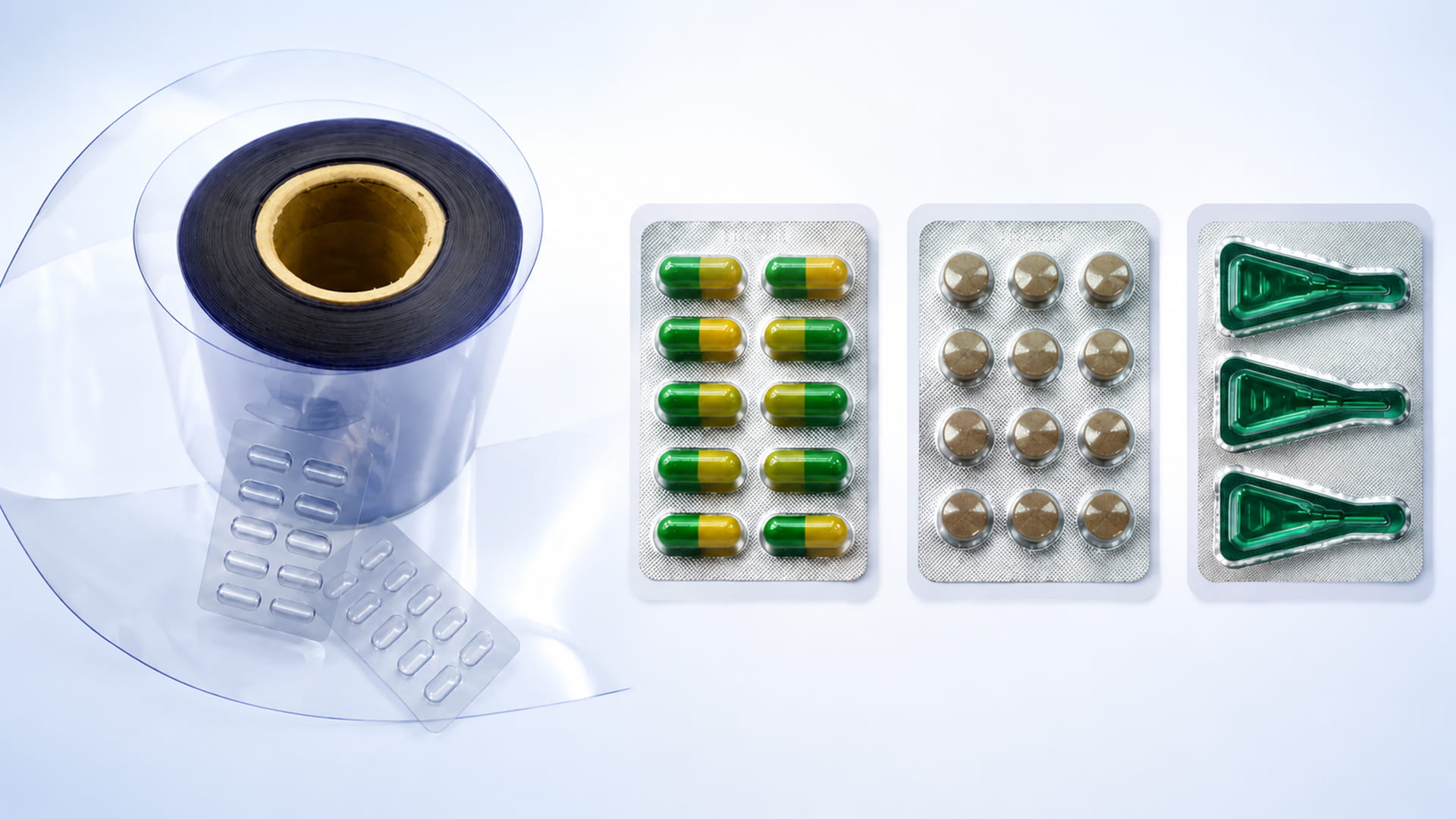
PVC is the common blister material for tablets, capsules and liquid

PVC Advantages

  • 低コスト. PVC is very affordable compared to high-barrier films.
  • Excellent clarity. The film is clear, making it easy to inspect tablets through the blister.
  • Easy thermoforming. PVC softens and forms quickly, allowing high line speeds and complex shapes.
  • Rigid strength. Even without plasticizers (RPVC), PVC is stiff enough to protect tablets during transport.
  • Widespread use. Ideal for most OTC products, vitamins and stable generics.

PVC Limitations

  • Moderate moisture barrier. A 250 μm PVC film has a water vapor transmission rate around 3.0 g/m²/day (at 38°C/90%RH). That’s fine for short-term storage but not great for long shelf lives.
  • Limited oxygen barrier. Oxygen transmission is about 20 mL/m²/day. Moisture or oxygen-sensitive API may degrade if stored in PVC blisters too long.
  • Not for harsh climates. PVC blisters can fail in humid or tropical climates. High humidity and heat penetrate easily.
  • 貯蔵寿命. PVC alone is usually only suitable for shorter shelf-life 製品 (例えば. <1 年) or climates with controlled humidity.
  • Coating needed for more barrier. To pack moisture-sensitive drugs, PVC is often paired with a barrier coating or laminate (see PVDC below).


What Is PVDC?

PVDC (ポリ塩化ビニリデン) です high-barrier polymer often applied as a coating on PVC film. Pure PVDC film (コーティングされていない) is hard to thermoform by itself, so in blister packs it appears as a very thin film layer (in duplex or triplex structures). The PVDC layer contains much more chlorine in its chemical structure (CH₂CCl₂), giving it outstanding moisture and oxygen resistance.

実際に, PVDC コーティングされた PVC is the standard for high-barrier blister packs. 例えば, a typical duplex film is 250 μm PVC with 40–120 gsm PVDC coating. Thicker PVDC (higher gsm) yields lower WVTR (as low as 0.25 g/m²/day) and near-zero OTR. Forming is very similar to PVC – you run the composite film on the thermoformer – but you must control the oven temperature so the PVDC layer doesn’t cure too quickly.

PVDC coating is usually applied by emulsion (water-based) コーティング, in multiple passes. There are “standard” and “super-barrier” PVDC grades. The super-barrier grades give over twice the moisture/O₂ resistance per gram of coating. Common final structures include:

  • Duplex PVC/PVDC:g. 250 μm PVC + 40–120 gsm PVDC (WVTR ~0.65–0.25 g/m²/day; OTR ~1–0.1 mL/m²/day).
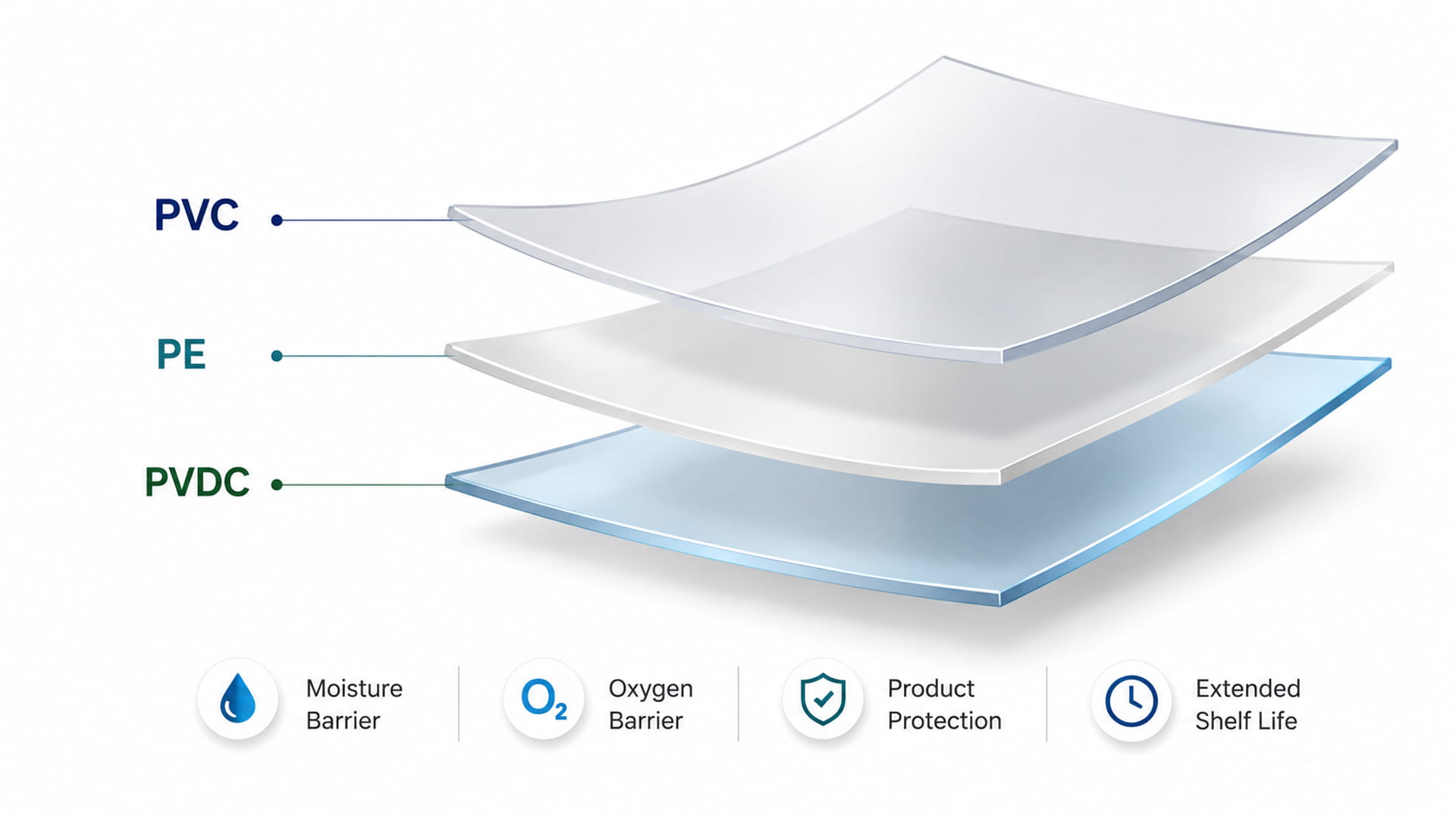
  • Triplex PVC/PE/PVDC:g. 250 μm PVC + 25 μm PE + up to 120 gsm PVDC. The PE layer aids deep-draw forming for big cavities (and adds a bit of moisture barrier).
PVC-PE-PVDC Triple Layer Structure
PVC/PE-/PVDC Triple Layer Structure

PVDC Advantages

  • Superior moisture barrier. PVDC cuts WVTR by 5–10× compared to PVC. A heavily coated PVC/PVDC pack can have WVTR below 0.3 g/m²/day.
  • Superior oxygen barrier. PVDC-coated films offer almost 10–100× lower OTR (0.1–1 mL/m²/day) than plain PVC. This protects oxygen-sensitive APIs and antioxidants.
  • Longer shelf life. Thanks to its barrier, PVDC prolongs shelf stability. (Pharma companies routinely get 24–36 months shelf life using PVC/PVDC packs.)
  • 熱 & light resistance. PVDC has a higher melting point than PVC, so coated films tolerate heat better during sealing. It also inherently blocks some UV light.
  • Transparent barrier. Coated PVC/PVDC films remain clear like PVC, so the medicine is visible through the pack.
  • Easy upgrade. You can often use the same thermoforming line as PVC – just change oven settings. No major new equipment needed.

PVDC Limitations

  • コストが高い. PVDC resin and coating add material and processing cost. Expect ~20–50% higher film cost over plain PVC.
  • Process sensitivity. The coating must be uniform. Inconsistent PVDC can cause weak spots. また, PVDC films sometimes require longer oven dwell or precise temperature control to form properly.
  • Recycling issues. PVDC contains chlorine, making recycling more difficult. (It’s also less flexible, so some new lines need adjustment.)
  • Not always necessary. If the medicine is stable and for domestic use, the extra barrier of PVDC may be overkill – and costly.

簡単に言えば: PVC forms the blister’s shape, while PVDC seals it tight. A blister pack made from plain PVC (with foil backing) is economical and clear, but only offers basic protection. A PVC/PVDC pack costs more but drastically slows moisture and oxygen ingress, protecting sensitive drugs longer.


PVC 対. PVDC: 並べて比較

特徴 PVC (コーティングされていない) PVC/PVDC (コーティングされた)
防湿層 ★★☆☆☆ (適度) ★★★★★ (high)
酸素バリア ★★☆☆☆ (low) ★★★★★ (high)
料金 低い Medium–High
明瞭さ (透明性) 素晴らしい 素晴らしい
貯蔵寿命 (in packaging) 適度 (shorter) 長さ (extended)
Thermoforming Ease 簡単 簡単 (with adjusted settings)
Sensitive Drugs (moisture/O₂) いいえ (not ideal) はい (推奨)
Export/Tropical Markets Limited suitability Good suitability
Common Products 市販ビタミン, 錠剤 Moisture-sensitive drugs, exports

テーブル: Comparing PVC vs PVC/PVDC blister films. (★ = barrier rating, more stars = better protection.)

This quick comparison shows why PVDC is chosen for challenging applications. Uncoated PVC is fine for general use, but PVC/PVDC gives far better protection.


PVC と PVDC の比較: Which Offers Better Medicine Protection?

Medicine protection is all about バリア性能. Moisture and oxygen can degrade APIs, affect potency, cause clumping, or trigger chemical changes. PVC alone provides only moderate protection: at 38°C/90%RH, a standard 250 μm PVC film lets in about 3.0 g/m²/day of water. That means a lot of humidity can seep through a PVC blister if exposed. 対照的に, a well-coated PVC/PVDC film (例えば. 250 μm PVC + 80 gsm PVDC) might only allow 0.30 g/m²/day (10× less moisture). The same story holds for oxygen: PVC’s OTR is ~20 mL/m²/day, while PVC/PVDC can drop to ~0.1–1 mL/m²/day.

なぜこれが重要なのか? Lower WVTR/OTR means longer shelf life and stability. A moisture-sensitive ingredient (like an effervescent granule or probiotic) might go bad in just 6–12 months inside PVC, but remain stable 2–3 years in PVC/PVDC. Medicine-makers track WVTR (水蒸気透過率) そして OTR (酸素透過率) when developing packaging. Lower values mean the film is a tougher barrier.

要するに: PVDC-coated films protect drugs far better. If your product is sensitive to humidity or needs a long expiration date, PVC/PVDC or another high-barrier film is usually worth the extra cost. PVC alone is a compromise – it’s OK until the worst-case climate or shelf requirement says otherwise.


Which Pharmaceutical Products Should Use PVC?

Use plain PVC blister film for:

  • Routine OTC tablets and capsules: 鎮痛剤, ビタミン, 制酸薬, 等.
  • Stable generics: Drugs with stable APIs that don’t degrade easily.
  • Short shelf-life products:g. items with 6–12 month expiry or refrigerated storage.
  • Domestic/controlled markets: When shipping within temperate climates or in climate-controlled supply chains.
  • Low-cost items: When packaging cost is a key factor and barrier needs are modest.

PVC is the workhorse for everyday items. Think ビタミンC錠剤 in a city pharmacy, または アスピリン in a winter climate. These products tolerate some moisture and won’t spoil quickly if the packaging leaks a bit. According to pharma best practice, standard 250 µm PVC film (RPVC) is used when cost-efficiency and ease are priorities.

例: A company packaging vitamin tablets might choose 250 µm PVC with aluminum foil lidding. The tablets have a 12-month shelf life and go to local markets. PVC’s low cost and clarity make it ideal.


Which Products Need PVDC?

Use PVC/PVDC films for:

  • Moisture-sensitive formulations: 発泡性の錠剤, プロバイオティクス, ハーブ抽出物, いくつかの 栄養補助食品. These degrade quickly if humidity gets in.
  • Expensive or potent drugs: 抗生物質, ホルモン, biotech medicines where potency loss is critical.
  • Long shelf-life requirements: Products needing 18, 24, または 36+ months stability.
  • Hot/humid export markets: Any product sent to ICH Zone IV (トロピカル) 国. PVDC is the go-to barrier for Southeast Asia, Latin America, Middle East
  • Prescription and specialty products: Prescription meds shipped internationally, 腫瘍治療薬, or pediatrics where dose is critical.

If your pills cannot tolerate moisture or oxygen, PVC/PVDC is usually required. 例えば, ある pediatric antibiotic bound for a tropical climate might ship from Singapore to Brazil. Using 250 µm PVC with 80–100 gsm PVDC (a “duplex” film) can achieve a 12+ month shelf life even in 30°C/75%RH conditions, according to case studies.

例: Effervescent Vitamin C tablets (which produce fizz in water) 湿気に非常に敏感です. A manufacturer would run 250 µm PVC/80gsm PVDC blisters to ensure the tablets stay solid through distribution in Asia. The higher film cost is justified by preventing product failure.


PVC/PVDC vs Other Blister Materials

Beyond PVC and PVDC, other blister materials include Aclar® (PCTFE) そして アルアル (cold-form aluminum). Here’s how they compare:

材料 Barrier Strength Cost Level 一般的な使用方法
PVC 中くらい $ 標準タブレット, カプセル (domestic)
PVC/PVDC 高い $$ Moisture-sensitive drugs, exports
PVC + Aclar® 非常に高い $$$$ Specialty biotech, high-end pharma
アルアル Maximum (zero light/moisture) $$$$$ Hormones, oncology, extreme climates
  • Aclar® (PCTFE): A crystal-clear film with ultra-low permeability. Think “VIP of blisters”. It’s used for premium or life-saving drugs (like sublingual cancer therapies). 利点: unbeatable barrier and still transparent. 欠点: extremely costly and supply can be limited.
  • アルアル (cold form): Fully opaque foil laminate (usually OPA/Alu/PVC or similar). It gives near-zero moisture and oxygen ingress. This is the gold-standard for highest-risk meds (例えば. ホルモン, ワクチン, emergency drugs). Visibility is zero – you can’t see the pill – and forming is slower. Best for export/regulatory-critical packs where nothing but maximum barrier will do.

For most pharma uses, PVC, PVC/PVDC and sometimes PVC/Aclar® are enough. Alu-Alu is a niche for ultra-sensitive APIs. (See our table above for a quick comparison.) 実際に, PVC/PVDC is the most common high-barrier option, balancing performance and cost.


料金, Processing and Environmental Considerations

When evaluating materials, budget and sustainability often weigh in alongside performance:

  • 料金: Plain PVC is economical. PVDC coatings (or multilayer PVC/PE/PVDC films) can be 2–5× more expensive per square meter. If you package massive volumes of a stable generic drug, PVC may hit the price targets. But if the product is a high-value API needing long shelf life, the extra cost for PVDC often pays off by reducing product loss.
  • 処理: Both films run on common blister machines, but with nuances. PVC forms readily with usual temperature settings. PVDC or PVC/PVDC may need tighter control of heat and speed so the thin coating bonds well. 実際に, most modern packaging lines can handle both – check with your equipment vendor. 例えば, Jinlupacking’s blister machines can run PVC or PVC/PVDC rolls to suit your material choice. If switching to PVDC, a short trial run to dial in parameters is wise.
  • Shelf Life vs Cost: Think of it as balancing cost vs 保護. Packaging engineers often ask: “What’s the consequence if the drug degrades 10% もっと早く?」 If the cost of spoilage or regulatory failure is high, investing in PVDC is justified. そうでない場合, PVC with a foil lid may be fine.
  • Recycling and Regulations: Sustainability is a hot topic. PVC and PVDC are hard to recycle together, and PVC has chlorine by nature. 対照的に, PET is more recycle-friendly. Some companies are even exploring PVC-free blister options for strict markets. If environmental concerns or regulations are top of mind, weigh this carefully.


PVC vs PVDC in Blister Packaging

Most pharma blister packs you see daily are actually PVC/PVDC rather than pure PVC. The reason: PVDC provides that extra barrier without sacrificing the visibility and formability of PVC. Here are some common formats:

  • PVC-Alu Blisters (PVC with foil lid): Classic pack. The cavity is PVC (クリア) and the backing is aluminum foil. Good for products with 適度 shelf life needs.
  • PVC/PVDC-Alu Blisters: A PVC cavity film coated with PVDC and sealed with foil. This pack dramatically slows moisture ingress, making it ideal for more sensitive drugs or humid markets. You get a clear blister (from PVC) with excellent protection (from PVDC).
  • アルアル (cold form) 水疱: Both cavity and lid are aluminum foil. Fully opaque but the ultimate バリア. Use when nothing less will do (例えば. ホルモン, high-value biologics).

実際に, の PVC/PVDC/Alu blister is the workhorse for many tablets and capsules that need a longer shelf life. If asked “which is better, PVC or PVDC blister?」, remember that it’s often not one or the other – it’s the combination that wins.

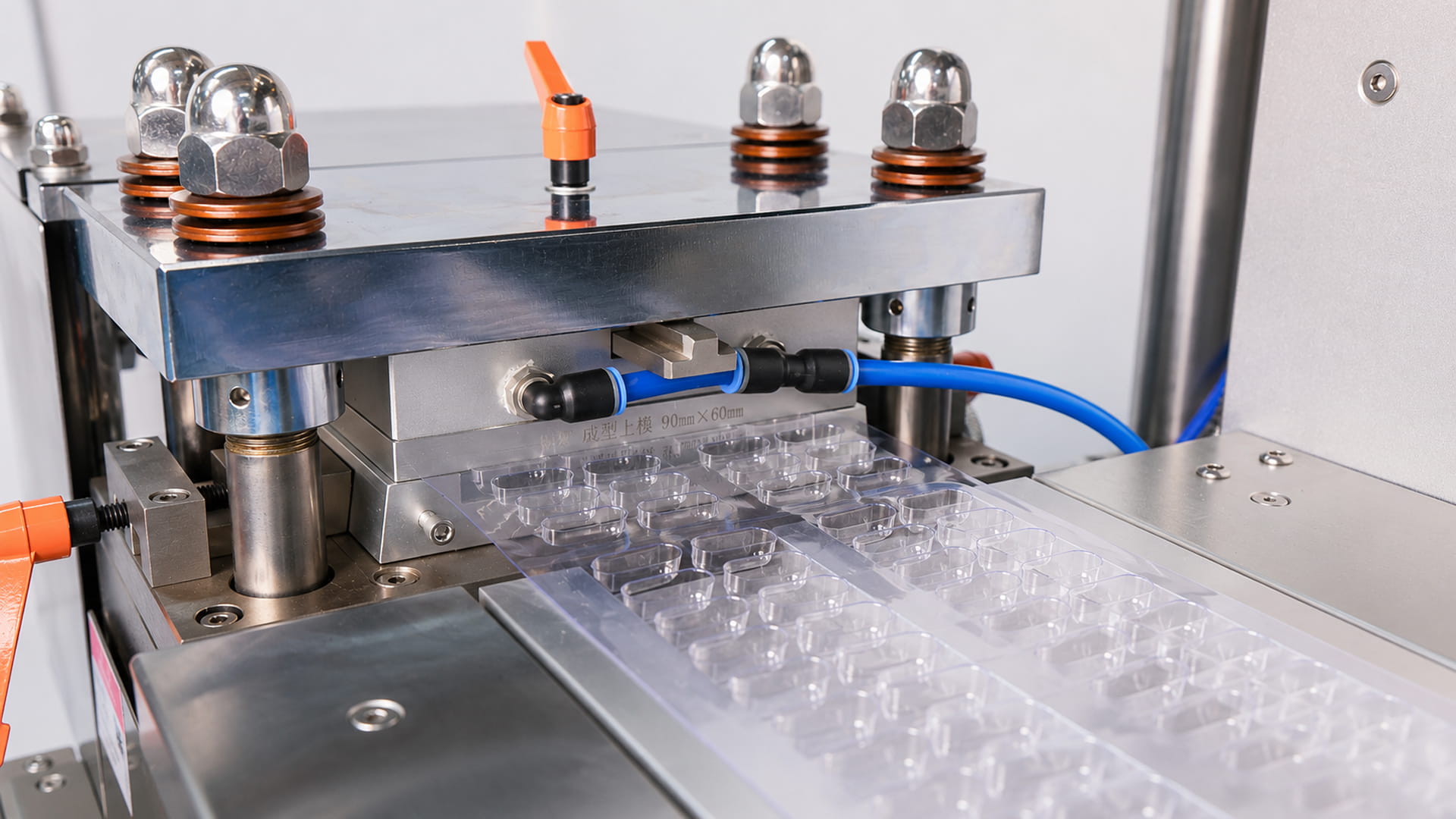
Modern blister packaging for pharmaceutical capsules (PVC/PVDC film on thermoformer)


Choosing the Right Film: Practical Tips

Here are some guiding questions and answers for picking between PVC and PVDC films in pharma:

  • 製品の感度: Is your medicine moisture- または酸素に敏感な? For high sensitivity or long shelf life (例えば. 18+ months in hot/humid climates), PVDC coating is usually essential. If the medicine is fairly stable or will be dispensed quickly (市販ビタミン, common generics), plain PVC packs might suffice.
  • Shelf Life Required: Short-term use (a few months) often aligns with PVC-Alu packs. But if you need to guarantee potency for a year or more, go with PVC/PVDC or consider even higher barriers (アクラー, アルアル).
  • Regulatory Climate: In highly regulated markets (FDA, エマ), established combos like PVC/PVDC-Alu are standard and proven. If you venture outside common materials, ensure full testing and approval.
  • 包装ライン: Does your machine support multilayer films? Most blister machines can handle PVC/PVDC rolls, but settings differ from plain PVC. If your line is older or simpler, PVC film may be the safer bet.
  • 予算: If cost is very tight, use PVC with the thinnest PVDC needed. Some companies run PVC/PET または PVC/PVDC/PET blends to tweak barrier vs cost. It’s often better to spend a bit more on film than to lose costly product to moisture damage later.
  • 持続可能性: If green packaging is a goal, note that PVC/PVDC is not easily recyclable. You may explore PET or paper-based blister solutions in tandem with standard packs.


Real-World Example: Tablet vs Capsule Blisters

Whether you package tablets or capsules, the material choices overlap. A common scenario:

  • Tablet Blister: Usually a shallow, round cavity. A PVC or PVC/PVDC film is typical because tablets are fairly stable solids. If these tablets are for humid markets or need 2-year shelf life, PVC/PVDC is advisable.
  • Capsule Blister: These cavities are deeper/oval. まだ, PVC or PVC/PVDC is often used. Sometimes capsules (with oils inside) demand better moisture protection, tipping the choice to PVDC coatings.

Tablet vs Capsule Blisters

どちらの場合も, の unit-dose format isolates each dose, and the transparent cavity lets users see the medication. You might wonder about ブリスター包装機: modern lines can form cavities from either PVC or PVDC films. The main difference is that PVDC-coated PVC might need slightly different heating settings on the thermoforming die. Consult your equipment manual or vendor to dial in the right parameters.


Can the Same Blister Packaging Machine Handle PVC and PVDC?

はい. ブリスター包装機 are generally compatible with both materials. You don’t need separate machines for PVC vs PVC/PVDC. しかし, あなた do need to adjust the process:

  • Heating/Oven: PVDC-coated films may require slightly lower oven temperatures or longer dwell time so the coating doesn’t crack.
  • 形にする: PVDC films are a bit stiffer; you may notice you need a little extra air pressure or wait a bit longer for deep draws.
  • シーリング: The lidding side (foil or PVDC lidding) また重要です, but typically unchanged.

最新の機械 (such as JinLuPacking’s DPP-160 または DPP-270マックス thermoformers) handle PVC, PVC/PVDC and even cold-form aluminum. They allow you to switch between films by tweaking the temperature profile and forming depth. 例えば, when running PVC/PVDC, a tech might reduce the oven lamps by 10-20% compared to plain PVC. 全体, the transition is straightforward for an experienced operator.

DPP-160Proブリスターパッキングマシン

JinLuPacking’s blister machines are built to run all major pharma blister films – PVC, PVC/PVDC, PVC/PE/PVDC, アルミニウム, even high-barrier laminates. Their PLC controls and recipe system make it easy to save parameters for each film type. 要するに, one machine can be your all-in-one solution as long as you set it up correctly for PVC vs PVDC materials.


結論

Choosing between PVC and PVDC boils down to your product’s needs. PVC films are cost-effective and clear, ideal for many standard tablets and capsules. PVDC-coated films deliver superior barrier, crucial for moisture- or oxygen-sensitive drugs requiring long shelf life. 実際に, の hybrid PVC/PVDC approach often wins: it uses PVC’s clarity and formability while adding PVDC’s barrier where it counts.

迷ったときは, evaluate factors like medicine stability, required shelf life, 予算, and sustainability goals. 例えば, a common choice is PVC/PVDC blisters for export medicines, and plain PVC-Alu blisters for local, short-term products. Always think about the failure mode: if your product lost potency 10% too soon, what would that cost? This risk assessment often guides whether a higher-barrier film is justified.

Ready to optimize your pharma packaging? Contact JinluPacking for expert advice and the right blister packing solutions. Our team can help you select the ideal film (PVC, PVDC, or advanced composites) and recommend the blister packaging machine setup to match. Whether you need standard tablet blisters or specialized child-resistant capsules, we’ll ensure your packaging keeps medicines safe and compliant until the very end.


FAQs on PVC vs PVDC in Pharmaceutical Packaging

What is the difference between PVC and PVDC in pharmaceutical packaging?

PVC (ポリ塩化ビニル) and PVDC (Polyvinylidene Chloride) are two commonly used materials for pharmaceutical blister packaging. PVC is mainly used as the thermoforming base film because it offers excellent transparency, easy forming, そして低コスト.

PVDC is usually applied as a coating layer on PVC film to improve moisture and oxygen barrier performance. Compared with standard PVC blister packaging, PVC/PVDC blister provides better protection for sensitive drugs and can help extend shelf life.

What is PVDC material?

PVDC (Polyvinylidene Chloride) is a high-barrier polymer material widely used in pharmaceutical and food packaging applications. It has excellent resistance against moisture vapor and oxygen transmission, making it suitable for protecting products that require improved stability.
In pharmaceutical blister packaging, PVDC is commonly used as a coating layer on PVC film rather than as a standalone forming material. The combination of PVC/PVDC creates a high-barrier blister film with better drug protection performance.

How to identify PVC and PVDC foil?

PVC and PVDC films can be difficult to distinguish visually because both materials are usually transparent and used in similar blister packaging structures.
The main identification methods include:
• Material structure: PVC is normally the base thermoforming film, while PVDC is a thin barrier coating applied on PVC.
• Barrier performance: PVDC-coated films provide significantly better moisture and oxygen protection than standard PVC.
• Technical specification: Manufacturers usually identify the material by structure labels such as PVC, PVC/PVDC, or PVC/PE/PVDC.
For pharmaceutical purchasing and production, checking the supplier’s material specification sheet is the most reliable method.

Is PVDC better than PVC?

In terms of moisture and oxygen barrier, はい. PVDC (as a coating) provides much higher barrier than plain PVC. But PVDC is more expensive, so it’s “better” only if you need that extra protection. For simple, stable products, PVC is usually fine.

Why is PVDC more expensive than PVC?

PVDC resin costs more to produce, and applying the coating is a multi-step process. You’re essentially adding extra material (the coating) and extra processing. The added performance comes at that price.

Does PVDC improve pharmaceutical shelf life?

はい. PVDC can improve pharmaceutical shelf life by reducing the penetration of moisture and oxygen into the blister package.
Many drug products, including moisture-sensitive tablets, プロバイオティクス, and certain nutraceutical products, require stronger barrier packaging because humidity and oxygen can affect product quality and stability.
しかし, actual shelf life depends on the drug formulation, packaging structure, ストレージ条件, and stability testing results.

What is the difference between PVC/PVDC and PVC/PE/PVDC blister film?

PVC/PVDC and PVC/PE/PVDC are both high-barrier blister packaging structures.

PVC/PVDC:
A standard duplex structure where PVDC coating is applied directly on PVC. It provides improved moisture and oxygen protection.
PVC/PE/PVDC:
A triplex structure that adds a PE layer between PVC and PVDC. This structure improves flexibility and forming performance, especially for deeper blister cavities.

The best choice depends on product requirements, cavity design, and packaging machine capability.

What is PVC/PVDC film?

It’s PVC film with a thin PVDC layer on one side. The PVC provides formability and strength; the PVDC layer provides moisture/oxygen barrier. Together they form a two-layer (デュプレックス) or three-layer (triplex) structure.

Can blister machines run both PVC and PVDC?

はい. 最新のブリスターマシン (like JinLuPacking’s models) are designed for PVC, PVC/PVDC and other thermoformable films. You simply select the right settings. The key is controlling oven temperature and forming parameters for the specific film.

Which material is best for export pharmaceuticals?

For hot/humid export markets, PVC/PVDC (or even PVC/Aclar or Alu-Alu) 推奨されています. PVC alone often fails in tropical climates.


参考文献:
1.ヒト用医薬品および生物製剤を包装するための容器閉鎖システム —— 私たち. 食品医薬品局
2.Plastic Packaging Systems and Their Materials of Construction —— 米国薬局方
3.Pharmaceutical Blister Packaging, 一部 1 Rationale and Materials —— Gale
4.Polyvinylidene Chloride —— サイエンスダイレクト
5.Chemical Approaches for the Identification of PVC and PVDC in Pharmaceutical Packaging Materials —— リサーチゲート
6.QUALIFICAÇÃO DE MATERIAL FLEXÍVEL PVC / PVC – PVDC NA INDÚSTRIA FARMACÊUTICA —— revistajrg.com

この記事をシェアする:
の写真 ペティフー
ペティフー

ペティフー, 金魯包装の創設者, もたらす 20 製薬機械分野における長年の専門知識. 彼のリーダーシップの下で, Jinlu はデザインを統合する信頼できるサプライヤーに成長しました, 生産, と販売. ペティは、クライアントが医薬品包装の複雑さを乗り越えられるよう、業界の深い知識を共有することに情熱を持っています。, 機器だけでなく確実に受け取れるようにする, しかし、生産目標に合わせて調整された真のワンストップ サービス パートナーシップ.

目次

お問い合わせを送信してください

返信を残す

あなたのメールアドレスは公開されません. 必須フィールドにマークが付いています *

無料見積もりを取得する

*私たちはあなたの機密性を尊重し、すべてのデータは保護されます. あなたの個人データは、JL ソリューションのためにのみ使用および処理されます。.