
Ensuring the seal integrity of pharmaceutical blister packs is critical to protect drugs from moisture, oxygen and contamination. 実際に, a blister pack may look perfectly sealed, yet microscopic leaks can compromise drug stability and patient safety. That’s why pharmaceutical manufacturers use specialized leak tests to verify blister seals. This article covers four main methods – 染料の浸透, 真空減衰, 圧力減衰, and high-voltage leak detection (HVLD) – explaining how each works, 彼らの長所/短所, and when to use them. You’ll learn which test is best suited for different blister materials and defect types, helping you choose the right approach for your quality control needs.
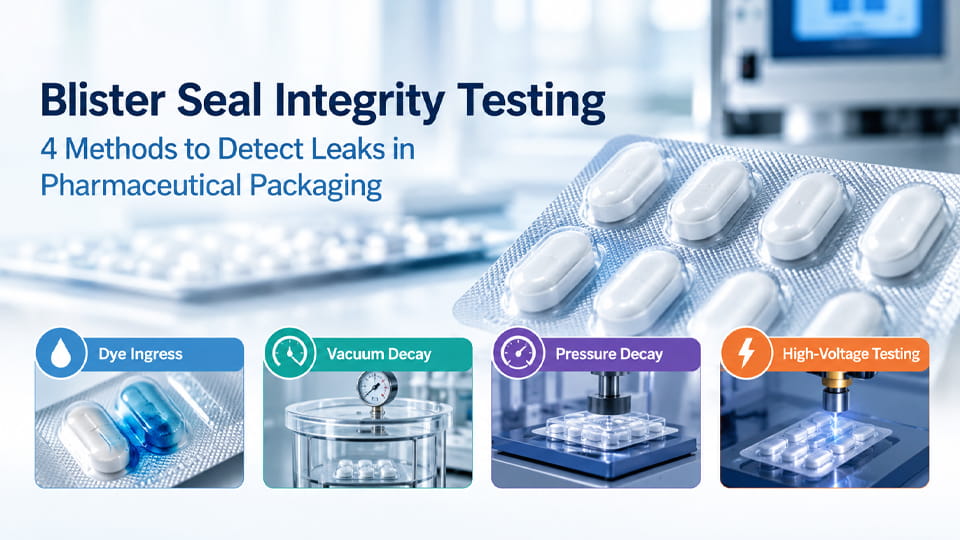
Blister seal integrity testing checks whether a sealed blister package can keep its contents protected under real-world conditions. Unlike a simple シール強度 test (which only measures how hard it is to peel apart a portion of the seal), a seal integrity test evaluates the whole package for leaks. 言い換えると, even if a blister has strong heat seals on paper, it might still fail a leak test if a tiny channel or pinhole is present. This is especially important in 医薬品の包装, where a micro-leak can let in moisture or contaminants and render a dose unsafe.
Common causes of blister leaks include uneven seal pressure or temperature, contamination on the sealing surfaces, wrinkles or debris at the seal interface, or even defects in the film or foil material. 例えば, if the aluminum lidding foil doesn’t fully fuse with the thermoformed PVC cavity, a gap channel can allow air or moisture to seep in. Detecting these hidden leaks requires more than a visual inspection or peel test. That’s where integrity tests come in, revealing leaks that normal routine checks might miss.
How it Works: The goal of any seal integrity test is to detect whether the sealed blister holds its barrier. A test typically involves creating a challenge (such as applying vacuum, プレッシャー, or electric field) and observing the package’s response. If there’s a breach, the test will show a change (例えば. pressure rise, 染料の侵入, or electrical conductivity) that indicates a leak path.
Seal Strength vs. Integrity: 覚えて, seal strength tests (ASTM F88) そして バーストテスト (F1140) measure mechanical strength of a small seal area, while seal integrity tests (D3078, F2096, などc.) assess the entire package. You need both: strength tests for process control, integrity tests for product safety. A package can pass a peel test yet still leak in distribution if a tiny channel exists.
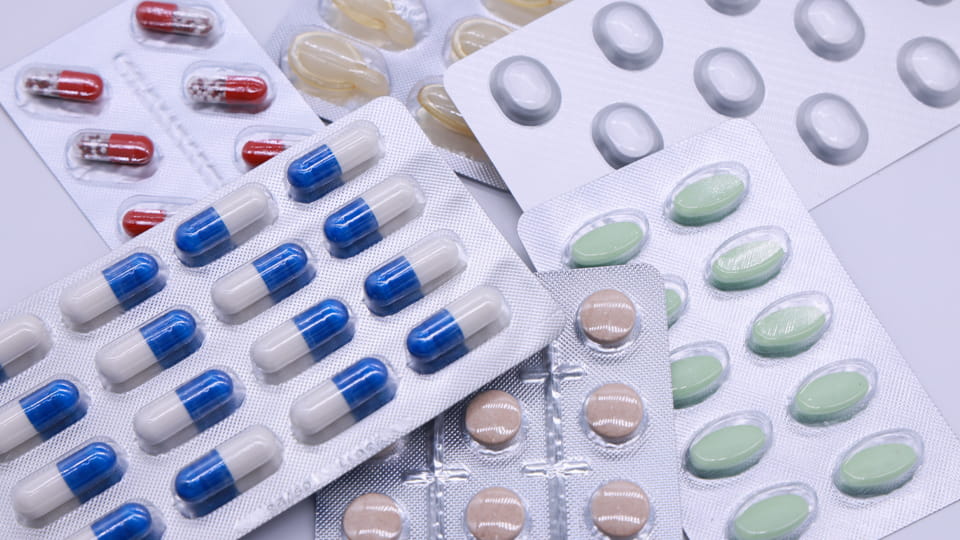
Before diving into each method, here’s a quick overview of the four blister leak test techniques and when they’re generally used:
| 方法 | 原理 | Destructive? | 典型的な使用例 |
| Dye Penetration (Methylene Blue) – immerse in dye under vacuum; leaks draw in dye | Destructive (sample is ruined) | – R&D troubleshooting, development stage- Low-cost leak check, simple setup | |
| Vacuum Decay – place pack in vacuum chamber, monitor pressure rise | Non-destructive | – Inline or batch QA for thermoformed blister packs- Verifying production line seal quality | |
| Pressure Decay – inject air/gas into pack, 隔離する, watch for pressure drop | Destructive (requires gas entry) | – Validation of flexible pouches or blisters where filling gas is possible- Alternate to vacuum decay when liquid products are tested | |
| High-Voltage Leak Detection (HVLD) – apply HV across package; detect conductivity change | Non-destructive | – Parenterals or products with conductive fill- Only rarely used for solid-dose blisters |
Each method has unique advantages and limitations. The rest of this article explains how each test works, what defects it finds, and its pros/cons for blister packs.
仕組み: 古典的な 染料の浸透 test (often called the methylene blue test) is one of the oldest leak detection methods. Sealed blister packs are submerged in a tank of colored dye, usually methylene blue, and a vacuum is applied. The vacuum helps the dye draw into any leaks in the seal. After a set time, the pack is removed and rinsed; if dye is visible inside a cavity, that pack is marked as failed.
This test is destructive – once a sample is dyed, you can’t use it. しかし, it is very simple and low-cost. It gives a clear, visual pass/fail result without fancy equipment. 例えば, a quality engineer can quickly see a blue stain showing a compromised cavity. The standard for this method is ASTM F3039 (for non-porous materials like plastic/foil blisters) (注記: a different ASTM F1929 covers porous seals and isn’t typically used for blister foil).
長所:
短所:
When to Use: Dye ingress is best as a spot-check or debugging tool. It’s commonly used in R&D or validation to verify a suspected leak, or in regulatory audits where a qualitative demonstration is needed. Because it’s destructive and labor-intensive, it’s not suitable for routine 100% 検査 生産中. Think of it as an old-but-trusted baseline: if a blister passes a well-executed dye test, it’s confidence-building (especially during development), but a clean pack on the line might still have leaks undetected because dye only finds leaks the dye can reach.
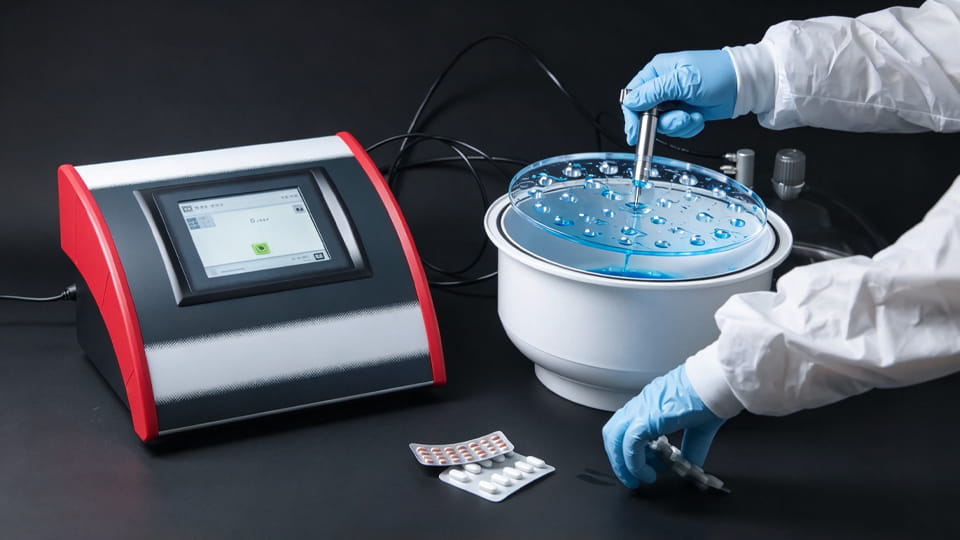
仕組み: Vacuum decay is a non-destructive integrity test widely used in pharma. To perform it, the blister sample is placed in a sealed chamber and a vacuum is drawn around it. If any cavity has a leak, internal air or product vapors will escape into the chamber, causing a rise in chamber pressure over time. This pressure change is precisely measured by sensors. 安定した, flat pressure curve means no leak; any spike indicates a failed seal.
In more advanced systems (like the ASTM F3169 method for blisters), the blister surface may also be scanned by a laser or camera before and during vacuum to measure foil deflection. A healthy sealed pocket will bulge outward under vacuum (foil moves), whereas a leaky pocket won’t hold the vacuum (foil collapses quickly). But even basic vacuum testers work by simply monitoring pressure change in the chamber.
長所:
短所:
When to Use: Vacuum decay is the industry workhorse for blister QA. It’s ideal for routine batch checks or even inline inspection of tablet blister packs. Since it’s non-destructive, you can test a portion of each batch and still ship the product. 規制機関 (例えば. 米国薬局 <1207>) endorse deterministic methods like vacuum decay for CCI of parenterals, and it’s widely applied to solid oral packages too. A typical use case is an in-line leak tester immediately after the ブリスターマシン; if the pressure curve indicates a leak, the line is halted for troubleshooting.
仕組み: Pressure decay is the opposite of vacuum decay. In this method, the inside of the blister (or more often, a flexible pouch containing the product) is pressurized with air or gas via a probe or a sealing chamber. Once the package is sealed and isolated from the gas source, the system monitors internal pressure over time. A decrease in pressure means gas is escaping through a leak.
For pressure decay to work, you usually need access to inject gas. 実際に, this often means the test is done in a hermetic chamber that seals around the pack’s edges (especially with trays or pouches) and pumps air into the package, or by using a fixture that enters through the seal. このため, pressure decay tests are typically destructive – inserting a needle or fitting or unsealing part of the package is often required.
長所:
短所:
When to Use: Pressure decay (ASTM F2095) is more common in testing flexible pouches or foil trays than rigid thermoformed blisters. In blister context, it might be applied to cold-form aluminum blisters (if you can get gas inside) or thermoform trays with a gasket. It is often used in validation studies rather than day-to-day QA. 例えば, R&D might use pressure decay to determine a minimum leak size or to validate vacuum decay results.
If a pharmaceutical requires deterministic leak data (例えば. USPごとに <1207>), pressure decay provides quantitative leak rates. しかし, remember it is usually destructive: the method assumes you can pressurize the package (inserting a probe or removing backing film), which means that package is no longer marketable.
仕組み: High-Voltage Leak Detection is a specialized method originally developed for parenteral vials and ampoules. The principle is electrical: a high-voltage electrode is placed above (or around) the sealed package, while a second electrode contacts a conductive medium inside (often a small pool of the product liquid, or a water drop). If a leak (through the seal or vial wall) allows electrical contact, current will flow. 実際に, a sealed blister pack can be tested by placing it on a grounded plate and touching the foil top with a high-voltage probe (with the product or a film in between).
しかし, note that HVLD is highly dependent on the product’s conductivity. It only works if the packaged contents (or an added conductive solution) can carry current. That generally means liquid medications (saline, buffers, 等) or semi-moist products. Dry tablets in a PVC/Al blister typically won’t conduct electricity on their own, so a direct HVLD test on a tablet blister is usually not effective.
長所:
短所:
When to Use: HVLD is not a standard choice for tablet blister packs. It is highly effective for liquid-filled containers (例えば. prefilled syringes, バイアル, infusions). For blister packaging, you would only consider HVLD if your blister contains a conductive liquid or if you adapt it (例えば, applying a conductive spray on the surface). Some firms have experimented with HVLD for blisters by inserting a wet sponge on top of the foil as the upper electrode, but this is atypical.
実際に, if someone asks “Can HVLD test a tablet blister?」, the answer is usually no. It’s simply the wrong tool for most solid-dose blisters. It’s worth mentioning here because it is a recognized leak test method in pharma, but our advice is: reserve HVLD for applications it’s designed for (liquid parenterals with built-in conductivity).
When choosing a method, consider a few key factors: destructiveness, 感度, スピード, and applicability to your blister type. Here’s how the four compare:
A useful rule of thumb: non-destructive methods (vacuum or HVLD) are preferred for in-process checks, その間 destructive methods (dye, pressure-decay) are for lab validations or trouble-shooting.
ヒント: If you need to strictly comply with regulatory expectations (例えば. 米国薬局 <1207>), you may end up using more than one method. 例えば, a vacuum decay test might be routinely used, but you could periodically do a dye test or a pressure-decay test to validate it.
Selecting the appropriate leak test depends on several practical considerations:
方法を問わず, いつも validate the test: run known “good” and “bad” samples (with calibrated leaks or holes) to confirm your equipment and parameters are detecting the intended leak size. This is a key part of pharmaceutical QC.
Leak testing is crucial, but the best leak test is the one you never need. Prevention is key. Here are some tips to minimize seal defects on blister machines:
By keeping your blister packing machine well-tuned, you reduce the risk of leaks. If leaks do occur, refer back to your leak test results to identify whether the problem is heat, プレッシャー, contamination or film quality. 時間とともに, data from integrity testing can guide preventive maintenance and equipment upgrades.
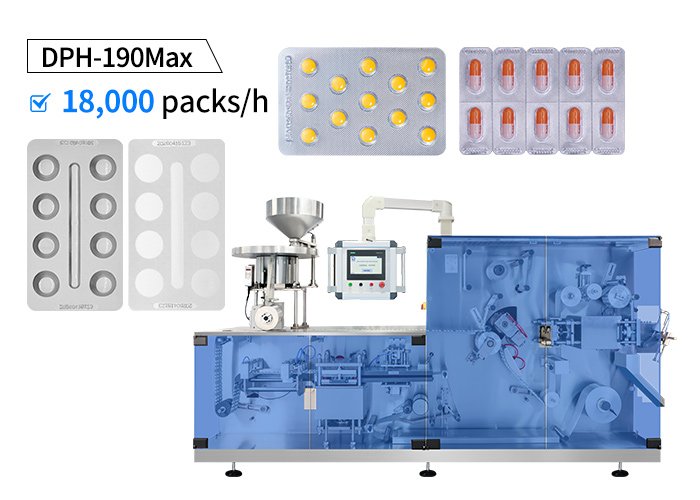
ヒントの場合: Discuss sealing issues with your equipment supplier or technical support. 例えば, Jinlu Packing’s blister machines have features like precise temperature control and uniform pressure zones to help ensure consistent seals. Regularly review your quality data: if vacuum decay tests show a trend toward failure, there’s likely an underlying sealing problem that needs addressing. Prevention saves far more time and money than remediating leaks later.
Blister seal integrity testing is essential for ensuring that your pharmaceutical packs truly protect the product. There is no one-size-fits-all solution: 染料浸漬, 真空減衰, pressure decay and high-voltage tests each have their place. Dye ingress is simple and visual but destructive and less sensitive. Vacuum and pressure decay are deterministic, non-destructive and suitable for on-line 100% 検査. High-voltage detection is rapid and sensitive but only works for conductive (usually liquid-filled) パッケージング. Your choice should be guided by the blister design, product value and regulatory needs.
No matter which test you use, a validated routine CCIT program will dramatically reduce the chance that a leak goes unnoticed. Combining solid leak-detection methods with good production controls (proper sealing temperature, プレッシャー, tooling maintenance and in-line inspection) is the most effective strategy.
If you have questions about blister sealing or leak testing, or need equipment to help ensure integrity, contact the Jinlu Packing team. We offer advanced ブリスター包装機 and testing solutions designed for pharmaceutical production. Protect your product and patients with reliable blister seal integrity testing!
It’s the evaluation of a finished blister pack to verify that its seal truly prevents leaks and maintains package barrier under realistic conditions.
Seal strength tests (例えば. peel tests) measure force to separate a seal in a small coupon sample. Seal integrity tests examine the whole package for leaks. A package can have strong seal strength and still leak (via pinholes or channels).
はい. Dye tests (methylene blue) destroy the sample. Once a blister is immersed in dye, it cannot be reused or sold.
A blister is placed in a vacuum chamber. Any internal leak causes a pressure rise in the chamber as the package’s internal air escapes. The pressure change indicates a leak.
5.はい, properly calibrated vacuum decay instruments can detect microleaks down to a few microns. 例えば, FDA-recognized methods detect leaks in blister pouches ~5 µm size.
It’s used for non-porous flexible packages (like pouches and blisters) per ASTM F2095. Gas is introduced into the package and then isolated; a pressure drop reveals leaks. It’s more common in lab validation than on production lines.
HVLD applies a high-voltage electrical field across the seal. If the packaged contents or seal area becomes conductive (due to a leak), current flows. It’s mainly used for liquid parenteral containers and is not generally effective on dry tablet blisters.
For vacuum decay, ASTM F3169 specifically addresses blister packaging vacuum deflection. For dye ingress on non-porous packs, ASTM F3039 applies. ASTM F2095 covers pressure decay for flexible packages. (注記: USP provides general guidance on packaging integrity methods.)
Sampling frequency depends on risk and volume. Some companies test every batch or lot (statistically or 100%). ハイリスク商品について, more frequent in-line checks or periodic validation with destructive tests may be done. Always follow your internal QMS and any regulatory requirements.
参考文献:
1.Promising advancements to the blue dye ingress test – Quantification of blister integrity by leakage rate —— サイエンスダイレクト
2.Comparing Physical Container Closure Integrity Test Methods and Artificial Leak Methodologies —— PDA Journal
3.ブリスターパッケージの品質に対するヒートシールラッカーの厚さの影響 —— パブメッド
4.Vacuum decay container/closure integrity testing technology. 一部 2. Comparison to dye ingress tests —— パブメッド
5.Standard Test Method for Leak Detection in Blister Packaging by Vacuum Deflection Method by Laser Measurement —— ASTM F3169-16
6.高い – throughput thermal NDT of pharmaceutical plastic container packaging —— サイエンスダイレクト