
- Macchine
- Competenza
- Risorse
- Certificati
- Di
- Contatto
- Macchine
- Competenza
- Risorse
- Certificati
- Di
- Contatto
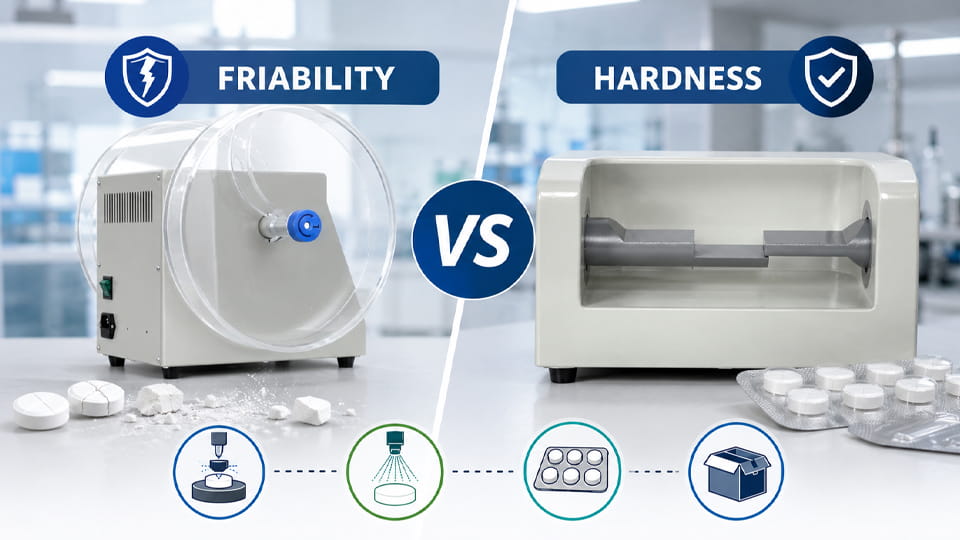
In produzione di compresse, durezza E friabilità sono due misure chiave di qualità. Durezza (forza di rottura) ci dice quanta pressione può sopportare una compressa prima che si rompa. La friabilità misura la facilità con cui la superficie di una compressa si scheggia o si erode quando viene fatta cadere o maneggiata. In altre parole, controlli di durezza forza interna, mentre la friabilità viene controllata durabilità della superficie. Entrambe le proprietà influiscono sulla lavorazione a valle, dal modo in cui le compresse vengono compresse al modo in cui vengono rivestite e infine confezionate. Questo articolo spiega perché la friabilità e la durezza sono importanti, come ciascuno viene testato, e come influenzano la compressione della compressa, rivestimento, e qualità del confezionamento in linee di produzione reali.
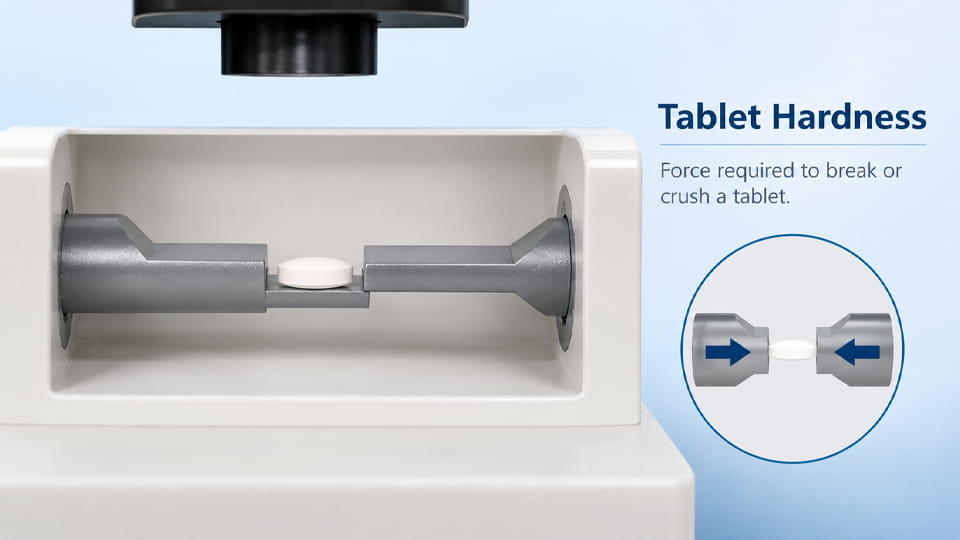
Durezza della compressa (tecnicamente “forza di rottura della compressa”) è la forza necessaria per rompere una compressa mediante compressione. In pratica, la durezza viene misurata posizionando la compressa tra due incudini o piastre e applicando la forza finché non si frattura. Durometri moderni (manuale o digitale) misurare la forza di picco in chilogrammi o newton. La forza di rottura della compressa è fondamentale controllo di qualità: una compressa deve essere abbastanza resistente da resistere alla manipolazione, confezione, e spedizione senza rotture. Gli Stati Uniti. e le farmacopee europee specificano metodi standardizzati per la durezza (forza di rottura) Test. Parte della letteratura industriale preferisce il termine “forza di rottura” sulla “durezza”.," poiché nella scienza dei materiali "durezza" significa tipicamente resistenza alla rientranza della superficie, mentre il test sulle compresse misura la forza di compressione.
La durezza della compressa è influenzata dalla formulazione e dai parametri di processo. Più alto forza di compressione generalmente produce compresse più dure, mentre anche fattori di formulazione come leganti e lubrificanti influiscono sulla durezza. Per esempio, aumentando un legante (per esempio. PVP o HPMC) solitamente aumenta la forza della compressa, mentre troppo lubrificante (stearato di magnesio) può indebolire il legame interparticellare. Le dimensioni del tablet, forma, e anche la porosità giocano un ruolo: le compresse più spesse o più dense spesso richiedono più forza per rompersi.
Durezza troppo bassa (sottocompressione) provoca compresse a crepa, sbriciolarsi o scheggiarsi facilmente. Durezza troppo elevata, Tuttavia, può avere degli svantaggi: compresse molto dure possono disintegrarsi lentamente o dissolversi troppo lentamente nel corpo. Anche un tablet troppo duro può esserlo difficile da deglutire per i pazienti. Così, il design del tablet deve bilanciare la resistenza meccanica con le prestazioni. In pratica, i produttori stabiliscono un intervallo di accettazione (per esempio. 4–10 kg circa) per la forza di rottura durante la produzione.
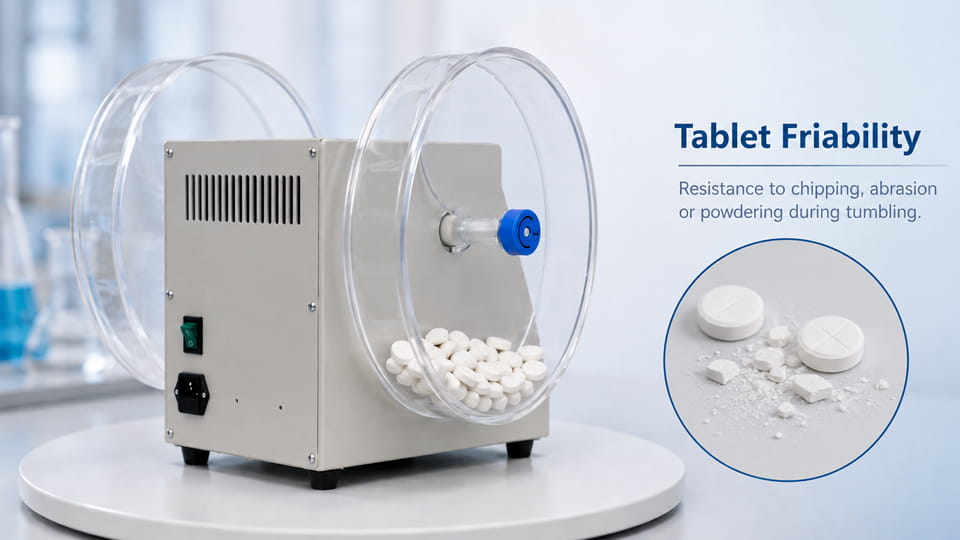
La friabilità della compressa è una misura della facilità con cui una compressa si sbriciola o perde massa quando sottoposta a stress meccanico, come una caduta o un impatto. Test di friabilità prevede il posizionamento delle compresse depolverate in un tamburo rotante (Roche friabile), tipicamente a 25 giri, e sottoporli a 100 rivoluzioni. Ogni giro fa cadere le compresse ad un'altezza fissa per simulare lo stress durante la movimentazione e il trasporto. Dopo la prova, vengono raccolte le compresse, e l'eventuale polvere sciolta viene rimossa. Le compresse vengono pesate prima e dopo per determinare la percentuale di perdita di peso, che è riportato come friabilità. Per esempio, IL USP <1216> e Ph.Eur. le monografie descrivono questa procedura.
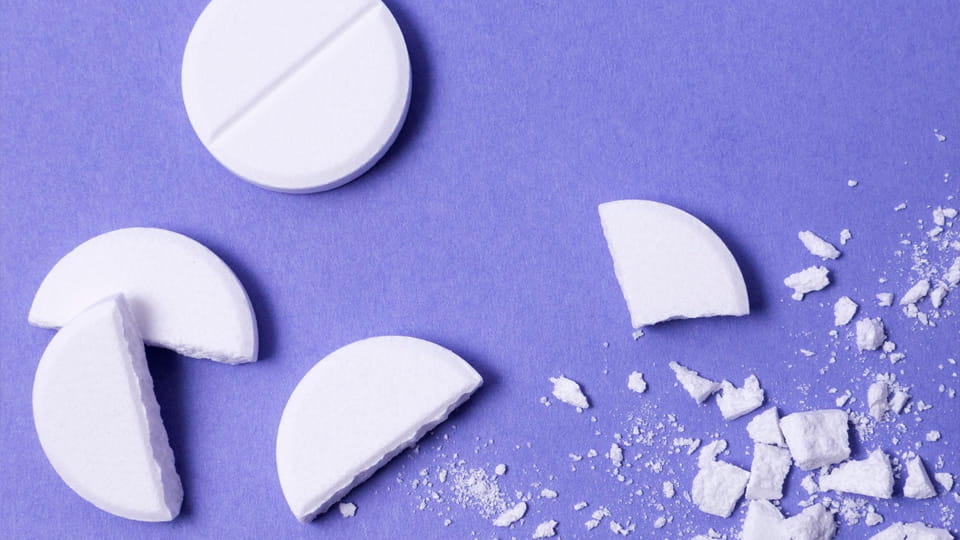
Minore è la friabilità, tanto più resistente è la compressa all'abrasione o alla scheggiatura. Un limite di friabilità accettabile è convenzionalmente ≤1,0% perdita di peso. Compresse che perdono più di questa soglia, o che si crepino o si rompano visibilmente durante la prova, non soddisfano il criterio della friabilità. La friabilità delle compresse si rivolge in modo specifico durabilità post-compressione – simula lo stress fisico a cui sono sottoposte le compresse nelle vasche di verniciatura, trasportatori, riempitrici di bottiglie, linee di blister, e imballaggio. L'elevata friabilità si manifesta sotto forma di scheggiature sui bordi della compressa, crepe visibili, o polvere in eccesso. La friabilità è quindi un attributo di qualità strettamente legato alla robustezza dell'imballaggio e della manipolazione.
Questi test sembrano simili ma rilevano stress diversi. In termini semplici:
Immagina due compresse: uno testato a 20 kP (kilopond) della forza di schiacciamento (molto difficile) e uno a 5 kP (morbido). Potresti pensare che 20 Il tablet kP è indistruttibile, ma se i suoi bordi sono fragili, potrebbe ancora perdere il 2-3% di massa in un tamburo friabile, il doppio del limite accettabile. In pratica, un tablet può esserlo "estremamente duro, richiede una forza significativa per essere schiacciato, ma sorprendentemente fragile.". Questo mostra perché Entrambi sono necessari dei test. La tabella seguente riassume la differenza:
Insomma: la durezza resiste schiacciamento, mentre resiste la friabilità scheggiatura. Il design robusto del tablet bilancia entrambi: deve sopravvivere alla stampa e alle macchine senza spolverarsi, eppure si dissolvono ancora correttamente.
| Parametro | Durezza della compressa (Forza di rottura) | Friabilità della compressa |
|---|---|---|
| Cosa misura | Resistenza ad una singola forza applicata (compressione o tensione) provocando la frattura | Resistenza all'abrasione ripetuta, impatto, e scheggiatura (perdita di peso quando cade) |
| Tipo di stress tipico | Carico di compressione o flessione su tre punti una tantum fino alla rottura | Inciampi/cadute multiple (Generalmente 100 rotazioni) simulando shock da manovra |
| Scopo principale | Valutare la resistenza alla rottura della compressa (robustezza della formulazione sotto compressione) | Valutare la durabilità durante il trasporto, rivestimento, e imballaggio |
| Prova uscita | Valore della forza di rottura (per esempio. in Newton o kp) | Perdita di peso percentuale dopo il test (e ispezione visiva per eventuali danni) |
| Collegamento alla qualità | Imposta i parametri di compressione; garantisce che le compresse non si rompano sotto l'azione della forza | Imposta le impostazioni della linea di confezionamento; garantisce che le compresse sopravvivano al rivestimento/trasporto |
| Sostituibile con altro test? | NO. Stress diverso; necessita di una propria misurazione. | NO. Logica del test diversa; non può sostituire il test di durezza. |
La tabella qui sopra lo evidenzia durezza e friabilità misurano aspetti diversi. Durezza (forza di rottura) è uno stress test una tantum, mentre i test di friabilità hanno ripetuto shock di basso livello. È importante sottolineare che, un tablet può esserlo duro ma fragile o viceversa. Per esempio, una compressa con elevata forza di rottura potrebbe rimanere ferma fallire il test di friabilità se i suoi bordi si scheggiano facilmente o se l'incollaggio interno non è uniforme. Insomma, durezza e friabilità sono correlate ma non intercambiabili: entrambe devono essere valutate.
I tester per la durezza delle compresse applicano una forza controllata a una singola compressa finché non si frattura. In un tipico tester, due incudini piatte (piatto) afferrare il tablet – uno fermo, uno in movimento. Il tester registra la forza alla rottura. Tester manuali (a base primaverile come la Monsanto) e moderni tester digitali (con celle di carico e visualizzatori elettronici) sono comuni. I tester elettronici forniscono precisione, misurazioni ripetibili e spesso misurano diametro e spessore contemporaneamente. Durante i test, fattori come orientamento della tavoletta (per compresse a faccia piatta) o apparecchi speciali (per forme insolite) sono attentamente controllati per garantire risultati coerenti. La forza di rottura misurata informa il controllo di qualità: i lotti sono accettati solo se la durezza rientra nell'intervallo definito per quella formulazione.
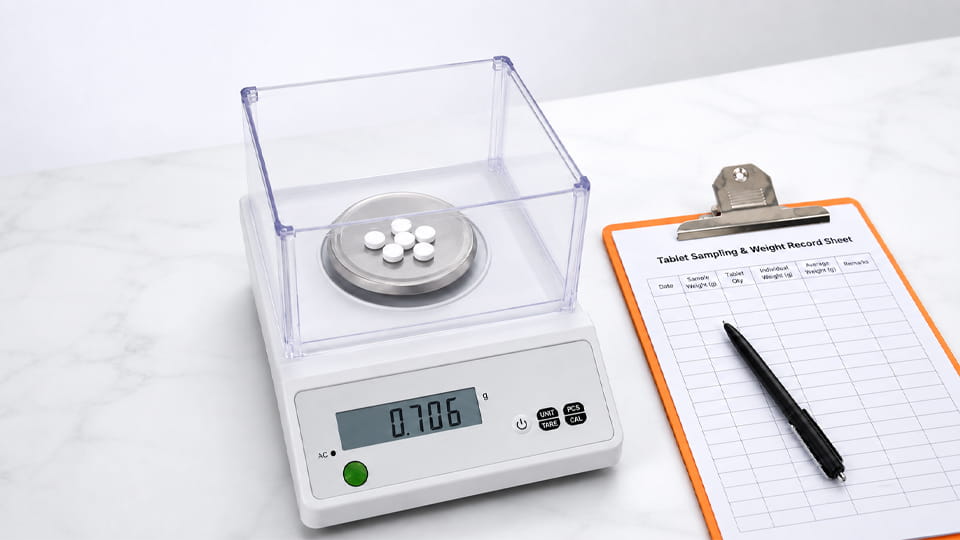
UN friabile oppure il tester di friabilità fa cadere un campione di compresse in un fusto trasparente per simulare la manipolazione. Passaggi chiave (per USP/Ph.Eur.) Sono: 1. Depolverare e pesare un campione di compressa (per esempio. 6.5 g o 10 compresse). 2. Collocare le compresse in un tamburo rotante con una linguetta di sollevamento all'interno. 3. Ruotare a 25 giri per 100 rivoluzioni (4 minuti). 4. Rimuovere le compresse, rimuovere la polvere sciolta, ripesare. 5. Calcolare % perdita di peso: .
Se qualsiasi tablet è incrinato o rotto dopo essere caduto, il batch fallisce immediatamente. Altrimenti, se perdita di peso totale >1%, il test viene ripetuto tre volte e viene utilizzata una media. In pratica, le compresse che passano mostrano scheggiature o polvere minime. I risultati sulla friabilità guidano le decisioni prima del rivestimento e dell'imballaggio: una perdita elevata richiede una riformulazione o un cambiamento del processo.
I metodi di prova presuppongono compresse non rivestite. È possibile testare anche le compresse rivestite, ma spesso hanno una minore friabilità semplicemente a causa della conchiglia. Al contrario, le compresse effervescenti o altamente porose possono richiedere uno speciale controllo dell'umidità durante il test. Forma e dimensione della compressa influenzare il comportamento di rotolamento; per forme irregolari, la base del tamburo può essere inclinata di ~10° per garantire un movimento casuale. In tutti i casi, standard compendiali (USP, Ph.Eur.) specificare l'apparato e la procedura. La moderna pratica di laboratorio controlla anche la calibrazione dei tester di durezza e friabilità ed esegue regolarmente il controllo di qualità con compresse di riferimento standard.
Entrambe le proprietà dipendono dalla formulazione e dalla lavorazione. I fattori chiave includono il tipo/concentrazione del legante, forza di compressione, e forma di compressa. Per esempio:
Perché tante variabili contano, i produttori stabiliscono intervalli target anziché valori singoli. C'è nessuna durezza universale “perfetta”.; dipende dal prodotto forma di dosaggio, destinazione d'uso, e imballaggio. Una vitamina masticabile e a rivestito con film l'antidolorifico può avere livelli di durezza ottimali molto diversi, anche se pesano lo stesso.
La fase di compressione sulla comprimitrice determina in gran parte la durezza. In pratica:

Insomma, l'ottimizzazione dei parametri e delle formulazioni di compressione è essenziale. Come nota la guida alla risoluzione dei problemi di JinluPacking, “se le compresse sono troppo morbide, potrebbero scheggiarsi, rottura, o mostrare un'elevata friabilità. Se troppo difficile, potrebbero resistere al rivestimento o dissolversi lentamente.. Ottimizzando la forza di compressione e il contenuto del legante, i produttori possono puntare a tablet che resistano alle sollecitazioni del processo senza superare la durezza.
Rivestimento di compresse (film o rivestimento di zucchero) è molto sensibile alla forza del nucleo del tablet. Durante il rivestimento, le compresse cadono in una padella rotante e spruzzano la soluzione su di esse. Questa burattatura applica stress meccanico e umidità. Ecco come entrano in gioco durezza e friabilità:
Una volta che le compresse vengono pressate e rivestite, si trasferiscono a linee di confezionamento – macchine blister, astucciatori, O linee di riempimento bottiglie. Anche qui la forza delle compresse è fondamentale:

Per ottenere compresse di altissima qualità che soddisfino le esigenze di rivestimento e confezionamento, tieni a mente questi punti:
In pratica, l'obiettivo è un tablet che sia "Abbastanza duro da sopravvivere alla manipolazione, ma non così duro da fallire i test di dissoluzione.". Molti produttori calcolano la forza di compressione, durezza, e friabilità in tempo reale per individuare tempestivamente le tendenze (Per esempio, una variazione improvvisa della durezza potrebbe segnalare un cambiamento nell'alimentazione della polvere o nell'umidità).
In sintesi, durezza e friabilità sono due facce della stessa medaglia per la qualità della tavoletta. La durezza garantisce la resistenza centrale del tablet sotto compressione, mentre la friabilità misura la robustezza della superficie contro l'abrasione. Giustamente bilanciato, garantiscono che le compresse passino attraverso le vasche di ricopertura e le macchine confezionatrici senza scheggiature o rotture. Le compresse troppo morbide genereranno polvere e difetti di rivestimento, mentre le compresse troppo dure possono resistere alle soluzioni di rivestimento o produrre un'esperienza negativa per il paziente.
Per produttori farmaceutici e ingegneri del confezionamento, prestare attenzione a entrambi i test è fondamentale. Assicurati di integrare i test di friabilità e durezza nei tuoi punti di controllo qualità, e regolare la formulazione/compressione secondo necessità. In questo modo, ridurrai al minimo i costosi rifiuti e garantirai un funzionamento regolare del tuo linee di confezionamento blister, macchine astucciatrici, o linee di imbottigliamento.
Pronti per ottimizzare la vostra linea di produzione e confezionamento di compresse? Il team di JinluPacking vanta decenni di esperienza nella compressione e nell'imballaggio farmaceutico. Se hai bisogno di un comprimitrice ad alta velocità, depolveratore, o una soluzione di confezionamento in blister personalizzata, possiamo aiutarvi a garantire che le vostre compresse rimangano intatte dalla pressa al paziente. Contattaci per discutere di come le nostre macchine e la nostra esperienza possono supportare i vostri obiettivi di produzione.
NO. Durezza (forza di rottura) misura la forza necessaria per fratturare una compressa sotto un singolo carico. La friabilità misura la durabilità della compressa sotto ripetuta abrasione, espresso come % perdita di peso durante un test sul tamburo. Valutano proprietà diverse.
SÌ. Un tablet potrebbe avere un'elevata forza di rottura (difficile) ma si scheggia ancora ai bordi se il legame delle particelle è scarso. Un tablet del genere potrebbe rompersi facilmente se fatto cadere, ottenendo un'elevata friabilità. Al contrario, una compressa con durezza moderata potrebbe passare alla friabilità se ha una forma robusta. Quindi sono necessari entrambi i test.
Lo standard industriale comune è una perdita di peso ≤1,0% dopo il test di friabilità. Molti produttori fissano lo 0,5–1% come specifica per i tablet comuni. Alcuni prodotti (per esempio. compresse molto grandi o insolite) possono avere criteri speciali, Ma 1% è una linea guida tipica.
La durezza può influenzare in modo significativo la dissoluzione. Una compressa eccessivamente dura può disintegrarsi lentamente, ritardare il rilascio del farmaco. I test normativi hanno dimostrato che le compresse sono molto dure (compresso a forze elevate) può non rientrare nelle specifiche di dissoluzione perché la matrice della compressa è troppo stretta. Al contrario, una compressa molto morbida potrebbe disintegrarsi rapidamente ma potrebbe rompersi prematuramente. La durezza ottimale garantisce una disintegrazione tempestiva senza rotture.
Le cause più comuni includono legante insufficiente, umidità di granulazione inadeguata, compressione inadeguata, lubrificante in eccesso, ed eccipienti fragili. Per esempio, le compresse con troppo poco materiale legante o granuli eccessivamente essiccati tendono ad essere più friabili. Una soluzione tipica è quella di aggiustare la formulazione (per esempio. legante più efficace) o ottimizzare il processo di granulazione ed essiccazione a umido.
Non sempre. Una compressione più elevata generalmente aumenta la durezza e può inizialmente ridurre la friabilità, ma ha dei limiti. Una forza eccessiva può causare l'ostruzione, laminazione o alterata dissoluzione. Anche, se la formulazione è errata (per esempio. scarsa rilegatura), il semplice aumento della pressione potrebbe non risolvere la friabilità. È meglio ottimizzare sia la formulazione che la forza insieme.
Perché affrontano diversi stress meccanici. La durezza garantisce che la compressa possa sopravvivere a una singola forza di schiacciamento (importante per la compressione e il taglio), mentre la friabilità gli garantisce la resistenza a ripetuti urti (importante per il rivestimento, gestione, e imballaggio). Solo valutandoli entrambi i produttori possono essere sicuri che i tablet manterranno l’integrità attraverso l’intera catena di produzione e consegna.
La progettazione delle apparecchiature è fondamentale. Per esempio, Le astucciatrici ad alta velocità utilizzano sensori e scivoli imbottiti per rallentare delicatamente le compresse (prevenendo la rottura in caso di impatto). I trasportatori a vuoto con curve morbide riducono gli urti. Le linee di imbottigliamento hanno spesso tubi flessibili e transizioni lente. I sistemi di movimentazione delle compresse ben progettati riducono le vibrazioni, gocce, e attrito, riducendo direttamente le rotture e la generazione di polvere.
Riferimenti:
1.Test di durezza delle compresse ——Wikipedia
2.IO 4 Allegato QB 9 Friabilità della compressa – Linee guida scientifiche —— Agenzia europea per i medicinali
3.Allegato Q4B 9: Capitolo Generale sulla Friabilità delle Compresse -- NOI. Amministrazione degli alimenti e dei farmaci
4.Dipendenza della friabilità dalle proprietà meccaniche della compressa e un approccio predittivo per miscele binarie —— Esperti@Minnesota
5.Effetto dell'umidità e della forza di frantumazione sulla friabilità delle compresse e sulla dissoluzione in vitro —— Biblioteca in linea Wiley