
Untuk produsen kontrak farmasi, itu mesin pengisian kapsul terbaik biasanya bukan mesin dengan kecepatan papan nama tertinggi. Ini adalah mesin yang dapat berpindah secara andal antar produk nyata dengan total kehilangan waktu produksi paling sedikit.
Itu berarti melihat lebih dari sekedar “kapsul per jam”. CMO atau CDMO multi-produk perlu dipertimbangkan ukuran kapsul, perilaku bubuk, pelet, tablet mikro, produk kombinasi, persyaratan pembersihan, perubahan perkakas, penahanan, waktu operator, validasi, dan kendali mutu hilir. Besar pemasok peralatan pengisian kapsul menyampaikan hal yang sama dengan cara yang berbeda: fleksibilitas berasal dari sistem dosis yang dapat dipertukarkan, kompatibilitas produk yang luas, pergantian singkat, mudah dibersihkan, dan pengendalian berat badan yang terintegrasi—bukan hanya kecepatan saja.
Untuk sebagian besar penanganan produsen kontrak beberapa SKU pada skala komersial, fleksibel mesin pengisian kapsul otomatis dalam kisaran kecepatan sedang seringkali merupakan titik awal terbaik. Peralatan semi-otomatis masih berguna jika jumlah batchnya kecil dan sering diganti. Mesin berkecepatan sangat tinggi masuk akal ketika kampanye besar mendominasi jadwal. Dan jika senyawa kuat terlibat, penahanan dapat mengesampingkan setiap kriteria seleksi lainnya. Peralatan pengisian kapsul khusus tersedia dengan OEB 4/OEB 5 sistem penahanan dan pembersihan basah atau pencucian di tempat, yang menunjukkan betapa berbedanya persyaratan tersebut dengan membeli enkapsulator serba guna standar.
Aturan praktisnya sederhana:
Pilih mesin pengisian kapsul yang memberi Anda keluaran harian tertinggi yang dapat digunakan di seluruh campuran produk Anda—bukan keluaran teoritis per jam tertinggi pada satu produk mudah.
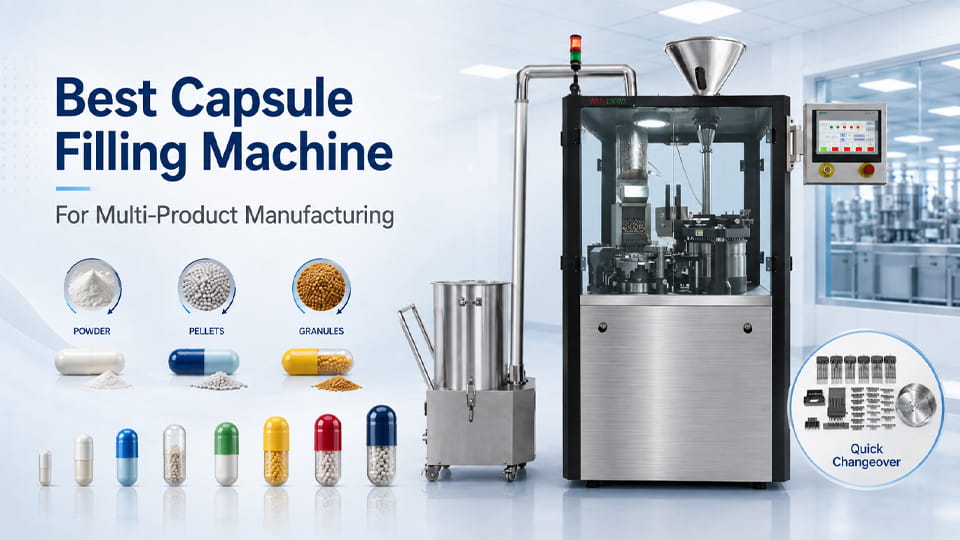
CMO Farmasi (produsen kontrak) menjalankan banyak SKU di jalur bersama. Mereka sering kali harus beralih antar produk, ukuran kapsul, dan formula dengan cepat. Mesin serba guna (dikonfigurasi untuk satu ukuran atau produk) tidak dapat memenuhi variasi ini tanpa banyak unit. Pengisi multi-ukuran yang mampu mencakup #000–#5 (kapsul keras terbesar hingga terkecil) dalam satu mesin. Hal ini memungkinkan CMO mengkonsolidasikan peralatan, menghemat ruang dan modal. Hal ini juga mempercepat peluncuran produk baru: daripada memesan mesin enkapsulasi baru untuk setiap SKU, mesin yang dapat disesuaikan dapat menghasilkan banyak resep.
Namun, fleksibilitas membawa pengorbanan. Pergantian menjadi hambatan jika pertukaran perkakas berjalan lambat atau rumit (lihat bagian selanjutnya). Pembersihan dan validasi juga penting: mesin pengisian kapsul CMO harus mudah dibersihkan antara obat yang berbeda untuk menghindari kontaminasi silang (peralatan yang tidak khusus harus dibersihkan antar batch). Pendeknya, CMO membutuhkan pengisi kapsul yang dirancang untuk perubahan cetakan yang cepat, pembersihan lembut, dan takaran yang tepat sehingga satu mesin dapat membuat banyak produk dengan andal GMP aturan.
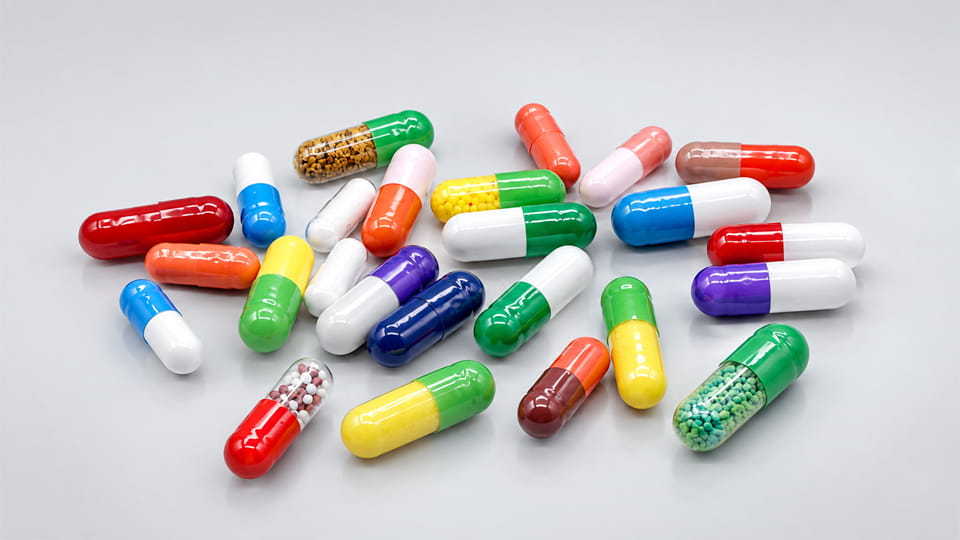
Saat mengevaluasi mesin untuk lingkungan multi-produk, fokus pada faktor-faktor ini (tabel di bawah ini), lalu baca detailnya setelahnya. Pilihan yang seimbang meminimalkan kompromi di seluruh portofolio Anda.
| Faktor | Apa yang harus dicari |
| Kisaran Ukuran Kapsul | Mendukung semua ukuran yang dibutuhkan (#000–#5 umum di bidang farmasi) tanpa mod khusus. Yang tidak kalah pentingnya adalah pergantian cepat antar ukuran. |
| Jenis Formulasi | Menangani bubuk/butiran Anda. Periksa apakah ia dapat memberi dosis bubuk API spesifik Anda, pelet atau tablet mikro. Beberapa model bahkan memberi dosis cairan (memerlukan nozel khusus). |
| Kecepatan Produksi | Nilai keluaran (kapsul/jam) harus melebihi laju lari tertinggi Anda. Namun perhatikan kecepatan yang dikutip mengasumsikan kondisi ideal (ukuran #00, bubuk yang mengalir bebas). |
| Kemudahan Pergantian | Carilah perkakas modular dan desain yang dapat disesuaikan dengan cepat. Mesin modern dapat menukar set cetakan <30 menit (15 min dalam model lanjutan). |
| Pembersihan/Desain CIP | GMP memerlukan pembersihan tervalidasi antar produk. Lebih memilih komponen kontak baja tahan karat dan kemampuan CIP atau pembongkaran tanpa alat. |
| Akurasi Pengisian | Periksa sistem dosis (auger/cakram, pin tamping) dan spesifikasi presisi. Pengisi yang baik mencapai ~±1–3% variasi berat. Iklan jalur kelas atas >97% akurasi pengisian. |
| Tingkat Otomatisasi | Mesin yang sepenuhnya otomatis bekerja terus menerus dengan tenaga kerja minimal (memuat/mengunci otomatis, Kontrol PLC), sedangkan semi-otomatis memerlukan operator tetapi biayanya lebih murah (lihat di bawah). |
| Dukungan Validasi | Pastikan mesin mendukung protokol IQ/OQ/PQ, log data dan Bagian CFR21 11 jika diperlukan. Periksa apakah pemasok menyediakan dokumen atau bantuan validasi. |
| Tapak & Skalabilitas | Untuk CMO, ruang lantai dan pertumbuhan di masa depan penting. Satu mesin fleksibel menghemat ruang dibandingkan beberapa unit khusus, tapi pastikan itu bisa berkembang (misalnya. menambahkan stasiun atau menghubungkan pengisi jika volume meningkat). |
Setiap faktor di atas harus disesuaikan dengan situasi Anda. Misalnya, jika Anda menangani dengan kuat Lebah, itu Pembersihan/Desain CIP menjadi sangat penting (Anda memerlukan pengendalian penuh atau pembersihan tervalidasi secara berkala untuk melindungi operator dan mencegah kontaminasi silang). Jika Anda sering beralih di antara banyak ukuran kapsul, maka “Kemudahan Perubahan” adalah yang terpenting; seperti disebutkan di bawah ini, melewatkan otomatisasi perubahan ukuran dapat menyebabkan waktu henti selama berjam-jam.
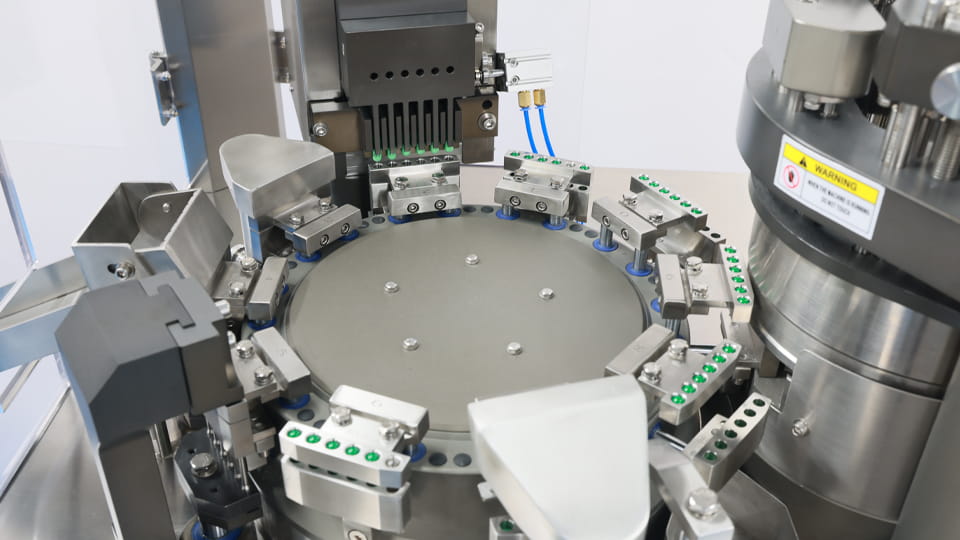
Throughput kapsul yang tinggi sangat menarik, namun efisiensi di dunia nyata tidak hanya bergantung pada kecepatan tertinggi. Pabrikan sering kali mengutip kapasitas mesin dalam kondisi ideal, tapi keluaran sebenarnya bisa jauh lebih rendah jika produk Anda menantang. Misalnya, bubuk halus atau lengket dapat membuat sekrup macet, atau kapsul kecil menghasilkan kecepatan lebih lambat. Selalu pertimbangkan efek ukuran kapsul, aliran bubuk, dan waktu henti.
Untuk perencanaan kapasitas, mulai dengan output yang Anda butuhkan (kapsul per batch atau per tahun) dan bekerja mundur. Tentukan berapa jam produksi yang dapat Anda jalankan secara realistis (misalnya. dua shift vs penuh 24x7). Kemudian bagi kebutuhan kapsul berdasarkan jam operasional untuk mendapatkan target kapsul/jam. Bandingkan ini dengan kecepatan efektif alat berat (seringkali 80–90% dari peringkat maksimalnya). Catatan: Ukuran yang terlalu besar dapat menjadi bumerang jika peralatan lain berada di jalur yang sama (perhitungan, pembatasan, pelabelan) tidak bisa mengikuti. Seperti yang dikatakan oleh seorang pemandu, memasang pengisi 150rb/jam pada saluran 80rb/jam menyebabkan 47% waktu menganggur, membuang-buang uang. Selalu bidik throughput saluran yang seimbang.
Untuk menangkap efisiensi, juga memperhitungkan kerugian pergantian dan pembersihan. Bahkan pergantian “30 menit” akan mengurangi kapasitas jika terjadi di antara setiap batch. Jika saluran Anda sering berpindah SKU, sertakan periode waktu henti tersebut dalam perhitungan Anda. Dalam praktiknya, menargetkan pengisi yang efektif kapasitas (keluaran waktu berjalan aktual) melebihi kebutuhan puncak Anda, sehingga Anda memiliki ruang untuk melakukan perubahan atau perlambatan kecil.
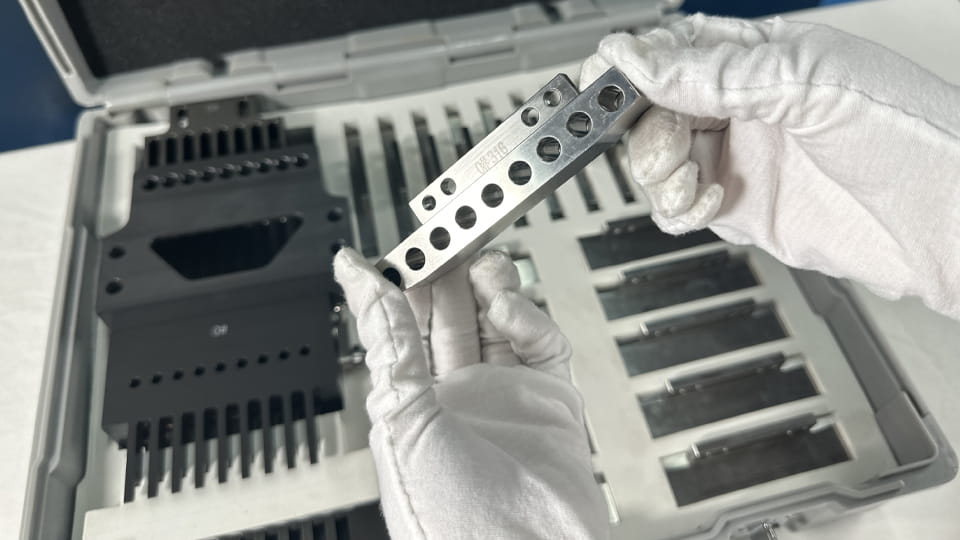
Pergantian yang lama dapat mengikis manfaat dari mesin fleksibel mana pun. Mesin pengisian kapsul putar tradisional sering kali dibutuhkan 4–6 jam untuk perubahan ukuran. Desain modern menggunakan penggerak servo dan pelat cetakan pengunci cepat untuk memotong secara dramatis – sering kali demikian 30–45 menit untuk pertukaran ukuran penuh. Saat mengevaluasi, minta pemasok untuk menunjukkan perubahan ukuran pada ukuran kapsul Anda.
Kemudahan pergantian berasal dari komponen modular: biasanya stasiun pemberian kapsul, pelat cetakan atas/bawah, cakram dosis dan pengikis, batang pengisi, dan pemandu pelepasan semuanya harus diganti dengan ukuran baru. Mesin dengan klem tanpa alat atau rumah cetakan berindeks dapat menghemat waktu di sini. Misalnya, Seri NJP Jinlu menggunakan a desain cetakan modular yang memungkinkan perubahan cetakan penuh di bawah 15 menit. Dalam satu kasus dunia nyata, beralih dari pengisi yang digerakkan oleh bubungan ke pergantian satu potong yang digerakkan oleh servo 6 jam sampai 35 menit, menabung \$120,000 per tahun.
Dalam ringkasan, meminimalkan pergantian: carilah mesin dengan pelepasan cetakan cepat, fitur penyesuaian prasetel, dan menyimpan “resep” sehingga operator tidak perlu melakukan penyesuaian offset secara manual setiap saat. Jika Anda mengharapkan lusinan perubahan ukuran per kuartal, kecepatan pergantian harus menjadi kriteria pemilihan utama.
CMO farmasi harus menerapkan kontrol pembersihan dan kontaminasi yang ketat saat menjalankan beberapa produk dalam satu mesin. Panduan FDA (dan logika GMP sederhana) menyatakan bahwa peralatan yang tidak khusus harus dibersihkan di antara produk yang berbeda untuk mencegah kontaminasi silang. nyatanya, sebuah surat peringatan FDA baru-baru ini menyatakan bahwa “tidak dapat diterima berdasarkan CGMP untuk memproduksi obat-obatan dengan menggunakan peralatan yang sama… juga digunakan untuk memproduksi produk non-farmasi” tanpa pembersihan yang ketat.
Untuk memenuhi persyaratan ini, pilihlah pengisi kapsul pil dengan desain sanitasi: konstruksi tahan karat 316L yang halus, tepi membulat, celah minimal, dan bantalan yang disegel jika memungkinkan. Banyak mesin sekarang mendukung Bersih di Tempatnya (CIP): bola semprot internal dan sistem pembersihan bersirkulasi yang memungkinkan Anda mencuci permukaan bagian dalam tanpa harus membongkar sepenuhnya. Jika CIP tidak tersedia, verifikasi bahwa semua hopper, cakram dosis, dan baki umpan dapat dilepas atau dibuka tanpa alat untuk pembersihan manual.
Tetapkan juga protokol pembersihan yang tervalidasi: kekotoran dalam kasus terburuk (misalnya. bahan yang sangat kuat atau lengket) harus dapat dihilangkan hingga batas residu yang dapat diterima. Pemasok peralatan farmasi harus menyediakan panduan pembersihan atau bahkan simulasi uji kontaminasi. Akhirnya, simpan log pembersihan menyeluruh seperti yang disyaratkan di bawah 21 CFR 211.67(B). (Seperti yang diingatkan oleh seorang inspektur FDA, validasi pembersihan yang tidak memadai merupakan pelanggaran berulang.) Pendeknya: desain untuk kebersihan dan dokumentasikan semuanya. Memastikan pergantian yang cepat dapat diperdebatkan jika mesin tidak dapat dibersihkan dengan cepat dan andal antar batch.
Tidak semua rumus mengalir sama. Peralatan pengisian kapsul menggunakan mekanisme pemberian dosis yang berbeda untuk menangani variabilitas produk. Sistem umum meliputi:
Bertujuan untuk akurasi berat isi dalam ±1–3% dari target. Mesin tingkat atas (seperti farmasi kelas atas mesin pembuat kapsul) mengiklankan presisi dalam kisaran ini. Misalnya, Pengisi otomatis NJP-3800D Jinlu tetap bertahan >97% akurasi berat. Selalu verifikasi dengan data pengujian: tanyakan kepada vendor tentang variasi berat tipikal sesuai ukuran dan berat kapsul target Anda.
Pemilihan sistem dosis harus sesuai dengan bahan Anda. Jika Anda menanganinya dengan sangat baik, elektrostatis, atau bubuk kohesif, pastikan fitur seperti pelapis antistatis atau platform fluidisasi tersedia. Dan selalu pastikan bahan bagian kontak sesuai dengan bahan kimia Anda (umumnya 304 atau 316 baja tahan karat adalah standar). Dalam ringkasan, cocokkan teknologi takaran dengan produk Anda dan konfirmasikan spesifikasi akurasi dengan bukti.
Memilih antara satu mesin multi-ukuran atau beberapa mesin khusus adalah trade-off klasik. Pertimbangkan pro dan kontra ini (tabel di bawah ini) dalam konteks SKU dan volume Anda.
| Aspek | Satu Mesin Multi-Ukuran | Beberapa Mesin Khusus |
| Kisaran Kapsul | Menangani jangkauan penuh (misalnya. #000–#5) dengan pergantian. Memerlukan pertukaran alat antar ukuran. | Setiap mesin disesuaikan dengan satu ukuran (tidak diperlukan swap per mesin). |
| Biaya Modal | Turunkan dimuka: beli satu unit kelas atas, bukan banyak. | Lebih tinggi: beberapa mesin (seringkali dengan fitur yang tumpang tindih). |
| Ruang Lantai | Menghemat ruang dengan satu tapak. | Jejak yang lebih besar; beberapa unit membutuhkan lebih banyak ruang. |
| Hasil | Dibatasi oleh kecepatan maksimal satu mesin. Jika volumenya tinggi, Anda mungkin memerlukan mesin yang sangat besar. | Throughput gabungan bisa lebih tinggi (berjalan paralel); ukuran dapat sesuai dengan volume masing-masing produk. |
| Fleksibilitas Campuran Produk | Sangat tinggi: produk apa pun dapat menggunakan mesin yang sama (dengan pergantian). Cocok untuk banyak SKU. | Diperbaiki dengan mesin; beralih produk berarti memindahkan batch antar mesin atau membeli unit tambahan. |
| Pergantian & Waktu henti | Anda akan mengalami waktu henti untuk setiap perubahan ukuran (dan pembersihan) pada satu baris itu. | Tidak ada waktu henti perubahan ukuran pada setiap unit (mereka tetap siap); tapi kamu tetap perlu dibersihkan. |
| Risiko Kontaminasi Silang | Setiap pembersihan batch antar produk, risiko kontaminasi silang yang lebih tinggi jika tidak dibersihkan dengan baik. | Jika didedikasikan per SKU atau penahanan, risiko penularan silang yang lebih rendah (dengan lebih sedikit siklus pembersihan yang diperlukan). |
| Pemeliharaan | Hanya satu mesin yang harus dirawat dan inventaris suku cadangnya. | Lebih banyak mesin berarti lebih banyak perawatan dan suku cadang yang harus dikelola. |
| Pemanfaatan | Mungkin ada waktu menganggur jika permintaan rendah untuk beberapa ukuran. | Setiap mesin dapat berjalan terus menerus pada ukuran yang ditentukan jika ada permintaan. |
| Penskalaan Masa Depan | Skalakan dengan meningkatkan ke model yang lebih cepat atau menambahkan mesin jenis yang sama nanti. | Untuk meningkatkan kapasitas suatu ukuran, tambahkan lebih banyak unit sebesar itu. |
Pengisi fleksibel tunggal umumnya paling baik: kamu punya banyak batch kecil hingga menengah dan membutuhkan efisiensi ruang atau modal, dan Anda dapat menjadwalkan pergantian. Beberapa mesin khusus lebih baik jika: satu atau dua produk mendominasi volume (membenarkan mesin mereka sendiri), atau jika risiko kontaminasi memerlukan pemisahan yang ketat (misalnya. satu mesin untuk sangat ampuh, yang lain untuk standar formulasi). Untuk sebagian besar CMO dengan banyak produk volume sedang, satu mesin yang dapat beradaptasi – atau sepasang mesin yang fleksibel – seringkali merupakan hasil yang optimal.
Mesin pengisian kapsul semi-otomatis dan otomatis masing-masing memiliki kasus penggunaan. Umumnya:
| Fitur | Pengisi Semi-Otomatis | Pengisi Sepenuhnya Otomatis |
| Keluaran (batas/jam) | Sedang: ~10.000–40.000 (khas) | Tinggi: ~30.000–200.000+ (hingga 468k di model teratas) |
| Biaya Investasi | Lebih rendah (puluhan ribu USD). | Jauh lebih tinggi (biasanya label harga enam digit). |
| Tenaga Kerja Operator | Memerlukan 1 operator memuat kapsul dan bubuk. | Minimal (1–2 operator) – mesin mengumpan dan mengeluarkan secara otomatis. |
| Fleksibilitas | Bagus: banyak yang bisa berganti ukuran, tetapi beban manual menambah waktu siklus. | Bagus: beberapa dapat berganti ukuran juga, tapi dengan program preset; berjalan terus menerus dengan sangat cepat. |
| Pergantian | Umumnya lebih mudah (stasiun yang lebih sedikit), tapi masih membutuhkan waktu beberapa menit untuk menukar bagian. | Juga membutuhkan waktu beberapa menit, tetapi mesin sering kali menyertakan penyesuaian otomatis dan penyimpanan resep untuk pergantian. |
| Ruang Lantai | Jejak yang lebih kecil. | Lebih besar, dengan lebih banyak stasiun/menara. |
| Pengguna Biasa | Perusahaan kecil, nutraceutical, laboratorium kontrak, atau CMO dengan <40kebutuhan k/jam (sebagai solusi “jembatan”.). | Produsen farmasi/nutra besar dengan permintaan tinggi. Lebih baik jika permintaannya dibenarkan >50throughput k/jam. |
Dalam praktiknya, banyak pembuat kontrak temukan mesin pengisian kapsul semi otomatis ideal untuk volume awal atau batch percontohan, karena mereka sangat mengurangi tenaga kerja vs manual tanpa mengeluarkan uang terlalu banyak untuk satu lini penuh. Namun seiring pertumbuhan atau diversifikasi lini produk, konsistensi dan kecepatan mesin putar otomatis menjadi menarik. Itu tabel di atas menyoroti bahwa kecepatan perdagangan semi-otomatis untuk biaya dan kesederhanaan, sedangkan otomatisasi unggul dalam volume tinggi namun memerlukan investasi dan keterampilan teknis yang signifikan untuk menjalankannya.

Saat berbicara dengan produsen mesin farmasi atau OEM, bertanya secara langsung:
Bonusnya: “Fitur keamanan/penahanan apa untuk API yang ampuh?” Jika berlaku, verifikasi isolator glovebox atau sistem filter. Kesediaan vendor untuk menjawab pertanyaan-pertanyaan ini secara menyeluruh akan membedakan mitra yang memahami kebutuhan CMO.
Untuk mengukur peralatan atau memilih jumlah mesin, ikuti langkah-langkah ini:
Selalu berbuat salah di pihak fleksibilitas dengan ruang kepala. Untuk pekerjaan kontrak, permintaan dapat melonjak atau berubah. Memilih mesin yang memenuhi akurat baseline mungkin menyebabkan penurunan kapasitas di kemudian hari. Jika anggaran memungkinkan, mesin dengan kapasitas ekstra 20–30%. (atau opsi untuk menambahkan unit lain dengan mudah) seringkali lebih aman.
Meringkas pertimbangan:
Dalam praktiknya, sebagian besar CMO memulai dengan satu mesin kapsul otomatis semi-otomatis atau lebih kecil yang fleksibel (untuk bertindak sebagai seorang generalis) dan menambahkan mesin khusus hanya jika volume produk atau kebutuhan peraturan membenarkan hal tersebut.
Sebagai contoh mesin multi produk, Jinlu Pengisi kapsul otomatis seri NJP menggambarkan banyak spesifikasi yang diinginkan. Misalnya, itu NJP-1500D model:

Jinlu juga mendukung mesin dengan jaminan dan dokumentasi (lihat kami Dapatkan Penawaran dan halaman kontak). Sedangkan spesifikasi NJP kami soroti sebagai ilustrasi, vendor mana pun idealnya harus mencocokkan atau melampaui fitur-fitur ini untuk aplikasi CMO.
Gunakan daftar periksa ini untuk membandingkan vendor secara berdampingan. Terbaik perangkat pengisian kapsul karena CMO Anda akan memenuhi kebutuhan Anda saat ini Dan sisakan ruang untuk proyek besok.
Memilih mesin pembuat kapsul yang tepat adalah keseimbangan fleksibilitas, kecepatan, dan kualitas. Untuk CMO multi-produk, mesin pengisian kapsul otomatis kelas atas sering kali memberikan keserbagunaan yang dibutuhkan: ini mendukung semua ukuran (#000–#5), perubahan cetakan yang cepat, dan pembersihan tervalidasi. Seri NJP Jinlu adalah salah satu contoh peralatan tersebut, namun prinsip ini berlaku untuk model pemasok mana pun. Evaluasi mesin berdasarkan portofolio dan prioritas spesifik Anda, dan jangan ragu untuk melibatkan tim teknik dan QA sejak dini.
Saat Anda siap untuk melanjutkan, jelajahi penawaran pengisi kapsul Jinlu (lihat kami Mesin Pengisian Kapsul bagian) atau hubungi teknisi penjualan kami untuk mendapatkan penawaran khusus. Pastikan vendor memahami alur kerja multi-SKU dan persyaratan peraturan Anda. Dengan mesin yang tepat di tempatnya, CMO Anda dapat secara efisien memproduksi berbagai macam produk, memenuhi standar GMP, dan merespons permintaan klien dengan gesit.
Siap mendiskusikan kebutuhan pengisian kapsul Anda? Hubungi Jinlu Packing melalui kami Hubungi Kami halaman atau minta penawaran terperinci untuk panduan tentang solusi optimal.
Untuk sebagian besar CMO komersial multi-produk, pilihan terbaik adalah mesin pengisian kapsul otomatis dan fleksibel yang berukuran sesuai volume batch sebenarnya, bukan kecepatan maksimum yang mungkin. Prioritaskan kompatibilitas formulasi, pergantian mekanis yang cepat, kemampuan bersih, kisaran ukuran kapsul, dosis berulang, dukungan validasi dan keluaran harian yang efektif.
Ya, asalkan mesin dirancang dengan suku cadang pengganti yang diperlukan. Jinlu saat ini mendaftar #000, #00, #0, #1, #2, #3, #4 Dan #5 kapsul keras untuk NJP-1200C, NJP-1500D dan NJP-7800D. Mengubah ukuran kapsul biasanya memerlukan perubahan format/peralatan, jadi pembeli harus menyertakan setiap ukuran yang direncanakan dalam URS dan penawaran.
Ya, pengisi kapsul industri yang sesuai dapat mengolah bubuk dan pelet, dan beberapa arsitektur dapat mengisi kombinasi ke dalam kapsul yang sama menggunakan stasiun pemberian dosis terpisah. ACG, Syntegon dan MG2 semuanya mendokumentasikan kemampuan pengisian multi-bahan atau kombinasi dalam portofolio pengisian kapsul mereka. Konfigurasi yang tepat harus diverifikasi karena “mendukung bubuk dan pelet” tidak berarti kombinasi pengisian simultan disertakan sebagai standar.
Selalu pisahkan pergantian mekanis dari pergantian produk yang divalidasi. Jinlu menerbitkan angka penggantian cetakan sekitar 15 menit untuk NJP-1200C, NJP-1500D dan NJP-7800D, tetapi pergantian produk secara penuh juga dapat mencakup izin lini, pembongkaran, pembersihan, pengeringan, inspeksi, verifikasi dan rilis terdokumentasi. FDA mengharapkan proses pembersihan terbukti efektif, jadi waktu pergantian yang lengkap sangat bergantung pada produk dan prosedur pembersihan yang divalidasi di lokasi.
Pengisi kapsul semi-otomatis dapat menjadi pilihan tepat untuk batch kecil karena biaya modalnya lebih rendah dan peralatannya relatif sederhana. Mesin pengisian kapsul otomatis menjadi lebih menarik seiring dengan volume komersial, biaya tenaga kerja, persyaratan pengulangan dan otomatisasi hilir meningkat. CGN-208D semi-otomatis Jinlu saat ini terdaftar di hingga 30,000 kapsul/jam, dibandingkan dengan 72,000, 90,000 Dan 468,000 kapsul/jam untuk tiga model otomatis yang dibahas di atas.
Mulailah dengan desain yang higienis, bagian kontak produk yang dapat diakses, pengendalian debu yang efektif dan prosedur pembersihan yang dibenarkan secara ilmiah. Kemudian validasi pembersihan sesuai persyaratan sistem mutu fasilitas. Untuk produk yang ampuh, menilai apakah diperlukan peralatan khusus atau pengungkung yang dirancang khusus, dibandingkan mengandalkan ekstraksi debu biasa. FDA mengidentifikasi pencegahan kontaminasi dan sisa makanan sebagai alasan utama pembersihan peralatan, sementara peralatan kapsul khusus tersedia dengan penahanan berperingkat OEB dan pembersihan WIP.
Tidak ada harga mesin pengisian kapsul tunggal yang berguna untuk produksi farmasi multi-produk karena konfigurasinya mendorong biaya. Keluaran, perkakas kapsul, modul dosis, pengumpan bubuk atau pelet, penahanan, penimbangan, otomatisasi, dokumentasi validasi, instalasi, suku cadang dan layanan semuanya mempengaruhi proyek. Bandingkan total biaya kepemilikan dan biaya per kapsul yang dapat dijual, bukan harga beli saja.
Strategi kualifikasi yang tepat bergantung pada sistem mutu produsen farmasi dan persyaratan pasar yang berlaku. Lampiran GMP UE 15 secara eksplisit menggambarkan IQ, OQ dan PQ serta membahas URS dan FAT/SAT. Panduan validasi proses FDA juga mengharapkan peralatan memenuhi syarat sesuai untuk penggunaan yang dimaksudkan sebelum kualifikasi proses komersial. Dokumentasi vendor dapat mendukung pekerjaan ini, namun hal ini tidak menggantikan kualifikasi dan tanggung jawab validasi yang disetujui pengguna.
Sistem takaran yang ideal bergantung pada karakteristik produk.
• Formulasi bubuk sering kali menggunakan sistem tamping pin atau dosator.
• Butiran memerlukan mekanisme pemberian makanan khusus.
• Pelet dan tablet mikro mungkin memerlukan unit dosis khusus.
Mesin pengisian kapsul yang fleksibel harus mendukung berbagai metode pengisian untuk memenuhi perubahan kebutuhan produksi.
Itu tergantung pada strategi produksi. Satu mesin pengisian kapsul fleksibel seringkali cocok untuk produsen dengan banyak SKU, perubahan produk yang sering, dan volume produksi sedang. Mesin khusus mungkin lebih efisien untuk produk bervolume sangat tinggi atau aplikasi khusus.
Referensi:
1.Pengaruh sifat aliran serbuk pada keseragaman berat pengisian kapsul —— Taylor & Fransiskus Daring
2.Pengisian kapsul produk inhalasi dosis rendah: atribut material penting dan parameter proses —— Perpustakaan Kedokteran Nasional
3.Pengaruh atribut bahan dan parameter proses terhadap keseragaman lapisan serbuk selama proses pengisian kapsul dosator dosis rendah —— Sains Langsung
4.PEMODELAN PROSES PENGISIAN KAPSUL DOSATOR UNTUK KAPSUL KERAS —— Perpustakaan Daring WILEY
5.Pengisian bubuk ke dalam kapsul gelatin keras pada mesin pengisi tamp —— Sains Langsung