Memilih kapsul nabati bukan sekadar keputusan label. Untuk pengadaan, hal ini mempengaruhi kualifikasi dan biaya pemasok. Untuk tim formulasi, itu mengubah lingkungan kelembaban dan oksigen di sekitar pengisian. Untuk produksi, itu dapat mempengaruhi pemisahan kapsul, mengunci, tingkat penolakan, dan kecepatan pengisian.
Jadi HPMC vs Pullulan vs Kapsul Pati pertanyaan harus dimulai dengan produk, bukan cangkangnya. HPMC sering kali merupakan kandidat pertama yang praktis untuk bahan pengisi yang bersifat higroskopis atau sensitif terhadap kelembapan. Pullulan patut mendapat perhatian serius karena oksidasi merupakan risiko utama. Kapsul berbahan dasar pati dapat bekerja dengan baik bila sistem pati tumbuhan tertentu atau posisi label bersih diperlukan, namun “kapsul pati” merupakan suatu kategori yang luas dan bukan suatu kategori kimia yang terstandarisasi. Penelitian yang ditinjau oleh rekan sejawat pada bahan kapsul berbasis pati menunjukkan bahwa komposisi polimer dan sumber pati dapat mempengaruhi sifat film dan mekanik secara signifikan..
Rute teraman itu sederhana: mendefinisikan risiko formulasi, memverifikasi dokumen, uji shell yang sebenarnya pada yang sebenarnya Mesin pengisian kapsul, dan konfirmasi produk jadi umur simpan dalam yang dimaksudkan kemasan.
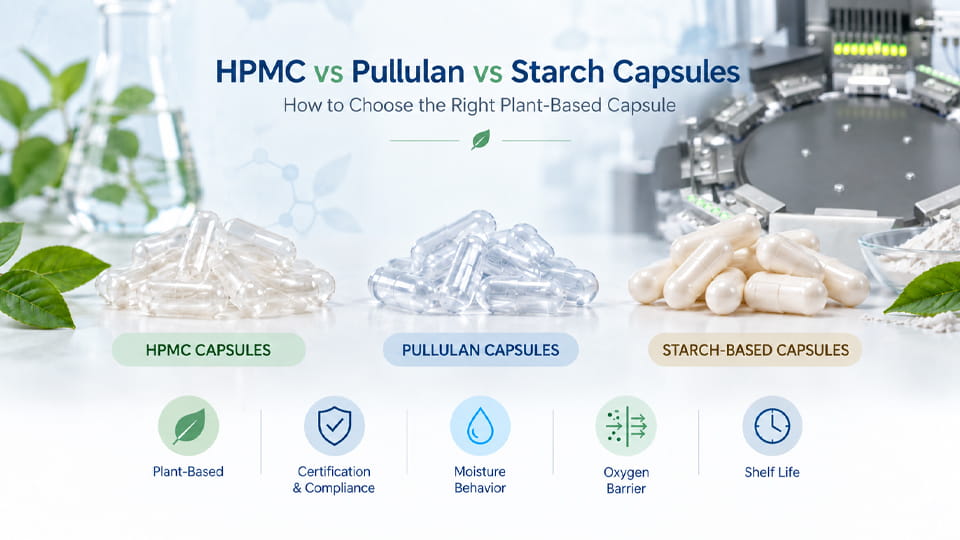
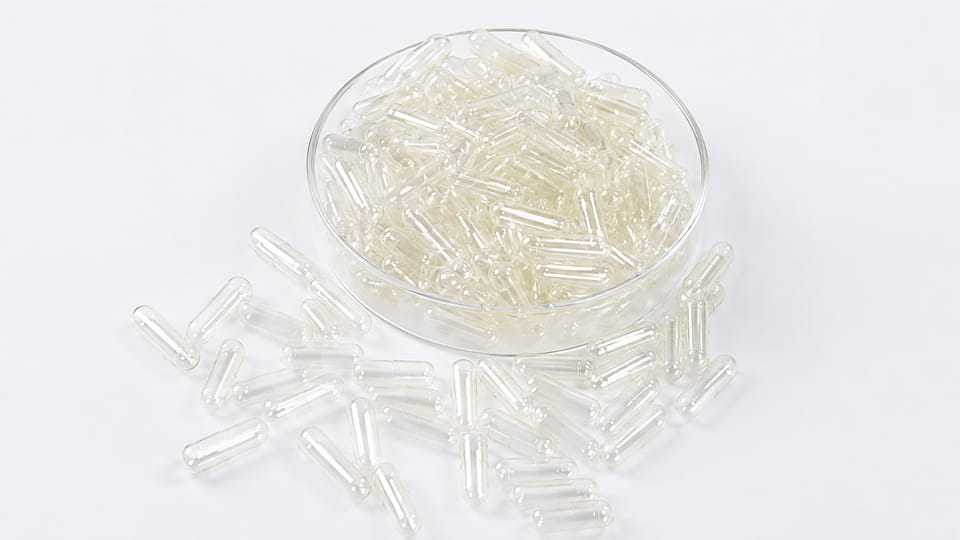
kapsul HPMC. HPMC berarti hidroksipropil metilselulosa, disebut juga hipomelosa. Ini digunakan sebagai polimer pembentuk film pada tutup dan badan kapsul. Sistem kapsul HPMC komersial belum tentu sama. Tergantung pada teknologi dan pemasok, cangkangnya mungkin berisi alat bantu pemrosesan atau sistem pembentuk gel yang berbeda, jadi tim pengadaan harus selalu meninjau spesifikasi kapsul yang tepat daripada berasumsi bahwa semua cangkang HPMC berperilaku sama.
Oleh karena itu HPMC adalah kandidat pertama yang logis ketika Anda membutuhkannya kapsul untuk bubuk higroskopis atau bahan yang sensitif terhadap kelembapan. Perbandingan gelatin yang dipublikasikan, HPMC, dan kapsul keras pullulan menemukan bahwa HPMC memiliki perilaku penyerapan dan retensi kelembapan yang paling lemah di antara ketiga bahan yang diuji..
Kapsul Pullulan. Pullulan adalah polisakarida yang dihasilkan melalui fermentasi. Tanaman Capsugel Komersial, Misalnya, menggunakan bahan baku turunan tapioka yang difermentasi dengan Tunas Aureobasidium. Pullulan sering dipertimbangkan ketika paparan oksigen merupakan masalah stabilitas utama karena karakteristik penghalang oksigennya yang baik.
Pullulan bukan sekadar nama lain dari pati. Pati dapat menjadi bahan baku fermentasi, tapi pullulan adalah polimer yang dihasilkan melalui fermentasi. Perbedaan itu penting ketika membandingkan spesifikasi pemasok.
Kapsul pati. Label ini memerlukan perhatian lebih. “Berbasis pati” dapat merujuk pada sistem pati yang dimodifikasi, pati hidroksipropil, atau campuran yang mengandung pembentuk film lainnya. Penelitian pada sistem kapsul HPMC/hidroksipropil-pati menunjukkan bahwa komposisi polimer dapat mempengaruhi pembentukan lapisan film dan sifat mekanik, itulah sebabnya “kapsul pati” tidak boleh diperlakukan sebagai satu kategori bahan standar: rasio polimer dan sumber pati dapat mengubah film, kekuatan, kekerasan, dan karakteristik mekanik lainnya.
Ketika pemasok menawarkan “kapsul tapioka,” “Kapsul pati,” atau “kapsul pati yang dimodifikasi,” tanyakan komposisi dan spesifikasi cangkang secara lengkap sebelum memperlakukannya setara dengan HPMC atau pullulan.
Bagi pembaca yang membutuhkan lebih banyak latar belakang, JinluPacking sudah memiliki artikel khusus tentang kapsul sayuran, kapsul pullulan, Dan kapsul kosong.
Tabel adalah titik awal, bukan peringkat materi final. Performa kapsul bergantung pada formulasi cangkang yang tepat, bahan pengisi, sistem pengemasan, kondisi penyimpanan, dan proses manufaktur. Untuk produk komersial, pilihan akhir harus dikonfirmasi melalui pengujian kompatibilitas dan stabilitas formulasi.
| Faktor | Kapsul HPMC | Kapsul Pullulan | Kapsul Berbasis Pati |
|---|---|---|---|
| Polimer utama | Hipromelosa (HPMC), turunan selulosa | Pullulan, polisakarida yang berasal dari fermentasi | Sistem pati atau pati termodifikasi; komposisinya bervariasi |
| Penentuan posisi berbasis tanaman | Kuat | Kuat | Kuat, tergantung bahan pastinya |
| Perilaku kelembaban | Umumnya kelembaban cangkang rendah; pilihan yang baik untuk mengevaluasi pengisian yang sensitif terhadap kelembapan | Penyerapan air lebih rendah dibandingkan gelatin dalam penelitian komparatif, tetapi umumnya lebih tinggi dari HPMC pada penelitian tersebut | Sangat formulasi- dan bergantung pada pemasok |
| Penghalang oksigen | Berguna, tapi biasanya bukan keuntungan utamanya | Alasan utama untuk mempertimbangkan pullulan untuk formulasi yang peka terhadap oksigen | Pemasok- dan bergantung pada formulasi |
| Aplikasi yang umum | Serbuk higroskopis, API yang sensitif terhadap kelembaban, penggunaan farmasi dan nutraceutical yang luas | Peka terhadap oksigen, formulasi nutraceutical premium dan probiotik pilihan | Platform berbasis pati atau label bersih tertentu |
| vegan / Halal / Halal | Sertifikasi mungkin tersedia; memverifikasi produk dan pemasok yang tepat | Sertifikasi mungkin tersedia; memverifikasi produk dan pemasok yang tepat | Verifikasi komposisi dan sertifikasi yang tepat |
| Status USP–NF | Monograf Cangkang Kapsul Hipromelosa Keras | Monograf Cangkang Kapsul Pullulan Keras | Verifikasi bahan yang tepat dan standar yang berlaku |
| Mengisi kinerja | Banyak digunakan dalam pengisian kapsul komersial; memvalidasi shell yang memenuhi syarat | Opsi komersial tersedia; memvalidasi shell tertentu dan pengaturan mesin | Validasi cangkang yang tepat dengan peralatan pengisian yang dimaksudkan |
| Biaya relatif | Biasanya moderat | Seringkali lebih tinggi | Variabel |
| Titik awal terbaik ketika… | Sensitivitas kelembaban dan kompatibilitas formulasi yang luas adalah prioritas | Sensitivitas oksigen menjadi perhatian utama | Formulasi berbasis pati atau persyaratan sumber tertentu membuatnya cocok |
USP mendefinisikan secara terpisah Cangkang Kapsul Hipromelosa Keras Dan Cangkang Kapsul Pullulan Keras sebagai cangkang dua bagian, dan kedua monografi mengizinkan bahan tambahan atau bantuan pemrosesan tertentu. Itu adalah pengingat pengadaan yang berguna: beli dengan spesifikasi yang disetujui untuk kapsul yang tepat, bukan hanya nama polimernya.
Mulailah dengan jalur degradasi yang dominan. Hal ini biasanya memberikan jawaban yang lebih jelas dibandingkan memulai dengan klaim vegan, harga, atau penampilan.
Jika penuangan aktif menarik air, HPMC biasanya merupakan kandidat pertama yang layak untuk disaring. Kapsul HPMC komersial memiliki kandungan air cangkang yang relatif rendah, dan penelitian yang ditinjau oleh rekan sejawat menunjukkan penyerapan air yang lebih rendah untuk HPMC dibandingkan pullulan atau gelatin dalam kondisi yang diteliti.
Benar bukan jadikan cangkang HPMC sebagai paket tahan lembab. Penelitian tentang permeabilitas cangkang kapsul menunjukkan bahwa pergerakan air bergantung pada kelembapan relatif dan penyerapan bahan, difusi, dan perilaku permeabilitas. Kelembapan masih bisa berpindah antar kemasan, kerang, ruang kepala, dan isi.
Uji coba yang berguna adalah mengisi kapsul yang representatif, kondisikan pada kelembapan produksi yang diharapkan, lalu pantau kondisi cangkangnya, mengisi aktivitas air, pengujian, produk degradasi, dan pembubaran selama stabilitas.
HPMC sekali lagi sering kali masuk akal sebagai percobaan pertama karena kelembapan cangkang yang lebih rendah menghilangkan satu kemungkinan sumber air. Capsugel secara khusus memposisikan Vcaps Plus untuk higroskopis dan sensitif terhadap kelembapan Lebah.
Tapi jangan berhenti di kapsulnya saja. Miskin kemasan dapat dengan mudah menghapus manfaat cangkang dengan kelembapan rendah.
Pullulan adalah titik awal yang lebih logis ketika oksidasi adalah modus kegagalan utama. Ini bisa termasuk antioksidan, bahan aktif botani tertentu, bubuk minyak, dan lainnya kapsul untuk bahan yang sensitif terhadap oksigen. Pullulan banyak dipertimbangkan ketika permeabilitas oksigen yang rendah merupakan persyaratan formulasi yang penting.
Jangan mengubahnya menjadi “pullulan selalu memberikan umur simpan paling lama.” Oksigen juga bisa berasal dari ruang kepala, permeabilitas paket, pembukaan wadah berulang kali, dan oksigen sudah ada dalam formulasi. Untuk produk berisiko tinggi, pembilasan nitrogen, peredam oksigen, atau paket penghalang yang lebih tinggi mungkin masih sesuai sebagai bagian dari sistem yang lengkap.
A probiotik adalah contoh bagus mengapa seleksi satu dimensi tidak berhasil. Beberapa strain sangat sensitif terhadap kelembapan; yang lain sangat sensitif terhadap oksigen. HPMC mungkin masuk akal ketika kelembapan merupakan risiko dominan, sementara pullulan mungkin lebih menarik jika paparan oksigen menjadi perhatian utama. Jawaban yang benar harus berasal dari data stabilitas CFU spesifik regangan, bukan klaim umum “kapsul probiotik terbaik”..
Periksa higroskopisitas, aktivitas air, sisa pelarut, komponen reaktif, dan konten yang mudah berubah. HPMC adalah dasar praktis. Pullulan menjadi lebih menarik ketika oksidasi atau penentuan posisi label bersih premium penting. Cangkang berbahan dasar pati juga bisa digunakan, namun pengujian cangkang yang tepat sangat penting karena kategorinya kurang seragam.
Pengambilan Kunci:Kapsul nabati yang tepat tidak ditentukan oleh kata “nabati” saja. Cocokkan cangkang dengan risiko stabilitas yang dominan, kemudian konfirmasikan pilihan melalui uji stabilitas dan pengisian khusus formulasi.
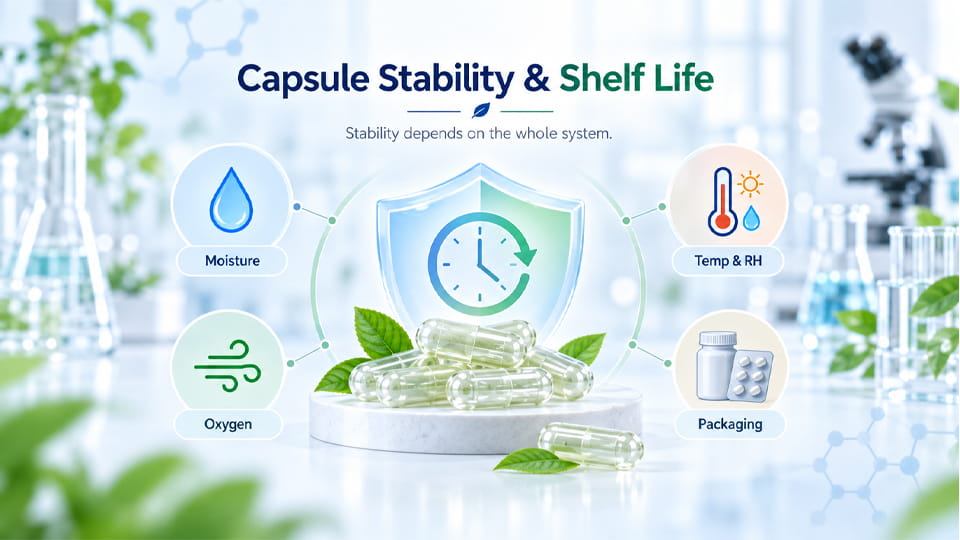
Umur simpan adalah milik keseluruhan sistem:
mengisi formulasi + cangkang kapsul + proses + kemasan primer + kondisi penyimpanan.
Itulah aturan utamanya.
Untuk kelembapan, HPMC memiliki bukti kuat sebagai opsi dengan kelembapan rendah. Penelitian komparatif menemukan penyerapan dan retensi kelembaban yang lebih rendah untuk HPMC dibandingkan pullulan dan gelatin. Perbandingan pekerjaan terpisah HPMC dan agar-agar juga menunjukkan bahwa penyerapan dan permeabilitas berubah dengan kelembaban relatif, jadi “kelembaban cangkang rendah” tidak sama dengan “transmisi kelembapan nol”.
Untuk oksigen, pullulan memiliki alasan yang lebih kuat ketika cangkang itu sendiri merupakan bagian penting dari strategi pengendalian oksigen.
Kemudian lihat paketnya.
Kapitel Umum USP <671> Kontainer—Pengujian Kinerja mengatasi transmisi uap air untuk sistem pengemasan yang digunakan dengan bentuk sediaan oral padat, ketika <670> Komponen Pengemasan Tambahan mencakup komponen seperti pengering. Standar-standar ini memperkuat poin praktis: pengering adalah salah satu bagian dari strategi pengemasan, bukan pengganti botol yang memenuhi syarat, penutup, atau melepuh itu sendiri.
Untuk produk kapsul yang sensitif terhadap kelembapan, bandingkan botol yang diusulkan, lapisan penutup, pengering konfigurasi, atau struktur melepuh dalam kondisi stabilitas yang relevan. Untuk produk yang sangat sensitif terhadap oksigen, mengevaluasi kemasan penghalang oksigen dan kontrol ruang kepala bersama dengan bahan kapsul.
Umur simpan sebuah kapsul kosong cangkang tidak boleh digunakan sebagai tanggal kedaluwarsa produk jadi. Harapan stabilitas FDA memperlakukan konfigurasi penutupan kontainer komersial sebagai bagian dari program stabilitas, jadi formulasi akhir harus diuji dalam paket pasar yang diusulkan.
Bagaimana Dengan Kapsul Berbasis Pati?
Kapsul berbahan dasar pati memerlukan evaluasi produk yang lebih spesifik. Berbeda dengan HPMC dan pullulan, “Berbasis pati” dapat menggambarkan sistem atau campuran pati termodifikasi yang berbeda, jadi kelembapan dan perilaku mekanisnya tidak dapat diasumsikan hanya dari kata pati saja. Untuk produk yang sensitif terhadap stabilitas, tanyakan kepada pemasok tentang komposisi cangkang yang tepat, spesifikasi kelembaban, data permeabilitas jika tersedia, dan mendukung informasi stabilitas sebelum memperlakukan cangkang berbahan dasar pati setara dengan HPMC atau pullulan.
Polimer yang berasal dari tumbuhan tidak secara otomatis memberikan produk akhir Anda a vegan, halal, atau halal mengeklaim.
Pemasok kapsul komersial menunjukkan mengapa sertifikasi harus diperiksa pada tingkat produk dan lokasi produksi. Produk komersial tertentu mungkin mengandung vegetarian, vegan, halal, halal, dan sertifikasi non-transgenik, tetapi sertifikasi dapat berbeda-beda di setiap lokasi produksi. Untuk klaim vegan, bahkan pewarna dan sistem pencetakan dapat mempengaruhi status sertifikasi.
Untuk pengadaan, meminta arus:
COA, spesifikasi kapsul jadi, komposisi bahan lengkap, lokasi produksi, GMP/sertifikasi mutu, batas mikrobiologis, kondisi penyimpanan, pernyataan alergen, Pernyataan transgenik, dan dokumentasi pengotor yang relevan.
Dimana klaim pemasaran penting, mendapatkan arus sebenarnya vegan, halal, dan sertifikat halal daripada mengandalkan email penjualan atau pernyataan bahwa polimer tersebut “berbasis tanaman.”
Untuk penggunaan farmasi, juga memeriksa posisi kompendial dan peraturan yang berlaku. USP – NF memiliki monografi khusus untuk Cangkang Kapsul Hipromelosa Keras Dan Cangkang Kapsul Pullulan Keras.
Di Amerika Serikat, Basis Data Bahan Tidak Aktif FDA dapat membantu para perumus memahami hal ini eksipien sebelumnya digunakan dalam produk obat yang disetujui. FDA menggambarkan database sebagai bantuan pengembangan yang terkait dengan faktor-faktor termasuk rute, bentuk sediaan, dan penggunaan sebelumnya; oleh karena itu, hal ini tidak boleh dianggap sebagai “persetujuan FDA” untuk setiap HPMC, pullulan, atau kelas kapsul pati.
Untuk Eropa, memverifikasi teks Farmakope Eropa saat ini dan persyaratan pasar sasaran daripada berasumsi bahwa pernyataan USP sudah cukup. Basis Data Pengetahuan EDQM adalah sumber resmi untuk memeriksa Ph.D. saat ini. euro. teks dan status revisi.
Aturan kualifikasi yang berguna adalah:
Verifikasi pemasok yang tepat + lokasi produksi + nilai + warna + sistem pencetakan + pasar sasaran.
Kebiasaan yang satu itu mencegah banyak kejutan sertifikasi di kemudian hari.
Sering, ya—tapi “mesin yang sama” tidak berarti “pengaturan yang sama”.
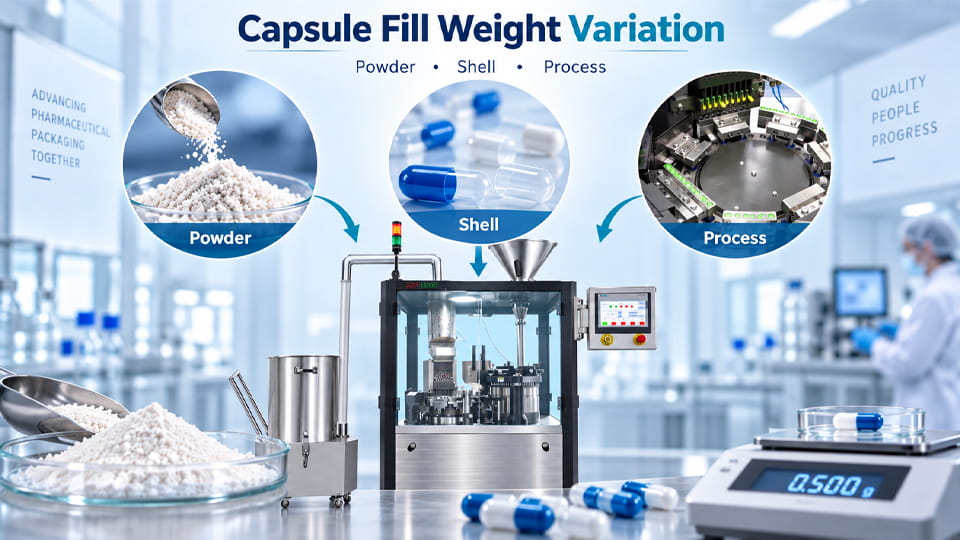
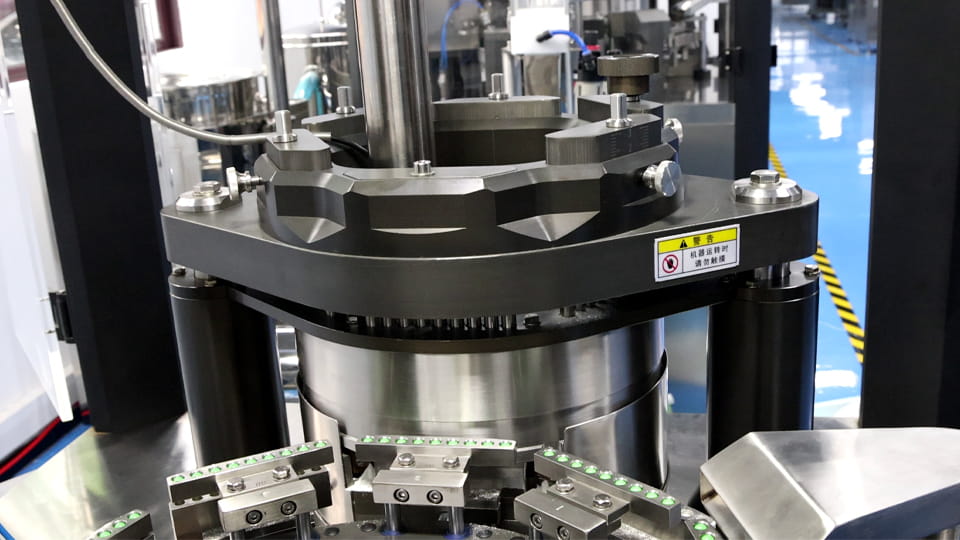
Di sisi peralatan, JinluPacking's Mesin pengisian kapsul otomatis NJP-2600D dirancang untuk kapsul keras dari ukuran #000 melalui #5 Dan untuk bubuk, butiran, pelet, dan tablet mikro, dengan keluaran terukur hingga 156,000 kapsul per jam. Mesin melakukan pengumpanan kapsul, pemisahan tutup-badan, isian, mengunci, penolakan, dan debit.

Sebelum peningkatan komersial, menantang enam poin.
Pemberian makan dan orientasi kapsul: Apakah shell masuk ke sistem rektifikasi secara konsisten?
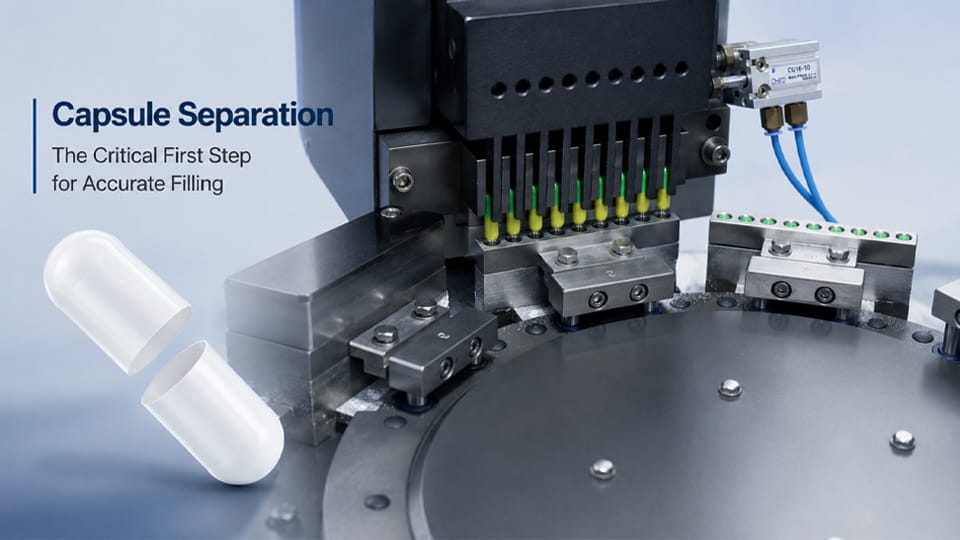
Pemisahan tutup-badan: Apakah pemisahan vakum tetap dapat diandalkan pada kecepatan saluran yang diinginkan?
Perilaku mekanis cangkang: Perhatikan perpecahan, penyok, kerapuhan, pelunakan, atau statis.
Mengunci: Konfirmasikan panjang tertutup dan kunci integritas. Shell yang terlihat bagus pada kecepatan rendah dapat berperilaku berbeda pada output penuh.
Isi kinerja: Lacak variasi berat isi, kebocoran, kerusakan pelet, dan tingkat penolakan. Bahan kapsul tidak dapat mengimbangi aliran bubuk yang buruk.
Lingkungan produksi: Tetap berada dalam rentang suhu dan kelembaban relatif yang ditentukan pemasok kapsul dan catat kondisi tersebut selama uji coba.
Untuk pengadaan mesin yang serius, kirimkan lot cangkang kapsul yang representatif dan bahan pengisi untuk uji pabrik. Hal ini sangat berguna ketika mengganti kapsul HPMC ke kapsul pullulan atau memperkenalkan cangkang berbahan dasar pati yang kurang dikenal.
Gunakan matriks ini sebagai titik awal—bukan sebagai pengganti pengujian pengembangan dan stabilitas.
| Persyaratan Utama | Titik Awal yang Direkomendasikan | Apa yang Harus Diverifikasi |
| Bubuk higroskopis | HPMC | Transfer kelembapan cangkang/isi, kerapuhan, paket MVTR |
| API yang peka terhadap kelembapan | HPMC | pengujian, degradasi, pembubaran, sistem pengering |
| Bahan-bahan yang sensitif terhadap oksigen | Pullulan | data OTR, oksigen ruang kepala, paket penghalang oksigen |
| Probiotik | HPMC atau Pullulan | Sensitivitas kelembaban/oksigen spesifik strain dan stabilitas CFU |
| Campuran herbal/botani | HPMC dulu; Pullulan jika oksidasi sangat penting | Aktivitas air, mudah menguap, stabilitas |
| Suplemen label bersih premium | Pullulan atau cangkang berbahan dasar pati berkualitas | Sertifikasi, biaya, kontinuitas pasokan |
| Posisi pati/tapioka tertentu | Kapsul berbahan dasar pati berkualitas | Komposisi, data mekanis, kehancuran, kemampuan mesin |
| Produksi berkecepatan tinggi | HPMC yang berkualitas, Pullulan, atau cangkang pati yang diuji | Pemisahan, mengunci, menolak, lari dengan kecepatan penuh |
| Risiko dominan tidak jelas | Bandingkan setidaknya dua cangkang | Stabilitas dalam kemasan akhir |
Matriks ini mensintesis data kelembaban komparatif, informasi kinerja HPMC/pullulan komersial, dan bukti yang dipublikasikan menunjukkan bahwa kinerja berbasis pati sangat bergantung pada formulasi yang tepat.
Kerangka kerja lima langkah ini sangatlah mudah:
Melangkah 1: Cirikan formulasinya –> Melangkah 2: Identifikasi risiko yang dominan –> Melangkah 3: Tentukan klaim dan dokumen pasar –> Melangkah 4: Jalankan uji coba cangkang dan mesin pengisi –> Melangkah 5: Konfirmasikan stabilitas dalam kemasan akhir –> Menyetujui pemasok, spesifikasi dan proses
Melangkah 1 mengukur apa yang penting: higroskopisitas, aktivitas air, sensitivitas oksigen, kepadatan pengisian, dan mengalir.
Melangkah 2 mengubah data tersebut menjadi daftar pendek shell.
Melangkah 3 pemeriksaan USP, Ph. euro., vegan, halal, halal, dan kebutuhan pasar lainnya.
Melangkah 4 membuktikan bahwa kapsul yang tepat dapat dijalankan pada proses produksi Anda—tidak hanya pada pengisi kapsul laboratorium.
Melangkah 5 membuktikan bahwa kapsul jadi dalam kemasan akhirnya benar-benar dapat memenuhi target umur simpan yang diinginkan.
Urutan tersebut jauh lebih aman daripada memilih “kapsul nabati terbaik” dari tabel pemasaran.
Kesalahan: memilih hanya berdasarkan “vegan.” Status vegan hampir tidak memberi tahu Anda apa pun tentang perlindungan kelembapan, penghalang oksigen, mekanika cangkang, atau kinerja produksi.
Kesalahan: memperlakukan setiap kapsul pati setara. Tanyakan apakah cangkangnya menggunakan pati asli, pati yang dimodifikasi, pati hidroksipropil, atau campuran. Penelitian kapsul pati yang dipublikasikan menunjukkan bahwa komposisi dan sumber botani dapat mengubah kinerja secara signifikan.
Kesalahan: dengan asumsi cangkang menentukan umur simpan. Botolnya, lepuh, penutup, pengering, dan lingkungan penyimpanan juga sama pentingnya.
Kesalahan: dengan asumsi halal atau halal yang berasal dari tumbuhan. Verifikasi sertifikat terkini untuk produk kapsul dan lokasi produksi sebenarnya.
Kesalahan: melewatkan uji coba shell kecepatan penuh. Pemasok komersial sendiri menekankan kemampuan mesin, sedangkan kinerja mesin pengisian kapsul bergantung pada pemisahan yang andal, orientasi, mengunci, dan konsistensi dimensi cangkang.
Tidak ada satu pemenang pun di dalamnya HPMC vs Pullulan vs Kapsul Pati. HPMC biasanya merupakan titik awal serbaguna untuk pengisian yang sensitif terhadap kelembapan dan higroskopis. Pullulan menjadi sangat menarik kapsul untuk bahan yang sensitif terhadap oksigen. Kapsul berbahan dasar pati dapat cocok untuk produk yang memerlukan platform pati nabati tertentu—tetapi hanya setelah Anda memverifikasi apa sebenarnya arti “berbasis pati”. Bukti mendukung pemilihan berdasarkan risiko formulasi daripada menyatakan satu polimer unggul secara universal.
Keputusan komersial harus mengikuti risiko formulasi → dokumentasi → kinerja mesin → stabilitas paket akhir. Sebelum mengunci pemasok kapsul atau membeli peralatan, uji cangkang yang tepat dan isi bersama-sama. Jinlupacking dapat mendukung uji coba pengisian kapsul di seluruh ukuran kapsul keras standar dan membantu mencocokkan prosesnya dengan mesin pengisian kapsul otomatis yang sesuai dan solusi pengemasan hilir.
Siap mengoptimalkan produksi kapsul Anda? Hubungi Pengepakan Jinlu untuk bantuan ahli dan penawaran peralatan pengisian kapsul yang sesuai. Tim kami dapat mendukung uji coba formulasi Anda dan memastikan transisi yang lancar ke kapsul nabati yang ideal.
Kapsul HPMC terutama dibuat dari hidroksipropil metilselulosa, polimer yang berasal dari selulosa. Kapsul Pullulan menggunakan pullulan, polisakarida yang dihasilkan melalui fermentasi. Kapsul berbahan dasar pati menggunakan sistem pati atau pati yang dimodifikasi. Perilaku kelembabannya, sifat penghalang oksigen, karakteristik mekanis, kesesuaian formulasi, dan kinerja pengisian dapat berbeda, jadi pilihan terbaik bergantung pada produknya, bukan pada satu bahan yang secara universal lebih baik.
Tidak ada yang lebih baik secara universal. HPMC seringkali merupakan pilihan praktis untuk berbagai formulasi farmasi dan nutraceutical, sedangkan pullulan bisa menjadi menarik jika perlindungan oksigen menjadi pertimbangan utama. Keputusan tersebut juga harus mempertimbangkan stabilitas formulasi, persyaratan sertifikasi, biaya, kemasan, dan kinerja pengisian kapsul.
Kapsul HPMC dapat menjadi pilihan yang cocok untuk banyak formulasi yang sensitif terhadap kelembapan, terutama ketika formulasi dan spesifikasi kapsul telah disesuaikan dengan tepat. Namun, pemilihan kapsul saja tidak menentukan stabilitas produk. Bahan pengisi, penghalang pengemasan, kelembaban penyimpanan, suhu, dan data stabilitas juga harus dievaluasi.
Kapsul Pullulan dapat menjadi pilihan yang kuat ketika paparan oksigen merupakan masalah stabilitas yang penting karena sistem kapsul berbasis pullulan dapat memberikan permeabilitas oksigen yang rendah.. Hal ini relevan untuk formulasi nutraceutical dan farmasi yang sensitif terhadap oksigen, tetapi stabilitas produk yang sebenarnya harus dikonfirmasi melalui pengujian stabilitas formulasi spesifik dan bukan hanya diasumsikan dari bahan kapsul saja.
Tidak ada bahan kapsul terbaik untuk setiap formulasi probiotik. Pullulan mungkin layak untuk dievaluasi ketika perlindungan oksigen penting, sementara HPMC dapat menawarkan alternatif praktis untuk formulasi yang mengutamakan perilaku kelembapan dan kompatibilitas pengisian luas. Pilihan akhir harus didasarkan pada strain probiotik, eksipien, sensitivitas kelembaban dan oksigen, kemasan, dan data stabilitas.
Belum tentu. Umur simpan tergantung pada sistem produk secara keseluruhan, termasuk bahan aktifnya, cangkang kapsul, perumusan, kemasan, suhu, kelembaban, paparan oksigen, dan kondisi penyimpanan. Kapsul nabati mungkin menawarkan keuntungan untuk formulasi tertentu, tetapi umur simpan yang lebih lama harus dibuktikan melalui pengujian stabilitas yang sesuai.
Mereka dapat mempunyai perilaku disintegrasi dan disolusi yang berbeda karena komposisi dan formulasi cangkang kapsul mempengaruhi interaksi cangkang dengan media uji.. Kapsul HPMC banyak digunakan untuk aplikasi farmasi dan nutraceutical, sementara formulasi HPMC dan pullulan yang berbeda dapat direkayasa untuk kebutuhan kinerja tertentu. Oleh karena itu, pembubaran sebenarnya harus dievaluasi menggunakan produk dan spesifikasi yang relevan, bukan hanya diasumsikan berdasarkan nama bahannya saja.
Tergantung target pasar dan produknya, produsen mungkin perlu memeriksa status vegan atau vegetarian, Halal, Halal, Dokumentasi terkait GMO, pernyataan alergen, sertifikat analisis (COA), dan spesifikasi farmasi atau food grade yang berlaku. Persyaratan pastinya bergantung pada pasar tujuan dan aplikasi yang dimaksudkan, sehingga tim pengadaan harus meminta dokumentasi pemasok terkini dibandingkan hanya mengandalkan klaim “berbasis tanaman”..
Ya, kapsul keras HPMC dan pullulan dapat digunakan dengan peralatan pengisian kapsul otomatis, tetapi kinerja pengisian sebenarnya bergantung pada dimensi kapsul, sifat mekanik cangkang, karakteristik formulasi, desain mesin, perkakas, dan pengaturan pengoperasian. Sebelum produksi skala penuh, produsen harus memverifikasi pemisahan kapsul, akurasi pengisian, mengunci, integritas kapsul, dan tingkat penolakan pada peralatan yang dimaksud.
Mulailah dengan mengidentifikasi risiko utama formulasi Anda. Periksa sensitivitas kelembaban terlebih dahulu, kemudian sensitivitas oksigen, target umur simpan, memerlukan sertifikasi vegan/halal/kosher atau sertifikasi lainnya, dan sistem pengemasan yang dimaksudkan. Setelah membuat daftar pendek, uji cangkang kapsul yang tepat dengan formulasi asli pada mesin pengisian kapsul Anda dan selesaikan studi stabilitas yang sesuai sebelum produksi komersial.
Referensi:
1.Sifat penyerapan air dan desorpsi gelatin, Kapsul keras HPMC dan pullulan —— Sains Langsung
2.kapsul HPMC: status saat ini dan prospek masa depan —— Perpustakaan Kedokteran Nasional
3.Karakteristik difusi kelembaban dan permeabilitas hidroksipropilmetilselulosa dan kapsul gelatin keras —— Perpustakaan Kedokteran Nasional
4.Sifat pembentukan kapsul keras film dan farmasi kacang hijau, kastanye air, dan tepung ubi jalar —— Sains Langsung
5.Kapsul pati: sistem alternatif untuk pemberian obat oral —— Sains Langsung