Machines de remplissage de gélules (remplisseuses de gélules ou machines d'encapsulation) sont les bêtes de somme de l’industrie pharmaceutique. Ils dosent automatiquement les poudres dans des gélules dures à grande vitesse, au service des fabricants de suppléments et des fabricants de médicaments. Pourtant, un casse-tête fréquent dans l'atelier de production est fuite de poudre – lorsque la poudre fine s’échappe de la machine au lieu de rester dans les capsules. Même une petite fuite de poudre peut faire perdre les poids de remplissage, obstruer l'équipement, et créez un nuage de poussière dans votre salle blanche. Le résultat est un produit gaspillé, nettoyage supplémentaire, et les rejets de lots potentiels.
Dans cet article, nous allons parcourir le symptômes, causes, et solutions de fuite de poudre dans un équipement de remplissage de gélules. Nous vous expliquerons pourquoi c'est important (pensez aux ingrédients perdus et au non-respect des BPF), puis plongez dans le haut 10 causes profondes – du mauvais débit de poudre aux joints usés – avec des solutions pratiques pour chacun.

Image: Un lot de gélules finies après remplissage (les machines de remplissage de gélules en produisent des millions chaque jour). Les capsules correctement remplies doivent contenir toute la poudre à l'intérieur sans aucune poudre visible à l'extérieur de la coque..
Lorsqu'une machine de remplissage de capsules commence à fuir de la poudre, les conséquences se répercutent sur la production:
En bref, les fuites de poudre nuisent à la productivité, qualité, et conformité. La bonne nouvelle est que la plupart des problèmes de fuite ont des causes et des solutions identifiables.. Les prochaines sections énuméreront les haut 10 causes courantes de fuite de poudre dans les remplisseurs de capsules, chacun expliqué avec pourquoi ça arrive et comment résoudre il. De nombreuses causes se chevauchent, les solutions impliquent donc souvent l'étalonnage de la machine, nettoyage, et contrôles des composants.
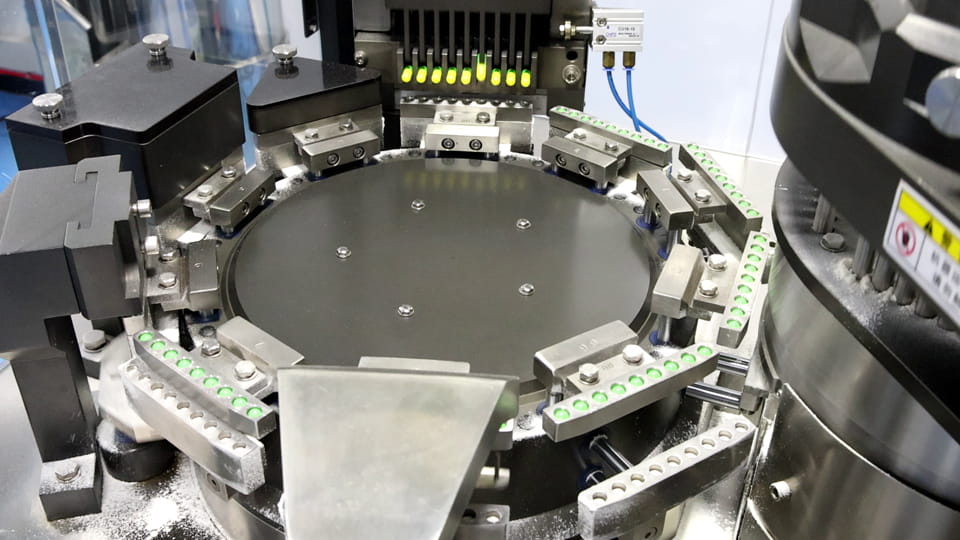
Nous détaillons ci-dessous les dix causes de fuites les plus fréquentes, avec chaque cause suivie de la stratégie de solution. Dans tous les cas, vérifier l'alignement de la machine, outillage, et les réglages du vide avant de poursuivre le dépannage. La plupart des solutions impliquent des ajustements de routine ou des remplacements de pièces que vous pouvez gérer dans l'usine..
Pourquoi ça arrive: Certaines poudres ne coulent tout simplement pas bien. Collant, les poudres hygroscopiques ou très cohésives ont tendance à s'agglutiner, pont, ou coller à l'intérieur du système d'alimentation. Par exemple, les extraits de plantes ou certains suppléments peuvent « adhérer aux modules et aux composants de dosage de la machine, interrompre le chemin d’écoulement prévu ». Lorsque la poudre colle à un disque doseur ou à une tige de bourrage, il peut se déloger de manière inattendue lors de la rotation, provoquant des déversements ou des débordements lors de la formation de la limace. Bien, les poudres électrostatiques peuvent également flotter si elles ne se déposent pas correctement.
Solution: Améliorer les propriétés d’écoulement de la poudre et la manipuler en douceur. Les options incluent:
En améliorant le flux (par le biais d'additifs ou de techniques), vous faites avancer la poudre de manière prévisible. Comme l’a partagé un ingénieur d’usine, le passage à une poudre avec une meilleure perméabilité et l'ajout de lubrification ont résolu leur problème de pontage.
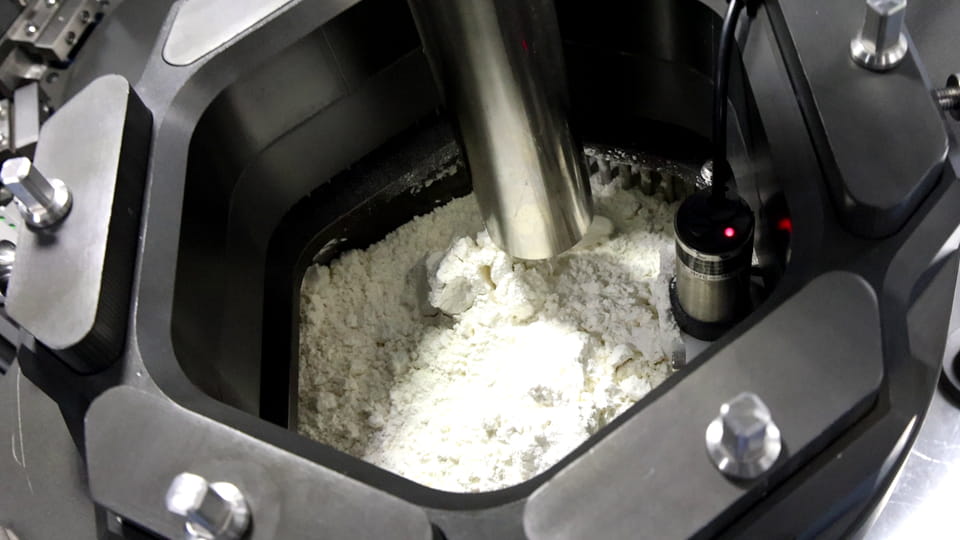
Image: Poudre de supplément à base de plantes versée dans une machine de remplissage de capsules. Des poudres comme celles-ci peuvent être collant ou visqueux, donc assurez-vous qu'ils coulent bien (via une formulation appropriée ou une vitesse d'alimentation lente) est la clé pour éviter les fuites.
Pourquoi ça arrive: Si les coques des capsules vides ne s'adaptent pas exactement à la station-service, des espaces ouverts pour que la poudre puisse s'échapper. Par exemple, l’utilisation d’une taille de capsule « trop petite ou trop grande pour la machine » crée des chemins de fuite. Même si la taille nominale (par exemple. "Taille 0") matchs, de légères variations dimensionnelles peuvent entraîner un inadéquation. Coquilles endommagées – fissurées, ébréché, ou autrement hors spécifications – fuiront également car ils ne se scelleront pas correctement.
Solution: Appliquer un contrôle qualité strict des capsules. Vérifiez toujours que le taille des capsules et tolérances correspondre à l'outillage de la machine. Mesurez un échantillon de coquilles et comparez-le aux spécifications techniques de la machine. Si les capsules diffèrent (même légèrement), passer à un lot certifié. JinluPacking met l'accent sur le contrôle qualité entrant: « les écarts dimensionnels entre les coques des capsules vides et les outils de la machine… entraîneront inévitablement des fuites de poudre ». Pour l’intégrité des capsules:
En assurant ajustement et qualité des capsules, vous éliminez l'une des causes de fuite les plus simples. Assurez-vous d'utiliser des coques de capsules qui correspondent aux spécifications de votre machine et ajustez la machine si elle autorise différentes tailles..
Pourquoi ça arrive: Dans les remplisseuses de gélules volumétriques (types de doseurs ou de broches de bourrage), le disque de dosage (plaque doseuse) et épingles de bourrage régler le volume de poudre par capsule. Si ces paramètres sont erronés, la poudre peut déborder ou se renverser. Par exemple, un disque de dosage trop fin (trop profond) Pour le volume de remplissage cible, l'excès de poudre se répandra sur le dessus.. JinluPacking note que « l'une des causes profondes des fuites de poudre et des incohérences de volume est une spécification incorrecte du disque de dosage, par exemple, un disque trop fin”. De la même manière, mauvais réglages des broches de bourrage (broches trop hautes ou trop basses) peut laisser la poudre vaguement remplie, entraînant un déversement pendant la rotation.
Solution: Calibrer et ajuster soigneusement les composants de dosage:
Avec les paramètres de disque et de broches corrects, chaque capsule doit contenir la dose prévue sans débordement. Si le disque de dosage n'est pas assez épais, cela peut déborder et provoquer des fuites, donc l'ajustement du disque ou de l'alimentation résout ce problème.
Pourquoi ça arrive: Les remplisseuses de capsules ont une station supérieure (alimentation/séparation des capsules) et une station inférieure (station-service). Ces modules doivent s'aligner parfaitement lorsque la tourelle tourne. Même une légère inclinaison ou un léger espace permet à la poudre de s'échapper entre les modules pendant le remplissage. Un désalignement peut s'installer avec le temps en raison des vibrations, porter, ou frapper, surtout sur les machines plus anciennes. Comme l'explique un expert, « Si les modules ne sont pas parfaitement alignés, des interstices sont créés par lesquels la poudre fine peut s'échapper ».
Solution: Réaligner et sécuriser les modules:
La prévention du désalignement est en grande partie une question de discipline dans l'entretien. Gardez le châssis de la machine d'équerre et ne le claquez pas et ne le surchargez pas.. Lorsqu'il est correctement aligné, "les modules supérieur et inférieur [avoir] un sans couture, interface sans espace » et les fuites dues à un mauvais ajustement du module disparaissent.
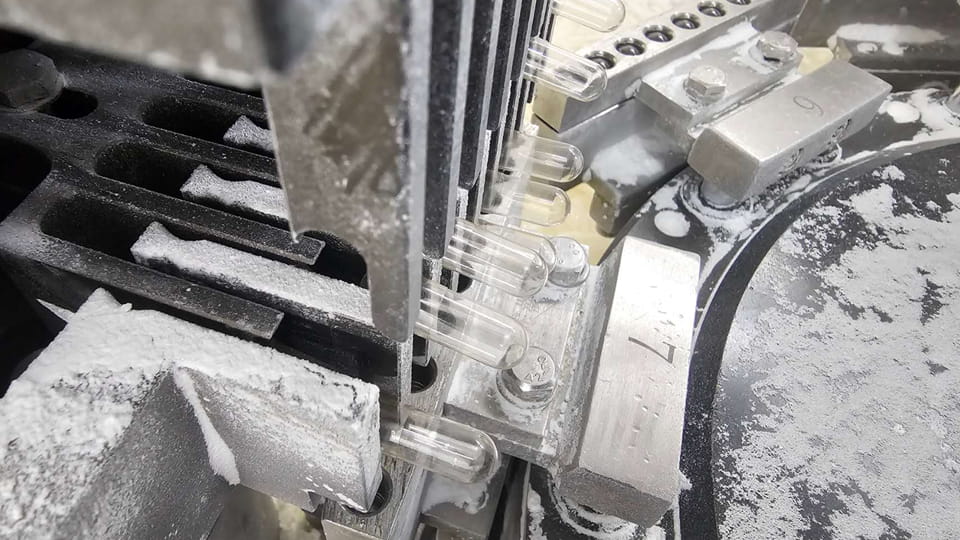
Pourquoi ça arrive: Le système de vide présent dans de nombreuses remplisseuses de capsules remplit deux rôles clés: séparer/ouvrir les capsules et maintenir les corps de capsules pendant le remplissage. Si la pompe à vide ou les conduites de vide ne tirent pas assez fort, les capsules ne tiennent pas fermement sous le disque de dosage. Même une légère perte d'aspiration signifie que la poudre se répandra autour du bord plutôt que dans la capsule. JinluPacking note qu '«une aspiration sous vide insuffisante… conduit à une panne: le corps de la capsule peut ne pas être maintenu solidement, sinon la poudre pourrait se répandre pendant le transfert ».
Solution: Tester et rétablir le vide:
En pratique, intégrer une vérification rapide du vide au démarrage. Si la poudre continue de couler, viser à obtenir une « aspiration constante » en nettoyant les filtres à chaque quart de travail. Un système de vide bien entretenu est essentiel pour prévenir les fuites.
Pourquoi ça arrive: Chaque machine de remplissage de gélules a une capacité maximale recommandée de trémie de poudre. Verser plus que cela crée une pression supplémentaire dans le mécanisme d'alimentation. Cette pression peut littéralement forcer poudrer au-delà des joints ou autour des bords du doseur. Lorsque la trémie est remplie au-delà de sa capacité recommandée, il peut forcer la poudre à travers de petits espaces ou des joints qui la contiendraient normalement. Essentiellement, la machine s'étouffe à cause de la surcharge et se renverse.
Solution: Contrôler le niveau de remplissage de la trémie:
Garder la trémie à un niveau sûr empêchera les fuites dues à la pression. Même si ce n'est qu'un peu de poudre supplémentaire, une fois les sceaux compromis, n'importe quelle quantité peut s'échapper. Mettez en place des marqueurs visuels ou des capteurs afin que personne ne dépasse accidentellement le niveau de remplissage maximum..
Pourquoi ça arrive: Scellés, Joints toriques et joints sur le cadre d'alimentation, trémie, et les stations de capsules sont les barrières qui maintiennent la poudre contenue. Au fil du temps, l'abrasion constante par de fins grains de poudre érode ces pièces en caoutchouc/plastique. Comme ils portent mince, de minuscules fissures ou espaces se forment, laisser passer la poussière. Jinlupacking le souligne: « Les joints usés ou endommagés… se détériorent avec le temps… Au fur et à mesure de leur usure, de minuscules espaces peuvent se former, permettant à la poudre de s'échapper".
Solution: Remplacer et mettre à niveau les joints:
La prévention des défaillances des joints fait partie de la maintenance préventive. Nous couvrirons un calendrier plus tard, mais en général: remplacer les joints avant une fuite. Cette approche proactive évite les écarts soudains. Un programme proactif de remplacement des joints assure l’étanchéité de la machine.
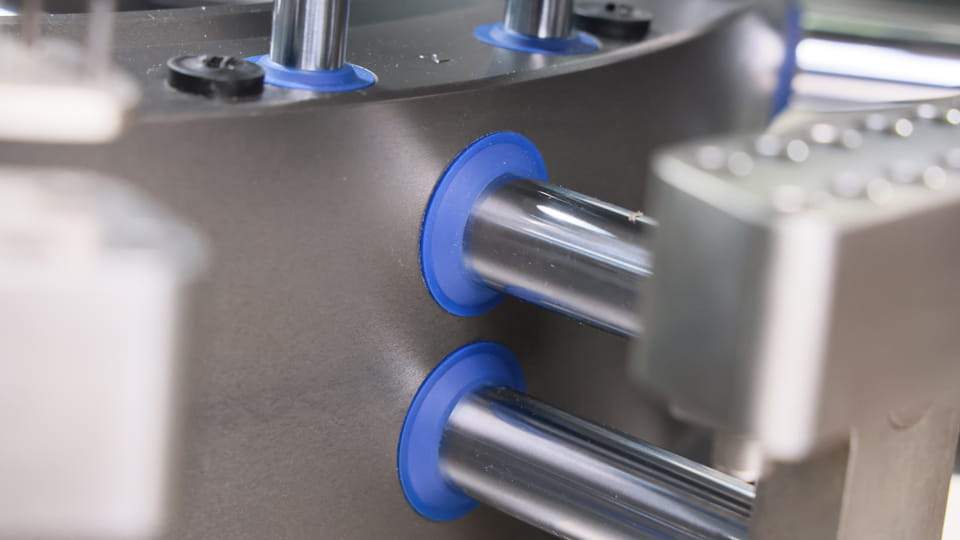
Pourquoi ça arrive: Faire fonctionner une remplisseuse de gélules trop rapidement est tentant de maximiser le rendement, mais ça peut avoir des effets secondaires. À très haut régime, les capsules et la poudre se déplacent de manière plus chaotique: les temps de remplissage raccourcissent et les capsules peuvent mal s'asseoir momentanément. Les vibrations augmentent. Le guide Jinlu prévient que dépasser le régime recommandé peut « déstabiliser l’alignement et provoquer des bourrages »., ce qui à son tour peut créer de minuscules espaces ouverts entre les pièces mobiles. En substance, dépasser la vitesse stable d’une machine peut libérer la poudre. Un problème connexe est simplement la charge mécanique: si la machine est surchargée avec trop d'aliment (similaire à Cause 6), il pourrait osciller ou se fermer, desserrer les articulations.
Solution: Respecter les vitesses nominales et équilibrer la vitesse d'avance:
En pratique, la plupart remplisseuses semi-automatiques ne fonctionnent pas au-dessus de ~ 10 tr/min pour les gélules. Les systèmes entièrement automatiques peuvent traiter des dizaines de milliers de capsules/heure, mais même dans ce cas, ils ont un contrôle intégré pour éviter un fonctionnement instable. Rester dans la plage de vitesse recommandée évite la dynamique « fragile » qui peut ouvrir des chemins de fuite.
Pourquoi ça arrive: Enfin, toute imperfection dans les capsules elles-mêmes peut provoquer des fuites. Si le capuchon d'une capsule est fissuré, la station-service ne peut pas la maintenir fermée et de la poudre se répandra. De même, si les coquilles sont cassantes ou déformées, ils peuvent ne pas s'asseoir correctement. Les facteurs environnementaux contribuent: Les coques des capsules sont hygroscopiques et peuvent ramollir ou devenir cassantes si l'humidité ou la température ne sont pas contrôlées.. Les coquilles fragiles se fissurent sous la pression, tandis que les coquilles trop molles s'effondrent.
Solution: Contrôler la qualité et l'environnement des capsules:
Haute qualité, les capsules intactes sont votre première défense contre les fuites. Même la meilleure machine ne peut pas sceller une coque cassée. Dans les cas graves, vous devrez peut-être refuser une livraison de capsule si sa qualité est suspecte. La prévention des fuites commence par de bonnes matières premières.
Pourquoi ça arrive: Enfin, même les composants internes peuvent s'user et créer des fuites. Par exemple, de nombreux systèmes de dosage utilisent une lame de grattoir pour éliminer l'excès de poudre du disque de dosage. Si ce grattoir devient inégal ou desserré, il peut ne pas réussir à balayer la poudre proprement, abîmer le joint sous vide et laisser la poudre s'échapper. De même, un bord du disque de dosage usé, goupille de bourrage ébavurée, ou une douille de tourelle desserrée peut compromettre un remplissage serré.
Solution: Inspecter et remplacer les pièces usées:
En bref, gardez vos outils de remplissage frais. Incluez ces contrôles dans votre maintenance mensuelle. Les pièces internes usées ou endommagées créent de minuscules fuites difficiles à repérer jusqu'à ce que la poudre commence à s'échapper.. Une inspection de routine minutieuse de tous les composants de remplissage préviendra ces causes cachées..
Utilisez ce tableau de référence rapide pour diagnostiquer une fuite. Associez le symptôme aux causes probables et aux remèdes:
| Symptôme / Signe | Cause possible | Solution |
| Poudre autour de la base de la tourelle | Désalignement des modules supérieur/inférieur; joints sales | Réaligner les modules (ajuster les tiges); nettoyer les joints |
| Poudre libre à la surface de la capsule | Capsule trop remplie (dose excessive); grattoir usé | Réduire la poudre par remplissage; remplacer/aligner le grattoir |
| Poids des capsules incohérent | Mauvaise fluidité; alimentation bouchée; doseur usé | Améliorer le débit de poudre (agent d'écoulement, déshumidifier); vérifier le disque de dosage; mécanismes d'alimentation propres |
| Poussière à l'intérieur de la machine (bas) | Fuite de vide (tuyau ou filtre); joint d'étanchéité | Inspecter les conduites de vide et la pompe; remplacer les filtres/joints |
| Capsule mal placée ou bourrage | Joints ou dimensions de coque usés; vitesse trop élevée | Inspecter/remplacer les joints de table; utiliser la bonne taille de capsule; réduire le régime |
| Poussière nuageuse à la décharge | Capsules cassées; vibrations des machines | Remplacer les capsules endommagées; vitesse/vibration inférieure |
| Taux de rejet élevé | Alignement désactivé; équipement sale | Effectuer un nettoyage complet, réalignement, étalonnage |
Chaque symptôme doit inciter à une vérification visuelle et mécanique des composants notés. Résoudre souvent un problème (comme resserrer l'alignement) effacera plusieurs symptômes.
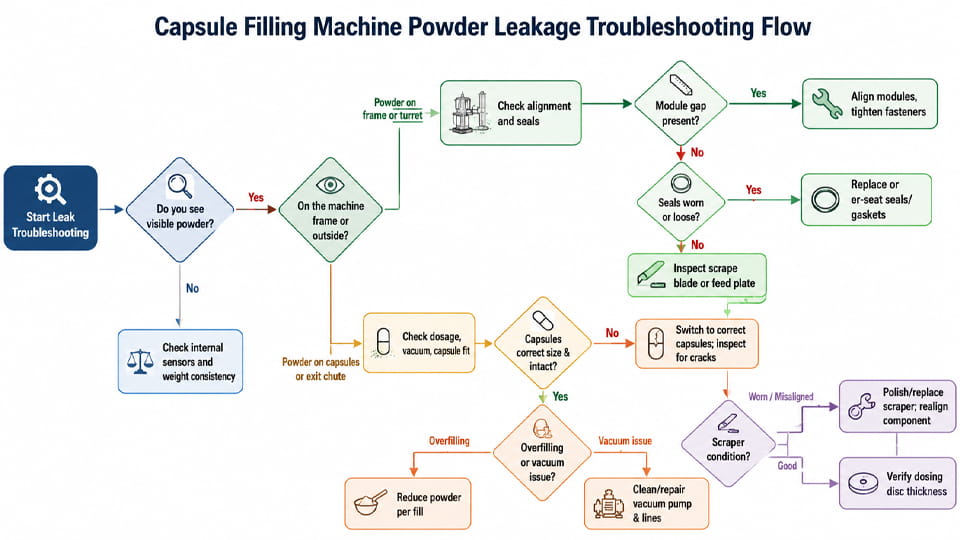
Chiffre: Organigramme de dépannage pour diagnostiquer les fuites de poudre de remplissage de capsules.
Si vous avez essayé tous les correctifs ci-dessus et que vos problèmes de fuite persistent (surtout sur une machine plus ancienne ou très utilisée), il est peut-être temps d'envisager une réparation majeure ou une mise à niveau. Fréquent, des fuites inexpliquées peuvent indiquer un désalignement caché ou des pièces de cadre usées qui coûtent cher à réparer au coup par coup. Par exemple, si les tiges d'alignement sont au maximum ou si la machine est constamment hors spécifications malgré l'étalonnage, une rénovation complète pourrait coûter presque autant qu'une nouvelle unité.
À ce point, comparer le coût d'un service complet à celui d'une nouvelle machine. Les remplisseuses de gélules modernes ont souvent conceptions avancées pour minimiser les fuites. Par exemple, Machines de la série NJP de Jinlu (NJP-400C, NJP-800C, NJP-1200C, NJP-1500D) intégrer des fonctionnalités telles que alimentation pneumatique en poudre (manipuler des poudres collantes) et structures à double étanchéité (pour isoler l'intérieur de l'environnement extérieur). Un joint double couche réduit considérablement la poussière de poudre à la station de remplissage. Le NJP-400C utilise même une balance numérique à la station-service pour un réglage précis de la dose., aidant à éviter les remplissages excessifs.

Si vous produisez de gros volumes ou des poudres extrêmement fines, une mise à niveau pourrait s'avérer payante en réduisant les déchets et les temps d'arrêt. Les modèles comme le NJP-800C ou plus sont évalués jusqu'à 60,000 capsules par heure avec une capacité de vide élevée. Dans tous les cas, quand la maintenance devient un combat constant, une nouvelle machine avec des commandes et des composants mis à jour peut éliminer de nombreuses causes profondes de fuite.
Finalement, que vous répariez ou remplaciez dépend de la situation économique et de vos besoins en matière de production. Mais consultez toujours votre fournisseur d’équipement – il peut souvent moderniser des pièces clés ou vous conseiller sur les derniers modèles pour gérer votre produit sans fuites..
Une fuite de poudre dans une machine de remplissage de gélules n’est jamais « juste un peu de poussière » – cela signifie une inefficacité, ingrédients perdus, et le risque. La bonne nouvelle est que la plupart des causes sont simples à diagnostiquer et à corriger.. En utilisant les étapes de dépannage ci-dessus, vérification de l'alignement, vide, flux de poudre, et maintenance, vous pouvez souvent arrêter les fuites sans gros investissement.
Si vous avez vérifié tout ce qui précède et constatez toujours une fuite (surtout sur une machine plus ancienne), envisager une mise à niveau ou une modernisation. Les remplisseurs de capsules modernes comme la série NJP de Jinlu sont conçus dans un souci de prévention des fuites. (par exemple. meilleures étanchéités et meilleure circulation de l'air).
La maintenance préventive est votre alliée: nettoyage quotidien, remplacements réguliers des joints, et un calibrage approprié permettra de détecter de nombreux problèmes avant qu'ils ne fuient.. Utilisez le tableau de dépannage et l'organigramme comme guide, et surveillez les symptômes pour étouffer toute fuite émergente dans l'œuf.
Besoin d'aide? Pour des conseils détaillés sur les machines de remplissage de gélules Jinlu ou pour obtenir un plan de maintenance personnalisé, contactez nos experts. Nous proposons également des services de formation et d'étalonnage sur site pour que votre équipement continue de fonctionner avec une efficacité maximale.. Ensemble, nous veillerons à ce que vos capsules restent à l’intérieur des capsules – à leur place!
Une fuite de poudre signifie généralement que quelque chose n’est pas scellé ou aligné correctement. Les coupables courants incluent un mauvais ajustement de la capsule, faible aspiration sous vide, joints usés, ou surcharger la trémie. C'est souvent une combinaison (Par exemple, mauvais débit de poudre + léger désalignement). Vérifier l'alignement, pression du vide, et assurez-vous d'abord d'utiliser la bonne taille de capsule.
C’est souvent une combinaison d’inadéquation des capsules et d’alignement de la machine.. Si les capsules vides ne correspondent pas parfaitement à l’outillage de taille du remplisseur, de minuscules trous apparaissent. De même, une tourelle inclinée ou un disque de dosage lâche laisse échapper la poudre. Vérifiez toujours les coques et la configuration de la machine en premier.
Arrêtez les fuites en vérifiant systématiquement chaque cause de fuite: vérifier que le vide est suffisamment fort, aligner les modules supérieur et inférieur, remplacez les capsules ou les joints fissurés, et adaptez le volume de poudre à votre disque de dosage. Effectuez un nettoyage quotidien afin qu'aucune poudre ne reste dans les espaces. De manière préventive, utilisez des capsules et des poudres connues pour fonctionner dans votre machine et formez les opérateurs sur la configuration et l'alimentation appropriées de la machine..
Oui. Si la poudre est trop grossière ou collante, il peut se ponter ou se coincer, puis tomber de manière inattendue. Cela peut projeter des éclats de poudre hors des bords du doseur.. Améliorer le flux (par exemple. ajout d'agents de flux, réduire l'humidité, ou en utilisant une alimentation pneumatique) permettra à la poudre de se déplacer en douceur afin qu'elle reste dans la capsule.
Absolument. Une capsule qui ne s'adapte pas à la machine-outil crée un espace permettant à la poudre de s'échapper. Vérifiez toujours la taille de la capsule (#0, #1, etc.) et la tolérance dimensionnelle du lot. Aussi, les capsules endommagées ou molles fuiront pendant la fermeture. En bref, utilisez uniquement la taille de capsule spécifiée et assurez-vous que les coques sont intactes et conformes aux spécifications.
D'abord, écoute la pompe et vérifie l'huile (le cas échéant). Inspecter les tuyaux pour déceler des fissures. Nettoyer ou remplacer les filtres. Mettez un vacuomètre sur le système: il devrait atteindre les spécifications de la machine (souvent autour de –0,06MPa pour les gélules). Si la pression rebondit ou n'atteint jamais cela, nettoyer le filtre ou rechercher des fuites. Souviens-toi: même une petite fuite (comme un trou d'épingle dans un tube) réduira considérablement l'aspiration.
Absolument. Les fuites entraînent des poids de remplissage incohérents (capsules sous-remplies) et peut contaminer les capsules avec de la poudre libre, affectant l’apparence et l’intégrité du produit. Le maintien d'une précision de remplissage stricte est crucial pour la sécurité et la conformité des produits..
En plus de réparer les fuites, utiliser la « capture des déchets » dans la mesure du possible – par exemple, remettre la poudre déversée dans la trémie si elle est exempte de contamination. Certaines installations installent des hottes d'aspiration locales autour de la zone de remplissage pour aspirer la poussière parasite dans le système.. Plus important encore, mettre en place un plan de maintenance préventive afin que les problèmes soient détectés tôt. On dit qu’un bon entretien peut empêcher 50% des problèmes de temps d'arrêt, ce qui se traduit directement par moins de déchets dus aux fuites.
Les poudres idéales ont une bonne fluidité: taille de particule moyenne, faible humidité, et faible cohésion. Les granulés ou les formulations en granulés fonctionnent souvent mieux que la poussière ultrafine. Si votre ingrédient est feuilleté, pensez à le pré-granuler ou à ajouter un petit lubrifiant. Quel que soit le mélange, une poudre consistante (pas de grumeaux) se remplira uniformément sans s'envoler.
Éteignez et verrouillez toujours la machine avant de la nettoyer. Utilisez un EPI approprié (masque et lunettes) pour se protéger de la poussière. Utilisez des brosses et un aspirateur au lieu de l'air comprimé lorsque cela est possible, pour minimiser la poudre en suspension dans l'air. Après le nettoyage, assurez-vous que toutes les pièces sont complètement sèches avant de redémarrer. Vérifiez tous les gardes, trémies, et les chambres sont remontées correctement (un mauvais remontage peut lui-même provoquer des fuites).
Références:
1.Flux de poudre—— Pharmacopée des États-Unis
2.Questions et réponses sur les exigences actuelles en matière de bonnes pratiques de fabrication | Équipement -- NOUS. Administration des aliments et des médicaments
3.Effets des propriétés d'écoulement de la poudre sur l'uniformité du poids de remplissage des capsules —— Bibliothèque nationale de médecine
4.Remplissage de poudre dans des capsules de gélatine dure sur une machine de remplissage à tampon —— Bibliothèque nationale de médecine
5.Enquête sur divers facteurs affectant l'encapsulation sur la machine de remplissage automatique de gélules In-Cap —— Bibliothèque nationale de médecine
6.Le remplissage de poudres dans des gélules en deux parties ——ScienceDirect