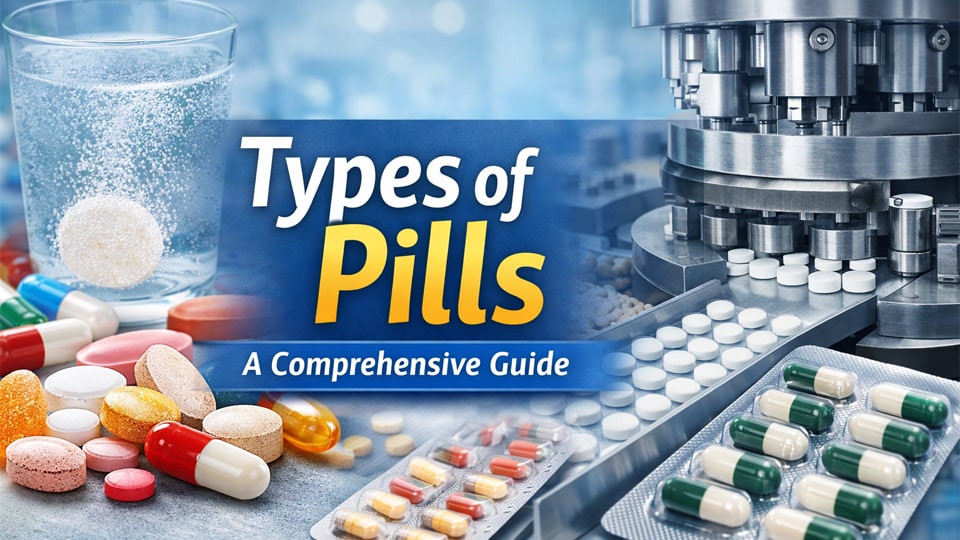
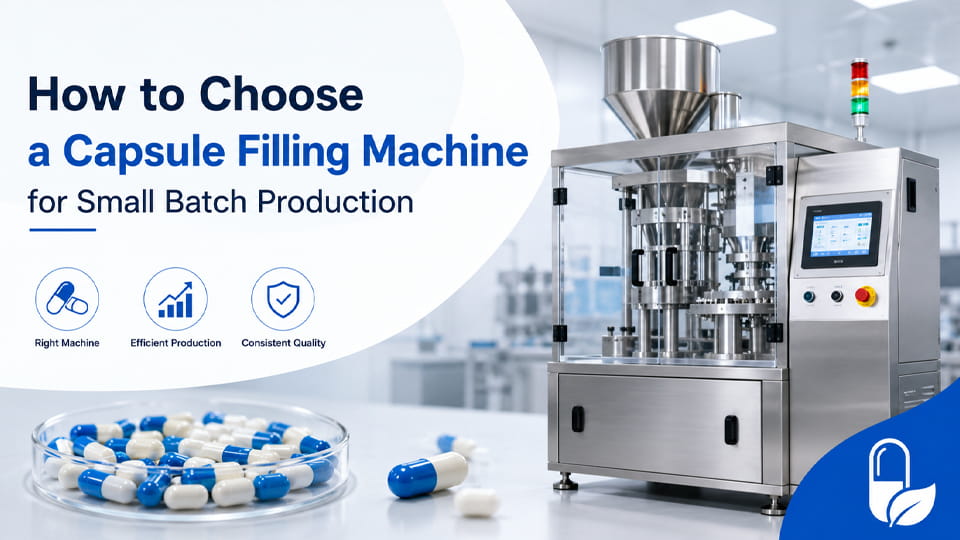
La production de capsules en petits lots est courante dans les nutraceutiques, suppléments à base de plantes, essais cliniques, R&D, essais pilotes et fabrication sous contrat. Choisir le bon Machine de remplissage de capsule est crucial pour les marques et les laboratoires en phase de démarrage, équilibrant les coûts, flexibilité, et Conformité BPF. Contrairement aux lignes pharmaceutiques à grand volume, ces opérations gèrent souvent des séries limitées, plusieurs SKU, et des formules évolutives. La droite remplisseuse de capsules augmente le débit et la cohérence sans surinvestir. Par rapport au remplissage manuel (plateaux à capsules manuels), une machine peut multiplier la production de quelques centaines à des dizaines de milliers de capsules par heure, tout en améliorant la précision du dosage. Mais l’automatisation prend de nombreuses formes. Certains fabricants commencent par un remplisseuse de capsules manuelle (pas besoin d'électricité, faible coût) ou un remplisseuse de gélules semi-automatique (opération assistée) avant de passer à une automatisation complète à mesure que les volumes augmentent. Ce guide coupe le jargon, expliquant comment faire correspondre machines d'encapsulation type et spécifications adaptés à vos besoins en petits lots.
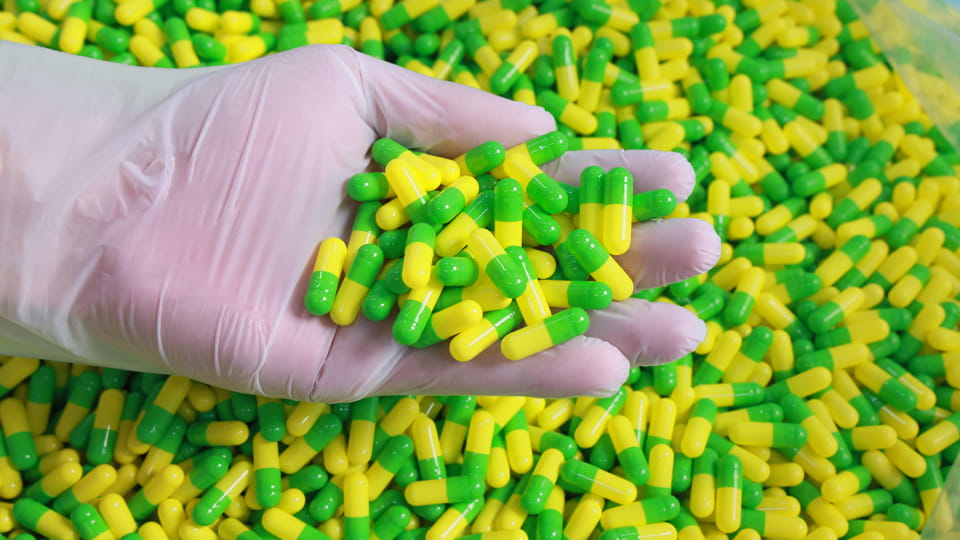
Machines de remplissage de gélules sont utilisés dans tous les produits pharmaceutiques, suppléments, et produits à base de plantes, pour poudres, boulettes, et même des liquides. Nous explorerons leurs capacités et leurs caractéristiques de conception pour vous aider à décider laquelle convient le mieux à votre échelle.. Nous couvrons également les facteurs réglementaires tels que l'hygiène BPF et les exigences des opérateurs., puisque même les petites lignes doivent répondre à des normes de qualité.
« Petit lot » fait généralement référence à des volumes de production relativement faibles ou flexibles.. Les définitions varient, mais une référence pratique est la production par exécution ou par heure. Par exemple, les remplisseuses manuelles sont généralement utilisées pour de très petits lots (moins de ~ 500 capsules par cycle). Combinaison de machines semi-automatiques petites et moyennes séries (sur l'ordre de 1,000–5 000 gélules par heure). Les remplisseuses automatiques se justifient lorsque les besoins de production dépassent ~5 000 à 10 000 gélules par heure. Ces règles empiriques correspondent aux observations de l’industrie: une fois que la demande quotidienne dépassera environ 15,000 gélules, de nombreux fabricants passent d'un équipement manuel à un équipement semi-automatique pour réduire les coûts de main-d'œuvre.
En termes pratiques, nous pouvons classer l'échelle comme: R&Échelle D/Lab (des centaines par jour), Petit lot (des milliers par jour), Moyen/Commercial (des dizaines de milliers par jour), Volume élevé (100k+ par heure). Les producteurs de petits lots gèrent souvent plusieurs SKU ou changent de formules, ils ont donc besoin de flexibilité. Ce guide se concentre sur équipements manuels et semi-automatiques qui prospèrent dans le régime inférieur à 50 000 caps/jour, tout en abordant les machines automatiques si vous envisagez de passer à l'échelle supérieure.
Les machines de remplissage de gélules se répartissent en trois grandes catégories: Manuel, Semi-automatique, et Entièrement automatique. Chacun a des compromis distincts en matière de vitesse, coût, travail, et complexité. (Des variantes spécialisées existent, par exemple. remplisseurs de capsules liquides ou encapsulateurs de gélules molles, mais ici nous nous concentrons sur les équipements de capsules dures en deux parties.)
Remplisseurs de gélules manuels (parfois appelé plateaux à capsules ou remplisseurs de plaques) ne nécessite pas d'électricité et utilise des outils de bourrage simples. Les opérateurs étalent de la poudre dans les bacs des corps de capsules, tasser à la main, et bouchon à la main.
En résumé, le remplissage manuel est extrêmement abordable et facile à apprendre, mais au-delà de quelques centaines de capsules par cycle, cela devient rapidement peu pratique en raison de la fatigue de l'opérateur et de l'incohérence..
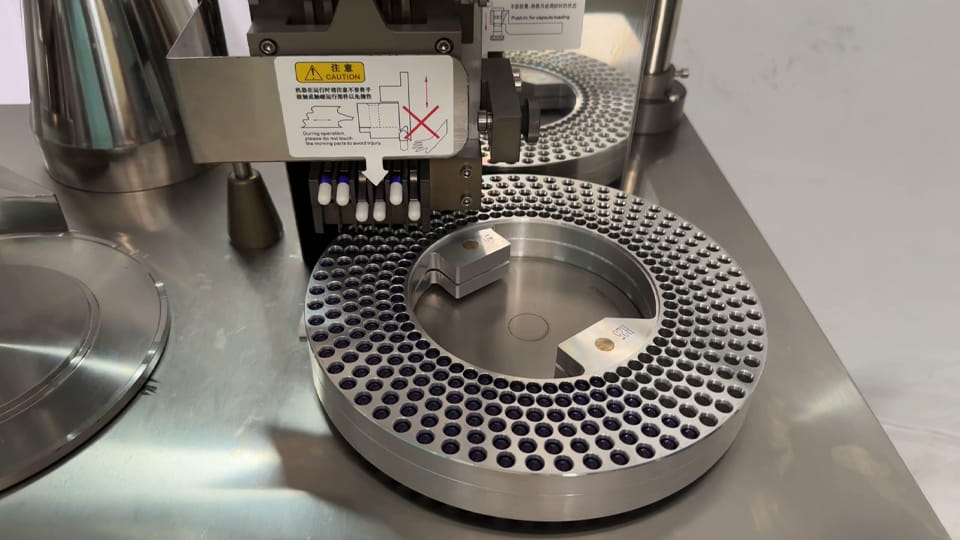
Remplisseurs de gélules semi-automatiques alliez le contrôle de l’opérateur à l’assistance de la machine. Typiquement, un opérateur charge des capsules vides dans des trémies et des poudres dans le système de dosage, mais la machine automatise étapes clés comme l'orientation de la capsule, remplissage, et parfois plafonner. Par exemple, de nombreux modèles utilisent une trémie à capsules vibrante et un aspirateur pneumatique pour séparer et présenter les corps et les capuchons des capsules, puis une vis sans fin ou une tige de bourrage dose la poudre, et un système mécanique verrouille les capsules.

Chiffre: Un Jinlu CGNT-209 remplisseuse de gélules semi-automatique, compatible avec les tailles de capsules #000 à #5 et capable de produire environ 40 000 capsules/heure.
Les remplisseuses de capsules entièrement automatiques fonctionnent chaque étape en continu avec une implication humaine minimale. Ils chargent automatiquement les capsules vides, les séparer et les orienter, doser le matériau de remplissage avec précision, recombiner les moitiés, inspecter les défauts, et éjecter les capsules terminées. Ces machines utilisent souvent des tables rotatives complexes avec de nombreuses stations de dosage.

Chiffre: Une grande vitesse Machine de remplissage de capsule automatique (Jinlu NJP-3800D) évalué à ~ 228 000 capsules/heure. Ces unités offrent un débit inégalé mais conviennent parfaitement à la production à grande échelle.
Remplisseurs de capsules liquides (Remarque spéciale): Certaines machines à capsules sont conçues pour le remplissage de liquide ou d'huile. Ils utilisent des micro-pompes ou des buses pour doser des liquides dans des capsules à coque dure. Ces machines sont encore généralement rotatives et peuvent atteindre des dizaines de milliers par heure.. Bien que précieux pour les huiles et les suspensions, ils nécessitent un nettoyage soigneux et souvent spécialisé capsules de gélatine ou HPMC pour éviter les fuites. Nous nous concentrerons ici sur les machines de remplissage de poudre sèche, mais gardez à l'esprit un machine compatible avec les liquides est une option si votre formule l'exige.
En résumé, le choix du type de machine dépend de votre échelle de production et de votre budget. Remplisseuses manuelles (<~500/jour) sont les plus simples et les moins chers; semi-automatique (jusqu'à ~40 000/heure) servir la plupart des petits producteurs; et machines automatiques (>~50 000/heure) sont destinés à des besoins importants.
Lors de l'évaluation des machines de remplissage de gélules, se concentrer sur les spécifications et les caractéristiques de conception les plus importantes pour la production en petits lots. Les facteurs clés comprennent:
Adaptez la vitesse de la machine à vos exigences de débit. Les remplisseurs manuels ne produisent que quelques centaines à quelques milliers de capsules par heure.. Les machines semi-automatiques passent à des dizaines de milliers: de nombreux modèles fonctionnent 10,000–40 000 capsules/heure en utilisation continue. L'équipement entièrement automatisé surpasse 100,000 capsules / heure.
Garder la marge est sage: si la demande pouvait doubler, envisagez un modèle plus rapide ou avec des mises à niveau modulaires. Mais évitez de surdimensionner (voir les erreurs ci-dessous).
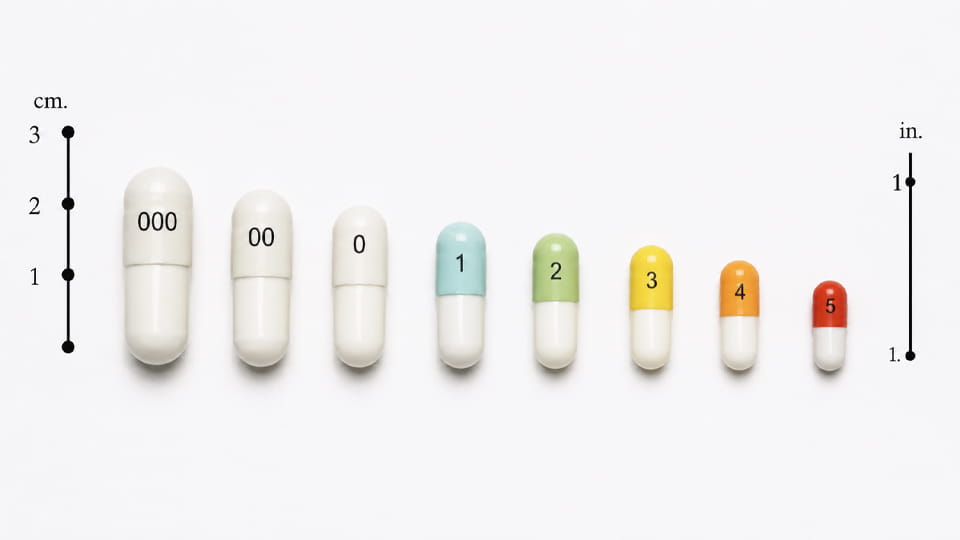
Votre remplisseur doit gérer le tailles de capsules tu utilises. Les gélules vont de 000 (le plus grand) à 5 (le plus petit). La nutrition et l’industrie pharmaceutique utilisent souvent #00, 0, 1, 2, etc.. Assurez-vous que la machine prend en charge vos tailles dès la sortie de la boîte.
La flexibilité du dimensionnement est cruciale pour les petits producteurs proposant plusieurs produits. Dans un guide d’achat, Jinlu note que la compatibilité multi-tailles est un gros plus, économie de coûts et d'espace.
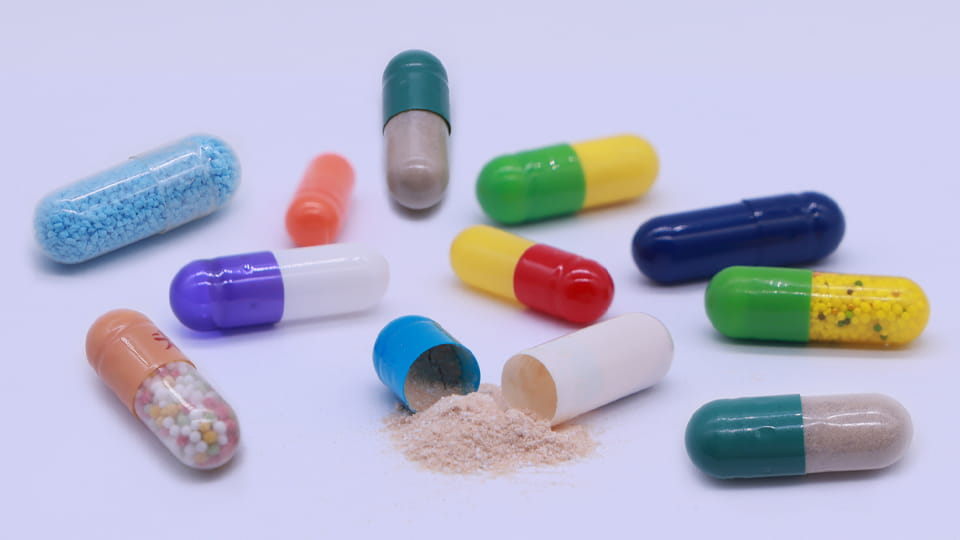
Les matériaux de remplissage des capsules varient considérablement en termes de débit, densité, et collant. Votre machine doit gérer les poudres ou granulés spécifiques que vous utilisez.
En bref: demandez au vendeur s'il a rempli des formules comme la vôtre, et envisagez de demander un exemple de test ou de démonstration si possible.
Un poids de remplissage précis n'est pas négociable dans la production de capsules. Recherchez des machines avec un contrôle de dosage précis:
Demandez toujours des données ou des témoignages sur la cohérence du remplissage. Même une petite erreur de poids dans une capsule peut signifier un produit non conforme aux spécifications.. Souviens-toi, l’accélération ne doit pas sacrifier la précision – les meilleures machines équilibrent vitesse élevée et contrôle strict.
La production pharmaceutique/de suppléments exige une nettoyabilité et un contrôle de la contamination:
Pour les petits producteurs, temps d'arrêt pour des raisons de nettoyage. Une machine difficile à nettoyer ralentira la production et risquera une contamination croisée.. Faire la nettoyabilité, un facteur d'achat clé.
Évaluer l’élément humain:
En bref, comparer les coût total de la main d'oeuvre (salaires + aérien) par rapport au coût de la machine. N'oubliez pas que les machines semi-automatiques échangent les efforts de l'opérateur contre des dépenses en capital..
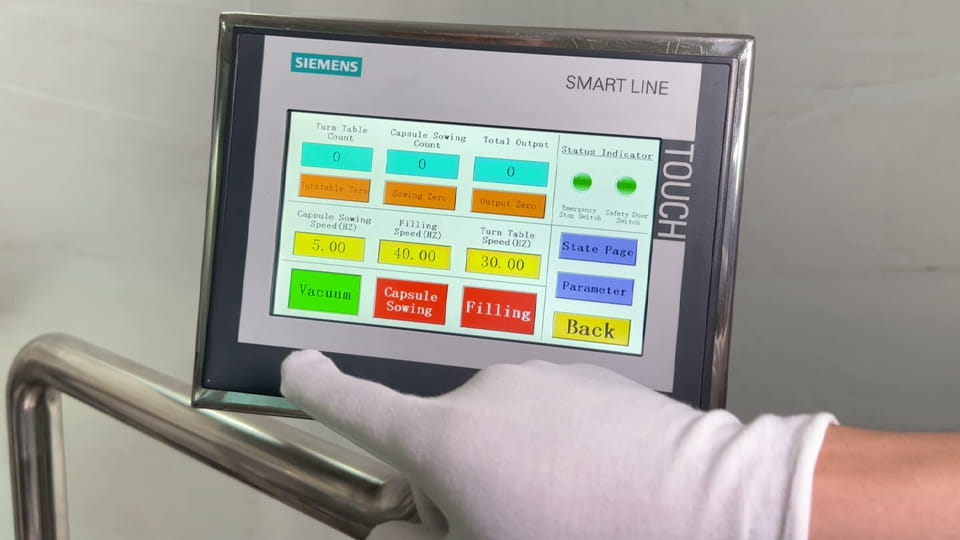
Même pour les petits lots aujourd'hui, penser à l'avance:
Prévoyez de grandir gracieusement. De nombreuses petites entreprises sont devenues trop grandes pour leur première remplisseuse de gélules; en choisir un avec un chemin de mise à niveau ou en acheter un légèrement plus grand que les besoins actuels peut économiser des coûts sur la route.
| Fonctionnalité | Remplisseuse de capsules manuelle | Remplisseur semi-automatique | Remplisseur automatique |
| Investissement typique | Très faible (des centaines de $) | Moyen (~5 000 $ à 20 000 $+) | Haut (six chiffres) |
| Sortir (gélules/heure) | 500–2 000 (max) | 10,000–40 000 (plage stable) | 30,000+ à 200,000+ |
| Main-d'œuvre requise | Haut (une personne par plateau) | Modéré (1 opérateur par machine) | Faible (1–2 opérateurs par ligne) |
| Compétence de l'utilisateur | Très faible | Modéré (un peu de formation) | Haut (nécessite une formation technique) |
| Précision & Cohérence | Variable (dépendant de l'opérateur) | Bien (régulé par machine) | Excellent (contrôle strict) |
| Conformité aux BPF | Basique (plateaux ouverts, acrylique) | Bien (dosage fermé, Pièces en acier inoxydable) | Excellent (entièrement clos, SS316) |
| Mieux pour | R&D, laboratoire, passe-temps, <500/jour | Petites et moyennes usines (~des milliers/jour) | Production à grande échelle (>100k/h) |
| Exemples de produits | Plateaux à main, 300/400-plaques à trous | Jinlu CGN-208D (30k/h), CGNT-209 (40k/h) | Jinlu NJP-3800D (228k/h) |
Pour la plupart des startups de suppléments ou de produits pharmaceutiques à petite échelle, un remplisseuse de gélules semi-automatique atteint le point idéal. Ces machines coûtent beaucoup moins cher que les grandes machines automatiques, mais offrent une vitesse et une cohérence bien supérieures à celles des méthodes manuelles.. Un semi-auto (30–40 000 capsules/heure) peut répondre à des besoins de production croissants sans la perte de main-d'œuvre liée au remplissage manuel. Ils ont également tendance à répondre aux exigences de conception GMP (pièces en acier inoxydable, trémies fermées) important pour les nouveaux fabricants.
Remplisseuses manuelles il y a encore une place si vos volumes sont extrêmement faibles (préparations personnalisées ou formules spécialisées) ou le budget est la principale contrainte. Mais soyez conscient du point de bascule: comme notes de JinluPacking, une fois la production quotidienne dépasse ~ 15 000 capsules, les coûts cachés du manuel (retravailler, au fil du temps) rentabiliser souvent une machine semi-automatique.
Machines automatiques dépassent généralement les besoins d’une startup; ne les envisagez que si vous prévoyez une évolution très rapide ou si vous avez déjà des contrats à volume élevé. Par exemple, un fabricant sous contrat servant plusieurs clients pourrait justifier une petite unité automatique (<$50k) ou une machine d'occasion pour répondre à de grosses commandes.
En résumé: Manuel pour les petits, lots occasionnels; Semi-automatique pour la plupart des entreprises en croissance; Automatique pour les gros volumes. Parlez de vos prévisions aux fournisseurs : certains peuvent suggérer des modèles de niveau intermédiaire. Jinlupacking, par exemple, encourage les entreprises à « intensifier » leurs lignes semi-automatiques pour atteindre des objectifs de production de niveau supérieur.
Évitez ces pièges en adaptant soigneusement une machine à ton plan de production et travailler en étroite collaboration avec des fournisseurs réputés qui peuvent vous guider. Comme le conclut un guide Jinlu, cette décision devrait être un partenariat – choisissez un équipement qui grandir avec votre entreprise.
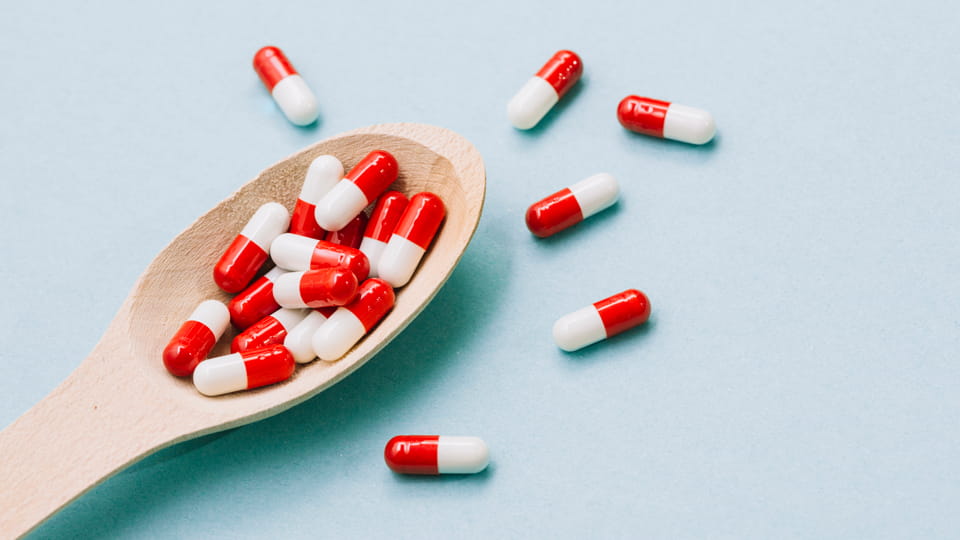
Le choix d'une machine de remplissage de gélules est une décision cruciale pour tout petit fabricant. Cela affectera votre efficacité, qualité du produit, et évolutivité. Résumer les points clés:
Surtout, travailler avec des fournisseurs expérimentés et recherchez des références ou des études de cas (Le site de Jinlu propose nouvelles et études de cas) au moment de finaliser votre sélection. Avec la bonne machine, votre production de capsules en petits lots se déroulera sans problème, produire des produits cohérents, des capsules de haute qualité qui respectent la réglementation et ravissent vos clients.
Pour la plupart des scénarios de petits lots, une remplisseuse de gélules semi-automatique offre le meilleur équilibre entre coût et performances. Il offre un débit élevé (~30 000 à 40 000 capsules/heure) sans les frais d'une ligne entièrement automatique. Les remplisseuses manuelles ne sont optimales que pour de très petits volumes (des dizaines à quelques centaines de gélules). Les machines entièrement automatiques sont généralement destinées aux opérations à gros volume.
Les remplisseurs de capsules manuels ne sont généralement PAS recommandés au-delà des très petites échelles ou R&D utiliser. Ils n’ont pas la vitesse et la cohérence nécessaires aux courses commerciales. L'expérience de l'industrie montre qu'une fois que les besoins en production dépassent quelques milliers de capsules par jour, le remplissage manuel devient un goulot d'étranglement. Pour une qualité et une efficacité constantes dans un environnement de production, la mise à niveau vers une remplisseuse semi-automatique est conseillée.
La plupart des machines à capsules dures acceptent les tailles de capsules 000 (le plus grand) jusqu'à 5 (le plus petit). Les tailles courantes dans les nutraceutiques sont 00, 0, 1, et 2. Par exemple, les machines semi-automatiques et automatiques de Jinlu couvrent toutes les tailles #000 à travers #5. Vérifiez les spécifications du produit pour être sûr; changer de taille nécessite généralement de changer le plateau ou le moule de remplissage, mais de nombreux modèles permettent ce changement rapide.
Les remplisseuses de gélules réputées à usage pharmaceutique sont construites selon les normes cGMP. Ils comportent généralement des cadres en acier inoxydable SUS304/316, chambres de dosage fermées, et surfaces lisses pour un nettoyage facile. Recherchez les certifications CE/FDA ou les allégations de conformité cGMP. Machines de fournisseurs de qualité (comme JinluPacking) sont conçus avec des coins arrondis, enceintes hygiéniques, et sont souvent accompagnés d'un support de validation. Vérifiez toujours les matériaux et la conception par rapport aux exigences GMP.
Les machines automatiques ont tendance à avoir la plus grande précision (souvent à ± 1–3 % du poids cible) grâce à des systèmes de vis sans fin précis et des contrôles de rétroaction. Les semi-automatiques atteignent généralement une précision similaire ou légèrement inférieure. Le remplissage manuel présente le plus de variations (dépendant de l'opérateur). Si un dosage précis est essentiel, choisissez une machine dotée d'un système de dosage à réglage fin et envisagez des modèles avec contrôle de poids en ligne. Demandez toujours au vendeur les données typiques sur les variations de poids..
Au minimum, disposer de compteurs de capsules précis et de tests de conformité (par exemple. contrôles de poids, testeurs de désintégration). Vous aurez peut-être également besoin de conditionneurs sous blister ou en bouteilles., scellants, et étiqueteuses. Jinlu propose des compteuses de gélules et des conditionneuses blister, Par exemple. N'oubliez pas les équipements HSE (masques anti-poussière, aspirateurs) pour gérer tout déversement de poudre.
Caractéristiques (par exemple. « 100 000 gélules/heure ») dépendent fortement des conditions. Demandez toujours un test d’acceptation en usine (GRAISSE) ou analyse d'échantillon en utilisant vos capsules et votre poudre réelles. Ce test en situation réelle constitue le moyen le plus sûr de confirmer la capacité, précision, et compatibilité. Il est courant pour les fournisseurs réputés d’autoriser les acheteurs à effectuer des tests avant l’achat final..
Références:
1. Forme posologique Fabricants de médicaments BPFc (10/93) -- NOUS. Administration des aliments et des médicaments
2.Informations sur les médicaments – Directives pour la fabrication des capsules -- OMS
3.Le remplissage de poudres dans des gélules en deux parties —— Bibliothèque nationale de médecine
4.Enquête sur divers facteurs affectant l'encapsulation sur la machine de remplissage automatique de gélules In-Cap —— Bibliothèque nationale de médecine