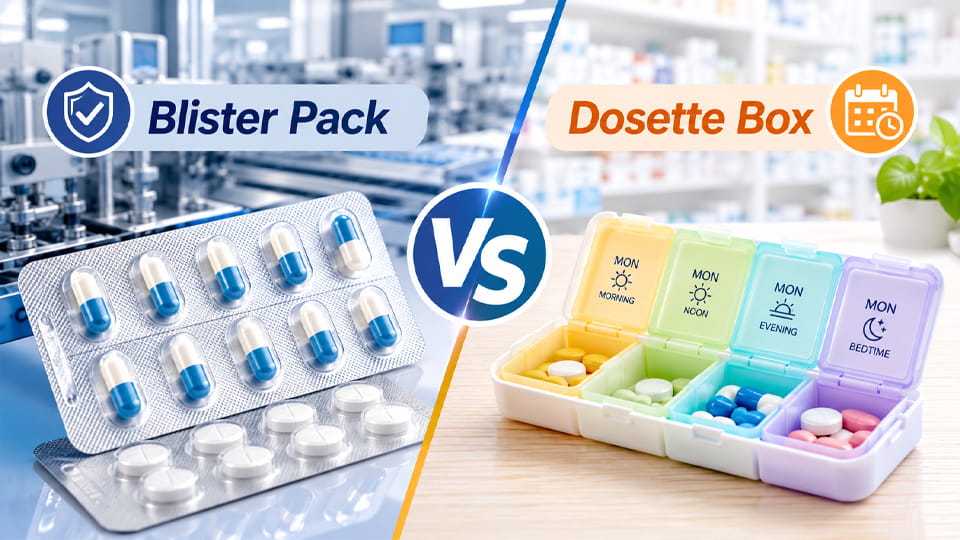
بسته بندی تاول دارویی (به عنوان مثال. قرص و کپسول) معمولاً از فیلم های شفاف PVC یا PVC/PVDC که با فویل مهر و موم شده اند استفاده می کند. انتخاب حق فیلم تاول یک تصمیم بزرگ برای هر تولید کننده دارو است. PVC و PVDC ممکن است شبیه به هم باشند, اما رطوبت و خاصیت مانع اکسیژن آنها, ماندگاری, هزینه و نیازهای پردازش بسیار متفاوت است. اگر در تولید یا تهیه دارو کار می کنید, احتمالا پرسیده اید: آیا PVC یا PVDC برای ما انتخاب بهتری است بسته های تاول دارویی? این راهنمای دوستانه PVC و PVDC را به صورت سر به سر برای بسته بندی دارویی مقایسه می کند. ما توضیح خواهیم داد که هر ماده چیست, چگونه ویژگی های مانع و هزینه آنها متفاوت است, و توصیه های عملی در مورد انتخاب فیلم تاول مناسب. در پایان, شما می دانید PVC ساده یا PVC با روکش PVDC (گاهی اوقات PVC/PVDC نامیده می شود) با نیازهای محصول شما مطابقت دارد - یا اگر یک راه حل ترکیبی منطقی تر باشد.
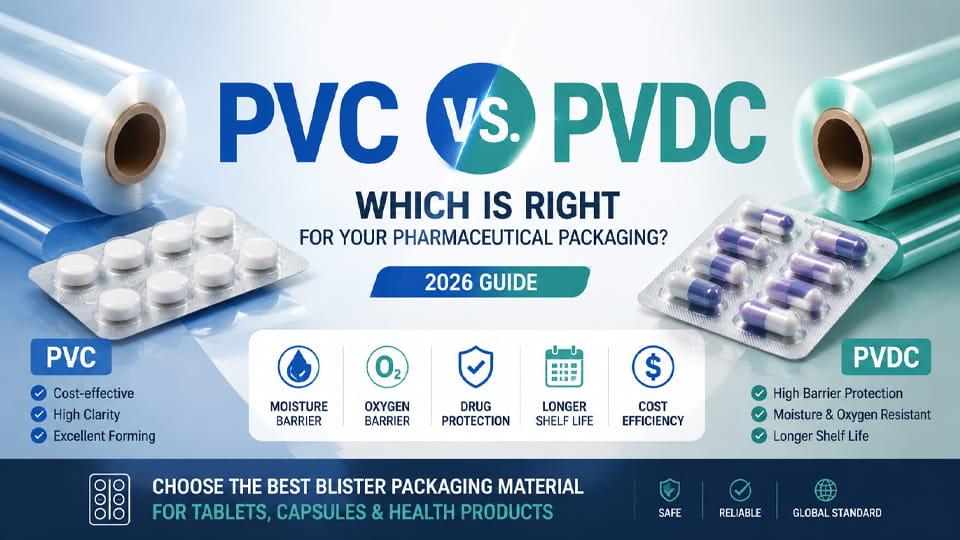
پی وی سی (پلی وینیل کلراید) واضح است, پلاستیک انعطاف پذیر, در رایج ترین مواد تاول برای قرص و کپسول. در تاول های دارویی, "پی وی سی" همیشه به این معنی است غیر پلاستیکی, پی وی سی سفت و سخت. ضخامت فیلم PVC معمولی 200 تا 300 میکرومتر است (اغلب 250 میکرومتر). این به عنوان خدمت می کند لایه پایه شکل پذیر از تاول. مزایای اصلی پی وی سی آن است هزینه کم و سهولت ترموفرمینگ. واضح است (شفافیت عالی), بادوام, و به سرعت روی خط ترموفرمینگ قالب می گیرد. تولید کنندگان PVC را برای محصولات معمولی مانند قرص های بدون نسخه دوست دارند, ویتامین ها و ژنریک های پایدار.
فیلم تاول پی وی سی فراهم می کند ساختار و دید خوب. می توانید قرص ها را از طریق بسته ببینید و بشمارید, و آنها را به راحتی بیرون برانید. PVC همچنین از نظر شیمیایی در برابر بسیاری از آنها پایدار است مواد کمکی و در داروسازی ها تایید شده است (Ph. یورو. و USP) برای تماس با دارو. به طور خلاصه: PVC قابل اعتماد است, فیلم تاول "اسب کار" برای حساس به هزینه, محصولات مقاوم در برابر رطوبت.
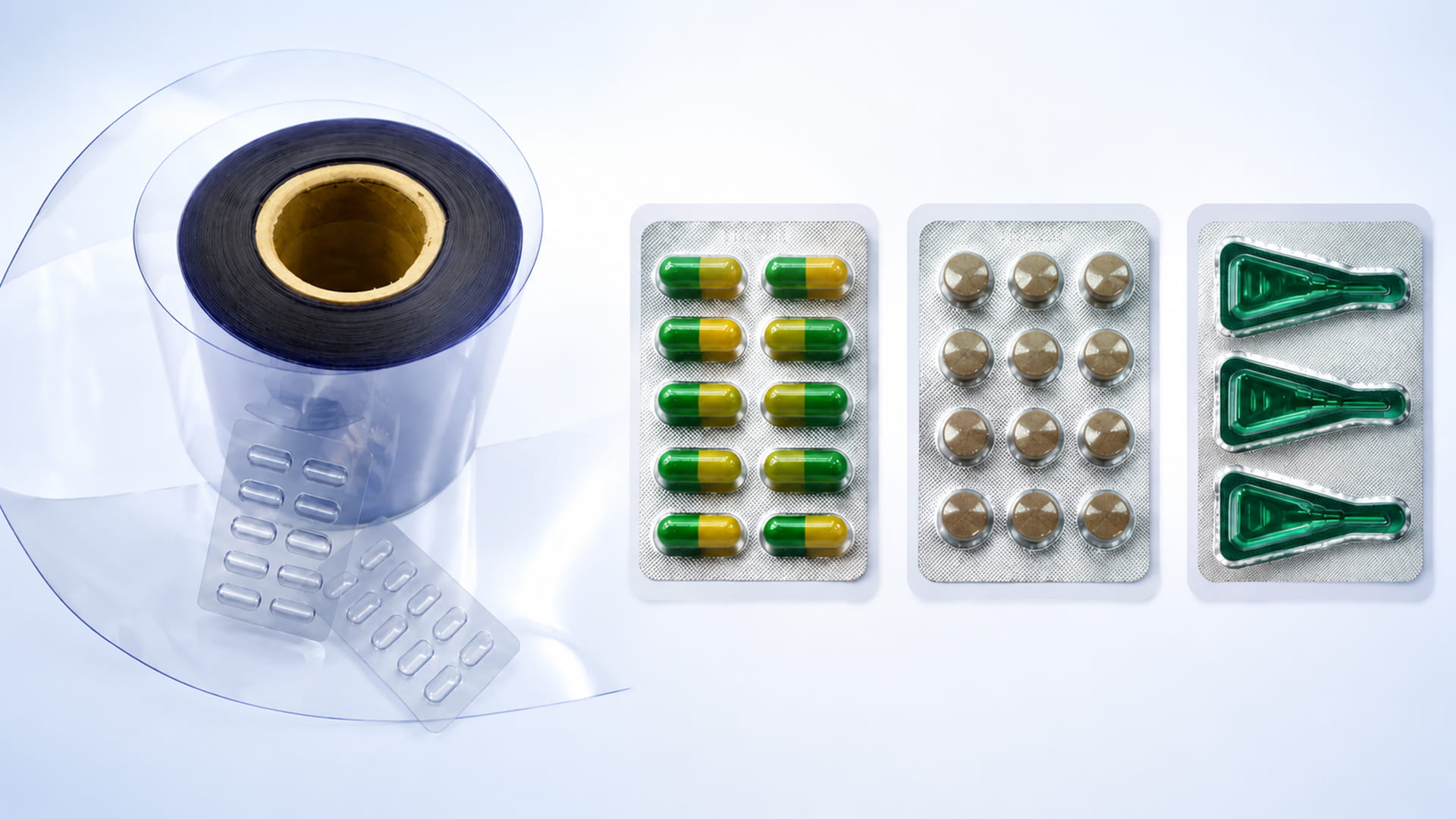
پی وی سی (پلی وینیلیدین کلراید) یک است پلیمر با مانع بالا اغلب به عنوان یک پوشش روی فیلم PVC اعمال می شود. فیلم PVDC خالص (بدون پوشش) به خودی خود به سختی ترموفرم می شود, بنابراین در بسته های تاولی به صورت یک لایه لایه بسیار نازک ظاهر می شود (در سازه های دوبلکس یا تریپلکس). لایه PVDC شامل کلر بسیار بیشتری در ساختار شیمیایی خود دارد (CH2CCl2), مقاومت فوق العاده ای در برابر رطوبت و اکسیژن به آن می دهد.
در عمل, PVC با روکش PVDC استاندارد بسته های تاولی با مانع بالا است. به عنوان مثال, یک فیلم دوبلکس معمولی 250μm PVC با پوشش PVDC 40-120gsm است.. PVDC ضخیم تر (gsm بالاتر) WVTR کمتری تولید می کند (حداقل 0.25 گرم در متر مربع در روز) و OTR نزدیک به صفر. شکل دهی بسیار شبیه پی وی سی است - شما فیلم کامپوزیت را روی ترموفرمر اجرا می کنید - اما باید دمای فر را کنترل کنید تا لایه PVDC خیلی سریع خشک نشود..
پوشش PVDC معمولاً توسط امولسیون اعمال می شود (بر پایه آب) پوشش, در پاس های متعدد. گریدهای PVDC "استاندارد" و "سوپر مانع" وجود دارد. نمرات فوق مانع می دهد بیش از دو برابر مقاومت در برابر رطوبت/O2 در هر گرم از پوشش. ساختارهای نهایی مشترک شامل:
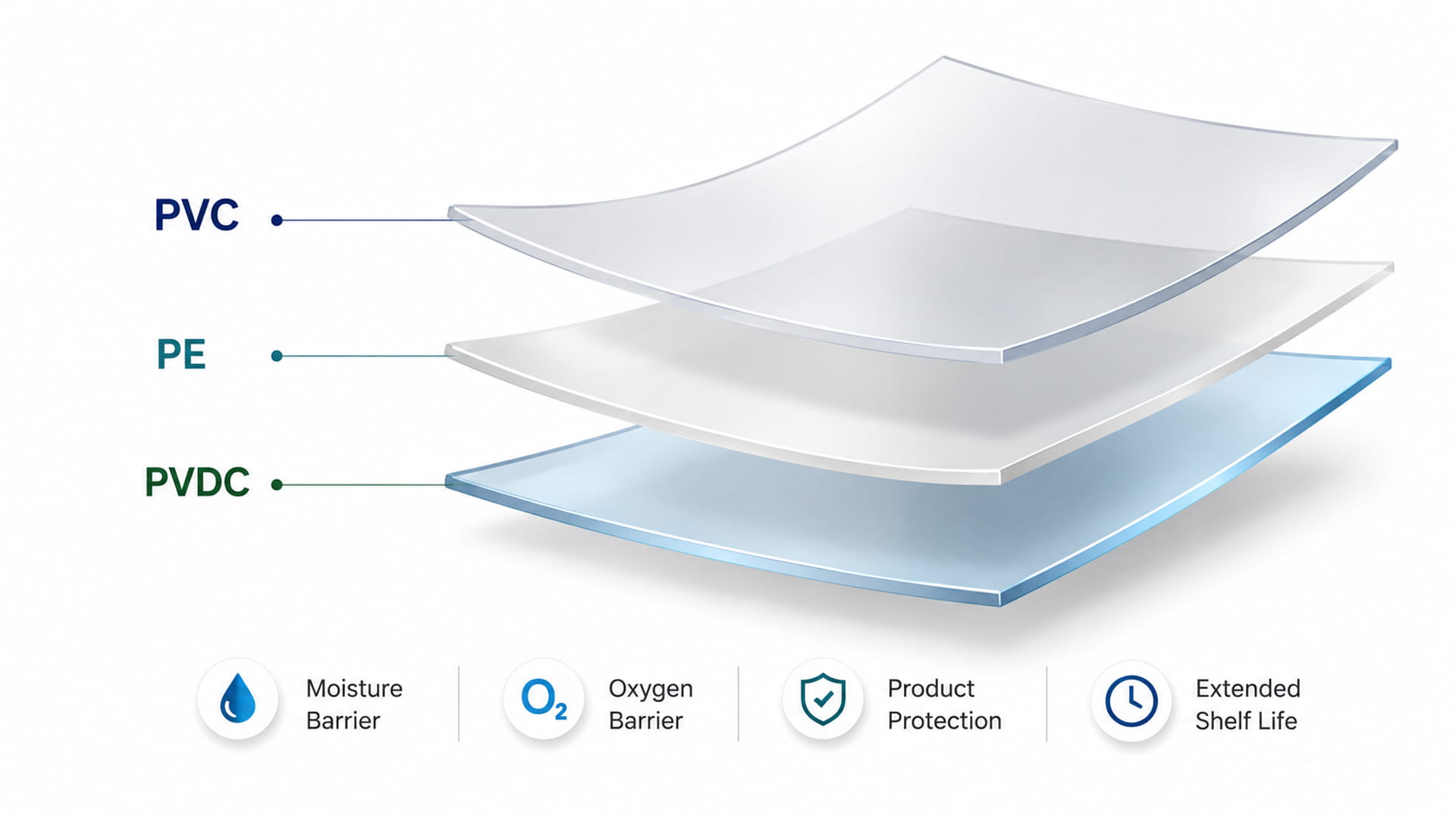
به زبان ساده: پی وی سی شکل تاول را تشکیل می دهد, در حالی که PVDC آن را محکم میبندد. یک بسته تاول ساخته شده از پی وی سی ساده (با پشتی فویل) مقرون به صرفه و واضح است, اما فقط محافظت اولیه را ارائه می دهد. یک بسته PVC/PVDC هزینه بیشتری دارد اما به شدت باعث کاهش رطوبت و اکسیژن می شود, محافظت طولانی تر از داروهای حساس.
| نشان | پی وی سی (بدون پوشش) | PVC/PVDC (پوشش داده شده) |
| سد رطوبتی | ★★☆☆☆ (متوسط) | ★★★★★ (بالا) |
| سد اکسیژن | ★★☆☆☆ (پایین) | ★★★★★ (بالا) |
| هزینه | کم | متوسط-بالا |
| وضوح (شفافیت) | عالی | عالی |
| ماندگاری (در بسته بندی) | معتاد (کوتاه تر) | طولانی (تمدید شد) |
| سهولت شکل دهی حرارتی | آسان | آسان (با تنظیمات تنظیم شده) |
| داروهای حساس (رطوبت / O2) | هیچ (ایده آل نیست) | بله (توصیه می شود) |
| صادرات/بازارهای گرمسیری | مناسب بودن محدود | مناسب بودن خوب |
| محصولات رایج | ویتامین های OTC, قرص ها | داروهای حساس به رطوبت, صادرات |
جدول: مقایسه فیلم های تاول PVC در مقابل PVC/PVDC. (★ = رتبه بندی مانع, ستاره های بیشتر = محافظت بهتر)
این مقایسه سریع نشان می دهد که چرا PVDC برای برنامه های کاربردی چالش برانگیز انتخاب شده است. PVC بدون پوشش برای استفاده عمومی مناسب است, اما PVC/PVDC می دهد حفاظت به مراتب بهتر.
حفاظت از دارو همه چیز است عملکرد مانع. رطوبت و اکسیژن می توانند API ها را تخریب کنند, بر قدرت تاثیر بگذارد, باعث جمع شدن, یا باعث تغییرات شیمیایی شود. پی وی سی به تنهایی تنها فراهم می کند حفاظت متوسط: در 38 درجه سانتی گراد / 90٪ RH, یک فیلم استاندارد 250 میکرومتری PVC اجازه می دهد تا در مورد 3.0 گرم در متر مربع / روز آب. این بدان معناست که رطوبت زیادی در صورت قرار گرفتن در تاول PVC می تواند نفوذ کند. در مقابل, یک فیلم PVC/PVDC با پوشش خوب (به عنوان مثال. 250 میکرومتر PVC + 80 gsm پی وی دی سی) فقط ممکن است اجازه دهد 0.30 g/m²/day (10× رطوبت کمتر). همین داستان در مورد اکسیژن نیز صادق است: OTR PVC 20 میلی لیتر در متر مربع در روز است, در حالی که PVC/PVDC می تواند به 0.1-1 میلی لیتر در متر مربع در روز کاهش یابد.
چرا این مهم است? WVTR/OTR پایین یعنی ماندگاری و پایداری بیشتر. یک ماده حساس به رطوبت (مانند گرانول جوشان یا پروبیوتیک) ممکن است در عرض 6 تا 12 ماه داخل PVC خراب شود, اما 2 تا 3 سال در PVC/PVDC پایدار می ماند. مسیر سازندگان دارو WVTR (نرخ انتقال بخار آب) و OTR (سرعت انتقال اکسیژن) هنگام توسعه بسته بندی. مقادیر کمتر به این معنی است که فیلم مانع سخت تری است.
به طور خلاصه: فیلم های پوشش داده شده با PVDC به مراتب بهتر از داروها محافظت می کنند. اگر محصول شما به رطوبت حساس است یا نیاز به تاریخ انقضای طولانی دارد, PVC/PVDC یا یک فیلم با مانع بالا معمولاً ارزش هزینه اضافی را دارد. پی وی سی به تنهایی یک مصالحه است - تا زمانی که شرایط آب و هوایی یا قفسه در بدترین حالت چیز دیگری را بیان نکند اشکالی ندارد..
از فیلم تاول پی وی سی ساده برای:
پی وی سی وسیله ای برای وسایل روزمره است. فکر کن قرص ویتامین C در داروخانه شهری, یا آسپرین در آب و هوای زمستانی. این محصولات مقداری رطوبت را تحمل می کنند و اگر بسته بندی کمی نشت کند به سرعت فاسد نمی شوند.. طبق بهترین روش دارویی, فیلم PVC استاندارد 250 میکرومتر (RPVC) زمانی استفاده می شود که مقرون به صرفه بودن و سهولت اولویت ها هستند.
مثال: یک شرکت بسته بندی قرص ویتامین ممکن است پی وی سی 250 میکرومتری با درپوش فویل آلومینیومی را انتخاب کند. این قرص ها 12 ماه ماندگاری دارند و به بازارهای محلی می روند. هزینه کم و شفافیت PVC آن را ایده آل می کند.
از فیلم های PVC/PVDC استفاده کنید:
اگر قرص های شما نمی توانند رطوبت یا اکسیژن را تحمل کنند, معمولاً PVC/PVDC مورد نیاز است. به عنوان مثال, بوها آنتی بیوتیک کودکان ممکن است با کشتی از سنگاپور به برزیل برای آب و هوای گرمسیری سفر کند. استفاده از PVC 250 میکرومتری با 80 تا 100 گرم پی وی دی سی (یک فیلم "دوبلکس".) می تواند به الف دست یابد 12+ ماه ماندگاری حتی در شرایط 30 درجه سانتیگراد / 75٪ RH, با توجه به مطالعات موردی.
مثال: قرص جوشان ویتامین C (که در آب گاز تولید می کنند) بسیار حساس به رطوبت هستند. یک سازنده تاول های 250 میکرومتری PVC/80gsm PVDC را اجرا می کند تا اطمینان حاصل شود که قرص ها از طریق توزیع در آسیا جامد می مانند.. هزینه فیلم بالاتر با جلوگیری از شکست محصول توجیه می شود.
فراتر از PVC و PVDC, سایر مواد تاول شامل Aclar® (PCTFE) و الو الو (آلومینیوم سرد). در اینجا نحوه مقایسه آنها آمده است:
| مادی | استحکام سد | سطح هزینه | استفاده معمولی |
| پی وی سی | واسطه | $ | تبلت های استاندارد, کپسول ها (داخلی) |
| PVC/PVDC | عالی | $$ | داروهای حساس به رطوبت, صادرات |
| پی وی سی + Aclar® | بسیار بالا | $$$$ | بیوتکنولوژی تخصصی, داروسازی سطح بالا |
| الو الو | حداکثر (نور/رطوبت صفر) | $$$$$ | هورمون ها, انکولوژی, آب و هوای شدید |
برای اکثر مصارف دارویی, پی وی سی, PVC/PVDC و گاهی اوقات PVC/Aclar® کافی است. Alu-Alu جایگاهی برای APIهای فوق حساس است. (برای مقایسه سریع به جدول بالا ما مراجعه کنید.) در عمل, PVC/PVDC رایج ترین گزینه با مانع بالا است, متعادل کردن عملکرد و هزینه.
هنگام ارزیابی مواد, بودجه و پایداری اغلب در کنار عملکرد وزن دارند:
اکثر بسته های تاول دارویی که روزانه می بینید در واقع هستند PVC/PVDC به جای پی وی سی خالص. دلیل: PVDC مانع اضافی را بدون به خطر انداختن دید و شکل پذیری PVC فراهم می کند. در اینجا چند فرمت رایج وجود دارد:
در عمل, در تاول PVC/PVDC/Alu اسباب کار برای بسیاری از قرص ها و کپسول هایی است که به ماندگاری طولانی تری نیاز دارند. اگر از او پرسیده شود «کدام بهتر است, تاول پی وی سی یا پی وی دی سی?”, به یاد داشته باشید که اغلب این یکی یا دیگری نیست - این ترکیب است که برنده می شود.
در اینجا چند سوال و پاسخ راهنمایی برای انتخاب بین فیلم های PVC و PVDC در داروسازی وجود دارد:
چه قرص یا کپسول را بسته بندی کنید, انتخاب مواد با هم همپوشانی دارند. یک سناریوی رایج:
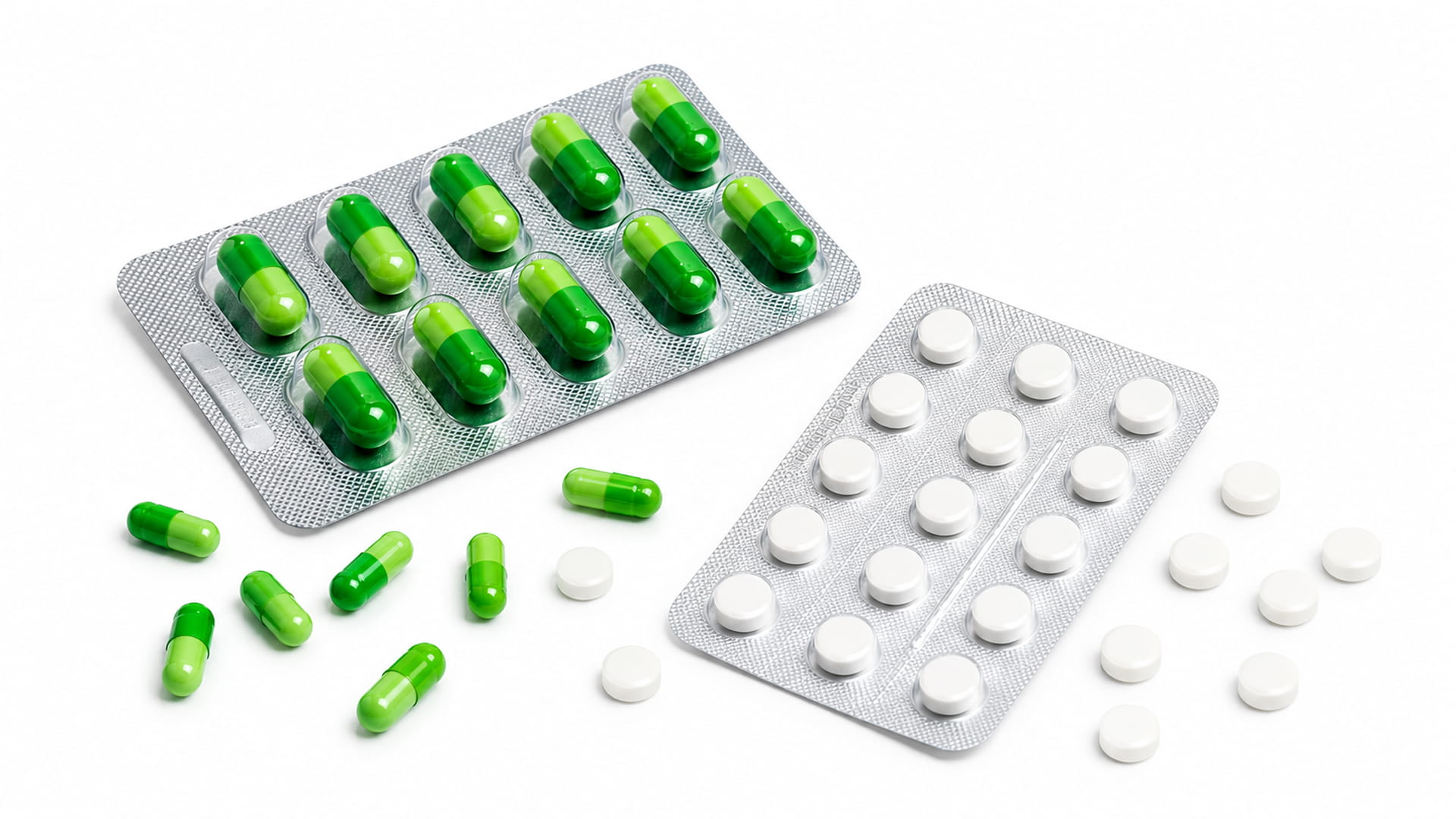
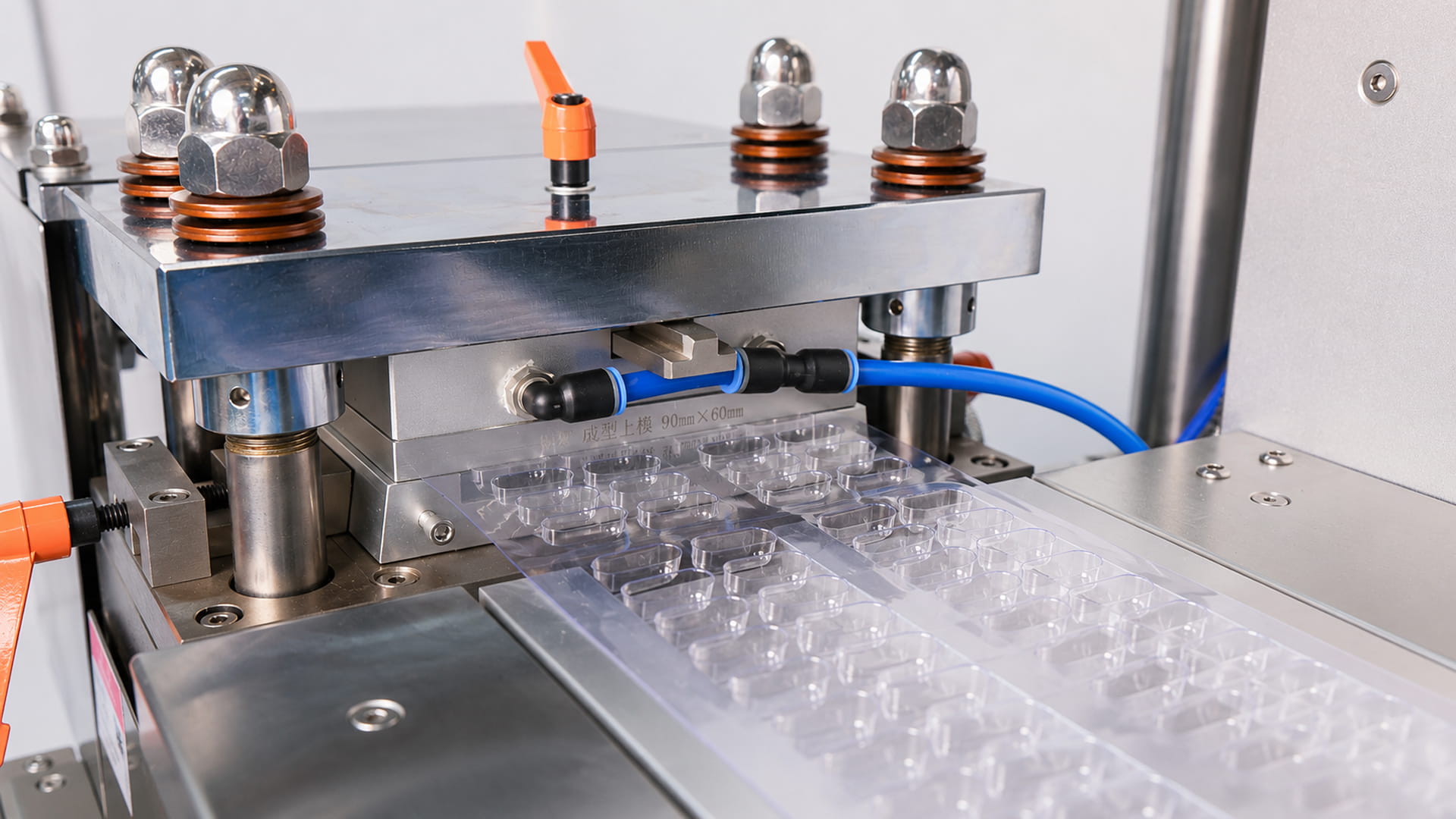
در هر دو مورد, در فرمت واحد دوز هر دوز را ایزوله می کند, و حفره شفاف به کاربران اجازه می دهد دارو را ببینند. ممکن است تعجب کنید دستگاه های بسته بندی تاول: خطوط مدرن می توانند حفره هایی از فیلم های PVC یا PVDC ایجاد کنند. تفاوت اصلی این است که PVC با روکش PVDC ممکن است به تنظیمات حرارتی کمی متفاوت در قالب ترموفرمینگ نیاز داشته باشد.. با دفترچه راهنمای تجهیزات یا فروشنده خود مشورت کنید تا پارامترهای مناسب را شماره گیری کنید.
بله. دستگاه های بسته بندی تاول به طور کلی با هر دو ماده سازگار هستند. برای PVC در مقابل PVC/PVDC به ماشین آلات جداگانه نیاز ندارید. با این حال, شما نیاز به تنظیم روند:
ماشین آلات مدرن (مانند JinLuPacking DPP-160 یا DPP-270Max ترموفرمرها) PVC دسته, PVC/PVDC و حتی آلومینیوم سرد. آنها به شما امکان می دهند با تغییر مشخصات دما و تشکیل عمق بین فیلم ها جابجا شوید. به عنوان مثال, هنگام اجرای PVC/PVDC, یک فناوری ممکن است لامپ های فر را کاهش دهد 10-20% در مقایسه با پی وی سی ساده. به طور کلی, انتقال برای یک اپراتور با تجربه ساده است.

دستگاههای تاولساز JinLuPacking برای اجرای تمام فیلمهای تاولهای دارویی اصلی - PVC ساخته شدهاند., PVC/PVDC, PVC/PE/PVDC, آلومینیوم, حتی لمینت های با مانع بالا. کنترل های PLC و سیستم دستور پخت آنها ذخیره پارامترها را برای هر نوع فیلم آسان می کند. به طور خلاصه, یک ماشین می تواند راه حل همه کاره شما باشد تا زمانی که آن را به درستی برای مواد PVC در مقابل PVDC تنظیم کرده باشید.
انتخاب بین PVC و PVDC به نیازهای محصول شما بستگی دارد. فیلم های پی وی سی هستند مقرون به صرفه و روشن است, ایده آل برای بسیاری از قرص ها و کپسول های استاندارد. فیلم های با پوشش PVDC ارائه می شود مانع برتر, برای رطوبت بسیار مهم است- یا داروهای حساس به اکسیژن که به ماندگاری طولانی نیاز دارند. در عمل, در رویکرد ترکیبی PVC/PVDC اغلب برنده می شود: از شفافیت و شکل پذیری PVC استفاده می کند در حالی که مانع PVDC را در جایی که مهم است اضافه می کند..
وقتی شک دارید, ارزیابی عواملی مانند ثبات دارو, عمر مفید مورد نیاز, بودجه, و اهداف پایداری. به عنوان مثال, یک انتخاب رایج، تاول های PVC/PVDC برای داروهای صادراتی است, و تاول های PVC-Alu ساده برای محلی, محصولات کوتاه مدت. همیشه در مورد آن فکر کنید حالت شکست: اگر محصول شما قدرت خود را از دست داده است 10% خیلی زود, هزینه آن چه خواهد بود? این ارزیابی ریسک اغلب راهنمایی می کند که آیا یک فیلم با مانع بالاتر توجیه می شود یا خیر.
آماده بهینه سازی بسته بندی داروی خود هستید? با JinluPacking تماس بگیرید برای مشاوره تخصصی و راه حل های مناسب بسته بندی تاول. تیم ما می تواند به شما در انتخاب فیلم ایده آل کمک کند (پی وی سی, پی وی سی, یا کامپوزیت های پیشرفته) و تنظیم دستگاه بسته بندی تاول را برای مطابقت توصیه کنید. چه به تاول های قرص استاندارد یا کپسول های تخصصی مقاوم در برابر کودکان نیاز داشته باشید, ما مطمئن خواهیم شد که بسته بندی شما داروها را ایمن و سازگار نگه می دارد تا آخر.
پی وی سی (پلی وینیل کلراید) و PVDC (پلی وینیلیدین کلراید) دو ماده متداول برای بسته بندی تاول های دارویی هستند. PVC عمدتاً به عنوان فیلم پایه ترموفرمینگ استفاده می شود زیرا شفافیت عالی را ارائه می دهد, شکل دهی آسان, و کم هزینه.
PVDC معمولاً به عنوان یک لایه پوشش روی فیلم PVC برای بهبود عملکرد رطوبت و مانع اکسیژن استفاده می شود.. در مقایسه با بسته بندی تاول پی وی سی استاندارد, تاول PVC/PVDC از داروهای حساس محافظت بهتری می کند و می تواند به افزایش عمر مفید کمک کند.
پی وی سی (پلی وینیلیدین کلراید) یک ماده پلیمری با مانع بالا است که به طور گسترده در کاربردهای دارویی و بسته بندی مواد غذایی استفاده می شود. مقاومت بسیار خوبی در برابر بخار رطوبت و انتقال اکسیژن دارد, آن را برای محافظت از محصولاتی که نیاز به پایداری بهبود یافته دارند مناسب می کند.
در بسته بندی بلیستر دارویی, PVDC معمولا به عنوان یک لایه پوشش روی فیلم PVC به جای یک ماده تشکیل دهنده مستقل استفاده می شود. ترکیب PVC/PVDC یک فیلم تاول با مانع بالا با عملکرد بهتر محافظت از دارو ایجاد می کند.
تشخیص بصری فیلمهای PVC و PVDC دشوار است زیرا هر دو ماده معمولاً شفاف هستند و در ساختارهای بستهبندی تاولهای مشابه استفاده میشوند..
روش های اصلی شناسایی شامل:
• ساختار مواد: PVC به طور معمول فیلم ترموفرمینگ پایه است, در حالی که PVDC یک پوشش نازک مانع است که روی PVC اعمال می شود.
• عملکرد مانع: فیلم های پوشش داده شده با PVDC نسبت به PVC استاندارد رطوبت و اکسیژن را به طور قابل توجهی محافظت می کنند.
• مشخصات فنی: تولید کنندگان معمولاً مواد را با برچسب های ساختاری مانند PVC شناسایی می کنند, PVC/PVDC, یا PVC/PE/PVDC.
جهت خرید و تولید دارو, بررسی برگه مشخصات مواد تامین کننده مطمئن ترین روش است.
از نظر رطوبت و مانع اکسیژن, بله. پی وی سی (به عنوان یک پوشش) سد بسیار بالاتری نسبت به PVC ساده ایجاد می کند. اما PVDC گران تر است, بنابراین فقط اگر به آن محافظت اضافی نیاز داشته باشید، "بهتر" است. برای ساده, محصولات پایدار, پی وی سی معمولا خوب است.
هزینه تولید رزین PVDC بیشتر است, و اعمال پوشش یک فرآیند چند مرحله ای است. شما اساساً مواد اضافی اضافه می کنید (پوشش) و پردازش اضافی. عملکرد اضافه شده با آن قیمت می آید.
بله. PVDC می تواند عمر مفید دارویی را با کاهش نفوذ رطوبت و اکسیژن به بسته بندی تاول بهبود بخشد..
بسیاری از محصولات دارویی, از جمله قرص های حساس به رطوبت, مربوط به, و برخی محصولات غذایی, نیاز به بسته بندی مانع قوی تری دارند زیرا رطوبت و اکسیژن می تواند بر کیفیت و پایداری محصول تأثیر بگذارد.
با این حال, ماندگاری واقعی بستگی به فرمولاسیون دارو دارد, ساختار بسته بندی, شرایط ذخیره سازی, و نتایج تست پایداری.
PVC/PVDC و PVC/PE/PVDC هر دو ساختارهای بسته بندی تاولی با مانع بالا هستند..
PVC/PVDC:
یک ساختار دوبلکس استاندارد که در آن پوشش PVDC به طور مستقیم بر روی PVC اعمال می شود. این محافظت از رطوبت و اکسیژن را بهبود می بخشد.
PVC/PE/PVDC:
یک ساختار تریپلکس که یک لایه پلی اتیلن بین PVC و PVDC اضافه می کند. این ساختار انعطاف پذیری و عملکرد را بهبود می بخشد, مخصوصا برای حفره های تاول عمیق تر.
بهترین انتخاب بستگی به نیاز محصول دارد, طراحی حفره, و قابلیت دستگاه بسته بندی.
این فیلم PVC با یک لایه نازک PVDC در یک طرف است. PVC شکل پذیری و استحکام را فراهم می کند; لایه PVDC مانع رطوبت/اکسیژن می شود. آنها با هم دو لایه را تشکیل می دهند (دوبلکس) یا سه لایه (تریپلکس) ساختار.
بله. دستگاه های تاول ساز مدرن (مانند مدل های JinLuPacking) برای PVC طراحی شده اند, PVC/PVDC و دیگر فیلم های گرما شکل پذیر. شما به سادگی تنظیمات مناسب را انتخاب کنید. کلید کنترل دمای فر و تشکیل پارامترهای فیلم خاص است.
برای بازارهای صادراتی گرم/مرطوب, PVC/PVDC (یا حتی PVC/Aclar یا Alu-Alu) توصیه می شود. پی وی سی به تنهایی اغلب در آب و هوای گرمسیری شکست می خورد.
مراجع:
1.سیستم های بسته بندی ظروف برای بسته بندی داروهای انسانی و بیولوژیک —— ایالات متحده. سازمان غذا و داروی
2.سیستم های بسته بندی پلاستیک و مواد ساخت و ساز آنها —— داروسازی ایالات متحده
3.بسته بندی تاول دارویی, قسمت 1 منطق و مواد —— گیل
4.پلی وینیلیدین کلراید —— ScienceDirect
5.رویکردهای شیمیایی برای شناسایی PVC و PVDC در مواد بسته بندی دارویی —— ResearchGate
6.صلاحیت مواد PVC انعطاف پذیر / پی وی سی – PVDC در صنعت داروسازی —— revistajrg.com