
Embalaje farmacéutico debe Prevenir la contaminación y garantizar la trazabilidad., según estrictos estándares globales. Buenas prácticas de fabricación (GMP) requieren un diseño de equipo higiénico, materiales no reactivos, y calificación completa (IR/WH/PQ) de maquinas. Las regulaciones clave incluyen FDA 21 Piezas CFR 210/211, que exigen equipos limpiables y registros de mantenimiento, BPF de la UE (EudraLex Vol4) (Parte I Capítulo 3 y Anexo 1) para envases estériles, y ISO 15378, el estándar QMS para materiales de embalaje primario. Cobertura de requisitos esenciales compatibilidad de material, limpieza validada/CIP, publicación por entregas, y integridad de los datos (21 CFR Parte 11/Anexo UE 11). Esta guía explica estos estándares y cómo elegir máquinas de envasado que cumplan con GMP (ampolla, llenado de botellas, estuchado, etiquetado, etc.) por seguridad, productos farmacéuticos rastreables.
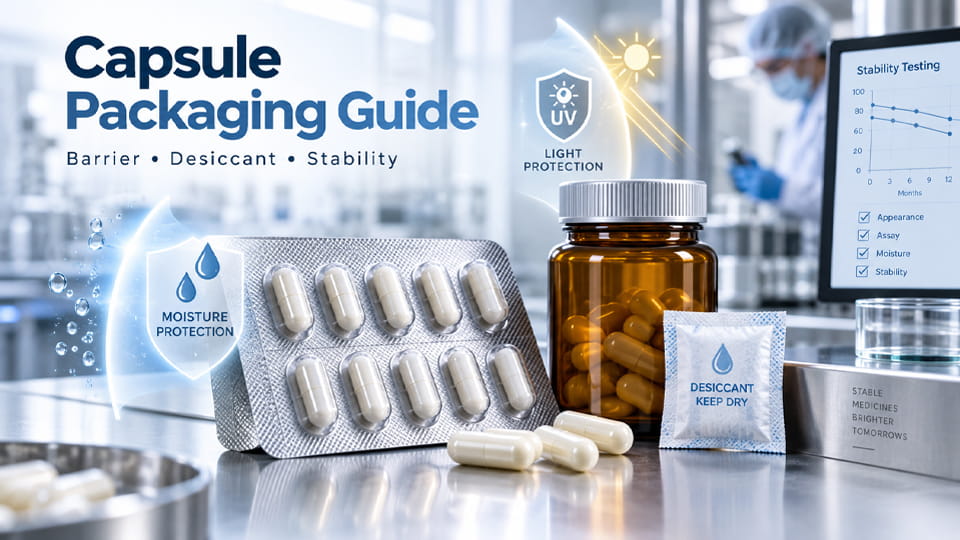
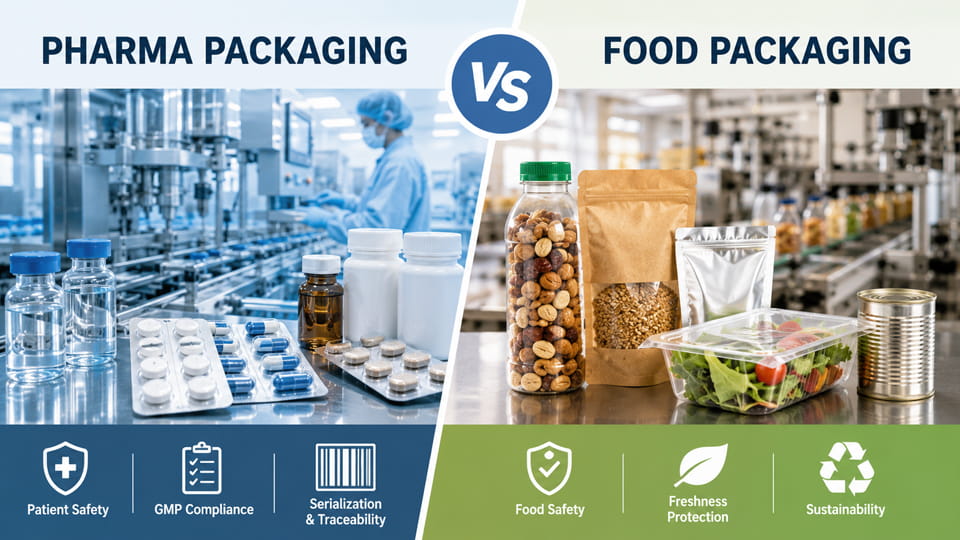
El embalaje farmacéutico es tan importante como el propio medicamento: protege la identidad del producto, potencia y esterilidad. La OMS señala que el embalaje debe proteger los medicamentos de sustancias químicas indeseables, contaminación biológica o física y, para productos estériles, “Hay que mantener la esterilidad”. En la práctica, esto significa cada blister, La botella o el paquete de cartón deben producirse y etiquetarse correctamente según GMP para evitar confusiones o contaminación.. Reguladores globales (FDA, EMA, OMS) Requerir que los procesos y equipos de envasado sean validados y controlados al igual que la fabricación de medicamentos.. En breve, estándares de embalaje farmacéutico existen para garantizar la seguridad del paciente manteniendo los medicamentos correctos, Puro y trazable en toda la distribución..

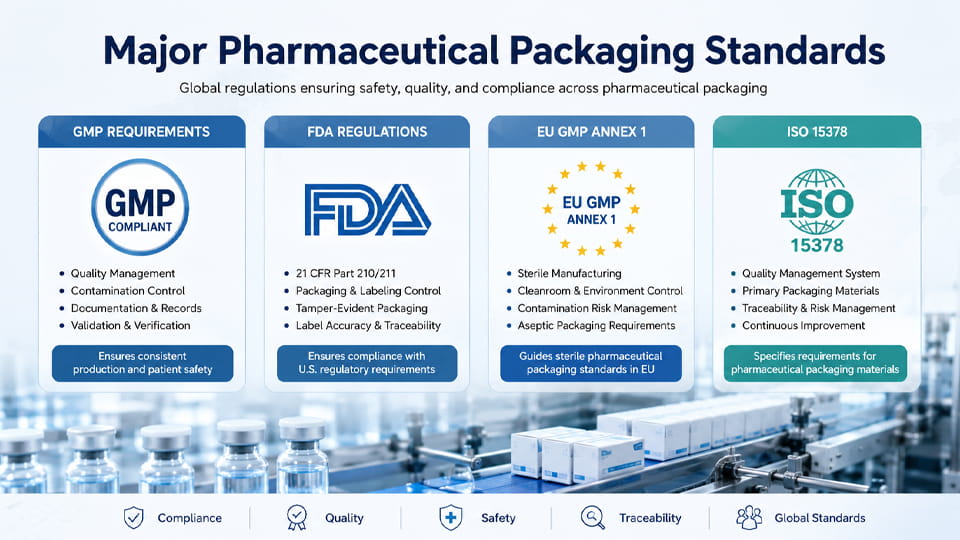
GMP es el marco general para la calidad de los medicamentos. Para embalaje, Mandatos de GMP Diseño higiénico y controles estrictos. para evitar la contaminación cruzada y las mezclas. El equipo debe estar diseñado para ser “limpieza fácil y completa”, como afirman los reguladores. Por ejemplo, La guía de la FDA especifica que el equipo “debe construirse y ubicarse para facilitar la limpieza… evitar la contaminación”. Las directrices WHO/PIC/S también enfatizan la validación de equipos y procesos con diseño sanitario.. En esencia, GMP para embalaje requiere: acero inoxidable limpiable (a menudo SUS316L) equipo, protocolos de limpieza documentados, calificación completa (IR/WH/PQ) y registros de etiquetado precisos. Estas prácticas protegen la identidad y la calidad del producto en cada paso del embalaje..
en los estados unidos, FDA 21 Piezas CFR 210 y 211 cubrir la fabricación y el envasado de medicamentos. Parte 211 (Subparte D/E) Incluye reglas específicas sobre el diseño de equipos., limpieza y calibración. Por ejemplo, Todo el equipo debe funcionar dentro de las especificaciones y limpiarse según procedimientos escritos.. Parte 211 También requiere identificar y etiquetar los componentes para evitar confusiones., y mantener registros completos de lotes durante el embalaje. En tono rimbombante, 21 Parte CFR 11 se aplica a los controles computarizados en líneas de embalaje: exige inicios de sesión de usuario únicos, Pistas de auditoría y firmas electrónicas para garantizar la integridad de los datos.. En la práctica, Esto significa que las máquinas de envasado modernas deben cifrar los datos de los lotes., restringir el acceso de los usuarios, y registrar cada cambio, de conformidad con las normas de la FDA.
La guía GMP de la UE (EudraLex Vol. 4) Se alinea estrechamente con los principios de la FDA para equipos.. Parte I Capítulo 3 (Locales y Equipos) requiere que el equipo sea “fácil de limpiar” con piezas de contacto no reactivas. Anexo 15 (UE) exige plena cualificación (IR/WH/PQ) de toda maquinaria. Para sistemas computarizados, Anexo UE 11 (no se muestra aquí) De manera similar, exige validación y pistas de auditoría seguras., como la parte de la FDA 11. Una actualización clave es Anexo GMP de la UE 1 (Productos estériles), totalmente aplicable desde 2024. Anexo 1 eleva el listón del envasado estéril: requiere una estrategia de control de la contaminación documentada (CCS) y estándares de sala limpia de alta calidad (ISO 5/7 calificaciones), así como tecnologías de barrera (aisladores/RABS) y métodos de esterilización validados.. Integridad del cierre del contenedor (CCI) También se hace hincapié en las pruebas y controles de los extraíbles/lixiviables para minimizar los riesgos de contaminación. Todas las líneas de exportación o con sede en la UE de inyectables estériles deben cumplir estos criterios..
ISO 15378 es el estándar internacional para materiales de embalaje primario de medicamentos. Especifica un sistema de gestión de calidad. (sistema de gestión de la calidad) alineado con ISO 9001, con referencia a GMP. En otras palabras, ISO 15378 se centra en el diseño, Fabricación y suministro de componentes de embalaje farmacéutico. (lámina de ampolla, botellas, viales, etc.), garantizar que cumplan consistentemente con los requisitos regulatorios y del cliente. Mientras que ISO 15378 está dirigido a proveedores de materiales en lugar de fabricantes de equipos, Los fabricantes de máquinas deben adaptarse a los materiales compatibles. (p.ej. plásticos o laminados aprobados) y proporcionar documentación (certificados de trazabilidad de materiales) para que el embalaje primario final tenga la certificación ISO‑15378. Lograr ISO 15378 La certificación demuestra el compromiso con los materiales de embalaje de calidad GMP en su producción..
Las máquinas de envasado farmacéutico deben cumplir estrictos criterios técnicos para cumplir con los estándares anteriores.. La siguiente tabla resume los requisitos clave.:
| Requisito | Puntos clave |
| Diseño higiénico | Equipos en acero inoxidable. (p.ej. 316l), soldaduras suaves, superficies inclinadas. Marcos voladizos (unidades aisladas) para eliminar áreas ocultas, permitiendo la limpieza. |
| Compatibilidad de material | Todas las partes que tocan el producto deben ser no reactivas ni absorbentes. (316LSS, PTFE, plásticos de calidad farmacéutica) por lo que no pueden lixiviar ni unir activos. Utilice lubricantes y sellos de calidad alimentaria. (PTFE, EPDM) resistente a los agentes de limpieza. |
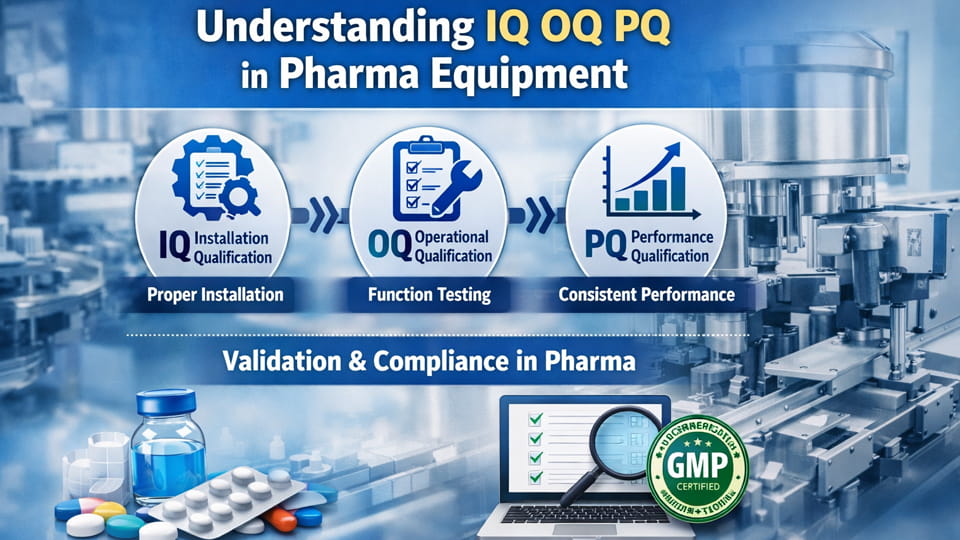
| Validación de equipos | Lleno IR/WH/PQ para cada máquina: calificación de instalación documentada, pruebas funcionales, y pruebas de rendimiento durante un lote simulado o real. Cada máquina nueva o modificada debe ser calificada antes de su uso.. |
| Limpieza & Sanitización | Procedimientos de limpieza/CIP validados para cada cambio de producto.. Los POE de limpieza deben estar escritos, ejecutado y revalidado periódicamente. Sólo las áreas de contacto con el producto requieren muestreo de validación. |
| Mantenimiento & Calibración | Mantenimiento preventivo programado para reemplazar piezas desgastadas.. Procedimientos de calibración (p.ej. para escalas, medidores de flujo) con registros (para la FDA 21 CFR 211.68) garantizar la precisión. Controles periódicos de sensores y actuadores según el SOP. |
| Automatización & Seguridad | Funciones de prevención de errores como inspección visual, el escaneo de códigos de barras y las puertas de rechazo automatizadas reducen los errores humanos. Enclavamientos (p.ej. sensores de puerta) detener máquinas en atascos. Para líneas de etiquetado, Las cámaras verifican la correcta aplicación de la etiqueta.. |
| Integridad de datos | Los controles deben cumplir con la FDA. 21 CFR Parte 11/Anexo UE 11: cuentas de usuario seguras, pistas de auditoría inalterables, y aprobación electrónica de registros. Integración MES/ERP para archivado de registros por lotes. Registros digitales de ajustes y desviaciones.. |
| Publicación por entregas & Trazabilidad | El equipo debe admitir la impresión o el grabado de identificadores únicos. (p.ej. 2D códigos DataMatrix) en cada paquete primario. La integración con los sistemas de seguimiento y localización garantiza que cada código esté vinculado a un lote/lote. La línea debe permitir rastreos y recuperaciones por código.. |
Por ejemplo, después de instalar un nuevo línea de ampolla o llenador de botellas, GMP requiere pruebas documentadas de IQ/OQ/PQ para probar cada función (llenar volumen, calidad de sellado, rechaza) cumple con las especificaciones. Similarmente, después de cada lote, La máquina debe limpiarse mediante un procedimiento validado.. Los reguladores exigen que estos procesos de limpieza sean “documentado, verificado, y revalidado periódicamente”. Limpieza automatizada en el lugar (PIC) Son comunes los sistemas para rellenos líquidos o limpieza a base de solventes para sólidos.. Superficies críticas (tolvas, boquillas, sellos) se prueban o miden con hisopos (p.ej. Carbono orgánico total) para confirmar que no quedan residuos. En breve, debe poder demostrar mediante documentación que en cada operación de llenado/empaque se utilizó un personal calificado., maquina sanitaria.
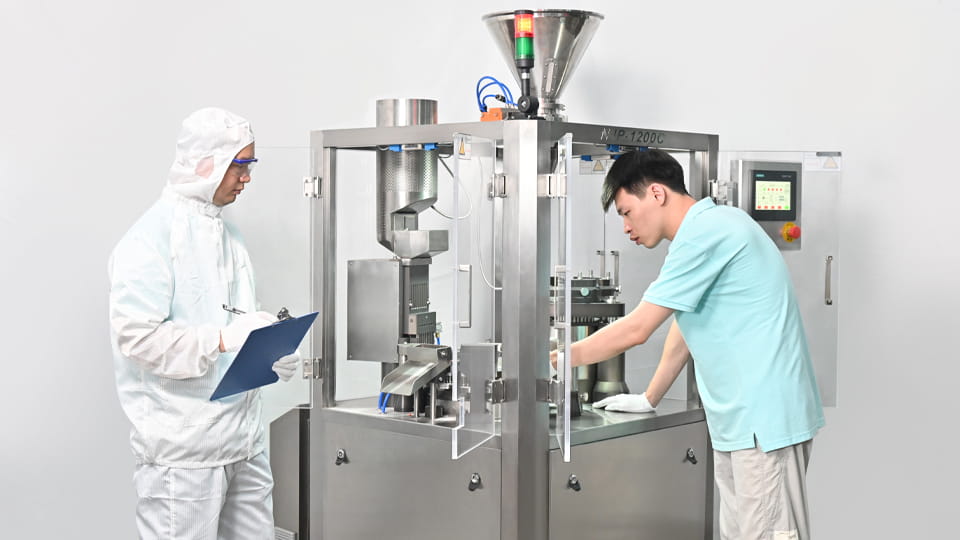
Líneas de producción farmacéutica utilizar una variedad de máquinas especializadas. Las características clave relacionadas con las GMP de los equipos comunes incluyen:
Cada una de estas máquinas debe seleccionarse teniendo en cuenta el diseño GMP. (superficies lisas de acero inoxidable, PIC, Aire HEPA si es necesario). Para ejemplos detallados, consulte las páginas de productos de Jinlu Packing, que destacan características de cumplimiento como marcos voladizos y certificaciones CE/GMP.
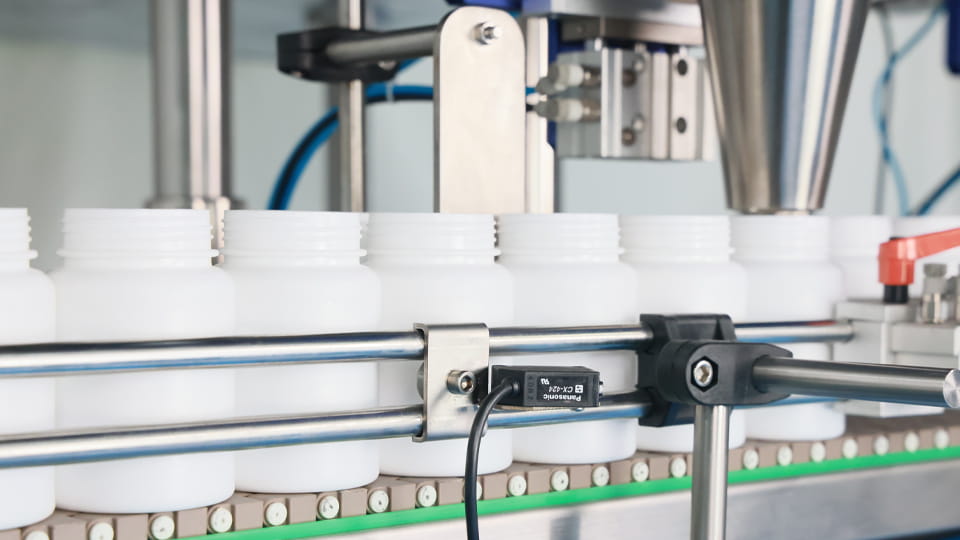
Cumplir con los estándares de envasado farmacéutico presenta desafíos: Los requisitos regulatorios varían según el mercado., y cada nuevo medicamento puede requerir diferentes especificaciones de empaque (p.ej. cierres a prueba de niños, recubrimientos específicos). La validación y la documentación añaden tiempo y costos: cada nuevo tamaño de paquete o cambio de producto puede desencadenar una revalidación.. Reglas de serialización (DSCSA en EE. UU., La fiebre aftosa en la UE, etc.) son complejos y evolucionan, Requiere actualizaciones periódicas de software y capacitación del personal.. Requisitos de sala limpia (para productos estériles) también aumentan los costos de las instalaciones. Finalmente, seguimiento y prueba del cumplimiento (a través de registros de lotes y pistas de auditoría) significa software robusto y mantenimiento de registros. Superar estos desafíos requiere una estrecha colaboración entre ingeniería, Control de calidad y proveedores., y elegir adaptable, equipo bien soportado.
Al seleccionar maquinaria para un línea de envasado farmacéutico, siga una lista de verificación GMP:
El futuro del packaging farmacéutico es cada vez más digital y sostenible. Serialización y seguimiento & Rastro se expandirá globalmente, posiblemente aprovechando blockchain para asegurar las cadenas de suministro. Embalaje inteligente (Etiquetas RFID, Sensores NFC) puede comenzar a monitorear las condiciones de almacenamiento o eventos de manipulación. El equipo tiende hacia Industria 4.0 – líneas con sensores IIoT y sistemas de visión impulsados por IA que predicen fallas o cuentan pastillas de manera más confiable. Robótica para embalaje final (manejo de casos, paletizar) y barreras asépticas avanzadas (p.ej. sistemas asépticos cerrados) también están creciendo. Del lado de los materiales, Hay un impulso por componentes de embalaje reciclables o biodegradables., por lo que las máquinas deben manejar nuevos tipos de películas. En general, automatización, La conectividad de datos y la seguridad ambiental son tendencias clave que dan forma a los envases farmacéuticos de próxima generación..
Cumplir con los estándares de embalaje farmacéutico es innegociable para fabricantes de medicamentos. Entendiendo las GMP, Los requisitos de la FDA e ISO (y al elegir maquinaria diseñada para cumplirlos) salvaguarda la calidad del producto y la seguridad del paciente.. El cumplimiento exige un diseño riguroso (superficies lisas 316L, Limpieza CIP/COP), validación completa (IR/WH/PQ) y documentación en curso (registros de mantenimiento y auditoría). Con regulaciones como la de la FDA 21 CFR y anexo de la UE 1, Las líneas farmacéuticas no pueden permitirse atajos.
Para soluciones de equipos de embalaje, trabajar con proveedores experimentados. Embalaje de Jinlu, Por ejemplo, se especializa en máquinas blister que cumplen con GMP, líneas de llenado de líquidos, encartonado y más. Nuestras máquinas cuentan con diseños en voladizo., Materiales de calidad FDA y serialización de soporte listos para usar. Contacte a Jinlu Packing hoy para garantizar que su próxima línea de embalaje cumpla con los estándares GMP globales con soporte de validación completo.
Los estándares de empaque farmacéutico son los requisitos regulatorios que garantizan que los paquetes de medicamentos no contaminen ni mezclen los productos.. Estos incluyen pautas GMP de agencias como FDA y EMA., que exigen el diseño de equipos higiénicos, Validación de limpieza y documentación exhaustiva.. Estándares como ISO 15378 centrarse en la gestión de la calidad de los propios materiales de embalaje. Juntos garantizan que el embalaje proteja la calidad de los medicamentos y contenga información precisa..
FDA 21 Parte CFR 211 cubre operaciones de embalaje. Requiere que se mantenga el equipo., limpiado y calibrado para que no afecte la identidad o pureza del medicamento. Por ejemplo, La guía de la FDA establece que el equipo "debe construirse para facilitar la limpieza" y advierte que los materiales no deben reaccionar con el medicamento.. Los sistemas informáticos en la línea también deben cumplir con 21 Parte CFR 11 (registros electrónicos y pistas de auditoría).
ISO 15378 es una norma ISO específica para materiales de embalaje primario de productos farmacéuticos.. Aumenta ISO 9001 con requisitos GMP, Garantizar que los proveedores de material de embalaje tengan un sistema de gestión de la calidad que cumpla sistemáticamente con los estándares legales y del cliente.. Si bien no regula el equipo directamente, El uso de materiales con certificación ISO 15378 en máquinas GMP ayuda a cumplir con las expectativas regulatorias y las demandas de calidad de los clientes..
Anexo 1 de la Guía GMP de la UE cubre los medicamentos estériles. Establece reglas estrictas para la fabricación aséptica, incluido el embalaje de inyectables. Los puntos clave incluyen la implementación de una estrategia de control de la contaminación. (CCS), utilizando salas limpias clasificadas (ISO 5/7), tecnología de aislamiento o barrera, y validar los pasos de esterilización/desinfección.. Anexo 1 El cumplimiento garantiza que incluso durante el embalaje, Los medicamentos estériles permanecen libres de microbios y partículas, lo cual es fundamental para la seguridad del paciente..
Primero, comprobar su diseño y materiales: debe utilizar acero inoxidable 316L en todas las piezas que entran en contacto con el producto y no debe tener grietas ocultas.. Asegúrese de que el proveedor proporcione documentación completa de IQ/OQ/PQ.. Busque características como capacidad CIP o limpieza sencilla. Confirme que tenga capacidad de registro electrónico de lotes (21 Parte CFR 11) y soporte de serialización (2codificación D). Finalmente, revisar cualquier marca de certificación (Ceñudo, GMP) y solicitar referencias o informes de auditoría. Una máquina verdaderamente GMP vendrá con soporte de validación y documentación de cumplimiento completa..
Leyes de serialización (p.ej. la Ley de Seguridad de la Cadena de Suministro de Medicamentos de EE. UU., Directiva de la UE sobre medicamentos falsificados) exigir un código único en cada paquete individual para rastrearlo a través de la cadena de suministro. El equipo de embalaje debe imprimir o grabar estos códigos. (normalmente códigos de barras 2D) en cada ampolla o botella. Esto garantiza que se puedan detectar falsificaciones y que los lotes se puedan retirar rápidamente si es necesario.. En la práctica, La serialización se integra en la línea de envasado mediante un codificador y una cámara de verificación., con software que vincula cada código a registros de lotes para una trazabilidad completa.
Una estuchadora GMP debe tener una superficie suave, Superficies higiénicas y alimentación de cajas de cartón cerradas para minimizar el polvo.. Debe integrar lectores de etiquetas y códigos para verificar el código de lote y el contenido de cada caja.. Compruebe que la máquina pueda realizar la limpieza de líneas. (vaciado/inspección entre productos) según las pautas de la FDA, y que permite una fácil limpieza de los aplicadores de cola de cartón. Por ejemplo, Muchas estuchadoras incluyen agarraderas de cartón al vacío y sistemas de visión para detectar atascos de cartón o encartes faltantes., cumplir las normas de prevención de confusiones en 21 CFR 211.
Referencias:
1.21 Parte CFR 211 – BUENAS PRÁCTICAS ACTUALES DE FABRICACIÓN DE PRODUCTOS FARMACÉUTICOS TERMINADOS —— Instituto de Información Jurídica
2.ISO 15378:2017 Materiales de embalaje primario para medicamentos. —— iso.org
3.Anexo GMP de la UE 1: Fabricación de medicamentos estériles —— gmp-compliance.org
4.Ley de seguridad de la cadena de suministro de medicamentos (DSCSA) --A NOSOTROS. Administración de Alimentos y Medicamentos