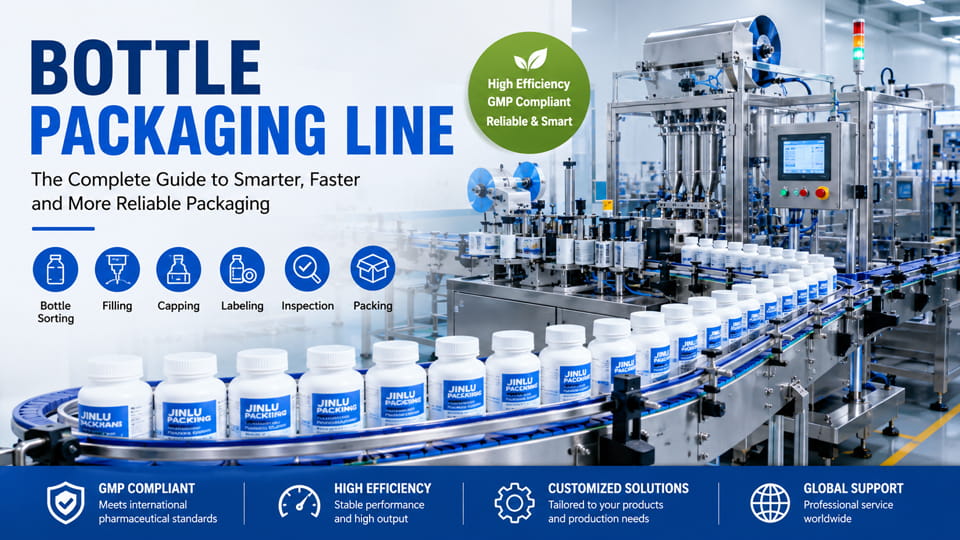
Guía de maquinaria taponadora: tipos, Principios de trabajo & Consejos de compra
Guía de maquinaria taponadora: tipos, Principios de trabajo & Consejos de compra
mayonesa 22, 2026
No hay comentarios
En envases modernos, maquinaria de tapado es el héroe anónimo que mantiene los productos seguros y listos para el almacenamiento. Ya sea un frasco de medicina, un refresco, o un tarro de salsa, la gorra es a menudo la “última línea de defensa” para la calidad del producto. Un sello seguro protege el contenido de la humedad., aire, y contaminantes, extender la vida útil y preservar la reputación de la marca. Como señala un experto, una tapa bien ejecutada “hace que su producto esté listo para el estante, protege la integridad del producto, prolonga la vida útil”. En pocas palabras, el sistema de tapado adecuado garantiza que cada contenedor esté sellado exactamente como debe estar, manteniendo el flujo de producción y la seguridad de los clientes.
Una máquina taponadora eficiente automatiza o semiautomatiza el proceso de colocación y cierre de tapas en envases.. Esto aumenta la productividad., reduce los costos laborales, y reduce los errores en comparación con las tapas apretadas manualmente. En líneas de envasado en toda la industria alimentaria. & bebida, farmacéutico, cosmético, industrias químicas y de cuidado personal, Las máquinas taponadoras garantizan coherente, cierres a prueba de fugas y ayudar a cumplir estrictas normas de calidad.
Las máquinas taponadoras manejan muchos tipos de botellas: plástico, vaso, metal, y más. Las taponadoras modernas pueden clasificar y alimentar tapas automáticamente y adaptarse a diferentes formas de botellas.. Como explica un fabricante, una buena taponadora automática “se adapta a diversos tipos de botellas y tapas” e incluso rechaza tapas desalineadas, asegurando que cada botella esté perfectamente sellada. En términos simples, La máquina taponadora adecuada acelera su línea y garantías un apretado, Sello consistente en cada botella., cada vez. En esta guía, Te explicaremos cómo funcionan estas máquinas., los principales tipos de tapadoras, cómo elegir el correcto, y mejores prácticas de mantenimiento y operación..
¿Qué es la maquinaria de tapado??
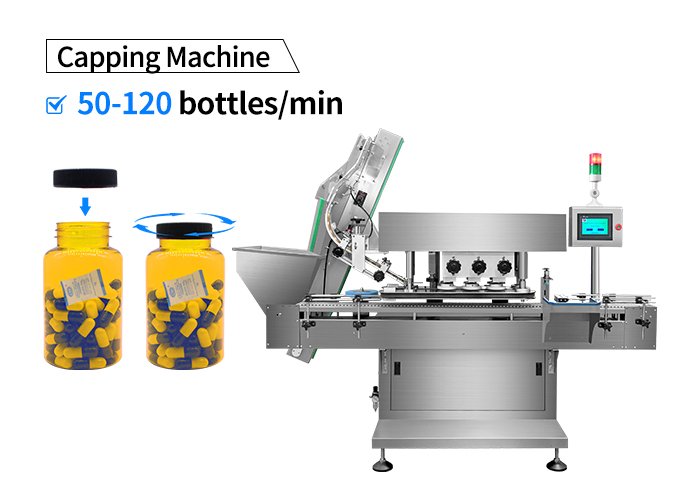
Maquinaria taponadora (También llamados taponadores de botellas o máquinas taponadoras.) se refiere a equipos que Coloca y asegura tapas en contenedores.. Puede ser completamente manual., semiautomático o completamente automático. En su forma más simple, una máquina taponadora manual puede ser simplemente una herramienta de banco o un dispositivo portátil para uso de bajo volumen. Las taponadoras semiautomáticas requieren que un operador coloque las botellas o las tapas, pero impulsa la acción de torsión mecánicamente.. Una máquina taponadora totalmente automática se encarga de todo en línea.: toma botellas de un transportador, recoge y alimenta tapas, los aprieta, e incluso rechaza botellas defectuosas, todo con una mínima intervención humana.
Todas las máquinas taponadoras realizan el propósito básico de cerrar los contenedores de forma segura para proteger el producto en su interior.. La máquina que elija depende de su línea de producción.: una pequeña empresa emergente podría utilizar una taponadora manual barata, mientras que una gran fábrica invertirá en una taponadora rotativa automática que funciona a cientos de botellas por minuto. Las taponadoras automáticas modernas a menudo incluyen características como clasificación de tapas & alimentación, control de par preciso, y controles de calidad en línea. Estos sistemas avanzados están diseñados para buenas prácticas de fabricación. (CGMP), a menudo con construcción inoxidable para higiene, y pueden integrarse perfectamente en líneas completas de llenado y envasado.
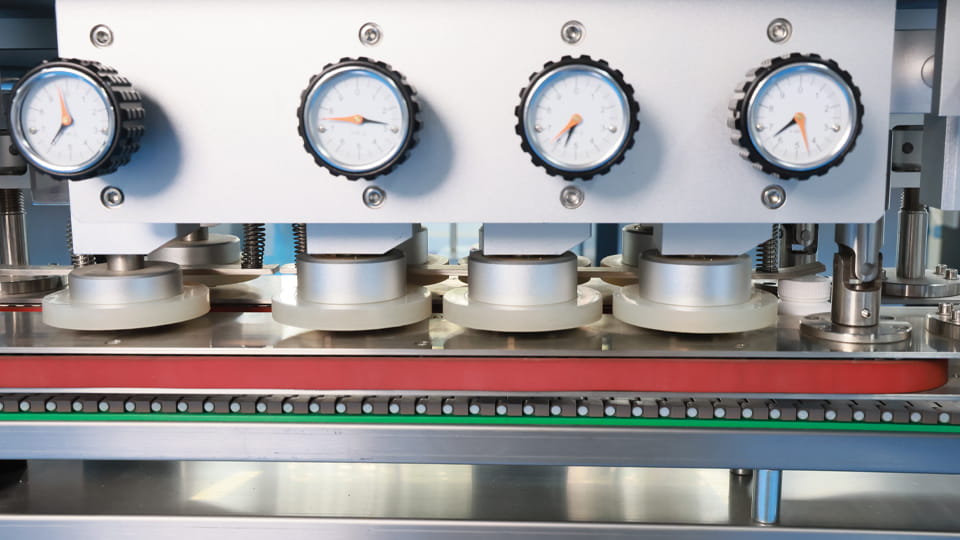
Máquina taponadora automática
¿Cómo funciona una maquinaria taponadora??
La mayoría de las máquinas taponadoras siguen una secuencia establecida de pasos para cerrar cada contenedor de manera confiable.. Aquí hay una simplificada. proceso de cinco pasos común a muchos sistemas:
alimentar los biberones – Los contenedores vacíos son entregados por un transportador., tornillo de sincronización o rueda de estrella en la estación de tapado. Deben estar alineados correctamente para que no choquen ni se atasquen.. Los sensores y guías mantienen las botellas espaciadas y orientadas adecuadamente para taparlas..
Clasificar y entregar las tapas. – Gorras (tapones de rosca, tapas, etc.) se cargan en un clasificador/alimentador de tapas sistema. El clasificador orienta cada tapón en la posición correcta y lo eleva a la estación de taponado.. Una taponadora bien alimentada tendrá un suave, alimentación continua de tapas para que cada botella reciba inmediatamente una tapa en la orientación correcta, evitando atascos o desajustes.
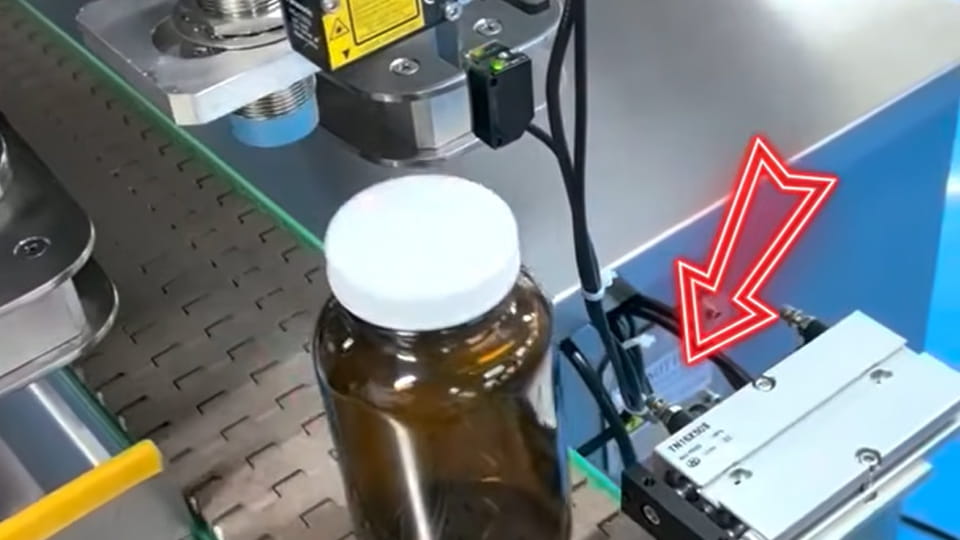
Coloque la tapa – Una vez que la botella y la tapa están alineadas, una cabeza mecanica (a menudo usando un brazo robótico, aguja de recoger y colocar, o alimentación por gravedad) coloca la tapa en la boca de la botella. La precisión aquí es clave: si la tapa está ligeramente inclinada o descentrada, Puede causar un mal sellado o rosca cruzada en el siguiente paso.. Las taponadoras de alta calidad suelen utilizar sensores o cámaras de visión para garantizar que la tapa esté correctamente asentada en el cuello..
Apretar según las especificaciones – Este es el corazón de la operación.. La máquina aplica un par controlado para apretar la tapa exactamente a la especificación establecida. Dependiendo del diseño, una taponadora puede utilizar un husillo giratorio, arrojar, o sistema de ajuste a presión para girar o presionar la tapa. El torque está calibrado para que cada tapa no esté demasiado floja. (que podría gotear) ni demasiado apretado (lo que podría romper la botella o dificultar su apertura). Algunas máquinas incluso miden el torque real en cada tapa para garantizar la consistencia..
Inspeccionar y rechazar defectos. – Después de tapar, Muchas máquinas tienen un paso de inspección final.. Los sensores de visión o sensores de torsión verifican que la tapa esté presente, derecho, y con la tensión adecuada. Si una botella falla (tapa faltante, gorra torcida, banda, etc.), es expulsado o desviado automáticamente de la línea. Esto evita que las botellas defectuosas avancen y ayuda a mantener la calidad del producto..
Cada paso está optimizado para lograr velocidad y precisión.. Por ejemplo, tornillos de sincronización y guías (Paso 1) mantenga las botellas espaciadas uniformemente; un suave elevador de tapas (Paso 2) evita interrupciones en la alimentación; y el cabezal de torsión (Paso 4) Suele ser un servo o embrague que repite exactamente la misma fuerza en cada ciclo.. Siguiendo estos pasos exactamente, Un sistema de tapado puede lograr un rendimiento muy alto manteniendo la calidad muy alta..
Principales tipos de maquinaria taponadora
Las máquinas taponadoras a menudo se clasifican según el estilo de tapa y método de sellado ellos usan. Estos son los tipos más comunes.:
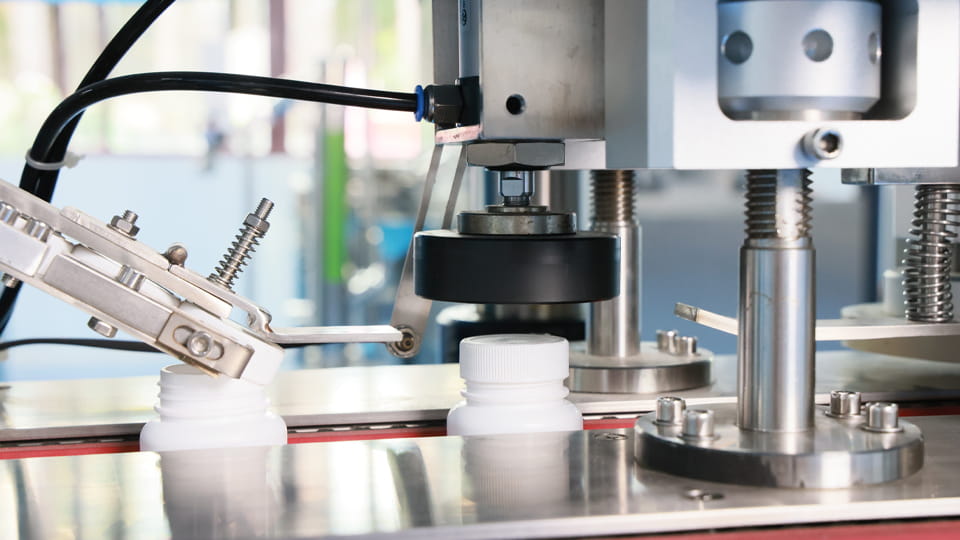
Máquinas tapadoras de tornillos: El máquina taponadora de tornillos es el caballo de batalla para tapas roscadas (como las típicas tapas de rosca de plástico o metal). Estas máquinas utilizan ruedas giratorias (husillos) o un cabezal de mandril vertical para agarrar y girar un tapón de rosca en el recipiente. Tapadoras de husillo (con discos giratorios) son conocidos por su muy alta velocidad y fácil cambio entre tamaños de tapa. Las tapadoras Chuck utilizan un cabezal descendente que presiona la tapa y luego la gira.; Ofrecen un excelente control de par., haciéndolos ideales para cierres delicados o con torsión precisa.
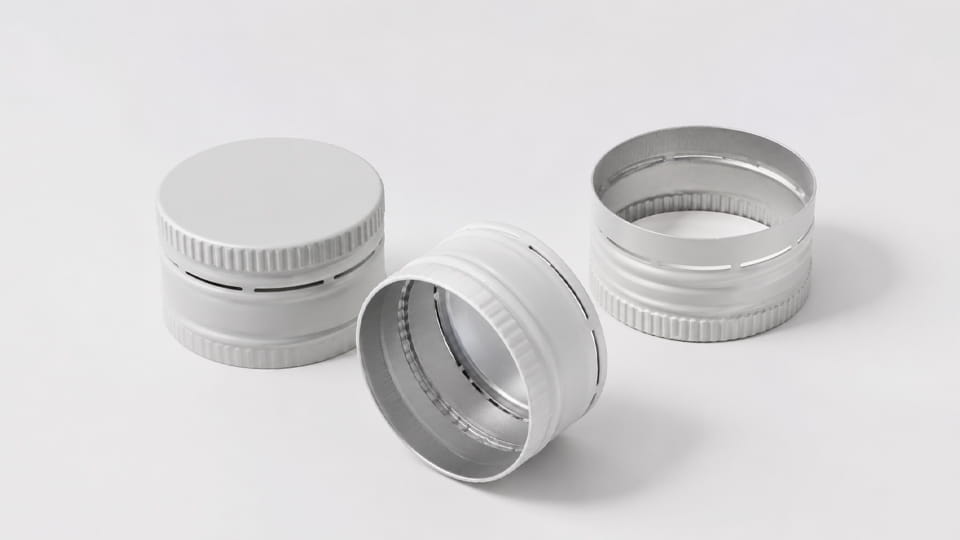
Máquinas tapadoras ROPP: BRUSCO representa Roll-on a prueba de robos. Estas taponadoras están especializadas para tapas de aluminio. (Común en bebidas y algunos productos farmacéuticos.). Una tapa ROPP comienza como una tapa de aluminio sin roscas.. Durante el taponado, Los rodillos de la máquina presionan y "enrollan" los hilos en el material de la tapa mientras se aplica a la botella.. El resultado es un sello a prueba de manipulaciones que es muy seguro.. Las máquinas taponadoras ROPP se utilizan habitualmente en el vino., espíritu, salsas, y medicinas. Garantizan que la tapa no se pueda quitar sin romper el sello., lo cual es crucial para la seguridad del consumidor y la integridad de la marca. Por ejemplo, Una línea de taponado ROPP en una bodega alimentará automáticamente una tapa de papel de aluminio., colócalo en una botella de vino, y enrolle los hilos para crear un sello perfecto a prueba de robos..
Tapadoras a presión: Tapas a presión o a presión (Piense en tapas de botellas deportivas o en algunos envases de lácteos.) requerir tapadoras a presión. Estas máquinas simplemente presionan una tapa hacia abajo sobre el contenedor sin ningún tipo de torsión.. Esto se hace mediante un conjunto de émbolos o una placa superior que empuja la tapa hacia su lugar.. Las taponadoras a presión se utilizan para botellas de plástico livianas en el cuidado personal., lácteos, y productos para el hogar. porque no hay hilos, La clave es aplicar una presión uniforme sobre la tapa para fijarla firmemente en su lugar.. Las taponadoras a presión generalmente tienen un diseño más simple, pero deben admitir una variedad de alturas de botellas y tamaños de tapas..
Máquinas de taponado: Máquinas taponadoras Son taponadoras especializadas para insertar corchos en botellas de vino o licores.. Alimentan automáticamente corchos naturales (o corchos sintéticos) y luego use presión neumática o un mecanismo de torsión para insertar el corcho a la profundidad correcta. Estas máquinas garantizan un ajuste perfecto y una calidad constante del corcho., que es importante en la conservación del vino. (Las taponadoras de corcho son un poco diferentes de las taponadoras de rosca y suelen formar parte de una línea de embotellado de vino dedicada.)
Arrastrar & Taponadoras al vacío: Para tarros y latas de boca ancha (como frascos de salsa, latas de pintura, contenedores de comida), máquinas tapadoras de orejetas (También llamadas taponadoras al vacío.) son usados. Estas máquinas se aplican tapas estilo orejeta (que tienen pequeñas orejetas/dientes que enganchan las roscas con un cuarto de vuelta) y a menudo incorporan sellado al vacío. Un taponador de orejetas colocará la tapa y aplicará torsión hasta que el vacío alcance su punto máximo., asegurando un sello hermético. Esto es común para productos que requieren atmósfera modificada o "sello de frescura", por ejemplo, tarros de salsa de tomate sellados al vacío. Las máquinas tapadoras de frascos combinan un alto torque y, a veces, vacío para conservar la frescura..
En línea vs.. Máquinas tapadoras rotativas
Los taponadores también difieren en cómo están colocados en la línea.. Máquinas taponadoras en línea Por lo general, tienen un solo cabezal de tapado y se asientan directamente sobre el transportador.. Ofrecen alta precisión y son ampliamente utilizados en líneas farmacéuticas para operación continua.. Una taponadora en línea alimenta una botella a la vez debajo del cabezal de la taponadora..
Por el contrario, máquinas taponadoras rotativas utilizar varios cabezales en una torreta giratoria. Las botellas se introducen en los bolsillos de una plataforma giratoria y se hacen girar bajo varios cabezales taponadores a la vez.. Las taponadoras rotativas logran un rendimiento mucho mayor, haciéndolos adecuados para producción a muy alta velocidad (piense en agua embotellada o en envases para el mercado masivo). En general, Las líneas pequeñas o de nicho pueden usar tapadoras en línea., mientras las grandes fábricas funcionan 100+ Las botellas por minuto suelen ir con sistemas rotativos..
Factores clave a considerar al elegir una maquinaria taponadora
Seleccionar la máquina taponadora perfecta requiere satisfacer sus necesidades específicas. Aquí están los factores críticos a evaluar:
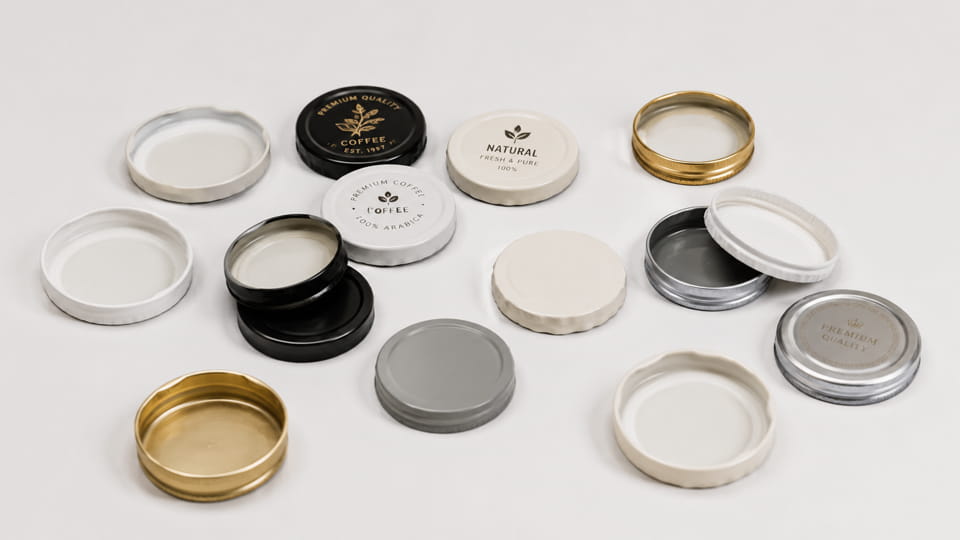
Compatibilidad de estilos de gorra: Primero, identifica tu tipo de gorra(s). ¿Utiliza tapones de rosca de plástico estándar?, tapas a prueba de niños a prueba de manipulaciones, tapas abatibles, Tapas de aluminio ROPP, tapas a presión, o algo más? Cada máquina está diseñada para ciertos estilos de gorras.. Por ejemplo, una tapa de rosca no soporta una tapa a presión, y viceversa. Asegúrese de que el cabezal y el sistema de alimentación de la taponadora puedan manejar el diámetro y el material de sus tapas..
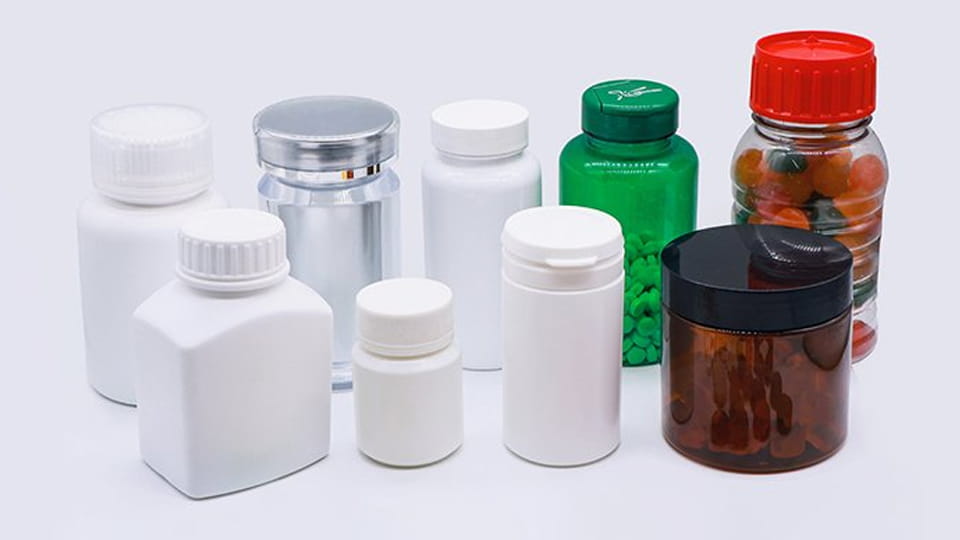
Especificaciones del contenedor: Tenga en cuenta las formas y tamaños de sus contenedores. ¿Tus botellas son altas y estrechas?, o corto y ancho? ¿Están hechos de vidrio o plástico?? Verifique el rango de capacidad de la máquina: Algunas máquinas sólo manipulan botellas dentro de una determinada altura., diámetro, o acabado del cuello. Si tienes frascos o latas, es posible que necesite un sistema de tapado de frascos exclusivo. Considere también si sus contenedores necesitan un manejo acolchado o guías suaves si son frágiles..
Velocidad de producción (Capacidad): cuantas botellas por minuto (BPM) ¿Necesitas tapar?? Si tu objetivo es sólo unas pocas docenas por minuto, una máquina semiautomática podría ser suficiente. Si necesitas cientos por minuto, opte por una taponadora automática rotativa o en línea. Recuerde planificar el crecimiento: Elija una máquina que pueda manejar al menos su demanda actual, o un poco más si espera que las ventas aumenten.
Nivel de automatización y mano de obra: Determina cuánto quieres depender del trabajo manual. Las taponadoras completamente automáticas reducen los costos de mano de obra y los errores, pero tienen un costo inicial más alto.. Las semiautomáticas ocupan un término medio, mientras que las máquinas manuales mantienen los costos bajos pero ocupan a los operadores. Considere su equipo: semiautomático podría permitir que un trabajador maneje una máquina de doble cabezal, mientras que completamente automático podría liberar a esa persona para otras tareas.
Precisión del par & Control de calidad: Busque máquinas que proporcionen un par constante. En muchas industrias (farmacéutica, alimento), Las regulaciones exigen que las tapas no estén ni demasiado apretadas ni demasiado flojas.. Algunas máquinas ofrecen monitoreo de torque o rechazo de botellas fuera de especificaciones para garantizar la calidad.. Por ejemplo, Los sensores de visión o de torsión pueden atrapar una tapa con rosca cruzada o mal apretada antes de empacar..
Integración con Línea: ¿La taponadora encajará en su línea de producción existente?? Considere la huella de la máquina, altura del transportador, e interfaz con upstream (relleno, descifrar) y aguas abajo (etiquetado, embalaje de la caja) equipo. Las taponadoras modernas suelen tener PLC y HMI simples para una comunicación perfecta.. Garantizar la compatibilidad minimizará el tiempo de inactividad durante la instalación.
Limpieza y mantenimiento: Especialmente en la comida, farmacéutica, y cosmeticos, La limpieza de la máquina importa. Busque diseño sanitario: superficies lisas, sartenes escurribles, y paneles de fácil acceso. Descubra si las piezas de rutina (cinturones, sellos, rodillos) son fáciles de limpiar o reemplazar. También considere cualquier requisito específico. (p.ej. CIP – Sistemas Clean-In-Place para líneas de alta velocidad).
Presupuesto y costo total: No mires solo el precio de etiqueta. Evaluar el costo total de propiedad: uso de energía, mantenimiento, disponibilidad de piezas de repuesto, y tiempo de actividad esperado. Una máquina un poco más cara podría dar sus frutos con una mayor confiabilidad o eficiencia.. Como señala una guía de la industria, Las máquinas manuales son baratas, pero invertir en un sistema automático "puede ofrecer un mejor retorno de la inversión a medida que su negocio crece"..
Cumplimiento normativo: Si estás en un campo regulado (farmacéutica, alimento, médico, etc.), Asegúrese de que la máquina cumpla con las normas pertinentes. (CGMP, FDA, Ceñudo, etc.). Funciones como la impresión de trazabilidad, manejo de tapas a prueba de manipulaciones, y es posible que se requieran lubricantes de grado farmacéutico. Compruebe si el fabricante proporciona documentos de validación o asistencia para auditorías..
Al hacer coincidir cuidadosamente estos factores con sus productos y objetivos, evitarás errores comunes (como una taponadora de tamaño incorrecto o un cuello de botella) y asegúrese de que su operación de tapado funcione sin problemas.
Problemas comunes de limitación & Soluciones
Incluso los mejores taponadores pueden tener problemas si no se configuran o mantienen correctamente. A continuación se muestran algunos problemas típicos y cómo solucionarlos.:
Tapas sueltas o con fugas: Si las tapas salen sintiéndose flojas, la causa probable es un torque insuficiente o un deslizamiento entre la tapa y la cabeza. Solución: Aumente el ajuste de torsión o verifique que el embrague de torsión esté calibrado.. También verifique que la pinza o el mandril de la taponadora esté correctamente ajustado al tamaño de su tapa.. Inspeccione las ruedas o pinzas de la taponadora en busca de desgaste que pueda causar deslizamiento..
demasiado apretado (aplastado) Gorras: Si las tapas están demasiado apretadas o las botellas se rompen, La máquina está aplicando demasiado par.. Solucione este problema reduciendo el torque en el panel de control.. Asegúrese de que el embrague o la presión del aire estén configurados correctamente.. También verifique que los tamaños de botella y tapa sean los esperados. (una tapa de gran tamaño o una botella de tamaño insuficiente pueden provocar atascos).
Tapas con rosca cruzada o torcidas: Cuando las tapas no están perfectamente alineadas, pueden atascarse en los hilos en ángulo. Para evitar esto, Ajuste las guías o conductos que presentan las botellas a la taponadora para que cada botella quede centrada debajo del cabezal.. Limpie cualquier residuo o residuo pegajoso que pueda quedar atrapado en el borde de la tapa.. Es posible que necesite ajustar los tornillos o rieles de separación de las botellas para que las botellas no se muevan durante el taponado..
Atascos de alimentación de tapas: Las tapas pueden pegarse o atascarse en el clasificador si están sucias o son del tamaño incorrecto. Mantenga el elevador de tapas y el alimentador limpios de polvo y aceite.. Ajuste el recipiente del comedero o las guías del conducto para que coincidan con el perfil de la tapa., y asegúrese de que las tapas no estén deformadas. Algunas máquinas permiten ajustes de velocidad en el alimentador si las tapas son demasiado grandes o pequeñas..
Atascos o roturas de botellas: Si las botellas no avanzan suavemente, Compruebe si hay guías transportadoras desalineadas o tornillos de sincronización.. Asegúrese de que la velocidad del transportador coincida con la velocidad de tapado.. Si las botellas se agrietan o deforman, Reduzca el torque o inspeccione el cabezal taponador para detectar desalineación.. También verifique que las tolerancias de la botella (forma, espesor) están dentro de las especificaciones; las botellas que no cumplen con las especificaciones pueden romperse con el taponado normal.
Cuando ocurren problemas, detener la línea, inspeccionar la causa (etiqueta, tapa, configuración de la máquina) y hacer ajustes. Conservar piezas de repuesto como ruedas de agarre., mandriles, ballestas, y los sellos disponibles pueden minimizar el tiempo de inactividad. Muchas taponadoras incluyen una sencilla interfaz mecánica o de pantalla táctil para realizar estos ajustes rápidamente..
Consejos de mantenimiento para maquinaria taponadora
El mantenimiento regular es clave para mantener los sistemas de tapado funcionando sin problemas. Estas son algunas de las mejores prácticas:
Mantenlo limpio: Polvo, escombros, y los residuos del producto pueden atascar una máquina. Limpie el área de cobertura diariamente para eliminar cualquier acumulación.. Limpiar las guías, transportadores, y sensores. En plantas alimentarias o farmacéuticas., Siga los procedimientos CIP según lo recomendado.. Limpie el polvo de la tapa del recipiente clasificador y de las pistas., ya que las piezas atrapadas pueden provocar atascos.
Lubricar partes móviles: Lubrique las cadenas regularmente, engranajes, aspectos, y ejes deslizantes según programación del fabricante. Utilice grasa o aceite aprobados. Una lubricación adecuada reduce la fricción y el desgaste., Prolongando la vida útil de los componentes y evitando paradas inesperadas..
Inspeccionar & Reemplazar piezas desgastadas: Establecer un programa de mantenimiento preventivo. Inspeccionar cinturones, poleas, aspectos, y componentes del embrague semanal o mensualmente. Reemplazar engranajes desgastados, fauces, ballestas, o sellos antes de que fallen. Apriete los tornillos o pernos flojos. Un registro de mantenimiento sencillo ayuda a identificar las piezas que se desgastan con frecuencia.
Calibrar par & Sensores: Compruebe periódicamente que la máquina esté aplicando el par correcto.. Utilice un probador de torsión si está disponible para verificar la salida.. Si el torque está desactivado, ajustar la configuración de la máquina o calibrar el embrague. Pruebe también los sensores o cámaras de detección de tapas para asegurarse de que no estén desalineados..
Controles de verificación & Alambrado: Inspeccionar componentes eléctricos. (interruptores, alambres, paneles) por daños o conexiones sueltas. Las taponadoras modernas dependen de PLC y servoaccionamientos: asegúrese de que sus ventiladores o filtros estén libres de polvo y que el firmware esté actualizado, si corresponde..
Siga las pautas del fabricante: Consulte siempre los manuales de mantenimiento del OEM.. Utilice únicamente repuestos recomendados y siga los intervalos de mantenimiento sugeridos.. Si el proveedor ofrece servicio de campo o capacitación, aprovéchelo para mantener informados a los operadores.
Manteniendo proactivamente la máquina taponadora (limpieza diaria, inspecciones periódicas, reparaciones oportunas), Evitará averías costosas y garantizará un funcionamiento a largo plazo., operación confiable. Las taponadoras bien mantenidas ofrecen un mejor tiempo de actividad y mantienen la precisión de sellado necesaria para la seguridad del producto..
Conclusión
Elegir la maquinaria taponadora adecuada es crucial para cualquier producto de alta calidad. línea de embalaje. La taponadora ideal será una taponadora resistente, pieza de equipo de embalaje de alta precisión que se adapta a sus tipos de botellas y tapas, cumple con sus requisitos de velocidad, e incluye las características de seguridad y control que su industria exige. Ya sea un máquina taponadora en línea por una línea farmacéutica flexible, un cabezal múltiple maquinaria de tapado rotativo para una salida ultrarrápida, o una taponadora de mesa semiautomática para lotes pequeños, el objetivo es el mismo: sellos perfectos, cada botella.
Para orientación experta y máquinas confiables construidas para durar, considere comunicarse con un fabricante especializado. Embalaje de Jinlu, Por ejemplo, es un liderazgo proveedor de maquinaria de envasado farmacéutico con más 30 años de experiencia. Nuestra taponadora automática viene con características como controles de pantalla táctil Siemens, clasificación automática de tapas, y rechazo de defectos en tiempo real. Si necesita una solución de taponado personalizada, tal vez una máquina selladora de tapas de botellas de alta velocidad o un sistema de taponado en línea específico, el equipo de Jinlu puede ayudarlo a diseñar, instalar, y soporte el equipo adecuado para su línea de producción.
Listo para mejorar la eficiencia y seguridad de su línea? Contacte con los especialistas de Jinlu Packing hoy para discutir sus necesidades de limitación y obtener una cotización. Una máquina taponadora bien elegida no sólo aumentará su rendimiento sino que también garantizará la calidad y reputación de sus productos..
Para obtener más información sobre taponadoras de botellas de alta velocidad y otra maquinaria de envasado, visita jinlupacking.com o solicite un presupuesto detallado para encontrar la mejor solución de máquina taponadora para su negocio.
Preguntas frecuentes sobre maquinaria taponadora
¿Para qué se utiliza la maquinaria taponadora??
La maquinaria taponadora se utiliza para colocar y apretar automáticamente las tapas de las botellas., paso, o contenedores durante el proceso de envasado. Estas máquinas ayudan a los fabricantes a mejorar la consistencia del sellado, prevenir fugas, Reducir los costos laborales, y aumentar la eficiencia de la producción. Los sistemas de taponado se utilizan ampliamente en la industria farmacéutica., alimento, bebida, cosmético, e industrias químicas.
¿Cómo funciona una máquina taponadora de botellas??
Una máquina taponadora de botellas normalmente funciona mediante varios pasos.: alimentación con biberón, clasificación de tapas, colocación de la tapa, par de apriete, y alta. Las máquinas taponadoras automáticas modernas suelen incluir un clasificador de tapas., sistema transportador, controles PLC, y funciones de ajuste de torsión para garantizar un sellado de tapa preciso y confiable.
¿Cuáles son los principales tipos de máquinas taponadoras??
Los tipos más comunes de maquinaria taponadora incluyen: • Máquinas taponadoras de rosca • Tapadoras rotativas • Tapadoras ROPP • Máquinas tapadoras a presión • Máquinas tapadoras de orejetas • Máquinas taponadoras al vacío • Máquinas taponadoras de botellas Diferentes máquinas selladoras de tapas están diseñadas para diferentes tipos de botellas., materiales de la tapa, y velocidades de producción.
¿Cuál es la diferencia entre las máquinas tapadoras rotativas y en línea??
Las máquinas taponadoras en línea tapan botellas en una línea transportadora recta y suelen ser más flexibles para diferentes tamaños de botellas.. Las máquinas tapadoras rotativas utilizan un sistema de torreta giratoria y son más adecuadas para entornos de producción de alta velocidad con grandes requisitos de producción.. Las taponadoras de botellas en línea se utilizan comúnmente para producción a velocidad media., mientras que los sistemas de tapado giratorio son ideales para grandes fábricas farmacéuticas y de bebidas..
¿Cómo elijo la máquina taponadora adecuada para mi línea de producción??
Al elegir una máquina taponadora, deberías considerar: • Forma y tamaño de la botella • Tipo de tapa • Velocidad de producción • Nivel de automatización • Precisión del par • Expansión futura de la producción • Compatibilidad con líneas de envasado existentes Para aplicaciones farmacéuticas, El cumplimiento de GMP y el control de par estable son especialmente importantes.
¿Qué es un clasificador de tapas en un sistema de tapado??
Un clasificador de tapas es un dispositivo que organiza e introduce automáticamente las tapas en la máquina taponadora en la orientación correcta.. Mejora la eficiencia de la automatización y reduce el trabajo manual.. Los clasificadores de tapas se integran comúnmente en la maquinaria taponadora de botellas de alta velocidad..
¿Por qué es importante el control del par en las máquinas selladoras de tapas??
El control de torsión adecuado garantiza que las tapas se aprieten consistentemente sin que queden demasiado flojas o demasiado apretadas.. El torque incorrecto puede causar fugas, contaminación, tapas dañadas, o dificultad para abrir la botella. Las modernas máquinas selladoras de tapas de botellas suelen utilizar servomotores o sistemas de control de par para una aplicación precisa de las tapas..
¿Cuáles son los problemas comunes en las operaciones de limitación??
Algunos problemas comunes de limitación incluyen: • Tapas sueltas • Enhebrado cruzado • Apretar demasiado • Atascos en la alimentación de tapas • Daños en la botella • Sellado inconsistente Mantenimiento regular, configuración adecuada de la máquina, y la selección correcta del límite puede ayudar a reducir estos problemas.
¿Con qué frecuencia se debe mantener la maquinaria taponadora??
La maquinaria taponadora debe inspeccionarse y mantenerse periódicamente para garantizar un rendimiento de producción estable.. Limpieza diaria, inspecciones semanales, lubricación, calibración de par, y los programas de mantenimiento preventivo pueden reducir significativamente el tiempo de inactividad y prolongar la vida útil de la máquina.. Para líneas de envasado farmacéutico, El mantenimiento de rutina es especialmente importante para el cumplimiento de las GMP y la confiabilidad de la producción..
¿Qué industrias suelen utilizar máquinas taponadoras de botellas??
Las máquinas taponadoras de botellas se utilizan ampliamente en: • Fabricación farmacéutica • Producción nutracéutica • Envases de alimentos y bebidas • Envases para cosméticos y cuidado de la piel. • Envases de productos químicos • Envases de líquidos agrícolas Cualquier industria que necesite un sellado seguro de botellas puede beneficiarse de los equipos de sellado de tapas automatizados..
Petty Fu, Fundador de Jinlupacking, trae 20 años de experiencia al sector de maquinaria farmacéutica. Bajo su liderazgo, Jinlu se ha convertido en un proveedor confiable que integra diseño, producción, y ventas. A Petty le apasiona compartir su profundo conocimiento de la industria para ayudar a los clientes a navegar las complejidades del empaque farmacéutico., garantizar que reciban no sólo equipos, sino una verdadera asociación de servicio integral adaptada a sus objetivos de producción..