
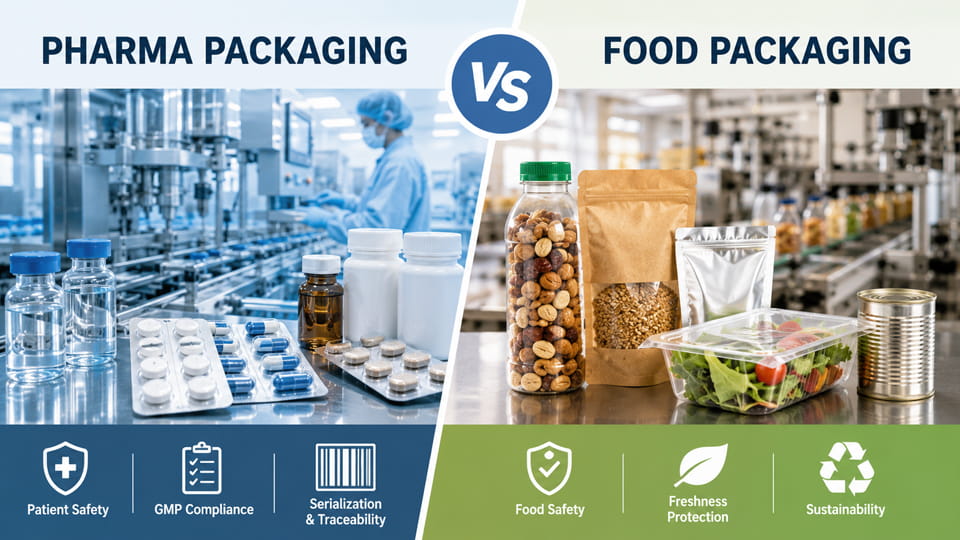
Η σωστή συσκευασία είναι ζωτικής σημασίας για την προστασία των προϊόντων και των καταναλωτών. Φαρμακευτική συσκευασία (ονομάζεται επίσης συσκευασία φαρμάκων) περιλαμβάνει όλα τα δοχεία, υλικά, και συσκευές που περικλείουν και προστατεύουν τα φάρμακα. Εξασφαλίζει ότι ένα φάρμακο παραμένει ασφαλές, σταθερό και μη μολυσμένο από την κατασκευή μέχρι την παράδοση. Η τρέχουσα ορθή παρασκευαστική πρακτική του FDA (CGMP) Οι κανόνες απαιτούν οι διαδικασίες και ο εξοπλισμός συσκευασίας φαρμάκων να πληρούν αυστηρούς ποιοτικούς ελέγχους. Αντίθετα, συσκευασία τροφίμων προστατεύει τα τρόφιμα από αλλοίωση και μόλυνση, παρέχει πληροφορίες διατροφής και συστατικών, και βοηθά στη διανομή και το branding. Οι συσκευασίες τροφίμων πρέπει να συμμορφώνονται με τους κανονισμούς για την ασφάλεια των τροφίμων (π.χ.. Εγκρίσεις επαφής με τρόφιμα FDA) και εφαρμόζει προγράμματα ασφάλειας τροφίμων όπως το HACCP για την πρόληψη των κινδύνων. Εν συντομία, Και τα δύο συστήματα στοχεύουν στο να διατηρούν τα προϊόντα ασφαλή και να επισημαίνονται σωστά, αλλά η συσκευασία του φαρμάκου υπόκειται σε αυστηρότερους κανόνες στειρότητας και ιχνηλασιμότητας, ενώ η συσκευασία τροφίμων δίνει έμφαση στην απόδοση φραγμού, ευκολία, και ενημέρωση των καταναλωτών.
Η φαρμακευτική συσκευασία αποτελείται από πρωταρχικός, δευτερεύων, και τριτοβάθμιας στρώματα συσκευασίας. Πρωτογενής συσκευασία βρίσκεται σε άμεση επαφή με το φάρμακο (π.χ.. φουσκάλες, μπουκάλια, φιαλίδια, αμπούλες) και παρέχει το πρώτο εμπόδιο στην υγρασία, φως, και οξυγόνο. Για παράδειγμα, άκαμπτα κεχριμπαρένια γυάλινα μπουκάλια θωρακίζουν τα φωτοευαίσθητα δισκία, ενώ αλουμίνιο-πλαστικό φουσκάλες σφραγίστε κάθε δόση αεροστεγώς για να διατηρήσετε την ισχύ. Δευτερεύουσα συσκευασία ομαδοποιεί πρωτεύουσες μονάδες (π.χ.. βάζοντας κυψέλες ή μπουκάλια σε τυπωμένα χαρτοκιβώτια) και προσθέτει χώρο ετικετών, οδηγίες, και σφραγίδες παραβίασης. Τα χαρτοκιβώτια επίσης αποσβένουν τα προϊόντα κατά τη μεταφορά. Τριτογενής συσκευασία περιλαμβάνει εμπορευματοκιβώτια χύδην μεταφοράς (κουτιά, κιβώτια, παλέτες) χρησιμοποιείται για αποθήκη και μεταφορά. Κάθε επίπεδο συσκευασίας έχει λειτουργίες: πρωτογενείς σχηματίζει το δοχείο δόσης, δευτερεύουσα παρέχει πληροφορίες και μέτρια προστασία, και ο τριτογενής τομέας χειρίζεται χύδην logistics.
Η Jinlupacking σημειώνει ότι η φαρμακευτική συσκευασία πρέπει να διατηρεί τα φάρμακα σταθερό και αποστειρωμένο, συχνά σε ανθεκτικό στα παιδιά ή προφανές για παραποίηση μορφές, κατά τη μεταφορά των πληροφοριών δοσολογίας και ασφάλειας.
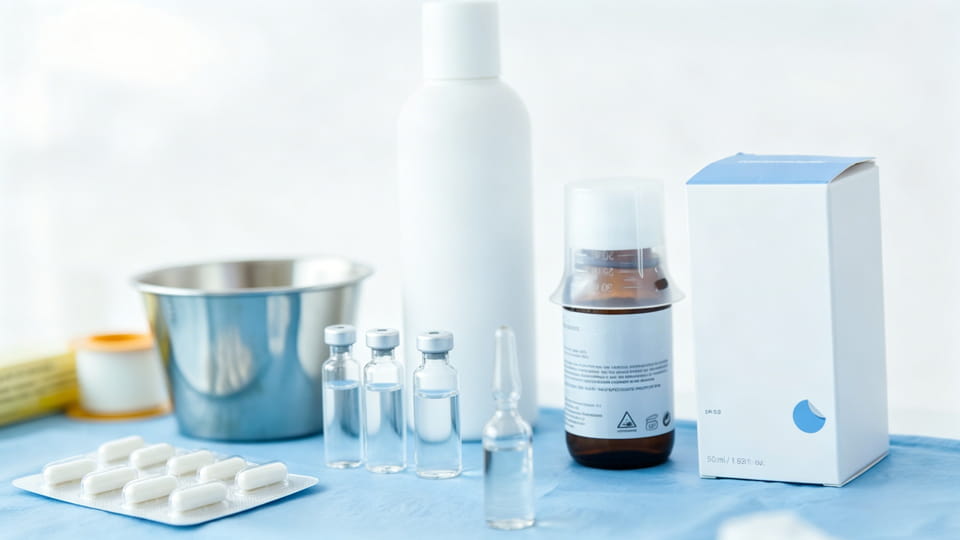
Η συσκευασία τροφίμων εξυπηρετεί σε προστατεύω, διατηρώ, και ενημερώστε. Οι κύριες λειτουργίες είναι να διατηρείτε τα τρόφιμα φρέσκα, αποτρέψτε τη μόλυνση ή την αλλοίωση (από την υγρασία, οξυγόνο, μικρόβια), και να παρέχει επισήμανση και επωνυμία διατροφής/συστατικών. Οι συνήθεις μορφές συσκευασίας τροφίμων περιλαμβάνουν μπουκάλια και βάζα, εύκαμπτες θήκες, χαρτοκιβώτια, κονσέρβες, δίσκοι, και ταινίες. Για παράδειγμα, κέτσαπ μπορεί να κυκλοφορήσει σε επανακλειόμενα μπουκάλια συμπίεσης PET ή σε φακελάκια αλουμινόχαρτου μίας μερίδας. Τα σνακ συχνά χρησιμοποιούν πολυεπίπεδες πλαστικές θήκες ή σακούλες από φύλλο αλουμινίου που εξισορροπούν το κόστος με επαρκή φράγμα υγρασίας/οξυγόνου.
Αν και και οι δύο βιομηχανίες επιδιώκουν να αποτρέψουν τη μόλυνση, Συσκευασία τροφίμων συχνά δίνει προτεραιότητα ευκολία και κόστος καταναλωτή. Για παράδειγμα, Οι θήκες τροφίμων χρησιμοποιούν απλές μεμβράνες και στοχεύουν στη δυνατότητα επανακλεισίματος ή στην ελαφριά σχεδίαση, ενώ τα φαρμακευτικά προϊόντα ενδέχεται να χρησιμοποιούν υλικά βαρύτερης αντοχής για μέγιστο φράγμα και ανθεκτικότητα.
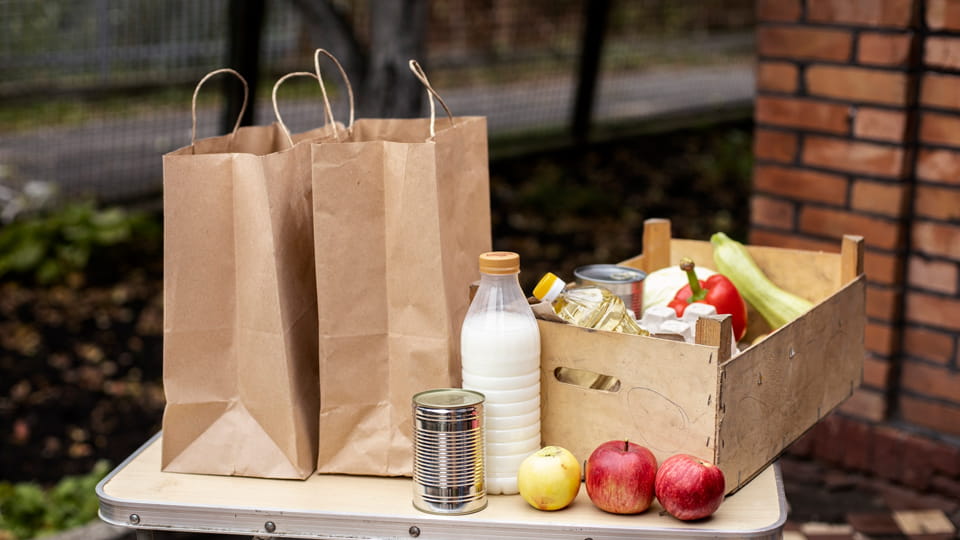
Ανεξάρτητα από τον τύπο του προϊόντος, αποτελεσματική συσκευασία πρέπει:
Για παράδειγμα, Ο Jinlu σημειώνει τα φαρμακευτικά υλικά συσκευασίας (ποτήρι, πλαστική ύλη, ξίφος) επιλέγονται για τις προστατευτικές τους ιδιότητες, σύμφωνα με αυστηρά πρότυπα μη τοξικότητας και αντοχής στην παραβίαση. Η συσκευασία των τροφίμων στοχεύει επίσης στην προστασία (π.χ.. πλαστική μεμβράνη για πατατάκια) αλλά εξισορροπεί το κόστος και την ελκυστικότητα μάρκετινγκ.
| Χαρακτηριστικό | Φαρμακευτική Συσκευασία | Συσκευασία Τροφίμων |
| Πρωταρχικοί Στόχοι | Προστατέψτε την αποτελεσματικότητα και τη στειρότητα του φαρμάκου; αποτρέψτε τη μόλυνση ή την ανάμειξη. Εξασφαλίστε ακριβή δοσολογία (βαθμονόμηση μέτρησης/δοσολογίας). | Διατηρήστε τη φρεσκάδα, αποτρέψτε την αλλοίωση, παρέχουν μερίδες; προστασία από μικροβιακή/μικροβιακή μόλυνση. Εξασφαλίστε τις σωστές πληροφορίες διατροφής/αλλεργιογόνων. |
| Κανονιστικά Πρότυπα | Αυστηρή συμμόρφωση με την GMP (FDA 21 CFR 210/211, EU GMP EudraLex Vol.4, ISO 15378). Ολόκληρη η διαδικασία συσκευασίας είναι επικυρωμένη και τεκμηριωμένη. | Διέπεται από κανονισμούς ασφάλειας τροφίμων: Εγκρίσεις επαφής με τρόφιμα FDA, HACCP (προαπαιτούμενα προγράμματα για συνθήκες υγιεινής), και πρότυπα όπως BRCGS/ISO 22000. Ετικέτες προεγκεκριμένες σύμφωνα με τον Οδηγό επισήμανσης τροφίμων της FDA. |
| Ιχνηλασιμότητα | Ψηλά: αριθμοί παρτίδας/παρτίδας σε κάθε συσκευασία, σειριοποίηση (μοναδικούς γραμμωτούς κώδικες) για γενεαλογία φαρμάκων (π.χ.. DSCSA στις ΗΠΑ). Ενεργοποιεί την πλήρη ιχνηλασιμότητα/ανάκληση. | Μέτριος: κωδικούς παρτίδας ή ημερομηνίας για ανάκληση; δεν απαιτείται σε κάθε μονάδα στις περισσότερες περιοχές (εκτός από τους μαζικούς κωδικούς). Περιορισμένη σειριοποίηση (σπάνια από το νόμο). |
| Tamper-Evident | Συνήθως ναι: σφραγίδες ασφαλείας, αλουμινόχαρτο blister που είναι ξεκάθαρα σπασμένο αν ανοιχτεί, ειδικά καπάκια (για παιδιά ή για φάρμακα). | Συχνά ναι για ορισμένα τρόφιμα (π.χ.. κονσέρβες, καπάκια γιαουρτιού), αλλά πολλές συσκευασίες τροφίμων έχουν βασικές σφραγίδες. Χαρακτηριστικά ένδειξης παραβίασης (θερμοσφραγίδες) κοινό σε βάζα και καπάκια. |
| Καθαρό δωμάτιο / Υγιεινή | Κρίσιμος: Εξοπλισμός συχνά σε ελεγχόμενα περιβάλλοντα (καθαρά δωμάτια) για την αποφυγή σωματιδίων/μικροβίων. Ανοξείδωτο ατσάλι (SUS316L) επιφάνειες, Διήθηση HEPA. | Απαιτείται σχεδιασμός υγιεινής, αλλά συνήθως γενικής ποιότητας τροφίμων (χωρίς σκουριά, εύκολο πλύσιμο) αντί για καθαρά δωμάτια τάξης 100.000. Υγειονομικός σχεδιασμός για την πρόληψη αλλεργιογόνου ή μικροβιακής διασταυρούμενης μόλυνσης. |
| Επικύρωση/QA | Υποχρεωτική πιστοποίηση εξοπλισμού και επικύρωση διαδικασίας (IR/WH/PQ) σύμφωνα με τους κανόνες της FDA/ΕΕ. Διαδικασίες συσκευασίας επικυρωμένες για στειρότητα και συνέπεια. | Επικύρωση με την έννοια του HACCP: έλεγχος κρίσιμων σημείων. Ο εξοπλισμός καθαρίζεται/επιθεωρείται, αλλά επίσημη επικύρωση (IQ/OQ) δεν είναι στάνταρ. Το QA εστιάζει στη μικροβιολογία και τα αλλεργιογόνα. |
| Υλικά | Φαρμακευτική: π.χ.. Γυαλί τύπου Ι, ιατρικά πλαστικά, καπάκι από αλουμινόχαρτο, λαστιχένια πώματα, ειδικές κυψέλες. Δοκιμασμένο για εκχυλίσιμα/εκπλυμένα (για να διασφαλιστεί ότι δεν υπάρχει επιβλαβής μετανάστευση). | Τροφίμων: Π.Ε, ΚΑΤΟΙΚΙΔΙΟ ΖΩΟ, PP, αλουμινόχαρτο, χαρτόνι. Πρέπει να είναι εγκεκριμένο από τον FDA για επαφή με τρόφιμα. Χαμηλότερες απαιτήσεις καθαρότητας από το φαρμακευτικό; ρυθμιστική εστίαση στα όρια μετανάστευσης και στα αλλεργιογόνα. |
| Τιτλοφόρηση | Λεπτομερείς ετικέτες: όνομα φαρμάκου, δύναμη, δοσολογία, προειδοποιήσεις, παρτίδα/παρτίδα, λήξη, οδηγίες. Οι κανονισμοί απαιτούν ακριβή επισήμανση και αναθεώρηση (π.χ.. Κωδικοί NDC). Συχνά μικρά γράμματα. | Πίνακας στοιχείων διατροφής, συστατικά (κατεβαίνοντας κατά βάρος), καθαρό βάρος, δηλώσεις αλλεργιογόνων, μάρκα/μάρκετινγκ. Πρέπει να πληροί τον FD&Απαιτήσεις του νόμου Γ (χωρίς προέγκριση της ετικέτας από τον FDA, αλλά αυστηρές οδηγίες μορφής). |
| Ανάκληση κινδύνου | Πολύ υψηλά στοιχήματα: οποιαδήποτε μόλυνση μπορεί να προκαλέσει βλάβη στον ασθενή. Οι ανακλήσεις είναι δαπανηρές και ελέγχονται αυστηρά ( Η FDA επιβάλλει ειδοποιήσεις ανάκλησης σειρών). Ολόκληρες παρτίδες συχνά τραβηγμένες. | Σημαντικός κίνδυνος (περιστατικά ασφάλειας τροφίμων), αλλά ο αντίκτυπος είναι συνήθως στενότερος. Οι ανακλήσεις επικεντρώνονται σε συγκεκριμένα μέρη; τα απορρίμματα συσκευασίας είναι πιο ανεκτά. |
| Πρότυπα Εξοπλισμού | Ο εξοπλισμός πρέπει να είναι σχεδιασμός cGMP: εύκολο να καθαριστεί/αποστειρωθεί, ανοξείδωτες επιφάνειες, ελαχιστοποιούνται οι νεκρές ζώνες. Κοινώς υπό CIP (Καθαριότητα επί τόπου). Π.χ. μηχανές φυσαλίδων με κενό, αποστειρωμένες γραμμές πλήρωσης. | Υγειονομικός σχεδιασμός: ανοξείδωτο χάλυβα, χωρίς παγίδες βακτηρίων. Επιλογές CIP ή πλύσης. Π.χ. Γραμμές VFFS, πρώην, πληρωτικό που πληροί τα υγειονομικά πρότυπα USDA/FDA. Ο σχεδιασμός εστιάζει στην πρόληψη της αλλοίωσης. |
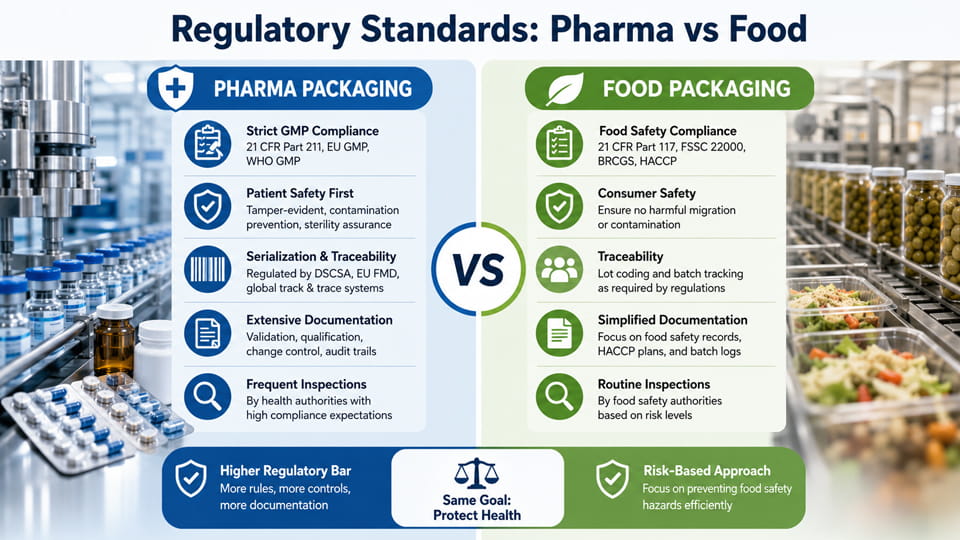
Αυτές οι συγκρίσεις το αναδεικνύουν φαρμακευτική συσκευασία είναι πολύ πιο ρυθμισμένο και ελεγχόμενο. Για παράδειγμα, Οι οδηγίες cGMP του FDA απαιτούν από τις γραμμές συσκευασίας φαρμάκων να χρησιμοποιούν επικυρωμένες διαδικασίες και υλικά που έχουν αποδειχθεί ασφαλή. Σε αντίθεση, συσκευασία τροφίμων ακολουθεί ευρείς ελέγχους υγιεινής και ασφάλειας (Προαπαιτούμενα προγράμματα HACCP) αντί για επικύρωση παρτίδας φαρμακευτικού τύπου.
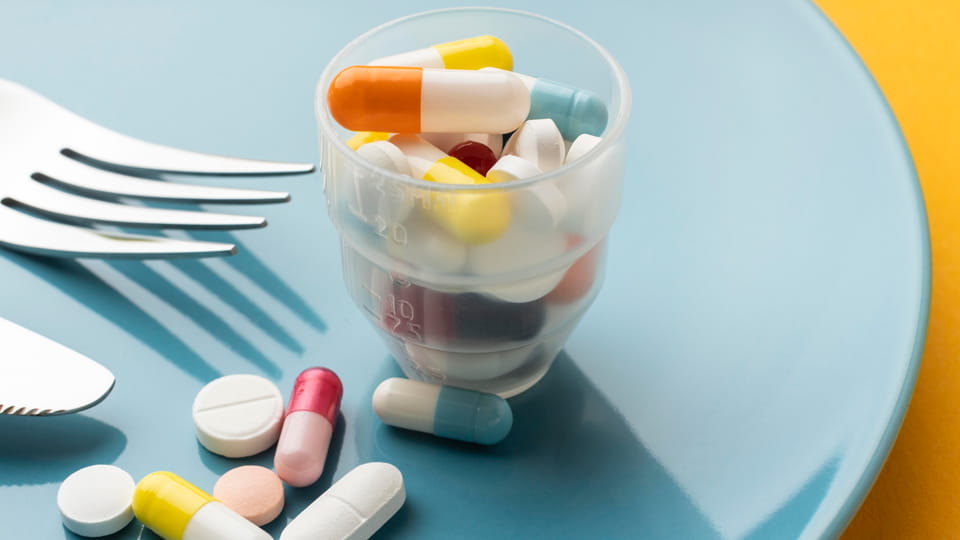
Η φαρμακευτική συσκευασία διέπεται από φαρμακευτικών κανονισμών GMP. Στις Η.Π.Α., Τίτλος 21 Σετ CFR Parts 210–211 τρέχουσα ορθή παραγωγική πρακτική (CGMP) απαιτήσεις για τη «συσκευασία» ναρκωτικών (συσκευασία). Αυτό σημαίνει μεθόδους, ελέγχους, εγκαταστάσεις, και ο εξοπλισμός που χρησιμοποιείται στη συσκευασία φαρμάκων πρέπει να διασφαλίζει την ασφάλεια του προϊόντος και την επισημασμένη αντοχή. η Ευρώπη χρησιμοποιεί GMP της ΕΕ (EudraLex Vol. 4) με παρόμοιους κανόνες. Επιπλέον, ISO 15378:2017 είναι ένα παγκόσμιο πρότυπο που εφαρμόζει το ISO 9001 Αρχές ΣΔΠ για υλικά πρωτογενούς συσκευασίας για φαρμακευτικά προϊόντα. ISO 15378 αντιμετωπίζει ρητά τον έλεγχο της μόλυνσης, μείωση του κινδύνου, και κανονιστική συμμόρφωση στην κατασκευή υλικών συσκευασίας.
Συγκριτικά, οι συσκευασίες τροφίμων πρέπει να πληρούν τους κανονισμούς για την ασφάλεια των τροφίμων. Ο FDA απαιτεί όλα τα υλικά που έρχονται σε επαφή με τρόφιμα να είναι προεγκεκριμένα (μέσω Ειδοποίησης Επικοινωνίας Τροφίμων ή GRAS). Ο εξοπλισμός συσκευασίας σε εργοστάσια τροφίμων ακολουθεί τις αρχές υγιεινής και πρόληψης μόλυνσης σύμφωνα με το HACCP και τις Ορθές Πρακτικές Παραγωγής του FDA για τα τρόφιμα. Ένα σχέδιο HACCP αντιμετωπίζει τον εξοπλισμό και το υλικό συσκευασίας προαπαιτούμενα προγράμματα – για παράδειγμα, Οι εγκαταστάσεις και ο εξοπλισμός πρέπει να ακολουθούν τις διαδικασίες υγειονομικού σχεδιασμού και καθαρισμού. Πρότυπα όπως Υλικά Συσκευασίας BRCGS ή ISO 22000 (διαχείριση της ασφάλειας των τροφίμων) ισχύουν επίσης. Σε αντίθεση με τα ναρκωτικά, Οι ετικέτες και οι συσκευασίες των τροφίμων δεν απαιτούν προέγκριση από τις αρχές, αλλά πρέπει να συμμορφώνεται με τους νόμους περί επισήμανσης (συστατικά, θρέψη, και τα λοιπά.) όταν κυκλοφορεί στην αγορά.
Συνοπτικά, η φαρμακευτική συσκευασία δεσμεύεται από εντεταλμένος κανονισμοί (συγκεκριμένες κατευθυντήριες γραμμές, έλεγχοι πιστοποιητικών), λαμβάνοντας υπόψη ότι η συσκευασία τροφίμων διέπεται από προληπτικός συστήματα ασφαλείας (HACCP, Πρότυπα GFSI) και εγκρίσεις υλικών που έρχονται σε επαφή με τρόφιμα. Αυτή η διαφορά οδηγεί σε πολλές επιλογές υλικών και εξοπλισμού (δείτε τον παραπάνω πίνακα).
Συσκευασία υλικά διαφέρω: Τα φαρμακευτικά δοχεία χρησιμοποιούν συχνά υψηλής καθαρότητας, αδρανή υποστρώματα. Η κοινή φαρμακευτική κύρια συσκευασία περιλαμβάνει Γυαλί τύπου Ι φιαλίδια (για ενέσεις), πλαστικά φαρμακευτικής ποιότητας (HDPE, PP, PETG), και πολυστρωματικά ελάσματα (Κυψέλες PVDC/Alu foil). Αυτά επιλέγονται για την αποφυγή τυχόν εκπλυσίμων που θα μπορούσαν να αλληλεπιδράσουν με το φάρμακο. Πράγματι, εκχυλίσιμα και εκπλυόμενα (χημικές ουσίες που μεταναστεύουν από πλαστικό/φύλλο) αποτελούν μια σημαντική ανησυχία στη φαρμακευτική. Οι κατασκευαστές φαρμάκων πρέπει να δοκιμάσουν τη συσκευασία για να διασφαλίσουν την ακεραιότητα κλεισίματος του περιέκτη (CCI) και ότι τυχόν εκπλυμένα παραμένουν κάτω από τα τοξικά όρια. Η καθοδήγηση του FDA συνιστά αυστηρό έλεγχο CCI (π.χ.. εμβάπτιση βαφής, αποσύνθεση πίεσης) για αποστειρωμένες παρεντερικές συσκευασίες για εξασφάλιση σφραγισμένης προστασίας.
Υλικά συσκευασίας τροφίμων (πολυαιθυλένιο, πολυπροπυλένιο, ΚΑΤΟΙΚΙΔΙΟ ΖΩΟ, επικαλυμμένο χαρτόνι, αλουμίνιο, και τα λοιπά.) ελέγχονται επίσης για μετανάστευση (συχνά βάσει κανονισμών όπως η ΕΚ της ΕΕ 1935/2004). Ωστόσο, το όριο για τις δοκιμές ασφάλειας είναι γενικά χαμηλότερο από ό,τι στο φαρμακευτικό. Για φαγητό, ο FDA επιβλέπει έναν «Απογραφή ουσιών που έρχονται σε επαφή με τρόφιμα» – π.χ. όλα τα πολυμερή και τα μελάνια πρέπει να είναι εγκεκριμένα από τον FDA. Οι συσκευασίες τροφίμων δεν υποβάλλονται συνήθως σε δοκιμές CCI, καθώς δεν απαιτείται στειρότητα; αντί, μπορεί να υποβληθεί σε δοκιμές μικροβιακής πρόκλησης για τη διάρκεια ζωής ή δοκιμή μετανάστευσης για πρόσθετα.
Στην πράξη: φαρμακευτική συσκευασία απαιτεί αυστηρότερο έλεγχο των εκχυλίσιμων/εκπλυθέντων. ISO 15378 περιλαμβάνει ρητά τον μετριασμό του κινδύνου μόλυνσης για το γυαλί, πλαστική ύλη, καουτσούκ, και υλικά αλουμινίου που χρησιμοποιούνται στη συσκευασία φαρμάκων. Συσκευασία τροφίμων επικεντρώνεται στις ιδιότητες φραγμού και στη συμμόρφωση με τους κανονισμούς επαφής με τα τρόφιμα, αλλά επιτρέπει μεγαλύτερη ποικιλία υλικών (ακόμη και ανακυκλωμένο περιεχόμενο) επειδή ο κίνδυνος κατάποσης είναι χαμηλότερος και οι τοξίνες ρυθμίζονται σε ασφαλή επίπεδα έκθεσης. Για παράδειγμα, μπουκάλια νερού (ΚΑΤΟΙΚΙΔΙΟ ΖΩΟ) είναι κοινά, λαμβάνοντας υπόψη ότι τα φάρμακα σπάνια εμφιαλώνονταν σε πλαστικό μη φαρμακευτικής ποιότητας.
Τα ίδια τα μηχανήματα αντικατοπτρίζουν αυτές τις απαιτήσεις. Εξοπλισμός συσκευασίας φαρμακευτικών προϊόντων πρέπει να έχει σχεδιαστεί για GMP: ανοξείδωτο χάλυβα (συχνά 316L), λείες επιφάνειες, σφραγισμένοι άξονες μετάδοσης κίνησης, ελάχιστες ρωγμές, και εύκολη καθαριότητα. Συχνά έχουν δυνατότητα CIP και εγκαθιστούν φίλτρα HEPA για άσηπτες περιοχές. Οι κοινές φαρμακομηχανές περιλαμβάνουν:
Αντίθετα, μηχανές συσκευασίας τροφίμων είναι βελτιστοποιημένα για όγκο και καθαριότητα: έχουν συχνά μεγαλύτερη απόδοση (τσάντα σε δευτερόλεπτα) και κατασκευασμένο για γρήγορη αποχέτευση (Δυνατότητα CIP ή wash-down). Ο τυπικός εξοπλισμός συσκευασίας τροφίμων περιλαμβάνει:
Για παράδειγμα, Οι μηχανές συσκευασίας της Jinlu's Premade Pouch Packing είναι ευέλικτες για τσίχλες, σκόνες ή υγρά, και είναι πιστοποιημένα για GMP, CE, Συμμόρφωση με τον FDA. Σε αντίθεση, μια τυπική σειρά σνακ-φαγητού μπορεί να χρησιμοποιεί VFFS πολλαπλών λωρίδων με εξαρτήματα ποιότητας τροφίμων.
Παρακάτω είναι ένα απλό διάγραμμα ροής για να επεξηγήσει πώς ένας κατασκευαστής μπορεί να επιλέξει μηχανήματα συσκευασίας με βάση τον τύπο του προϊόντος και τις απαιτήσεις:
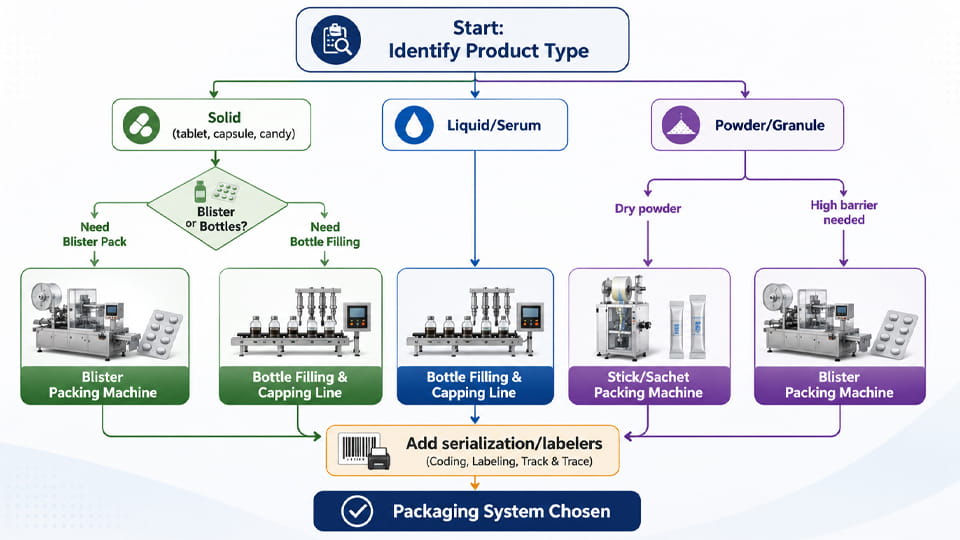
Αυτή η ροή τονίζει: επιλέξτε τη συσκευασία σχήμα και διάταξις βιβλίου (blister vs μπουκάλι vs πουγκί, και τα λοιπά.) με βάση τη μορφή του προϊόντος και τις ανάγκες σταθερότητας, στη συνέχεια επιλέξτε την αντίστοιχη γραμμή μηχανής. Για παράδειγμα, τα ευαίσθητα στη θερμοκρασία δισκία ενδέχεται να οδηγήσουν στη χρήση του ψυχρής μορφής φουσκάλες παρά μπουκάλια (για την εξασφάλιση φραγμού οξυγόνου/υγρασίας).
Σε σχέδιο, Οι φαρμακομηχανές συχνά περιλαμβάνουν περισσότερο αυτοματισμό για τον καθαρισμό και την ιχνηλασιμότητα. Για παράδειγμα, τα πληρωτικά για ενέσιμα χρησιμοποιούνται κάτω από κουκούλες στρωτής ροής, ενώ οι μεταφορείς τροφίμων μπορεί να λειτουργούν ανοιχτά σε ψυκτικό χώρο. Και τα δύο πρέπει να πληρούν τα πρότυπα υγιεινής, αλλά το αυστηρότητα και η επικύρωση διαφέρει.
Η φαρμακευτική συσκευασία απαιτεί εξαιρετικά ακριβή σήμανση και παρακολούθηση. Κάθε συσκευασία φαρμάκου δείχνει τυπικά το ακριβές όνομα του προϊόντος, δύναμη, αριθμός παρτίδας, ημερομηνία λήξης, και μερικές φορές μοναδικούς σειριακούς κωδικούς για track-and-trace (π.χ.. υπό τις Η.Π.Α. Νόμος DSCSA). Η καθοδήγηση του FDA έχει επιβάλει τη σειριοποίηση για πολλά φάρμακα, απαιτούν μοναδικούς γραμμωτούς κώδικες στις συσκευασίες μονάδων. Αυτό διασφαλίζει ότι μια παρτίδα που ανακαλείται μπορεί να εντοπιστεί σε κάθε είδος. Αντίθετα, Οι ετικέτες συσκευασίας τροφίμων πρέπει να περιλαμβάνουν λίστες συστατικών, πάνελ διατροφής, και καθαρό βάρος σύμφωνα με τους κανόνες του FDA, αλλά γενικά δεν απαιτείται σειριοποίηση μεμονωμένων μονάδων (εκτός ίσως από ορισμένα συμπληρώματα ή αγορές).
Τα στοιχεία παραποίησης είναι επίσης ισχυρότερα για τα φάρμακα - κάθε κυψέλη ή φιαλίδιο συχνά έχει μια σφράγιση που καταστρέφεται κατά το άνοιγμα. Ο Jinlu σημειώνει ότι οι σειριακές γραμμωτοί κώδικες και οι σφραγίδες που προστατεύουν από παραβιάσεις σε κάθε μονάδα είναι στάνταρ στα φαρμακευτικά προϊόντα για την καταπολέμηση της παραχάραξης. Στο φαγητό, Χρησιμοποιούνται λωρίδες και σφραγίδες που είναι εμφανείς από παραβιάσεις (π.χ.. δαχτυλίδια ασφαλείας σε μπουκάλια σόδας, επαγωγικές σφραγίδες στα καπάκια), αλλά τα τρόφιμα μιας μερίδας μπορεί να βασίζονται αποκλειστικά σε άθικτες φώκιες (σαν θερμοσφραγίδες φακέλων) με λιγότερο επίσημη σειριοποίηση.
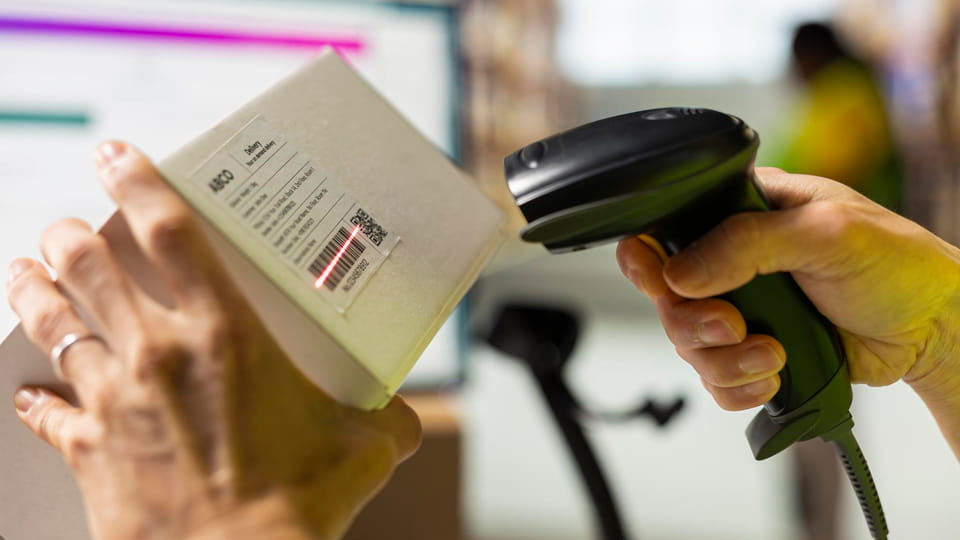
Τα συστήματα ιχνηλασιμότητας στα φαρμακευτικά είναι πιο ψηφιακά (ηλεκτρονικά αρχεία παρτίδων, Τεκμηρίωση GMP). Η ιχνηλασιμότητα των τροφίμων εστιάζει στις παρτίδες και την προέλευση (σκεφτείτε «από αγρόκτημα σε πιρούνι» για ασφάλεια) αλλά συχνά είναι λιγότερο αναλυτική σε επίπεδο καταναλωτή. Συνοπτικά, Η φαρμακευτική συσκευασία επενδύει σε μεγάλο βαθμό στην τεχνολογία σειριοποίησης στη γραμμή (εκτύπωση και σάρωση γραμμωτού κώδικα), ενώ οι σειρές τροφίμων δίνουν έμφαση στην ταχύτητα επισήμανσης και στην εξασφάλιση όλων των απαιτούμενων πληροφοριών (π.χ.. εικονίδια αλλεργιογόνων, διατροφικά στοιχεία) εκτυπώνεται σωστά.
Και οι δύο βιομηχανίες κινούνται προς πιο πράσινες συσκευασίες, αλλά τα προγράμματα οδήγησης και οι λύσεις διαφέρουν. Σε φαρμακευτικά προϊόντα, υπάρχει μια ώθηση για μείωση των απορριμμάτων και χρήση ανακυκλώσιμων/βιοαποικοδομήσιμων υλικών όπου είναι δυνατόν. Για παράδειγμα, οι κατασκευαστές διερευνούν μονο-υλικό μεμβράνες blister και ανακυκλωμένο χαρτόνι για δευτερεύουσα συσκευασία. Μια τάση είναι η αντικατάσταση των ένθετων ένθετων χαρτιού με ψηφιακές πληροφορίες για εξοικονόμηση χαρτιού. Ωστόσο, οποιαδήποτε αλλαγή πρέπει να εξακολουθεί να συμμορφώνεται με τις απαιτήσεις σταθερότητας, Έτσι οι καινοτομίες ξεκινούν συχνά σε δευτερεύοντα ή τριτογενή στρώματα.
Στο φαγητό, βιωσιμότητα σημαίνει συχνά ελαφριά συσκευασία, κομποστοποιήσιμα υλικά, και μείωση του πλαστικού μιας χρήσης. Πολλές περιφέρειες νομοθετούν ενάντια σε ορισμένα μη ανακυκλώσιμα. Ιδιαίτερα, φακελάκια με καρυκεύματα (σακουλάκια από αλουμινόχαρτο/χαρτί) καταργούνται σταδιακά σε ορισμένες αγορές από 2030 υπέρ των επαναγεμιζόμενων ή ανακυκλώσιμων εναλλακτικών λύσεων. Οι μεγάλες μάρκες τροφίμων αναζητούν επίσης ανακυκλώσιμες μεμβράνες από ένα υλικό. Και οι δύο βιομηχανίες εκτιμούν τη μείωση του αποτυπώματος άνθρακα, αλλά οι φαρμακευτικές εταιρείες πρέπει να εξισορροπήσουν τους οικολογικούς στόχους με την πρωταρχική ανάγκη για προστασία του προϊόντος.
(Τζινλού): «Η βιωσιμότητα είναι μια σημαντική τάση: οι εταιρείες σχεδιάζουν συσκευασίες με ανακυκλώσιμα ή βιοαποδομήσιμα υλικά και μειώνουν την υπερβολική συσκευασία. Για παράδειγμα, Τα χαρτοκιβώτια χρησιμοποιούν συχνά ανακυκλωμένο περιεχόμενο, και οι μεμβράνες μονού υλικού επιλέγονται για ευκολότερη ανακύκλωση».
(Οδηγός κέτσαπ): «Οι οικολογικές μάρκες αναζητούν πιο ελαφριές, ανακυκλώσιμες επιλογές. Οντως, Ορισμένες περιοχές καταργούν σταδιακά τα φακελάκια καρυκευμάτων μιας χρήσης 2030, ωθώντας τους κατασκευαστές προς βιώσιμη θήκη ή επαναγεμιζόμενες λύσεις.”
Αυτές οι τάσεις σημαίνουν ότι ο εξοπλισμός μπορεί επίσης να προσαρμοστεί: μηχανήματα που μπορούν να χειριστούν ανακυκλωμένα πλαστικά, ή γραμμές που έχουν σχεδιαστεί για ευκολότερες αλλαγές υλικών γίνονται πολύτιμες.

Κατά την επιλογή εξοπλισμού για συσκευασία φαρμάκων ή τροφίμων, εξετάστε τους ακόλουθους παράγοντες:
Στην πράξη, συνεργαστείτε με κατασκευαστές (σαν Συσκευασία Jinlu) να αναλύσει αυτούς τους παράγοντες. Για παράδειγμα, Η ομάδα μηχανικών του Jinlu μπορεί να συστήσει ένα ενσωματωμένη γέμιση μπουκαλιού & γραμμή χαρτοκιβωτίου για νέο συμπλήρωμα, ή α αρθρωτό διάλυμα συσκευασίας θήκης για ένα ειδικό σιρόπι.
Η Jinlu Packing ειδικεύεται σε λύσεις συσκευασίας με το κλειδί στο χέρι για φαρμακευτικά προϊόντα και τρόφιμα/διατροφικά προϊόντα. Τα μηχανήματα μας είναι σχεδιασμένα για να πληρούν αυστηρά πρότυπα GMP (CE, FDA, Πιστοποιήσεις ISO) ενώ προσφέρει ευελιξία. Τα βασικά πλεονεκτήματα περιλαμβάνουν:
Με 30+ χρόνια σε μηχανήματα συσκευασίας φαρμακευτικών προϊόντων, Η Jinlu έχει εμπιστοσύνη από τους ηγέτες του κλάδου για την παράδοση εξοπλισμού που με ασφάλεια και αποτελεσματικά συσκευάζει φάρμακα και τρόφιμα εξίσου. Επικοινωνήστε μαζί μας για να συζητήσουμε τον τρόπο λειτουργίας των μηχανών μας (σαν Μηχανές Συσκευασίας Κυψελών, Μετρητές Μηχανές, Μηχανές χαρτοκιβωτίου, Συσκευασία φακελλίσκων, ή Προκατασκευασμένα Γεμιστικά Θήκης) μπορεί να πετύχει τους στόχους παραγωγής σας.
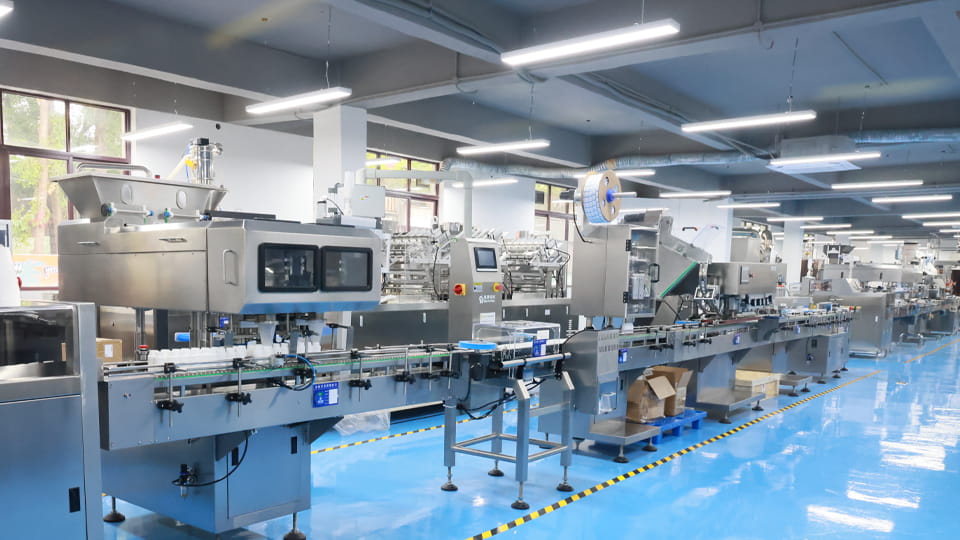
Συμπεράσματα, Φαρμακευτική συσκευασία vs Συσκευασία τροφίμων έχουν διαφορετικές προτεραιότητες, παρόλο που και οι δύο στοχεύουν στην προστασία των προϊόντων. Η συσκευασία του φαρμακευτικού προϊόντος καθοδηγείται από αυστηρούς κανονισμούς GMP και δίνει έμφαση στη στειρότητα, ιχνηλασιμότητα, και ακεραιότητα φραγμού. Η συσκευασία τροφίμων δίνει έμφαση στην ασφάλεια των τροφίμων (πρόληψη αλλοίωσης/κινδύνων) και πρακτικότητα (κόστος, ευκολία) σύμφωνα με τους κανόνες HACCP και επικοινωνίας με τα τρόφιμα. Επιλογές υλικών, σχεδιασμός μηχανής, και η επισήμανση αντικατοπτρίζει αυτές τις προτεραιότητες: φαρμακευτικές γραμμές συχνά εκτελούνται σε ελεγχόμενα περιβάλλοντα με σειριοποίηση, ενώ γραμμές τροφίμων τρέχει με υψηλή ταχύτητα με υγειονομικό σχεδιασμό.
Με την κατανόηση αυτών των διαφορών, οι μηχανικοί συσκευασίας και οι αγοραστές μπορούν να επιλέξουν τις σωστές λύσεις. Για παράδειγμα, ένας κατασκευαστής φαρμάκων μπορεί να επιλέξει μια σειρά blister υψηλού φραγμού με ενσωματωμένη σειριοποίηση για να πληροί τους κανόνες του FDA και της ΕΕ. Ένας παραγωγός σνακ τροφίμων μπορεί να επιλέξει ένα VFFS πολλαπλών λωρίδων για αποτελεσματικότητα, διασφαλίζοντας ότι οι ταινίες είναι εγκεκριμένες από τον FDA. Και οι δύο μπορούν να βρουν την κατάλληλη τεχνολογία: Η Jinlu Packing προσφέρει μηχανήματα κατασκευασμένα για κάθε κόσμο, από κυψέλες συμβατές με GMP έως εύκαμπτα συστήματα θήκης. Τελικά, Η ικανοποίηση των αναγκών ασφάλειας και ποιότητας του τελικού προϊόντος - με ταυτόχρονη τήρηση των κανόνων κάθε κλάδου - είναι ο βασικός στόχος για κάθε σύστημα συσκευασίας.
Η φαρμακευτική συσκευασία δίνει προτεραιότητα στην αυστηρή στειρότητα και τη συμμόρφωση με τους κανονισμούς. Συνήθως περιλαμβάνει υψηλότερο εμπόδιο, υλικά ιατρικής ποιότητας και χαρακτηριστικά που δεν παραβιάζονται για την προστασία των φαρμάκων σύμφωνα με τους κανόνες cGMP. Η συσκευασία των τροφίμων δίνει προτεραιότητα στη φρεσκάδα και την ασφάλεια (πρόληψη αλλοίωσης/κινδύνων) σύμφωνα με τους κανονισμούς HACCP και επαφής με τρόφιμα, συχνά χρησιμοποιούν ελαφρύτερα ή ανακυκλώσιμα υλικά.
Νόμος για την ασφάλεια της αλυσίδας εφοδιασμού ναρκωτικών (DSCSA) και παρόμοιοι νόμοι απαιτούν μοναδικούς σειριακούς αριθμούς σε μεμονωμένες συσκευασίες φαρμάκων για να είναι δυνατή η παρακολούθηση μέσω της αλυσίδας εφοδιασμού. Αυτό βοηθά στην πρόληψη των πλαστών φαρμάκων και επιτρέπει την ακριβή ανάκληση. Τέτοιες απαιτήσεις δεν υπάρχουν για τα περισσότερα τρόφιμα, Έτσι, ο σειριακός εντοπισμός γενικά δεν γίνεται σε επίπεδο μονάδας στις συσκευασίες τροφίμων.
Κάποιες μηχανές (όπως συσκευασίες κυψέλης ή πληρωτικά σακουλών) μπορεί να χρησιμοποιηθεί και στις δύο βιομηχανίες εάν καθαριστεί και επικυρωθεί σωστά. Για παράδειγμα, Οι μηχανές κυψέλης Jinlu συσκευάζουν τόσο ταμπλέτες όσο και μερίδες φαγητού (μαρμελάδες, σνακ) με εναλλαγή υλικών και ρυθμίσεων. Ωστόσο, Ο εξοπλισμός πρέπει να απολυμαίνεται καλά μεταξύ των χρήσεων και μπορεί να χρειάζεται αναβάθμιση (όπως πρόσθετα φίλτρα HEPA ή τεκμηρίωση GMP) να πληρούν τα φαρμακευτικά πρότυπα.
Στις Η.Π.Α., όλα τα εξαρτήματα της συσκευασίας τροφίμων πρέπει να είναι εγκεκριμένα από την FDA ουσίες που έρχονται σε επαφή με τρόφιμα (FCS) πριν από το μάρκετινγκ. Αυτό σημαίνει οποιοδήποτε πλαστικό, επένδυση, μελάνι, ή το συγκολλητικό που έρχεται σε επαφή με τρόφιμα πρέπει να βρίσκεται σε λίστα FDA ή να ειδοποιηθεί. Οι ετικέτες και οι συσκευασίες πρέπει επίσης να ακολουθούν τους κανόνες επισήμανσης των τροφίμων του FDA (λίστα συστατικών, διατροφικά στοιχεία). Οι κατασκευαστές τροφίμων χρησιμοποιούν HACCP και GMP για να εξασφαλίσουν ασφαλείς διαδικασίες συσκευασίας.
Επιλέξτε με βάση τις ανάγκες του προϊόντος και της παραγωγής. Οι προκατασκευασμένες θήκες συσκευασίας χρησιμοποιούν προτυπωμένα, επανασφραγιζόμενες σακούλες και είναι ιδανικές για ειδικά προϊόντα ή προϊόντα υψηλού φραγμού (π.χ.. βιταμίνες, χυμούς) με γρήγορες αλλαγές. Οι μηχανές VFFS σχηματίζουν σακούλες on-the-fly από φιλμ σε ρολό και υπερέχουν στην υψηλή ταχύτητα, μεγάλου όγκου σειρές τυπικών προϊόντων (σνακ, σκόνες) με χαμηλότερο κόστος υλικού. Αξιολογήστε τη μορφή της τσάντας σας, ανάγκες διακίνησης, και απαιτήσεις ευελιξίας για να αποφασίσετε.
Αναφορές:
1.Τρέχουσα ορθή παραγωγική πρακτική (CGMP) Κανονισμοί | FDA —— Η.Π.Α. Υπηρεσία Τροφίμων και Φαρμάκων
2.21 Μέρος CFR 211 – Υποτμήμα Ζ – Έλεγχος συσκευασίας και επισήμανσης —— Ινστιτούτο Νομικών Πληροφοριών
3.Συσκευασία & Ουσίες επαφής με τρόφιμα (FCS) —— Η.Π.Α. Υπηρεσία Τροφίμων και Φαρμάκων
4.Καλές πρακτικές παραγωγής και διανομής —— Ευρωπαϊκή Επιτροπή
5.Τρέχουσες ορθές πρακτικές παραγωγής (CGMPs) για τρόφιμα και συμπληρώματα διατροφής —— Η.Π.Α. Υπηρεσία Τροφίμων και Φαρμάκων