Cold Forming vs Thermoforming: Ποια ιατρική συσκευασία κυψέλης είναι κατάλληλη για το Pharma?
Cold Forming vs Thermoforming: Ποια ιατρική συσκευασία κυψέλης είναι κατάλληλη για το Pharma?
Αύγουστος 26, 2026
Δεν υπάρχουν σχόλια
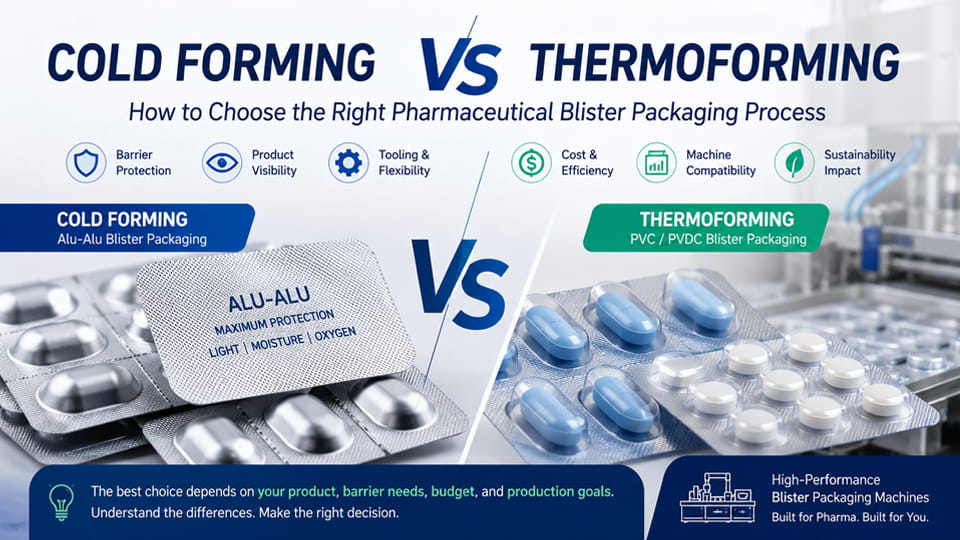
Τα φαρμακευτικά προϊόντα συχνά σφραγίζονται σε συσκευασίες blister για προστασία μοναδιαίας δόσης και ελκυστικότητα στο ράφι. Σε συσκευασία blister, οι δύο κύριες μέθοδοι διαμόρφωσης είναι Θερμοτομή και ψυχρή διαμόρφωση. Η θερμοδιαμόρφωση θερμαίνει έναν πλαστικό ιστό (όπως το PVC ή το PET) μέχρι να είναι εύκαμπτο και στη συνέχεια να το σκουπίσει ή να το πιέσει σε καλούπια. Σχηματισμός κρύου, αντίθετα, χρησιμοποιεί σφράγιση υψηλής πίεσης σε πολυστρωματικό πολυστρωματικό υλικό με βάση το αλουμίνιο σε θερμοκρασία δωματίου. Κάθε μέθοδος χρησιμοποιεί διαφορετικά υλικά και δίνει πολύ διαφορετικά αποτελέσματα: Οι θερμοδιαμορφωμένες κυψέλες είναι διαφανείς και χαμηλού κόστους, ενώ ψυχρός (Alu-Alu) Οι φουσκάλες είναι αδιαφανείς αλλά προσφέρουν πολύ υψηλότερη προστασία φραγμού. Αυτός ο οδηγός αναλύει τον τρόπο λειτουργίας τους, βασικές διαφορές (εμπόδιο, κόστος, ταχύτητα, και τα λοιπά.), και πώς να επιλέξετε τη σωστή μέθοδο και μηχανή για το προϊόν σας.
Τι είναι η θερμοδιαμόρφωση?
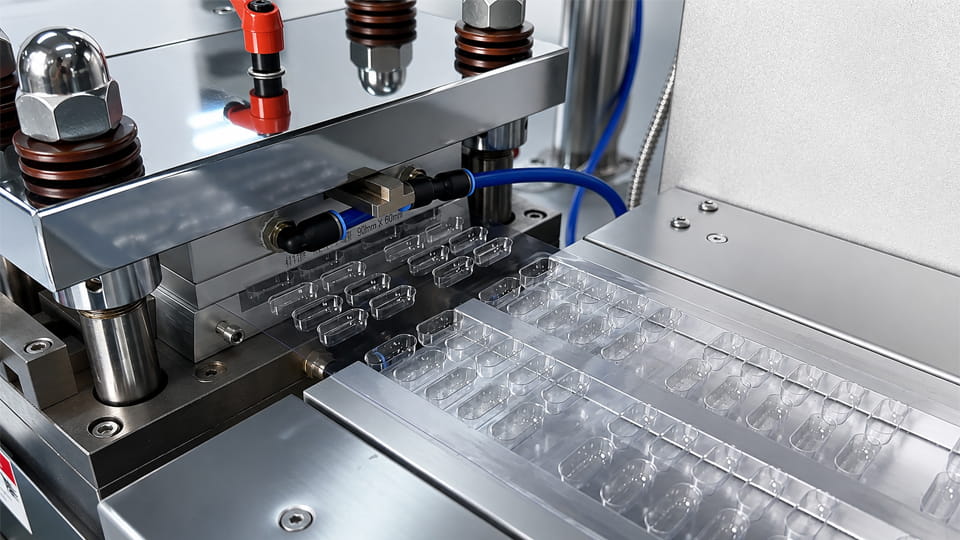
Θερμοτομή Η συσκευασία blister θερμαίνει ένα πλαστικό φύλλο μέχρι να μαλακώσει και στη συνέχεια το σχηματίζει κοιλότητες με κενό ή πίεση. Μια μονάδα ελεγχόμενης θερμοκρασίας (συχνά 150–180°C) θερμαίνει το PVC ή άλλο θερμοπλαστικό φιλμ, το οποίο στη συνέχεια πλάθεται πάνω από ένα καλούπι. Μόλις κρυώσει η μεμβράνη, Οι σχηματισμένες κοιλότητες γεμίζονται με προϊόν και σφραγίζονται με φύλλο ή χάρτινο καπάκι.
Αυτή η διαδικασία είναι ιδιαίτερα προσαρμόσιμη: Οι κοινές μεμβράνες διαμόρφωσης περιλαμβάνουν PVC, ΚΑΤΟΙΚΙΔΙΟ ΖΩΟ, PP, ή συμπολυμερή, μερικές φορές με επιστρώσεις φραγμού (Pvdc, COC, PCTFE, και τα λοιπά.). Η θερμοδιαμόρφωση προσφέρει υψηλή ευελιξία σχεδιασμού – τα σχήματα φυσαλίδων μπορεί να είναι βαθιά ή πολύπλοκα (χρησιμοποιώντας υποβοήθηση βύσματος) χωρίς αλλαγή των υλικών βάσης. Είναι επίσης οικονομικά αποδοτικό για μεγάλες διαδρομές: Τα θερμοπλαστικά φιλμ είναι φθηνά και τα μηχανήματα λειτουργούν σε υψηλές ταχύτητες. Το κύριο πλεονέκτημα είναι η προσιτή τιμή και η απόδοση – όπως σημειώνει μια πηγή, «Τα κύρια πλεονεκτήματα του PVC είναι το χαμηλό κόστος και η ευκολία θερμοδιαμόρφωσης».
Πλεονεκτήματα θερμοδιαμόρφωσης
Χαμηλότερο κόστος υλικού: Πλαστικές μεμβράνες (ακόμη και με επιστρώσεις φραγμού) είναι πολύ φθηνότερα από τα πολυστρωματικά μεταλλικά φύλλα. Αυτό καθιστά το κόστος μονάδας χαμηλότερο για μεγάλη παραγωγή.
Μεγαλύτερη ταχύτητα: Οι μηχανές θερμοδιαμόρφωσης συνήθως κυκλώνουν γρηγορότερα. Για παράδειγμα, μια σύγχρονη γραμμή θερμοδιαμόρφωσης blister μπορεί να ξεπεράσει αρκετά 150 συσκευασίες/λεπτό, υψηλότερες από τις τυπικές ταχύτητες ψυχρής μορφής.
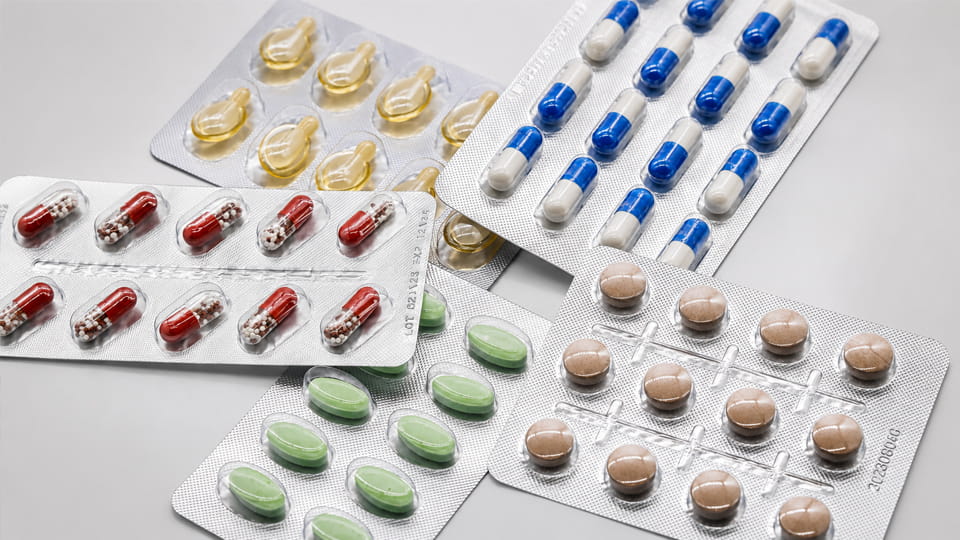
Ορατότητα προϊόντος: Οι διαυγείς συσκευασίες PVC/PET επιτρέπουν στους χρήστες να βλέπουν τα χάπια ή τα δισκία μέσα. Αυτή η διαφάνεια είναι καλή για την απήχηση των καταναλωτών (π.χ.. βιταμίνες λιανικής) και για οπτική επιθεώρηση.
Ευελιξία σχεδιασμού: Πολύπλοκα σχήματα κοιλοτήτων ή βαθιές έλξεις μπορούν να επιτευχθούν με θερμαινόμενο φιλμ (συχνά υποβοηθείται από την υποπίεση ή την υποβοήθηση βύσματος). Επίσης, ενσωματώνεται εύκολα με διαδικασίες ταχείας πλήρωσης και σφράγισης υψηλής ταχύτητας.
Περιορισμοί Θερμοδιαμόρφωσης
Προστασία φραγμού: Ένα απλό φιλμ PVC προσφέρει μόνο α μέτριος φράγμα υγρασίας και οξυγόνου. Το μη επικαλυμμένο PVC έχει υψηλό ρυθμό μετάδοσης υδρατμών (π.χ.. ~3g/m²·ημέρα σε 90% RH). Για βελτίωση της διάρκειας ζωής, Τα θερμικά πακέτα πρέπει να χρησιμοποιούν δαπανηρές μεμβράνες πολλαπλών στρώσεων (π.χ.. PVC/PVDC ή πολυστρωματικά PVC/PCTFE) ή παχύτερες μεμβράνες. Ακόμα και τότε, το φράγμα συνήθως παραμένει κάτω από αυτό που επιτυγχάνει το φύλλο αλουμινίου.
Ευαισθησία στο φως: Οι διαφανείς μεμβράνες επιτρέπουν την υπεριώδη ακτινοβολία και το ορατό φως να περάσει. Αυτό σημαίνει ότι οι θερμοδιαμορφωμένες συσκευασίες blister είναι δεν ιδανικά για φάρμακα ευαίσθητα στο φως – δεν προσφέρουν ουσιαστικά καμία προστασία από την υπεριώδη ακτινοβολία, εκτός εάν προσθέσετε πρόσθετα που εμποδίζουν την υπεριώδη ακτινοβολία.
Περιορισμένη διάρκεια ζωής: Για εξαιρετικά ευαίσθητα στην υγρασία ή αντιδραστικά API, θερμοδιαμορφωμένα πακέτα (ακόμα και με επιστρώσεις) συχνά δίνουν μικρότερη σταθερότητα. Σημειώσεις Wikipedia: «τα μειονεκτήματα [από PVC] είναι το φτωχό φράγμα ενάντια στην είσοδο υγρασίας και οξυγόνου».
Άκαμπτο κόστος εργαλείων: Ενώ τα μηχανήματα είναι γενικά φθηνότερα, Η θερμοδιαμόρφωση βαθιάς έλξης μπορεί να απαιτεί καλούπια ακριβείας και μήτρες υποβοήθησης βύσματος, προσθέτοντας στα έξοδα εργαλείων.
Τι είναι ψυχρή διαμόρφωση?
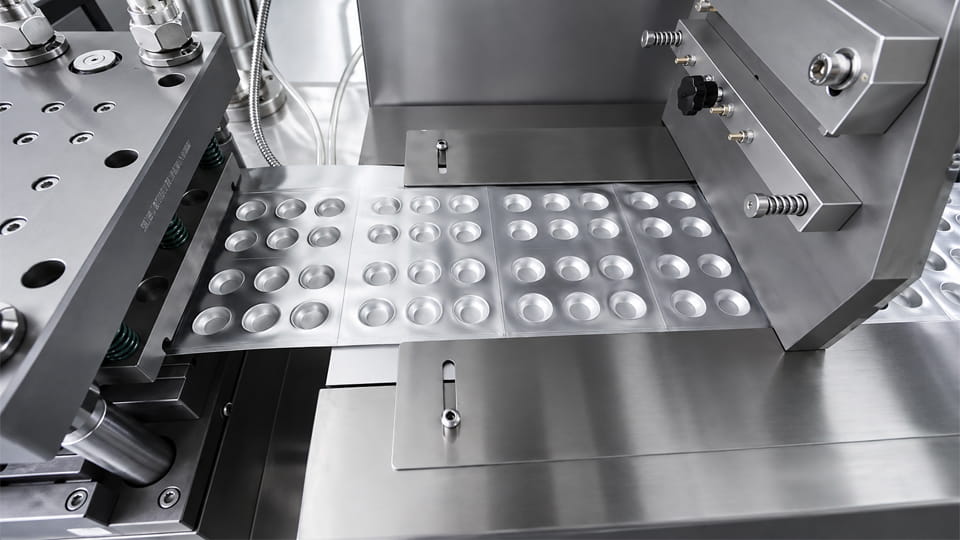
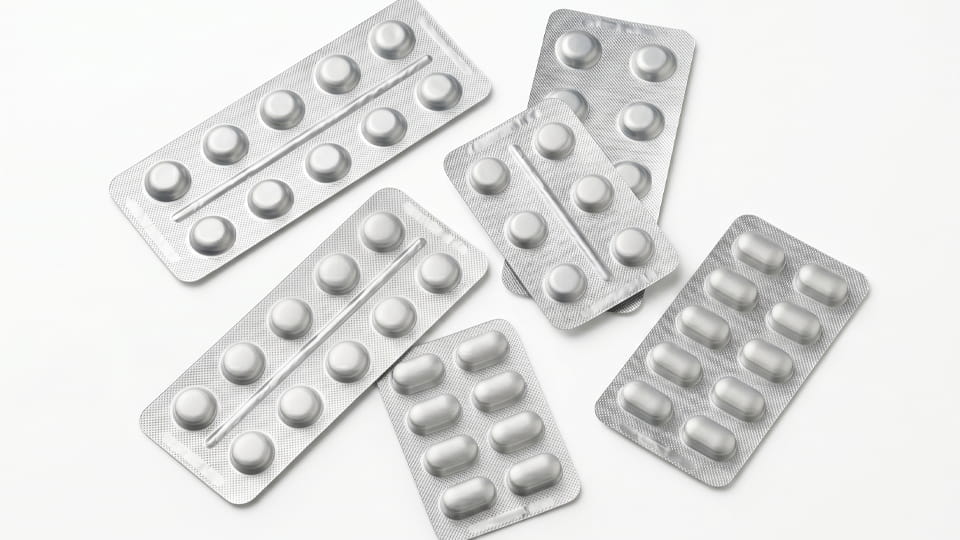
Σχηματισμός κρύου (συχνά αποκαλείται Alu-Alu συσκευασία φουσκάλας) χρησιμοποιεί μια πολυστρωματική μεμβράνη με βάση το αλουμίνιο ως ιστό διαμόρφωσης. Ένα τυπικό laminate ψυχρής μορφής είναι το PVC/Αλουμίνιο/Πολυαμίδιο, με το στρώμα αλουμινίου εξωτερικά. Σε αυτήν τη διαδικασία, η ταινία είναι δεν θερμός. Αντί, μια στιβαρή διάτρηση υψηλής πίεσης σφραγίζει το φύλλο σε κοιλότητες σε θερμοκρασία δωματίου. Το αλουμίνιο τεντώνεται αλλά παραμορφώνεται πλαστικά, και διατηρεί το σχήμα της κοιλότητας μόλις αφαιρεθεί η σφραγίδα. Κάθε γεμάτη κοιλότητα στη συνέχεια σφραγίζεται (συχνά με χάρτινο καπάκι με επένδυση αλουμινίου ή φύλλου).
Επειδή η ψυχρή διαμόρφωση δεν θερμαίνει το υλικό, αποφεύγει οποιαδήποτε θερμική καταπόνηση σε ευαίσθητα φάρμακα. Το αποτέλεσμα είναι μια κυψέλη που είναι πλήρως αδιαφανής (χωρίς προβολή του περιεχομένου) αλλά παρέχει ένα έξοχος εμπόδιο. Το αλουμινόχαρτο σταματά σχεδόν όλη την υγρασία, οξυγόνο, και το φως από το να φτάσει στο φάρμακο, που μπορεί να παρατείνει σημαντικά τη διάρκεια ζωής.
Πλεονεκτήματα ψυχρής διαμόρφωσης
Ανώτερο φράγμα: Τα στρώματα αλουμινίου καθιστούν την κυψέλη σχεδόν αδιαπέραστη. Όπως σημειώνει η Wikipedia: «Το κύριο πλεονέκτημα των κυψελών από αλουμινόχαρτο ψυχρής μορφής είναι ότι η χρήση αλουμινίου προσφέρει ένα σχεδόν πλήρες φράγμα για το νερό και το οξυγόνο, επιτρέποντας μια εκτεταμένη ημερομηνία λήξης του προϊόντος». Αυτός είναι ο λόγος για τον οποίο οι κυψέλες Alu-Alu χρησιμοποιούνται για υγροσκοπικά, ευαίσθητο στο οξυγόνο, ή φωτοευαίσθητα φαρμακευτικά προϊόντα.
Προστασία από την υγρασία και το φως: Οι ψυχρής μορφής φουσκάλες διατηρούν την υγρασία, οξυγόνο και σβήνει το φως. Για παράδειγμα, Τα φύλλα πολλαπλών στρώσεων μπλοκάρουν εξ ολοκλήρου την υπεριώδη/ορατή ακτινοβολία και σχηματίζουν μια αεροστεγή σφράγιση γύρω από κάθε δόση. Αυτό κλειδώνει την ισχύ για φάρμακα που αποικοδομούνται γρήγορα σε υγρό αέρα ή έντονο φως.
Ευελιξία υλικού: Ο σχηματιζόμενος ιστός (PVC/Alu/PA) έχει ακόμα μια πλευρά PVC, που διατηρεί το σχήμα της τσέπης και παρέχει κάποια ελαστικότητα, ενώ το αλουμίνιο παρέχει προστασία. Αυτό κάνει την κοιλότητα ισχυρή και ρηχή, που συχνά είναι αρκετό για τα περισσότερα δισκία και κάψουλες.
Περιορισμοί Ψυχρής Διαμόρφωσης
Υψηλότερο κόστος υλικού: Τα ελάσματα αλουμινίου είναι πολύ πιο ακριβά από τα πλαστικά φιλμ. Το φύλλο έχει πολλαπλές στρώσεις (π.χ.. 9–15μm Al συν 80–100μm άλλων στρωμάτων) και εξειδικευμένες συνθέσεις, οπότε το κόστος πρώτης ύλης ανά συσκευασία είναι υψηλό. Σημειώνει συγκεκριμένα μια πηγή «Το κόστος των συσκευασιών με κυψέλες ψυχρής μορφής τείνει να είναι υψηλότερο από τη θερμοδιαμόρφωση».
Πιο αργή ταχύτητα: Λόγω της διαδικασίας σφράγισης και της ανάγκης χειρισμού αλουμινόχαρτου (που δεν τεντώνεται όπως το πλαστικό), μηχανές ψυχρής μορφής λειτουργούν σε χαμηλότερες ταχύτητες. Όπως επισημαίνει μια περίληψη, Οι κυψέλες από αλουμινόχαρτο ψυχρής μορφής υποφέρουν από "πιο αργή ταχύτητα παραγωγής σε σύγκριση με τη θερμοδιαμόρφωση".
Καμία ορατότητα: Και οι δύο πλευρές της κυψέλης είναι αλουμινίου (ή το πάνω μέρος είναι αλουμίνιο), ώστε οι χρήστες να μην μπορούν να δουν καθόλου το προϊόν. Αυτό περιορίζει τη χρήση σε προϊόντα που δεν απαιτούν οπτική επιβεβαίωση στο ράφι. (Σημαίνει επίσης ότι τα πακέτα συμμόρφωσης πρέπει να έχουν καλή εκτύπωση ετικετών, αφού δεν μπορείτε να ελέγξετε οπτικά το περιεχόμενο.)
Φθορά μηχανής: Τα εργαλεία ψυχρής διαμόρφωσης και οι μήτρες αναλαμβάνουν βαριά φορτία, έτσι τα μηχανήματα πρέπει να είναι πολύ στιβαρά. Η διάτρηση και η αντίθετη μήτρα πρέπει να είναι κατασκευασμένα με ακρίβεια και συχνά χρειάζονται παχύτερο ατσάλι, προσθήκη συντήρησης.
Μεγαλύτερο μέγεθος συσκευασίας: Επειδή το αλουμίνιο δεν μπορεί να τεντωθεί όσο το πλαστικό, Οι ψυχρόμορφες κοιλότητες είναι συνήθως πιο ρηχές ή έχουν μεγαλύτερα περιβάλλοντα όρια. Η Wikipedia σημειώνει ότι ένα πακέτο Alu-Alu συνήθως καταλήγει “Μεγαλύτερο μέγεθος της κάρτας blister” και λιγότερο απότομους τοίχους τσέπης.
Cold Forming vs Thermoforming: Βασικές διαφορές
Ο παρακάτω πίνακας υπογραμμίζει τις κύριες διαφορές μεταξύ της θερμοδιαμόρφωσης και της συσκευασίας με κυψέλες ψυχρής διαμόρφωσης:
Παράγοντας
Θερμοτομή
Ψυχρή Μορφοποίηση (Alu-Alu)
Διαδικασία διαμόρφωσης
Ζεσταίνουμε την πλαστική μεμβράνη μέχρι να μαλακώσει, στη συνέχεια διαμορφώστε το κενό/πίεση σε κοιλότητες.
Σφράγιση σε θερμοκρασία δωματίου από μεταλλικό laminate.
Μέτριος (Το PVC από μόνο του είναι διαπερατό; Οι μεμβράνες με επίστρωση PVDC βελτιώνουν το φράγμα).
Εξαιρετικό – το φύλλο αλουμινίου είναι σχεδόν αδιαπέραστο από το νερό και το οξυγόνο.
Προστασία από το φως
Περιορισμένη - το διαφανές πλαστικό δεν προσφέρει φράγμα UV/φωτός (εκτός εάν προστεθεί χρωστική ουσία).
Πλήρες – το αδιαφανές φύλλο μπλοκάρει όλο το φως.
Ορατότητα
Διαφανές – ο πελάτης μπορεί να δει το προϊόν.
Αδιαφανές – το προϊόν είναι κρυμμένο μέσα.
Ταχύτητα παραγωγής
Γενικά υψηλότερα (γραμμές υψηλής απόδοσης).
Γενικά πιο αργά (η μηχανική σφράγιση περιορίζει την ταχύτητα).
Υλικό & κόστος μηχανής
Κάτω – η πλαστική μεμβράνη είναι φθηνότερη, οι μηχανές είναι απλούστερες.
Υψηλότερα – τα ελάσματα αλουμινίου κοστίζουν περισσότερο, και οι μηχανές απαιτούν γερές πρέσες.
Τυπικές περιπτώσεις χρήσης
Φάρμακα OTC μεγάλου όγκου, βιταμίνες, τυπικά δισκία; όταν η ορατότητα & το κόστος έχει σημασία.
Υγρασία- ή φωτοευαίσθητα φάρμακα (αντιβιοτικά, βιολογικά), απαιτείται μεγάλη διάρκεια ζωής.
Κάθε παράγοντας παραπάνω αντικατοπτρίζει τους συμβιβασμούς μεταξύ των δύο μεθόδων. Η θερμοδιαμόρφωση τείνει να χρησιμοποιεί φθηνότερα υλικά και να λειτουργεί πιο γρήγορα, ενώ η ψυχρή διαμόρφωση χρησιμοποιεί ακριβά μεταλλικά φύλλα για προστασία ανώτερης βαθμίδας.
Αναλυτική Σύγκριση: 8 Βασικοί συντελεστές
Για να συνοψίσουμε, Εδώ είναι οκτώ κύριοι παράγοντες που διαχωρίζουν τη θερμοδιαμόρφωση και την ψυχρή διαμόρφωση:
Μέθοδος σχηματισμού:
Θερμοτομή: Το πλαστικό φύλλο είναι θερμός, στη συνέχεια σχηματίζεται υπό κενό/πίεση πάνω από ένα καλούπι.
Ψυχρή Μορφοποίηση: Το μεταλλικό laminate είναι στάμπα κρύο με υψηλή πίεση; Το αλουμίνιο κρατά το σχήμα.
Υλικά:
Θερμοτομή: Χρησιμοποιεί ταινίες όπως PVC, ΚΑΤΟΙΚΙΔΙΟ ΖΩΟ, PP (συχνά με επιστρώσεις φραγμού PVDC/COC/COP). Για παράδειγμα, Πολλές σειρές blister χρησιμοποιούν μη πλαστικοποιημένο PVC (RPVC) ως ο ιστός σχηματισμού.
Ψυχρή Μορφοποίηση: Χρησιμοποιεί ένα laminate με βάση το αλουμίνιο (τυπικά PVC/αλουμίνιο/νάιλον). Αυτό το "φύλλο ψυχρής μορφής" είναι ειδικά σχεδιασμένο για διαμόρφωση υψηλού φραγμού.
Υγρασία & Φράγμα αερίου:
Θερμοτομή: Ένα γυμνό φιλμ PVC έχει φτωχό φράγμα (WVTR ~3g/m²·ημέρα, OTR ~20mL/m²·ημέρα). Μεμβράνες PVC πολλαπλών στρώσεων (επικαλυμμένο με PVDC ή συνεξωθημένο με PCTFE/COC) μπορεί να το βελτιώσει αυτό, αλλά ποτέ στο επίπεδο του μεταλλικού φύλλου. Η Wikipedia σημειώνει ότι το μειονέκτημα του PVC είναι “Φτωχό φράγμα ενάντια στην υγρασία και το οξυγόνο”.
Ψυχρή Μορφοποίηση:Εξοχος. Το φύλλο αλουμινίου δημιουργεί ένα σχεδόν αδιαπέραστο φράγμα. Όπως σημειώθηκε, οι ψυχρόμορφες φουσκάλες δίνουν α “Σχεδόν πλήρες φράγμα για νερό και οξυγόνο”, παρατείνει σε μεγάλο βαθμό τη λήξη.
Προστασία από το φως:
Θερμοτομή: Οι καθαρές μεμβράνες αφήνουν όλο το φως να περάσει (εκτός εάν χρησιμοποιείτε ειδικές μεμβράνες με χρώμα ή προσθέτετε παράγοντες αποκλεισμού της υπεριώδους ακτινοβολίας). Αυτός είναι ο λόγος για τον οποίο είναι οι διαφανείς κυψέλες από PVC δεν συνιστάται για φωτοευαίσθητα φάρμακα.
Ψυχρή Μορφοποίηση: Πλήρης. Αδιαφανή μπλοκ από αλουμινόχαρτο 100% του φωτός, προστασία φωτοευαίσθητων API.
Ταχύτητα Παραγωγής:
Θερμοτομή: Τυπικά υψηλότερα. Επειδή οι πλαστικές μεμβράνες τροφοδοτούνται γρήγορα και οι κύκλοι σχηματισμού είναι γρήγοροι, Αυτές οι γραμμές συχνά υπερβαίνουν τα 150–200 πακέτα/λεπτό (σε περιστροφικά μηχανήματα υψηλής τεχνολογίας).
Ψυχρή Μορφοποίηση: Γενικά πιο αργά. Η σφράγιση και ο χειρισμός του φύλλου περιορίζει την απόδοση. Ακόμη και τα κορυφαία μηχανήματα ψυχρής μορφής είναι συνήθως κάτω 100 πακέτα/λεπτό για βαθιά σχέδια Alu-Alu.
Κόστος (Υλικό & Εξοπλισμός):
Θερμοτομή: Οι πλαστικές ακατέργαστες μεμβράνες κοστίζουν πολύ λιγότερο ανά γραμμικό μέτρο από το φύλλο 3 στρώσεων. Τα μηχανήματα είναι πιο απλά (μόνο πλάκες θέρμανσης και σταθμοί αναρρόφησης), οπότε το αρχικό κόστος του μηχανήματος είναι γενικά χαμηλότερο. Μια πηγή συνοψίζει, Τα «κύρια πλεονεκτήματα» του PVC είναι το χαμηλό κόστος και η εύκολη διαμόρφωση.
Ψυχρή Μορφοποίηση: Άνω. Το ειδικό φύλλο είναι ακριβό, και οι μηχανές πρέπει να είναι πιο δυνατές. Σημείωση μελετών «Ο εξοπλισμός συσκευασίας blister σε ψυχρή μορφή … είναι ιδιαίτερα κατάλληλος για προϊόντα ευαίσθητα στην υγρασία,” αλλά με υψηλό κόστος.
Ορατότητα προϊόντος:
Θερμοτομή: Ναι – το προϊόν είναι ορατό μέσω διαφανούς πλαστικού. Καλό για προβολή λιανικής ή εύκολο έλεγχο δόσης.
Ψυχρή Μορφοποίηση: Όχι – εντελώς αδιαφανές.
Τυπικές Εφαρμογές:
Θερμοτομή: Τυπικά OTC και συνταγογραφούμενα δισκία/κάψουλες όπου ο υψηλός φραγμός δεν είναι κρίσιμος (π.χ.. παυσίπονα, βιταμίνες). Χύμα φαρμακευτικά προϊόντα, συμπληρώματα, ή οποιοδήποτε προϊόν που χρειάζεται μια γρήγορη γραμμή υψηλής ταχύτητας. Χρησιμοποιείται επίσης για ιατρική συσκευασία φουσκάλων μη αποστειρωμένων συσκευών.
Ψυχρή Μορφοποίηση: Premium ή κρίσιμα φάρμακα (π.χ.. αντιβιοτικά, ευαίσθητα API, ένζυμα συσκευασμένα σε κενό) και κάθε προϊόν που απαιτεί μέγιστη προστασία υγρασίας/φωτός και μεγάλη διάρκεια ζωής. Συχνά εμφανίζεται στο PTP (ώθηση) συσκευασίες για πολύ σταθερή δοσολογία, ή για προϊόντα που διανέμονται παγκοσμίως με ποικίλα κλίματα.
Αυτές οι διαφορές το δείχνουν Θερμοτομή υπερέχει σε ταχύτητα, κόστος και προβολή, ενώ ψυχρή διαμόρφωση υπερέχει σε προστασία και σταθερότητα. Στην πράξη, οι σχεδιαστές σταθμίζουν αυτούς τους παράγοντες σε σχέση με τις απαιτήσεις του προϊόντος.
Επιλέγοντας τη σωστή μέθοδο: Οδηγίες για αγοραστές φαρμακευτικών μηχανημάτων
Κατά την επιλογή μεταξύ ψυχρής διαμόρφωσης και θερμοδιαμόρφωσης (και το αντίστοιχο Μηχανή συσκευασίας φυσαλίδων), παρακαλώ:
Ανάγκες σταθερότητας προϊόντος: Είναι δικό σου API ή σκεύασμα πολύ ευαίσθητο στην υγρασία, οξυγόνο ή φως? Αν Ναί, ψυχρός (Alu-Alu) συνήθως απαιτούνται φουσκάλες. Εάν το προϊόν σας είναι σχετικά σταθερό (π.χ.. τυπικό δισκίο), η θερμοδιαμόρφωση είναι πιθανώς επαρκής.
Επιθυμητή διάρκεια ζωής: Χρειάζεται το προϊόν παρατεταμένη λήξη (18+ μήνες)? Οι συσκευασίες ψυχρής μορφής μπορούν να παρατείνουν σημαντικά τη διάρκεια ζωής λόγω του ανώτερου φραγμού τους. Για σύντομη διάρκεια ζωής (<1 έτος) προϊόντα, Οι συσκευασίες PVC είναι συχνά αποδεκτές.
Όγκος και Ταχύτητα Παραγωγής: Χρειάζεστε πολύ υψηλή απόδοση? Οι γραμμές θερμοδιαμόρφωσης γενικά λειτουργούν πιο γρήγορα, άρα ταιριάζουν σε μεγάλη παραγωγή. Για μικρότερες σειρές πολύτιμων φαρμάκων, η πιο αργή μέθοδος ψυχρής μορφής μπορεί να είναι αποδεκτή.
Περιορισμοί Κόστους: Εάν ο προϋπολογισμός είναι περιορισμένος και οι απαιτήσεις φραγμού μέτριες, η θερμοδιαμόρφωση είναι πιο οικονομική. Για παράδειγμα, Η Jinlupacking σημειώνει ότι «το κόστος των συσκευασιών με κυψέλες ψυχρής μορφής τείνει να είναι υψηλότερο από τη θερμοδιαμόρφωση». Υπολογίστε το κόστος υλικού και εξοπλισμού στην ανάλυση TCO σας.
Ρυθμιστική / Ανάγκες της αγοράς: Ορισμένες αγορές ή σκευάσματα μπορεί απαιτώ ορισμένη συσκευασία. Για παράδειγμα, μια ρυθμιστική προδιαγραφή μπορεί να επιβάλλει αλουμινόχαρτο Alu-Alu για ένα συγκεκριμένο αντιβιοτικό, ή το μάρκετινγκ μπορεί να ευνοήσει τη διαφανή συσκευασία για μια επώνυμη βιταμίνη.
Συμβατότητα μηχανών: Σκεφτείτε εάν θέλετε ένα μηχάνημα και για τις δύο μεθόδους ή ξεχωριστές γραμμές. Μερικά σύγχρονα μηχανήματα (όπως του Τζινλού Μηχανή φυσαλίδων DPP-180PRO) μπορεί να ρυθμιστεί για οποιοδήποτε θερμομόνωση- ή ψυχρής διαμόρφωσης, αλλά πολλές εταιρείες χρησιμοποιούν αποκλειστικές γραμμές για τη βελτιστοποίηση κάθε διαδικασίας.
DPP-180pro Blister Machine για Tablet Capsule
Ένας γρήγορος εμπειρικός κανόνας: Χρησιμοποιήστε θερμοδιαμόρφωση για τυπικά φάρμακα όπου η ορατότητα και το κόστος των πελατών είναι καθοριστικής σημασίας; χρησιμοποιήστε ψυχρή διαμόρφωση για ανάγκες υψηλού φραγμού όπου η προστασία είναι πρωταρχικής σημασίας.
Πότε να επιλέξετε Θερμοδιαμόρφωση
Το προϊόν σας δεν είναι επακρώς υγρασία- ή φωτοευαίσθητο (βασικά δισκία OTC, βιταμίνες).
Η υψηλή ταχύτητα παραγωγής και το χαμηλό κόστος είναι προτεραιότητες.
Θέλετε διαφανή συσκευασία για να φαίνεται το προϊόν.
Η αναμενόμενη διάρκεια ζωής είναι σχετικά μικρή ή μέτρια.
Σκοπεύετε να χρησιμοποιήσετε τυπικές πλαστικές μεμβράνες (PVC, Επικαλυμμένο με PVDC/PVDC, COC, και τα λοιπά.).
Το μηχάνημα συσκευασίας blister έχει ρυθμιστεί για θερμαινόμενους σταθμούς διαμόρφωσης.
Πότε να επιλέξετε Ψυχρή Μορφοποίηση
Το προϊόν σας είναι υψηλά ευαίσθητο στην υγρασία/οξυγόνο ή στο φως (π.χ.. υγροσκοπικά δισκία, στερόλες, ορισμένα βιολογικά).
Χρειάζεστε το απόλυτο καλύτερο φράγμα και τη μεγαλύτερη διάρκεια ζωής.
Έχετε μικρότερη απόδοση ή είστε πρόθυμοι να ανταλλάξετε την ταχύτητα για προστασία.
Μπορείτε να δεχτείτε αδιαφανή συσκευασία (ή χρησιμοποιήστε βαριά σήμανση για διαφοροποίηση).
Ο προϋπολογισμός επιτρέπει υψηλότερο κόστος υλικού (ελάσματα αλουμινίου).
Τα μηχανήματα σας (ή προμηθευτή) υποστηρίζει τη διαδικασία ψυχρής μορφής με στιβαρές μεταλλικές μήτρες.
Για παράδειγμα, πολλές φαρμακευτικές συσκευασίες blister ψυχρής μορφής φέρουν την ετικέτα "Alu-Alu” στο αλουμινόχαρτο. Αυτά επιλέγονται ακριβώς όταν μεγιστοποίηση της σταθερότητας του φαρμάκου είναι ο στόχος.
Σύγκριση Κόστους
Το κόστος είναι ένα σημαντικό στοιχείο. Κόστος υλικού: Ταινία PVC (ακόμη και με επίστρωση PVDC) είναι πολύ φθηνότερο από ένα laminate αλουμινίου 3 στρώσεων. Σε βάση ανά μονάδα, το υλικό μιας θερμοδιαμορφωμένης συσκευασίας μπορεί να είναι μόνο μερικά σεντς, ενώ ένα ισοδύναμο πακέτο αλουμινόχαρτου Alu-Alu μπορεί να είναι πολλαπλάσιο αυτού. Μια πηγή του κλάδου το επιβεβαιώνει «Το κόστος των συσκευασιών με κυψέλες ψυχρής μορφής τείνει να είναι υψηλότερο από τη θερμοδιαμόρφωση».
Κόστος μηχανήματος και ΟΕΕ: Οι μηχανές θερμοδιαμόρφωσης είναι γενικά πιο απλές (μονάδες θέρμανσης και θάλαμοι κενού) και συχνά φθηνότερο στη συντήρηση. Οι μηχανές ψυχρής μορφής χρειάζονται βαριές γροθιές και μερικές φορές διπλή τροφοδοσία (για εσωτερικά και εξωτερικά φύλλα), που μπορεί να αυξήσει το κόστος κεφαλαίου. Ωστόσο, εάν η ψυχρή διαμόρφωση αποτρέπει τις απώλειες του προϊόντος (π.χ.. από αλλοίωση), το υψηλότερο αρχικό κόστος μπορεί να δικαιολογηθεί. Πάντα να εξετάζετε συνολικό κόστος ιδιοκτησίας, συμπεριλαμβανομένου του χρόνου διακοπής λειτουργίας, συντήρηση, και υλικά απόβλητα, όχι μόνο ταχύτητα γραμμής.
Γραμμές επιλογής μηχανών και συσκευασίας
Η επιλογή σας υπαγορεύει επίσης τη γραμμή συσκευασίας. Μηχανές συσκευασίας φουσκάλων έχουν σχεδιαστεί για τη μία ή την άλλη διαδικασία. ΕΝΑ θερμοδιαμορφωτική μηχανή κυψελών θα διαθέτει σταθμούς θέρμανσης και αναρρόφησης; ένα μηχανή φυσαλίδων ψυχρής διαμόρφωσης θα έχει μεγάλη πρέσα και τροφοδότες αλουμινόχαρτου. Μερικές υβριδικές μηχανές (συχνά σε ερευνητική ή χαμηλής κλίμακας χρήση) μπορεί να αλλάξει λειτουργίες, αλλά μια δεδομένη γραμμή συνήθως βελτιστοποιείται για μία μέθοδο.
Για παράδειγμα, το Τζινλού Μηχανή φυσαλίδων κυλίνδρων DPH-270MAX είναι ικανός και για τις δύο μεθόδους, αλλά οι περισσότερες γραμμές παραγωγής θα είναι αφιερωμένες. Εάν επιλέξετε θερμοδιαμόρφωση, εξασφαλίστε σας εξοπλισμός συσκευασίας blister υποστηρίζει την ταινία που επιλέξατε (Πάχος PVC, τύπος επίστρωσης) και έχει επαρκή έλεγχο θερμοκρασίας. Αν επιλέξετε ψυχρή διαμόρφωση, βεβαιωθείτε ότι το μηχάνημά σας μπορεί να χειριστεί ρολά από φύλλο αλουμινίου Alu-Alu και ότι έχει την απαιτούμενη δύναμη σφράγισης.
Όταν μιλάμε με προμηθευτές, αναφέρετε τις ανάγκες του προϊόντος σας: πείτε εάν χρειάζεστε "μηχανή συσκευασίας κυψελών για συσκευασία κυψελών Alu-Alu" ή "μηχανή συσκευασίας κυψελών θερμοδιαμόρφωσης για μεμβράνες PVC/PVDC".
Πώς να αποφασίσετε: Μια γρήγορη λίστα ελέγχου
Αξιολογήστε την ευαισθησία του προϊόντος: Ελέγξτε εάν το φάρμακό σας χρειάζεται προστασία από την υγρασία, οξυγόνο, ή φως. Αν κάθε από αυτά είναι κρίσιμα, πιθανώς απαιτείται ψυχρός σχηματισμός.
Στόχοι διάρκειας ζωής: Απαιτείται παρατεταμένη λήξη? Για 2+ έτος διάρκεια ζωής, το φράγμα Alu-Alu είναι η ασφαλέστερη επιλογή.
Οπτικές Απαιτήσεις: Θέλετε οι πελάτες να δουν το προϊόν? Αν ναι, ευνοούν τη θερμοδιαμόρφωση (διαφανής).
Όγκος παραγωγής & Κόστος: Για πολύ υψηλό όγκο και ευαισθησία στο κόστος, η θερμοδιαμόρφωση συνήθως κερδίζει. Εάν ο όγκος είναι μικρότερος και το κόστος του προϊόντος είναι υψηλό, Η χαμηλότερη ταχύτητα της ψυχρής διαμόρφωσης μπορεί να είναι αποδεκτή.
Δυνατότητες μηχανών: Επιβεβαιώστε ότι σας μηχανή φυσαλίδων μπορεί να χειριστεί το επιλεγμένο υλικό. Πολλοί κατασκευαστές μπορούν να επιπλώσουν και τους δύο τύπους, αλλά χρειάζεστε τα σωστά εργαλεία και τη σωστή ρύθμιση γραμμής.
Εάν έχετε αμφιβολίες, συμβουλευτείτε έναν ειδικό: Οι μηχανικοί συσκευασίας συχνά μοντελοποιούν τη σταθερότητα του συγκεκριμένου φαρμάκου σε διαφορετικά υλικά. Αλλά μια καλή ευρετική είναι αυτή ψυχρή διαμόρφωση (καλωσόρισμα) παρέχει την καλύτερη προστασία με υψηλότερο κόστος, και θερμοδιαμόρφωση (πλαστική ύλη) παρέχει την καλύτερη ορατότητα και απόδοση με χαμηλότερο κόστος.
Σύναψη
Η ψυχρή διαμόρφωση και η θερμοδιαμόρφωση έχουν σαφή πλεονεκτήματα και μειονεκτήματα. Θερμοτομή (με βάση το PVC) είναι γρήγορο, διαφανής, και οικονομικά αποδοτικό, καθιστώντας το ιδανικό για πολλά φαρμακευτικά προϊόντα ρουτίνας. Σχηματισμός κρύου (καλωσόρισμα) είναι πιο αργή και δαπανηρή, αλλά προσφέρει ασυναγώνιστη υγρασία, προστασία οξυγόνου και φωτός για υψηλή αξία, ευαίσθητα φάρμακα. Στην πράξη, Οι συσκευασίες θερμοδιαμόρφωσης χρησιμοποιούνται για τυπικά δισκία, βιταμίνες και προϊόντα OTC, ενώ οι συσκευασίες ψυχρής μορφής επιλέγονται για φάρμακα ευαίσθητα στην υγρασία ή μακράς λήξης.
Τελικά, η απόφασή σας πρέπει να βασίζεται απαιτήσεις προϊόντος. Εάν το απόλυτο εμπόδιο είναι απαραίτητο, πιθανότατα θα επιλέξετε μια συσκευασία blister alu-alu σε μια μηχανή συσκευασίας κυψελών ψυχρής διαμόρφωσης. Εάν χρειάζεστε ταχύτητα, ορατότητα και εξοικονόμηση κόστους, Μια θερμομορφική συσκευασία PVC σε μια μηχανή φυσαλίδων θερμοδιαμόρφωσης είναι πιθανώς επαρκής.
Νιώστε ελεύθεροι να επικοινωνήστε με τους ειδικούς μας στη συσκευασία για καθοδήγηση. Μπορούμε να προτείνουμε το σωστό αυτόματη μηχανή συσκευασίας blister και επεξεργασία για το προϊόν σας – είτε χρειάζεστε μια σειρά blister θερμοδιαμόρφωσης υψηλής ταχύτητας είτε μια ψυχρής μορφής (καλωσόρισμα) μηχανή φυσαλίδων.
Παραμείνετε συμβατοί και οικονομικά αποδοτικοί με τη σωστή επιλογή συσκευασίας blister!
Συχνές ερωτήσεις σχετικά με τις συσκευασίες φυσαλίδων Cold Forming vs Thermoforming
Ποια είναι η διαφορά μεταξύ ψυχρής διαμόρφωσης και θερμοδιαμόρφωσης?
Το Thermoforming χρησιμοποιεί θερμότητα για να διαμορφώσει το πλαστικό φιλμ σε κοιλότητες φυσαλίδων, ενώ η ψυχρή διαμόρφωση πιέζει μηχανικά ένα laminate με βάση το αλουμίνιο σε σχήμα χωρίς θερμότητα. Η θερμοδιαμόρφωση είναι συνήθως ταχύτερη και πιο οικονομική, ενώ η ψυχρή διαμόρφωση παρέχει ισχυρότερη προστασία φραγμού.
Η ψυχρή διαμόρφωση είναι καλύτερη από τη θερμοδιαμόρφωση?
Όχι απαραίτητα. Η ψυχρή διαμόρφωση είναι καλύτερη για προϊόντα που απαιτούν ισχυρή προστασία από την υγρασία, οξυγόνο, ή φως, ενώ η θερμοδιαμόρφωση συχνά προτιμάται για σταθερά προϊόντα όπου το κόστος, ταχύτητα, και η προβολή του προϊόντος αποτελούν προτεραιότητες.
Που είναι φθηνότερο, ψυχρή διαμόρφωση ή θερμοδιαμόρφωση?
Η θερμοδιαμόρφωση είναι γενικά λιγότερο δαπανηρή. Τα πλαστικά υλικά μορφοποίησης συνήθως κοστίζουν λιγότερο από τα ελάσματα με βάση το αλουμίνιο που χρησιμοποιούνται για συσκευασίες με κυψέλες Alu-Alu ψυχρής μορφής, αν και το συνολικό κόστος εξαρτάται και από την ταχύτητα του μηχανήματος, εργαλεία, και απαιτήσεις παραγωγής.
Το οποίο παρέχει καλύτερη προστασία από την υγρασία?
Η ψυχρή διαμόρφωση γενικά παρέχει καλύτερη προστασία από την υγρασία. Το laminate με βάση το αλουμίνιο προσφέρει ένα πολύ ισχυρό φράγμα, καθιστώντας το κατάλληλο για ευαίσθητα στην υγρασία φαρμακευτικά προϊόντα. Η πραγματική απαίτηση θα πρέπει να επιβεβαιωθεί μέσω μελετών σταθερότητας προϊόντος και συσκευασίας.
Που είναι πιο γρήγορο, ψυχρή διαμόρφωση ή θερμοδιαμόρφωση?
Η θερμοδιαμόρφωση είναι γενικά ταχύτερη από την ψυχρή διαμόρφωση. Η διαδικασία σχηματισμού του είναι κατάλληλη για παραγωγή μεγάλου όγκου, ενώ η ψυχρή διαμόρφωση συνήθως εκτελείται σε χαμηλότερες ταχύτητες επειδή το ελασματοποιημένο αλουμίνιο απαιτεί μηχανική διαμόρφωση.
Γιατί η συσκευασία κυψέλης Alu-Alu χρησιμοποιείται για ευαίσθητα φάρμακα?
Η συσκευασία blister Alu-Alu παρέχει εξαιρετική προστασία από την υγρασία, οξυγόνο, και φως. Ως εκ τούτου, θεωρείται συνήθως για φαρμακευτικά προϊόντα με υψηλή ευαισθησία στην περιβαλλοντική έκθεση ή απαιτητικές απαιτήσεις διάρκειας ζωής.
Είναι θερμοδιαμόρφωση κατάλληλο για συσκευασία φαρμακευτικών blister?
Ναί. Η θερμοδιαμόρφωση χρησιμοποιείται ευρέως για ταμπλέτες και κάψουλες όταν το προϊόν δεν απαιτεί το υψηλότερο επίπεδο προστασίας από φραγμό. Υλικά όπως το PVC και το PVC/PVDC μπορούν να παρέχουν διαφορετικά επίπεδα προστασίας από την υγρασία ανάλογα με τη σύνθεση και τις προδιαγραφές συσκευασίας.
Ποια είναι η διαφορά μεταξύ μιας συσκευασίας κυψέλης Alu-Alu και μιας θερμομορφικής κυψέλης?
Μια συσκευασία blister Alu-Alu χρησιμοποιεί ένα πολυστρωματικό υλικό σχηματισμού με βάση το αλουμίνιο και είναι αδιαφανές, ενώ μια θερμομορφική κυψέλη χρησιμοποιεί συνήθως μια πλαστική μεμβράνη και μπορεί να είναι διαφανής. Το Alu-Alu προσφέρει ισχυρότερη προστασία φραγμού, ενώ η θερμοδιαμόρφωση προσφέρει γενικά καλύτερη ορατότητα και χαμηλότερο κόστος.
Μπορεί μια μηχανή συσκευασίας blister να χειριστεί τόσο την ψυχρή διαμόρφωση όσο και τη θερμοδιαμόρφωση?
Όχι συνήθως χωρίς συγκεκριμένο σχεδιασμό ή διαμόρφωση μηχανήματος. Οι δύο διαδικασίες απαιτούν διαφορετικά συστήματα διαμόρφωσης, εργαλεία, και χειρισμός υλικών. Εάν χρειάζονται και οι δύο μορφές, ο κατασκευαστής του μηχανήματος θα πρέπει να επιβεβαιώσει τη συμβατότητα πριν από την αγορά.
Πώς μπορώ να επιλέξω ανάμεσα σε μια μηχανή φυσαλίδων ψυχρής διαμόρφωσης και θερμοδιαμόρφωσης?
Ξεκινήστε με την ευαισθησία του προϊόντος, απαιτούμενη διάρκεια ζωής, υλικό συσκευασίας, όγκος παραγωγής, και το κόστος στόχου. Επιλέξτε ψυχρή διαμόρφωση όταν η υψηλή προστασία φραγμού είναι κρίσιμη; επιλέξτε θερμοδιαμόρφωση κατά την ταχύτητα, ορατότητα, και η αποδοτικότητα κόστους είναι πιο σημαντικά.
Πέτι Φου, Ιδρυτής της Jinlupacking, φέρνει πάνω 20 χρόνια εμπειρίας στον τομέα των φαρμακευτικών μηχανημάτων. Υπό την ηγεσία του, Η Jinlu έχει εξελιχθεί σε έναν αξιόπιστο προμηθευτή που ενσωματώνει το σχεδιασμό, παραγωγή, και πωλήσεις. Ο Petty είναι παθιασμένος με το να μοιράζεται τις βαθιές του γνώσεις στον κλάδο για να βοηθήσει τους πελάτες να πλοηγηθούν στην πολυπλοκότητα της συσκευασίας φαρμάκων, εξασφαλίζοντας ότι δεν λαμβάνουν μόνο εξοπλισμό, αλλά μια πραγματική συνεργασία ενιαίας εξυπηρέτησης προσαρμοσμένη στους στόχους παραγωγής τους.