
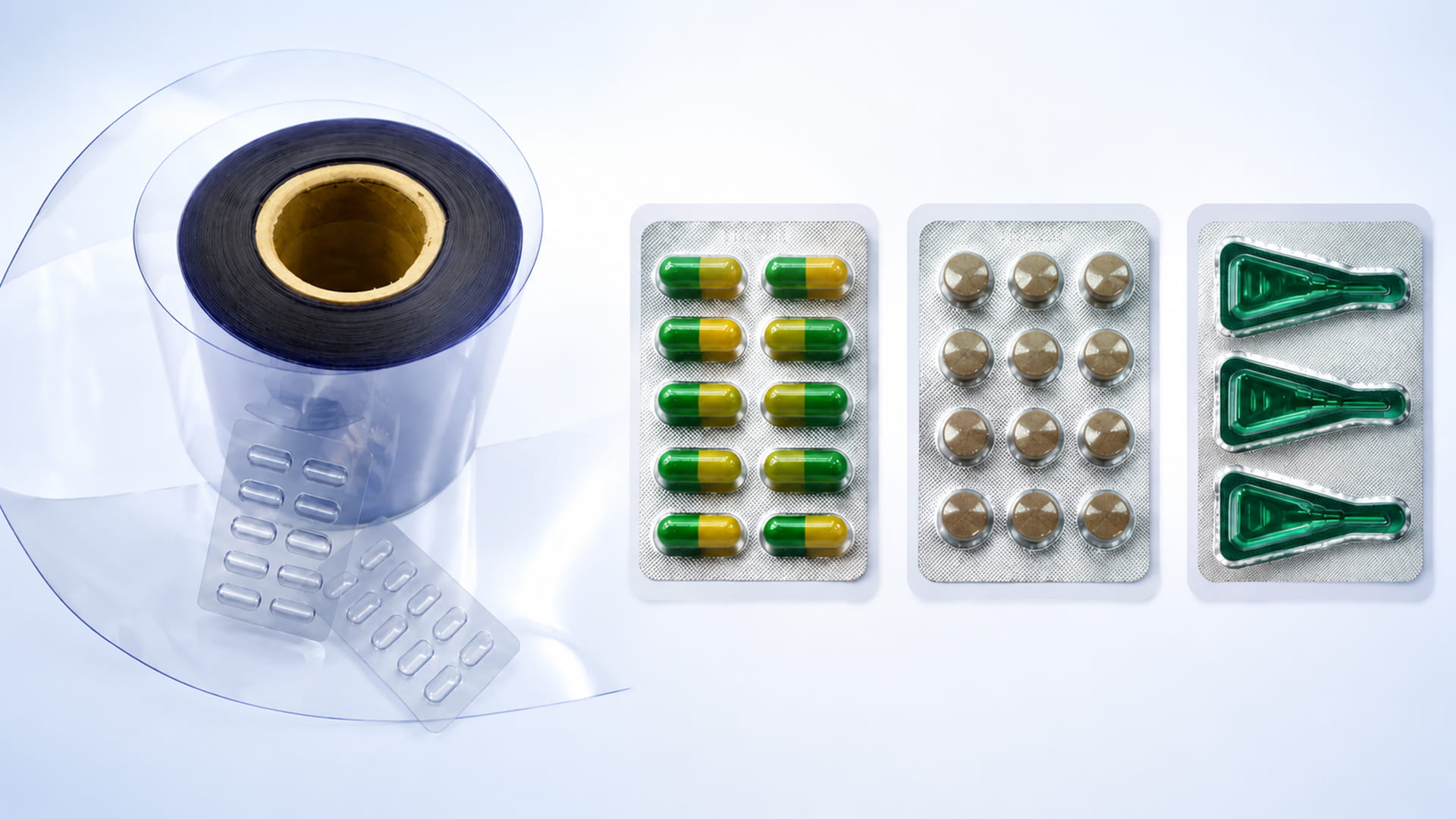
Φαρμακευτική συσκευασία blister (π.χ.. δισκία και κάψουλες) συνήθως χρησιμοποιεί διαφανείς μεμβράνες PVC ή PVC/PVDC σφραγισμένες με αλουμινόχαρτο. Επιλέγοντας το σωστό μεμβράνη κυψέλης είναι μια μεγάλη απόφαση για κάθε φαρμακευτικό παραγωγό. Το PVC και το PVDC μπορεί να μοιάζουν, αλλά οι ιδιότητες φραγμού υγρασίας και οξυγόνου τους, διάρκεια ζωής, Το κόστος και οι ανάγκες επεξεργασίας είναι πολύ διαφορετικές. Εάν εργάζεστε στην παραγωγή ή την προμήθεια φαρμάκων, πιθανότατα ρωτήσατε: Είναι PVC ή PVDC η καλύτερη επιλογή για εμάς συσκευασίες κυψελών φαρμάκων? Αυτός ο φιλικός οδηγός συγκρίνει το PVC και το PVDC head-to-head για φαρμακευτικές συσκευασίες. Θα καλύψουμε τι είναι κάθε υλικό, πώς διαφέρουν οι ιδιότητες φραγμού και κόστους τους, και πρακτικές συμβουλές για την επιλογή του σωστού φιλμ blister. Μέχρι το τέλος, θα ξέρετε αν είναι απλό PVC ή PVC με επίστρωση PVDC (μερικές φορές ονομάζεται PVC/PVDC) ταιριάζει στις ανάγκες του προϊόντος σας - ή εάν μια υβριδική λύση είναι πιο λογική.
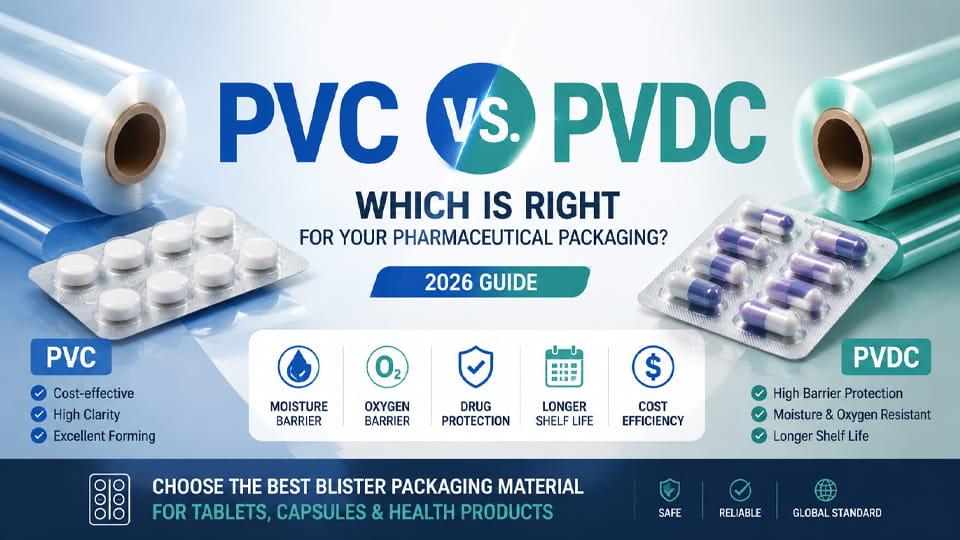
PVC (πολυβινυλοχλωρίδιο) είναι ένα ξεκάθαρο, εύκαμπτο πλαστικό, ο πιο συνηθισμένο υλικό blister για ταμπλέτες και κάψουλες. Σε φαρμακευτικές κυψέλες, "PVC" σημαίνει πάντα μη πλαστικοποιημένο, άκαμπτο PVC. Το τυπικό φιλμ PVC έχει πάχος 200–300μm (συχνά 250μm). Χρησιμεύει ως το διαμορφώσιμο βασικό στρώμα της κυψέλης. Τα κύρια πλεονεκτήματα του PVC είναι χαμηλό κόστος και ευκολία θερμοδιαμόρφωσης. Είναι ξεκάθαρο (εξαιρετική διαφάνεια), διαρκής, και καλουπώνεται γρήγορα σε μια γραμμή θερμοδιαμόρφωσης. Οι κατασκευαστές λατρεύουν το PVC για συνηθισμένα προϊόντα όπως ταμπλέτες χωρίς ιατρική συνταγή, βιταμίνες και σταθερά γενόσημα.
Το φιλμ blister PVC παρέχει καλή δομή και ορατότητα. Μπορείτε να δείτε και να μετρήσετε τα χάπια μέσα από τη συσκευασία, και σπρώξτε τα έξω εύκολα. Το PVC είναι επίσης χημικά σταθερό έναντι πολλών έκδοχα και έχει εγκριθεί σε φαρμακοποιίες (Ph. Eur. και USP) για επαφή με το φάρμακο. Εν συντομία: Το PVC είναι αξιόπιστο, ταινία blister “workhorse” για ευαίσθητο στο κόστος, προϊόντα ανθεκτικά στην υγρασία.
Pvdc (χλωριούχο πολυβινυλιδένιο) είναι α πολυμερές υψηλού φραγμού εφαρμόζεται συχνά ως επίστρωση σε φιλμ PVC. Καθαρό φιλμ PVDC (όχι αλειμμένος) είναι δύσκολο να θερμομορφωθεί από μόνο του, Έτσι σε συσκευασίες blister εμφανίζεται ως πολύ λεπτό στρώμα μεμβράνης (σε διπλές ή τριπλές δομές). Το στρώμα PVDC περιέχει πολύ περισσότερο χλώριο στη χημική του δομή (CH2CCl2), δίνοντάς του εξαιρετική αντοχή στην υγρασία και το οξυγόνο.
Στην πράξη, PVC με επίστρωση PVDC είναι το πρότυπο για συσκευασίες blister υψηλού φραγμού. Για παράδειγμα, ένα τυπικό φιλμ διπλής όψης είναι 250μm PVC με επίστρωση PVDC 40–120gsm. Πιο παχύ PVDC (υψηλότερο gsm) αποδίδει χαμηλότερο WVTR (τόσο χαμηλό όσο 0,25 g/m²/ημέρα) και σχεδόν μηδενικό OTR. Η διαμόρφωση είναι πολύ παρόμοια με το PVC - περνάτε το σύνθετο φιλμ στον θερμοδιαμορφωτή - αλλά πρέπει να ελέγχετε τη θερμοκρασία του φούρνου, ώστε το στρώμα PVDC να μην σκληραίνει πολύ γρήγορα.
Η επίστρωση PVDC εφαρμόζεται συνήθως με γαλάκτωμα (με βάση το νερό) επένδυση, σε πολλαπλά περάσματα. Υπάρχουν ποιότητες PVDC "τυποποιημένες" και "υπερφραγμένες".. Οι βαθμοί υπερ-φραγμού δίνουν υπερδιπλάσια αντίσταση υγρασίας/Ο2 ανά γραμμάριο της επίστρωσης. Οι κοινές τελικές δομές περιλαμβάνουν:
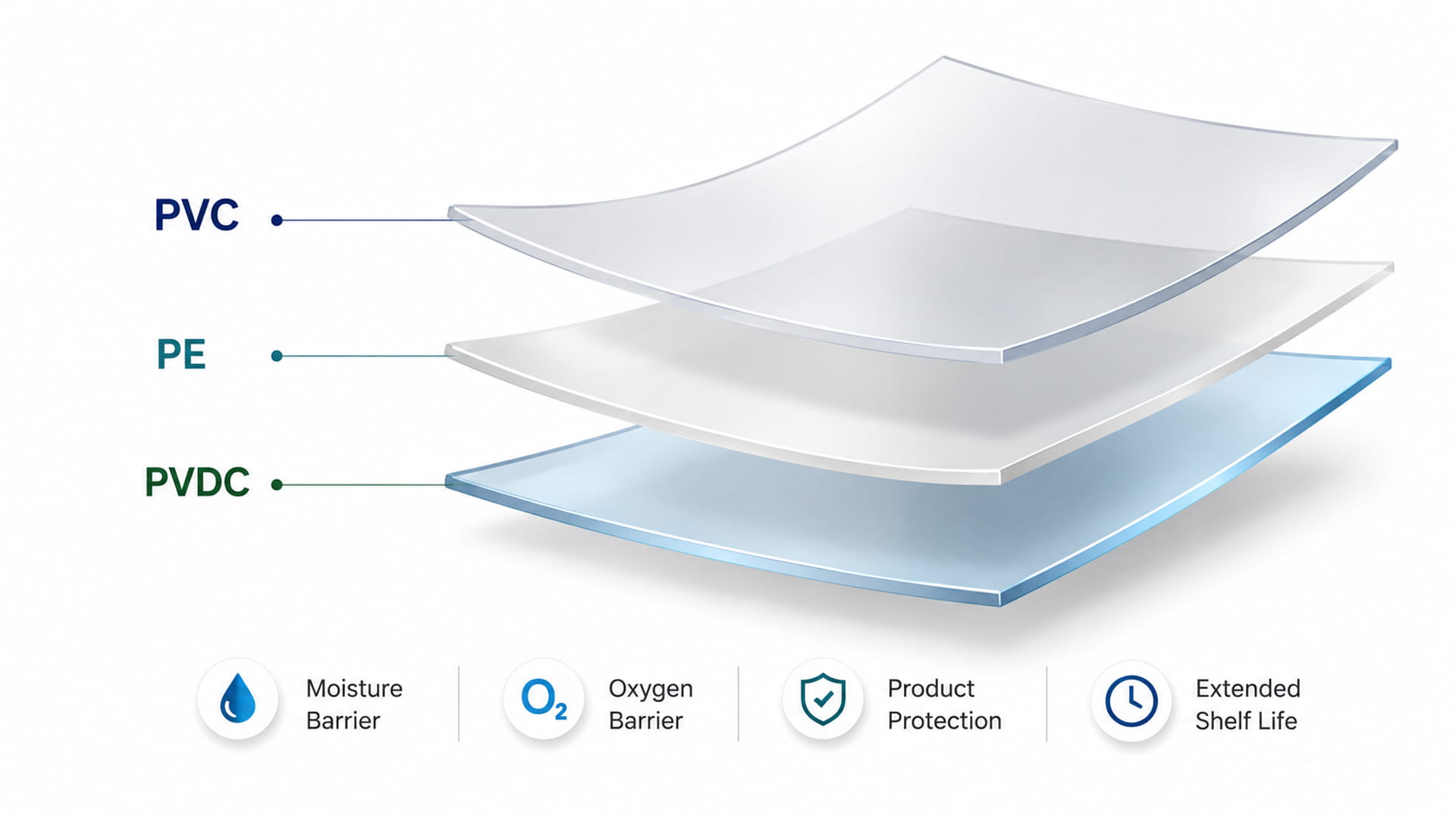
Με απλά λόγια: Το PVC σχηματίζει το σχήμα της κυψέλης, ενώ το PVDC το σφραγίζει σφιχτά. Συσκευασία blister κατασκευασμένη από απλό PVC (με αλουμινόχαρτο) είναι οικονομικό και ξεκάθαρο, αλλά προσφέρει μόνο βασική προστασία. Μια συσκευασία PVC/PVDC κοστίζει περισσότερο, αλλά επιβραδύνει δραστικά την είσοδο υγρασίας και οξυγόνου, προστασία ευαίσθητων φαρμάκων για μεγαλύτερο χρονικό διάστημα.
| Χαρακτηριστικό | PVC (όχι αλειμμένος) | PVC/PVDC (επικαλυμμένο) |
| Φράγμα υγρασίας | ★★☆☆☆ (μέτριος) | ★★★★★ (ψηλά) |
| Φράγμα Οξυγόνου | ★★☆☆☆ (χαμηλός) | ★★★★★ (ψηλά) |
| Κόστος | Χαμηλός | Μεσαία–Υψηλή |
| Σαφήνεια (Διαφάνεια) | Εξοχος | Εξοχος |
| Διάρκεια ζωής (σε συσκευασία) | Μέτριος (κοντύτερος) | Μακρύς (παρατεταμένη) |
| Ευκολία Θερμοδιαμόρφωσης | Εύκολος | Εύκολος (με προσαρμοσμένες ρυθμίσεις) |
| Ευαίσθητα Φάρμακα (υγρασία/O2) | Οχι (όχι ιδανικό) | Ναί (συνιστάται) |
| Εξαγωγές/Τροπικές Αγορές | Περιορισμένη καταλληλότητα | Καλή καταλληλότητα |
| Κοινά Προϊόντα | OTC βιταμίνες, δισκία | Φάρμακα ευαίσθητα στην υγρασία, εξαγωγές |
Τραπέζι: Σύγκριση μεμβρανών blister PVC με PVC/PVDC. (★ = βαθμολογία φραγμού, περισσότερα αστέρια = καλύτερη προστασία.)
Αυτή η γρήγορη σύγκριση δείχνει γιατί επιλέγεται το PVDC για δύσκολες εφαρμογές. Το μη επικαλυμμένο PVC είναι καλό για γενική χρήση, αλλά PVC/PVDC δίνει πολύ καλύτερη προστασία.
Η ιατρική προστασία είναι το παν απόδοση φραγμού. Η υγρασία και το οξυγόνο μπορούν να υποβαθμίσουν τα API, επηρεάζουν την ισχύ, προκαλούν συσσώρευση, ή να προκαλέσει χημικές αλλαγές. Το PVC από μόνο του παρέχει μόνο μέτρια προστασία: στους 38°C/90% RH, μια τυπική μεμβράνη PVC 250μm αφήνει περίπου 3.0 g/m²/ημέρα νερού. Αυτό σημαίνει ότι πολλή υγρασία μπορεί να διαρρεύσει μέσα από μια κυψέλη PVC εάν εκτεθεί. Σε αντίθεση, μια καλά επικαλυμμένη μεμβράνη PVC/PVDC (π.χ.. 250 μm PVC + 80 gsm PVDC) μπορεί μόνο να επιτρέπει 0.30 g/m²/ημέρα (10× λιγότερη υγρασία). Η ίδια ιστορία ισχύει και για το οξυγόνο: Το OTR του PVC είναι ~20mL/m²/ημέρα, ενώ το PVC/PVDC μπορεί να πέσει σε ~0,1–1mL/m²/ημέρα.
Γιατί έχει σημασία αυτό? Χαμηλότερο WVTR/OTR σημαίνει μεγαλύτερη διάρκεια ζωής και σταθερότητα. Ένα ευαίσθητο στην υγρασία συστατικό (σαν αναβράζον κόκκο ή προβιοτικό) μπορεί να χαλάσει σε μόλις 6-12 μήνες μέσα στο PVC, αλλά παραμένουν σταθερά 2–3 χρόνια σε PVC/PVDC. Ιατρικό κομμάτι WVTR (ρυθμό μετάδοσης υδρατμών) και OTR (ρυθμός μετάδοσης οξυγόνου) κατά την ανάπτυξη της συσκευασίας. Οι χαμηλότερες τιμές σημαίνουν ότι η ταινία είναι πιο σκληρό εμπόδιο.
Εν συντομία: Οι μεμβράνες με επικάλυψη PVDC προστατεύουν πολύ καλύτερα τα φάρμακα. Εάν το προϊόν σας είναι ευαίσθητο στην υγρασία ή χρειάζεται μεγάλη ημερομηνία λήξης, Το PVC/PVDC ή άλλο φιλμ υψηλού φραγμού συνήθως αξίζει το επιπλέον κόστος. Το PVC από μόνο του είναι ένας συμβιβασμός - είναι εντάξει έως ότου η απαίτηση για το κλίμα ή το ράφι στη χειρότερη περίπτωση λέει το αντίθετο.
Χρησιμοποιήστε απλό φιλμ blister PVC για:
Το PVC είναι το εργαλείο για καθημερινά είδη. Νομίζω Ταμπλέτες βιταμίνης C σε φαρμακείο της πόλης, ή ασπιρίνη σε χειμωνιάτικο κλίμα. Αυτά τα προϊόντα ανέχονται λίγη υγρασία και δεν θα χαλάσουν γρήγορα εάν η συσκευασία διαρρεύσει λίγο. Σύμφωνα με τη φαρμακευτική βέλτιστη πρακτική, τυπικό φιλμ PVC 250μm (RPVC) χρησιμοποιείται όταν αποδοτικότητα και ευκολία αποτελούν προτεραιότητες.
Παράδειγμα: Μια εταιρεία που συσκευάζει δισκία βιταμινών μπορεί να επιλέξει PVC 250 μm με κάλυμμα από φύλλο αλουμινίου. Τα δισκία έχουν διάρκεια ζωής 12 μήνες και κυκλοφορούν στις τοπικές αγορές. Το χαμηλό κόστος και η διαύγεια του PVC το καθιστούν ιδανικό.
Χρησιμοποιήστε μεμβράνες PVC/PVDC για:
Εάν τα χάπια σας δεν αντέχουν την υγρασία ή το οξυγόνο, Συνήθως απαιτείται PVC/PVDC. Για παράδειγμα, ένα παιδιατρικό αντιβιοτικό με προορισμό ένα τροπικό κλίμα μπορεί να μεταφερθεί από τη Σιγκαπούρη στη Βραζιλία. Χρησιμοποιώντας PVC 250 μm με PVDC 80–100 gsm (μια «διπλή» ταινία) μπορεί να πετύχει α 12+ μήνας διάρκειας ζωής ακόμη και σε συνθήκες 30°C/75% RH, σύμφωνα με μελέτες περιπτώσεων.
Παράδειγμα: Αναβράζοντα δισκία βιταμίνης C (που παράγουν αφρό στο νερό) είναι εξαιρετικά ευαίσθητα στην υγρασία. Ένας κατασκευαστής θα χρησιμοποιούσε κυψέλες 250μm PVC/80gsm PVDC για να διασφαλίσει ότι τα δισκία παραμένουν σταθερά κατά τη διανομή τους στην Ασία. Το υψηλότερο κόστος του φιλμ δικαιολογείται με την αποφυγή αστοχίας του προϊόντος.
Πέρα από PVC και PVDC, άλλα υλικά blister περιλαμβάνουν Aclar® (PCTFE) και Alu-Alu (ψυχρής μορφής αλουμίνιο). Να πώς συγκρίνονται:
| Υλικό | Αντοχή φραγμού | Επίπεδο Κόστους | Τυπική χρήση |
| PVC | Μέσον | $ | Τυπικά δισκία, κάψουλες (οικιακός) |
| PVC/PVDC | Ψηλά | $$ | Φάρμακα ευαίσθητα στην υγρασία, εξαγωγές |
| PVC + Aclar® | Πολύ ψηλά | $$$$ | Ειδικότητα βιοτεχνολογίας, φαρμακείο υψηλής ποιότητας |
| Alu-Alu | Ανώτατο όριο (μηδενικό φως/υγρασία) | $$$$$ | ορμόνες, ογκολογία, ακραία κλίματα |
Για τις περισσότερες φαρμακευτικές χρήσεις, PVC, Το PVC/PVDC και μερικές φορές το PVC/Aclar® είναι αρκετά. Το Alu-Alu είναι μια θέση για εξαιρετικά ευαίσθητα API. (Δείτε τον παραπάνω πίνακα για μια γρήγορη σύγκριση.) Στην πράξη, Το PVC/PVDC είναι η πιο κοινή επιλογή υψηλού φραγμού, εξισορρόπηση απόδοσης και κόστους.
Κατά την αξιολόγηση των υλικών, προϋπολογισμού και βιωσιμότητας συχνά βαραίνουν παράλληλα με την απόδοση:
Οι περισσότερες φαρμακευτικές συσκευασίες blister που βλέπετε καθημερινά είναι στην πραγματικότητα PVC/PVDC παρά καθαρό PVC. Ο λόγος: Το PVDC παρέχει αυτό το επιπλέον φράγμα χωρίς να θυσιάζει την ορατότητα και τη μορφοποίηση του PVC. Ακολουθούν ορισμένες κοινές μορφές:
Στην πράξη, ο Κυψέλη PVC/PVDC/Alu είναι το εργαλείο για πολλά δισκία και κάψουλες που χρειάζονται μεγαλύτερη διάρκεια ζωής. Αν ρωτηθεί «ποιο είναι καλύτερο, Κυψέλη PVC ή PVDC?”, να θυμάστε ότι συχνά δεν είναι το ένα ή το άλλο - είναι ο συνδυασμός που κερδίζει.
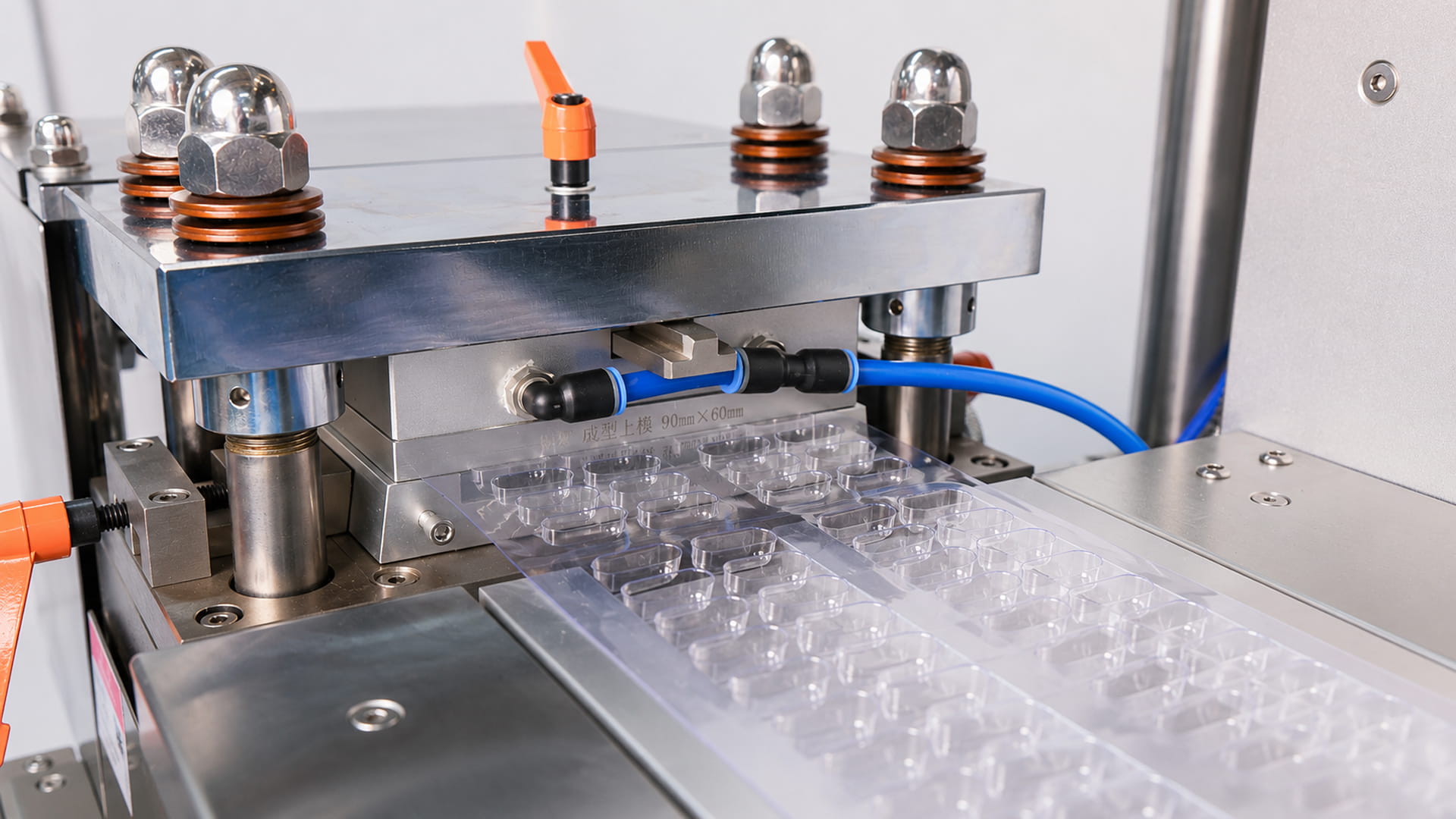
Ακολουθούν ορισμένες κατευθυντήριες ερωτήσεις και απαντήσεις για την επιλογή μεταξύ μεμβρανών PVC και PVDC στη φαρμακευτική:
Είτε συσκευάζετε δισκία είτε κάψουλες, οι επιλογές υλικών αλληλεπικαλύπτονται. Κοινό σενάριο:
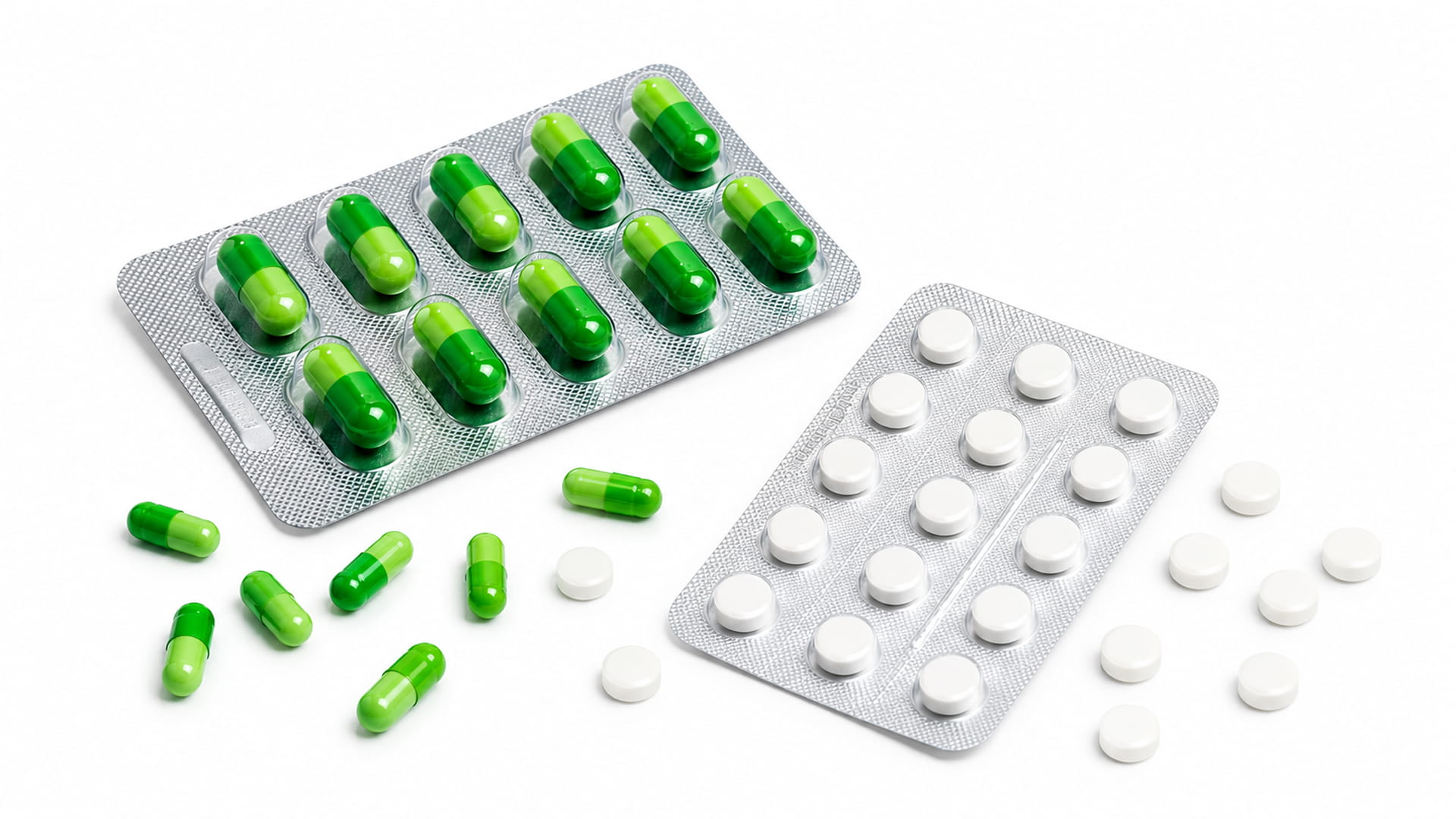
Και στις δύο περιπτώσεις, ο μορφή μονάδας δόσης απομονώνει κάθε δόση, και η διαφανής κοιλότητα επιτρέπει στους χρήστες να δουν το φάρμακο. Μπορεί να αναρωτιέστε για μηχανές συσκευασίας blister: Οι σύγχρονες γραμμές μπορούν να σχηματίσουν κοιλότητες είτε από μεμβράνες PVC είτε από PVDC. Η κύρια διαφορά είναι ότι το PVC με επίστρωση PVDC μπορεί να χρειάζεται ελαφρώς διαφορετικές ρυθμίσεις θέρμανσης στη μήτρα θερμοδιαμόρφωσης. Συμβουλευτείτε το εγχειρίδιο του εξοπλισμού ή τον προμηθευτή σας για να πληκτρολογήσετε τις σωστές παραμέτρους.
Ναί. Μηχανές συσκευασίας blister είναι γενικά συμβατά και με τα δύο υλικά. Δεν χρειάζεστε ξεχωριστές μηχανές για PVC έναντι PVC/PVDC. Ωστόσο, εσείς χρειάζεται να προσαρμόσετε τη διαδικασία:
Σύγχρονα μηχανήματα (όπως το JinLuPacking's DPP-160 ή DPP-270 Μέγ θερμοδιαμορφωτές) λαβή PVC, PVC/PVDC και ακόμη και αλουμίνιο ψυχρής μορφής. Σας επιτρέπουν να κάνετε εναλλαγή μεταξύ φιλμ, τροποποιώντας το προφίλ θερμοκρασίας και σχηματίζοντας βάθος. Για παράδειγμα, όταν λειτουργεί PVC/PVDC, μια τεχνολογία μπορεί να μειώσει τις λάμπες του φούρνου κατά 10-20% σε σύγκριση με το απλό PVC. Ολικός, η μετάβαση είναι απλή για έναν έμπειρο χειριστή.

Οι μηχανές κυψέλης της JinLuPacking είναι κατασκευασμένες για να λειτουργούν όλα τα μεγάλα φαρμακεία με κυψέλες - PVC, PVC/PVDC, PVC/PE/PVDC, αλουμίνιο, ακόμη και ελάσματα υψηλού φραγμού. Τα χειριστήρια PLC και το σύστημα συνταγών τους διευκολύνουν την αποθήκευση παραμέτρων για κάθε τύπο φιλμ. Εν συντομία, ένα μηχάνημα μπορεί να είναι η all-in-one λύση σας αρκεί να το ρυθμίσετε σωστά για υλικά PVC έναντι PVDC.
Η επιλογή μεταξύ PVC και PVDC ανταποκρίνεται στις ανάγκες του προϊόντος σας. Οι μεμβράνες PVC είναι οικονομικά αποδοτικό και σαφές, ιδανικό για πολλά τυπικά δισκία και κάψουλες. Οι μεμβράνες με επίστρωση PVDC αποδίδουν ανώτερο εμπόδιο, κρίσιμο για την υγρασία- ή φάρμακα ευαίσθητα στο οξυγόνο που απαιτούν μεγάλη διάρκεια ζωής. Στην πράξη, ο υβριδική προσέγγιση PVC/PVDC συχνά κερδίζει: χρησιμοποιεί τη διαύγεια και τη μορφοποίηση του PVC ενώ προσθέτει το φράγμα του PVDC όπου μετράει.
Όταν υπάρχει αμφιβολία, αξιολογούν παράγοντες όπως η σταθερότητα του φαρμάκου, απαιτούμενη διάρκεια ζωής, προϋπολογισμός, και στόχους βιωσιμότητας. Για παράδειγμα, μια κοινή επιλογή είναι οι κυψέλες PVC/PVDC για εξαγωγικά φάρμακα, και απλές κυψέλες PVC-Alu για τοπικά, βραχυπρόθεσμα προϊόντα. Πάντα να σκέφτεσαι το λειτουργία αποτυχίας: εάν το προϊόν σας έχασε τη ισχύ 10% πολύ νωρίς, τι θα κοστίσει αυτό? Αυτή η αξιολόγηση κινδύνου συχνά καθοδηγεί κατά πόσο δικαιολογείται ένα φιλμ υψηλότερου φραγμού.
Έτοιμοι να βελτιστοποιήσετε τη συσκευασία του φαρμάκου σας? Επικοινωνήστε με την JinluPacking για συμβουλές ειδικών και τις σωστές λύσεις συσκευασίας κυψέλης. Η ομάδα μας μπορεί να σας βοηθήσει να επιλέξετε την ιδανική ταινία (PVC, Pvdc, ή προηγμένα σύνθετα υλικά) και προτείνετε τη ρύθμιση της μηχανής συσκευασίας blister ώστε να ταιριάζει. Είτε χρειάζεστε τυπικές κυψέλες δισκίων είτε εξειδικευμένες κάψουλες ανθεκτικές στα παιδιά, θα διασφαλίσουμε ότι η συσκευασία σας διατηρεί τα φάρμακα ασφαλή και συμβατά μέχρι το τέλος.
PVC (Πολυβινυλοχλωρίδιο) και PVDC (Πολυβινυλιδενοχλωρίδιο) είναι δύο υλικά που χρησιμοποιούνται συνήθως για τη συσκευασία φαρμακευτικών blister. Το PVC χρησιμοποιείται κυρίως ως φιλμ βάσης θερμοδιαμόρφωσης επειδή προσφέρει εξαιρετική διαφάνεια, εύκολος σχηματισμός, και χαμηλό κόστος.
Το PVDC εφαρμόζεται συνήθως ως στρώμα επίστρωσης σε φιλμ PVC για τη βελτίωση της απόδοσης της υγρασίας και του φραγμού οξυγόνου. Σε σύγκριση με την τυπική συσκευασία blister από PVC, Η κυψέλη PVC/PVDC παρέχει καλύτερη προστασία για ευαίσθητα φάρμακα και μπορεί να βοηθήσει στην παράταση της διάρκειας ζωής.
Pvdc (Πολυβινυλιδενοχλωρίδιο) είναι ένα πολυμερές υλικό υψηλού φραγμού που χρησιμοποιείται ευρέως σε εφαρμογές συσκευασίας φαρμακευτικών προϊόντων και τροφίμων. Έχει εξαιρετική αντοχή στους ατμούς υγρασίας και στη μετάδοση οξυγόνου, καθιστώντας το κατάλληλο για την προστασία προϊόντων που απαιτούν βελτιωμένη σταθερότητα.
Σε φαρμακευτική συσκευασία blister, Το PVDC χρησιμοποιείται συνήθως ως στρώμα επίστρωσης σε φιλμ PVC και όχι ως αυτόνομο υλικό διαμόρφωσης. Ο συνδυασμός PVC/PVDC δημιουργεί ένα φιλμ φυσαλίδων υψηλού φραγμού με καλύτερη απόδοση προστασίας από τα φάρμακα.
Οι μεμβράνες PVC και PVDC μπορεί να είναι δύσκολο να διακριθούν οπτικά επειδή και τα δύο υλικά είναι συνήθως διαφανή και χρησιμοποιούνται σε παρόμοιες δομές συσκευασίας με κυψέλες.
Οι κύριες μέθοδοι αναγνώρισης περιλαμβάνουν:
• Δομή υλικού: Το PVC είναι συνήθως το θερμοδιαμορφωτικό φιλμ βάσης, ενώ το PVDC είναι μια λεπτή επίστρωση φραγμού που εφαρμόζεται σε PVC.
• Απόδοση φραγμού: Οι μεμβράνες με επίστρωση PVDC παρέχουν σημαντικά καλύτερη προστασία από την υγρασία και το οξυγόνο από το τυπικό PVC.
• Τεχνικές προδιαγραφές: Οι κατασκευαστές συνήθως αναγνωρίζουν το υλικό με ετικέτες δομής όπως το PVC, PVC/PVDC, ή PVC/PE/PVDC.
Για την αγορά και παραγωγή φαρμακευτικών προϊόντων, ο έλεγχος του φύλλου προδιαγραφών υλικού του προμηθευτή είναι η πιο αξιόπιστη μέθοδος.
Όσον αφορά το φράγμα υγρασίας και οξυγόνου, Ναί. Pvdc (ως επίστρωση) παρέχει πολύ υψηλότερο φράγμα από το απλό PVC. Αλλά το PVDC είναι πιο ακριβό, οπότε είναι "καλύτερο" μόνο αν χρειάζεστε αυτήν την επιπλέον προστασία. Για απλά, σταθερά προϊόντα, Το PVC είναι συνήθως καλό.
Η παραγωγή της ρητίνης PVDC κοστίζει περισσότερο, και η εφαρμογή της επίστρωσης είναι μια διαδικασία πολλαπλών σταδίων. Ουσιαστικά προσθέτετε επιπλέον υλικό (την επίστρωση) και επιπλέον επεξεργασία. Η πρόσθετη απόδοση έρχεται σε αυτή την τιμή.
Ναί. Το PVDC μπορεί να βελτιώσει τη διάρκεια ζωής του φαρμάκου μειώνοντας τη διείσδυση υγρασίας και οξυγόνου στη συσκευασία blister.
Πολλά φαρμακευτικά προϊόντα, συμπεριλαμβανομένων των ευαίσθητων στην υγρασία δισκίων, προβιοτικά, και ορισμένα διατροφικά προϊόντα, απαιτούν ισχυρότερη συσκευασία φραγμού επειδή η υγρασία και το οξυγόνο μπορούν να επηρεάσουν την ποιότητα και τη σταθερότητα του προϊόντος.
Ωστόσο, Η πραγματική διάρκεια ζωής εξαρτάται από τη σύνθεση του φαρμάκου, δομή συσκευασίας, όροι αποθήκευσης, και αποτελέσματα δοκιμών σταθερότητας.
Το PVC/PVDC και το PVC/PE/PVDC είναι και οι δύο δομές συσκευασίας με κυψέλες υψηλού φραγμού.
PVC/PVDC:
Μια τυπική δομή διπλής όψης όπου η επίστρωση PVDC εφαρμόζεται απευθείας σε PVC. Παρέχει βελτιωμένη προστασία από την υγρασία και το οξυγόνο.
PVC/PE/PVDC:
Μια δομή triplex που προσθέτει ένα στρώμα PE μεταξύ PVC και PVDC. Αυτή η δομή βελτιώνει την ευελιξία και την απόδοση διαμόρφωσης, ειδικά για βαθύτερες κοιλότητες με φουσκάλες.
Η καλύτερη επιλογή εξαρτάται από τις απαιτήσεις του προϊόντος, σχεδιασμός κοιλότητας, και ικανότητα μηχανής συσκευασίας.
Είναι φιλμ PVC με λεπτό στρώμα PVDC στη μία πλευρά. Το PVC παρέχει μορφοποίηση και αντοχή; το στρώμα PVDC παρέχει φράγμα υγρασίας/οξυγόνου. Μαζί σχηματίζουν ένα δύο στρώματα (διπλός) ή τριών στρώσεων (τριπλός) δομή.
Ναί. Σύγχρονες μηχανές blister (όπως τα μοντέλα της JinLuPacking) έχουν σχεδιαστεί για PVC, PVC/PVDC και άλλες θερμοδιαμορφώσιμες μεμβράνες. Απλώς επιλέγετε τις σωστές ρυθμίσεις. Το κλειδί είναι ο έλεγχος της θερμοκρασίας του φούρνου και η διαμόρφωση των παραμέτρων για τη συγκεκριμένη μεμβράνη.
Για εξαγωγικές αγορές με ζέστη/υγρή, PVC/PVDC (ή ακόμα και PVC/Aclar ή Alu-Alu) συνιστάται. Το PVC μόνο συχνά αποτυγχάνει σε τροπικά κλίματα.
Αναφορές:
1.Συστήματα κλεισίματος δοχείων για συσκευασία ανθρώπινων φαρμάκων και βιολογικών —— ΜΑΣ. Υπηρεσία Τροφίμων και Φαρμάκων
2.Συστήματα Πλαστικών Συσκευασιών και Υλικά Κατασκευής τους —— Φαρμακοποιία Ηνωμένων Πολιτειών
3.Φαρμακευτική συσκευασία blister, Μέρος 1 Σκεπτικό και Υλικά —— Θύελλα
4.Πολυβινυλιδενοχλωρίδιο —— ScienceDirect
5.Χημικές προσεγγίσεις για την ταυτοποίηση PVC και PVDC σε υλικά φαρμακευτικής συσκευασίας —— ResearchGate
6.ΠΡΟΣΟΧΗ ΕΥΚΑΜΠΤΟΥ ΥΛΙΚΟΥ PVC / PVC – PVDC ΣΤΗ ΦΑΡΜΑΚΕΥΤΙΚΗ ΒΙΟΜΗΧΑΝΙΑ —— revistajrg.com