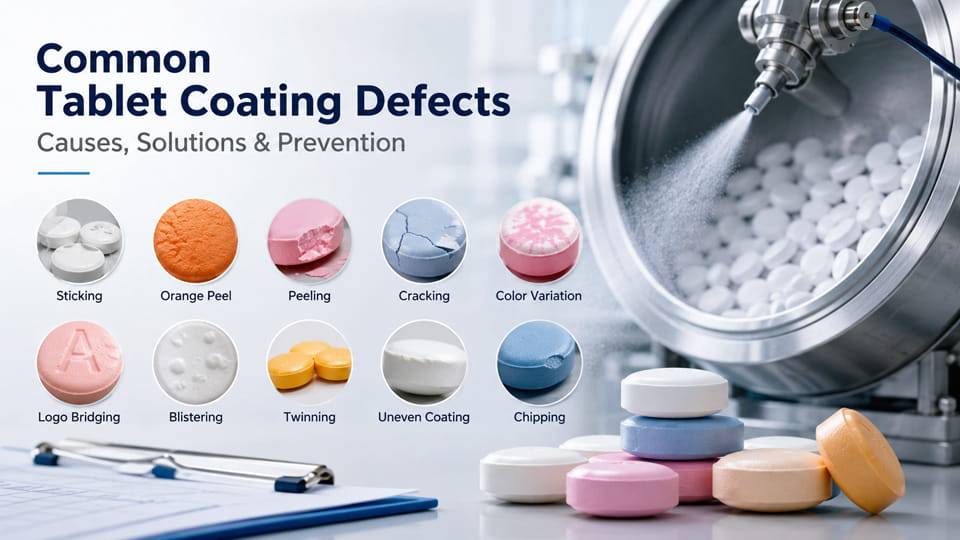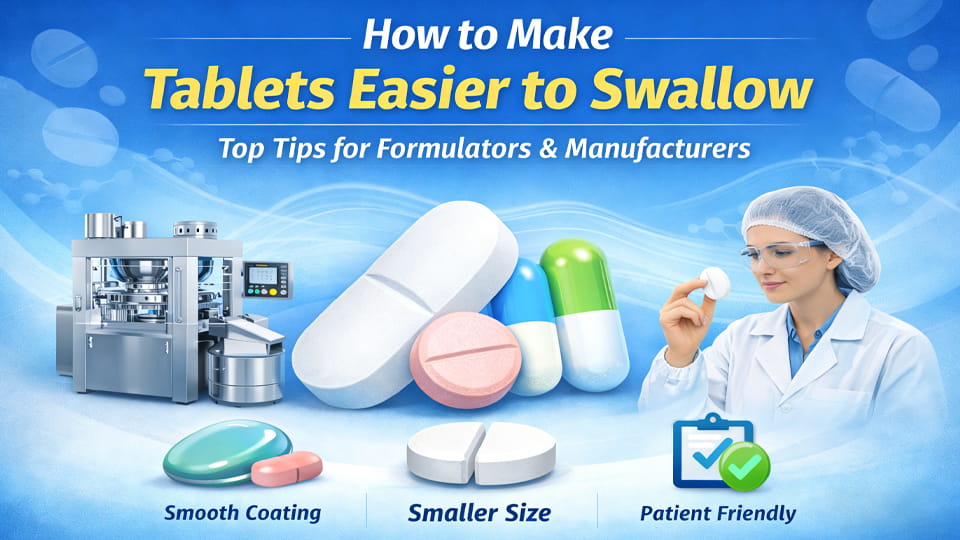

Δοσολογικές μορφές δισκίων διατίθενται σε δύο βασικούς τύπους: επικαλυμμένο και όχι αλειμμένος. Ενα μη επικαλυμμένο δισκίο είναι ένα απλό συμπιεσμένο χάπι χωρίς επιπλέον κέλυφος – μόνο τα συμπιεσμένα συστατικά (ενεργό φάρμακο συν έκδοχα). ΕΝΑ σακχαρόπηκτο δισκίο, σε αντίθεση, έχει ένα λεπτό εξωτερικό στρώμα ή κέλυφος που εφαρμόζεται μετά τη συμπίεση. Αυτή η επίστρωση μπορεί να είναι μια μεμβράνη πολυμερούς (επικαλυμμένο με λεπτό υμένιο), κέλυφος με βάση τη ζάχαρη (επικαλυμμένα με ζάχαρη), εντερικό στρώμα, ή άλλο λειτουργικό φιλμ. Η επίστρωση εξυπηρετεί λειτουργίες πέρα από την εμφάνιση - μπορεί να προστατεύσει το φάρμακο, γεύση μάσκας, έλεγχος απελευθέρωσης, ή να βελτιώσει την ικανότητα κατάποσης.
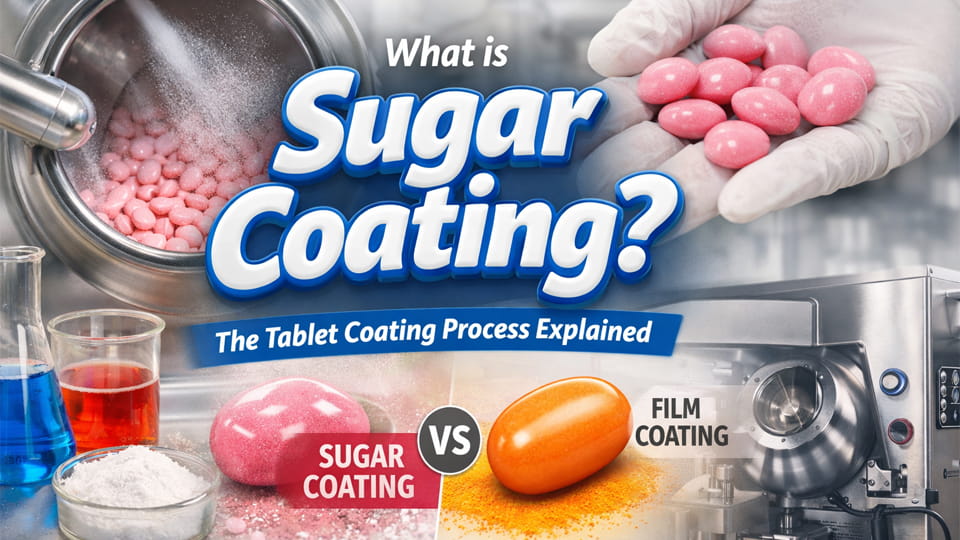
Για παράδειγμα, Εικόνα 1 δείχνει πώς μια μηχανή επικάλυψης φιλμ εφαρμόζει ένα ομοιόμορφο φιλμ πολυμερούς σε ταμπλέτες, δημιουργώντας ομαλή, γυαλιστερά χάπια. Αυτή η επίστρωση μπορεί να διευκολύνει την κατάποση και να προστατεύσει τον πυρήνα του δισκίου από την υγρασία και τον αέρα. Σε αντίθεση, Τα απλά μη επικαλυμμένα δισκία είναι ματ, συχνά κιμωλία, και πιο ευάλωτα στο περιβάλλον.
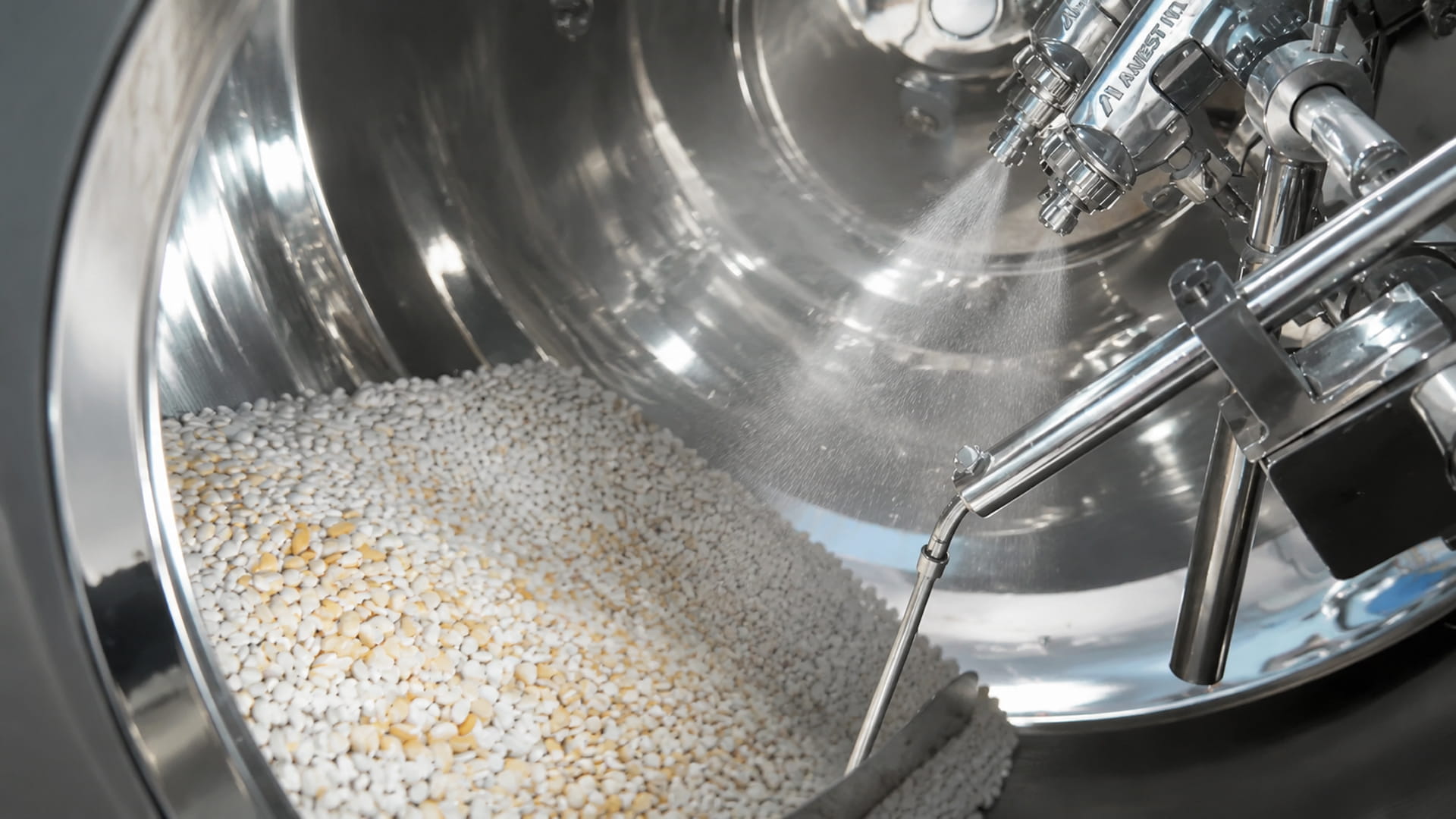
Εικόνα 1. Μηχάνημα επικάλυψης δισκίων υψηλής ταχύτητας που εφαρμόζει επίστρωση μεμβράνης. Η επίστρωση προσθέτει ένα προστατευτικό, λεία στρώση σε κάθε δισκίο, βελτίωση της εμφάνισης και της σταθερότητας.
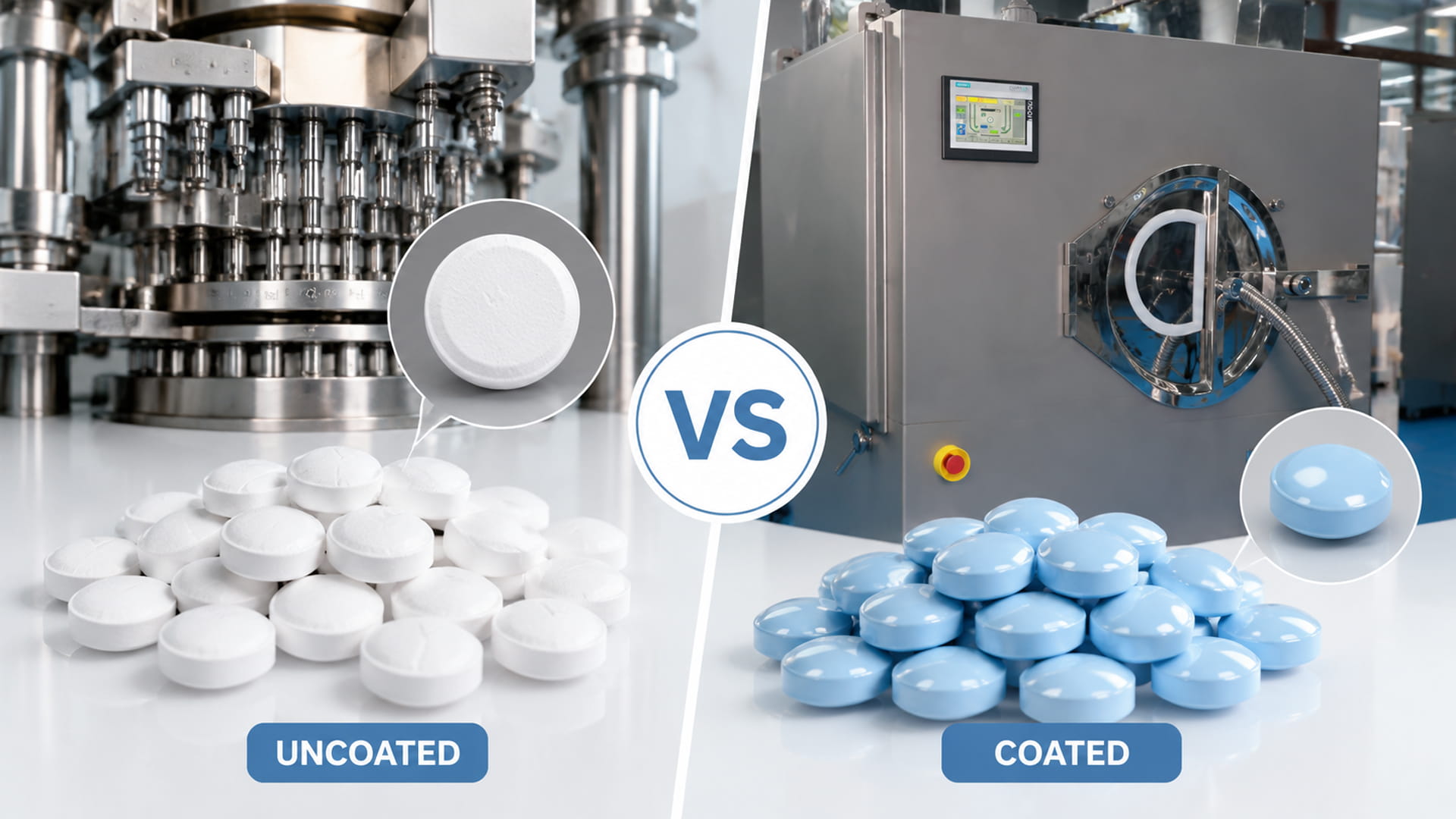
Για παράδειγμα, ένα επικαλυμμένο με λεπτό υμένιο δισκίο έχει λεπτό φιλμ πολυμερούς (συνήθως υδροξυπροπυλομεθυλοκυτταρίνη ή παρόμοια) που δεν συσσωρεύει το χάπι. ΕΝΑ επικαλυμμένο με ζάχαρη δισκίο έχει ένα παχύ, κέλυφος γλυκού σιροπιού – πιο επίπονη και πολύ πιο βαριά. Ενα δισκίο με εντερική επικάλυψη χρησιμοποιεί πολυμερή ευαίσθητα στο pH και έτσι περνά από το στομάχι και διαλύεται στο έντερο. Κάθε τύπος επίστρωσης έχει τα δικά του πλεονεκτήματα και μειονεκτήματα (δείτε τον παρακάτω πίνακα).
| Τύπος επικάλυψης | Περιγραφή | Πρωτεύουσες χρήσεις |
| Οχι αλειμμένος | Χωρίς επίστρωση; ο πυρήνας του tablet εκτεθειμένος | Γρήγορη απελευθέρωση, ευαίσθητο στο κόστος, σταθερά φάρμακα |
| Φιλμ-παλτό | Λεπτό πολυμερές φιλμ (π.χ.. HPMC) | Απόκρυψη γεύσης, προστασία υγρασίας/φωτός, εύκολη κατάποση, επωνυμία |
| Ζαχαρώνω | Χοντρές στρώσεις σιροπιού ζάχαρης | Ισχυρή γευστική κάλυψη, λείο γυαλιστερό φινίρισμα, συχνά στην παιδιατρική |
| Εντερικό παλτό | Πολυμερή ευαίσθητα στο pH (Eudragit) | Προστατέψτε το στομάχι ή το φάρμακο; καθυστερημένη εντερική απελευθέρωση |
| Άλλοι | Εξειδικευμένη/ελεγχόμενη-αποδέσμευση | Παρατεταμένη απελευθέρωση, στοχευμένη παράδοση, και τα λοιπά. |
Τραπέζι 1. Σύγκριση μη επικαλυμμένων έναντι επικαλυμμένων δισκίων και κοινών τύπων επικάλυψης.
Η επίστρωση δεν είναι μόνο για εμφάνιση – είναι α λειτουργικό βήμα στην κατασκευή tablet. Ρωτάνε οι φαρμακοποιοί, "Μπορεί το tablet να λειτουργήσει χωρίς επίστρωση?"Αν ναι, ένα μη επικαλυμμένο δισκίο είναι απλούστερο και φθηνότερο. Αλλά επιστρώσεις προστίθενται όποτε υπάρχει τεχνικό όφελος. Οι κύριοι λόγοι για την επικάλυψη των δισκίων περιλαμβάνουν:
Εν συντομία, η επίστρωση προσθέτει λειτουργικότητα. Δεν γίνεται αυθαίρετα, αλλά όποτε γευτείτε, σταθερότητα, ή απελευθερώστε θέματα ελέγχου. Όπως σημειώνει ένας οδηγός βιομηχανίας, «Η επίστρωση εισάγεται μόνο όταν παρέχει σαφές λειτουργικό όφελος».
Τα επικαλυμμένα δισκία συνδυάζουν ανθεκτικότητα και φιλικότητα προς το χρήστη. Τα βασικά οφέλη περιλαμβάνουν:
Εικόνα 2 συγκρίνει ένα μη επικαλυμμένο με ένα επικαλυμμένο με λεπτό υμένιο δισκίο. Το επικαλυμμένο δισκίο (δικαίωμα) έχει σαφώς μια ομαλή, γυαλιστερό εξωτερικό που καλύπτει κάθε αποτύπωμα ή τραχύτητα στον πυρήνα.
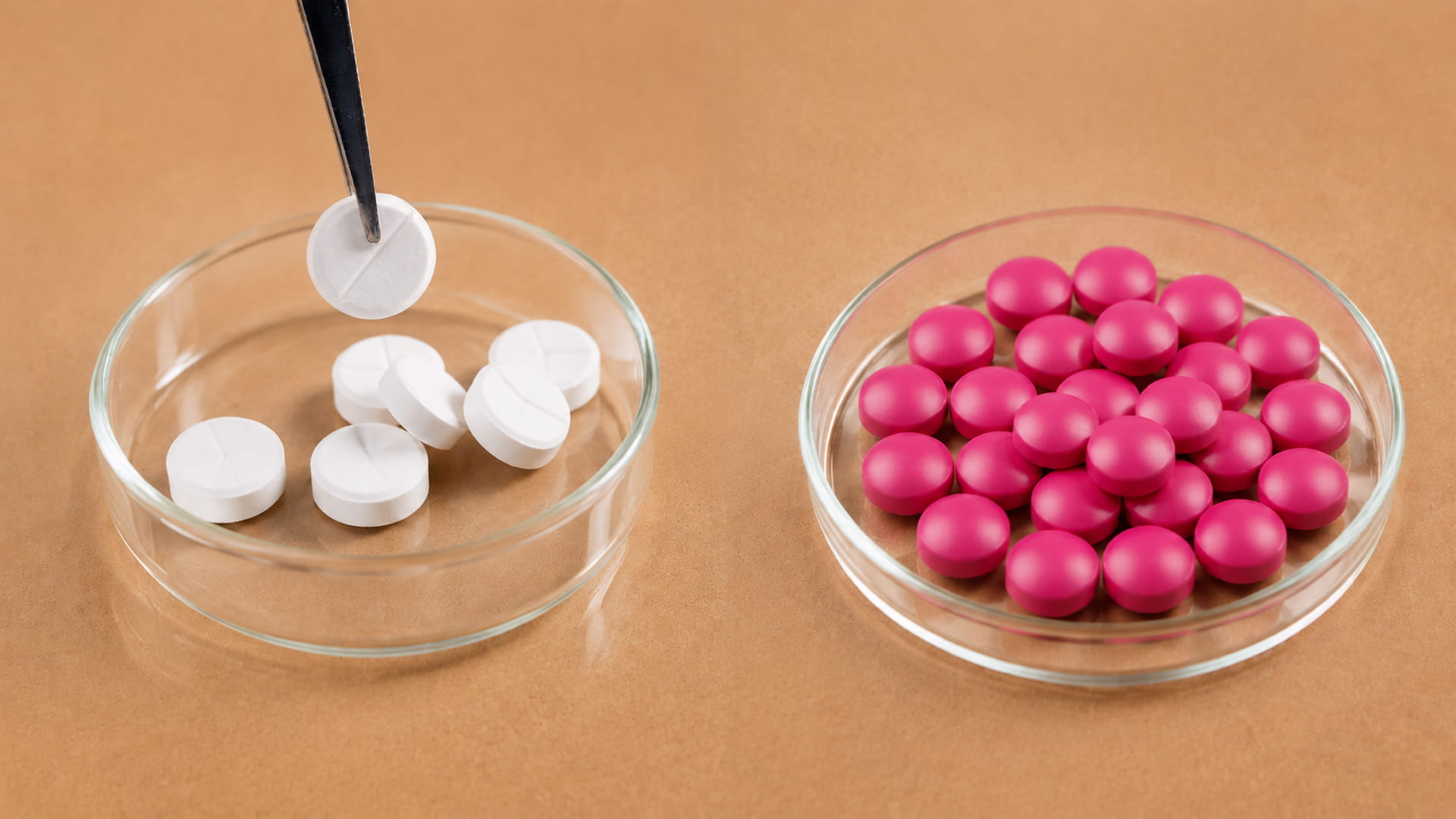
Εικόνα 2. Οχι αλειμμένος (αριστερά) έναντι μεμβράνης (δικαίωμα) δισκία. Το επικαλυμμένο με λεπτό υμένιο δισκίο έχει λεία, ομοιόμορφο φινίρισμα που καλύπτει το χρώμα και την υφή του πυρήνα. Επικαλύψεις όπως αυτή βελτιώνουν την καταποσιμότητα και προστατεύουν το φάρμακο μέσα.
Τα οφέλη των επιστρώσεων είναι εύκολο να εξηγηθούν: τα επικαλυμμένα δισκία συχνά «φαίνονται καλύτερα, διαρκούν περισσότερο, και κατέβα πιο εύκολα» παρά απλά χάπια. Αυτά τα πλεονεκτήματα σημαίνουν ότι παρόλο που η επίστρωση προσθέτει βήματα και κόστος, μπορεί να μειώσει τα προβλήματα αργότερα (βλάβη, παράπονα, πρόωρη λήξη). Μια ΚΟΑ συμπληρωμάτων διατροφής σημειώνει ότι ενώ «τα επικαλυμμένα δισκία περιλαμβάνουν πρόσθετα υλικά, εργασίας και χρόνου, η επίστρωση μπορεί να μειώσει τις παρτίδες που απορρίπτονται, παράπονα πελατών, και ζητήματα ποιότητας μετά τη διάθεση στην αγορά». Μακροπρόθεσμα, Τα επικαλυμμένα δισκία συχνά εξοικονομούν χρήματα σε όλο τον κύκλο ζωής του προϊόντος.
Φυσικά, Οι απλές ταμπλέτες έχουν ακόμα τη θέση τους. Τα μη επικαλυμμένα δισκία προσφέρουν απλότητα και οικονομική απόδοση:
Με απλά λόγια, ένα μη επικαλυμμένο δισκίο είναι “εύκολο και φθηνό να γίνει”. Είναι ένα καλό σημείο εκκίνησης στις μελέτες σκοπιμότητας. Το blog του φαρμακοποιού σημειώνει επίσης ότι τα μη επικαλυμμένα δισκία είναι φθηνότερα και λιγότερο χρονοβόρα στην παραγωγή τους, και διαλύονται πιο γρήγορα απελευθερώνοντας το φάρμακο πιο γρήγορα.
Ωστόσο, αυτά τα κέρδη έρχονται με συμβιβασμούς: ένα μη επικαλυμμένο δισκίο «αφήνει τον πυρήνα του φαρμάκου ευάλωτο» σε περιβαλλοντικές βλάβες, και μπορεί να είναι λιγότερο αποδεκτή από τους ασθενείς. Έτσι οι κατασκευαστές σταθμίζουν αυτούς τους παράγοντες: εάν δεν απαιτείται επίστρωση, πιθανότατα θα το παραλείψουν.
Οι επικαλύψεις δεν είναι μοναδικές για όλες. Η βιομηχανία χρησιμοποιεί αρκετούς κύριους τύπους επίστρωσης, το καθένα με συγκεκριμένα χρήσεις και οφέλη:
Επικαλυμμένα με λεπτό υμένιο vs Δισκία επικαλυμμένα με ζάχαρη: Εν συντομία, οι επικαλύψεις μεμβράνης είναι λεπτές, διαρκής, και κατάλληλο για παραγωγή υψηλής ταχύτητας. Έχουν αντικαταστήσει σε μεγάλο βαθμό τις επικαλύψεις ζάχαρης επειδή προσθέτουν ελάχιστο όγκο και εφαρμόζονται γρήγορα. Ωστόσο, Οι επικαλύψεις ζάχαρης εξακολουθούν να προσφέρουν εξαιρετική κάλυψη γεύσης και κλασική εμφάνιση, Έτσι εμφανίζονται σε προϊόντα όπως οι μασώμενες βιταμίνες όπου η γεύση είναι καθοριστική.
Επικαλυμμένα με λεπτό υμένιο vs Δισκία με εντερική επικάλυψη: Η βασική διαφορά είναι η θέση απελευθέρωσης. Μια επίστρωση μεμβράνης άμεσης αποδέσμευσης διαλύεται στο στομάχι και συχνά απλώς βελτιώνει την ικανότητα κατάποσης ή τη σταθερότητα. Εντερική επικάλυψη καθυστερήσεις διάλυση μέχρι το εντερικό pH. Για παράδειγμα, ένα φάρμακο για την καούρα μπορεί να χρησιμοποιήσει ένα εντερικό τρίχωμα για να αποφύγει το στομάχι, ενώ μια καθημερινή βιταμίνη μπορεί να χρησιμοποιεί μια κανονική επίστρωση μεμβράνης..
Πώς οι κατασκευαστές επικαλύπτουν πραγματικά τα δισκία? Είναι μια προσεκτικά ελεγχόμενη λειτουργία ψεκασμού και στεγνώματος. Τα βασικά βήματα είναι:
Η σύγχρονη παραγωγή tablet χρησιμοποιεί εξοπλισμό όπως περιστροφικές πρέσες δισκίων (για σχηματισμό πυρήνων) και μηχανές επίστρωσης υψηλής ταχύτητας (για την εφαρμογή μεμβράνης ή κελύφους ζάχαρης). Μια πρέσα tablet μπορεί να παράγει εκατοντάδες χιλιάδες ομοιόμορφους πυρήνες ανά ώρα. Στη συνέχεια, ένα εξειδικευμένο μηχάνημα επίστρωσης – βασικά ένα τύμπανο από ανοξείδωτο χάλυβα με ακροφύσια ψεκασμού και ακριβή ροή αέρα – εφαρμόζει το διάλυμα επίστρωσης στα κινούμενα δισκία.
Κάθε ένα από αυτά τα βήματα πρέπει να ελέγχεται αυστηρά. Πολύς ψεκασμός ή πολύ ζεστός αέρας μπορεί να προκαλέσει ελαττώματα όπως η υφή «φλοιού πορτοκαλιού» ή η μεμβράνη απολέπισης. Γι' αυτό προηγμένες μηχανές βαφής (όπως αυτά από το JinluPacking) διαθέτουν αυτόματα χειριστήρια PLC, ακριβή ακροφύσια ψεκασμού, και ακόμη και παρακολούθηση σε πραγματικό χρόνο για την προσαρμογή των παραμέτρων. Στο τέλος, η ακρίβεια είναι το κλειδί: κάθε ταμπλέτα πρέπει να έχει το σωστό πάχος επίστρωσης για σταθερή απόδοση.
[jl_youtube src=”https://www.youtube.com/embed/LFJJ-cEpfCk”]
Κατά τη μετάβαση από την εργαστηριακή ανάπτυξη στην εμπορική παραγωγή δισκίων, Η επιλογή της σωστής μηχανής επίστρωσης tablet γίνεται μια κρίσιμη απόφαση. Οι διευθυντές παραγωγής συνήθως αξιολογούν τον εξοπλισμό με βάση την ομοιομορφία της επίστρωσης, ικανότητα, επίπεδο αυτοματισμού, απαιτήσεις καθαρισμού, και το κόστος συντήρησης. Ο πιο συνηθισμένος εξοπλισμός επίστρωσης δισκίων περιλαμβάνει:

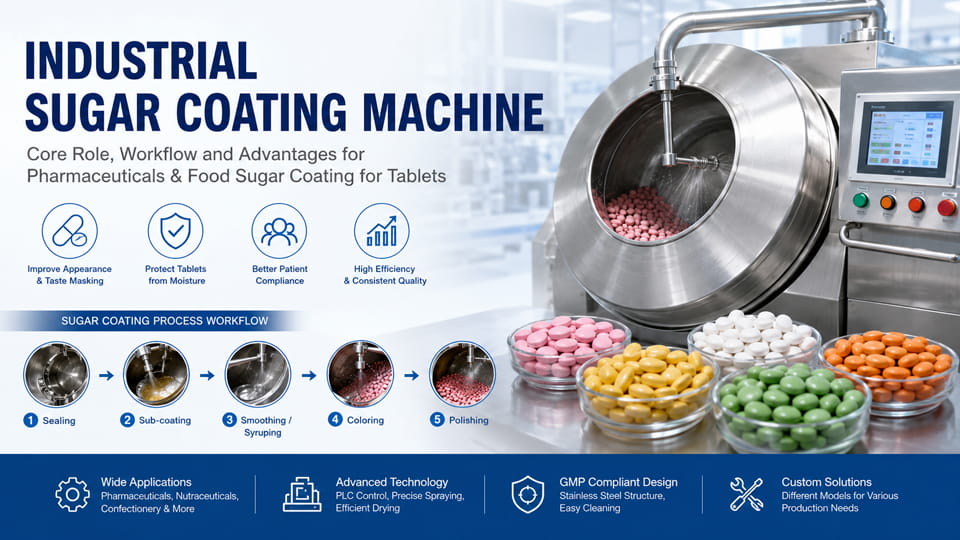
Εικόνα 3. Βιομηχανική μηχανή επικάλυψης tablet υψηλής ταχύτητας Jinlu. Τα δισκία πέφτουν μέσα καθώς το διάλυμα επικάλυψης ψεκάζεται και στεγνώνει. Χαρακτηριστικά όπως αναδευτήρες τύπου διαφράγματος και συστήματα κυκλοφορίας υλικού εξασφαλίζουν ομοιόμορφη κάλυψη και αποτελεσματική επίστρωση.
Τα βασικά χαρακτηριστικά που πρέπει να αναζητήσετε σε ένα coater περιλαμβάνουν:
Η επένδυση σε ποιοτικό εξοπλισμό αποδίδει: ένας καλός επιστρωτής επιτυγχάνει υψηλή ομοιομορφία επίστρωσης, ελάχιστα ελαττώματα, και μπορεί να τρέξει σε μεγαλύτερες ταχύτητες. Αυτό μειώνει τον χρόνο παραγωγής και την εργασία. Όπως σημειώνει ένα blog, Η σύγχρονη επίστρωση μεμβράνης «είναι πιο γρήγορη και πιο συνεπής από ποτέ,” χάρη στα αυτοματοποιημένα χειριστήρια και τα βελτιωμένα μηχανήματα.
Για να συνοψίσουμε, Εδώ είναι οι κύριες αντιθέσεις μεταξύ επικαλυμμένων και μη επικαλυμμένων δισκίων:
Τραπέζι 2 (παρακάτω) αναδεικνύει αυτές τις διαφορές. Σημειώστε ότι η επικάλυψη δεν είναι "καλύτερη" σε όλη την επιφάνεια - είναι καλύτερα όταν χρειάζεται επίστρωση. Όπως απαντά ένα FAQ: «Τα επικαλυμμένα δισκία είναι πάντα καλύτερα από τα μη επικαλυμμένα? Όχι – επικαλυμμένα δισκία χρησιμοποιούνται όταν υπάρχει λειτουργικός λόγος, όπως κάλυψη γεύσης ή προστασία. Όταν ένα σκεύασμα είναι σταθερό και εύγευστο, Τα μη επικαλυμμένα δισκία προτιμώνται συχνά λόγω απλότητας και κόστους»..
| Χαρακτηριστικό | Μη επικαλυμμένα δισκία | Επικαλυμμένα δισκία |
| Επιφάνεια | Ματ, ορατή σκόνη/κόκκοι | Λείος, γυαλιστερή ή έγχρωμη μεμβράνη |
| Γεύση/Οσμή | Πικρή ή δυσάρεστη μπορεί να είναι αισθητή | Η επίστρωση καλύπτει δυσάρεστες γεύσεις/οσμές |
| Ευκολία στην κατάποση | Συχνά πιο δύσκολο, ιδιαίτερα τα μεγάλα | Πιο εύκολο λόγω της λείας επιφάνειας |
| Προστασία (Υγρασία/Φως) | Απαιτεί ισχυρή συσκευασία | Η ταινία προσθέτει εμπόδιο, βελτιώνει τη σταθερότητα |
| Σταθερότητα φαρμάκων | Πιο ευάλωτο στην υγρασία, θερμότητα | Καλύτερη σταθερότητα και διάρκεια ζωής |
| Πολυπλοκότητα επεξεργασίας | Πιο απλή διαδικασία, λιγότερα βήματα | Απαιτείται πρόσθετο βήμα επίστρωσης |
| Χρόνος/Κόστος | Χαμηλότερο κόστος κατασκευής | Υψηλότερο αρχικό κόστος αλλά δυνητικά χαμηλότερο κόστος κύκλου ζωής |
| Έλεγχος απελευθέρωσης | Μόνο άμεση απελευθέρωση | Μπορεί να ενεργοποιήσει την καθυστερημένη ή ελεγχόμενη απελευθέρωση (εντερικός, παραπεταμένος) |
| Επωνυμία/Εμφάνιση | Περιωρισμένος (απλό χρώμα) | Μπορεί να είναι πολύχρωμο, τυπωμένο για επωνυμία |
Τραπέζι 2. Επικαλυμμένα vs Μη Επικαλυμμένα Δισκία: σύγκριση βασικών χαρακτηριστικών.
Στην πράξη, οι παρασκευαστές και οι κατασκευαστές αποφασίζουν με βάση τις ανάγκες του προϊόντος. Μερικές γενικές οδηγίες:
Μερικές φορές η απόφαση εξαρτάται από τη συσκευασία: Τα επικαλυμμένα δισκία γενικά έχουν καλύτερη απόδοση σε μπουκάλια ή βάζα επειδή ρίχνουν λιγότερη σκόνη. Σε φουσκάλες, οποιαδήποτε μορφή λειτουργεί, αλλά η επίστρωση μπορεί να επιτρέπει απλούστερη συσκευασία. Συμβασιούχοι κατασκευαστές (ΚΟΑ) ρωτούν συχνά: «Μπορούμε να κάνουμε αυτό το δισκίο χωρίς επικάλυψη?” και προσθέστε ένα βήμα επίστρωσης μόνο εάν είναι απαραίτητο.
Μια κοινή ερώτηση είναι εάν ένα επικαλυμμένο δισκίο μπορεί να σπάσει στη μέση ή να αλέσει. Γενικά, Όχι: Το σχίσιμο ή η σύνθλιψη ενός επικαλυμμένου δισκίου ακυρώνει το σκοπό του κελύφους. Μια επικάλυψη πολυμερούς προορίζεται για τον έλεγχο της απελευθέρωσης ή την προστασία του φαρμάκου. Η σύνθλιψή του αποκαλύπτει το φάρμακο ταυτόχρονα, που μπορεί να αλλάξει την απορρόφηση ή να προκαλέσει ερεθισμό. Επικαλυμμένα δισκία (ιδιαίτερα εντερικές ή παρατεταμένης αποδέσμευσης) πρέπει να παραμείνει ανέπαφο. Εάν χρειάζεται μικρότερη δόση, ελέγξτε αν το tablet έχει γραμμή σκορ (Κάποια δισκία άμεσης αποδέσμευσης το κάνουν) ή ρωτήστε έναν φαρμακοποιό. Όπως λέει ένα σημείωμα ειδικού: «Συνήθως όχι — η σύνθλιψη μπορεί να καταστρέψει το προστατευτικό στρώμα και να αλλάξει την απελευθέρωση του φαρμάκου. Πάντα να ελέγχετε πρώτα με έναν φαρμακοποιό».
Στο τέλος, επικαλυμμένα έναντι μη επικαλυμμένων δισκίων είναι μια αντιστάθμιση μεταξύ απλότητας και λειτουργικότητας. Τα μη επικαλυμμένα δισκία είναι φθηνότερα και πιο γρήγορα στην κατασκευή, αλλά αφήστε τον πυρήνα του φαρμάκου εκτεθειμένο. Τα επικαλυμμένα δισκία προσθέτουν πολυπλοκότητα και κόστος, αλλά προσφέρει σαφή οφέλη: καλύτερη σταθερότητα, κάλυψη γεύσης, καταποσιμότητα, και διαφοροποίηση της μάρκας. Στη σύγχρονη φαρμακευτική παραγωγή, τα περισσότερα χάπια καθημερινής χρήσης (βιταμίνες, OTC φάρμακα, διατροφικά) είναι επικαλυμμένα με λεπτό υμένιο γιατί επιτυγχάνει τη σωστή ισορροπία προστασίας και απόδοσης.
Ωστόσο, όποτε το επιτρέπει το σκεύασμα, Οι εταιρείες μπορεί να προτιμούν μη επικαλυμμένα δισκία για λόγους κόστους. Το κλειδί είναι να ταιριάζει με τον τύπο του δισκίου στις ανάγκες του φαρμάκου. Εάν το προϊόν σας απαιτεί κάλυψη γεύσης ή ελεγχόμενη απελευθέρωση, μια επίστρωση είναι συχνά απαραίτητη. Αν όχι, ένα απλό δισκίο μπορεί να αρκεί.
Για οποιεσδήποτε ερωτήσεις σχετικά με την επίστρωση tablet ή για να εξερευνήσετε επιλογές εξοπλισμού, απλώνω! Η ομάδα μας στο JinLuPacking ειδικεύεται στις πρέσες tablet, μηχανές επίστρωσης, και πλήρεις γραμμές παραγωγής tablet. Είτε χρειάζεστε ένα σύστημα επίστρωσης υψηλής ταχύτητας για φιλμ, ζάχαρη, ή εντερικές εφαρμογές, ή συμβουλές για τη βελτιστοποίηση της σύνθεσης του tablet σας, Είμαστε εδώ για να βοηθήσουμε. Επικοινωνήστε μαζί μας για προσφορά ή περισσότερες πληροφορίες, και ας διασφαλίσουμε ότι τα tablet σας έχουν το σωστό φινίρισμα και απόδοση.
Τα επικαλυμμένα δισκία έχουν ένα επιπλέον στρώμα (ταινία, ζάχαρη ή λειτουργικό πολυμερές) εφαρμόζεται πάνω από τον συμπιεσμένο πυρήνα, ενώ τα μη επικαλυμμένα δισκία είναι απλά συμπιεσμένα χάπια χωρίς κανένα εξωτερικό στρώμα. Η επίστρωση εξυπηρετεί λειτουργικούς σκοπούς: μπορεί να κρύψει τη γεύση, προστατεύστε το API από την υγρασία/φως, και έλεγχος απελευθέρωσης. Τα μη επικαλυμμένα δισκία διαλύονται αμέσως και είναι φθηνότερα στην παρασκευή τους, αλλά εκθέτουν το φάρμακο στο περιβάλλον και συχνά έχουν πικρή γεύση.
Τα δισκία είναι επικαλυμμένα για βελτίωση της σταθερότητας, αποδοχή από τον ασθενή, και απόδοση. Μια επίστρωση προστατεύει την υγρασία- ή φωτοευαίσθητα API, καλύπτει τις δυσάρεστες γεύσεις, και διευκολύνει την κατάποση του δισκίου. Εξειδικευμένες επικαλύψεις (σαν εντερικές ταινίες) μπορεί να καθυστερήσει την απελευθέρωση μέχρι το έντερο, πρόληψη του ερεθισμού του στομάχου. Εν συντομία, Η επίστρωση βελτιώνει την εμφάνιση και τη διάρκεια ζωής του δισκίου, και μπορεί να επιτρέψει την ελεγχόμενη χορήγηση φαρμάκων και την καλύτερη συμμόρφωση του ασθενούς.
Κανένα από τα δύο δεν είναι καθολικά "καλύτερο" - εξαρτάται από την εφαρμογή. Τα επικαλυμμένα δισκία έχουν το πλεονέκτημα της προστασίας και της ελκυστικότητας των ασθενών, αλλά κοστίζουν περισσότερο και απαιτούν επιπλέον επεξεργασία. Τα μη επικαλυμμένα δισκία είναι πιο απλά, ταχύτερος, και φθηνότερο στην παραγωγή, και απελευθερώνουν γρήγορα το φάρμακο. Για στάβλο, φάρμακο άμεσης αποδέσμευσης όπου το κόστος είναι προτεραιότητα, χωρίς επίστρωση μπορεί να είναι ιδανικό. Για ένα πικρό ή ευαίσθητο στην υγρασία φάρμακο όπου η κάλυψη της γεύσης και η σταθερότητα είναι προτεραιότητες, η επικάλυψη είναι η καλύτερη επιλογή.
Οι τρεις κύριες μέθοδοι επίστρωσης δισκίων είναι:
• Επικάλυψη φιλμ: Λεπτό πολυμερές στρώμα (συνήθως με βάση το νερό) εφαρμόζεται με ψεκασμό; πιο συνηθισμένο σήμερα. Προσφέρει προστασία από την υγρασία και μαρκάρισμα με ελάχιστη αύξηση βάρους.
• Επικάλυψη ζάχαρης: Παχύ κέλυφος ζάχαρης κατασκευασμένο από πολλαπλές στρώσεις σιροπιού; δίνει ένα γυαλιστερό φινίρισμα και η μάσκα έχει καλή γεύση, αλλά προσθέτει όγκο και απαιτεί μακρά επεξεργασία.
• Εντερική επίστρωση: Ένα φιλμ ευαίσθητο στο pH που αντιστέκεται στο οξύ του στομάχου και διαλύεται στα έντερα. Αυτό είναι τεχνικά ένας τύπος επίστρωσης μεμβράνης με ειδικά πολυμερή, χρησιμοποιείται για ασταθή στα οξέα φάρμακα ή για την αποφυγή γαστρικού ερεθισμού.
Τα επικαλυμμένα με λεπτό υμένιο δισκία κερδίζουν τα περισσότερα από τα βασικά πλεονεκτήματα επικάλυψης με λεπτότερο κέλυφος. Μια καλή υδατική επίστρωση μεμβράνης θα προστατεύσει το φάρμακο (φράγμα υγρασίας/φωτός), γεύση και οσμή μάσκας, και βελτιώστε την αισθητική χωρίς να αυξήσετε σημαντικά το μέγεθος του tablet. Οι επικαλύψεις μεμβράνης στεγνώνουν γρήγορα σε μοντέρνα επιστρώματα, δίνοντας υψηλή απόδοση. Μπορούν επίσης να διαμορφωθούν για συγκεκριμένα προφίλ απελευθέρωσης (εντερική ή παρατεταμένη) με επιλογή πολυμερούς.
Γενικά, Ναί. Τα μη επικαλυμμένα δισκία συνήθως αποσυντίθενται και διαλύονται πιο γρήγορα επειδή δεν υπάρχει στρώμα φραγμού. Το API εκτίθεται αμέσως σε γαστρικά υγρά, οδηγώντας σε πιο γρήγορη έναρξη. Σε αντίθεση, Ακόμη και μια στρώση μεμβράνης άμεσης απελευθέρωσης προσθέτει μια μικρή καθυστέρηση (καθώς το τρίχωμα πρέπει πρώτα να διαλυθεί). Ωστόσο, η διαφορά μπορεί να είναι μικρή ανάλογα με τη σύνθεση και το πάχος της επίστρωσης.
Ο κοινός εξοπλισμός επίστρωσης περιλαμβάνει:
• Διάτρητα βερνίκια ταψιού (Coaters υψηλής ταχύτητας): Μηχανήματα βιομηχανικών προτύπων με περιστρεφόμενα διάτρητα τύμπανα. Ο θερμός αέρας ρέει μέσα από το τύμπανο, επιτρέποντας υψηλή απόδοση στεγνώματος και ομοιόμορφη επίστρωση.
• Βαλβάρια κρεβατιού υγρού: Τα δισκία αιωρούνται σε ένα ρεύμα αέρα και ψεκάζονται από κάτω ή πάνω. Κατάλληλο για πέλλετ ή μικρά δισκία με πολύ ομοιόμορφα λεπτά στρώματα.
• Τηγάνια παραδοσιακής επίστρωσης: Μεγάλα ανοιχτά ταψιά που χρησιμοποιούνται κυρίως για επικάλυψη ζάχαρης (έντασης εργασίας και ως επί το πλείστον απαρχαιωμένο στη σύγχρονη φαρμακευτική).
Κάθε τύπος μηχανής επιλέγεται με βάση το μέγεθος παρτίδας, μέγεθος/σχήμα δισκίου, και υλικό επίστρωσης. Για επίστρωση φιλμ μεγάλης κλίμακας, διάτρητα τηγάνια (όπως η μηχανή επικάλυψης tablet της Jinlu) είναι πιο κοινά.
Η επικάλυψη μπορεί να καθυστερήσει ή να τροποποιήσει την απελευθέρωση του φαρμάκου. Μια εντερική επίστρωση εμποδίζει την απελευθέρωση του οξέος του στομάχου, έτσι το φάρμακο απελευθερώνεται μόνο στο έντερο. Άλλες ειδικές επιστρώσεις (ταινίες παρατεταμένης κυκλοφορίας) περιέχουν πολυμερή που επιβραδύνουν τη διείσδυση των υγρών, τεντώνοντας την απελευθέρωση σε ώρες. Ακόμα και μη λειτουργικά φιλμ (για άμεση απελευθέρωση) μπορεί να επιβραδύνει ελαφρώς την απελευθέρωση σε σύγκριση με έναν μη επικαλυμμένο πυρήνα, γιατί το φράγμα πρέπει πρώτα να διαλυθεί. Ετσι, Οι επικαλύψεις παρέχουν ένα εργαλείο για να ρυθμίσετε με ακρίβεια πού και πόσο γρήγορα παραδίδεται το API.
Οι επικαλύψεις μεμβράνης είναι ευέλικτες και αποτελεσματικές. Προστατεύουν το φάρμακο και βελτιώνουν τη γεύση/εμφάνιση με ελάχιστο χρόνο επεξεργασίας. Οι σύγχρονες υδατικές επιστρώσεις μεμβράνης στεγνώνουν γρήγορα, που είναι απαραίτητο για την παραγωγή υψηλής απόδοσης. Επιτρέπουν επίσης την προσθήκη χρωμάτων και αναγνωριστικών, βοηθώντας τη διαφοροποίηση της μάρκας. Επειδή μπορούν να σχεδιαστούν για διαφορετικά προφίλ απελευθέρωσης, Οι επικαλύψεις μεμβράνης είναι ένα πλεονέκτημα για τις φαρμακευτικές εταιρείες που θέλουν να προσφέρουν τόσο ποιότητα όσο και απόδοση στα δισκία τους.
Οι εταιρείες αξιολογούν πολλούς παράγοντες. Εάν το φάρμακο είναι ασταθές, πικρός, ή χρειάζεται προστασία στομάχου (εντερική απελευθέρωση), επιλέγουν επικαλυμμένα δισκία. Εάν το σκεύασμα είναι ήδη σταθερό, η γεύση είναι αποδεκτή, και η ελαχιστοποίηση του κόστους είναι προτεραιότητα, πάνε με ακάλυπτο. Όπως συνοψίζει ένας οδηγός του κλάδου: χρησιμοποιήστε επικαλυμμένα δισκία εάν «χρειάζεστε κάλυψη γεύσης,” “προστασία από την υγρασία, φως ή οξείδωση,» ή «ελεγχόμενη/καθυστερημένη απελευθέρωση»; επιλέξτε μη επικαλυμμένο εάν η φόρμουλα σας είναι σταθερή και δεν χρειάζεται επιπλέον προστασία. Ουσιαστικά, η απόφαση βασίζεται στις απαιτήσεις του προϊόντος (Χημεία API, απελευθέρωση στόχου, ανάγκες μάρκετινγκ) έναντι των εκτιμήσεων παραγωγής (κόστος, διαθεσιμότητα εξοπλισμού).
Αναφορές:
1.Φαρμακευτική Εφαρμογή Επικάλυψης Φιλμ Δισκίου —— Εθνική Βιβλιοθήκη Ιατρικής
2.Επικάλυψη tablet —— Πανεπιστήμιο Χημικών Μηχανικών του Μίσιγκαν
3.Επικάλυψη tablet: Μηχανική Συστημάτων Διεργασιών για Φαρμακευτική Παραγωγή —— ScienceDirect
4.Η Φαρμακευτική Επικάλυψη και οι Διαφορετικές της Προσεγγίσεις, μια κριτική —— Εθνική Βιβλιοθήκη Ιατρικής
5.Μια ολοκληρωμένη ανασκόπηση για τη φαρμακευτική επίστρωση φιλμ: Το παρελθόν, Παρόν, και Μέλλον —— Εθνική Βιβλιοθήκη Ιατρικής
6.Φαρμακευτική Εφαρμογή Επικάλυψης Φιλμ Δισκίου —— MDPI
7.Πρόοδος στις τεχνολογίες κατασκευής tablet: Κεφάλαιο 10 – Τεχνολογίες επικαλυμμένων δισκίων —— ScienceDirect