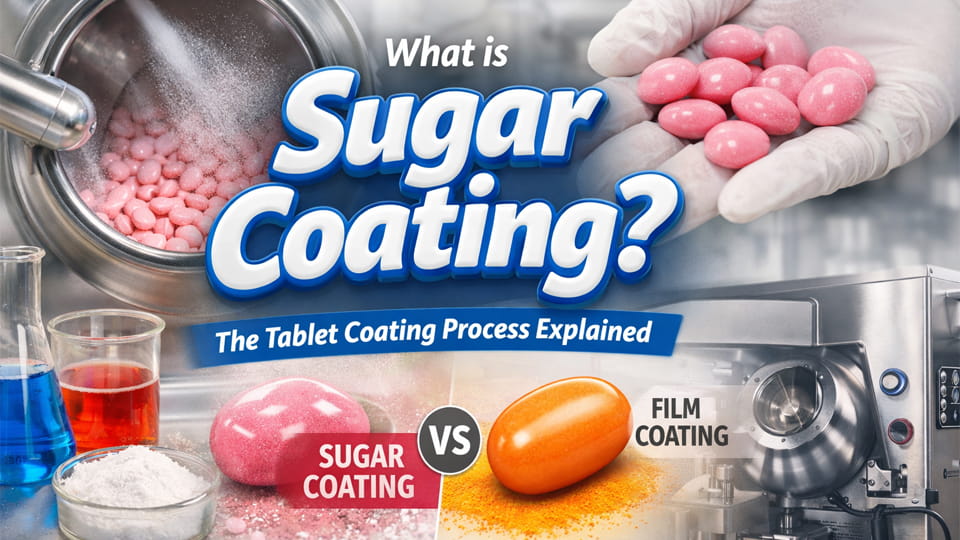

Επιστρώσεις δισκίων (υδατικό ή φιλμ διαλύτη, εντερικές ή σακχαρώδεις στιβάδες) προστατεύουν τα φάρμακα και βελτιώνουν την εμφάνιση. Ένα ομοιόμορφο φιλμ κάνει τα δισκία πιο εύκολα στην κατάποση και ελέγχει την απελευθέρωση του φαρμάκου. Όμως, οι αστοχίες επίστρωσης –μικρά ελαττώματα – μπορεί να προκαλέσουν μεγάλα προβλήματα: ασταθής απελευθέρωση φαρμάκου, απόρριψη παρτίδας, επιπλέον κόστος. Για παράδειγμα, ένα εντερική επικάλυψη χάπι με ρωγμές θα μπορούσε να απελευθερώσει ευαίσθητο σε οξύ API πολύ νωρίς, ενώ φτωχός επικάλυψη ταινιών Το πάχος μπορεί να αλλάξει τα προφίλ απελευθέρωσης. Τα κοινά ελαττώματα επίστρωσης δισκίων είναι κυρίως καλλυντικό (εμφάνιση επιφάνειας) αλλά μερικά είναι λειτουργικά (π.χ.. τρύπες καρφιών σε επιστρώσεις τροποποιημένης αποδέσμευσης).
Τα ελαττώματα προκύπτουν όταν τα σταγονίδια δεν εξαπλώνονται και στεγνώνουν σωστά, ή όταν η πρόσφυση του φιλμ αποτυγχάνει. Γενικά, προβλήματα επίστρωσης δισκίων προέρχονται από τρεις πηγές: η σύνθεση του φιλμ (λάθος τύπο πολυμερούς ή χαμηλό πλαστικοποιητή), ρυθμίσεις διαδικασίας (ρυθμός ψεκασμού, θερμοκρασία αέρα, ταχύτητα), και πυρήνες tablet (πορώδης, μαλακά ή ακανόνιστα δισκία). Για παράδειγμα, μια μεμβράνη με πολύ λίγο πλαστικοποιητή ρωγμές, ενώ η υπερβολική ποσότητα προκαλεί κολλητικότητα. Τα καλά νέα: Τα περισσότερα ελαττώματα μπορούν να αποφευχθούν με την προσαρμογή των παραμέτρων του εξοπλισμού και της σύνθεσης.
Σύγχρονο αυτόματο μηχανές επικάλυψης δισκίων (επιστρώσεις με διάτρητο ταψί) χρησιμοποιήστε στρωτή ροή αέρα και πιστόλια ψεκασμού ακριβείας για να εξασφαλίσετε ομοιόμορφο στέγνωμα και απαλό τύλιγμα. Βαλωτή υψηλής ταχύτητας JinLu, για παράδειγμα, διαθέτει ένα σύστημα θερμού αέρα με στρωτή ροή που διανέμει ομοιόμορφα τη θερμότητα μέσω του τοιχώματος του τυμπάνου, ελαχιστοποίηση των κλίσεων θερμοκρασίας (μια ανομοιόμορφη ξηρή στρώση προκαλεί κόλλημα, συλλογή, φλούδα πορτοκαλιού ή φουσκάλες).
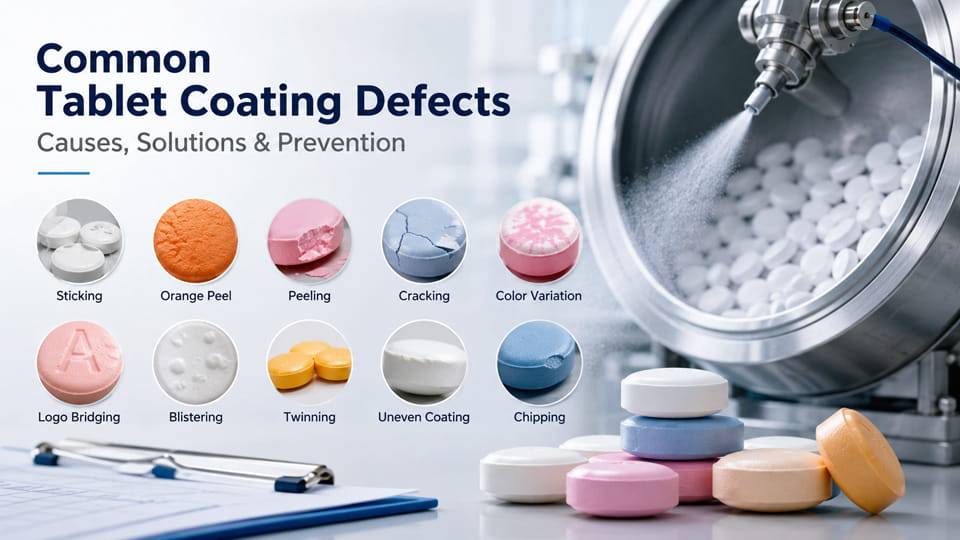
Τα ελαττώματα της επίστρωσης του tablet είναι οποιεσδήποτε ανεπιθύμητες ατέλειες στην εξωτερική στρώση μεμβράνης μετά την επίστρωση. Περιλαμβάνουν μηχανικά ελαττώματα (ρωγμές, πατατάκια, φλούδες) και οπτικά ελαττώματα (υφή φλούδας πορτοκαλιού, στίγματα, χρωματική παραλλαγή, θολά λογότυπα). Αυτά τα ελαττώματα θέτουν σε κίνδυνο την ποιότητα: ακόμα κι αν το περιεχόμενο του φαρμάκου είναι καλό, ένα κηλιδωμένο ή κατεστραμμένο δισκίο φαίνεται αντιεπαγγελματικό και μπορεί να απορριφθεί από τους επιθεωρητές. Δεν είναι όλα τα ελαττώματα καθαρά αισθητικά – λειτουργικά ελαττώματα (π.χ.. τρύπες καρφίτσας, φτωχό φράγμα υγρασίας, ή σπασμένο εντερικό χιτώνα) μπορεί να αλλάξει την απελευθέρωση ή τη σταθερότητα του φαρμάκου.
Οι ειδικοί ταξινομούν τα ελαττώματα επίστρωσης σε κατηγορίες: Το Jinlupacking τα χωρίζει σε μηχανικός (π.χ.. ράγισμα, θρυμματισμός λόγω εύθραυστου φιλμ), οπτικός (φλούδα πορτοκαλιού, ραβδώσεις από ζητήματα τυποποίησης), που προκαλείται από τη διαδικασία (κόλλημα, αδελφοποίηση που προκαλείται από κολλώδες φιλμ), και λειτουργικός (τρύπες ή ελλιπείς επικαλύψεις που επηρεάζουν την απελευθέρωση του φαρμάκου). Με απλά λόγια, κάθε φορά που η επίστρωση δεν καλύπτει πλήρως και ομοιόμορφα το κρεβάτι του δισκίου υπό τις επιλεγμένες συνθήκες, μπορεί να προκύψει ελάττωμα.
Τα ελαττώματα επίστρωσης προκύπτουν όταν οι βασικές μεταβλητές είναι εκτός προδιαγραφών. Οι τέσσερις κύριοι παράγοντες είναι:
Στην πράξη, ένα ελάττωμα έχει συχνά πολλαπλές αιτίες. Για παράδειγμα, φλούδα πορτοκαλιού συμβαίνει όταν τα σταγονίδια στεγνώνουν πολύ γρήγορα στην επιφάνεια του tablet – τα οποία μπορεί να προέρχονται από πολύ ζεστό αέρα εισόδου και/ή πολύ υψηλός ρυθμός ψεκασμού και/ή πολύ παχύρρευστη φόρμουλα. Ως εκ τούτου, οι προληπτικές ενέργειες πρέπει να ελέγχουν τη διαδικασία στο σύνολό της, καθώς και το σκεύασμα.
Ακόμη και με μια καλά σχεδιασμένη διαδικασία επίστρωσης tablet και προηγμένη εξοπλισμός φαρμακευτικής επίστρωσης, προβλήματα επίστρωσης μπορεί να παρουσιαστούν ακόμα κατά την παραγωγή. Στις περισσότερες περιπτώσεις, αυτά τα ζητήματα δεν προκαλούνται από έναν μόνο παράγοντα. Η τελική ποιότητα επίστρωσης εξαρτάται από πολλές μεταβλητές, συμπεριλαμβανομένων των ιδιοτήτων του πυρήνα του tablet, υλικό επικάλυψης δισκίων, παραμέτρους ψεκασμού, συνθήκες ξήρανσης, και την απόδοση της μηχανής επικάλυψης tablet.
Η κατανόηση της βασικής αιτίας κάθε ελαττώματος είναι το κλειδί για τη βελτίωση της συνοχής της επίστρωσης και τη μείωση των παρτίδων που απορρίπτονται.
Παρακάτω παρουσιάζονται μερικά από τα πιο κοινά ελαττώματα επίστρωσης δισκίων που εντοπίζονται στη φαρμακευτική παρασκευή και πρακτικοί τρόποι επίλυσής τους.
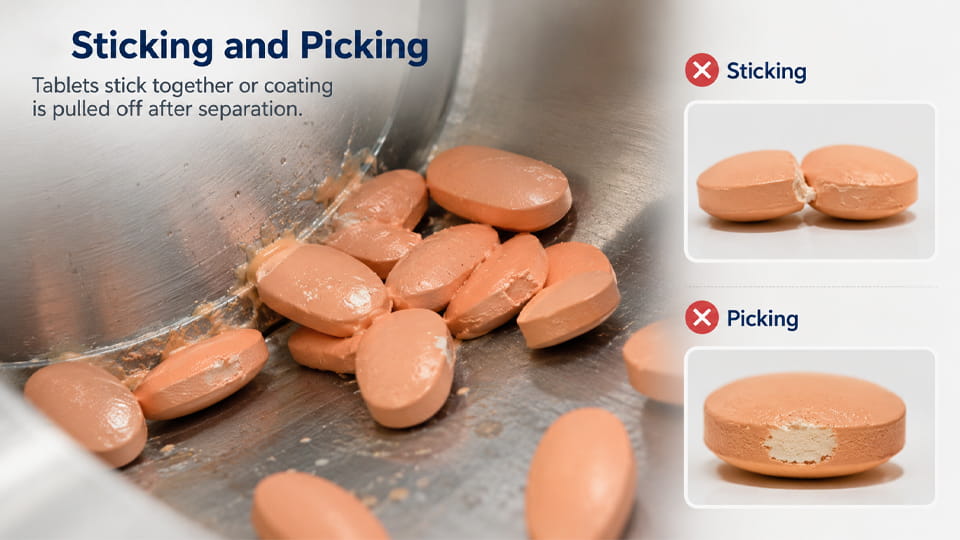
Το κόλλημα και το μάζεμα είναι από τα πιο συχνά αναφερόμενα προβλήματα επίστρωσης δισκίων, ειδικά κατά τη διάρκεια των διαδικασιών επίστρωσης μεμβράνης.
Κολλώντας συμβαίνει όταν τα δισκία συνδέονται μεταξύ τους, το ταψί επικάλυψης, ή άλλες επιφάνειες μηχανής κατά τη διάρκεια της διαδικασίας επίστρωσης. Συλλογή εμφανίζεται όταν μέρος της μεμβράνης επικάλυψης του δισκίου τραβιέται μακριά από την επιφάνεια του δισκίου μετά τον διαχωρισμό.
Αυτό το ελάττωμα μπορεί να επηρεάσει σοβαρά την εμφάνιση του tablet και μπορεί να οδηγήσει σε ασυνεπή ποιότητα του προϊόντος.
Κοινές αιτίες:
Πρακτικές λύσεις:
Για την επίλυση προβλημάτων κολλήματος και διαλογής, Οι κατασκευαστές θα πρέπει πρώτα να ελέγξουν την ισορροπία μεταξύ ψεκασμού και στεγνώματος.
Πιθανές βελτιώσεις περιλαμβάνουν:
Μια σωστά βελτιστοποιημένη μηχανή επίστρωσης δισκίων θα πρέπει να διατηρεί μια σταθερή σχέση μεταξύ εφαρμογής ψεκασμού και απόδοσης στεγνώματος.
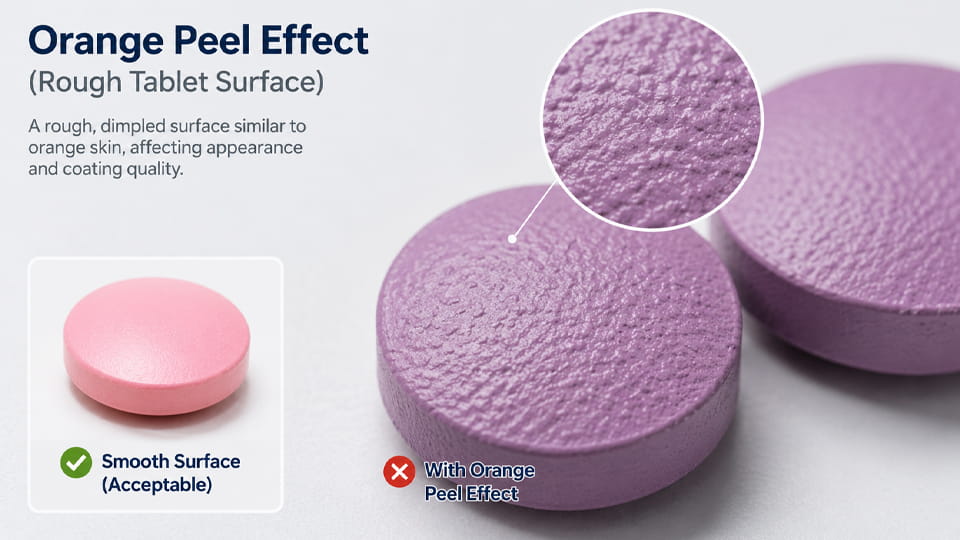
Το φαινόμενο φλούδας πορτοκαλιού είναι ένα κοινό ελάττωμα επίστρωσης μεμβράνης όπου τα δισκία αναπτύσσουν τραχύτητα, ανώμαλη επιφάνεια αντί για λεία και γυαλιστερή εμφάνιση.
Το όνομα προέρχεται από την υφή της επιφάνειας, που μοιάζει με το δέρμα ενός πορτοκαλιού.
Αυτό το ελάττωμα σχετίζεται κυρίως με την κακή εξάπλωση του διαλύματος επικάλυψης πριν τα σταγονίδια στεγνώσουν εντελώς.
Κοινές αιτίες:
Πρακτικές λύσεις:
Οι κατασκευαστές μπορούν να βελτιώσουν την ποιότητα της επιφάνειας με:
Για προϊόντα που απαιτούν εμφάνιση υψηλής ποιότητας, όπως επώνυμα φάρμακα ή premium διατροφικά δισκία, Η πρόληψη ελαττωμάτων φλοιού πορτοκαλιού είναι ιδιαίτερα σημαντική.
Το ξεφλούδισμα συμβαίνει όταν το φιλμ επικάλυψης διαχωρίζεται από τον πυρήνα του δισκίου. Σε σοβαρές περιπτώσεις, κομμάτια επίστρωσης μπορεί να αποκολληθούν από την επιφάνεια.
Αυτό το πρόβλημα μπορεί να επηρεάσει όχι μόνο την εμφάνιση αλλά και την προστατευτική λειτουργία της επίστρωσης.
Για παράδειγμα, τα δισκία με εντερική επικάλυψη βασίζονται σε ένα συνεχές και σταθερό στρώμα επικάλυψης για την προστασία του δραστικού συστατικού από το οξύ του στομάχου. Οποιαδήποτε ζημιά στο φιλμ επίστρωσης μπορεί να επηρεάσει την απόδοση του προϊόντος.
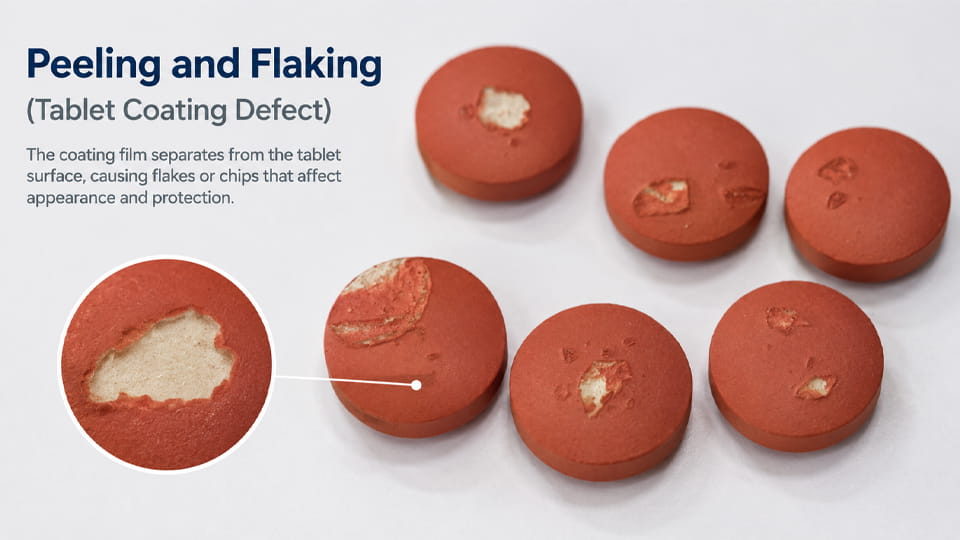
Κοινές αιτίες:
Πρακτικές λύσεις:
Για τη μείωση των προβλημάτων απολέπισης:
Μια σταθερή σύνθεση επίστρωσης σε συνδυασμό με τον ακριβή έλεγχο της διαδικασίας μπορεί να βελτιώσει σημαντικά την πρόσφυση του φιλμ.
Το ράγισμα συμβαίνει όταν η πίεση στο εσωτερικό του φιλμ επίστρωσης γίνεται υψηλότερη από την αντοχή του φιλμ.
Συνήθως εμφανίζεται ως ορατές ρωγμές στην επιφάνεια του tablet, ειδικά γύρω από τις άκρες ή τα λογότυπα του tablet.
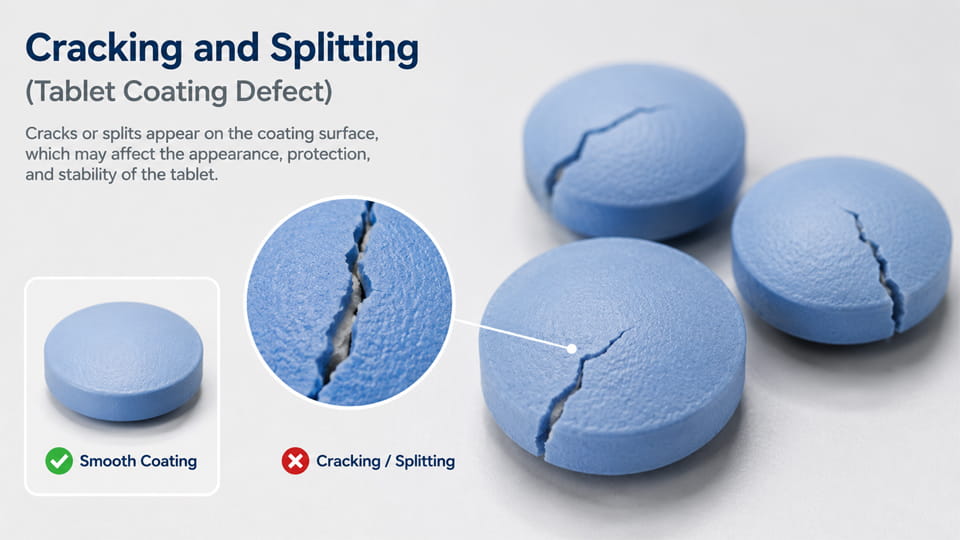
Κοινές αιτίες:
Πρακτικές λύσεις:
Οι κατασκευαστές μπορούν να μειώσουν το ράγισμα κατά:
Για παραγωγή μεγάλου όγκου, Η διατήρηση σταθερής ευελιξίας επίστρωσης είναι απαραίτητη για την αποφυγή διαφοροποιήσεων κατά παρτίδες.
Η χρωματική διακύμανση είναι ένα κοινό πρόβλημα για τα έγχρωμα επικαλυμμένα με λεπτό υμένιο δισκία και δισκίο επικαλυμμένο με ζάχαρη προϊόντα.
Εμφανίζεται όταν τα δισκία από την ίδια παρτίδα εμφανίζουν ασυνεπή χρωματική ένταση ή ανομοιόμορφη κατανομή επικάλυψης.
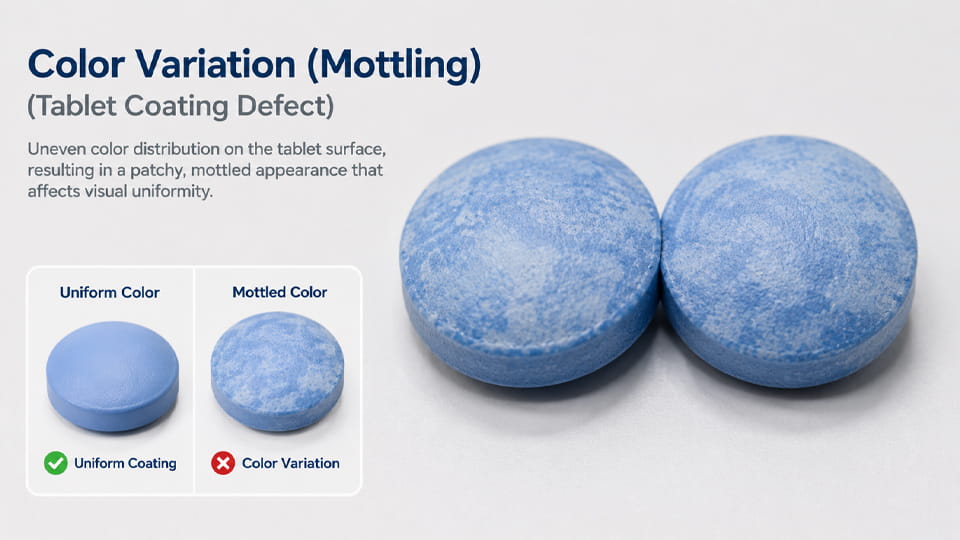
Κοινές αιτίες:
Πρακτικές λύσεις:
Για τη βελτίωση της συνοχής των χρωμάτων:
Για κατασκευαστές που παράγουν οπτικά αναγνωρίσιμα φάρμακα, Το σταθερό χρώμα είναι μια σημαντική απαίτηση ποιότητας.
Πολλά φαρμακευτικά δισκία περιέχουν λογότυπα, γράμματα, ή σκοράρετε γραμμές. Κατά την επίστρωση, αυτές οι λεπτομέρειες μπορεί να γίνουν ασαφείς λόγω της υπερβολικής συσσώρευσης επίστρωσης.
Αυτό το πρόβλημα είναι γνωστό ως γεφύρωση ή πλήρωση λογότυπου.
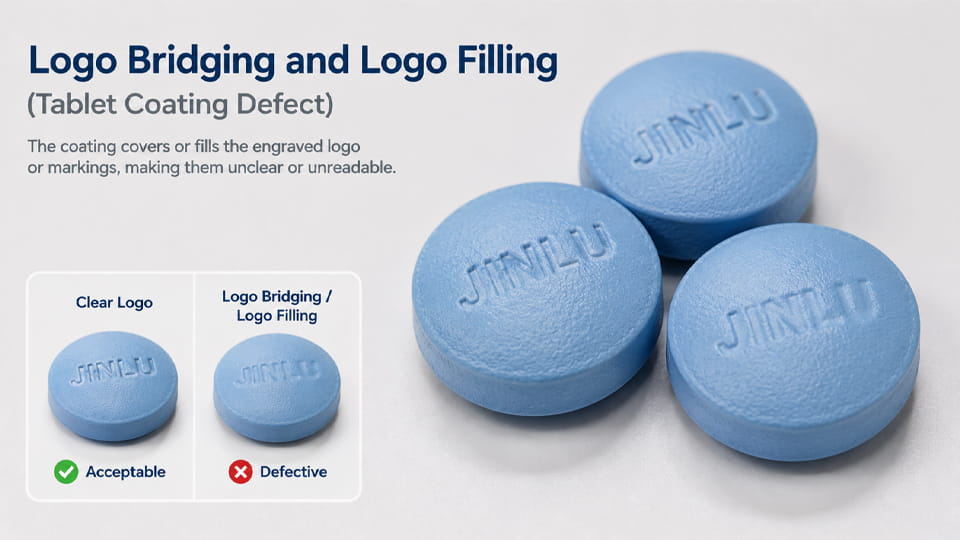
Κοινές αιτίες:
Πρακτικές λύσεις:
Οι κατασκευαστές μπορούν να αποτρέψουν τη γεφύρωση λογότυπου:
Αυτό είναι ιδιαίτερα σημαντικό για επώνυμα tablet, όπου τα αναγνωριστικά σημάδια πρέπει να παραμένουν καθαρά.
Οι φουσκάλες εμφανίζονται όταν το φιλμ επικάλυψης διαχωρίζεται από την επιφάνεια του δισκίου και σχηματίζει μικρές φυσαλίδες ή ανυψωμένες περιοχές.
Αυτό συμβαίνει συνήθως επειδή παγιδεύεται υγρασία ή αέρας κάτω από το στρώμα επικάλυψης.
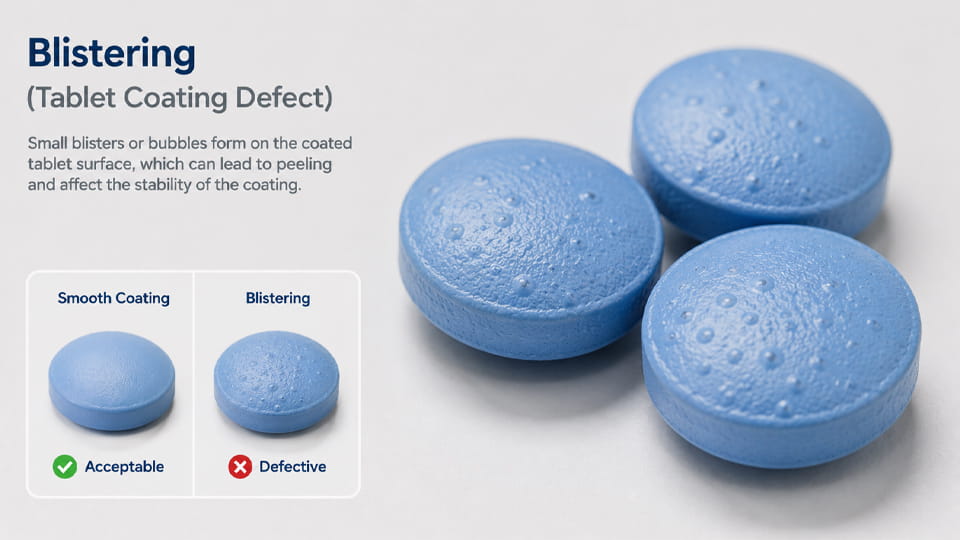
Κοινές αιτίες:
Πρακτικές λύσεις:
Πιθανές βελτιώσεις περιλαμβάνουν:
Ο προσεκτικός έλεγχος της διαδικασίας ξήρανσης είναι απαραίτητος για την παραγωγή σταθερών επικαλυμμένων με λεπτό υμένιο δισκίων.
Η αδελφοποίηση αναφέρεται σε δύο ή περισσότερα δισκία που κολλάνε μεταξύ τους κατά τη διαδικασία επικάλυψης.
Αυτό το ελάττωμα αυξάνει τα απόβλητα παραγωγής και μπορεί να μειώσει την απόδοση της συσκευασίας.
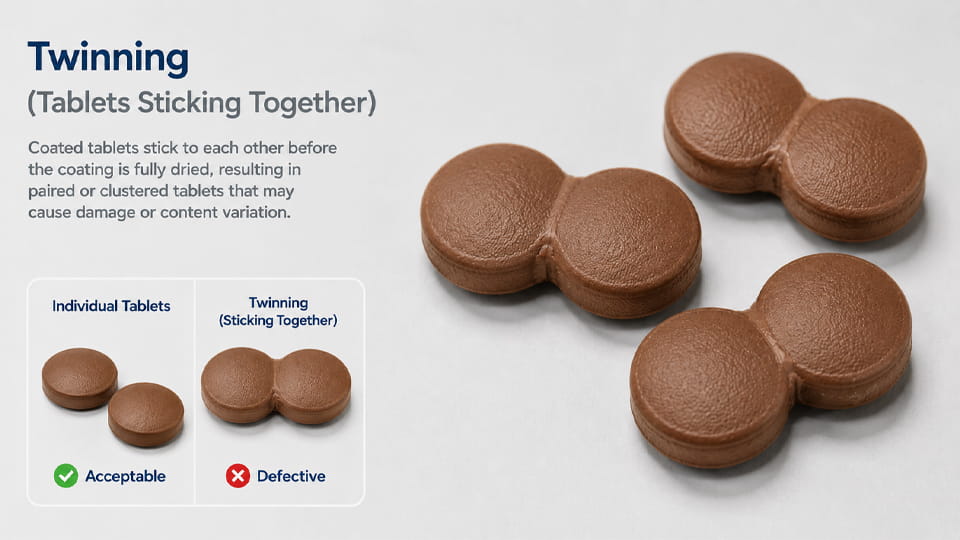
Κοινές αιτίες:
Πρακτικές λύσεις:
Για την πρόληψη της αδελφοποίησης:
Η σωστή κίνηση του tablet είναι ένας από τους πιο σημαντικούς παράγοντες που εμποδίζουν τα tablet να έρχονται σε επαφή μεταξύ τους για πολύ μεγάλο χρονικό διάστημα.
Το ομοιόμορφο πάχος επίστρωσης είναι κρίσιμο για τη φαρμακευτική απόδοση, ειδικά για δισκία με εντερική επικάλυψη και προϊόντα ελεγχόμενης αποδέσμευσης.
Η ανομοιόμορφη επίστρωση μπορεί να προκαλέσει διαφορές στην εμφάνιση, σταθερότητα, ή απόδοση απελευθέρωσης φαρμάκου.
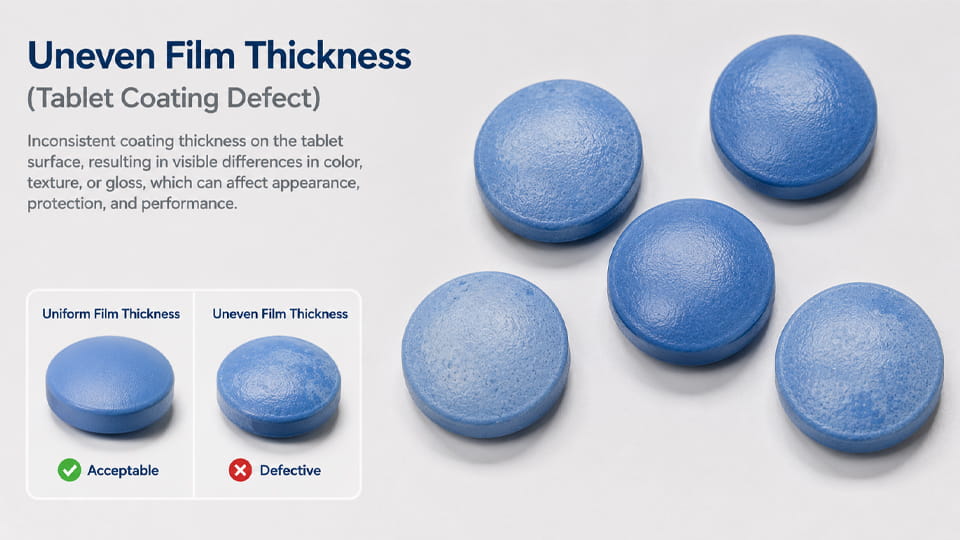
Κοινές αιτίες:
Πρακτικές λύσεις:
Οι κατασκευαστές θα πρέπει:
Ένας αξιόπιστος σχεδιασμός εξοπλισμού φαρμακευτικής επίστρωσης βοηθά στη διατήρηση σταθερού πάχους επίστρωσης σε όλη την παρτίδα.
Το θρυμματισμό συμβαίνει όταν το φιλμ επικάλυψης αποκολλάται από τις άκρες του δισκίου κατά την επεξεργασία.
Αυτό συμβαίνει συνήθως επειδή τα δισκία υφίστανται υπερβολική μηχανική κρούση ή το φιλμ επικάλυψης δεν έχει επαρκή αντοχή.
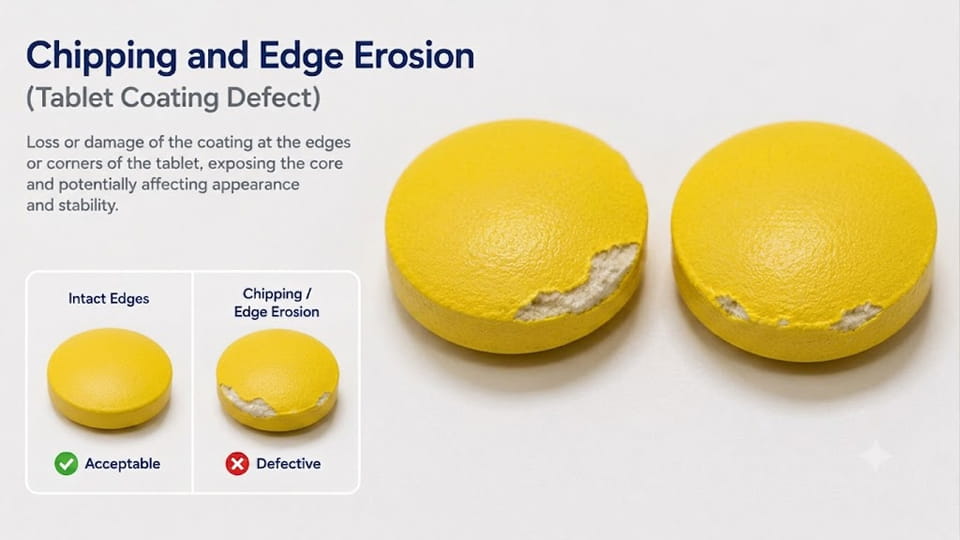
Κοινές αιτίες:
Πρακτικές λύσεις:
Για να μειωθεί η ζημιά στις άκρες:
Ο σωστός συντονισμός μεταξύ της σύνθεσης του δισκίου και των ρυθμίσεων του εξοπλισμού επίστρωσης είναι απαραίτητος για την αποφυγή αυτού του προβλήματος.
Τα περισσότερα ελαττώματα επίστρωσης δισκίων δεν προκαλούνται από ένα μόνο πρόβλημα. Συνήθως προκύπτουν από την αλληλεπίδραση μεταξύ της σύνθεσης, ρυθμίσεις εξοπλισμού, και συνθήκες λειτουργίας.
Μια επιτυχημένη διαδικασία επίστρωσης απαιτεί προσεκτικό έλεγχο:
Με την κατανόηση της σχέσης μεταξύ αυτών των παραγόντων, Οι κατασκευαστές φαρμακευτικών προϊόντων μπορούν να βελτιώσουν την ποιότητα της επίστρωσης, μείωση των απορριμμάτων παραγωγής, και να επιτύχετε πιο σταθερές παρτίδες.
Η πρόληψη είναι ευκολότερη από τη θεραπεία. Εδώ είναι οι βέλτιστες πρακτικές:
Με την ελαχιστοποίηση της διακύμανσης, τα ελαττώματα γίνονται σπάνια. Όπως λέει μια κατευθυντήρια γραμμή του κλάδου, «Όσο πιο συνεπείς κάνετε τις λειτουργίες και το tablet, τόσο λιγότερο πρέπει να βασίζεστε στις δεξιότητες χειριστή».
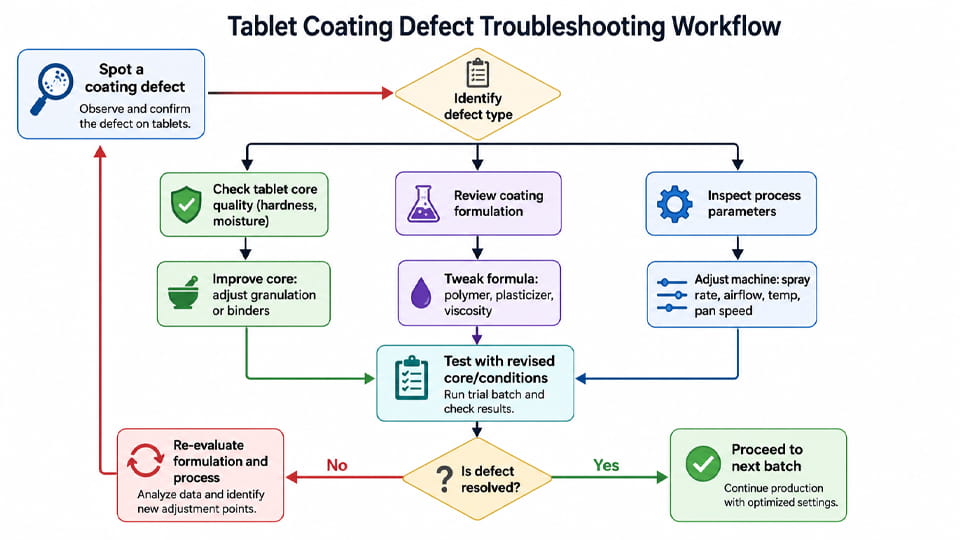
Το παραπάνω διάγραμμα ροής περιγράφει τα βήματα αντιμετώπισης προβλημάτων: προσδιορίστε τον τύπο του ελαττώματος, στη συνέχεια ελέγξτε τις σχετικές παραμέτρους (σπρέι, ξήρανση, τύπος) και προσαρμόστε ανάλογα, στη συνέχεια κάντε ξανά δοκιμή μέχρι να επιλυθεί.
Ο σωστός σχεδιασμός εξοπλισμού είναι ζωτικής σημασίας. Προχωρημένος μηχανές επικάλυψης δισκίων προσφέρουν χαρακτηριστικά που καταπολεμούν άμεσα ελαττώματα:

Επενδύοντας σε α υψηλής ποιότητας φαρμακευτικό σύστημα επίστρωσης (όπως τα μηχανήματα της JinLuPacking), Οι χρήστες λαμβάνουν εξοπλισμό που μειώνει εγγενώς τον κίνδυνο ελαττωμάτων. Για παράδειγμα, Το μηχάνημα του JinLu «... διασφαλίζει ότι το φάρμακο έχει καλύτερη εμφάνιση, πιο σταθερές ιδιότητες και πιο ελεγχόμενη απελευθέρωση». Το σύστημα κυκλοφορίας του υλικού και τα διαφράγματα βελτιώνουν περαιτέρω την ομοιομορφία της επίστρωσης. Αυτό σημαίνει ότι χρειάζονται λιγότερες ανθρώπινες προσαρμογές κατά τη διάρκεια των τρεξίματος, μεταφράζεται σε περισσότερες καλές παρτίδες και λιγότερα απόβλητα.
Τα ελαττώματα στην επικάλυψη του δισκίου συνήθως προέρχονται από ανισορροπίες υλικού ή διεργασιών. Απαιτείται μια ολιστική προσέγγιση αντιμετώπισης προβλημάτων: προσαρμόστε τις παραμέτρους ψεκασμού/ξήρανσης, τελειοποιήστε τη σύνθεση, και εξασφαλίστε καλούς πυρήνες tablet. Ο σύγχρονος εξοπλισμός προχωρά πολύ – τα βερνίκια υψηλής ποιότητας με ακριβή έλεγχο θα μειώσουν δραματικά αυτά τα προβλήματα. Στην πράξη, τακτική συντήρηση, συνεπείς διαδικασίες (Πρότυπα GMP) και η παρακολούθηση σε πραγματικό χρόνο είναι το κλειδί για την αποφυγή ελαττωμάτων.
Εάν αντιμετωπίζετε επίμονα προβλήματα επίστρωσης ή σχεδιάζετε μια νέα γραμμή, θεωρώ αναβάθμιση της μηχανής επίστρωσής σας. JinLuPacking's αυτόματες μηχανές επικάλυψης δισκίων έχουν σχεδιαστεί για να παρέχουν ομοιόμορφες επιστρώσεις και υποστηρίζονται από εξειδικευμένη τεχνική υπηρεσία. Για παράδειγμα, Οι πελάτες που άλλαξαν στο υψηλής ταχύτητας coater της JinLu αναφέρουν πολλά πιο λεία φινιρίσματα, ακριβής χρωματική συνέπεια, και υψηλότερη απόδοση.
Ψάχνετε για ένα αξιόπιστο φαρμακευτική μηχανή επικάλυψης δισκίων ή τεχνική υποστήριξη? Επικοινωνήστε με την JinLuPacking για λύσεις επαγγελματικού εξοπλισμού επίστρωσης. Η ομάδα μας μπορεί να βοηθήσει στη βελτιστοποίηση των παραμέτρων της διαδικασίας σας και να παρέχει εξοπλισμό (επικαλύψεις τηγανιών, επικαλύψεις ζάχαρης, και τα λοιπά.) για την αποφυγή ελαττωμάτων επίστρωσης.
Τα πιο συνηθισμένα ελαττώματα επίστρωσης δισκίων περιλαμβάνουν το κόλλημα και το μάζεμα, εφέ φλούδας πορτοκαλιού, ξεφλούδισμα, ράγισμα, χρωματική παραλλαγή, γεφύρωση λογότυπου, φουσκάλες, αδελφοποίηση, ανομοιόμορφο πάχος επίστρωσης, και διάβρωση ακμών.
Αυτά τα προβλήματα συμβαίνουν συνήθως λόγω ακατάλληλων παραμέτρων ψεκασμού, λανθασμένες συνθήκες στεγνώματος, ακατάλληλο υλικό επικάλυψης δισκίων, κακές ιδιότητες πυρήνα tablet, ή ασταθείς ρυθμίσεις μηχανής επίστρωσης tablet.
Ο εντοπισμός της βασικής αιτίας είναι το πρώτο βήμα προς τη βελτίωση της ποιότητας της επίστρωσης και τη μείωση των απωλειών παραγωγής.
Η ανομοιόμορφη επίστρωση ή το χρώμα συνήθως σημαίνει ότι η κατανομή του ψεκασμού ή η ανάμειξη του δισκίου ήταν ασυνεπής. Πιθανοί λόγοι είναι η κακή ανάμειξη του εναιωρήματος (συσσώρευση χρωστικών), Η τοποθέτηση του πιστολιού ψεκασμού δεν καλύπτει ολόκληρο το κρεβάτι του tablet, ή λανθασμένη ταχύτητα τυμπάνου. Όπως αναφέρει ένας οδηγός του κλάδου, ζητήματα όπως το στίγματα μπορούν να εντοπιστούν στην ανεπαρκή επικάλυψη ψεκασμού και στην κίνηση του δισκίου. Η διόρθωση αυτού μπορεί να περιλαμβάνει εκ νέου βαθμονόμηση των πιστολιών ψεκασμού, προσθέτοντας άλλο ένα ακροφύσιο ψεκασμού, ή επιβράδυνση του τυμπάνου ώστε όλα τα δισκία να λάβουν ομοιόμορφη επίστρωση.
Το κόλλημα μπορεί να αποφευχθεί αποτρέποντας την υπερβολική διαβροχή και εξασφαλίζοντας γρήγορο στέγνωμα. Πρακτικά, Αυτό σημαίνει μείωση του ρυθμού ψεκασμού ή των στερεών διαλυτών, αύξηση της θερμοκρασίας/ροής του αέρα εισόδου, και αυξάνοντας την ταχύτητα του τυμπάνου αν είναι δυνατόν. Επίσης, δισκία με τραχιές ή γεμάτες σκόνη επιφάνειες κολλάνε πιο εύκολα – χρησιμοποιήστε ένα βήμα αποσκόνης και σκεφτείτε τα αντικολλητικά έκδοχα στη φόρμουλα. Γρήγορη σκλήρυνση (υψηλότερη ροή αέρα) βοηθά στη σταθεροποίηση του φιλμ πριν τα δισκία συγκρουστούν και κολλήσουν.
Το ελάττωμα της φλούδας πορτοκαλιού (τραχύς, κοκκώδης επιφάνεια) προκαλείται από τα σταγονίδια που στεγνώνουν πολύ γρήγορα για να συνενωθούν. Αυτό συμβαίνει συχνά όταν η πίεση του αέρα ψεκασμού είναι πολύ χαμηλή (μεγάλα σταγονίδια) ή όταν το διάλυμα επικάλυψης είναι πολύ παχύρρευστο ή έχει υψηλή περιεκτικότητα σε στερεά. Με άλλα λόγια, το φιλμ σχηματίζεται σε διακριτές νησίδες αντί για ένα λείο στρώμα. Για να θεραπεύσει αυτό, αυξήσει την πίεση ψεκασμού (λεπτότερο σπρέι), αραιώστε το διάλυμα (χαμηλότερο ιξώδες/στερεό), ή επιβραδύνετε το στέγνωμα (χαμηλότερη θερμοκρασία εισόδου) έτσι τα σταγονίδια έχουν χρόνο να συγχωνευθούν.
Το ανομοιόμορφο χρώμα προέρχεται συχνά από κακή ανάμειξη χρωστικών ή διαφορική απορρόφηση. Εάν ο πυρήνας του δισκίου είναι υγρός από το σπρέι, οι βαφές μπορούν να μεταναστεύσουν και να λιμνάσουν. Οι λύσεις περιλαμβάνουν τη χρήση προ-διασπαρμένων λιμνών χρωστικών ή χρωματικών προμιγμάτων, καλύτερη ανάμειξη του χρώματος στο υγρό επικάλυψης, και ρυθμίζοντας το προφίλ στεγνώματος ώστε να κλειδώνουν ομοιόμορφα οι χρωστικές ουσίες. Καλή σύνθεση δισκίου (αποφυγή εκρήξεων υγρασίας) βοηθά επίσης.
Επιθεωρήστε προσεκτικά: Εάν κάθε δισκίο της παρτίδας παρουσιάζει παρόμοια ελαττώματα (π.χ.. όλα είναι ραγισμένα ή όλα έχουν γρατσουνιές), είναι συχνά μηχανή/διεργασία (ρύθμιση ψεκασμού, ροή αέρα) προκαλώντας το. Εάν επηρεάζονται μόνο ορισμένα δισκία ή εμφανίζονται τυχαία έμπλαστρα, μπορεί να είναι σκεύασμα (συσσωματώσεις στο διάλυμα, αδιάλυτα στερεά) ή ποιότητα tablet. Σκεφτείτε επίσης το χρονοδιάγραμμα: Τα ελαττώματα που εμφανίζονται αμέσως μετά τη φόρτωση συνήθως παραπέμπουν σε βασικά ζητήματα του tablet, ενώ τα προβλήματα κατά την επίστρωση σχετίζονται με τη διαδικασία.
Τα επικαλυμμένα με λεπτό υμένιο δισκία χρησιμοποιούν ένα λεπτό στρώμα επικάλυψης με βάση το πολυμερές που βελτιώνει την εμφάνιση, προστατεύει το tablet, και μπορεί να προσφέρει λειτουργικά οφέλη όπως προστασία από την υγρασία.
Τα επικαλυμμένα με ζάχαρη δισκία χρησιμοποιούν πολλαπλές στρώσεις επικάλυψης με βάση τη ζάχαρη και συνήθως έχουν πιο παχιά εμφάνιση επικάλυψης.
Σε σύγκριση με την επίστρωση ζάχαρης, Η επίστρωση μεμβράνης είναι γενικά ταχύτερη, πιο αποτελεσματικός, και ευκολότερος έλεγχος στη σύγχρονη φαρμακευτική παραγωγή επειδή απαιτεί λιγότερο υλικό επίστρωσης και μικρότερο χρόνο επεξεργασίας.
Τα δισκία με εντερική επικάλυψη απαιτούν ακριβή έλεγχο επικάλυψης επειδή το στρώμα επικάλυψης πρέπει να προστατεύει το δραστικό συστατικό από το οξύ του στομάχου και να επιτρέπει την απελευθέρωση στο έντερο.
Ελαττώματα όπως ρωγμές, ξεφλούδισμα, ή ανομοιόμορφο πάχος επικάλυψης μπορεί να επηρεάσει την προστατευτική λειτουργία της εντερικής επικάλυψης.
Οι κατασκευαστές χρειάζονται ακριβή έλεγχο:
• Πάχος επίστρωσης
• Συνθήκες στεγνώματος
• Ιδιότητες υλικού επικάλυψης tablet
• Ομοιομορφία ψεκασμού
Μια σταθερή διαδικασία επικάλυψης είναι απαραίτητη για τη διατήρηση της αναμενόμενης απόδοσης των προϊόντων με εντερική επίστρωση.
Μια συστηματική προσέγγιση αντιμετώπισης προβλημάτων είναι ο καλύτερος τρόπος για την επίλυση προβλημάτων επίστρωσης tablet.
Οι κατασκευαστές πρέπει να ελέγχουν:
1.Ποιότητα πυρήνα tablet, συμπεριλαμβανομένης της σκληρότητας και της ευθρυπτότητας
2.Ιδιότητες διαλύματος επίστρωσης
3.Ρυθμός ψεκασμού και πίεση ψεκασμού
4.Θερμοκρασία στεγνώματος και ροή αέρα
5.Παράμετροι λειτουργίας μηχανής επικάλυψης tablet
Αντί να ρυθμίσετε μόνο μία παράμετρο, Οι ομάδες παραγωγής θα πρέπει να αξιολογήσουν ολόκληρη τη διαδικασία επίστρωσης για να εντοπίσουν την πραγματική αιτία.
Μια σύγχρονη αυτόματη επίστρωση παρέχει ακριβή έλεγχο σε όλες τις κρίσιμες παραμέτρους. Για παράδειγμα, Η αυτόματη μηχανή επίστρωσης δισκίων υψηλής ταχύτητας της JinLu χρησιμοποιεί ένα σύστημα στρωτής ροής για την παροχή ομοιόμορφου αέρα στεγνώματος σε όλη την επιφάνεια του tablet. Διαθέτει επίσης ελεγχόμενο σύστημα ψεκασμού και σχεδίαση διαφράγματος που αναδιπλώνει απαλά ταμπλέτες για ομοιόμορφη έκθεση. Σφιχτοί έλεγχοι (Σύστημα PLC) εξασφαλίστε τον προγραμματισμένο ρυθμό ψεκασμού, Η θερμοκρασία και η ταχύτητα του τυμπάνου διατηρούνται σταθερές, μείωση του ανθρώπινου λάθους. Όλα αυτά τα χαρακτηριστικά οδηγούν σε συνεπή, επιστρώσεις χωρίς ελαττώματα και λιγότερες αστοχίες παρτίδας.
Αναφορές:
1.Η Φαρμακευτική Επικάλυψη και οι Διαφορετικές της Προσεγγίσεις, μια κριτική —— Εθνική Βιβλιοθήκη Ιατρικής
2.Sticking and Picking in Pharmaceutical Tablet Compression: Μια κριτική κοινοπραξίας IQ —— ScienceDirect
3.Πρώιμη πρόβλεψη ελαττωμάτων ταμπλέτας κατά τη διάρκεια της επικάλυψης ταψιού —— Εθνική Βιβλιοθήκη Ιατρικής
4.Πώς να αποτρέψετε προβλήματα επίστρωσης tablet —— PharmTech
5.Περιεκτική ανασκόπηση σχετικά με τα προβλήματα και τις θεραπείες επίστρωσης tablet —— ResearchGate
6.Τεχνικές αξιολόγησης επικαλύψεων μεμβράνης και αξιολόγησης προϊόντων επικαλυμμένων με λεπτό υμένιο —— Εθνική Βιβλιοθήκη Ιατρικής