
In der Alltagssprache "Arzneimittel" Und "Medizin" werden oft synonym verwendet. In der Pharmaindustrie, Jedoch, Sie beziehen sich in der Regel auf verschiedene Phasen des Produktlebenszyklus. A Arzneimittel ist im Allgemeinen der pharmakologische Wirkstoff (API) das therapeutische Wirkungen bietet. A Medizin (manchmal auch a genannt Arzneimittel) ist das fertige Produkt – das für den Patientengebrauch formulierte und verpackte Medikament. Diese Unterscheidung beeinflusst die Art und Weise, wie Produkte entwickelt werden, hergestellt, und verpackt. In einfachen Worten, Jede Medizin beginnt mit einem Medikament (Wirkstoff), Aber nicht jedes Medikament ist am Ende ein marktfähiges Medikament. Die Unterschiede in diesen Begriffen können Einfluss haben Darreichungsform Design, Regulierungsstatus, Und Auswahl an Verpackungsmaschinen.
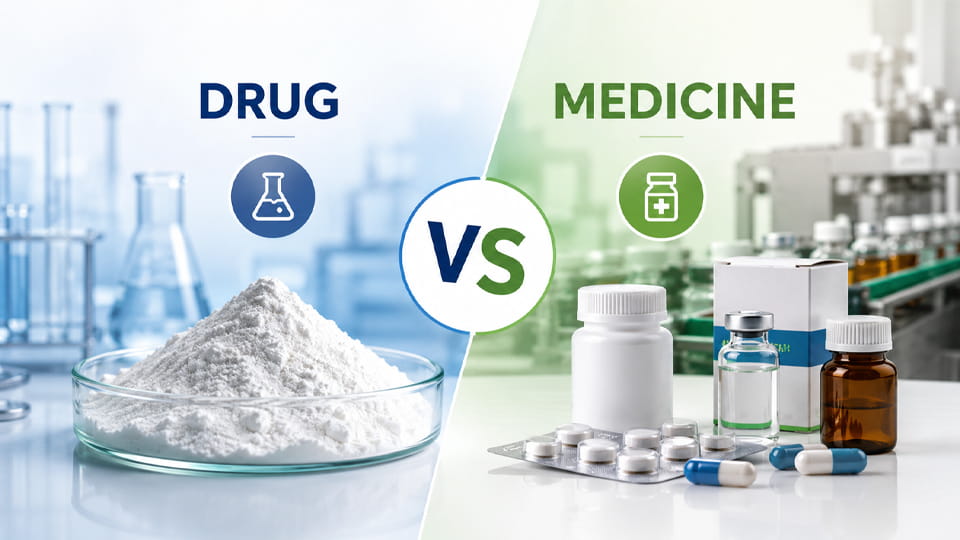
In pharmazeutischer Hinsicht, A Arzneimittel ist eine aktive chemische oder biologische Substanz, die zur Diagnose verwendet wird, Heilung, mildern, behandeln, oder Krankheiten vorbeugen. Die FDA definiert ein Medikament im weitesten Sinne als „Eine Substanz, die zur Verwendung bei der Diagnose bestimmt ist, Heilung, Milderung, Behandlung, oder Vorbeugung von Krankheiten” bei Menschen oder Tieren. In der Praxis, "Arzneimittel" bezieht sich oft auf den reinen Wirkstoff (API) selbst. Zum Beispiel, Ibuprofen oder Amoxicillin als Pulver würden als Arzneimittel bezeichnet, bevor sie zu einem Arzneimittel verarbeitet werden Tablette oder Kapsel.
Wichtige Punkte zu Drogen in der Pharmaherstellung:
Zusammenfassend, A Arzneimittel ist die rohe therapeutische Substanz oder API – das „Was“, das einem Arzneimittel seine Wirkung verleiht. Dieser Begriff ist in der Formulierungsentwicklung und -regulierung üblich.
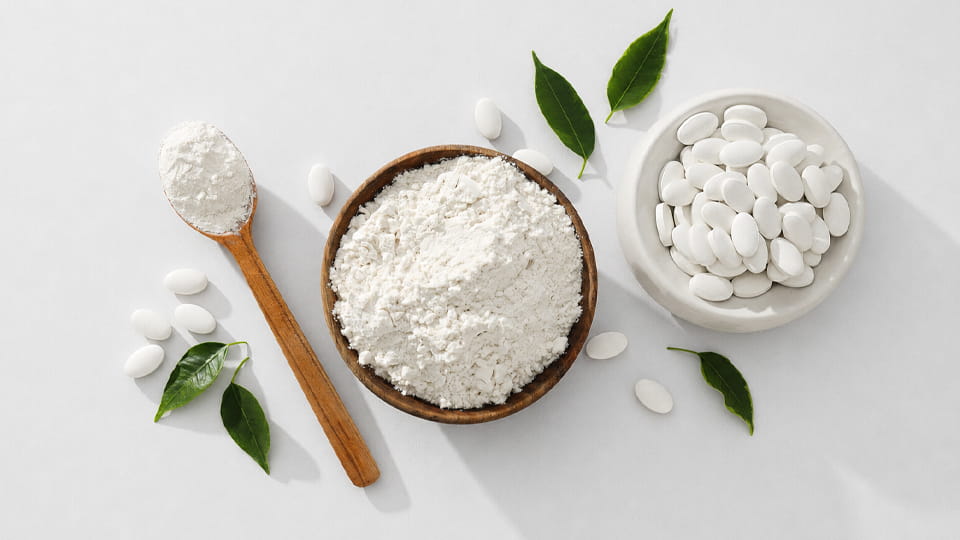
A Medizin (oder Arzneimittel) ist ein fertiges pharmazeutisches Produkt für den Patientengebrauch bestimmt. Es enthält ein oder mehrere Medikamente (APIs) plus inaktive Komponenten (Hilfsstoffe) und ist zur sicheren Abgabe und Verwendung verpackt. Mit anderen Worten, sobald ein Arzneimittel in eine Dosierungsform gebracht wird (Tablette, Kapsel, flüssig, usw.) und etikettiert in einem Behälter, es wird zu einem Medikament, das zum Verkauf bereit ist.
In einfachen Worten, A Medizin ist das verpackte, Für den Patienten geeignetes Produkt zur Diagnose oder Behandlung einer Erkrankung. Es enthält das Medikament als Hauptbestandteil, aber auch all die anderen Sachen (Hilfsstoffe, Container, Etikett).
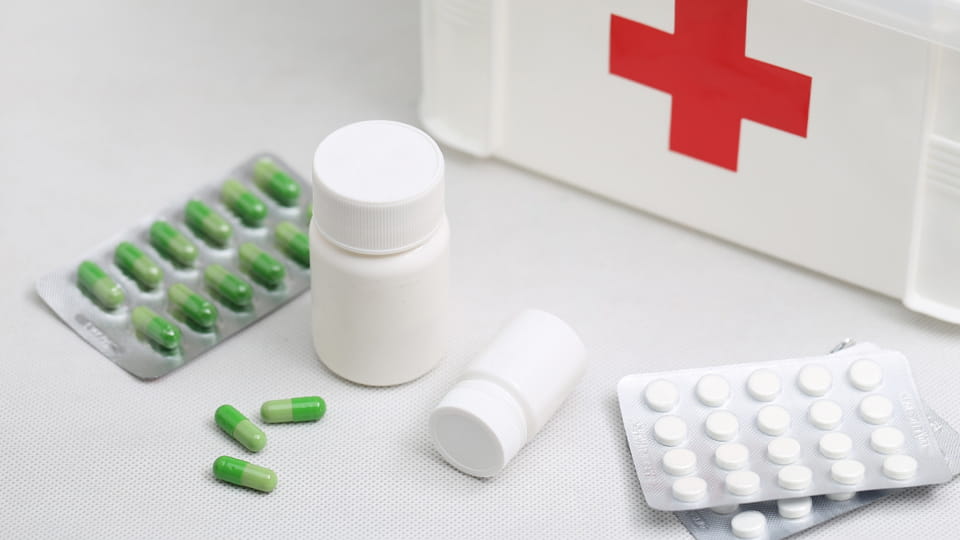
Nachfolgend finden Sie eine Zusammenfassung davon Hauptunterschiede zwischen einem Medikament und einem Medikament. Im Klartext sind die Unterschiede subtil, im Herstellungs- und Regulierungskontext jedoch wichtig:
| Aspekt | Arzneimittel | Medizin (Arzneimittel) |
| Grundlegende Bedeutung | Wirkstoff (API) mit therapeutischer Wirkung | Fertigprodukt, das das Arzneimittel enthält, bereit für den Einsatz am Patienten |
| Bühne | Bezieht sich oft auf Inhaltsstoffe oder Forschungsverbindungen im Frühstadium | Bezieht sich auf die endgültige Dosierungsform nach der Formulierung und Verpackung |
| Zusammensetzung | Der reine Wirkstoff (z.B. Aspirin-Pulver) | Beinhaltet API + Hilfsstoffe, Container, Etikett (z.B. Aspirin-Tablette im Blister) |
| Verwenden Sie den Kontext | Herstellung, R&D, regulatorisch (Genehmigungsverfahren) | Klinischer Einsatz, verschreiben, Abgabe (im Gesundheitswesen) |
| Verordnung | Die breite FDA-Definition „Arzneimittel“ umfasst APIs | Streng regulierte Fertigprodukte (FDA/EMA-Zulassungen, GMP) |
| Beispiel | Ibuprofen-API, Insulinprotein (Massensubstanz) | Ibuprofen-Tabletten, Insulininjektionen in Fläschchen |
Im Klartext: A Arzneimittel ist die aktive chemische/biologische Substanz mit pharmakologischer Wirkung. A Medizin ist das Medikament plus Formulierung und Verpackung, für den sicheren Gebrauch durch Patienten bestimmt. Wie eine Pharmaquelle es ausdrückte, „Jede Medizin beginnt als Medikament, aber nicht jedes Medikament wird zum Medikament“. Zum Beispiel, reines Morphin ist eine Arzneimittelsubstanz; einmal mit Kochsalzlösung in injizierbare Dosen formuliert und in Fläschchen versiegelt, es wird zu einer Medizin (ein schmerzlinderndes Produkt).
Der entscheidende Punkt ist das Medizin impliziert eine geregelte, Verbrauchsprodukt, wohingegen Arzneimittel kann nur den Rohwirkstoff oder eine breitere Klasse von Verbindungen bedeuten. Die obige Tabelle verdeutlicht diese Unterschiede.
Um „Droge vs. Medizin“ vollständig zu verstehen,„Es hilft, verwandte Begriffe zu klären, die in der Pharmaindustrie häufig verwendet werden:
Fazit: In der Pharmaherstellung, „Drogensubstanz“ ist die API, „Arzneimittel“ ist die formulierte Darreichungsform (Tabletten, Kapseln, Injektion, usw.), Und "Medizin" nennt man das Arzneimittel, wenn es sich um ein marktreifes Heilmittel handelt. Zum Beispiel, Metformin ist ein Arzneimittelwirkstoff, Das Arzneimittel ist eine 500-mg-Metformin-Tablette, und dieses Tablet (in seiner Verpackung) ist das Medikament, das der Patient einnimmt.
Es ist wichtig, diese Begriffe zu verstehen: Sobald wir die Darreichungsform eines Arzneimittels kennen, Wir können das Richtige auswählen Verpackungslinie um daraus ein stabiles Medikament zu machen.
Formulierung & Entwicklung der Darreichungsform: Ein rohes Arzneimittelsubstanz an sich ist es nicht für den Patienten geeignet. Es muss in einer geeigneten Dosierungsform formuliert werden (Tablette, Kapsel, Sirup, Injektion, usw.) – Dies ist ein wichtiger Teil der Fertigungsentwicklung. Jede Darreichungsform erfordert spezifische Hilfsstoffe und Verarbeitung (mischen, Granulation, Sterilisation) ein werden Arzneimittelprodukt. Zum Beispiel, Empfindliche Wirkstoffe für injizierbare Biologika erfordern eine aseptische Verarbeitung, wohingegen ein stabiler Wirkstoff für eine Pille das Trocknen und die Tablettenkomprimierung durchläuft.
Behördliche Genehmigung: Behörden wie die FDA oder die EMA prüfen Daten zum Wirkstoff Und das Arzneimittel/Medikament. Sie bewerten die Sicherheit des Wirkstoffs und die Wirksamkeit der endgültigen Formulierung. Das fertige Arzneimittel muss strenge Standards erfüllen (GMP, Stabilität, Beschriftung). FDAs CGMP Die Vorschriften betreffen ausdrücklich Verpackungsprozesse und -geräte – also die Art und Weise, wie ein Arzneimittel verpackt wird (sogar mehr als eine Rohdroge) ist stark reguliert.
Verpackung und Etikettierung: Die Unterscheidung bestimmt die Verpackungsanforderungen. Ein Arzneimittelwirkstoff hat normalerweise eine minimale Verpackung (Schlagzeug, Fläschchen zur Aufbewahrung). Ein Medikament, Jedoch, erfordert Primärverpackung das schützt die Dosierung (z.B. Blasenpackungen, Flaschen, Fläschchen) Und Sekundärverpackung (Kartons) für Informationen und Rückverfolgbarkeit. Zum Beispiel, Tabletten (fertiges Produkt) benötigen feuchtigkeitsbeständige Blisterverpackungen oder Flaschenverschlusssysteme, um die Haltbarkeit zu gewährleisten. Für ein injizierbares Arzneimittel sind sterile Glasfläschchen oder Ampullen mit manipulationssicheren Siegeln erforderlich. Für jede Kombination aus Wirkstoff und Darreichungsform gibt es eine passende Verpackungslösung.
Auswahl der Ausrüstung: Wenn Sie nur an APIs denken, Sie könnten Reaktoren oder Mischer in Betracht ziehen. Aber sobald ein Stoff ein Arzneimittel ist, muss er verpackt werden, Sie brauchen die richtige Verpackungslinie. Blisterverpackungsmaschinen, Kapselfüllmaschinen, flüssige Füllstoffe, Abfülllinien für Fläschchen, Kartoniermaschinen – alle werden relevant. Das Erkennen von „Medizin“ bedeutet, dass verpackte Produkte den Kauf dieser Maschinen veranlassen.
Zusamenfassend, Das Verständnis von „Medikament vs. Medizin“ hilft Projektteams dabei, dies herauszufinden wann und wie Verpackungen in den Produktionsablauf zu integrieren. Es stellt sicher, dass das Arzneimittel nicht nur formuliert wird, aber ordnungsgemäß geschützt und dem Markt präsentiert.
Die Verpackung ist der letzte entscheidende Schritt, der aus einem formulierten Arzneimittel ein Medikament macht, das Patienten sicher anwenden können. In Pharmazeutische Verpackung, Primärverpackung steht in direktem Kontakt mit der Dosierung (das Arzneimittelprodukt) und stellt die erste Barriere für den Abbau dar. Zum Beispiel, Oft kommen Hartgelatinekapseln und -tabletten zum Einsatz Aluminium–Kunststoff Blasenpackungen, während flüssige Sirupe hineingehen Plastik (PET/HDPE) Flaschen. Injizierbare Medikamente werden eingefüllt sterile Glasfläschchen oder Ampullen. Jeder Primärbehälter wird aufgrund seiner Inertheit und Barriereeigenschaften ausgewählt.
Sobald die Primärverpackung versiegelt ist, Sekundärverpackung (Kartons, Etiketten, Flugblätter) stellt Patienteninformationen und Chargendaten bereit. Zum Beispiel, Blisterpackungen oder Fläschchen werden in gebrandeten Pappkartons mit Beipackzetteln gruppiert, Chargennummern, und Barcodes – entscheidend für Compliance und Patientensicherheit.
Bei JinLuPacking, Unsere Maschinen automatisieren diese Schritte. Eine Automatik Blisterverpackungsmaschine kann Tausende von Tabletten pro Stunde in Blister verschließen; A Kapselfüllmaschine dosiert das Medikament in Kapseln; A Flaschenfüll- und Verschließlinie zählt Tabletten oder füllt Sirupe in Flaschen ab; und a Kartoniermaschine verpackt und verpackt die fertigen Produkte. Alle diese Phasen – Füllung, Capping, Verpackung – stellen Sie sicher, dass das endgültige Arzneimittel genau dosiert ist, sicher, und bereit zur Verteilung.
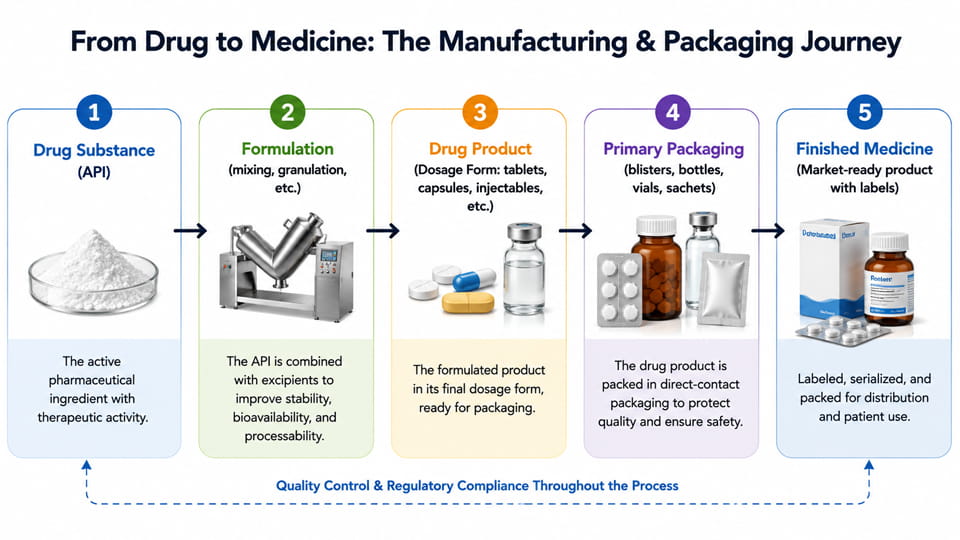
Figur: Flussdiagramm von Arzneimittel → Medizin: Der Aktive Arzneimittelsubstanz (API) wird in a formuliert Arzneimittelprodukt (spezifische Darreichungsform). Dann geht es hinein Primärverpackung (z.B. Blisterpackungen für Tabletten, Flaschen für Sirupe, Glasfläschchen für Injektionspräparate). Endlich, es wird ein fertige Medizin mit Umverpackung (Kartons/Etiketten) für den Patientengebrauch.
Unterschiedliche Darreichungsformen erfordern unterschiedliche Verpackungslösungen. Die folgende Tabelle fasst typische Paarungen zusammen:
| Darreichungsform | Gemeinsame Primärverpackung | Beispiel JinLuEquipment |
| Tabletten (Solide mündlich) | Blasenpackungen (PVC/PVDC-Folie), oder Kunststoff Flaschen mit Schraubverschlüssen | Blisterverpackungsmaschine; Tablettenzählung & Abfülllinie |
| Kapseln (Oral) | Blasenpackungen, oder tablettenähnliche Flaschen | Automatische Kapselfüllmaschine; Blistermaschine |
| Orale Flüssigkeit (Sirupe) | Plastik (PET/HDPE) Flaschen mit kindersicheren Verschlüssen | System zum Abfüllen und Verschließen von Flüssigkeiten; Flaschen -Unkrambler |
| Pulver / Beutel | Einzeldosis-Beutelpackungen (Folien- oder Laminatbeutel) | Beutel-/Stickpack-Verpackungsmaschine; Vorgefertigte Beutellinie |
| Injektionspräparate (Steril) | Glas Fläschchen, Ampullen, oder Fertigspritzen, plus Foliendichtungen | Befüllung von Fläschchen/Ampullen & Stopplinie; Induktionssiegelgerät |
| Salben/Cremes | Laminierte Röhren (Aluminium oder Kunststoff) | Tubenfüll- und Verschließmaschine |
| Softgel-Kapseln | Flaschen (HAUSTIER) oder Blisterpackungen | Softgel-Kapsel-Blistermaschine; Zähllinie |
Die Wahl hängt von Faktoren wie der Stabilität der Dosisform ab, Sterilität, und Patientenbequemlichkeit. Zum Beispiel, Tabletten und Kapseln werden häufig verwendet Blasenmaschinen oder Flaschenabfülllinien, während Flüssigkeiten brauchen Flaschenspüler, Füllung, und Verschließmaschinen. Injizierbar Medikamente erfordern sterile Abfüllanlagen unter Reinraumbedingungen. Jede Lösung wird durch spezielle Verpackungsmaschinen unterstützt, um sicherzustellen, dass das Arzneimittel geschützt wird, beschriftet Medizin das trifft GMP-Standards.
Um es konkret zu machen, Hier sind einige Beispiele, die zeigen, wie aus bestimmten Medikamenten Medikamente werden:
Jedes Beispiel zeigt: Arzneimittel (API) → Formulierung (Tablettierung, Füllung, usw.) → Verpackung (Blase, Flasche, Phiole, Beutel) → Medizin (Endprodukt mit Etikett).
Nicht unbedingt. Jede Medizin beginnt mit einem Medikament, Aber nicht jedes Medikament wird zu einem Medikament. Viele chemische oder biologische Verbindungen (Drogen) erreichen niemals Patienten. Einige Medikamente verbleiben in R&D oder werden nur zu Forschungszwecken verwendet, und andere werden außerhalb medizinischer Einrichtungen verwendet (z.B. Freizeitdrogen). Nur wenn ein Medikament formuliert wird, getestet, und genehmigt wird daraus ein Medikament.
Als FAQ-Antwortnotizen, „Aspirin ist sowohl ein Medikament als auch ein Medikament. Es ist ein Medikament in seiner chemischen Form (Acetylsalicylsäure) und wird zu einem Arzneimittel, wenn es formuliert und zur Behandlung von Fieber eingesetzt wird, Schmerz, oder Entzündung“. Entscheidend ist der Verwendungszweck und die Präsentation: Die Verwendung als patientenfertiges Produkt macht es zu einem Arzneimittel.
Zusammenfassend, nur genehmigt, Für den Patienten geeignete Produkte sind Arzneimittel. Dieses Verständnis hilft Herstellern und Regulierungsbehörden, zwischen experimentellen Substanzen und realen Marktprodukten zu unterscheiden.
Zusammenfassend, "Arzneimittel" bezieht sich normalerweise auf den Wirkstoff oder einen pharmazeutischen Wirkstoff, während "Medizin" (Arzneimittel) bezieht sich auf das Fertige, patientenfertiges Produkt, das dieses Medikament enthält. Diese Unterscheidung ist für die pharmazeutische Herstellung wichtig: es leitet R&D, Regulierungsstatus, und Verpackungsauswahl. Das Verständnis dieser Begriffe trägt dazu bei, sicherzustellen, dass wir einen Arzneimittelwirkstoff durch Formulierung und Umsetzung bewegen Verpackung richtig, um ein Stall zu werden, konforme Medizin.
Wann Entwicklung einer neuen Darreichungsform, erinnern: die richtige Verpackungslinie (Blisterpacker, Kapselfüller, Flaschenlinie, Fläschchenfüller, Karton, usw.) ist wichtig für Schutz des Arzneimittels und GMP treffen. Zum Beispiel, Darauf verlassen sich Tablet-Hersteller Blasenverpackungsmaschinen Und Zähl-/Fülllinien, während injizierbare Produkte erfordern Füll- und Verschließmaschinen für Fläschchen/Ampullen und sichere Sekundärverpackung. JinLuPacking bietet ein umfassendes Sortiment an Pharmaverpackungsmaschinen abgestimmt auf jede Darreichungsform – von Tablette & Blasenbildung in der Kapsel Zu Beutelverpackung Und Kartonierung.
Bereit, Ihr Medikament in ein marktreifes Medikament umzuwandeln? Entdecken Sie unsere Lösungen: Tablette & Kapsel-Blister-Verpackungsmaschinen für feste Dosen, Kapselfüllmaschinen für Pulver/flüssige Kapseln, Beutel & vorgefertigte Beutelmaschinen für Pulver, und Kartoniermaschinen für die Endverpackung. Unsere Ausrüstung trägt zum Schutz der Produktqualität bei, Gewährleistung der Patientensicherheit, und optimieren Sie Ihre Produktionslinie vom Arzneimittel bis zum fertigen Arzneimittel.
Nicht ganz. In lockeren Gesprächen überschneiden sie sich, Aber technisch gesehen bedeutet ein Medikament oft den Wirkstoff oder eine pharmakologische Substanz, wohingegen ein Arzneimittel das fertige Produkt ist, das Patienten verabreicht wird. Man kann sagen: „Jedes Medikament enthält ein Medikament.“, Aber ein Medikament allein ist möglicherweise kein Medikament, bis es formuliert ist..
In den meisten pharmazeutischen Kontexten handelt es sich im Wesentlichen um dasselbe Konzept. Ein Arzneimittel ist die fertige Darreichungsform (Tablette, Kapsel, Injektion) bereit zum Verkauf. Als Arzneimittel wird das Arzneimittel bezeichnet, wenn es für den Patientengebrauch verpackt ist. In der Praxis, zugelassene Arzneimittel (mit Beschriftung) sind Arzneimittel.
Eine Arzneimittelsubstanz (oder API) ist der reine Wirkstoff – die chemische oder biologische Substanz, die die therapeutische Wirkung hat. Ein Arzneimittel ist die endgültige Formulierung, die diesen Stoff enthält, plus Hilfsstoffe, in einer Darreichungsform (Pille, Lösung, usw.). Denken Sie an Salz und Salzstreuer: das Salz (Arzneimittelsubstanz) ist die Zutat; das Salz mit Trennmittel in einer Flasche (Arzneimittelprodukt) ist das nutzbare Produkt.
Die Verpackung ist entscheidend für die Umwandlung eines Medikaments in ein Medikament. Wie die JinLuPacking-Ressourcen vermerken, Pharmazeutische Verpackung (Blasenpackungen, Fläschchen, Flaschen) schützt die Stabilität und Dosierung des Arzneimittels, und stellt die Einhaltung der Vorschriften sicher. Durch die richtige Verpackung und Kennzeichnung wird aus einem losen Arzneimittel ein sicherer Stoff, benutzerfreundliche Medizin.
Ja. Eine Verbindung wie Ibuprofen oder Paracetamol ist eine Arzneimittelsubstanz. Wenn es zu einer OTC-Tablette mit Anweisungen verarbeitet wird, es ist auch ein Medikament. Es kommt auf Form und Verwendung an. Wie oben erwähnt, Aspirin ist chemisch gesehen ein Medikament, wird jedoch als Arzneimittel bezeichnet, sobald es in Tablettenform zur Schmerzlinderung vorliegt. Das Gleiche gilt für viele Schmerzmittel, Antibiotika, usw.
Ärzte verwenden „Medikament“ oft im neutralen Sinne eines pharmazeutischen Wirkstoffs. Im klinischen Fachjargon und im Recht (wie das FDA-Gesetz), „Droge“ ist die offizielle Bezeichnung für eine therapeutische Substanz. Es deckt alles ab, vom Hustensaft bis zur Chemotherapie. In der Zwischenzeit, „Medizin“ ist patientenfreundlicher. Daher könnte ein Arzt Ibuprofen verschreiben (Arzneimittel) als Schmerzmittel (Medizin).
Referenzen:
1.Drugs@FDA-Glossar der Begriffe -- UNS. Lebensmittel- und Arzneimittelbehörde
2.Klassifizierung von Produkten als Arzneimittel und Geräte sowie weitere Fragen zur Produktklassifizierung -- UNS. Lebensmittel- und Arzneimittelbehörde
3.Glossar (P-Begriffe: Pharmazeutisches Produkt, Hilfsstoff, Ausgangsmaterial) -- WER
4.Glossar zur Präqualifikation -- WER
5.Darreichungsformen | FDA -- UNS. Lebensmittel- und Arzneimittelbehörde
6.Q7A Leitfaden zur guten Herstellungspraxis für pharmazeutische Wirkstoffe -- UNS. Lebensmittel- und Arzneimittelbehörde
