
ফার্মাসিউটিক্যাল লেবেলিং প্রয়োজনীয়তা পণ্য শনাক্তকরণ সমর্থন করার জন্য ওষুধের প্যাকেজিং-এ উপস্থিত হওয়া আবশ্যক তথ্যগুলিকে সংজ্ঞায়িত করুন৷, নিরাপদ ব্যবহার, নিয়ন্ত্রক সম্মতি, এবং ট্রেসেবিলিটি. বাজার এবং পণ্যের প্রকারের উপর নির্ভর করে, একটি ফার্মাসিউটিক্যাল লেবেলে পণ্যের নাম অন্তর্ভুক্ত থাকতে পারে, সক্রিয় উপাদান(এস), শক্তি, ডোজ ফর্ম, পরিমাণ, ব্যাচ বা লট নম্বর, মেয়াদ শেষ হওয়ার তারিখ, স্টোরেজ শর্ত, সতর্কতা, এবং প্রস্তুতকারক বা বিপণন অনুমোদন তথ্য. মার্কিন যুক্তরাষ্ট্রে, প্রয়োজনীয়তা FDA প্রবিধানের মাধ্যমে প্রতিষ্ঠিত হয় যেমন 21 সিএফআর অংশ 201, যখন EU ঔষধি পণ্যের লেবেলিং ইউরোপীয় ফার্মাসিউটিক্যাল আইন দ্বারা পরিচালিত হয়, নির্দেশিকা 2001/83/EC সহ. সঠিক প্রয়োজনীয়তা ড্রাগ বিভাগ দ্বারা পরিবর্তিত হতে পারে, প্যাকেজিং বিন্যাস, এবং লক্ষ্য বাজার, তাই কোনো একক লেবেল টেমপ্লেট নেই যা সর্বত্র কাজ করে.
ফার্মাসিউটিক্যাল নির্মাতারা এবং প্যাকেজিং দলের জন্য, সম্মতি শুধুমাত্র সঠিক শিল্পকর্ম তৈরি সম্পর্কে নয়. অনুমোদিত তথ্যও প্রয়োগ করতে হবে, মুদ্রিত, পরিদর্শন, এবং উত্পাদন জুড়ে সঠিকভাবে নিয়ন্ত্রিত. এটি ফোস্কা প্যাকগুলির জন্য বিশেষভাবে গুরুত্বপূর্ণ হয়ে ওঠে, বোতল, কার্টন, এবং অন্যান্য বিন্যাস যেখানে স্থান সীমিত বা পরিবর্তনশীল ডেটা যেমন ব্যাচ নম্বর এবং মেয়াদ শেষ হওয়ার তারিখ প্যাকেজিংয়ের সময় যোগ করতে হবে. আধুনিক প্যাকেজিং লাইন ব্যবহার করতে পারে লেবেলিং মেশিন, ব্যাচ কোডিং সিস্টেম, বারকোড বা ডেটাম্যাট্রিক্স পাঠক, এবং সঠিক তথ্য সঠিক পণ্যে প্রয়োগ করা হয়েছে তা যাচাই করতে সাহায্য করার জন্য দৃষ্টি পরিদর্শন ব্যবস্থা. এই নির্দেশিকা মধ্যে, আমরা ফার্মাসিউটিক্যাল লেবেলিংয়ের মূল প্রয়োজনীয়তাগুলি ভেঙে দেব, প্রধান FDA এবং EU প্রয়োজনীয়তা তুলনা করুন, বিভিন্ন প্যাকেজিং বিন্যাসের জন্য বিশেষ বিবেচনার দিকে তাকান, এবং ব্যাখ্যা করুন কিভাবে লেবেলিং এবং কোডিং সরঞ্জাম আরও নির্ভরযোগ্য সমর্থন করতে পারে ফার্মাসিউটিক্যাল প্যাকেজিং প্রক্রিয়া.
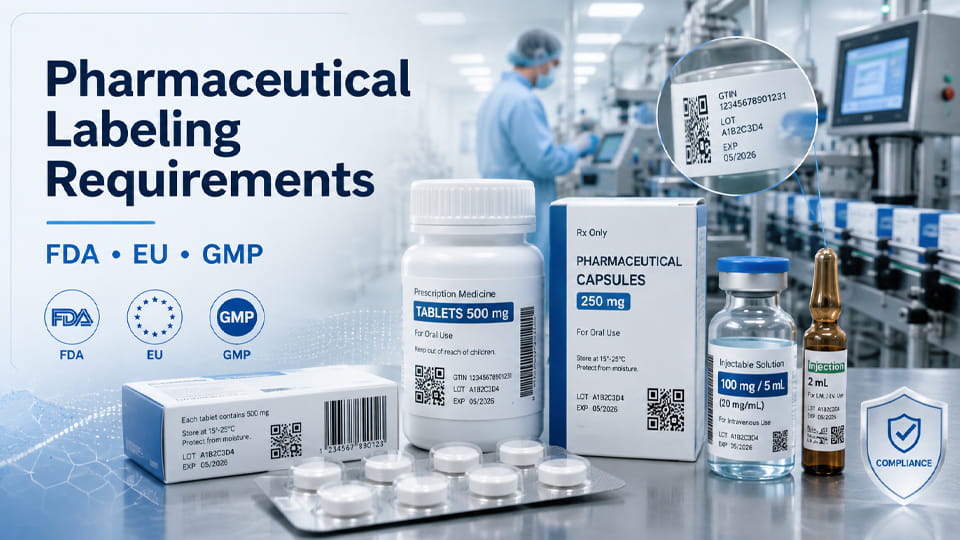
"ফার্মাসিউটিক্যাল লেবেলিং প্রয়োজনীয়তা" হল নিয়ম যা ওষুধের প্যাকেজিংয়ে কোন তথ্য মুদ্রিত করা উচিত তা নিয়ন্ত্রণ করে. মার্কিন যুক্তরাষ্ট্রে, এফডিএ নির্দেশিকা (এবং 21 সিএফআর অংশ 201) প্রয়োজনীয় লেবেল বিবৃতি এবং বিন্যাস সংজ্ঞায়িত করুন. উদাহরণস্বরূপ, FDA নির্দেশিকা নোট করে যে সমস্ত প্রেসক্রিপশন ড্রাগ লেবেলিং মেনে চলতে হবে 21 সিএফআর 201.56(ডি) & 201.57, কভার কন্টেন্ট এবং বিন্যাস. প্রবিধান দ্বারা, প্রেসক্রিপশনের ওষুধের জন্য "লেবেলিং" তিনটি উপাদানে বিস্তৃত: পেশাদার বিহিত তথ্য (প্যাকেজ সন্নিবেশ), শক্ত কাগজ এবং ধারক লেবেল, এবং রোগীর লেবেলিং. ব্যবহারিক দিক থেকে, লেবেলিং প্রয়োজনীয়তা নিশ্চিত করে যে প্রতিটি প্যাকেজ স্পষ্টভাবে ওষুধ এবং এর ব্যবহার সনাক্ত করে: ব্র্যান্ড এবং জেনেরিক নাম, সক্রিয় উপাদান(এস), শক্তি, ডোজ ফর্ম, পরিমাণ, এবং প্রস্তুতকারকের নাম/ঠিকানা অবশ্যই উপস্থিত হবে, নিরাপত্তা তথ্য সহ (সতর্কতা, ইঙ্গিত) এবং ট্রেসেবিলিটি কোড (ব্যাচ, মেয়াদ). এই নিয়মগুলি রোগীর নিরাপত্তা রক্ষা করে এবং সক্ষম করে পণ্য স্মরণ প্রয়োজন হলে.
অন্য কথায়, লেবেলিং প্রয়োজনীয়তা ড্রাগ প্যাকেজিং সম্পর্কে সুস্পষ্ট এবং সম্পূর্ণ তথ্যের জন্য ন্যূনতম মান নির্ধারণ করে. তারা ঔষধ ত্রুটি প্রতিরোধ এবং নিশ্চিত যে কেউ লক্ষ্য (রোগী, যত্নশীল বা পরিদর্শক) পণ্য যাচাই করতে পারেন. উদাহরণস্বরূপ, FDA স্পষ্টভাবে মেয়াদ শেষ হওয়ার তারিখ এবং লট কোড বাধ্যতামূলক হিসাবে তালিকাভুক্ত করে (নীচের "লেবেলটিও আপনাকে বলে" বক্সটি দেখুন), এবং ইইউ আইনে কার্টনের ব্যাচ এবং মেয়াদ প্রয়োজন. স্বাস্থ্যসেবা নির্দেশিকা (ইএমএ, WHO) এবং GS1 এর মতো শিল্পের মানগুলি আরও ফর্ম্যাটগুলিকে নির্দিষ্ট করে৷ (যেমন. ডেটাম্যাট্রিক্স বারকোড) গ্লোবাল ট্রেসেবিলিটি সমর্থন করতে. সামগ্রিকভাবে, সম্মতি মানে আপনার লেবেলগুলি অবশ্যই নীচের টেবিলের চেকবক্সগুলির সাথে মিলবে৷.
| লেবেল উপাদান | উদ্দেশ্য |
| পণ্যের নাম (ব্র্যান্ড & সাধারণ) | নাম দিয়ে ওষুধটি চিহ্নিত করুন, বিভ্রান্তি কমাতে. |
| সক্রিয় উপাদান(এস) | ওষুধের গঠন এবং শক্তি উল্লেখ করুন. |
| শক্তি (ডোজ) | ডোজ নির্দেশ করুন (যেমন. প্রতি ট্যাবলেট/মিলিগ্রাম). |
| ডোজ ফর্ম (ট্যাবলেট, ইত্যাদি) | সূত্র বর্ণনা কর (ট্যাবলেট, ক্যাপসুল, তরল). |
| নেট বিষয়বস্তু (গণনা/ভলিউম) | প্যাকেজে পরিমাণ দেখান (যেমন. 30 ট্যাবলেট). |
| ব্যাচ/লট নম্বর | ট্রেসেবিলিটি সক্ষম করুন এবং প্রয়োজন হলে প্রত্যাহার করুন. |
| মেয়াদ শেষ (মেয়াদ) তারিখ | শক্তি হারানোর আগে ওষুধের ব্যবহার নিশ্চিত করুন. |
| প্রস্তুতকারকের নাম & ঠিকানা | জবাবদিহিতার জন্য উৎস চিহ্নিত করুন. |
| স্টোরেজ শর্ত | তাপমাত্রা সম্পর্কে নির্দেশ দিন, হালকা, আর্দ্রতা. |
| সতর্কতা/সতর্কতা | নিরাপত্তা সতর্কতা (যেমন, "শিশুদের নাগালের বাইরে রাখুন"). |
| প্রশাসনের রুট | ব্যবহার নির্দিষ্ট করুন (যেমন, মৌখিক, ইনজেকশনযোগ্য). |
| ব্যবহার/ইঙ্গিত | (Al চ্ছিক) এটি কি আচরণ করে তা নির্দেশ করুন (বিশেষ. ওটিসি). |
| নিয়ন্ত্রক কোড (এনডিসি/এমএ নম্বর) | ইউ.এস. এনডিসি বা ইইউ মার্কেটিং অনুমোদন নম্বর. |
| টেম্পার-স্পষ্ট নোটিশ | (যদি প্রয়োজন হয় তাহলে "তাড়িত-প্রকাশ্য" বিবৃতি). |
| বারকোড/ডেটাম্যাট্রিক্স | GTIN এনকোড করে, ব্যাচ, স্ক্যান করার জন্য মেয়াদ শেষ. |
প্রতিটি উপাদান একটি পরিষ্কার কারণ আছে. উদাহরণস্বরূপ, পণ্যের নাম এবং উপাদান রোগীদের সঠিক ওষুধ পেতে সাহায্য করে; শক্তি, ফর্ম এবং রুট সঠিক ডোজ নিশ্চিত করুন; স্টোরেজ এবং সতর্কতা নিরাপত্তা রক্ষা করে; ব্যাচ/লট এবং মেয়াদ উত্তীর্ণযোগ্যতা প্রদান করে; এবং বারকোড (GS1 ডেটাম্যাট্রিক্স) মেশিনগুলিকে প্যাকেজটি স্ক্যান এবং যাচাই করতে দিন. নিয়ন্ত্রক কর্তৃপক্ষ (এফডিএ, ইএমএ, ইত্যাদি) মূলত এই সব আইটেম প্রয়োজন. উপরের টেবিলটি সাধারণ ক্ষেত্র এবং তাদের ফাংশন তালিকাভুক্ত করে. সব ক্ষেত্রেই, লেবেল পাঠযোগ্য হতে হবে (পর্যাপ্ত ফন্ট সাইজ, বিপরীত) এবং স্ট্যান্ডার্ড ফরম্যাট ব্যবহার করুন (যেমন. ওটিসি ওষুধের জন্য এফডিএর "ড্রাগ ফ্যাক্টস" লেআউট).
মার্কিন যুক্তরাষ্ট্রে, এফডিএ প্রবিধান (21 সিএফআর অংশ 201) এবং নির্দেশিকা ওষুধের জন্য লেবেল বিষয়বস্তুর বিস্তারিত. প্রেসক্রিপশন (Rx) ওষুধ: মূল প্রয়োজনীয়তা প্রতিষ্ঠিত অন্তর্ভুক্ত (সাধারণ) ওষুধের নাম (21 সিএফআর 201.50), ডোজ ফর্ম, নেট কন্টেন্ট, এবং দিকনির্দেশ (21 সিএফআর 201.55). লেবেলগুলি অবশ্যই প্রস্তুতকারক/প্যাকার/পরিবেশকের নাম এবং ঠিকানা প্রদর্শন করবে৷ (201.1), জাতীয় ড্রাগ কোড (201.2), এবং বিবৃতি "শুধুমাত্র Rx" যদি প্রযোজ্য হয়. লট নম্বর এবং মেয়াদ শেষ হওয়ার তারিখের মতো জটিল শনাক্তকারীরা নিয়ন্ত্রিত হয় 21 সিএফআর 201.17-18. উদাহরণস্বরূপ, 201.17 প্যাকেজে মেয়াদ শেষ হওয়ার তারিখের অবস্থান নির্দেশ করে, এবং 201.18 একটি নিয়ন্ত্রণ প্রয়োজন (অনেক) সনাক্তকরণের জন্য নম্বর. অনুশীলনে, FDA তাৎক্ষণিক কন্টেইনার এবং শক্ত কাগজ উভয়েই ব্যাচ বা লট নম্বর এবং মেয়াদ শেষ হওয়ার বিষয়ে স্পষ্টভাবে প্রিন্ট করার জন্য জোর দেয়. উদাহরণস্বরূপ, এফডিএর "ড্রাগ ফ্যাক্টস" নির্দেশিকা স্পষ্টভাবে উল্লেখ করে যে অনেক (ব্যাচ) কোড এবং মেয়াদ শেষ হওয়ার তারিখ অবশ্যই ওটিসি লেবেলে প্রদর্শিত হবে, এবং একই যুক্তি Rx ওষুধের ক্ষেত্রে প্রযোজ্য.
ওটিসি ওষুধ (ড্রাগ ফ্যাক্টস প্যানেল): ভোক্তাদের সাহায্য করার জন্য সমস্ত নন-প্রেসক্রিপশন ওষুধের অবশ্যই FDA-এর মানসম্মত "ড্রাগ ফ্যাক্টস" লেবেল বহন করতে হবে. এই প্যানেলটি সক্রিয় উপাদানের মতো বিভাগগুলির সাথে একটি নির্দিষ্ট বিন্যাস অনুসরণ করে(এস), উদ্দেশ্য(এস), ব্যবহার, সতর্কতা, দিকনির্দেশ, এবং নিষ্ক্রিয় উপাদান. লক্ষ্য ধারাবাহিকতা এবং স্বচ্ছতা (ব্যথা উপশমকারী জন্য একই গঠন, এলার্জি ওষুধ, ইত্যাদি). উদাহরণস্বরূপ, "সক্রিয় উপাদান(এস)” লাইন থেরাপিউটিক পদার্থ এবং শক্তি তালিকাভুক্ত করে, "উদ্দেশ্য" এর বিভাগ দেয়, এবং "সতর্কতা/নির্দেশ" ব্যবহার নির্দেশিকা প্রদান করে. এই বিভাগগুলি ছাড়াও, প্রতিটি ওটিসি লেবেলে অবশ্যই মেয়াদ শেষ হওয়ার তারিখ দেখাতে হবে (অথবা ডিফল্ট 3 বছরের মেয়াদ শেষ হওয়ার নিয়ম) এবং অনেক কোড, প্রস্তুতকারকের নাম/ঠিকানা এবং নেট পরিমাণ সহ. ওটিসি ড্রাগ ফ্যাক্টসের এফডিএ পৃষ্ঠা নিশ্চিত করে: "লেবেলটি আপনাকেও বলে... মেয়াদ শেষ হওয়ার তারিখ ... লট বা ব্যাচ কোড ... প্রস্তুতকারকের নাম এবং ঠিকানা ... নেট পরিমাণ". একটি OTC লেবেলে এগুলি অন্তর্ভুক্ত করতে ব্যর্থ হলে FDA লেবেলিংয়ের নিয়ম লঙ্ঘন হবে৷.
এফডিএ প্রবিধান অনেক বিস্তারিত লেবেলিং বিবৃতি তালিকাভুক্ত করে. উদাহরণস্বরূপ, 21 সিএফআর 201.50-201.56 এবং 201.100-201.128 কভার কন্টেইনার লেবেল এবং শক্ত কাগজ লেবেল. কিছু হাইলাইট অন্তর্ভুক্ত:
সিএফআরের বাইরে, এফডিএ নির্দেশিকা এই নিয়মগুলিকে স্পষ্ট করে. উল্লেখযোগ্যভাবে, এফডিএ এখন প্রেসক্রিপশন ড্রাগ লেবেলিংকে তিনটি অংশ হিসাবে সংজ্ঞায়িত করে: পেশাদার বিহিত তথ্য (প্যাকেজ সন্নিবেশ), শক্ত কাগজ/পাত্রে শারীরিক লেবেল, এবং রোগীর নির্দেশিত কোনো লিফলেট. ধারক লেবেল নিজেই ওষুধের প্রতিষ্ঠিত নাম বহন করতে হবে, শক্তি, ডোজ ফর্ম, ডোজ ইউনিট, অনেক সংখ্যা, মেয়াদ শেষ হওয়ার তারিখ, এনডিসি, এবং ব্যবসার নাম/ঠিকানা - মূলত আমাদের উপরের টেবিলের সমস্ত চেকবক্স কভার করে. এগুলি নিশ্চিত করে যে ফার্মেসীগুলি সঠিক পণ্য সরবরাহ করে এবং রোগীরা মূল সুরক্ষা তথ্য দেখতে পান.
ইউরোপীয় ইউনিয়নে, নির্দেশিকা 2001/83/EC (সংশোধিত হিসাবে) এবং সংশ্লিষ্ট প্রবিধানগুলি ঔষধি পণ্যের লেবেলিং নিয়ন্ত্রণ করে. নিয়মগুলি ব্যাপকভাবে মার্কিন যুক্তরাষ্ট্রের মতো কিন্তু কিছু পার্থক্য সহ (যেমন. ভাষার প্রয়োজনীয়তা, বিপণন অনুমোদনের বিবরণ). প্রবন্ধ 54 এর 2001/83 বাইরের প্যাকেজিংয়ে কী থাকতে হবে তা নির্দিষ্ট করে (বা বাইরের বাক্স না থাকলে তাৎক্ষণিক প্যাকেজিং). এটি অবশ্যই পণ্যের সম্পূর্ণ নাম প্রদর্শন করবে, শক্তি, ফার্মাসিউটিক্যাল ফর্ম, এবং প্রশাসনের পথ. পণ্যটি প্রাপ্তবয়স্কদের বা শিশুদের জন্য উপযুক্ত কিনা তা উল্লেখ করা উচিত, এবং কোনো বিশেষ সতর্কতা বা সতর্কতা তালিকাভুক্ত করুন (যেমন. স্টোরেজ তাপমাত্রা). গুরুতরভাবে, প্রবন্ধ 54 বাইরের প্যাকে মেয়াদ শেষ হওয়ার তারিখ এবং ব্যাচ নম্বর প্রয়োজন, মার্কেটিং অথরাইজেশন হোল্ডারের ঠিকানা সহ (MAH) এবং ইইউ মার্কেটিং অনুমোদন নম্বর. অনুশীলনে, এর মানে ইইউ কার্টনে অবশ্যই মার্কিন লেবেলের মতো একই তথ্য বহন করতে হবে: নাম, উপাদান, শক্তি, পরিমাণ, সতর্কতা, মেয়াদ, এবং ব্যাচ, প্লাস MAH যোগাযোগ.
EMA নির্দেশিকা এবং টেমপ্লেট (QRD বিবৃতি) এই নিয়মের সাথে সারিবদ্ধ. কেন্দ্রীয়ভাবে অনুমোদিত পণ্যের জন্য, QRD (নথির গুণমান পর্যালোচনা) টেমপ্লেটগুলি মূল বিবৃতিগুলির শব্দকে প্রমিত করে. EMA সম্প্রতি আধুনিক প্রযুক্তি সম্বোধন করেছে: এটি অনুমোদিত হলে ঐচ্ছিক QR কোড বা লেবেলে স্ক্যানিং প্রযুক্তির অনুমতি দেয়. ব্রেইল চিহ্ন (অনুচ্ছেদ 56a) অধিকাংশ জন্য প্রয়োজন হয় ওষুধের কার্টন (পণ্যের নাম নির্দেশ করে, শক্তি, ব্রেইলে ফর্ম) দৃষ্টি প্রতিবন্ধীদের জন্য নিরাপত্তা বৈশিষ্ট্য হিসেবে. প্রতিটি ইইউ দেশের সরকারী ভাষায় লেবেলও প্রয়োজন(এস). নিচের লাইন: ইইউ লেবেল (প্রাথমিক বা মাধ্যমিক) সমস্ত জটিল ওষুধের বিস্তারিত স্পষ্ট ভাষায় জানাতে হবে (প্রায়ই একাধিক ভাষা), মার্কিন প্রয়োজনীয়তার অনুরূপ কিন্তু MAH পরিচয়ের উপর অতিরিক্ত জোর দিয়ে, নিয়ন্ত্রক সংখ্যা, এবং বহুভাষিক লিফলেট.
ফোস্কা মত প্রাথমিক প্যাকেজিং বিন্যাস, বোতল এবং শিশি বিশেষ চ্যালেঞ্জ তৈরি করে.
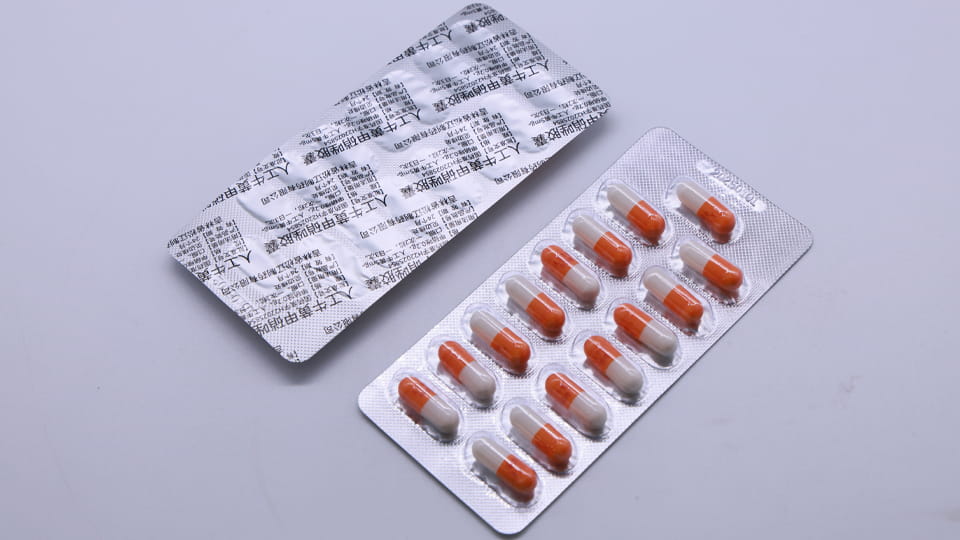
ফোস্কা প্যাক: নকশা দ্বারা, একটি ফোস্কা (সিল করা পকেটের ফালা) সীমিত স্থান আছে. নিয়ন্ত্রকরা এটি স্বীকার করে: ইইউ প্রায়শই পৃথক ফোস্কা গহ্বরে সংক্ষিপ্ত লেবেলিংয়ের অনুমতি দেয় যদি সম্পূর্ণ বিবরণ শক্ত কাগজে থাকে (একটি "পতাকা" লেবেল বা লিফলেট ব্যবহার করে). মার্কিন যুক্তরাষ্ট্রে, ফোস্কা লেবেল (যেমন. ফয়েল ব্যাকিং) এখনও ড্রাগ নাম অন্তর্ভুক্ত করা আবশ্যক, শক্তি, লট নম্বর এবং মেয়াদ শেষ হওয়ার তারিখ. একটি শিল্প সারাংশ নোট: "ফোস্কা প্যাকেজিং লেবেলে মালিকানা/জেনারিক নাম অন্তর্ভুক্ত করা আবশ্যক, শক্তি, অনেক, মেয়াদ শেষ... এবং FDA প্রয়োজনীয়তা মেনে চলুন যেমন ন্যূনতম পাঠ্য উচ্চতা এবং বৈসাদৃশ্য।" অনুশীলনে, ফোস্কা ফয়েলে প্রায়ই প্রতিটি গহ্বরে বা চারপাশে মোড়ানো কাগজের লেবেলে নাম এবং কোড মুদ্রিত থাকে. কখনও কখনও একটি ফোস্কা কার্ডে একটি পিল-অফ লেবেল থাকে যা একাধিক ডোজ কভার করে, কিন্তু এটি এখনও একই তথ্য প্রয়োজন. টেম্পার-প্রমাণ সিল করা ফোস্কা মধ্যে অন্তর্নিহিত, কিন্তু যদি ব্যবহার করা হয়, একটি টেম্পার-স্পষ্ট বিবৃতি (যেমন. "সিল ভাঙ্গা হলে ব্যবহার করবেন না") প্রয়োজন হয়.
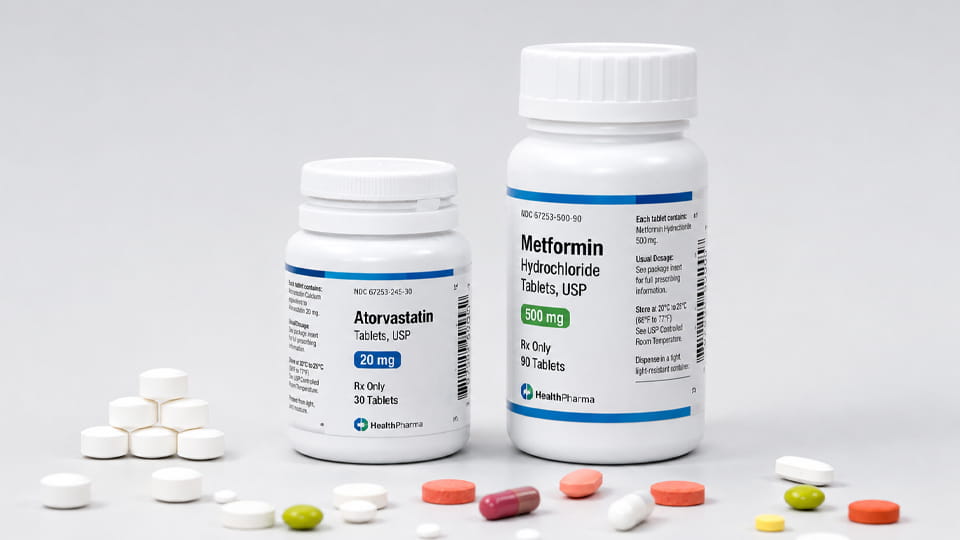
বোতল এবং শিশি: গোলাকার বোতলগুলি সাধারণত সামনে এবং পিছনে লেবেল ব্যবহার করে. সামনের লেবেল সাধারণত পণ্যের নাম দেখায়, দ্রুত আইডির জন্য শক্তি এবং পরিমাণ, এবং পিছনের লেবেলে দিকনির্দেশ রয়েছে, সতর্কতা এবং নিয়ন্ত্রক বিবরণ. অন-দ্য-ফ্লাই লেবেলিং মেশিন (নীচে দেখুন) বোতলগুলিতে এই লেবেলগুলি প্রয়োগ করুন. জিনলু প্যাকিংয়ের ব্রোশার থেকে একটি উদাহরণ: TBJ-120 লেবেলিং মেশিনটি গোলাকার বোতলের জন্য ডিজাইন করা হয়েছে (20-110 মিমি ব্যাস) এবং ব্যাচ/মেয়াদ শেষ করার জন্য একটি ইন-লাইন রিবন কোডার অন্তর্ভুক্ত করে. এটি নিশ্চিত করে যে প্রতিটি বোতলের আঠালো লেবেল সঠিক লট নম্বর এবং প্রয়োজন অনুসারে মেয়াদ শেষ হয়েছে. উভয় ফোস্কা এবং বোতল জন্য, ফন্টের আকার এবং রঙের বৈসাদৃশ্য অবশ্যই আইনি মান পূরণ করতে হবে (যেমন. এফডিএ এর 21 সিএফআর 201.15 সুপাঠ্যতার উপর). সংক্ষেপে, ফোস্কা এবং বোতল লেবেলিং ওয়ার্কফ্লো একই বিষয়বস্তু নিয়ম পূরণ করার জন্য ইঞ্জিনিয়ার করা হয় — নাম, উপাদান, অনেক এবং মেয়াদ শেষ - এমনকি যদি বিতরণ পদ্ধতি (peel-off, সরাসরি মুদ্রণ, বা স্টিকার) ভিন্ন.
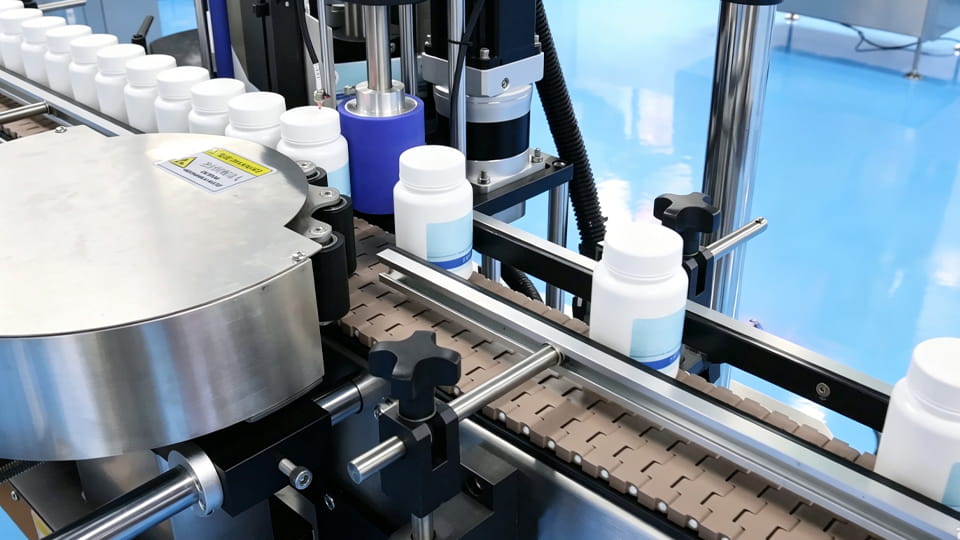
চিত্র: একটি উত্পাদন লাইনে ফার্মাসিউটিক্যাল বোতলের লেবেলযুক্ত. বোতল লেবেল স্পষ্টভাবে পণ্য পরিচয় প্রদর্শন করা আবশ্যক (নাম, সক্রিয় উপাদান, শক্তি) এবং প্রয়োজনীয় নিয়ন্ত্রক তথ্য (ব্যাচ নম্বর, মেয়াদ, প্রস্তুতকারক) যাতে প্রতিটি পৃথক শিশি বা বোতল যাচাই করা যায়.
ব্যাচ/লট নম্বর এবং মেয়াদ শেষ হওয়ার তারিখ মুদ্রণ করা লেবেলিংয়ের একটি গুরুত্বপূর্ণ অংশ. ফার্মাসিউটিক্যাল লাইনে, ডেডিকেটেড কোডিং সরঞ্জাম উচ্চ গতিতে এই তথ্য ছাপ ব্যবহার করা হয়. সাধারণ প্রযুক্তি অন্তর্ভুক্ত ক্রমাগত ইঙ্কজেট (সিআইজে) প্রিন্টার, থার্মাল ইঙ্কজেট (তার) প্রিন্টার, তাপ স্থানান্তর ওভারপ্রিন্টার (টিটিও) এবং লেজার কোডার.
এই প্রিন্টারগুলি সাধারণত লেবেল করার পরেই একত্রিত হয়. উদাহরণস্বরূপ, লেবেল প্রয়োগের পরপরই একটি বোতল ইঙ্কজেট কোডারের অধীনে যেতে পারে, যা লাইনে লেবেলে লট এবং মেয়াদ শেষ হয়ে যায়. জিনলু টিবিজে-120 মেশিন (উপরে) অন্তর্ভুক্ত a ফিতা কোডিং মেশিন প্রতিটি লেবেলে কোড স্ট্যাম্প করতে. পদ্ধতি নির্বিশেষে, প্রিন্ট করা তথ্য অত্যন্ত সুস্পষ্ট এবং প্রবিধান দ্বারা প্রয়োজনীয় হিসাবে অবস্থান করা আবশ্যক (যেমন. মেয়াদ শেষ হওয়ার তারিখের জন্য ডিসপ্লে প্যানেলের নীচের কাছে). মানব-পাঠযোগ্য বিন্যাস (YYMMDD এর মত) যেকোন বারকোড ডেটা অবশ্যই মেলে. যে কোন ক্ষেত্রে, ইঙ্কজেট বা লেজার দ্বারা কিনা, মূল লক্ষ্য একই: GMP ট্রেসেবিলিটি মেনে চলার জন্য প্রতিটি পৃথক প্যাকেজের ব্যাচ নম্বর এবং মেয়াদ শেষ হওয়ার তারিখ অবশ্যই বহন করতে হবে. পরিদর্শন সিস্টেম (নীচে দেখুন) প্রতিটি মুদ্রিত কোড উপস্থিত এবং সঠিক কিনা তা যাচাই করবে.
আধুনিক প্রবিধানে প্রায়শই ট্রেসেবিলিটি এবং জাল-বিরোধিতা করার জন্য মেশিন-পাঠযোগ্য কোডের প্রয়োজন হয়. গ্লোবাল স্ট্যান্ডার্ড হল GS1 ডেটাম্যাট্রিক্স 2D বারকোড, যা একটি ছোট বর্গাকার প্রতীকে একাধিক ডেটা উপাদান এনকোড করতে পারে. স্বাস্থ্যসেবায়, GS1 মান চারটি মূল বৈশিষ্ট্য এনকোডিং নির্দিষ্ট করে: জিটিআইএন (গ্লোবাল ট্রেড আইটেম নম্বর), মেয়াদ শেষ হওয়ার তারিখ, ব্যাচ/লট নম্বর, এবং সিরিয়াল নম্বর. জিটিআইএন অনন্যভাবে পণ্যটিকে শনাক্ত করে, অন্য তিনটি প্রতিটি প্যাকেজে ট্র্যাকিং এবং যাচাইকরণ সক্ষম করে.
মার্কিন যুক্তরাষ্ট্রে, দ্য 2013 ওষুধের গুণমান ও নিরাপত্তা আইন (ডিকিউএসএ) প্রেসক্রিপশনের ওষুধের পর্যায়ক্রমে সিরিয়ালাইজেশন বাধ্যতামূলক করে. দ্বারা 2023, ড্রাগ সাপ্লাই চেইন সিকিউরিটি অ্যাক্টের প্রতিটি ইউনিটে একটি পণ্য শনাক্তকারী প্রয়োজন (যার মধ্যে লট এবং মেয়াদ শেষ) যাতে ফার্মেসি রসিদে পণ্য যাচাই করতে পারে. ইইউতে, মিথ্যা ওষুধের নির্দেশিকা (নির্দেশিকা 2011/62/EU) ইতিমধ্যেই অনেক প্রেসক্রিপশন ড্রাগ প্যাকে অনন্য সিরিয়াল নম্বর প্রয়োজন. EU প্যাকেজ অবশ্যই GTIN সহ একটি GS1 ডেটাম্যাট্রিক্স বহন করবে৷, প্রস্তুতকারকের দ্বারা নির্ধারিত ক্রমিক নম্বর, মেয়াদ শেষ এবং ব্যাচ (অ্যাপ্লিকেশন শনাক্তকারী 17, 10). GS1 নির্দেশিকা স্পষ্টভাবে নির্মাতাদের নির্দেশ করে: "আপনার GTIN এনকোড করুন, GS1 DataMatrix বারকোডে লট এবং মেয়াদ শেষ হওয়ার তারিখ এবং এটি পণ্যের সাথে সংযুক্ত করুন". কিছু বাজার (ব্রাজিল, ভারত, অন্যদের) এছাড়াও অনুরূপ সিরিয়ালাইজেশন প্রয়োজনীয়তা গ্রহণ করা হয়.
DataMatrix ছাড়াও, কোম্পানিগুলি ভোক্তাদের ব্যস্ততা বা স্টক ব্যবস্থাপনার জন্য লেবেলে QR কোড বা RFID ব্যবহার করতে পারে, কিন্তু সম্মতির জন্য নিয়ন্ত্রক ফোকাস 2D বারকোডগুলিতে থাকে৷. এই কোডগুলি প্যাকে বিশেষ লেবেলিং মেশিন বা কোডার দ্বারা মুদ্রিত হয়. উদাহরণস্বরূপ, একটি পদ্ধতি হল একটি লেজার বা লেবেল প্রিন্টার প্রাথমিক লেবেল প্রয়োগ করার পরে ডেটাম্যাট্রিক্স যুক্ত করা. ভিশন সিস্টেমগুলি তারপরে ডেটাম্যাট্রিক্স স্ক্যান করে নিশ্চিত করে যে এটি সঠিকভাবে পড়ছে. বারকোডে ব্যাচ এবং মেয়াদ এনকোডিং করে, যেকোনো সময়ে স্ক্যান করা হচ্ছে (বিতরণ, বিতরণ) অবিলম্বে যারা মান যাচাই. সংক্ষেপে, সিরিয়ালাইজেশন মানে প্রতিটি ইউনিট-ডোজ প্যাকেজ একটি অনন্য স্ক্যানযোগ্য কোড রয়েছে যা এটির উত্পাদন ডেটার সাথে লিঙ্ক করে.
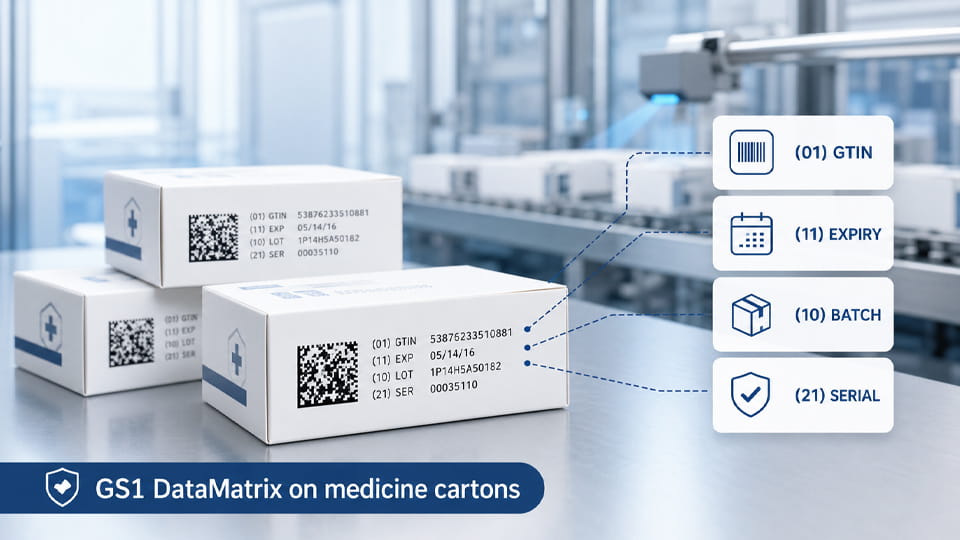
চিত্র: ওষুধের কার্টনে GS1 ডেটাম্যাট্রিক্স কোড রয়েছে (01)জিটিআইএন, (11)মেয়াদ, (10)ব্যাচ, (21)সিরিয়াল. ফার্মাসিউটিক্যাল প্যাকেজ প্রায়ই একটি GS1 DataMatrix বহন করে (2D বারকোড) জিটিআইএন সহ, মেয়াদ শেষ হওয়ার তারিখ এবং ব্যাচ/লট নম্বর এনকোড করা হয়েছে. এটি উচ্চ-গতির স্ক্যানিং এবং সমস্ত মূল ট্র্যাকিং ডেটা যাচাই করার অনুমতি দেয়.
সমস্ত প্রয়োজনীয় লেবেল এবং কোড লাইন গতিতে প্রয়োগ করার জন্য স্বয়ংক্রিয় যন্ত্রপাতি অপরিহার্য. লেবেলিং সহ একটি সাধারণ ফার্মাসিউটিক্যাল প্যাকেজিং ওয়ার্কফ্লো এর মতো দেখতে হতে পারে:
পাত্রে ভর্তি/লোড হচ্ছে → স্বয়ংক্রিয় লেবেলিং মেশিন → ব্যাচ & মেয়াদোত্তীর্ণ কোডার → বারকোড/সিরিয়ালাইজেশন মার্কিং → দৃষ্টি পরিদর্শন স্টেশন → কার্টোনিং / মাধ্যমিক প্যাকেজিং

চিত্র: বোতল বিভাজন এবং কোডার সহ স্বয়ংক্রিয় লেবেলিং মেশিন (উত্থান জেএল-টিবিজে -120 লেবেলিং মেশিন). স্বয়ংক্রিয় লেবেলার বোতলগুলিতে আঠালো লেবেল প্রয়োগ করে, যখন একটি সমন্বিত প্রিন্টার ব্যাচ/মেয়াদ শেষ হয়. আধুনিক লেবেলিং মেশিন উচ্চ গতিতে চলতে পারে (যেমন, 120 বোতল/মিনিট) নির্ভুলতা সহ, এবং প্রায়শই ব্যাচ এবং তারিখের ইঙ্কজেট/থার্মাল প্রিন্টিংয়ের জন্য কোড প্রিন্টার অন্তর্ভুক্ত করে. এই মেশিনগুলি নিশ্চিত করে যে লেবেল এবং কোডগুলি প্রতিটি পাত্রে ধারাবাহিকভাবে প্রয়োগ করা হয়েছে.
এই পদক্ষেপগুলি একত্রিত করে, একটি ফার্মা প্যাকেজিং লাইন নিশ্চিত করে যে চূড়ান্ত বক্সিংয়ের মাধ্যমে পূরণ করা থেকে, প্রতিটি ইউনিট সঠিকভাবে লেবেল করা হয় এবং সনাক্ত করা যায়. একটি লিঙ্ক সিস্টেম ব্যবহার করে (বা সিঙ্ক করা মেশিনের লাইন) মানুষের ভুল কমিয়ে দেয়. সমালোচনামূলক পরিদর্শনের জন্য, ভিশন ক্যামেরা প্রতিটি প্যাক সম্মতি পূরণ করে তা পরীক্ষা করে. শেষ পর্যন্ত, উচ্চ মানের লেবেলিং সরঞ্জাম (শিশি ফিডার থেকে লেবেল প্রয়োগকারী থেকে কোডার পর্যন্ত) এফডিএ/ইএমএ লেবেল নিয়মগুলিকে স্কেলে ব্যবহারযোগ্য করে তোলে.
এমনকি যত্ন সহকারে, লেবেল ত্রুটি ঘটতে পারে. সাধারণ সমস্যা অন্তর্ভুক্ত:
প্রশমন কৌশল অন্তর্ভুক্ত: কঠোর পরিবর্তন প্রোটোকল (পণ্য স্যুইচ করার সময় লেবেল দুবার চেক করুন), প্রক্রিয়াধীন নিয়ন্ত্রণ (লাইনে ম্যানুয়াল স্পট চেক), এবং 100% দৃষ্টি পরিদর্শন. স্বয়ংক্রিয় কোড রিডার যাচাই করে যে প্রতিটি মুদ্রিত কোড উত্পাদন রেকর্ডের সাথে মেলে. অনেক লাইনে ব্যাকআপ বারকোড স্ক্যানারও থাকে যাতে লট/মেয়াদ শেষ হওয়া প্রিন্টগুলি সুস্পষ্ট হয়. আর্টওয়ার্ক ফাইলগুলিকে আপ-টু-ডেট রাখা এবং ভাষা চেকলিস্টগুলি অনুসরণ করা বিষয়বস্তু ত্রুটিগুলি প্রতিরোধ করে. অবশেষে, লেবেল এবং কালির সরবরাহ সিস্টেমের প্রয়োজনীয়তার সাথে মেলে (যেমন. প্রয়োজন হলে UV-প্রতিরোধী কালি). একটি শক্তিশালী QA প্রক্রিয়া প্রকাশের আগেই লেবেলিং ত্রুটিগুলি ধরবে৷.
প্রতিটি লেবেল এবং প্যাকেজ প্রয়োজনীয়তা পূরণ করে তা নিশ্চিত করতে এই চেকলিস্টটি ব্যবহার করুন:
| লেবেল চেকপয়েন্ট | সম্পন্ন? |
| পণ্যের নাম (ব্র্যান্ড & সাধারণ) বর্তমান | ☐ |
| সক্রিয় উপাদান(এস) তালিকাভুক্ত (শক্তির সাথে) | ☐ |
| শক্তি (ডোজ) স্পষ্টভাবে বলা হয়েছে | ☐ |
| ডোজ ফর্ম (ট্যাবলেট, সমাধান, ইত্যাদি) অন্তর্ভুক্ত | ☐ |
| ব্যাচ/লট নম্বর মুদ্রিত এবং পাঠযোগ্য | ☐ |
| মেয়াদ শেষ হওয়ার তারিখ মুদ্রিত এবং পাঠযোগ্য | ☐ |
| প্রস্তুতকারক (নাম & ঠিকানা) বর্তমান | ☐ |
| স্টোরেজ শর্ত বিবৃত (যেমন. "স্টোর <25°সে") | ☐ |
| সতর্কতা/সতর্কতা বিবৃতি অন্তর্ভুক্ত | ☐ |
| বারকোড/ডেটাম্যাট্রিক্স (GTIN + মেয়াদ + ব্যাচ) বর্তমান | ☐ |
| নেট বিষয়বস্তু (পরিমাণ বা আয়তন) নির্দেশিত | ☐ |
| নিয়ন্ত্রক কোড (এনডিসি, লাইসেন্স নম্বর) অন্তর্ভুক্ত | ☐ |
| হরফের আকার/পঠনযোগ্যতা প্রবিধান পূরণ করে | ☐ |
| টেম্পার-স্পষ্ট বিবৃতি (প্রয়োজন হলে) | ☐ |
আপনার মুদ্রিত লেবেলের বিপরীতে উপরের প্রতিটি পয়েন্ট পর্যালোচনা করুন. উদাহরণস্বরূপ, FDA স্পষ্টভাবে মেয়াদ শেষ হওয়ার তারিখ এবং লট নম্বর প্রয়োজন, এবং ইইউ প্রবিধান পণ্যের নাম নির্দেশ করে, শক্তি এবং বিষয়বস্তু. কোনো আইটেম অনুপস্থিত বা অপাঠ্য হলে, প্যাকেজ অনুগত নয়. এই চেকলিস্ট গুণমানের নিরীক্ষার জন্য একটি বৈশিষ্ট্যযুক্ত-রেফারেন্স টেবিল হিসাবে কাজ করতে পারে.
সঠিক লেবেলিং হল ফার্মাসিউটিক্যাল উৎপাদনের একটি অ-আলোচনাযোগ্য অংশ. উপরের প্রয়োজনীয়তা বোঝার মাধ্যমে, আপনি লেবেল এবং কর্মপ্রবাহ ডিজাইন করতে পারেন যা FDA মেনে চলে, EMA এবং বিশ্বব্যাপী নিয়ম. মূল লেবেল উপাদান মনে রাখবেন (পণ্যের পরিচয়, উপাদান, নিরাপত্তা তথ্য, এবং কোডিং) এবং সম্মতি চেকলিস্টের বিরুদ্ধে তাদের চেক বন্ধ করুন. আধুনিক প্যাকেজিং লাইন স্বয়ংক্রিয় লেবেলার ব্যবহার করে, কোডার এবং ভিশন সিস্টেম ত্রুটির হার শূন্যের কাছাকাছি রাখতে.
লেবেলিং এবং কোডিংয়ের জন্য আপনার যদি শক্তিশালী সরঞ্জামের প্রয়োজন হয়, জিনলু প্যাকিং এর সমাধান বিবেচনা করুন. জিনলু একটি পরিসীমা অফার করে ফার্মাসিউটিক্যাল প্যাকেজিং মেশিন - থেকে স্বয়ংক্রিয় বোতল লেবেল মেশিন (যেমন. টিবিজে সিরিজ) থেকে ব্যাচ / মেয়াদোত্তীর্ণ কোডার এবং সম্পূর্ণ কার্টোনিং লাইন - সব জন্য ডিজাইন করা জিএমপি সম্মতি. আমাদের মেশিন লেবেল সংহত, মুদ্রণ এবং পরিদর্শন আপনাকে সহজেই লেবেলিং প্রয়োজনীয়তা পূরণ করতে সহায়তা করে. উদাহরণস্বরূপ, জিনলুর রাউন্ড বোতল লেবেলিং মেশিনটি 20-110 মিমি বোতল পর্যন্ত পরিচালনা করে 120 bpm, একটি পাসে লেবেল প্রয়োগ এবং তারিখ/লট কোড প্রিন্ট করা. আরও বিশদ বিবরণের জন্য জিনলুর লেবেলিং মেশিন এবং কার্টোনিং মেশিনগুলি অন্বেষণ করুন. সঠিক সরঞ্জামের সাথে ভাল প্রক্রিয়াগুলিকে একত্রিত করে, আপনি নিশ্চিত করতে পারেন যে প্রতিটি ওষুধের প্যাকেজ নিরাপত্তা এবং সম্মতির জন্য সঠিকভাবে লেবেল করা হয়েছে.
ফার্মাসিউটিক্যাল লেবেল সংক্রান্ত প্রয়োজনীয়তা হল সেই নিয়ম যা সংজ্ঞায়িত করে যে ওষুধের লেবেলে কোন তথ্য উপস্থিত হতে হবে, ধারক, শক্ত কাগজ, অথবা প্যাকেজ লিফলেট. তারা পণ্যের নাম কভার করতে পারে, সক্রিয় উপাদান, শক্তি, ডোজ ফর্ম, ব্যাচ নম্বর, মেয়াদ শেষ হওয়ার তারিখ, সতর্কতা, স্টোরেজ শর্ত, প্রস্তুতকারকের বিবরণ, এবং অন্যান্য নিয়ন্ত্রক তথ্য. দেশ অনুযায়ী প্রয়োজনীয়তা পরিবর্তিত হয়, ওষুধের ধরন, এবং প্যাকেজিং বিন্যাস.
একটি ফার্মাসিউটিক্যাল লেবেলে পণ্যের নাম অন্তর্ভুক্ত করার প্রয়োজন হতে পারে, সক্রিয় উপাদান, শক্তি, ডোজ ফর্ম, বিষয়বস্তু, ব্যাচ বা লট নম্বর, মেয়াদ শেষ হওয়ার তারিখ, প্রস্তুতকারক বা বিপণন অনুমোদন তথ্য, স্টোরেজ শর্ত, সতর্কতা, এবং অন্যান্য বাজার-নির্দিষ্ট বিবরণ. সঠিক তথ্য প্রযোজ্য নিয়ন্ত্রক কাঠামো এবং পণ্য বিভাগের উপর নির্ভর করে.
মার্কিন যুক্তরাষ্ট্রে, ড্রাগ লেবেল অবশ্যই প্রযোজ্য FDA লেবেল প্রবিধান মেনে চলতে হবে, সহ 21 সিএফআর অংশ 201. প্রেসক্রিপশন এবং ওভার-দ্য-কাউন্টার ওষুধের মধ্যে প্রয়োজনীয়তা আলাদা. প্রেসক্রিপশন ড্রাগ লেবেলিং যেমন প্রয়োজনীয়তা অনুসরণ করে 21 সিএফআর 201.56 এবং 201.57, যখন OTC পণ্যগুলি সাধারণত এর অধীনে প্রমিত ড্রাগ ফ্যাক্ট ফরম্যাট ব্যবহার করে 21 সিএফআর 201.66.
EU ফার্মাসিউটিক্যাল লেবেলিং প্রয়োজনীয়তাগুলির জন্য সাধারণত ওষুধের নামের মতো গুরুত্বপূর্ণ তথ্যের প্রয়োজন হয়, শক্তি, ফার্মাসিউটিক্যাল ফর্ম, সক্রিয় পদার্থ, বিষয়বস্তু, প্রাসঙ্গিক সহায়ক, মেয়াদ শেষ হওয়ার তারিখ, এবং ব্যাচ নম্বর. পণ্য এবং বাজারের উপর নির্ভর করে অতিরিক্ত প্রয়োজনীয়তা প্রযোজ্য হতে পারে. ইইউ কাঠামোতে প্যাকেজ লিফলেট এবং প্যাকেজিংয়ে ব্রেইলের মতো অ্যাক্সেসিবিলিটি বৈশিষ্ট্যগুলির প্রয়োজনীয়তাও অন্তর্ভুক্ত রয়েছে.
হ্যাঁ, ব্যাচ বা লট শনাক্তকরণ ফার্মাসিউটিক্যাল প্যাকেজিং এবং ট্রেসেবিলিটির একটি গুরুত্বপূর্ণ অংশ. উদাহরণস্বরূপ, EU নিয়মের জন্য বিশেষভাবে কিছু অবিলম্বে প্যাকেজিং এর ব্যাচ নম্বর প্রয়োজন, ব্লিস্টার প্যাক সহ, পণ্যের নাম এবং মেয়াদ শেষ হওয়ার তারিখের মতো তথ্য সহ. বাজার এবং পণ্যের ধরন অনুসারে নির্দিষ্ট প্রয়োজনীয়তা পরিবর্তিত হতে পারে.
অনেক ফার্মাসিউটিক্যাল প্যাকেজের মেয়াদ শেষ হওয়ার তারিখ প্রয়োজন এবং এটি পণ্য সনাক্তকরণ এবং নিরাপদ ব্যবহারের একটি মূল উপাদান. উদাহরণস্বরূপ, ইইউ প্রয়োজনীয়তা তাৎক্ষণিক প্যাকেজিং যেমন ব্লিস্টার প্যাক এবং ছোট প্যাকেজিং ইউনিটগুলির জন্য মেয়াদ শেষ হওয়ার তারিখের তথ্য নির্দিষ্ট করে. সঠিক বিন্যাস এবং স্থান নির্ধারণ প্রযোজ্য বাজারের প্রয়োজনীয়তার উপর নির্ভর করে.
ব্লিস্টার-প্যাকের প্রয়োজনীয়তা বাজার এবং প্যাকেজিং কনফিগারেশনের উপর নির্ভর করে. ইইউ নিয়মের অধীনে, একটি বাইরের প্যাকেজের ভিতরে রাখা ফোস্কা প্যাকগুলি অবশ্যই ঔষধি পণ্যের নাম সহ গুরুত্বপূর্ণ তথ্য বহন করবে, বিপণন অনুমোদন ধারক, মেয়াদ শেষ হওয়ার তারিখ, এবং ব্যাচ নম্বর. তথ্যও সুস্পষ্ট হতে হবে, বোধগম্য, এবং অদম্য.
ফার্মাসিউটিক্যাল সিরিয়ালাইজেশন হল পণ্য সনাক্তকরণ এবং ট্রেসেবিলিটি সমর্থন করার জন্য একটি পৃথক বিক্রয়যোগ্য ড্রাগ প্যাকেজের জন্য একটি অনন্য শনাক্তকারীর নিয়োগ এবং পরিচালনা. সিরিয়ালাইজেশন সাধারণত 2D কোড এবং অন্যান্য পণ্য-শনাক্তকরণ সিস্টেমের সাথে কাজ করে, কিন্তু সঠিক প্রয়োজনীয়তা লক্ষ্য বাজার এবং প্রযোজ্য প্রবিধানের উপর নির্ভর করে.
সাধারণ ফার্মাসিউটিক্যাল লেবেলিং এবং কোডিং সরঞ্জামের মধ্যে স্বয়ংক্রিয় লেবেলিং মেশিন অন্তর্ভুক্ত রয়েছে, বোতল লেবেল মেশিন, ব্যাচ কোডিং সিস্টেম, ইঙ্কজেট বা লেজার প্রিন্টার, বারকোড স্ক্যানার, দৃষ্টি পরিদর্শন সিস্টেম, এবং সিরিয়ালাইজেশন সরঞ্জাম. সঠিক সেটআপ প্যাকেজিং বিন্যাসের উপর নির্ভর করে, উত্পাদন গতি, লেবেল নকশা, পরিবর্তনশীল-ডেটা প্রয়োজনীয়তা, এবং প্রয়োজনীয় পরিদর্শন স্তর.
প্রস্তুতকারকদের প্রথমে প্রতিটি লক্ষ্য বাজার এবং পণ্যের প্রয়োজনীয়তা চিহ্নিত করা উচিত, তারপর উত্পাদনের আগে লেবেল আর্টওয়ার্ক এবং পরিবর্তনশীল ডেটা অনুমোদন করুন. প্যাকেজিং লাইন লেবেল নির্বাচন নিয়ন্ত্রণ করা উচিত, ব্যাচ এবং মেয়াদ শেষ হওয়ার তারিখ মুদ্রণ, বারকোড বা সিরিয়ালাইজেশন ডেটা, লেবেল অবস্থান, দৃষ্টি পরিদর্শন, এবং ভুল পণ্য প্রত্যাখ্যান. GMP পদ্ধতি ডকুমেন্টেশন সমর্থন করা উচিত, লাইন ক্লিয়ারেন্স, পরিবর্তন নিয়ন্ত্রণ, এবং ট্রেসেবিলিটি.
তথ্যসূত্র:
1.প্রেসক্রিপশন মেডিসিনের জন্য লেবেলিং সম্পর্কিত প্রায়শ জিজ্ঞাস্য প্রশ্নাবলী —— ইউ.এস. খাদ্য ও ওষুধ প্রশাসন
2.শক্ত কাগজ এবং ধারক লেবেল সম্পদ —— ইউ.এস. খাদ্য ও ওষুধ প্রশাসন
3.টিআরএস 902 – অ্যানেক্স 9: ফার্মাসিউটিক্যাল পণ্যের প্যাকেজিং সংক্রান্ত নির্দেশিকা —— WHO
4.পণ্য-তথ্য প্রয়োজনীয়তা —— ইউরোপীয় মেডিসিন এজেন্সি
5.'মানুষের ব্যবহারের জন্য ঔষধি দ্রব্যের লেবেলিং এবং প্যাকেজ লিফলেটে সহায়ক উপাদান' সম্পর্কিত ইউরোপীয় কমিশনের নির্দেশিকা সংযোজন’ —— ইউরোপীয় মেডিসিন এজেন্সি
6.21 CFR § 201.66 – ওভার-দ্য-কাউন্টারের জন্য বিন্যাস এবং বিষয়বস্তুর প্রয়োজনীয়তা (ওটিসি) ড্রাগ পণ্য লেবেলিং. —— আইনি তথ্য ইনস্টিটিউট