Farklı Tablet Tipleri İçin Tablet Pres Makinası Nasıl Seçilir: Eksiksiz Bir Satın Alma Kılavuzu (2026)
Farklı Tablet Tipleri İçin Tablet Pres Makinası Nasıl Seçilir: Eksiksiz Bir Satın Alma Kılavuzu (2026)
Nisan 22, 2026
Yorum yok
Doğru seçmek tablet basın makinesi herhangi bir farmasötik veya nutrasötik üreticisi için kritik öneme sahiptir. Tablet presleri çeşitli tiplerde gelir (tek yumruk, döner, katmanlı, vesaire.) ve hızlar, her biri belirli tablet formülasyonlarına ve üretim hacimlerine uygundur. Tabletler, basit yuvarlak haplardan efervesan veya iki katmanlı tabletlere kadar geniş bir yelpazeye sahiptir ve her tür, alet yapımına özel gereksinimler getirir., sıkıştırma kuvveti, besleme, ve çevre kontrolü.
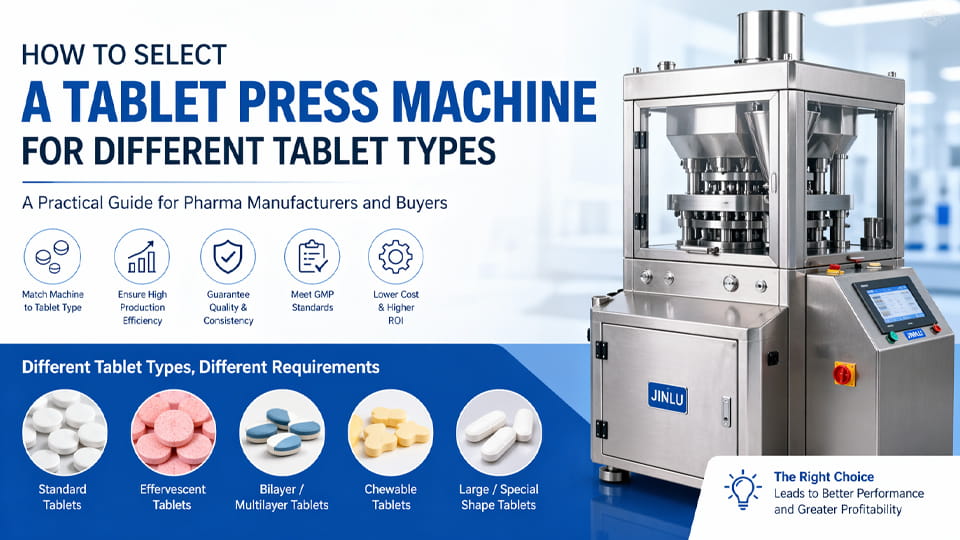
Bu kılavuz, sektördeki alıcıların tablet türlerini ideal makineyle eşleştirmelerine yardımcı olur. Tablet kategorilerini kapsıyoruz (standart, efervesan, katmanlı, çiğnenebilir, büyük/düzensiz), makine kategorileri (tek yumruk, döner, yüksek hızlı, iki/çok katmanlı presler), ve çıktı kapasitesi gibi temel seçim faktörleri, tablet boyutu, takım uyumluluğu, besleyici tasarımı, sıkıştırma kuvveti, ve GMP'ye uygunluk. Tablet türlerini önerilen makineler ve özelliklerle eşleştiren bir karşılaştırma tablosu ekliyoruz, kaçınılması gereken yaygın tuzaklar, ve ipuçları güvenilir bir tedarikçi seçmek. Sonunda, hızı nasıl dengeleyeceğinizi öğreneceksiniz, esneklik ve kalite - tabletlerinize ve üretim ihtiyaçlarınıza uygun bir baskı makinesi bulun.
Tablet Türlerini ve Gereksinimlerini Anlamak
Farklı tablet ürünleri farklı baskı özellikleri gerektirir. Aşağıda yaygındır tablet kategorileri ve ekipman için ne anlama geldikleri:
Standart Tabletler (Tek katmanlı, Yuvarlak, Kaplet, vesaire.): Bunlar tipik ilaç veya takviye haplarıdır. Kullanıyorlar B-takımlama (19 mm yumruk, ~13 mm'ye kadar tabletler) çoğu döner preste. Orta sıkıştırma kuvveti (yaklaşık 60–100kN) genellikle düzgün sertlik için gereklidir. Standart makineler birden fazla şekli işler (yuvarlak, oval, dikdörtgen) özel donanım olmadan. Örneğin, Jinlu ZP-17D basın (çok amaçlı bir model) kadar üretir 37,800 tablet/saat bir ile 25 mm maksimum çap Ve 100 kN kuvveti, çoğu standart tableti kapsar.
Efervesan tabletler (Gazlı, Efervesan): Bu tabletler (ilaçlarda kullanılır, içecek karışımları, temizleyiciler) asit-baz ajanları içerir (sitrik asit + sodyum bikarbonat) nemde reaksiyona giren. Onlar gerektirir yüksek sıkıştırma (tableti sağlam tutmak için) ve sıklıkla daha büyük ölür. Ağır hizmet tipi döner pres (sıklıkla D-takımı) tavsiye edilir. Eleştirel olarak, efervesan tozlar nemi hızla emer, yani çevre kontrolü çok önemli. Özel efervesan presler hat içi nem gidericiler gibi özellikler içerir, mühürlü sıkıştırma odaları, ve erken reaksiyonları önlemek için korozyona dayanıklı bileşenler. Örneğin, Jinlu'nun büyük boyutlu baskı makineleri (kadar 400 kN güç, 60 mm çap) efervesan ve deterjan tabletlerini işlemek için özel olarak tasarlanmıştır.
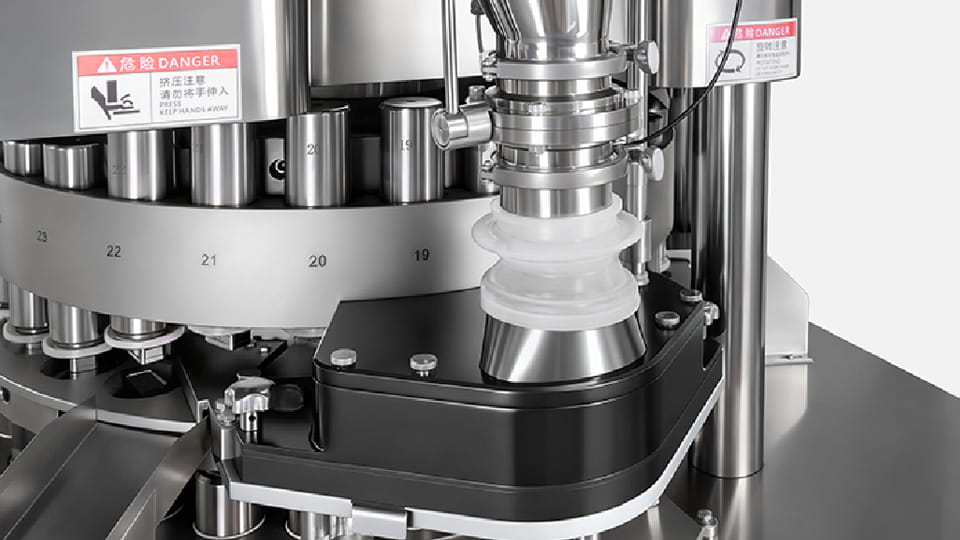
Çift katmanlı / Çok Katmanlı Tabletler: Bir tabletin iki veya daha fazla katmanı olduğunda (farklı ilaçlar, renk, veya profilleri serbest bırakın), ihtiyacın var iki katmanlı veya çok katmanlı baskı. Bu makinelerde, tek bir tarete sırayla beslenen iki veya daha fazla besleme hunisi ve besleyici bulunur. İlk katmanı sıkıştırıyorlar, sonra ikinciyi ekle (ve üçüncü, gerekirse). Temel özellikler arasında ikili kuvvetli besleyiciler bulunur (katman karışmasını önlemek için), bağımsız sıkıştırma istasyonları, ve süreç içi numune alma bağlantı noktaları. Örneğin, JL ZP-27/73D üç katmanlı baskı çıktıları 395,000 tablet/saat (ile 50 mm çap) ve 150kN basınç. Üç senkronize hazne, tablet başına üç katmana kadar izin verir (renk kodlu veya çeşitli formülasyon). Çok katmanlı bir presin figürü (Aşağıya bakın) tareti ve hazneleri gösterir.
Figür: Çok katmanlı döner tablet presi (örneğin. JL ZP-27/73D) basabilir 2-3 çok yüksek hızda tablet başına katmanlar (kadar 395,000 tablet/saat). Özel basınçlı besleyiciler ve kapalı odalar her katmanın eşit şekilde doldurulmasına yardımcı olur.
çiğnenebilir / Yumuşak Tabletler: Çiğnenebilir tabletler (vitamin, antiasitler) ihtiyacım var daha yumuşak doku ve daha iyi tat. Sertliği önlemek için genellikle daha düşük basınç altında sıkıştırılırlar, ve sıklıkla kullanıyorum BB-takımları (küçük tabletler için daha kısa 19 mm zımbalar). Toz formülü (örneğin. manitol, Tatlandırıcılar, yağlayıcılar) yapışkan veya yumuşak olma eğilimindedir. Makine gereksinimleri hafif sıkıştırmayı içerir (daha düşük kN), yavaş taret hızı (daha yüksek bekleme süresi), ve yapışmayı önleyici takım kaplamaları. Pratikte, uygun aletlerle standart bir döner pres (veya özel bir “çiğnenebilir tablet presi”) kullanıldı. Zımbaların genellikle özel şekilleri vardır (kalpler, vesaire.) pazarlama için.
Büyük veya Düzensiz Tabletler: Bazı ürünler (efervesan temizleme tabletleri, büyük veteriner tabletleri) çok büyükler (60 mm'ye kadar genişlikler veya tuhaf şekiller). Bunlar gerektirir D-takımı (25.4 mm yumruk maksimum) ve çok sağlam presler (yüksek tork, 400kN'ye kadar). Hız daha düşük olmalı; çıkış aralıkları mütevazı (örneğin. 20,000–45.000 tablet/saat) kaliteyi sağlamak için. Bu "büyük tablet" baskı makineleri genellikle özel bir taret boyutuna ve ağır hizmet tipi kamlara sahiptir. Ayrıca bonus olarak çok renkli veya çok katmanlı bazı şeyleri de işleyebilirler. Jinlu'nun efervesan/deterjan kullanımına yönelik büyük boyutlu presleri. Takas kapasitedir: 400kN'de 60 mm'lik bir tablet yalnızca ~30k/saat üretebilir, ama çatlamadan böyle bir hap oluşturmanın tek yolu bu.
Özetle, önce ürününüzü tanımlayın: tablet çapı, kalınlık, katmanlar, ve formülasyon (akışkanlık, nem hassasiyeti, gevreklik). Her boyut ve özellik makine seçimini daraltır. Genel bir kural: boyut ve sertlik tahrik makinesi boyutu, sadece çıktıyı hedeflemek değil. "100 bin sekme/saat" banner'larıyla satın almayın; tablet özelliklerini taret ve takımlarla eşleştirerek başlayın.
Tablet Pres Makinası Çeşitleri
Tablet baskı makineleri genel olarak iki ana kategoriye ayrılır: tek yumruk (eksantrik) Ve döner (çok istasyonlu), özel varyantlarla.
Tek Yumruk (Eksantrik) Presler: Bu basit makinelerde yalnızca bir yumruk ve kalıp var, manuel veya motorlu. Şunlar için idealdir: R&D, pilot gruplar, ve küçük ölçekli üretim. Tek istasyonlu bir pres, manuel toz beslemesi gerektirir (hazne veya kalıp doldurma yoluyla) ve her seferinde bir tableti deliyor. Faydalar: çok düşük maliyet, kolay bakım, ve karmaşık kontrol sistemlerine gerek yok. Dezavantajları: son derece düşük verim (birkaç yüz hap/saat) ve basit formülasyonlarla sınırlı. Bütünlük sağlamak için bu türü dahil ediyoruz, ancak çoğu endüstriyel alıcı, çıktı ihtiyaçları çok küçük olmadığı sürece döner makinelere yönelecektir.
Döner Tablet Presleri: Bunlar orta ve büyük ölçekli üretime yönelik iş makineleridir. Döner preste birçok zımba/kalıp tutan dönen bir taret bulunur (yaygın taret boyutları şunlardır 8, 16, 20, 37, 45, 62, 80 istasyonlar). Toz, döner bir besleme çerçevesi aracılığıyla bir hazneden beslenir. Bir dönüş düzinelerce tableti sıkıştırabilir. Endüstriyel döner tablalar saatte ~20.000'den yüzbinlerce tablete kadar her yere ulaşır. Standart döner tablalar tipik tabletleri işleyebilir: sürekli yüksek verim ve hassas ağırlık/sertlik kontrolü sağlarlar. İki alt tip vardır:
Standart Döner Pres: Orta hacimler için yüksek verimlilik ve tutarlı sonuçlar sunar. Genellikle şunları içerirler: ön sıkıştırma silindirler (son sıkıştırmadan önce tozu yoğunlaştırmak için), ve orta hızlarda koşabilir (örneğin. 6045 istasyonlu taret üzerinde –120 rpm, ~162 bin ila 243 bin sekme/saat verim sağlar).
Yüksek Hızlı veya Çok Katmanlı Döner Pres: Çok yüksek hacimli üretime yönelik. Bunlar genellikle servo motorlara sahiptir, çift taret (bir sabit, biri iki kat kapasiteye dönüyor), ve gibi gelişmiş özellikler zorla besleme sistemleri (yapışkan tozu kalıplara itmek). Ayrıca tek seferde iki katmanlı/çok katmanlı olarak da yapılandırılabilirler. Örneğin, RichPacking, yüksek hızlı baskı makinelerinin çıktıyı en üst düzeye çıkarmak için çok katmanlı sıkıştırma ve hassas hız kontrolü içerdiğini belirtiyor. Jinlu'nun "ZP-26-40D" serisi, yüksek hızlı döner makinelere bir örnektir.
İki Katmanlı / Çok Katmanlı Presler: Bunlar özel olarak tasarlanmış döner çarklardır. iki veya daha fazla hazne ve senkronize sıkıştırma istasyonları. Yaygın bir konfigürasyon, her taret konumunda çift pres istasyonudur; biri ilk katmanı sıkıştırır, bir diğeri ikinci katmanı ekler, sonra fırlatma. Genellikle ekstra kameraları ve zorla besleyicileri vardır. İki formülasyonu tek bir tablette birleştirmeniz gerektiğinde bunları kullanın (örneğin. sürekli salınımlı bir katman üzerinde anında salınımlı bir katman). Temel özellikler arasında bağımsız katman ağırlığı kontrolü ve her katmanın otomatik olarak örneklenmesi yer alır. Jinlu'nun ZP-27/73D ve benzeri modelleri çıktı verebilir üç katmanlı tabletler (hatta üç renkli bir tasarım) tek bir makinede. Ürününüzün katmanlı bir tasarımı varsa, çok katmanlı bir baskı zorunludur.
Çift Taraflı (Tablet Basın) / Parçalı Taret: Daha az yaygın olan gelişmiş bir varyant. Bu makinelerde taretin her iki yanında delme istasyonları bulunur, rotasyon başına iki tablete izin verilmesi (kapasiteyi etkili bir şekilde iki katına çıkarmak). Çoğunlukla çok büyük ilaç fabrikalarında bulunan yüksek hızlı makinelerdir.. Genellikle taretin her tarafı için ayrı hazneler içerirler, ancak bunun dışında arka arkaya iki döner pres gibi görünüyor.
Çiğnenebilir Tablet Presleri: Bunlar genellikle özel donanıma sahip standart döner makinelerdir. çiğnenebilir tablet takımları. JinLuPacking, çiğnenebilir preslerin daha yumuşak bir dokuya ve hoş bir tada sahip tabletler oluşturmak için özel aletler kullandığını belirtiyor. Pratikte, formülasyonu kolayca ayarlayabilir ve kauçuk kaplama kullanabilirsiniz, ancak makinenin kendisi daha düşük sıkıştırma kuvveti ayarlarına ve şeker bazlı tozları işlemek için ek toz kapağına sahip olabilir.
Her durumda, modern olanı ara otomasyon ve kontrol özellikler: PLC/HMI dokunmatik ekranı, basınç/ağırlık sensörleri, tarif saklama, ve otomatik ağırlık reddi, özellikle mevzuat uyumluluğuna ihtiyacınız varsa. İyi makinelerde ayrıca güvenlik kilitleri bulunur, toz emme, ve kolay erişim kapıları (bunları aşağıdaki seçim faktörleri kapsamında ele alıyoruz).
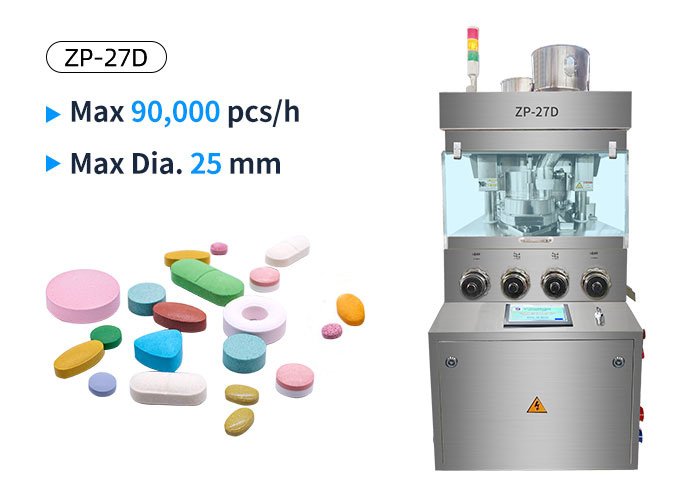
ZP-27D Döner Tablet Sıkıştırma Makinası
Temel Seçim Faktörleri
Tabletinizi öğrendikten sonra, sonraki adım belirli makine özelliklerinin değerlendirilmesidir. Anahtar faktörler şunları içerir::
Üretim kapasitesi (Verim): Saatte kaç tablete ihtiyacınız var?? Döner presler tablet/saat veya taret devrine göre derecelendirilir. Daha fazla delme istasyonu = daha yüksek verim. Örneğin, A 45-istasyon tuşuna basın 60 devir/dakika ≈ 162,000 sekme/saat. Ama takasa dikkat edin: hızı çok yükseğe itmek dolum/ağırlık değişimine neden olabilir. Kule hızını bekleme süresiyle dengeleyin (daha kalın tabletlerin sertlik için daha yavaş hıza ihtiyacı vardır). Bahşiş için: Eğer ihtiyacın varsa >50k/saat veya çoklu SKU partileri, İstikrarlı performans için ≥45 istasyonlu bir döner pres tavsiye edilir. Tek zımbalı üniteler veya küçük döner tablalar yalnızca aşağıdakiler için anlamlıdır: <10k/saat veya R&D.
Tablet boyutu ve şekli: Tablet çap ve kalınlık esasen makine sınıfını belirler. Her modelin maksimum kalıp deliği ve doldurma derinliği vardır. Örneğin, küçük tezgah üstü presler (örneğin. “ZP-7”) yaklaşık 6-12 mm'lik tabletleri kapatın, daha büyük taretler ise 60 mm'ye kadar işler (D-tooling ile). Daima önce kalıp boyutunu ve taret uyumluluğunu eşleştirin: “tabletinizin boyutları olmadan baskı makinesi seçmek, yolcu sayısını bilmeden araba almaya benzer”. Ayrıca, çok kalın tabletler daha fazla güce ve genellikle daha fazla kalma süresine ihtiyaç duyar; küçük bir pres, çap uysa bile 8 mm kalınlığındaki bir kapletin düzgün şekilde sıkıştırılması mümkün olmayabilir.
Takım Uyumluluğu: Zımbalar ve kalıplar tablet geometrisini tanımlar. Neyi kontrol et takımlama basının kullandığı standart (ortak standartlar B, D, ve BB takımları). Örneğin, çiğnenebilir vitaminler yapmanız gerekiyorsa (küçük, 6–8mm), BB takımları idealdir; standart 12–13 mm haplarınız varsa, B-takımı yeterlidir. Veteriner veya büyük deterjanlar (25 mm+ tabletler) D-takımı gerektirir. Ayrıca takım malzemesini/kaplamayı da göz önünde bulundurun: sertleştirilmiş çelik (örneğin. GCR-15) çoğu için kullanılır, ancak ıslak veya asidik karışımlar için paslanmaz veya TiN kaplı aletler gerekebilir. Jinlu'nun ZP-17D baskı makinesinin kullanım alanları GCR-15 çelik takımlar 100kN'ye dayanabilir. Yapışmaz kaplamalar öneriyoruz (TiN/CrN) ve özellikle efervesan veya yapışkan formülasyonlar üretiyorsanız zorla besleyiciler.
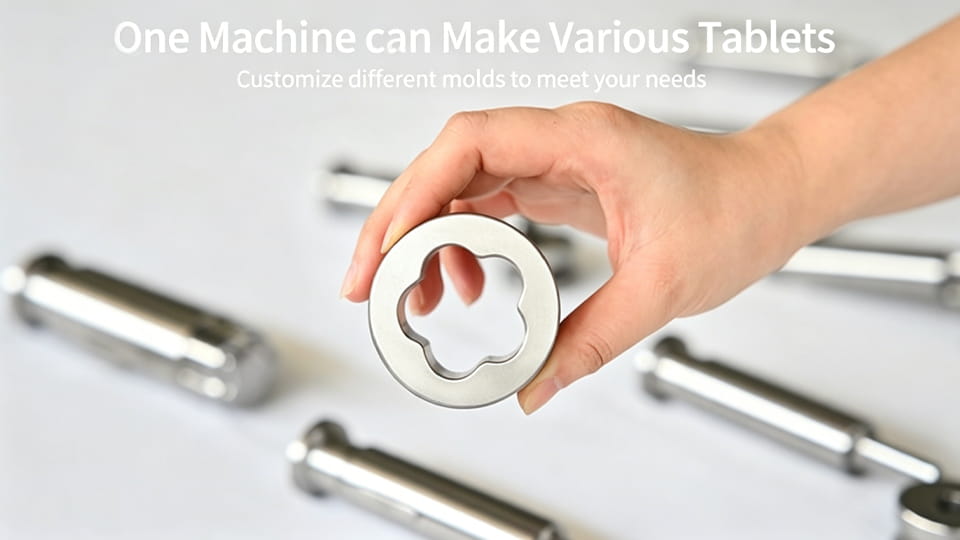
Figür: Yumruklar ve ölür (tablet takım) farklı boyutlarda/malzemelerde gelir. Örneğin, Jinlu'nun standart baskı makinesinde 100kN basınca kadar dayanıklı GCR-15 çelik zımbalar kullanılıyor. Aletler tablet boyutuna uygun olmalıdır: örneğin. 6–8 mm çiğnenebilir ürünler için BB takımları, ~12mm eczane tabletleri için B-tooling, Büyük 25+ mm tabletler için D-tooling.
Toz Akışı ve Besleme: Zorlu tozlar (çok iyi, bağlı, veya düşük yığın yoğunluğu) yerçekimi nedeniyle iyi akmayabilir. Makinenin olup olmadığını kontrol edin kuvvet besleyici (Tozu kalıba iten karıştırıcılar veya kürekler). Zorla besleme, taret hızlı hareket ettiğinde ağırlığın değişmesini önler. Yapışkan veya nemli tozlar (örneğin. bitkisel özler) özellikle kuvvetli besleyicilerden ve düzgün hazne tasarımından yararlanın. Ayrıca ön sıkıştırmayı da göz önünde bulundurun: küçük bir ön sıkıştırma silindiri, kapatmayı/laminasyonu azaltmak için malzemenin havasını alabilir veya önceden sıkıştırabilir. Özetle, Presin haznesinin ve besleme çerçevelerinin toz akışınıza uygun olduğundan emin olun; formülasyonunuzu daha önce çalıştırıp çalıştırmadıklarını sorun.
Sıkıştırma kuvveti: Tablet sertliği ve formülasyon yoğunluğu gerekli kuvveti belirler. Standart ilaç tabletlerinin ihtiyacı var 60–100kN. Çok sert veya büyük tabletler (60mm efervesan gibi) ihtiyaç duyabilir yüzlerce kN'nin (JL'nin büyük makineleri 400kN'ye kadar çıkıyor). Gücün aşırı belirlenmesi, altından daha iyidir; çok az kuvvet yumuşaklık verir, kolayca kırılan tabletler. RichPacking, 60–100kN'nin tipik olduğunu belirtiyor, ve "daha yüksek kuvvet, sertliği ve bütünlüğü artırır." Ayrıca makinenin gerçek zamanlı sıkıştırmayı izlemek için basınç dönüştürücüleri olup olmadığını kontrol edin.. Tek bir makinede hem yumuşak çiğnenebilir gıdalara hem de sert haplara ihtiyacınız varsa, kuvvet aralığının aşağıya ve yukarıya doğru çevrilebildiğinden emin olun.
Otomasyon & Kontrol (PLC/HMI): Modern tesislerde, manuel aramaların modası geçmiş. İyi bir baskı makinesinde tarifler ve veri kaydı için bir PLC ve dokunmatik ekranlı HMI bulunur. Otomatik aşırı/düşük ağırlık reddi gibi özellikleri arayın, basınç sensörleri, ve zımba konumlarının dijital okumaları. Veri takibi (toplu dosyalar, CMS21 CFR Parçası 11 uygunluk) ilaç kalite sistemleri için önemlidir. Uzaktan erişim veya IoT modülleri, teknik desteğe ve önleyici bakım uyarılarına olanak tanır. Jinlu ZP-27/73D baskı makinesi, Örneğin, Sıkıştırma tariflerini saklamak ve kontrolü kolaylaştırmak için Siemens dokunmatik ekranlı HMI ile birlikte gelir.
GMP Uyumluluğu & Malzemeler: Özellikle eczacılık için, baskı tasarımı cGMP'ye uygun olmalıdır. Bunun anlamı temas yüzeyleri olmalı paslanmaz çelik (sıklıkla 316L) ve cilalanabilir, temizlik için minimum ölü köşelerle. Mühürlü, kapalı sıkıştırma bölgeleri toz kaçışını önler. Çabuk açılan hazneler ve taretler temizliği hızlandırır ve çapraz bulaşma riskini azaltır. Mevcut olup olmadığını kontrol edin IQ/OQ/PQ belgeleri tedarikçiden. Makineler genellikle CE ile birlikte gelir, CGMP, veya FDA tasarım sertifikaları. Hassas ürünler için (efervesan gibi), korozyona dayanıklı malzemeler arayın (krom kaplama veya paslanmaz) basının iç kısımlarında.
Değişim & Bakım: Arıza süresi çok maliyetlidir. Takımları değiştirmenin veya makineyi temizlemenin ne kadar kolay olduğuna bakın. Kontrol edilecek özellikler: modüler tasarım, aletsiz sökme, ve yağlama sistemleri. RichPacking şunu belirtiyor: çıkarılabilir taret, hazne, ve besleyiciler, artı zamanlı otomatik yağlama, bakım süresini önemli ölçüde azaltabilir. Hızlı kalıp değiştirme sistemi, zımbaların alttan değiştirilmesine izin vermelidir 20 dakika. Şeffaf güvenlik kapıları ve ergonomik düzen operatörlere yardımcı olur. Bir örnek: bazı modern presler, çalışmalar arasında kalan tozu emmek için taretin içinde vakum çubukları kullanır. Tedarikçinin hizmet sözleşmesi olup olmadığını sorun, eğitim, ve yedek parça bulunabilirliği.
Toplam Sahip Olma Maliyeti (TCO): Etiket fiyatının ötesinde, yaşam döngüsü maliyetini hesaplayın. Daha ucuz bir makine daha hızlı aşınabilir veya daha fazla işçilik gerektirebilir. Enerji kullanımındaki faktör, yedek parça ihtiyaçları, ve beklenen kullanım ömrü. Örneğin, Kolayca bulunabilen parçalara sahip, iyi tasarlanmış bir baskı makinesi tasarruf sağlayabilir kadar 20% yıllık kesinti maliyetlerinde. Ayrıca garanti süresini ve nelerin kapsandığını da sorun.
Tedarikçi Uzmanlığı & Hizmet: Bir tablet baskı makinesi satın almak uzun vadeli bir ortaklıktır. Tedarikçinin geçmiş performansını kontrol edin (10+ İlaç ekipmanlarında uzun yıllara dayanan deneyim idealdir). Hedef pazarınızda referansları var mı? (Avrupa, BİZ, vesaire.)? Fabrika düzeni konusunda yardımcı olabilirler mi?, tarif denemeleri, ve doğrulama? Satış sonrası desteği (kurulum, devreye alma, eğitim, 24/7 uzaktan yardım) çok önemli. Örneğin, Jinlu Packaging ücretsiz formül testi sunar ve birçok makinede 3 yıl garantiye sahiptir. Tam kapsamlı bir tedarikçiden satın alma (kapsül dolgu maddeleri, sayaçlar, Blister Makineler) RichPacking'in belirttiği gibi entegrasyon ve doğrulamayı basitleştirebilir, tek bir satıcıya sahip olmak bakım yönetimini basitleştirir. Jinlu'nun sitesi de tedarik ettiklerini gösteriyor kapsül dolum makineleri, sayma makineleri, kabarcık paketleyiciler, vesaire., Tam bir üretim hattı planlıyorsanız bu yararlı olabilir.
Gürültü, Toz ve Güvenlik: Tablet baskı makineleri gürültülü ve tozlu olabilir. Gürültü seviyesini kontrol edin (olmalı <80 dB) ve baskı makinesinde HEPA toz filtreleri ve kapalı kanallar varsa. Güvenlik kilitleri (kapılar hareketi durdurur, Menetmek) ve aşırı yük sensörleri operatörleri ve ekipmanı korur. Aşırı titreşim veya dökülen toz GMP statüsüne zarar verebilir.
Geleceğe Hazırlama: Yükseltme yollarını arayın. Sanayi İlaç'a doğru ilerliyor 4.0: servo tahrikli hassasiyet, MES için Ethernet/IP bağlantısı, kestirimci bakım, ve modüler eklentiler. Açık mimariye sahip bir baskı makinesi satın almak, daha sonra yeni sensörlerin veya yazılımların takılabileceği anlamına gelir, yenileme maliyetlerinden tasarruf. Örneğin, bazı baskı makineleri artık kamera incelemesi veya otomatik örnekleme modülleri sunuyor. En azından temel bilgileri sağlayın: SCADA veya MES'e entegrasyon yeteneği.
Tablet Türlerini Önerilen Makinelerle Eşleştirme
Aşağıdaki tablo, her tablet kategorisine uygun baskı tipi ve özelliklerini özetlemektedir:
Tablet Tipi
Önerilen Makine
Temel Makine Özellikleri
Standart Tabletler
Döner pres (B-takımlama) veya yüksek hızlı pres
19 mm (B) takımlama, 60–100kN kuvvet, 30k–250 bin sekme/saat, ön sıkıştırma, PLC kontrolü. Ayna kaplama, GMP tasarımı. Düz yuvarlak/oval tabletler için uygundur.
Efervesan / Deterjan
Ağır hizmet tipi döner veya büyük D-aracı presi
25 mm (D) takımlama, çok yüksek kuvvet (150–400kN'ye kadar), mühürlü oda, kuvvet besleyici, nem alma seçenekleri. Paslanmaz veya kaplamalı parçalar (aside dayanıklı). Daha düşük hız, özel besleyici.
Çift katmanlı / Çok katmanlı
İki katmanlı veya üç katmanlı pres (özel döner)
2+ hazneler & besleyiciler, çift sıkıştırmalı kameralar, hat içi ağırlık örneklemesi. Her katman için önceden sıkıştırın, VFD kontrolü, senkronize taretler. İnce ara katmanları işleyebilir. Standart veya özel zımba şekillerini kullanır.
çiğnenebilir / Yumuşak
Standart döner (B veya BB takımları)
BB-takımları (kısa yumruklar, ~6–8mm), düşük sıkıştırma kuvveti (~30–60kN), nazik sıkıştırma profili, yapışmayı önleyici kaplama. Muhtemelen daha uzun kalma süresi (yavaş RPM). Pürüzsüz besleme ve toz kapağı (şeker tozu).
Büyük/Düzensiz
Büyük kalıplı döner pres (D-takımı)
25+ mm'lik zımbalar (D takım), çok yüksek kuvvet (100–400kN), sağlam çerçeve, düşük taret hızı (~10–60 RPM), özel kameralar. Büyük kalıp hareketine uyum sağlamak için genellikle ağır kam taretleri. Karmaşık şekilleri yönetir.
Tabletinizin boyutlarını ve türünü yukarıdakilerle eşleştirerek, modelleri kısa listeye alabilirsiniz. Daima çapraz kontrol yapın: örneğin. 40 mm'lik bir efervesan tablet, Büyük D-aracı presi sıra, standart bir baskı değil.
Kaçınılması Gereken Yaygın Hatalar
Deneyimli alıcılar bile hata yapıyor. İşte dikkat etmeniz gereken tuzaklar:
Önce Çıktıya/Fiyata Göre Seçim Yapmak: Bir makineyi sırf "200.000 sekme/saat"e sahip olduğu veya düşük fiyatı olduğu için seçmeyin. Tabletiniz çok büyük veya kalınsa, hızlı makine kalıbı kabul etmeyecek veya sisteme aşırı yük bindirecek. Hatırlamak: tablet boyutu makineyi belirler, tam tersi değil. Daima tablet çapı ve kalınlığıyla başlayın.
Tablet Boyutlarının Göz Ardı Edilmesi: İlgili olarak, Önemli özellikleri asla göz ardı etmeyin. Tedarikçinize tabletin çapını ve kalınlığını vermemek, onların daha küçük boyutlu bir baskı önermesine yol açabilir. Presin maksimum kalıp deliğini ve maksimum dolgu derinliğini kendiniz doğrulayın.
Büyük Boyutlandırma Kapasitesi: Bazı alıcılar "küçük beden yerine büyük beden almanın daha iyi" olduğunu düşünüyor. Ancak büyük boyutlu bir baskı makinesinin maliyeti 2-3 kat daha fazla olabilir, daha fazla zemin alanı tüketin, ve verimsiz bir şekilde çalıştırın 10% yük. Daha kötüsü, daha uzun izinlere sahip olabilir (daha kısa bekleme süresi) ince tabletlerin çok yumuşak hale getirilmesi. Rekabetçi bir tedarikçi aşağıdakileri tavsiye etmelidir: en küçük yeterli modeli, veya gelecekteki büyüme için en fazla bir beden büyük.
Aletleri Yoksayma & Formülasyon: Baskı makinesinin tam ihtiyacınız olan takımları kullanıp kullanmadığını kontrol edin. Takım tasarımı hataları ağırlık değişimine veya yapışmaya neden olur. Ayrıca tozunuzu da değerlendirin: eğer yapışkansa (bitkisel, şeker bazlı), kaplamalı zımbaların ve kuvvet besleyicinin belirtildiğinden emin olun.
Bakım ve Parçaları Hafife Alma: Yeni presler yağlama ve ara sıra yenileme gerektirir. Yedek yumruklar için bütçe ayırdığınızdan emin olun, silindirler, kemerler, vesaire. RichPacking'in uyardığı gibi, Yedek parça planlamasında başarısız olmak yaygın bir hatadır. Ayrıca bölgenizde yedek parça almanın ne kadar kolay olduğunu da düşünün.
Uyumluluğun İhmal Edilmesi & Kurulum: Doğrulama belgelerini unutmayın (IR/WH/PQ) ilaç işletmecisiyseniz. Kurulum için bir planınız olduğundan emin olun, eğitim, ve doğrulama testleri. Burada tedarikçinin desteğine güvenmek daha güvenlidir.
Önce Test Etmiyorum: İdeal olarak, makine modelinde gerçek formülünüzle bir test veya pilot çalışma yapın. Birçok iyi tedarikçi (Jinlu Ambalaj dahil) ücretsiz test veya formül denemeleri sunun. Testi atlarsanız, sorunları yalnızca gönderimden sonra keşfedebilirsiniz, ayları boşa harcamak.
Kısacası, tablet profilinize ve ürün hedeflerinize odaklanın, sadece parlak özellikler değil. "Sadece en hızlı makineyi istedim" gibi hatalar sıklıkla geri teper.
Doğru Tedarikçi Nasıl Seçilir? (ve Neden Jinlu Ambalaj)
Deneyim & Referanslar: İdeal olarak, tablet ekipmanı alanında 5-10 yıldan fazla deneyime sahip bir tedarikçiyi ve sektörünüzde/bölgenizde müşterileri olan bir tedarikçiyi seçin. Vaka çalışmaları veya referanslar isteyin (özellikle küresel büyük ilaç isimleri). Jinlu Paketleme, Örneğin, Fortune-500 tedarikçisi konumundadır 30+ yıllık makine tecrübesi (müşteri logolarını görün).
Teknik Destek: Doğru modeli belirlemeye yardımcı olacaklar mı?? İyi bir tedarikçi tabletin özelliklerini soracaktır (çap, kalınlık, formülasyon ayrıntıları) alıntı yapmadan önce – LinCi'nin vurguladığı gibi, bir üretici asla tahmin etmemelisin. Fabrika kabul testleri sunup sunmadıklarını kontrol edin (YAĞ) ve uygunluğu onaylamak için örnek takımları göndermeye hazırız.
Satış Sonrası Hizmet: Yerinde devreye alma, eğitim, ve zamanında yedek parça gönderimi çok önemlidir. Bazı tedarikçiler uzaktan kumanda sözü veriyor 24/7 Destek. Yerel temsilcilere veya servis merkezleri ağına sahip satıcıları tercih edin. Garanti koşullarını netleştirin (en azından 1 tüm makinede yıl, 3 büyük parçalarda yıllar iyi).
Entegrasyon Yeteneği: Bir çizgi inşa ediyorsanız, Baskı makinesinin yukarı/aşağı yöndeki ekipmanlarla entegre olup olamayacağına bakın. Örneğin, bir tablet sayacına veya kabarcık hattına bağlanabilir mi? RichPacking, Rich'in baskı makinelerinin sayma ve kabarcıklama makinelerine bağlandığını belirtiyor. Jinlu da benzer şekilde tam bir süit sunuyor (sayaçlar, kartonlama makineleri, kabarcık paketleyiciler), böylece anahtar teslimi hatlar konusunda tavsiyelerde bulunabilirler.
Şirket Güvenilirliği: Sertifikaları kontrol edin (CE, ISO). Ayrıca finansal istikrarı da onaylayın.
Örnekler ve Referanslar: Jinlu'nun sitesinde vaka çalışmaları (örneğin. Pakistan'da bir tablet presi) ve sertifikalar (CGMP, CE, ROHS, UL logoları gösteriliyor). Yetkinliği ölçmek için bunları kullanın. Ayrıca ticaret forumu geri bildirimlerini inceleyin veya meslektaşlarınıza sorun.
Deneme Teklifi/İletişim: Nihayet, tedarikçilerle iletişime geçtiğinizde, kısa bir teknik özellikler sayfası sağlayın: tablet şekli/boyutları, beklenen çıktı, birim ağırlık, ana malzemeler (aşınma/korozyon için), ve birlikte işlenmiş yardımcı maddeler. Ürününüz için gereken kalıp deliği ve taret boyutunu onaylamalarını isteyin. Kırmızı bayrak, teknik özelliklerinizi sormadan hemen bir modelin fiyatına göre fiyat teklifi veren bir satıcıdır.
Mümkün olduğunda, Yerel mevcudiyeti olan bir tedarikçiyi veya bilinen bir distribütörü seçin; bu, garanti hizmetini kolaylaştırır. Birçok 1. Kademe ilaç Fette gibi tedarikçileri kullanıyor, Bosch'un (Milstein), veya presler için Cadmach; Çinli üreticiler arasında, Jinlu Paketleme, Zengin Paketleme, ve diğerleri küresel ölçekte rekabet ediyor. Önemli olan iddiaları doğrulamaktır: Örneğin, Jinlu çıktı aralıklarını ve baskılarını tanıtıyor, ancak bunları gereksinimlerinize göre çapraz kontrol etmelisiniz.
Sonuç ve Sonraki Adımlar
Doğru tablet baskı makinesini seçmek, teknolojiyi üretim stratejinizle uyumlu hale getirmekle ilgilidir. Güvenilir için, uyumlu tablet üretimi, odaklanmak toplam performans - kesinlik, dayanıklılık, ve destek – yalnızca fiyat etiketi değil. Jinlu Packaging, GMP uyumlu bir dizi döner pres sunar (Bekar, çok katmanlı, yüksek hızlı) ve destekleyici ekipmanlar. Tabletinizin özellikleriyle bize ulaşın (çap, kalınlık, katmanlar, çıktı) özel bir öneri ve fiyat teklifi almak için. Uzmanlarımızın sizi doğru makine ve takımlara yönlendirmesine izin verin, ve sık karşılaşılan tuzaklardan kaçınmanıza yardımcı olur. Formülünüzle örnek testler bile yapabiliriz. Detaylı fiyat teklifi veya proje danışmanlığı için, fiyat teklifi isteyin veya satış ekibimizle konuşun Bugün.
Jinlu'nun ürün yelpazesi hakkında daha fazla bilgi edinin: Kapsül Dolum Makineleri, Blister Ambalaj Makinaları, Ve Tablet Sayma Makineleri hepsi tablet baskı cihazınızla entegre edilebilir. Bizim kontrol edin kapsül dolum makinesi sayfa veya tablet sayma makineleri ayrıntılar için.
Tablet Pres Makinasının Nasıl Seçileceğine İlişkin SSS
Tablet pres makinesi nedir ve nasıl çalışır??
Tablet pres makinesi, tozları veya granülleri tanımlanmış bir şekle sahip tabletler halinde sıkıştırmak için kullanılan farmasötik bir cihazdır., ağırlık, ve sertlik. Malzemeyi bir kalıp boşluğuna doldurarak ve katı bir tablet oluşturmak için üst ve alt zımbaları kullanarak sıkıştırma kuvveti uygulayarak çalışır..
Bir tablet presi hem ilaç hem de nutrasötiği işleyebilir mi? (örneğin. vitamin) ürünler?
Çoğu zaman evet, tozlar benzer akışa ve yağlamaya sahipse. Fakat, Yapışkan bitkisel tozlar veya şeker, özel kaplamalar veya basınçlı besleyiciler gerektirir. Farklı tarifler için kalıp ve besleyici ayarlarının değiştirilebildiğinden emin olun.
Farklı tablet türleri için doğru tablet baskı makinesini nasıl seçerim??
Önemli olan makineyi tabletinizin özellikleriyle eşleştirmektir, boyut dahil, şekil, formülasyon, ve üretim hacmi. Örneğin, efervesan tabletler yüksek sıkıştırma kuvveti ve daha büyük aletler gerektirir, iki katmanlı tabletler çok katmanlı besleme sistemlerine ihtiyaç duyarken. Yalnızca fiyata dayalı seçim yapmak genellikle daha sonra üretim sorunlarına yol açar.
Sıkıştırma sırasında tablet kalitesini hangi faktörler etkiler??
Tablet kalitesini etkileyen çeşitli faktörler, içermek: • Tozun akışkanlığı • Sıkıştırma kuvveti • Takım durumu • Nem içeriği Yetersiz toz akışı veya yanlış besleme, eşit olmayan tablet ağırlığına ve kusurlara yol açabilir.
Tablet baskı makinelerinde sık karşılaşılan sorunlar nelerdir??
Tipik sorunlar şunları içerir:: • Eşit olmayan tablet ağırlığı • Yumruklara yapışmak veya takılmak • Tabletin çatlaması veya sertliğinin düşük olması • Toz sızıntısı Bu sorunlara genellikle zayıf malzeme akışı neden olur, yanlış basınç ayarları, veya aşınmış takımlar.
İlk kez alıcıların yaptığı yaygın hatalar?
"Daha fazlası daha iyidir" düşüncesiyle büyük boyutlu bir baskı makinesi satın almak; takım uyumluluğunun göz ardı edilmesi; bakım ihtiyaçlarını hafife almak; ve testleri veya yedek parça bütçelemesini atlamak. Makineyi tabletinizin özelliklerine ve toplam üretim planınıza göre dikkatlice eşleştirerek bunlardan kaçının.
Bir tablet baskı makinesini tam üretim hattına entegre edebilir miyim??
Evet. İyi tedarikçiler (Jinlu Paketleme gibi) tablet sayaçlarıyla arayüz oluşturmak için tasarım baskıları, kapsül dolgu maddeleri, kabarcıklar, ve anahtar teslimi üretim için kartonlama makineleri. Çok adımlı bir çizgi planlıyorsanız, Satıcıyla konveyör entegrasyonunu ve otomasyonunu önceden görüşün.
Tablet baskı makinesi almadan önce malzememi test etmeli miyim??
Kesinlikle. Gerçek formülasyonunuzu kullanarak bir deneme çalıştırması şiddetle tavsiye edilir. Tablet sertliğini değerlendirmenizi sağlar, ağırlık tutarlılığı, Nihai yatırım kararı verilmeden önce gerçek üretim koşullarında kusur oranlarının belirlenmesi.
B takımlama ile D takımlama arasındaki fark nedir?
B takımları standart tabletler için yaygın olarak kullanılır (daha küçük boyut), D takımları efervesan veya veterinerlik ürünleri gibi daha büyük tabletler için tasarlanırken. Doğru aletin seçilmesi kritik öneme sahiptir çünkü tablet boyutunu doğrudan etkiler, şekil, ve makine uyumluluğu.
Küçük fu, Jinlupacking'in kurucusu, getiriyor 20 ilaç makineleri sektöründe uzun yıllara dayanan uzmanlık. Onun liderliği altında, Jinlu, tasarımı entegre eden güvenilir bir tedarikçiye dönüştü, üretme, ve satış. Petty, müşterilerin ilaç ambalajının karmaşıklıklarını aşmasına yardımcı olmak için derin sektör bilgisini paylaşma konusunda tutkuludur, sadece ekipman almamalarını sağlamak, ancak üretim hedeflerine göre uyarlanmış gerçek bir tek elden hizmet ortaklığı.