Enterik kapsüller Sıradan haplara benziyorlar ancak mide asidine direnen ve içeriklerini bağırsakta serbest bırakan özel kaplamalara sahipler.. Enterik (veya mide-dayanıklı) Kapsüller midede güvenli bir şekilde dolaşacak ve ince bağırsakta çözünecek şekilde özel olarak tasarlanmıştır.. “Enterik” terimi Yunanca bağırsak anlamına gelir. Pratikte, enterik kapsüllere pH'a duyarlı bir kaplama verilir veya pH'a duyarlı malzemelerden yapılır, böylece asidik midede bozulmadan kalırlar (pH ~1,5–3,5) ancak ince bağırsağın daha yüksek pH'ına ulaştıklarında hızla çözünürler. Açıkça söylemek gerekirse, enterik kapsüller içindeki ilacı veya takviyeleri mide asidinden korur, aktif bileşenlerin yalnızca kapsül bağırsaklara geçtikten sonra salınmasını sağlamak. Salınım yerindeki bu basit değişiklik, birçok ilaç ve takviyenin etkinliği ve toleransı açısından büyük bir fark yaratabilir..
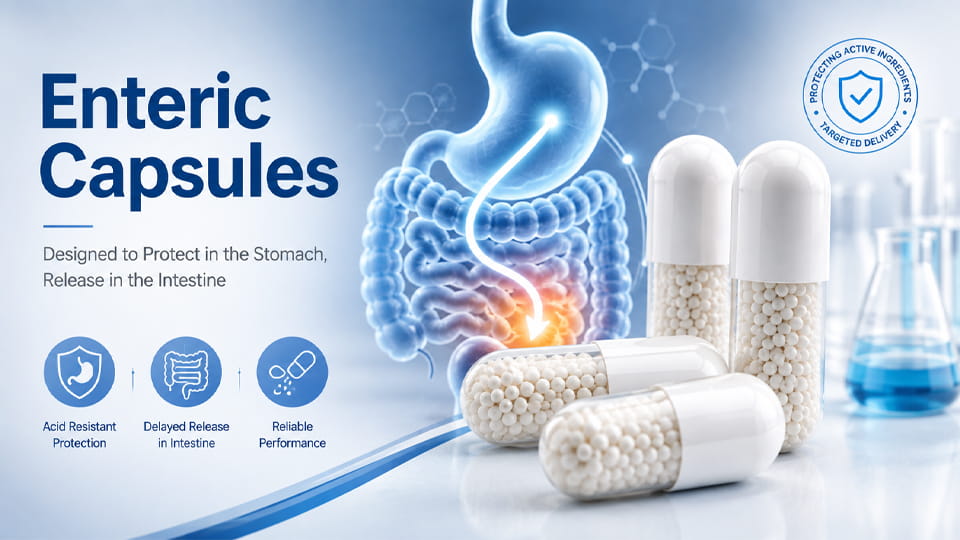
Enterik (aside dayanıklı, mide-dayanıklı) kapsüller oral dozaj formlarıdır Mide asidine direnecek ve ince bağırsakta çözünecek şekilde tasarlanmıştır. Ürün tasarımına bağlı olarak, mide-direnç fonksiyonu şuradan gelebilir: kapsül kabuğu kendisi, BİR enterik kaplama, veya enterik kaplı içerikler peletler veya granüller gibi. Bu yaklaşım, bir API mide asidine duyarlı olduğunda yaygın olarak kullanılır., midede salınımı istenmediğinde, veya formülasyonun aktif bileşenini gastrointestinal sistem boyunca daha da iletmesi amaçlandığında. Pratikte, ilaçları midede bozulmadan taşırlar ve daha yüksek pH'ta salıverirler (genellikle pH 5,5–6,0'ın üzerinde). Bu pH tetiklemeli salım iki ana amaca hizmet eder:
Bu faydalar, formülasyonların reçeteli ilaçlardan takviyelere ve nutrasötiklere kadar neden değiştiğini açıklamaktadır.. Örneğin, enterik bir kapsül içinde canlı probiyotiklerin verilmesi organizmaların mide asidinde hayatta kalmasını sağlar. Benzer şekilde, Ağrı kesicilerin salınmasını geciktirmek mide rahatsızlığını önler. Özetle, enterik kapsüller etkinleştirir gecikmeli salınımlı teslimat: kapsül mideden geçer (bozulmadan kalan) Ve yalnızca yüksek pH'lı bağırsaklara ulaştığında açılır.
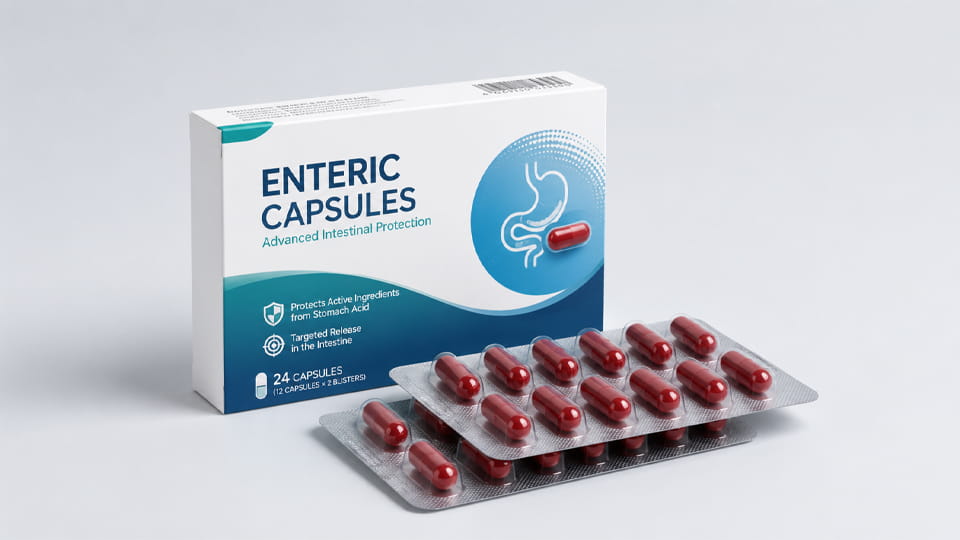
Enterik kapsüller sıklıkla normal jelatin veya sebze kapsüllerine benzese de, mide asidinde onları bir arada tutan özel polimerler içerirler. Enterik kapsüllerin sırrı pH'tır. Midenin asidik ortamında, özel kaplamaları veya kabukları sağlam kalır (çözünmez). Kapsül ince bağırsağa hareket ettiğinde (tipik olarak pH 5,5–7,5), daha yüksek pH kaplamanın parçalanmasını tetikler. Örneğin, HPMCP adı verilen ortak bir polimer (hidroksipropil metilselüloz ftalat) enterik kapsüller için seçilir çünkü yaklaşık pH 5,5'in altında çözünmez kalır. Pratikte, HPMCP'li bir kapsül midede 1-3 saat boyunca güvenli bir şekilde geçecek ve ancak bağırsağa ulaştığında çözünmeye başlayacaktır.. Bu pH ile tetiklenen salınım, kapsülün dolmasını sağlar (toz olsun, sıvı veya diğer formlar) doğru yerde serbest bırakılır.
Düzenleyici testler bu eylemi doğruluyor. Tasarım gereği, enterik bir dozaj formu olmalıdır Olumsuz parçalanır veya içeriği simüle edilmiş mide sıvısına sızar (pH 1.2) 1-2 saate kadar, Ve mutlak bağırsak koşullarında tamamen parçalanır ve içeriğini serbest bırakır (pH ~6.8). Basit anlamda, Farmakope kuralları, en fazla 10% Kapsül içeriğinin büyük bir kısmı mide benzeri asitte salınabilir, oysa en azından 80% daha yüksek bir pH'ta salınmalıdır (bağırsak) tampon. Bu, enterik kapsüllerin ince bağırsağa kadar salınımı gerçekten "geciktirmesini" sağlar.
Etkili bir enterik kapsül için doğru malzemeleri seçmek çok önemlidir. Anahtar bileşenler şunları içerir: polimer(S) kaplama için (veya kabuk) Ve yardımcı maddeler. Yaygın enterik polimerler ve malzemeler şunlardır::
Ek olarak, kapsül kabuğu malzemeleri kendileri enterik davranışa katkıda bulunabilir. Örneğin, Bazı ürünlerde kaplama adımını önlemek için önceden hazırlanmış aside dayanıklı kapsüller kullanılır. Örnekler Capsugel'i içerir EnTRinsic® (bir selüloz asetat ftalat kabuğu) ve CapsCanada'nın AR Caps® (HPMC ve hipromelloz ftalat karışımı). Bu özel kabuklar mide pH'ında stabil kalacak şekilde tasarlanmıştır (örneğin. AR Kapakları aşağıdakiler için stabildir: 60 mide benzeri durumlarda min) ve daha sonra bağırsak pH'ında parçalanır. Bu tür enterik kapsül kabuklarının kullanılması üretimi kolaylaştırabilir (kaplama adımına gerek yok), ancak tescilli kapsüllerin kendilerinin tedarik edilmesini gerektirir.
Malzemeleri özetlemek için: çoğu enterik kapsül bir polimer kaplama dolgu sonrası uygulandı, veya bir enterik dereceli kapsül kabuğu; yaygın polimerler metakrilatlardır (Eudragit L/S), CAP/HPMCP, veya doğal reçineler. Formülatörler aynı zamanda tekdüzelik sağlamak için plastikleştirici ve solvent sistemlerini de ayarlar., hatasız film.
Enterik kapsüller, hedefe yönelik veya hassas dağıtıma ihtiyaç duyduğunuzda birçok belirgin avantaj sunar:
Etraflı, enterik kapsüller esasen kontrol etmenizi sağlar Neresi Ve Ne zaman ürününüz yükünü serbest bırakır. Bu, hassas enzimler veya asitte kararsız besin maddeleri içeren formülasyonlar için çok büyük bir değerdir., Zaman salınımlı dozajlama için, ve hastanın konforu için. Bir kapsül uzmanının belirttiği gibi, enterik kabukların asit dirençli doğası, onları sıradan bir kabuktan daha özel ilaç dağıtım işlevleri için uygun hale getirir jelatin veya sebze kapsülü”.
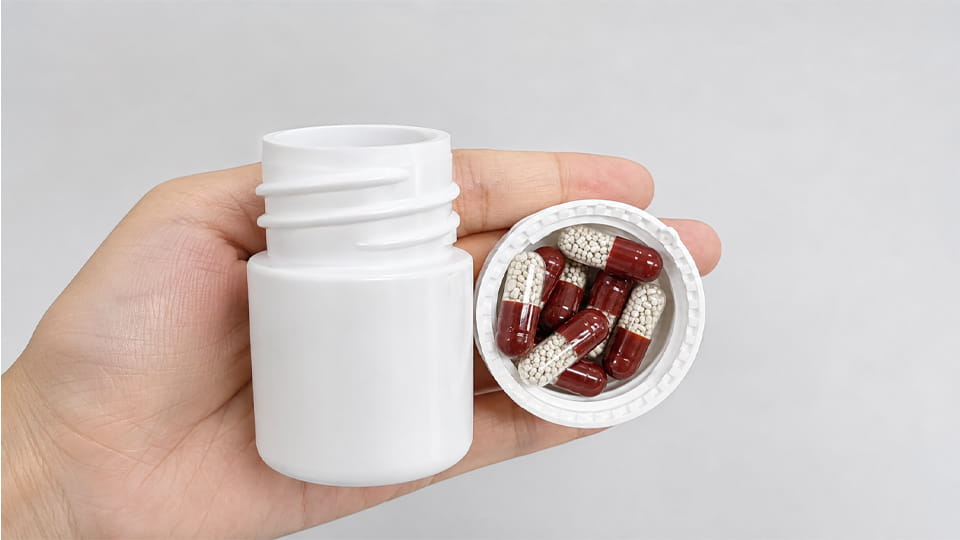
Enterik Kapsüller Arasında Seçim Yapmak, standart jelatin kapsüller, ve HPMC kapsülleri yalnızca kabuk malzemesi meselesi değildir. Asidik koşullardaki davranışları, nem tepkisi, amaçlanan salım profili, ve taşıma gereksinimleri oldukça farklı olabilir. Aşağıdaki karşılaştırma, ilaç üreticilerine ve üretim ekiplerine temel farklılıklara ilişkin hızlı bir genel bakış sunmaktadır..
| Karşılaştırma Boyutu | Enterik / Asite Dayanıklı Kapsüller | Standart Jelatin Kapsüller | Standart HPMC Kapsülleri |
|---|---|---|---|
| Parçalanma davranışı | Mide koşullarında parçalanmaya direnecek ve bağırsak koşullarında içerikleri daha sonra serbest bırakacak şekilde tasarlanmıştır | Genellikle nispeten hızlı parçalanma için tasarlanmıştır | Genellikle hızlı parçalanma için tasarlanmıştır; performans formülasyona bağlıdır |
| pH eşiği | Enterik polimere ve formülasyona bağlıdır; Düşük mide pH'ına direnecek ve daha yüksek pH'da salınacak şekilde tasarlanmıştır | Doğal pH tetiklemeli enterik koruma yok | Standart HPMC, özel olarak formüle edilmediği veya kaplanmadığı sürece doğası gereği enterik değildir |
| Nem içeriği | Kabuk bileşimine ve üretim sürecine bağlıdır; çevre kontrolü önemli olabilir | Nispeten yüksek nem içerir ve nem değişikliklerinden etkilenebilir | Genellikle jelatinden daha düşük nem gereksinimlerine sahiptir ve bazı neme duyarlı formülasyonlara uyabilir |
| İdeal uygulamalar | Aside duyarlı API'ler, gecikmeli salınımlı formülasyonlar, ve bağırsak hedefli dağıtım | Geleneksel anında salınan farmasötik ve nutrasötik ürünler | HPMC kabukları gerektiren ürünler, birçok vejetaryen veya neme duyarlı formülasyon dahil |
| Dikkate alınması gereken noktalar | Kabuk taşımanın dikkatli kontrolünü gerektirir, doldurma parametreleri, ve mekanik stres | İyi kurulmuş ve genel olarak geleneksel kapsül doldurma işlemleriyle uyumlu | Mekanik ve nem davranışı jelatinden farklıdır ve seçilen dolum ekipmanında doğrulanmalıdır. |
Enterik kapsüllerin üretimi normal kapsüllerle benzer temel aşamaları takip eder, ancak malzeme ve kaplamada bazı değişiklikler vardır. Bir kapsül üretim tesisinde, tipik aşamalar şunlardır:
Özetle, enterik kapsüllerin yapımında tanıdık kapsül teknolojisi kullanılır ancak malzeme ve testlerde ekstra dikkat gerekir. Pim daldırma veya şerit doldurma gibi genel adımlar hâlâ geçerlidir, ancak karışımda enterik polimerler var. Birçok üretici, birden fazla kapsül malzemesini destekleyen gelişmiş kapsül üretim hatlarını tercih ediyor. Bir paketleme kılavuzunun tavsiye ettiği gibi, Ekipmanınızın "enterik kapsülleri" jelatin veya vejetaryen kabuklarda olduğu gibi işleyebildiğini bir kez daha kontrol edin. İyi ekipman tasarımı (pürüzsüz metal yüzeyler, HPMC için uygun araçlar, vesaire.) doldurma sırasında bu özel kabukların hasar görmesini önlemeye yardımcı olur.
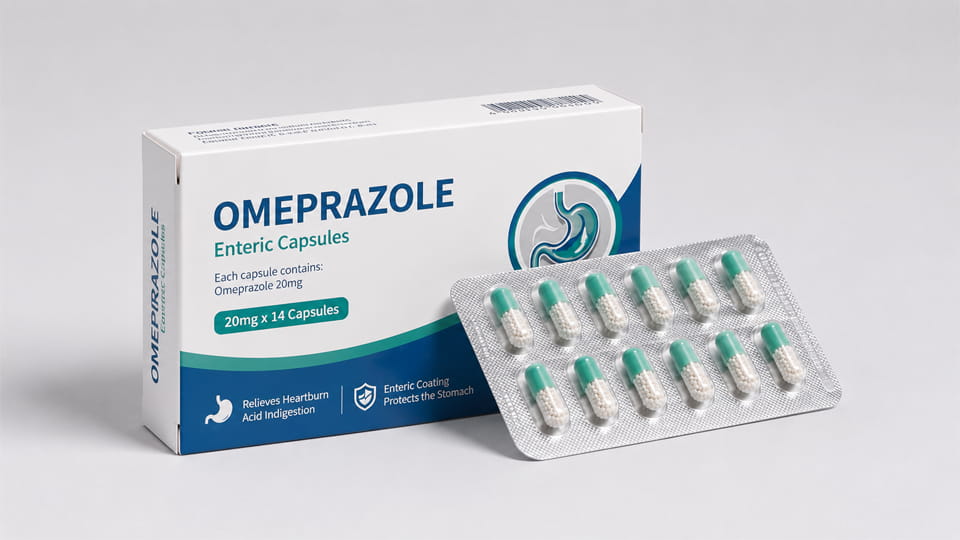
Sağlam bir kalite güvencesi önemlidir enterik fonksiyonun sağlanması. Temel kalite ölçümleri şunları içerir::
Düzenleyici kurumlar bunu gerektirir gecikmeli salım formları katı çözünme kriterlerini karşılayın. Farmakopelere göre, kabul kriterleri belirtebilir, Örneğin, “asit aşamasında %X'ten fazla salınım olmaz; tampon aşamasında Z dakika içinde en az %Y salınır." Spesifik limitler ilaç monografisine bağlıdır. Pratikte, üreticiler yukarıdaki testleri kullanarak enterik kapsül serilerini bu farmakope standartlarına göre doğrularlar. Enterik özelliklerin raf ömrü boyunca korunmasını sağlamak için stabilite testleri de yapılır..
Enterik kapsüller, ilaçların ince bağırsakta serbest bırakılmadan ve aktive edilmeden mideden geçmesini sağlayarak ilaç dağıtımını ve hasta konforunu iyileştirmenin güçlü bir yolunu sunar.. Enterik kapsüller daha güvenlidir, Akıllı formülasyon ve hassas üretimi birleştirerek daha etkili ilaç dağıtımı. Başarıları sıkı kaplama ve test süreçlerine bağlıdır, yanı sıra yüksek kaliteli kapsülleme ekipmanı. İster klinik deneme serileri üretiyor olun ister yılda milyonlarca kapsül üretiyor olun, doğru makine kritik öneme sahiptir. Herhangi bir ilaç için, nutrasötik, veya enterik formülasyonları dikkate alan ek şirket, bu noktaları anlamak ürün başarısı için çok önemlidir.
Enterik kapsüller üretmek isteyen bir operasyon veya satın alma yöneticisiyseniz, JinLu Packaging doğru makine konusunda size yardımcı olabilir. Enterik ve diğer özel kapsüllerle uyumlu gelişmiş kapsül doldurma ve paketleme çözümleri sunuyoruz. Makinelerimiz hassasiyet için tasarlanmıştır, temizlik kolaylığı, ve ilaç standartlarına uygunluk. Enterik kapsül üretiminizi optimize etmeye hazır? Bugün JinLu Packaging ile iletişime geçin kapsül ihtiyaçlarınıza göre uyarlanmış özel bir çözüm veya fiyat teklifi için.
Enterik Kapsüller, mide sıvısına direnmek ve midede erken ilaç salınımını önlemek için tasarlanmış gecikmeli salımlı kapsüllerdir.. Uygun bağırsak ortamına ulaştıktan sonra içeriklerini serbest bırakacak şekilde tasarlanmışlardır.. Formülasyona bağlı olarak, enterik fonksiyon kapsül kabuğundan gelebilir, harici kaplama, veya kapsül içine doldurulmuş enterik kaplı peletler veya granüller.
Enterik Kapsüller, bir formülasyonun mide asidinden korunması gerektiğinde kullanılır, midede salınımı istenmediğinde, veya aktif bileşenin gastrointestinal sistem boyunca daha fazla salınması amaçlandığında. Aside duyarlı API'lerin korunmasına yardımcı olabilirler ve belirli formülasyonların mideye istenmeyen maruziyetini azaltabilirler.
Enterik Kapsüller, asidik gastrik koşullar altında bozulmadan kalan ve daha sonra dozaj formu uygun bir bağırsak ortamına ulaştığında ilacın salınmasına izin veren, gastro-dirençli bir tasarım kullanır.. Birçok enterik sistem pH'a duyarlı polimerlere dayanır, kesin salınım mekanizması kullanılan formülasyona ve polimere bağlı olmasına rağmen.
Enterik Kapsüller genellikle bir tür gecikmeli salımlı kapsüldür. "Gecikmeli sürüm" sürüm profilini açıklar, "enterik" veya "gastro-dirençli", dozaj formunu mide rahatsızlıklarından koruyarak salınımı geciktirmek için kullanılan ortak bir mekanizmayı tanımlar.. Fakat, Her gecikmeli salınımlı sistemin enterik bir mekanizma kullanması gerekmiyor.
Standart jelatin kapsüller genellikle mide-bağırsak sıvılarına maruz kaldıktan sonra nispeten hızlı çözünecek ve salınacak şekilde tasarlanmıştır., Enterik Kapsüller mide rahatsızlıklarına direnmek ve salınımı geciktirmek için özel olarak tasarlanmıştır.. Özel kabuk malzemeleriyle enterik performans elde edilebilir, kaplamalar, veya enterik kaplı içerikler, bu nedenle iki kapsül tipi farklı formülasyon gerektirebilir, elleçleme, ve üretim düşünceleri.
Evet, ancak standart bir HPMC kapsülü otomatik olarak Enterik Kapsül değildir. HPMC, enterik dağıtım sisteminde kapsül kabuğu malzemesi olarak kullanılabilir, ancak gerekli gastro-direnç performansı spesifik formülasyona bağlıdır, polimer sistemi, kaplama, veya kapsül kabuğu teknolojisi. Nihai ürün, amaçlanan çözünme ve salınım gerekliliklerine göre değerlendirilmelidir..
Enterik sistemler, selüloz türevleri gibi pH'a duyarlı polimerleri kullanabilir, hidroksipropil metilselüloz ftalat dahil (HPMCP), selüloz asetat ftalat (KAP), ve metakrilik asit kopolimerleri. Seçim gerekli sürüm profiline bağlıdır, formülasyon uyumluluğu, işleme yöntemi, ve düzenleyici spesifikasyonlar.
Birkaç üretim yaklaşımı var. Üretici daha sonraki bir işlem adımı olarak kapsüle enterik bir kaplama uygulayabilir, doldurmadan önce kapsül kabuğunu kaplayın, mide-dirençli polimerlerden yapılmış bir kapsül kabuğu kullanın, veya geleneksel kapsül kabuklarını enterik kaplı peletler veya granüllerle doldurun. Uygun yol formülasyona ve gerekli salım özelliklerine bağlıdır.
Evet. Enterik kaplı peletler veya granüller, gecikmiş bağırsak salınımının sağlanmasına yönelik bir yaklaşım olarak sert kapsüllere doldurulabilir.. Üretim sırasında, üreticilerin pelet akışkanlığını dikkate alması gerekir, kapsül doldurma doğruluğu, mekanik stres, ve taşıma sırasında kaplamaya zarar verme olasılığı. Ekipman ayarları spesifik formülasyon ve kapsül tipiyle doğrulanmalıdır.
Enterik Kapsüller tipik olarak asidik koşullara karşı dirençleri ve uygun bir tampon veya bağırsak aşaması ortamındaki sonraki salım davranışları açısından değerlendirilir.. Farmakope gecikmeli salım testi, bir asit aşamasını ve ardından bir tampon aşamasını içerebilir, geçerli monografi veya ürün spesifikasyonu tarafından tanımlanan kabul kriterleri ile.
Referanslar:
1.Uluslararası Farmakope: Gecikmeli salımlı kapsüller (enterik kapsüller)—— DSÖ
2.Uzatılmış Salımlı Oral Dozaj Formları: Gelişim, Değerlendirme, ve In Vitro/In Vivo Korelasyonlarının Uygulanması —— BİZ. Gıda ve İlaç İdaresi
3.Piyasada Bulunan Enterik Boş Sert Kapsüller, Üretim Teknolojisi ve Uygulaması —— Ulusal Tıp Kütüphanesi
4.Enterik Kaplı HPMC Kapsüllerin İn Vitro Değerlendirilmesi - Formülasyon Faktörlerinin Ürün Performansına Etkisi —— Ulusal Tıp Kütüphanesi
5.Enterik kaplı HPMC kapsülleri: Enterik kaplamaların karşılaştırılması ve in vitro parçalanma ile çözünme süreleri arasındaki ilişkinin araştırılması —— Johannes Gutenberg Üniversitesi Mainz
6.Farmasötik Kaplama ve Farklı Yaklaşımları, bir İnceleme —— Ulusal Tıp Kütüphanesi