
Choosing between tablet bottles and blister packs depends on more than packaging cost. Pharmaceutical manufacturers need to consider product stability, moisture and oxygen protection, формат дозы, удобство для пациента, целевой рынок, и эффективность производства.
Tablet bottles are commonly used for multi-dose products such as vitamins, пищевые добавки, and many OTC medicines. Blister packs are widely used for unit-dose applications where individual tablet protection, dose tracking, and controlled dispensing are important. Ни один из форматов не является универсально лучшим. The right choice depends on the drug’s stability requirements, packaging specifications, целевой рынок, и общая стоимость владения.
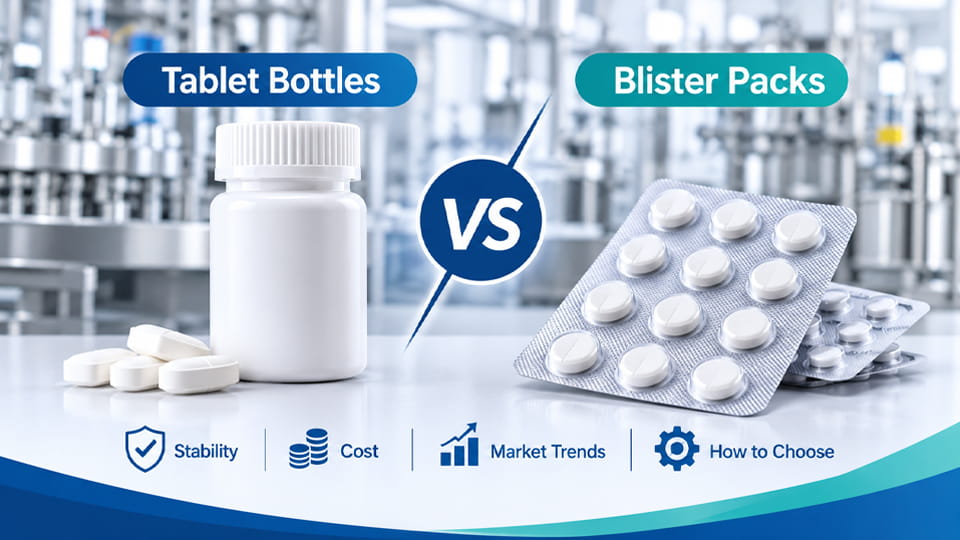
This guide compares tablet bottles vs. blister packs across market applications, стабильность продукта, затраты на упаковку, безопасность пациента, and equipment requirements to help manufacturers select the most suitable packaging solution.
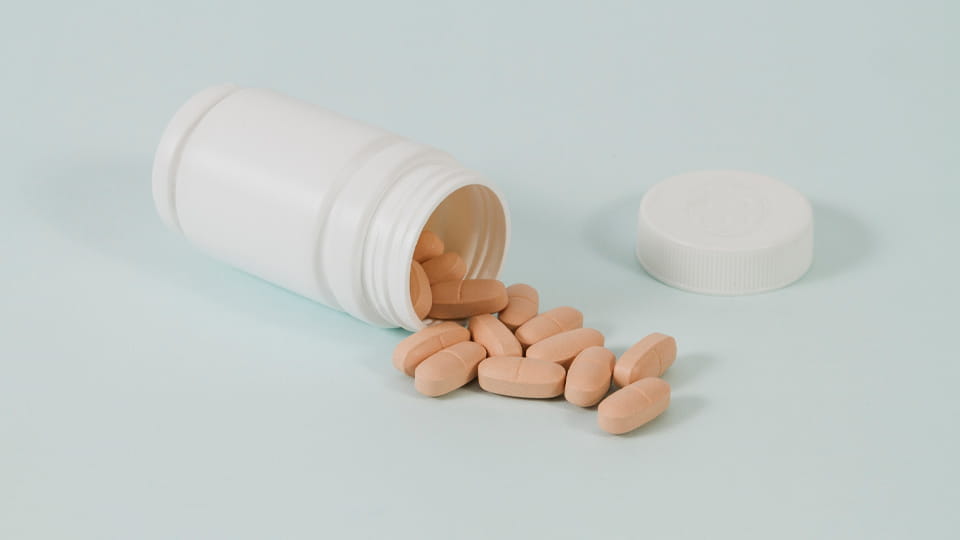
Tablet bottles are rigid multi-dose containers (commonly HDPE, ДОМАШНИЙ ПИТОМЕЦ, или стекло) filled with many tablets or capsules. They’re ubiquitous for vitamins, supplements and high-volume OTC drugs. Bottles often include extra features like induction foil seals, desiccant packs, and child-resistant caps for protection. Автоматизированный tablet-counting and bottling line (с расшифровщиком, прилавок, capper and labeler) usually fills these bottles.
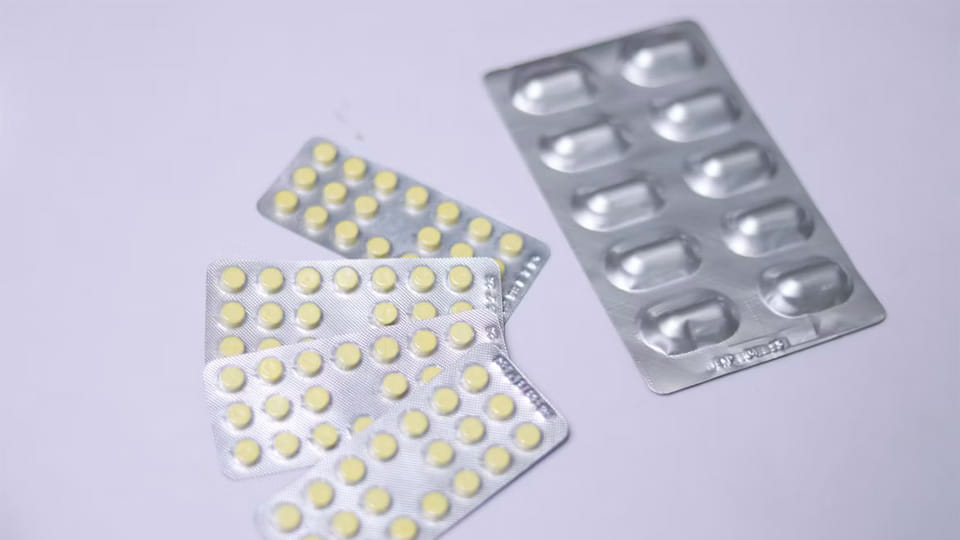
В отличие, Блистерные пакеты are unit-dose formats. Tablets are placed in individual thermoformed cavities (made of plastic or aluminum alloy) and sealed with a lidstock (usually aluminum foil or plastic film). Каждая полость содержит одну дозу, so unopened doses remain fully sealed until taken. Blisters can use materials ranging from plain PVC (low barrier) до cold-formed aluminum foil (высокий барьер). They offer excellent moisture and oxygen protection (when foil lids are used). Blister lines form the cavities, наполните их таблетками, then heat-seal and cut the sheets on high-speed automatic machines.
Ключевые различия: В итоге, bottles are масса, reclosable containers while blisters are single-dose seals. With bottles, you may need a counting and filling step in production. Blisters are sealed individually, eliminating any need to count once the tablets are loaded. Bottles can vary easily in size (50 таблетки, 100 таблетки, и т. д.) by changing cap and label, whereas blisters are fixed by the tooling (you must use a different mold for a different strip size or shape). Bottles allow easy refilling (in concept), but blisters make tracking and dosing more precise.
У каждого формата есть компромиссы, which we’ll explore. Стол 1 summarizes some basics:
| Фактор | Tablet Bottles (Масса) | Блистерные упаковки (Единичная доза) |
| Dose format | Multi-dose (many pills in one container) | Single-dose cavities (one tablet per pocket) |
| Exposure after open | All remaining tablets share air space | Unopened doses stay sealed; only opened pills exposed |
| Moisture barrier | Умеренный (improved with desiccant/foil) | Высокий (especially with Alu-Alu foil or barrier film) |
| Световая защита | Good if amber or opaque bottle | Excellent if foil is opaque; can use colored lidstock |
| Tamper evidence | Induction seal, shrink band on cap | Each cavity must be intact; foil breach is obvious |
| Child resistance | Standard CR caps available | Special CR foil or peelable laminates (tested per regs) |
| Dose tracking | Requires manual counting, этикетки | Сильный (calendar labels, visible pill count per card) |
| Pack size flexibility | Easy to change (choose bottle size) | Fixed by tooling (new blister mold for each count) |
| Production line | Counting/bottling line (расшифровщик, прилавок, каппер, Лейбл) | Blister forming/sealing line (film feed, форма, наполнять, тюлень, резать) |
| Типичные применения | безрецептурные витамины, добавки, дженерики | Таблетки по рецепту, short-course meds, hospital use |
| Расходы (per dose) | Lower for high counts, simple packaging | Выше (each tablet has own cavity and foil) |
(Стол: General comparison; actual performance depends on specific materials and design choices.)
Bottles are масса, многодозовый packages. A single bottle might hold 100–1000 tablets. This is convenient for high-volume products (например. ежедневные витамины, антацидные таблетки) where the consumer takes multiple pills over time. Блистерные упаковки unit-dose or fixed-count packages. Each pocket holds one tablet, and packs often come as strips or cards. Blisters are perfect when you need to control dosing or distribute fixed counts (например. 10 tablets per card). Blisters eliminate the need for counting during dispensing, since each cavity has one dose.
Aluminum foil–backed blisters typically offer the самый высокий барьер для влаги и кислорода. Многие таблетки (аспирин, и т. д.) are packaged with aluminum foil to block humidity and light, продление срока годности. A full aluminum-aluminum (Все время) blister is near-impermeable, making it ideal for very moisture-sensitive or photodegradable tablets. В отличие, a plain PVC blister (no foil) has modest barrier properties; it protects from dust and light but allows more moisture ingress.
A bottle’s protection depends on its material and closure. HDPE and PET bottles have low permeability to moisture, but they’re not perfect barriers. A tight-fitting cap with an induction seal and an internal desiccant can make a bottle almost as protective as a blister. Однако, помнить: тот seal is critical. Even a tiny defect in the cap liner or a loose cap can let moisture in. FDA guidance notes that “container-closure integrity” is part of the barrier system. Суммируя, both systems can protect your tablets if designed properly: foil blisters excel at sealing each pill, while bottles rely on a good cap and desiccant.
Blister packs have an edge in patient compliance. Потому что каждая таблетка индивидуально запечатана., patients can see exactly how many pills they have taken or missed (especially if calendar or numbered blisters are used). This reduces dosing errors. Например, patients using daily pills benefit from combo blister packs that track each day. Bottles require the user to count tablets each time they dispense a dose, which can lead to mistakes. С другой стороны, bottles are very convenient for consumers who prefer one container: it’s easy to carry a bottle and pour out multiple tablets. Bottles with reclosable caps are easier for repeat use (no torn foil), and they allow adding or removing tablets at leisure.
Bottles win in flexibility. A manufacturer can stock one bottle and adjust the number of tablets or label for different products. It’s easy to change a label design or count without new molds. Blister packs require a specific mold (die and punch) for each tablet shape and pack configuration, so changing a blister design can be more involved. In terms of branding, bottles offer a 360° label surface for branding, инструкции, и штрих-коды. Blister packs can print on foil and back cards, but space is typically smaller.
Защита от детей (ЧР) safety caps on bottles are a standard requirement for many drugs. They prevent young children from accidentally opening a bottle. Blister packs also offer inherent protection: a child would have to push through foil to access each pill, which can be harder than unscrewing a cap (though not foolproof for very determined toddlers). Both formats have tamper-evident features: shrink seals or induction seals on bottle caps, and sealed foil on blisters (any broken seal is obvious).
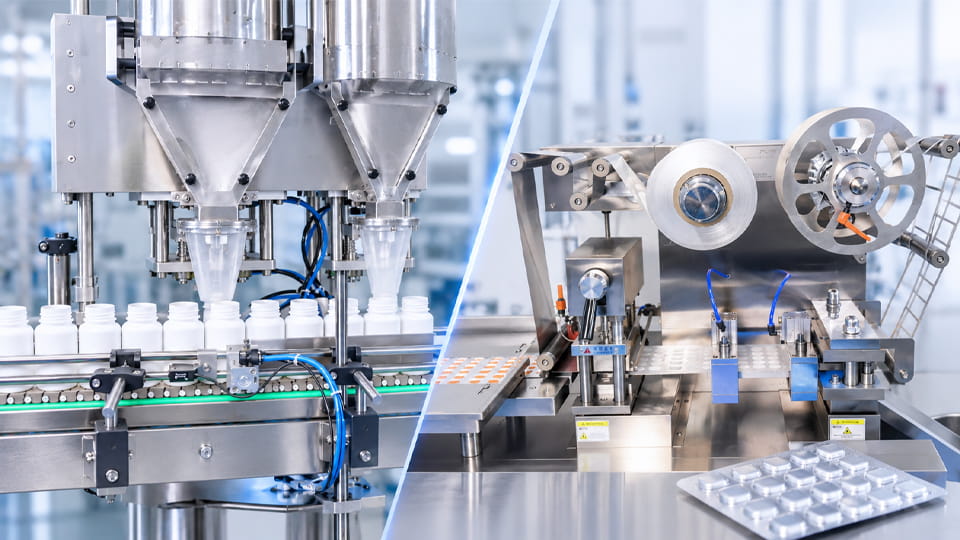
В производстве, a high-speed bottle-filling line can count and fill many tablets per minute, then cap and label the bottle in one flow. После настройки, it’s easy to run large batches. Однако, changing bottle runs (especially for different tablet sizes) may require cleaning and adjustments. Blister lines can be very fast too (forming and sealing thousands of cavities per hour), but each tablet size or pack format needs its own tooling. For short runs or seasonal products, bottles allow quantity flexibility, whereas blisters might be slower to set up but excel at unit dosing.
Окончательно, consider market practice and regulations. In some regions or product categories, one format dominates. Например, in many OTC/supplement markets, bottles are more common (consumers expect a “pill bottle”). В prescription drug markets, especially outside the US, blister packs are often preferred for single-dose safety and compliance. Regulatory bodies may also push for unit dosing (НАПРИМЕР., to reduce dosing errors) or for child-resistance. Emerging trends in sustainability are also influencing choice: some companies are replacing PVC blisters with greener PET blisters (as Bayer did for Aleve, cutting carbon footprint by 38%). Тем временем, lightweight plastic bottles remain popular due to lower cost and ease of recycling.
Суммируя, the “differences” boil down to your priorities: volume vs. единичная доза, maximum protection vs. удобство, and production logistics. Each has clear advantages, but neither is universally better.
На практике, geography and product segment influence the choice. In Europe and much of Asia, blisters dominate for tablets. In Japan, Europe and Australia, most prescription and even many OTC pills come in blister cards. Напротив, in the US market, pharmacists commonly dispense pills in bottles (counting machines are standard in pharmacies). Например, one industry source notes that blister packs are “the most common way to supply oral pills to patients in Europe and Asia,» whereas US pharmacies usually count into bottles.
Product type matters too. For high-volume generics, Витамины, и добавки, bulk bottles rule. These products prioritize low cost and shelf presence of many pills (например. a 60‑tablet bottle of vitamin C). С другой стороны, больницы, long-term care and clinical trials almost exclusively use unit-dose blisters or strips. That’s because safety and exact dose control are paramount. Например, an intensive care ward will give nurses blister cards (often labeled by date or time) to avoid any confusion or contamination. Фактически, JinluPacking research shows hospital/healthcare and controlled substances are nearly always packaged unit-dose (блистерные карты, pouch packs, или предварительно заполненные шприцы), пока безрецептурные препараты, generics and nutraceuticals are overwhelmingly bottled.
Sustainability and regulation are shaping trends too. The industry is moving toward recyclable and PVC-free materials. As an example, Bayer’s switch to a PET-based blister (eliminating PVC) shows how big players respond to environmental pressures. Тем временем, emerging markets are expanding production of both formats: growing generic manufacturing in India and Brazil uses both bottles and blisters depending on the customer (например. affordable blister packs for cost-sensitive generics, or simple bottles for high-volume generics). Serialized, tamper-evident packaging rules affect both types, but features like child-resistance or adherence aids (календарные волдыри) can sway the format choice. In emerging markets, convenience and single-dose formats are gaining ground as compounders adopt automated blister lines. Тем временем, lifestyle supplements still favor bottles for economy.
Ключевой вывод: Neither format is obsolete. Bottles still dominate large-volume product sales, while blisters lead in unit-dose safety and regulation. Watch your target market: if customers expect a bottle (например. a nutrition brand), lean that way. If they expect individual blistered pills (например. a hospital pharmacy), go that route.
Protecting a tablet’s stability (срок годности) имеет решающее значение. Tablets can degrade from moisture uptake, окисление, or light exposure. The strength of protection depends on both materials and design:
Testing is essential. Don’t assume one format is automatically “good enough.” For example, some moisture-sensitive or effervescent tablets требовать Алю-Алю блистеры. Others work fine in bottles with a silica gel packet. Тестирование стабильности (accelerated aging at high humidity, например) will show if your chosen packaging meets shelf-life goals. The right choice is product-dependent: sometimes a high-barrier blister is safer, and sometimes a well-sealed bottle is sufficient.
Cost involves both materials and equipment. Вот основные факторы:
It’s hard to say unequivocally which is cheaper: it depends on your product and volume. Как правило, блистерная упаковка often has higher per-unit material cost but lower contamination risk, пока розлив has lower unit cost for bulk but may need additional components (осушитель, этикетки).
This dimension looks at how the end user and supply chain prefer to handle the product:
Краткое содержание: Blisters shine where dose control and compliance matter (больницы, пожилые пациенты, tight schedules). Bottles shine where ease of use and bulk dispensing matters (добавки, refills).
Let’s illustrate with some common scenarios:
В каждом случае, тот product’s attributes drive the choice. Например, a multi-dose OTC pain reliever is typically bottled for economics. But a specialty cancer drug (tiny volume, very unstable) would never be bottled; it would use ampoules, vials or individual blisters. Если есть сомнения, refer to the principles: packaging is part of the product’s final formulation. Ask “Which system can protect this tablet and perform reliably through manufacturing, distribution and use?».
Once you’ve decided on format, the next step is the machinery:
Equipment for Tablet Bottling:Типичный tablet bottling line includes:

These machines can be linked in one automated линия розлива. Bottles usually move in a bottle sleeve or carrier after counting, so ensure the counting machine output matches your filler input. Результат: заполненный, запечатанный, and labeled bottles ready for distribution.
Equipment for Blister Packaging:А блистерная упаковочная машина автоматизирует формование, наполнение, уплотнение, и резка. Core parts are:
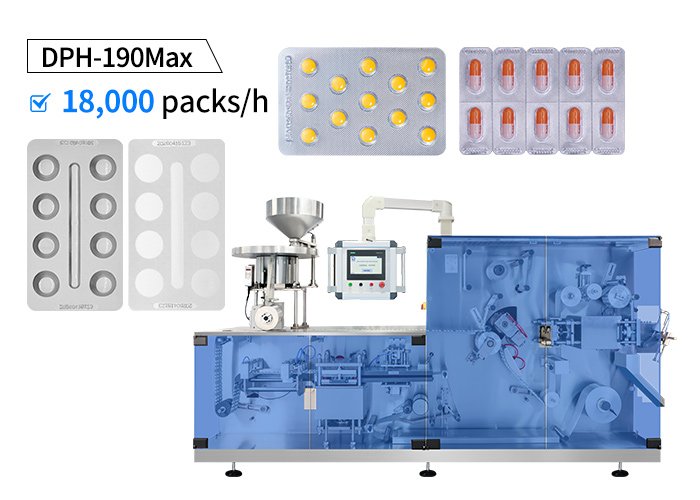
JinLuPacking's Блистерная упаковочная машина is one example – it can handle Alu-PVC and Alu-Alu systems and output thousands of doses per hour. Some advanced lines also include a cartoner at the end.
Суммируя, а линия розлива означает (unscramble → count-fill → cap → label) в то время как блистерная линия does (form → feed → seal → cut). Always match the line design to your chosen packaging format for tablets.
Не существует универсального ответа. Tablet bottles work best for large-quantity, multi-dose products (especially where cost and flexibility are key). Блистерные пакеты excel in unit-dose, high-protection applications (especially for moisture-sensitive or strictly-dosed meds). To decide for your tablets, consider these steps: evaluate your product’s stability data under each packaging; analyze your production volume and budget; consider your market’s expectations; and compare the total costs. Во многих случаях, packaging engineers perform accelerated stability tests on both formats before choosing.
If you’re still unsure, talk to packaging experts. They can help you model costs and even run trial packaging. В JinLuPacking, we specialize in both tablet bottling lines and blister packing machines. Свяжитесь с нашей командой for a customized comparison of options – we’ll take into account your tablets’ sensitivity, your throughput needs, and your budget to recommend the right packaging solution.
Да. Many tablets can be packaged in either format, but the final choice depends on product stability, требования к дозировке, regulatory considerations, and the intended market.
Manufacturers should provide the product type, tablet dimensions, target pack size, required production speed, упаковочный материал, and any special requirements such as desiccant insertion or serialization.
Unit-dose packaging separates medication into individual doses, as seen in blister packs. Multi-dose packaging stores several doses in one container, such as a tablet bottle.
Да. Many packaging lines can handle different tablet sizes by changing or adjusting product-contact parts, feeding components, and format parts. The actual flexibility depends on the machine design.
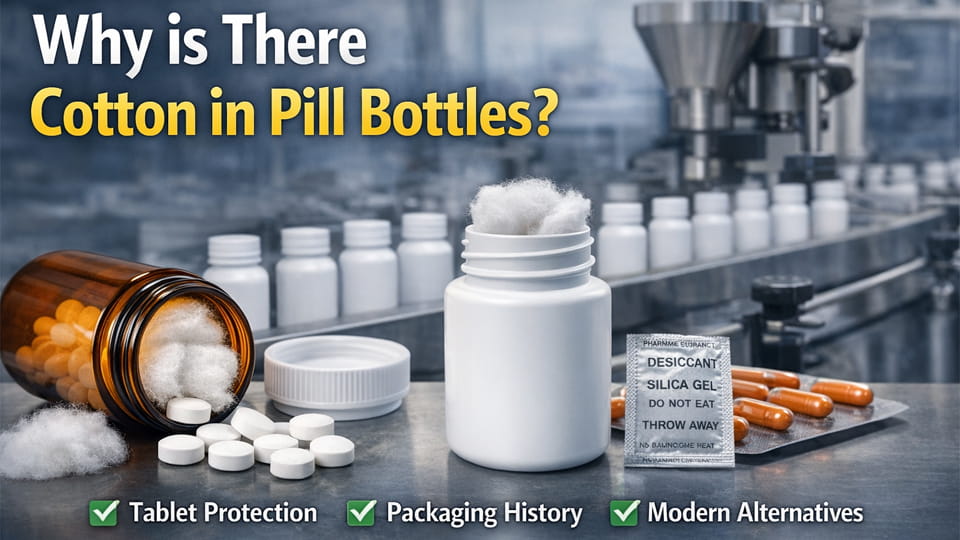
Desiccants help control moisture inside the bottle, while cotton or other cushioning materials can help reduce tablet movement during transportation. Their use should be determined by product and packaging validation requirements.
They should review product stability data, packaging material compatibility, нормативные требования, инвестиции в оборудование, производственная мощность, and any necessary changes to the approved packaging configuration.
Automatic tablet counting machines use electronic counting sensors to detect and count tablets before filling. Manufacturers should also establish inspection procedures and verify counting accuracy during production.
Thermoforming uses heat to shape a plastic film into blister cavities, while cold forming mechanically shapes an aluminum-based laminate without heat. Cold-form blisters generally provide a stronger barrier against moisture and light.
Depending on the applicable market regulations, information may include the product name, сила, партийный номер, Дата окончания срока, инструкции по дозировке, Условия хранения, and manufacturer details.
Production speed depends on the machine configuration, tablet feeding performance, pack format, number of filling or forming stations, требования к переналадке, and downstream equipment capacity.
Ссылки:
1.ТРС 902 – Приложение 9: Руководство по упаковке фармацевтической продукции —— ВОЗ
2.Системы укупорки контейнеров для упаковки лекарственных и биологических препаратов для человека —— FDA
3.Фармацевтические упаковочные материалы и безопасность лекарств: Мини-обзор —— МДПИ
4.Размер рынка фармацевтической упаковки, Делиться & Анализ отрасли —— Fortune Business Insights
5.White Paper on pharmaceutical packaging —— EFPIA
6.Packaging and Packaging Waste Regulation (ППВР) —— Европейская комиссия