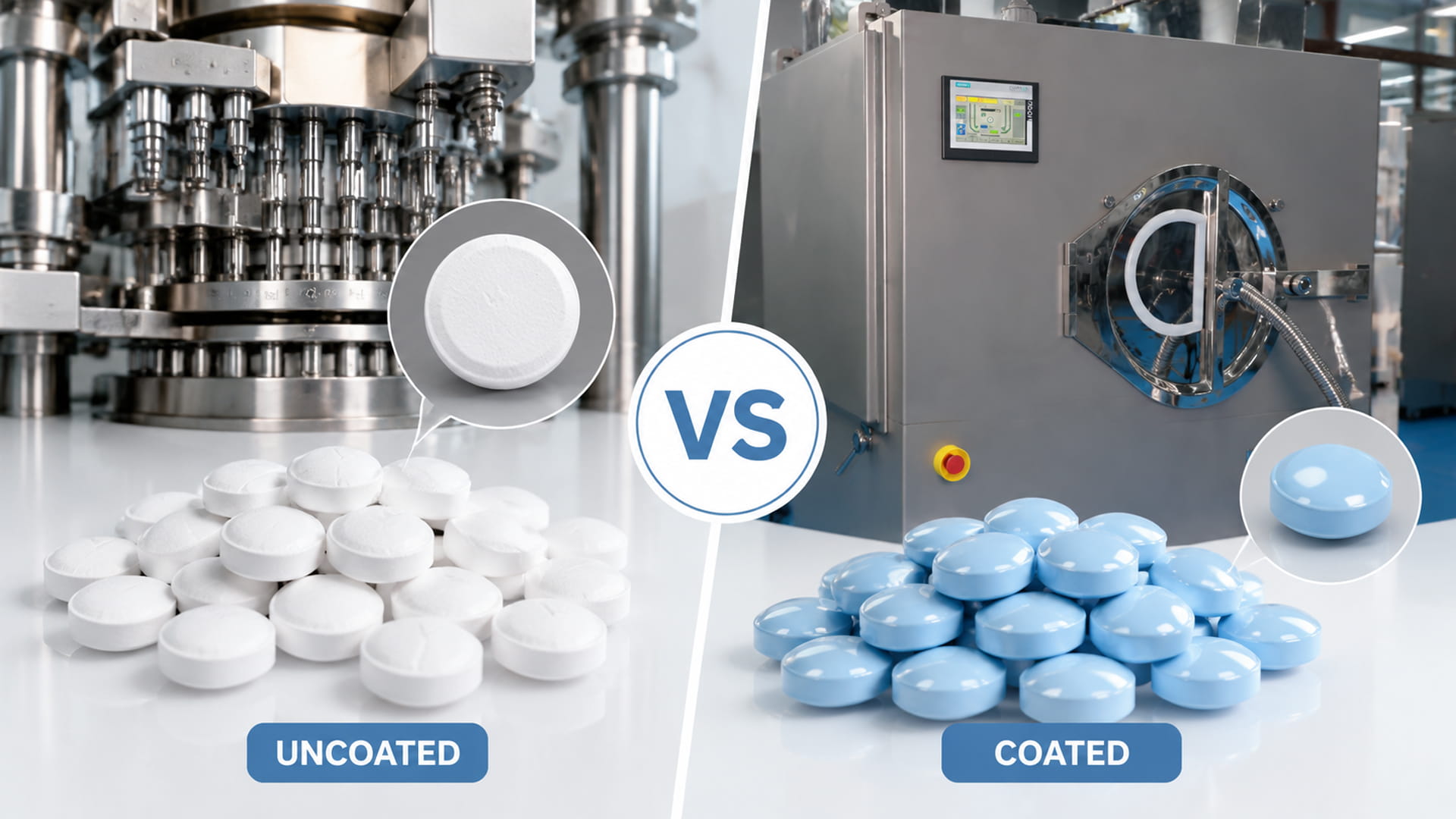

Покрытия для таблеток (водный или сольвентная пленка, кишечнорастворимые или сахарные слои) защитить лекарства и улучшить внешний вид. Однородная пленка облегчает проглатывание таблеток и контролирует высвобождение лекарственного средства.. Но дефекты покрытия – незначительные на первый взгляд дефекты – могут вызвать большие проблемы.: нестабильное высвобождение лекарства, отклонение партии, дополнительная плата. Например, а с кишечнорастворимой оболочкой таблетка с трещинами может выделять чувствительные к кислоте API слишком рано, пока бедный Кино -покрытие толщина может изменить профили высвобождения. Распространенные дефекты покрытия таблеток в первую очередь косметический (внешний вид поверхности) но некоторые работают (например. поры в покрытиях с модифицированным высвобождением).
Дефекты возникают, когда капли не растекаются и не высыхают должным образом, или когда адгезия пленки не удается. В общем, Проблемы с покрытием планшета возникают из-за три источника: формулировка фильма (неправильный тип полимера или низкий уровень пластификатора), настройки процесса (скорость распыления, температура воздуха, Скорость сковороды), и ядра планшета (пористый, мягкие или нерегулярные таблетки). Например, пленка со слишком небольшим количеством пластификатора трескается, в то время как слишком много вызывает липкость. Хорошие новости: большинство дефектов можно предотвратить путем корректировки параметров оборудования и рецептуры.
Современный автоматический машины для покрытия таблеток (машины для нанесения покрытий с перфорированными лотками) используйте ламинарный поток воздуха и точные распылители для обеспечения равномерной сушки и бережного перемешивания.. Высокоскоростная машина для нанесения покрытий JinLu, например, оснащен системой горячего воздуха с ламинарным потоком, которая равномерно распределяет тепло через стенку барабана, минимизация температурных градиентов (неровная сухая шерсть вызывает слипание, сбор, апельсиновая корка или волдыри).
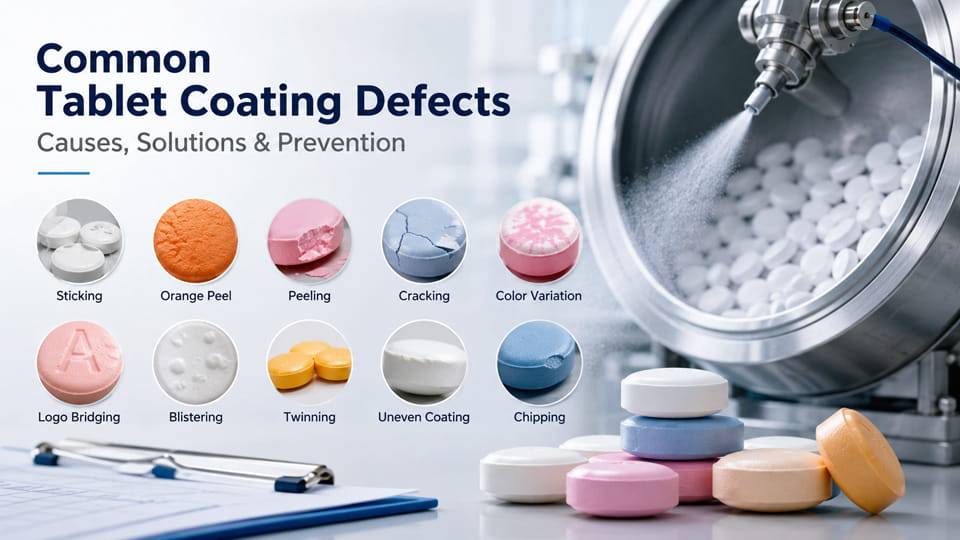
Дефекты покрытия планшета любые. нежелательные недостатки во внешнем слое пленки после нанесения покрытия. К ним относятся механические дефекты. (трещины, чипсы, пилинг) и визуальные дефекты (текстура апельсиновой корки, крапчатость, изменение цвета, размытые логотипы). Эти недостатки снижают качество: даже если содержание препарата в порядке, планшет с пятнами или повреждениями выглядит непрофессионально и может быть отклонен инспекторами. Не все дефекты являются чисто косметическими – функциональные дефекты. (например. дырочки, плохой барьер от влаги, или сломанная кишечная оболочка) может изменить высвобождение или стабильность лекарственного средства.
Эксперты классифицируют дефекты покрытия по категориям: Jinlupacking делит их на механический (например. трещины, сколы из-за хрупкой пленки), визуальный (апельсиновая цедра, потеки от проблем с формулировкой), вызванный процессом (прилипать, двойникование, вызванное липкой пленкой), и функциональный (отверстия или неполные покрытия, которые влияют на высвобождение лекарственного средства). Проще говоря, каждый раз, когда покрытие не полностью и равномерно не покрывает слой таблетки при выбранных условиях., может возникнуть дефект.
Дефекты покрытия возникают, когда ключевые параметры не соответствуют техническим характеристикам.. Четырьмя основными факторами являются:
На практике, дефект часто имеет несколько причин. Например, апельсиновая цедра происходит, когда капли слишком быстро высыхают на поверхности таблетки, что может произойти из-за слишком горячего входящего воздуха. и/или слишком высокая скорость распыления и/или слишком вязкая формула. Поэтому профилактические действия должны проверять процесс в целом., а также формулировка.
Даже при хорошо продуманном процессе нанесения покрытия на таблетки и передовых технологиях фармацевтическое оборудование для нанесения покрытий, проблемы с покрытием все еще могут возникнуть во время производства. В большинстве случаев, эти проблемы не вызваны каким-то одним фактором. Качество окончательного покрытия зависит от множества переменных., включая основные свойства планшета, материал покрытия таблетки, параметры распыления, условия сушки, и производительность машины для нанесения покрытия на таблетки.
Понимание основной причины каждого дефекта является ключом к улучшению однородности покрытия и сокращению бракованных партий..
Ниже приведены некоторые из наиболее распространенных дефектов покрытия таблеток, встречающихся в фармацевтическом производстве, и практические способы их устранения..
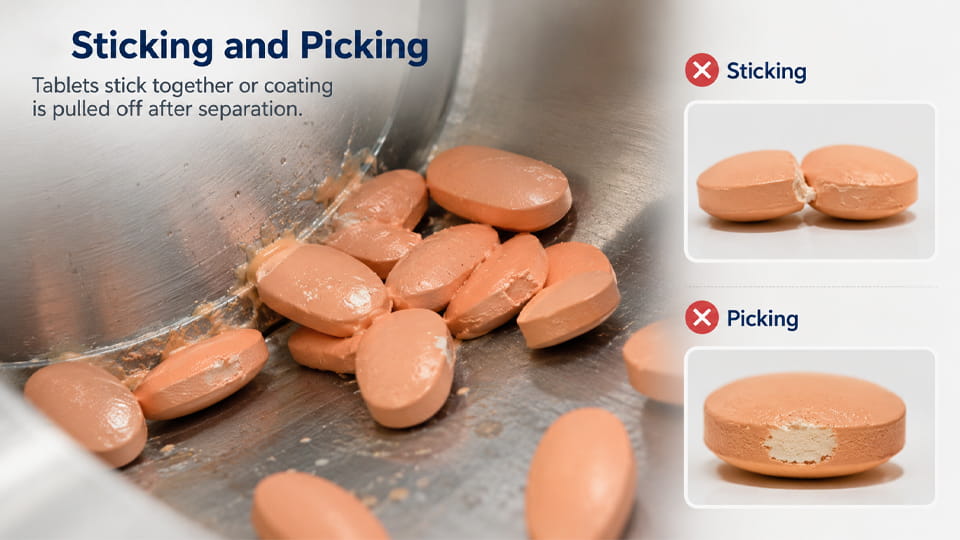
Прилипание и растрескивание являются одними из наиболее частых проблем с покрытием таблеток., особенно во время процессов нанесения пленочного покрытия.
Прилипание происходит, когда таблетки прикрепляются друг к другу, противень для нанесения покрытия, или другие поверхности машины во время процесса нанесения покрытия. Сбор происходит, когда часть пленки покрытия таблетки отрывается от поверхности таблетки после отделения.
Этот дефект может серьезно повлиять на внешний вид планшета и привести к нестабильному качеству продукта..
Распространенные причины:
Практические решения:
Для решения проблем с прилипанием и сбором, производители должны сначала проверить баланс между распылением и сушкой.
Возможные улучшения включают в себя:
Правильно оптимизированная машина для нанесения покрытия на таблетки должна поддерживать стабильную взаимосвязь между нанесением распылением и эффективностью сушки..
Эффект апельсиновой корки — распространенный дефект пленочного покрытия, при котором на таблетках появляется шероховатость., неровная поверхность вместо гладкого и блестящего вида.
Название происходит от текстуры поверхности., который похож на кожуру апельсина.
Этот дефект в основном связан с плохим растеканием раствора покрытия до полного высыхания капель..
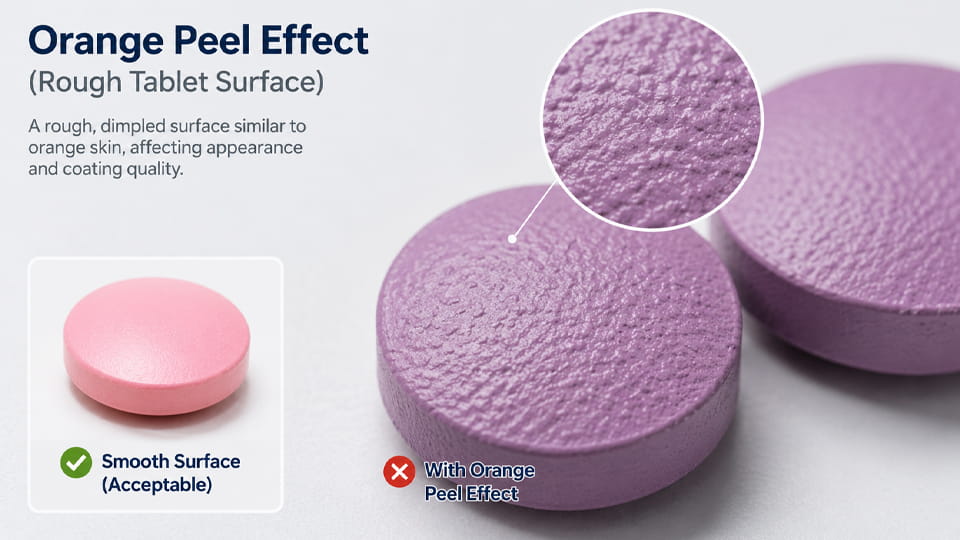
Распространенные причины:
Практические решения:
Производители могут улучшить качество поверхности,:
Для продукции, требующей качественного внешнего вида, например, фирменные лекарства или препараты премиум-класса нутрицевтические таблетки, особенно важно предотвращать дефекты апельсиновой корки.
Отслаивание происходит, когда покровная пленка отделяется от ядра таблетки.. В тяжелых случаях, кусочки покрытия могут оторваться от поверхности.
Эта проблема может повлиять не только на внешний вид, но и на защитную функцию покрытия..
Например, Таблетки с энтеросолюбильным покрытием имеют сплошной и стабильный слой оболочки, защищающий активный ингредиент от желудочной кислоты.. Любое повреждение пленки покрытия может повлиять на производительность продукта..
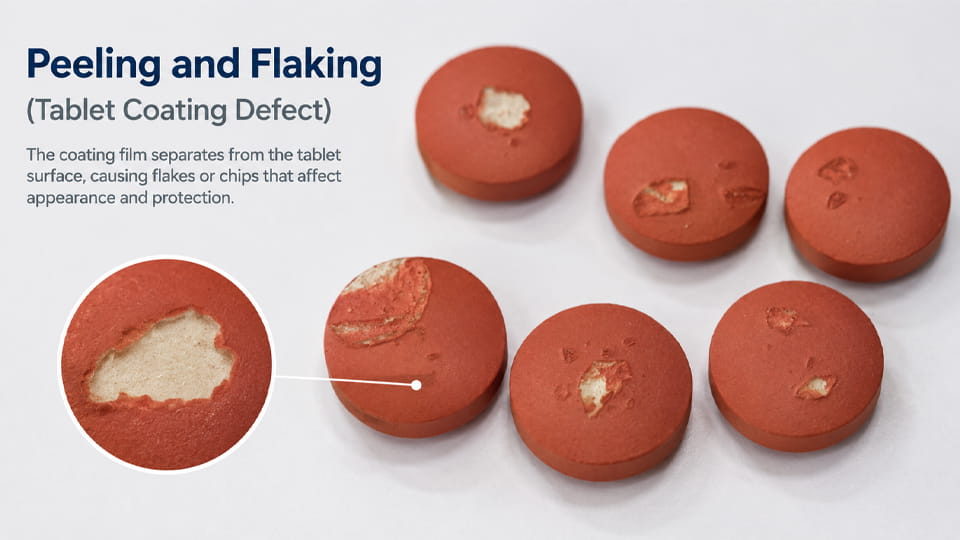
Распространенные причины:
Практические решения:
Чтобы уменьшить проблемы с шелушением:
Стабильный состав покрытия в сочетании с точным контролем процесса может значительно улучшить адгезию пленки..
Растрескивание происходит, когда напряжение внутри пленки покрытия становится выше прочности пленки..
Обычно это проявляется в виде видимых трещин на поверхности планшета., особенно вокруг краев планшета или логотипов.
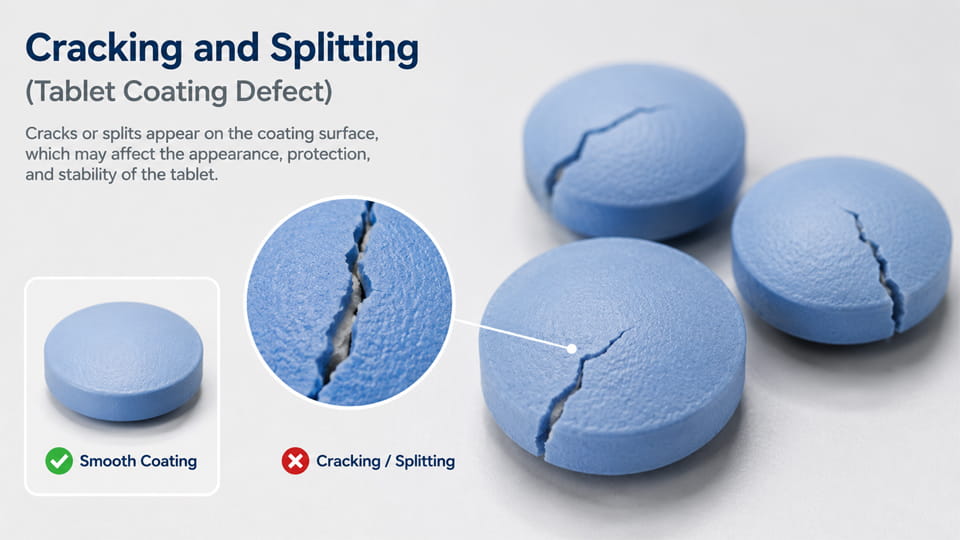
Распространенные причины:
Практические решения:
Производители могут уменьшить растрескивание,:
Для крупносерийного производства, поддержание постоянной гибкости покрытия важно, чтобы избежать изменений в партиях.
Изменение цвета является распространенной проблемой для таблеток, покрытых цветной пленочной оболочкой. таблетка, покрытая сахаром продукты.
Оно появляется, когда таблетки из одной партии имеют непостоянную интенсивность цвета или неравномерное распределение покрытия..
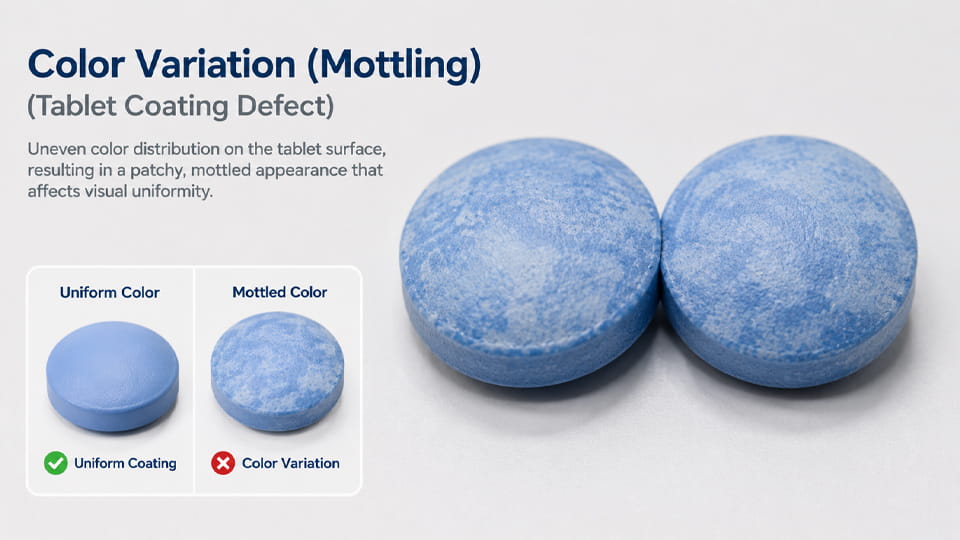
Распространенные причины:
Практические решения:
Для улучшения однородности цвета:
Для производителей, выпускающих визуально идентифицируемые лекарственные средства, постоянный цвет является важным требованием качества.
Многие фармацевтические таблетки содержат логотипы, буквы, или забить линии. Во время нанесения покрытия, эти детали могут стать неясными из-за чрезмерного нарастания покрытия.
Эта проблема известна как перекрытие или заполнение логотипа..
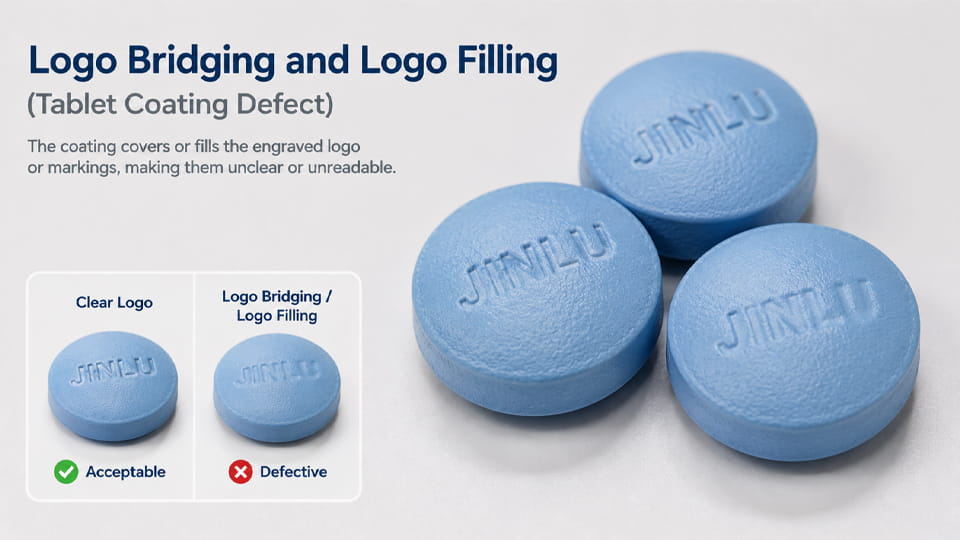
Распространенные причины:
Практические решения:
Производители могут предотвратить перекрытие логотипа,:
Это особенно важно для фирменных планшетов, на которых идентификационные знаки должны оставаться четкими..
Образование пузырей происходит, когда пленка покрытия отделяется от поверхности таблетки и образует небольшие пузырьки или выпуклости..
Обычно это происходит потому, что влага или воздух задерживаются под слоем покрытия..
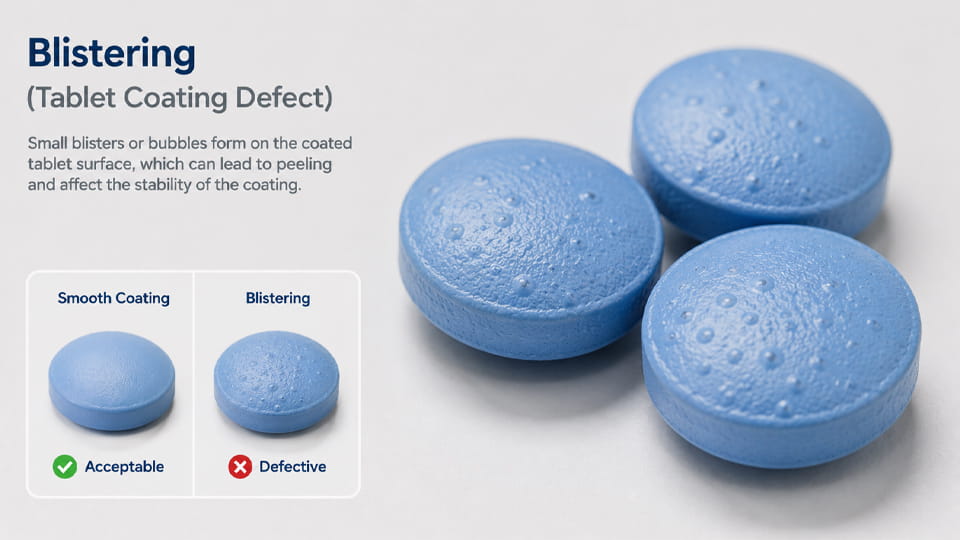
Распространенные причины:
Практические решения:
Возможные улучшения включают в себя:
Тщательный контроль процесса сушки необходим для производства стабильных таблеток, покрытых пленочной оболочкой..
Двойникование означает слипание двух или более таблеток во время процесса нанесения покрытия..
Этот дефект увеличивает производственные отходы и может снизить эффективность упаковки..
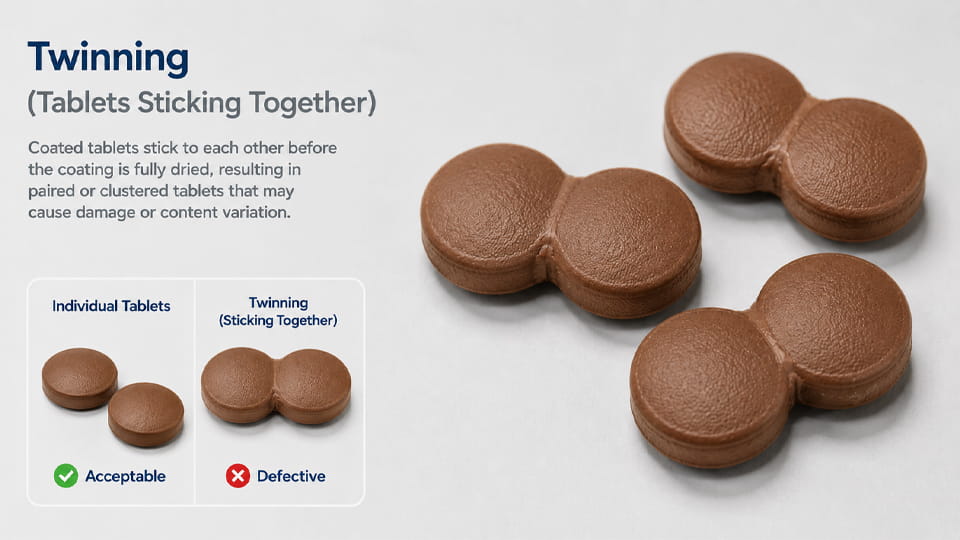
Распространенные причины:
Практические решения:
Чтобы предотвратить побратимство:
Правильное перемещение планшета является одним из наиболее важных факторов, предотвращающих слишком длительный контакт таблеток друг с другом..
Равномерная толщина покрытия имеет решающее значение для фармацевтической эффективности., особенно для таблеток с энтеросолюбильным покрытием и продуктов с контролируемым высвобождением.
Неравномерное покрытие может привести к различиям во внешнем виде., стабильность, или производительность высвобождения лекарственного средства.
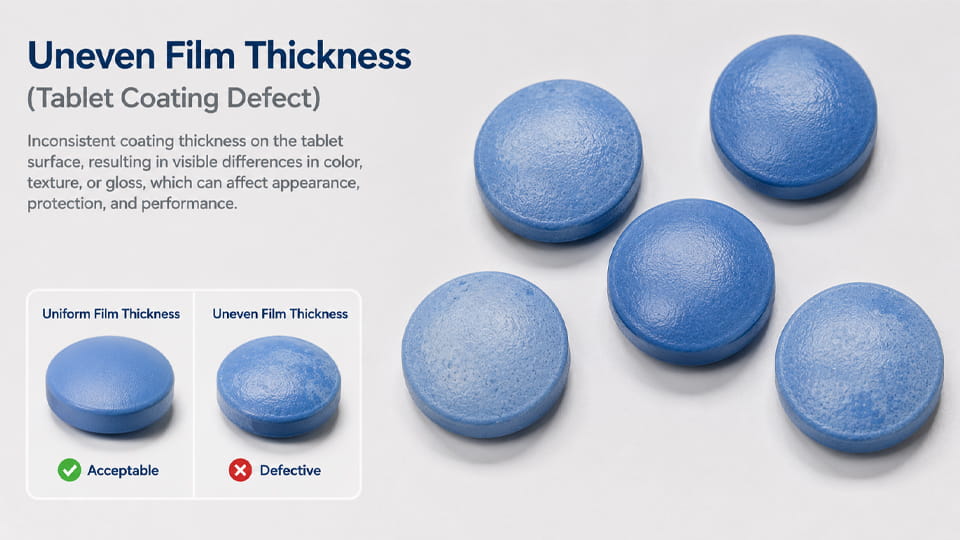
Распространенные причины:
Практические решения:
Производители должны:
Надежная конструкция оборудования для нанесения фармацевтического покрытия помогает поддерживать постоянную толщину покрытия на протяжении всей партии..
Сколы возникают, когда пленка покрытия отрывается от краев таблетки во время обработки..
Обычно это происходит из-за того, что таблетки испытывают чрезмерное механическое воздействие или пленка покрытия не обладает достаточной прочностью..
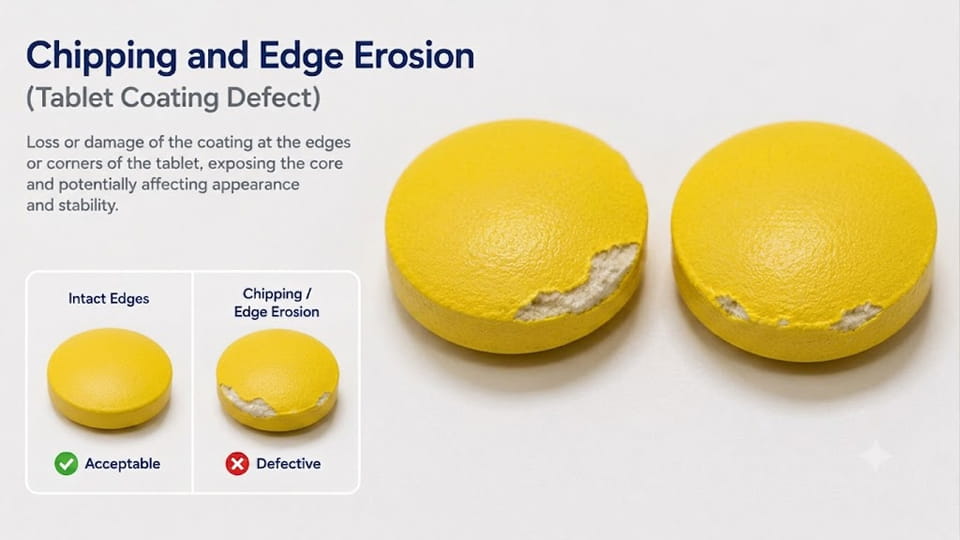
Распространенные причины:
Практические решения:
Чтобы уменьшить повреждение кромок:
Для предотвращения этой проблемы необходима правильная координация между рецептурой таблеток и настройками оборудования для нанесения покрытия..
Большинство дефектов покрытия планшетов не вызваны какой-то одной проблемой.. Обычно они возникают в результате взаимодействия формулировок, настройки оборудования, и условия эксплуатации.
Успешный процесс нанесения покрытия требует тщательного контроля:
Понимая взаимосвязь между этими факторами, фармацевтические производители могут улучшить качество покрытия, сократить отходы производства, и добиться более стабильных партий.
Предупредить легче, чем лечить. Вот лучшие практики:
Минимизируя вариации, дефекты становятся редкими. Как гласит отраслевое руководство, «Чем более последовательно вы выполняете операции, тем планшет, тем меньше вам придется полагаться на навыки оператора».
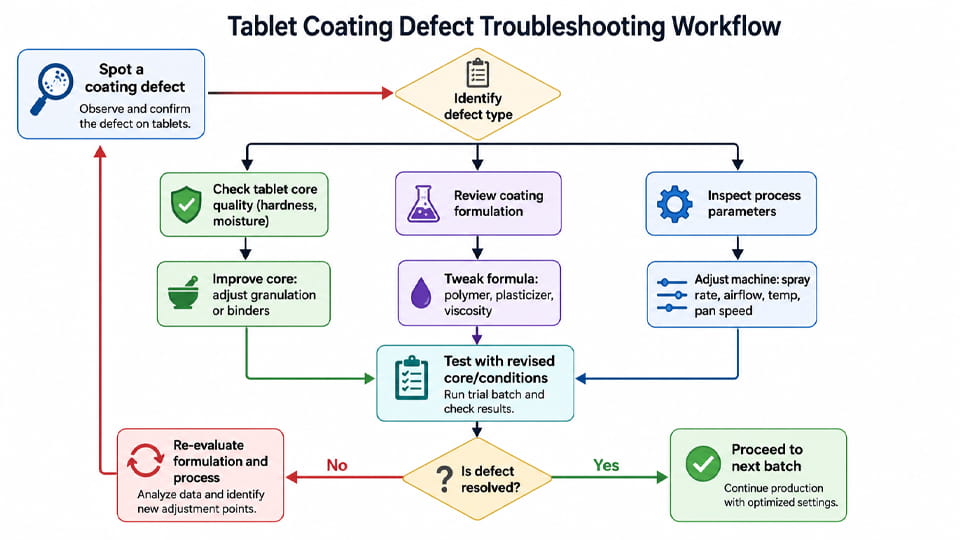
На приведенной выше блок-схеме показаны шаги по устранению неполадок.: определить тип дефекта, затем проверьте соответствующие параметры (спрей, сушка, формула) и соответствующим образом отрегулировать, затем повторите тестирование, пока не будет решено.
Правильная конструкция оборудования имеет решающее значение. Передовой машины для покрытия таблеток предлагать функции, которые напрямую борются с дефектами:

Инвестируя в высококачественная система фармацевтического покрытия (как машины JinLuPacking), пользователи получают оборудование, которое снижает риск возникновения дефектов. Например, Машина ДжинЛу «…обеспечивает лучший внешний вид препарата, более стабильные свойства и более контролируемое высвобождение».. Система циркуляции материала и перегородки дополнительно улучшают однородность покрытия.. Это означает, что во время пробежек требуется меньше вмешательств человека., переводя к большему количеству хороших партий и меньшему количеству отходов.
Дефекты покрытия таблеток обычно возникают из-за дисбаланс материалов или процессов. Необходим комплексный подход к устранению неполадок: отрегулировать параметры распыления/сушки, уточнить формулировку, и обеспечьте хорошие ядра планшета. Современное оборудование имеет большое значение: высококачественные устройства для нанесения покрытий с точным управлением значительно уменьшат эти проблемы.. На практике, Регулярное обслуживание, последовательные процедуры (стандарты GMP) и мониторинг в реальном времени являются ключом к предотвращению дефектов.
Если вы столкнулись с постоянными проблемами покрытия или планируете новую линию, учитывать модернизация вашей машины для нанесения покрытий. JinLuPacking's автоматические машины для нанесения покрытия на таблетки предназначены для обеспечения однородного покрытия и поддерживаются экспертной технической службой.. Например, клиенты, перешедшие на высокоскоростную машину для нанесения покрытий JinLu, сообщают о многом. более гладкая поверхность, точная консистенция цвета, и более высокая пропускная способность.
Ищем надежного машина для нанесения покрытия на фармацевтические таблетки или техническая поддержка? Связаться с JinLuPacking для профессионального оборудования для нанесения покрытий. Наша команда может помочь оптимизировать параметры вашего процесса и предоставить оборудование. (машины для нанесения покрытия, машины для нанесения сахарного покрытия, и т. д.) для предотвращения дефектов покрытия.
Наиболее распространенными дефектами покрытия таблеток являются слипание и растрескивание., эффект апельсиновой корки, шелушение, трещины, изменение цвета, перекрытие логотипа, волдыри, побратимство, неравномерная толщина покрытия, и эрозия кромок.
Эти проблемы обычно возникают из-за неправильных параметров распыления., неправильные условия сушки, неподходящий материал покрытия таблетки, плохие свойства ядра планшета, или нестабильные настройки машины для нанесения покрытия на таблетки.
Выявление основной причины — первый шаг к улучшению качества покрытия и снижению производственных потерь..
Неравномерное покрытие или цвет обычно означают, что распыление или смешивание таблеток были неравномерными.. Возможные причины – плохое перемешивание суспензии. (пигменты слипаются), размещение распылителя не покрывает всю поверхность планшета, или неправильная скорость барабана. Как говорится в одном из отраслевых справочников, такие проблемы, как пятнистость, могут быть связаны с недостаточным перекрытием распыления и движением таблетки.. Для устранения этой проблемы может потребоваться повторная калибровка распылителей., добавление еще одного распылителя, или замедление барабана, чтобы на все таблетки было нанесено равномерное покрытие..
Прилипания можно избежать, предотвращая переувлажнение и обеспечивая быстрое высыхание.. Практически, это означает уменьшение скорости распыления или количества твердых растворителей, увеличение температуры/расхода входящего воздуха, и если возможно, увеличить скорость барабана. Также, Таблетки с шероховатой или покрытой пылью поверхностью легче прилипают – используйте этап удаления пыли и предусмотрите в формуле вспомогательные вещества, препятствующие слипанию.. Быстрое отверждение (более высокий поток воздуха) помогает установить пленку до того, как таблетки столкнутся и прилипнут.
Дефект апельсиновой корки (грубый, зернистая поверхность) вызвано тем, что капли высыхают слишком быстро и не успевают слиться. Это часто происходит, когда давление воздуха распыления слишком низкое. (большие капли) или когда раствор покрытия очень вязкий или имеет высокое содержание твердых веществ. Другими словами, пленка образуется отдельными островками, а не гладким слоем. Чтобы вылечить это, поднять давление распыления (более тонкий спрей), разбавить раствор (более низкая вязкость/твердое вещество), или замедлить высыхание (более низкая температура на входе) чтобы капельки успели слиться.
Неравномерный цвет часто возникает из-за плохого смешивания пигментов или разной абсорбции.. Если ядро таблетки влажное от брызг, красители могут мигрировать и объединяться. Решения включают использование предварительно диспергированных озерных пигментов или цветных премиксов., лучшее смешивание цвета в покрывающей жидкости, и регулировка профиля сушки для равномерного закрепления пигментов.. Хороший состав таблеток. (предотвращение всплесков влаги) также помогает.
Внимательно осмотрите: Если все таблетки в партии имеют одинаковые дефекты (например. все потрескавшиеся или все имеют царапины), часто это машина/процесс (настройка распыления, расход воздуха) вызывая это. Если затронуты только некоторые планшеты или появляются случайные патчи, это может быть формулировка (комки в растворе, нерастворенные твердые вещества) или качество планшета. Также учитывайте время: дефекты, возникающие сразу после загрузки, обычно указывают на проблемы с ядром планшета, тогда как проблемы во время нанесения покрытия связаны с процессом.
Таблетки, покрытые пленочной оболочкой, имеют тонкий слой покрытия на полимерной основе, который улучшает внешний вид., защищает планшет, и может обеспечить функциональные преимущества, такие как защита от влаги.
Таблетки, покрытые сахарной оболочкой, имеют несколько слоев оболочки на основе сахара и обычно имеют более толстый вид покрытия..
По сравнению с сахарным покрытием, пленочное покрытие, как правило, происходит быстрее, более эффективный, и его легче контролировать в современном фармацевтическом производстве, поскольку для этого требуется меньше материала для покрытия и более короткое время обработки..
Таблетки с энтеросолюбильным покрытием требуют точного контроля покрытия, поскольку слой покрытия должен защищать активный ингредиент от желудочной кислоты и обеспечивать высвобождение в кишечнике..
Дефекты, такие как трещины, шелушение, или неравномерная толщина покрытия может повлиять на защитную функцию энтеросолюбильного покрытия..
Производителям необходим точный контроль:
• Толщина покрытия
• Условия сушки
• Свойства материала покрытия таблеток
• Равномерность распыления
Стабильный процесс нанесения покрытия необходим для поддержания ожидаемых характеристик продуктов с энтеросолюбильным покрытием..
Систематический подход к устранению неполадок — лучший способ решить проблемы с покрытием таблеток..
Производители должны проверить:
1.Качество ядра планшета, включая твердость и рыхлость
2.Свойства раствора покрытия
3.Скорость распыления и давление распыления
4.Температура сушки и поток воздуха
5.Параметры работы машины для нанесения покрытия на таблетки
Вместо настройки только одного параметра, Производственные группы должны оценить весь процесс нанесения покрытия, чтобы определить реальную причину.
Современная автоматическая установка для нанесения покрытий обеспечивает точный контроль всех критических параметров.. Например, Высокоскоростная автоматическая машина для нанесения покрытия на таблетки JinLu использует систему ламинарного потока для равномерной подачи осушающего воздуха по всему слою таблетки.. Он также имеет контролируемую систему распыления и конструкцию перегородки, которая аккуратно перемешивает таблетки для равномерного воздействия.. Жесткий контроль (Система ПЛК) обеспечить запрограммированную скорость распыления, температура и скорость барабана остаются стабильными, уменьшение человеческой ошибки. Все эти особенности приводят к последовательному, бездефектные покрытия и меньше брака партий.
Ссылки:
1.Фармацевтическое покрытие и его различные подходы, Обзор —— Национальная медицинская библиотека
2.Прилипание и комкование при прессовании фармацевтических таблеток: Обзор консорциума IQ —— НаукаДирект
3.Раннее прогнозирование дефектов таблеток во время нанесения покрытия на противень —— Национальная медицинская библиотека
4.Как предотвратить проблемы с покрытием планшета —— ФармТех
5.Комплексный обзор проблем с покрытием таблеток и способов их устранения —— ResearchGate
6.Методы оценки пленочных покрытий и оценки изделий с пленочным покрытием —— Национальная медицинская библиотека