
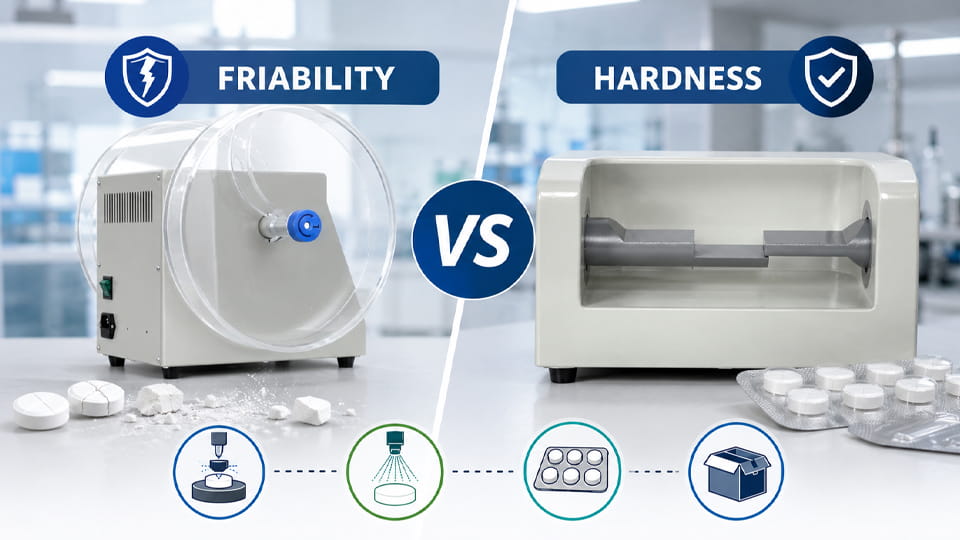
В производство планшетов, твердость и рыхлость два ключевых показателя качества. Твердость (разрушающая сила) говорит нам, какое давление может выдержать таблетка, прежде чем она треснет. Хрупкость измеряет, насколько легко поверхность планшета скалывается или разрушается при падении или обращении с ним.. Другими словами, проверка твердости внутренняя сила, пока проверяется рыхлость долговечность поверхности. Оба свойства влияют на последующую обработку – от способа прессования таблеток до нанесения на них покрытия и окончательной упаковки.. В этой статье объясняется, почему хрупкость и твердость имеют значение., как каждый тестируется, и как они влияют на сжатие планшета, покрытие, и качество упаковки на реальных производственных линиях.
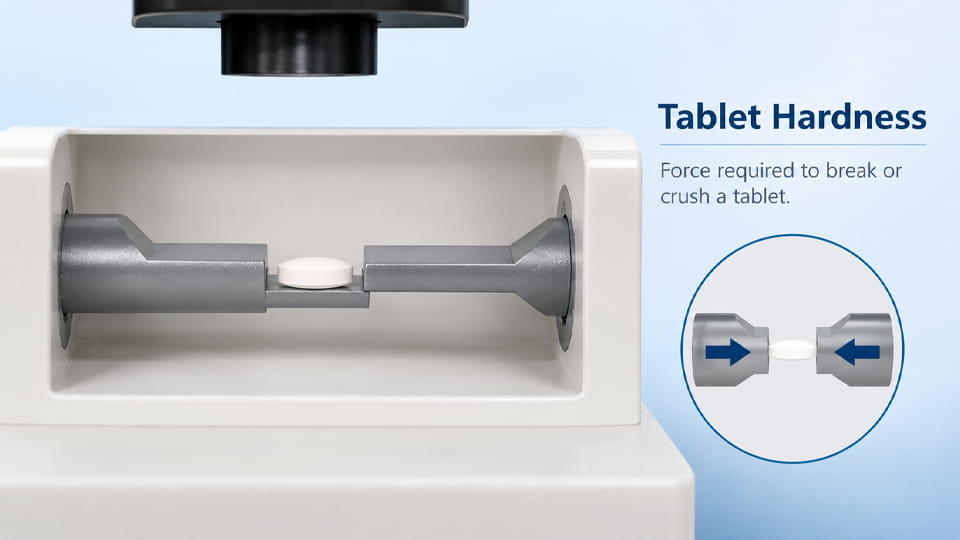
Твердость таблетки (технически «разрывная сила таблетки») сила, необходимая для того, чтобы сломать таблетку при сжатии. На практике, твердость измеряется путем помещения таблетки между двумя наковальнями или плитами и приложения силы до тех пор, пока она не сломается.. Современные твердомеры (ручной или цифровой) измерить пиковую силу в килограммах или ньютонах. Разрывная сила таблетки имеет решающее значение для Контроль качества: планшет должен быть достаточно прочным, чтобы выдерживать манипуляции, упаковка, и доставка без поломок. США. и европейские фармакопеи определяют стандартизированные методы определения твердости. (разрушающая сила) тестирование. В некоторой отраслевой литературе отдается предпочтение термину «разрушающая сила» из-за «твердости»,поскольку в материаловедении «твердость» обычно означает устойчивость к вмятинам на поверхности., тогда как тестирование планшетов измеряет силу сжатия.
Твердость таблетки зависит от рецептуры и параметров процесса.. Выше сила сжатия обычно получается более твердые таблетки, в то время как факторы состава, такие как связующее и смазочные материалы, также влияют на твердость. Например, увеличение связующего (например. ПВП или HPMC) обычно увеличивает прочность таблетки, слишком много смазки (стеарат магния) может ослабить межчастичные связи. Размер планшета, форма, и пористость тоже играют роль: более толстые или плотные таблетки часто требуют большего усилия, чтобы их сломать..
Слишком низкая твердость (недостаточное сжатие) заставляет таблетки трескаться, рассыпаться или расколоться легко. Слишком высокая твердость, однако, может иметь недостатки: очень твердые таблетки могут медленно распадаться или слишком медленно растворяться в организме. Слишком твердую таблетку тоже можно пациентам трудно глотать. Таким образом, дизайн планшета должен сочетать механическую прочность с производительностью. На практике, производители устанавливают диапазон приемки (например. 4-10 кг или около того) для разрушающего усилия при производстве.
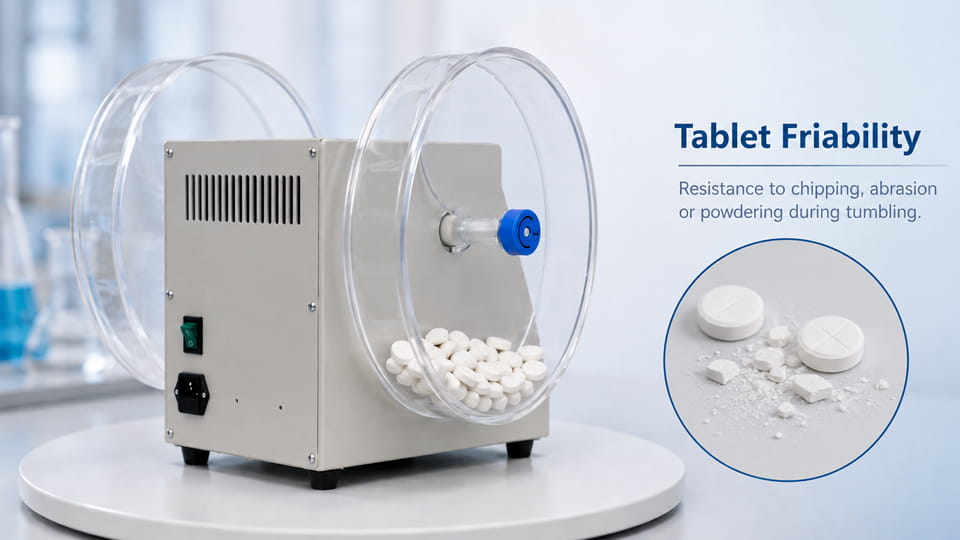
Хрупкость таблетки — это показатель того, насколько легко таблетка крошится или теряет массу под воздействием механического воздействия., например, падение или удар. Испытание на хрупкость предполагает помещение обеспыленных таблеток во вращающийся барабан. (Рош рассыпчатый), обычно на 25 об/мин, и подвергая их 100 революции. При каждом обороте таблетки опрокидываются и падают на фиксированную высоту, чтобы имитировать стресс во время обращения и транспортировки.. После теста, таблетки собраны, и вся пыль удаляется. Таблетки взвешивают до и после, чтобы определить процент потери веса., о чем сообщается как рыхлость. Например, тот USP <1216> и доктор Европы. монографии описывают эту процедуру.
Чем ниже рыхлость, тем более устойчив планшет к истиранию или сколам. Приемлемый предел хрупкости обычно составляет ≤1,0% потеря веса. Таблетки, которые теряют больше этого порога, или которые заметно треснули или сломались во время испытания, не соответствует критерию хрупкости. В частности, проблема хрупкости таблеток долговечность после сжатия – имитирует поверхность таблеток, подвергающихся физическому стрессу, в панелях для нанесения покрытия, конвейеры, наполнители для бутылок, волдыри, и упаковка. Высокая хрупкость проявляется в виде сколов на краях таблеток., видимые трещины, или лишняя пыль. Таким образом, хрупкость является показателем качества, тесно связанным с надежностью упаковки и транспортировки..
Эти тесты кажутся похожими, но исследуют разные стрессы.. Проще говоря:
Представьте себе две таблетки: один протестирован в 20 КП (килопонды) силы раздавливания (очень тяжело) и один в 5 КП (мягкий). Вы можете подумать, 20 Таблетка КП неразрушима, но если его края хрупкие, он все равно может потерять 2–3% массы в барабане для сыпучести – вдвое больше допустимого предела.. На практике, планшет может быть «чрезвычайно твердый, требующий значительной силы, чтобы его раздавить, но удивительно хрупкий».. Это показывает, почему оба нужны тесты. В таблице ниже приведены различия:
Суммируя: твердость сопротивляется сокрушительный, пока рыхлость сопротивляется сколы. Прочный дизайн планшета сочетает в себе оба: он должен выдерживать прессы и машины, не образуя пыли, но все же растворяется должным образом.
| Параметр | Твердость таблетки (Разрывная сила) | Таблетка хрупкость |
|---|---|---|
| Что он измеряет | Сопротивление одной приложенной силе (сжатие или растяжение) вызывающий перелом | Устойчивость к многократному истиранию, влияние, и сколы (потеря веса при падении) |
| Типичный тип стресса | Единовременная большая сжимающая или трехточечная изгибающая нагрузка до разрушения | Многократные падения/падения (обычно 100 вращения) имитация ударов |
| Основная цель | Оцените прочность планшета на разрыв (прочность рецептуры при сжатии) | Оцените долговечность во время транспортировки, покрытие, и упаковка |
| Тестовый вывод | Значение разрывной силы (например. в Ньютонах или кп) | Процент потери веса после теста (и визуальный осмотр на наличие повреждений) |
| Ссылка на качество | Устанавливает параметры сжатия; гарантирует, что таблетки не треснут под действием силы | Устанавливает настройки упаковочной линии; гарантирует, что таблетки выдержат покрытие/транспортировку |
| Заменяемый другим тестом? | Нет. Разный стресс; нуждается в собственном измерении. | Нет. Другое обоснование теста; не может заменить тест на твердость. |
В таблице выше подчеркивается, что твердость и хрупкость измеряют разные аспекты. Твердость (разрушающая сила) это одноразовый стресс-тест, тогда как испытания на хрупкость повторяли удары низкой мощности. Важно, планшет может быть твердый, но хрупкий или наоборот. Например, таблетка с высокой разрывной силой все еще может провалить тест на хрупкость если его края легко скалываются или внутреннее соединение неравномерно. Суммируя, твердость и хрупкость взаимосвязаны, но не взаимозаменяемы – необходимо оценивать оба.
Измерители твердости таблеток прикладывают контролируемую силу к одной таблетке до тех пор, пока она не сломается.. В обычном тестере, две плоские наковальни (тарелка) захват планшета – один стационарный, один движущийся. Тестер фиксирует усилие при разрыве. Ручные тестеры (пружинный, как у Монсанто) и современные цифровые тестеры (с датчиками веса и электронными показаниями) являются общими. Электронные тестеры обеспечивают точные, повторяемые измерения и часто одновременное измерение диаметра и толщины. Во время тестирования, такие факторы, как ориентация планшета (для планшетов с плоской поверхностью) или специальные приспособления (для необычных форм) тщательно контролируются для обеспечения стабильных результатов. Измеренная разрушающая сила используется для контроля качества.: партии принимаются только в том случае, если твердость находится в пределах, определенных для данного состава..
А рыхлый или тестер ломкости перемалывает образец таблеток в прозрачный барабан для имитации обращения с ним.. Ключевые шаги (согласно USP/Ph.Eur.) являются: 1. Очистите от пыли и взвесьте образец таблетки. (например. 6.5 г или 10 таблетки). 2. Поместите таблетки во вращающийся барабан с подъемным язычком внутри.. 3. Вращайте со скоростью 25 об/мин для 100 революции (4 минуты). 4. Удалить таблетки, удалить рыхлую пыль, перевзвешивать. 5. Рассчитать % потеря веса: .
Если любой планшет треснут или сломан после падения, пакет сразу терпит неудачу. В противном случае, если полная потеря веса >1%, тест повторяется трижды и используется среднее значение. На практике, на проходящих таблетках минимальное количество сколов и пыли. Результаты хрупкости определяют решения перед нанесением покрытия и упаковкой.: высокие потери требуют переформулировки или изменения процесса.
Методы испытаний предполагают таблетки без оболочки.. Таблетки с покрытием также могут быть протестированы, но зачастую они имеют меньшую рыхлость просто из-за скорлупы. Наоборот, шипучие или высокопористые таблетки могут потребовать особого контроля влажности во время тестирования.. Форма и размер планшета влиять на кувыркающееся поведение; для нестандартных форм, основание барабана можно наклонить примерно на 10°, чтобы обеспечить случайное движение. Во всех случаях, компендиальные стандарты (USP, Доктор Европы.) указать аппарат и процедуру. Современная лабораторная практика также регулярно проверяет калибровку твердомеров и твердомеров и проводит контроль качества с использованием стандартных эталонных таблеток..
Оба свойства зависят от рецептуры и обработки.. Ключевые факторы включают тип/концентрацию связующего., сила сжатия, и форма таблетки. Например:
Потому что так много переменных имеют значение, производители устанавливают целевые диапазоны, а не отдельные значения. Есть нет универсальной «идеальной» твердости; это зависит от продукта лекарственная форма, предполагаемое использование, и упаковка. Жевательные витамины и покрытый пленкой обезболивающее может иметь очень разные оптимальные уровни твердости, даже если они весят одинаково.
Стадия сжатия таблеточного пресса во многом определяет твердость.. На практике:

Суммируя, оптимизация параметров сжатия и рецептур имеет важное значение. Как отмечается в руководстве по устранению неполадок JinluPacking, «если таблетки слишком мягкие, они могут чиповаться, перерыв, или проявлять высокую рыхлость. Если слишком сложно, они могут сопротивляться покрытию или медленно растворяться».. Путем настройки силы сжатия и содержания связующего, производители могут стремиться к созданию таблеток, которые выдерживают технологические нагрузки без превышения твердости.
Планшетное покрытие (фильм или сахарное покрытие) очень чувствителен к прочности ядра планшета. Во время нанесения покрытия, Таблетки опрокидывают во вращающуюся чашку и распыляют на них раствор.. При этом галтовке возникает механическое напряжение и влага.. Вот как вступают в игру твердость и хрупкость:
После прессования таблеток и нанесения покрытия, они переезжают в упаковочные линии – блистерные машины, картотеры, или линии розлива в бутылки. Прочность планшета и здесь имеет решающее значение.:

Добиться таблеток высочайшего качества, соответствующих требованиям к покрытию и упаковке., помните об этих моментах:
На практике, цель — планшет, который «достаточно твердый, чтобы выдержать обращение, но не настолько твердый, чтобы не пройти тесты на растворение».. Многие производители указывают силу сжатия., твердость, и гибкость в режиме реального времени, чтобы заранее выявить тенденции (например, внезапное изменение твердости может сигнализировать об изменении подачи порошка или влажности.).
В итоге, твердость и хрупкость - две стороны одной медали по качеству планшета. Твердость обеспечивает прочность ядра планшета при сжатии., в то время как хрупкость определяет устойчивость поверхности к истиранию. Правильно сбалансированный, они гарантируют, что таблетки проходят через дражировочные машины и упаковочные машины без сколов и поломок.. Слишком мягкие таблетки будут образовывать пыль и дефекты покрытия., в то время как слишком твердые таблетки могут сопротивляться покрытию растворами или приводить к ухудшению качества обслуживания пациентов..
Для фармацевтических производителей и инженеров по упаковке, крайне важно уделять внимание обоим тестам. Обязательно включите испытания на хрупкость и твердость в свои контрольные точки качества., и при необходимости отрегулируйте состав/сжатие. Делая это, вы сведете к минимуму дорогостоящие отказы и обеспечите бесперебойную работу вашего линии блистерной упаковки, Картонические машины, или линии розлива.
Готовы оптимизировать вашу линию по производству и упаковке таблеток? Команда JinluPacking имеет многолетний опыт в области фармацевтического сжатия и упаковки.. Нужна ли вам высокоскоростной таблеточный пресс, обеспылитель, или индивидуальное решение для блистерной упаковки, мы можем помочь гарантировать, что ваши таблетки останутся в целости и сохранности от печати до пациента. Связаться с нами чтобы обсудить, как наши машины и опыт могут способствовать достижению ваших производственных целей.
Нет. Твердость (разрушающая сила) измеряет силу, необходимую для разрушения таблетки под одной нагрузкой. Хрупкость измеряет долговечность таблетки при многократном истирании., выражается как % потеря веса в барабанном тесте. Они оценивают разные свойства.
Да. Таблетка может иметь высокую разрывную силу (жесткий) но все равно сколы по краям, если соединение частиц плохое. Такая табличка может легко сломаться при падении., обеспечивает высокую рассыпчатость. Наоборот, таблетка средней твердости может стать хрупкой, если она имеет прочную форму. Таким образом, необходимы оба теста..
Общий отраслевой стандарт составляет потерю веса ≤1,0% после испытания на рассыпчатость.. Многие производители устанавливают для обычных таблеток 0,5–1 %.. Некоторые продукты (например. очень большие или необычные таблетки) могут иметь особые критерии, но 1% это типичный ориентир.
Твердость может существенно влиять на растворение. Слишком твердая таблетка может медленно распадаться., задержка выпуска препарата. Нормативные испытания показали, что очень твердые таблетки (сжимается с большой силой) может выходить за пределы спецификации растворения, поскольку матрица таблетки слишком плотная. Наоборот, очень мягкая таблетка может быстро распасться, но может преждевременно распасться. Оптимальная твердость обеспечивает своевременное разрушение без разрушения..
Распространенные причины включают недостаточное связующее., неправильная влажность грануляции, недостаточное сжатие, избыток смазки, и хрупкие наполнители. Например, Таблетки со слишком малым количеством связующего материала или пересушенными гранулами обычно становятся более рыхлыми.. Типичное решение – корректировка рецептуры. (например. более эффективное связующее) или оптимизировать процесс влажной грануляции и сушки.
Не всегда. Более высокое сжатие обычно увеличивает твердость и может первоначально снизить хрупкость., но у него есть пределы. Чрезмерное усилие может привести к заклиниванию, ламинирование или измененное растворение. Также, если формулировка ошибочна (например. плохое переплет), простое повышение давления не может решить проблему хрупкости. Лучше всего оптимизировать и формулировку, и силу вместе..
Потому что они справляются с различными механическими нагрузками.. Твердость гарантирует, что таблетка выдержит даже одну раздавливающую силу. (важен для сжатия и резки), а хрупкость гарантирует, что он выдержит многократные удары (важно для покрытия, умение обращаться, и упаковка). Только оценив оба фактора, производители могут быть уверены, что планшеты сохранят целостность на протяжении всей цепочки производства и доставки..
Конструкция оборудования имеет решающее значение. Например, высокоскоростные упаковочные машины используют датчики и мягкие желоба для мягкого замедления таблеток (предотвращение поломки при ударе). Вакуумные конвейеры с плавными изгибами снижают удары.. Линии розлива часто имеют гибкие трубы и медленные переходы.. Хорошо спроектированные системы подачи таблеток снижают вибрацию., капли, и трение, непосредственное снижение поломок и образования пыли.
Ссылки:
1.Проверка твердости таблеток —— Википедия
2.я 4 Приложение QB 9 Рассыпчатость таблеток – Научное руководство —— Европейское агентство лекарственных средств
3.Приложение Q4B 9: Общая глава о хрупкости таблеток -- НАС. Управление по контролю за продуктами и лекарствами
4.Зависимость хрупкости от механических свойств таблеток и прогнозный подход для бинарных смесей —— Эксперты@Миннесота
5.Влияние влаги и прочности на раздавливание на хрупкость таблеток и растворение in vitro. —— Интернет-библиотека Wiley