O que é uma especificação de requisitos do usuário (URS) em Farmacêutica?Um guia completo para equipamentos farmacêuticos
O que é uma especificação de requisitos do usuário (URS) em Farmacêutica?Um guia completo para equipamentos farmacêuticos
Agosto 17, 2026
Sem comentários
UM Especificação de requisitos do usuário (URS) em fabricação farmacêutica é o documento fundamental que define o que um sistema ou peça de equipamento deve cumprir para atender, desempenho, e necessidades regulatórias. É escrito pelo proprietário do equipamento (a empresa farmacêutica) e descreve as funções necessárias, capacidades, Materiais, e recursos GMP do equipamento. Um URS garante que todas as partes interessadas (produção, engenharia, Controle de qualidade) concordar com os requisitos antes do início da aquisição ou do projeto. Ele fornece uma base para propostas de fornecedores e se torna referência em todo o projeto, teste, e validação.
Principais conclusões
URS define o que o equipamento farmacêutico precisa alcançar, incluindo o uso pretendido, capacidade, desempenho, qualidade, segurança, e requisitos operacionais.
Um bom A URS farmacêutica deve conter requisitos claros e mensuráveis que pode ser verificado mais tarde.
Para máquinas de embalagem, o URS pode cobrir especificações do produto, formatos de pacote, velocidade de produção, Materiais, utilitários, automação, limpeza, segurança, e documentação.
URS não é o mesmo que uma especificação de projeto. O URS define o resultado necessário; o fabricante do equipamento desenvolve a solução técnica.
A URS pode fornecer uma referência para aquisição de equipamentos, avaliação de fornecedores, DQ, GORDURA/SAT, QI, QO, e QP.
Um URS claro ajuda a reduzir mal-entendidos entre o fabricante farmacêutico e o fornecedor do equipamento antes da máquina ser projetada e construída.
Para um projeto de máquina de embalagem, quanto mais cedo o comprador definir requisitos como tipo de produto, formato de embalagem, velocidade alvo, e expectativas de BPF, mais fácil será avaliar equipamentos adequados.
O que é uma especificação de requisitos do usuário (URS) em Farmacêutica?
UM Especificação de requisitos do usuário (URS) é um documento formal que captura o necessidades e expectativas do usuário para um equipamento ou sistema na indústria farmacêutica. Ele descreve o que o equipamento deve fazer - por exemplo. taxa de produção alvo, formatos de produto, precisão, e funções regulatórias – sem prescrever como para alcançá-lo. O URS atua como uma ponte entre engenheiros de processo ou usuários de produção e fornecedores de equipamentos. Comunica a visão e as restrições do usuário para que os fornecedores possam projetar, citar, e construir um sistema para atender a essas necessidades.
Por exemplo, um URS pode especificar:
O uso pretendido (E.G.. “Embale blisters de comprimidos de 10 a 60 contagens”).
Critérios de desempenho (E.G.. “≥ 100,000 bolhas por hora”).
Requisitos regulatórios e de BPF (E.G.. “Design higiênico, capacidade de limpeza para <10 resíduo ppm”).
Materiais de construção (E.G.. “Todas as peças de contato com o produto em aço inoxidável 316L”).
Utilitários e meio ambiente (E.G.. “Opera em sala limpa Classe C, requer energia de 380 V, 6 barra de água”).
Ao definir requisitos claramente antecipadamente, o URS se torna a pedra angular para todas as fases posteriores – revisão do projeto, avaliação de fornecedores, teste, e validação. Orientação regulatória (E.G.. EU Annex 15, FDA 21 Parte CFR 11, GAMP5) espera explicitamente que os requisitos documentados do usuário sejam o ponto de partida para a qualificação do equipamento. Na prática, escrever um URS força equipes multifuncionais (produção, Controle de qualidade, validação, engenharia) alinhar exatamente o que o equipamento deve fazer para que o produto seja feito corretamente.
Por que o URS é importante na fabricação farmacêutica?
Um URS bem elaborado é crucial para o sucesso do projeto em conformidade com as BPF. Os principais motivos incluem:
Clareza dos Requisitos: Um URS documenta todas as expectativas (saída, qualidade, segurança, etc.) em um só lugar. Isso evita confusão e garante que o fornecedor saiba exatamente o que é necessário. Sem URS, os requisitos podem ser vagos ou negligenciados, levando a redesenhos dispendiosos.
Base para qualificação de design (DQ): O URS serve como base para a qualificação de design. Permite verificar se o projeto proposto atende a todos os requisitos. EU GMP Annex 15 afirma explicitamente que “os requisitos da especificação de requisitos do usuário devem ser verificados durante a qualificação do projeto”.
Validação & Teste: Cada atividade de qualificação remonta ao URS. A orientação da FDA explica que a Qualificação de Instalação (QI) verifica a instalação do equipamento em relação às especificações aprovadas “definidas no URS (Por exemplo, materiais de construção)”. Qualificação Operacional (QO) testa se o equipamento funciona conforme pretendido, e Qualificação de Desempenho (QP) confirma que atende consistentemente às especificações definidas no Estágio 1 (a URS). Resumidamente, seja no FAT, SENTADO, QI, OQ ou PQ, cada teste verifica um ou mais requisitos URS.
Gestão de Risco & Conformidade com BPF: Incluindo atributos críticos de qualidade (CQAs), Recursos de design GMP, e requisitos regulamentares na URS, as equipes podem lidar com os riscos antecipadamente. Por exemplo, especificar critérios de projeto higiênico antecipadamente evita problemas de contaminação posteriormente. As melhores práticas do setor enfatizam a incorporação do controle de qualidade, segurança, e necessidades de conformidade no URS para que “o sistema final atenda às necessidades de negócios e de conformidade”.
Comunicação & Seleção de Fornecedores: O URS é uma referência comum entre a empresa farmacêutica e vendedores de equipamentos. Permite que os fornecedores preparem propostas que correspondam diretamente às necessidades do usuário. Também ajuda a avaliar propostas – as máquinas podem ser verificadas em relação ao URS (via FAT/SAT) para ver qual atende melhor às suas necessidades.
Controle de custos e cronograma: Requisitos claros significam menos chances de aumento de escopo ou recursos perdidos. Isso reduz o risco de atrasos no projeto e retrabalho dispendioso.
Exemplo – categorias de conteúdo URS:
Categoria URS
Requisitos de exemplo
Uso pretendido
Quais processos e produtos o equipamento manipula.
Capacidade/Desempenho
Taxa de saída (Por exemplo, bolhas/min), tamanho do lote, precisão.
Produto & Embalagem
Tipo de produto, dosagem, tamanho do pacote, material (Por exemplo, PVC).
Materiais (Contatos)
Todas as peças de contato com o produto (Por exemplo, 316LSS, acabamento superficial).
BPF & Limpeza
Design higiênico, facilidade de limpeza (sem pernas mortas), CIP fácil.
Ambiental/Utilidades
Aula de sala limpa, temperatura/umidade, poder, ar, vazio, etc..
Controles & Dados
Necessidades de CLP/IHM, armazenamento de receitas, registro de dados, controle de acesso.
Segurança
Guardas, Parada de emergência, intertravamentos, alarmes, padrões de segurança.
Documentação
Manuais, desenhos, certificados, documentos de treinamento.
Qualificação
Planos FAT/SAT, e resultados IQ/OQ/PQ com critérios de aprovação.
Nota de verificação: Cada item URS deve ser claro e mensurável. Por exemplo, especifique números exatos (E.G.. “100 garrafas/min” ou “temperatura máxima da câmara de 30°C”) para que testes como FAT/OQ possam verificá-los objetivamente. Sempre inclua critérios de aceitação (E.G.. “as vedações devem conter 0,01 MPa para 5 segundos”) quando aplicável.
O que um URS farmacêutico deve incluir?
Um URS farmacêutico normalmente cobre essas áreas:
Uso pretendido & Escopo: Descreva a etapa do processo (enchimento, vedação, rotulagem, etc.), os produtos e formatos de embalagens, e como o equipamento se encaixa no processo geral. Isso define o contexto para todo o resto.
Capacidade e rendimento: Definir saída alvo (unidades/hora ou tamanho do lote). Por exemplo: "Pacote 50,000 embalagens blister de dose unitária por turno de 8 horas. Inclua quaisquer condições de inicialização/desligamento ou intervalos de desligamento.
Detalhes do produto e embalagem: Especifique as características do produto (tamanho do tablet, peso, sensibilidade à umidade) e o formato da embalagem (tipo de garrafa, Dimensões do cartão blister, tamanho da caixa). Se vários produtos ou tamanhos forem usados, liste cada um.
Material de Construção: Liste os materiais e padrões necessários. Na indústria farmacêutica, aço inoxidável (304/316eu) e polímeros de grau FDA são comuns para peças de contato. Incluir requisitos de acabamento superficial (E.G.. Ra ≤0,8 μm) e quaisquer forros ou revestimentos.
GMP e recursos de design: Incluir critérios de design higiênico (E.G.. sem pernas mortas ou fendas, drenabilidade). Faça referência a quaisquer padrões ou diretrizes aplicáveis (EU GMP Annex 11, ISO, ASTM). Para sistemas informatizados, observe as necessidades de integridade de dados (trilha de auditoria, assinaturas eletrônicas de acordo com 21CFR11).
Utilidades e Meio Ambiente: Detalhe os utilitários necessários (poder: tensão/fases, pressão/fluxo de ar comprimido, água de resfriamento, vazio, etc.) e condições ambientais (aula de sala limpa, faixas de temperatura/umidade).
Controles e dados: Descrever as necessidades de automação: Plataforma CLP/IHM, idiomas, gerenciamento de receitas, alarmes, e conectividade (Ethernet/SCADA/MES). Indique quaisquer requisitos de armazenamento de dados ou relatórios (registros em lote, Rastreamento de OEE).
Requisitos de segurança: Listar recursos de segurança (E.G.. cortinas de luz, paradas de emergência, guardas interligados) e padrões de segurança relevantes (CE, Ul). Incluir quaisquer requisitos ergonômicos ou de segurança do operador (bloqueio/sinalização, Zonas LOTO).
Documentação e Serviços: Exigir entrega de manuais do usuário, desenhos as-built, registros de calibração, certificados de materiais, backups de software, e treinamento para operadores/pessoal de manutenção.
Teste e Qualificação: Especifique FAT (Teste de aceitação de fábrica) critérios e o âmbito de aplicação IR/WH/PQ. Por exemplo: “O fornecedor deverá realizar um FAT em suas instalações demonstrando conformidade com todos os pontos do URS e fornecer um relatório do FAT.”
Requisitos URS para equipamentos de embalagem farmacêutica
Máquinas de embalagem tem algumas considerações especiais sobre URS. Além dos itens gerais acima, incluir:
Velocidades de embalagem: Especifique as taxas alvo (E.G.. 200 garrafas/min, 50 caixas/min, 80 bolhas/min). Se múltiplas máquinas/linhas estiverem integradas, esclarecer o rendimento de cada.
Gama de produtos: Liste todas as variantes de produtos que devem ser tratadas (tablet versus. cápsula, diferentes diâmetros de garrafa, estilos de boné, etc.). Se a linha lidar com vários formatos, incluir obrigatório tempos de mudança e quaisquer peças de formato necessárias.
Formatos de pacote: Para bolhas, especifique os tamanhos dos cartões, layout da cavidade, tipo de folha (Espessura de PVC/PVDC, Alu/PVdC). Para garrafas, forneça tipos de contêineres e volumes de preenchimento. Para caixas, especifique dimensões e tipo de fechamento. Esses detalhes garantem que a máquina esteja configurada corretamente.
Manuseio de materiais: Detalhe quaisquer alimentadores, separadores, ou peneiras necessárias para dosagem sólida. Para pós/líquidos, especificar tolerâncias de dosagem e necessidades de reservatório.
Materiais: Como sempre, todas as peças em contato com o produto devem ser adequadas para produtos farmacêuticos (E.G.. SS316L). Se estiverem envolvidos produtos corrosivos ou ácidos, observe quaisquer revestimentos ou materiais especiais.
Limpeza & Mudança: Se forem esperadas trocas frequentes de produtos, requerem peças de liberação rápida ou CIP (Limpeza no local) características. Para linhas estéreis, especificar classificação de salas limpas e métodos de esterilização.
Controles: E.G.. “A linha deverá usar um CLP Allen-Bradley com interface SCADA, apoiando o controle de receita. Especifique qualquer serialização de etiqueta ou conectividade com equipamentos upstream/downstream.
Integração: Se fizer parte de uma linha maior, requer compatibilidade (E.G.. transportadores, rastreamento de lote, leitores de código de barras). Documente todas as interfaces (elétrico, mecânico, comunicação) necessário.
Utilitários: Linhas de embalagem muitas vezes precisam de ar comprimido (E.G.. 5 barra a X NL/min) e pode usar vácuo ou nitrogênio. Dê requisitos mínimos.
Segurança: Com vários operadores ao redor, incluem cortinas de luz ou controles bimanuais nas estações de carregamento/rejeição. O URS deve refletir as regras de segurança do seu site (E.G.. Conformidade CE).
Por exemplo, uma máquina de blister URS pode incluir: “Capacidade de selagem térmica até 200°C, acomodar filme de PVC/PVDC com 300 µm de espessura, alimentador de blister integrado e transportador de aparas, 4-rastrear formato blister com mudança <15 min, todas as peças de contato em SS316L, saída ≥80 bolhas/min em 100% eficiência." Essas especificações permitem que o fabricante da máquina atenda exatamente às suas necessidades.
Como o URS se enquadra no processo de qualificação?
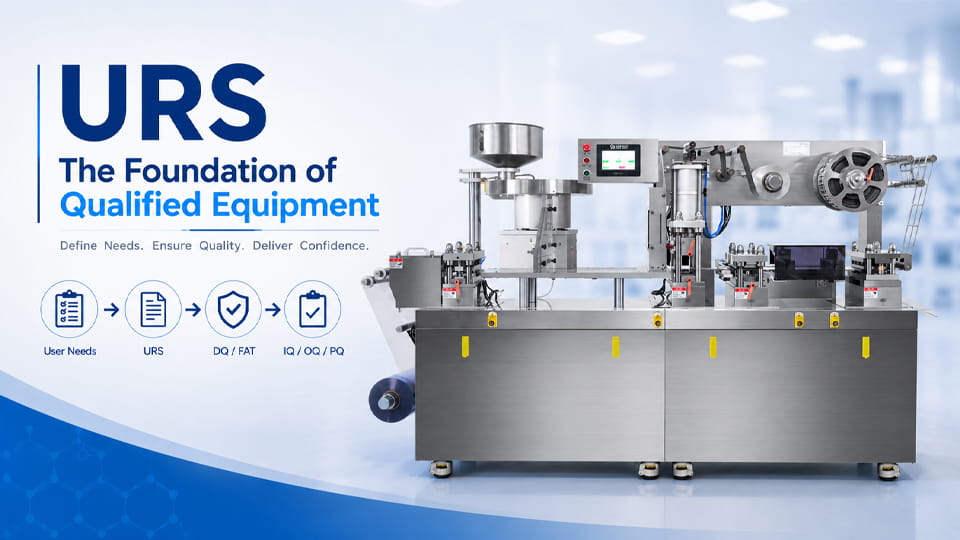
O URS é o ponto de partida do ciclo de vida de qualificação do equipamento. Um fluxo simplificado é:
URS → DQ: Assim que o URS for aprovado, o projeto do equipamento (desenhos, especificações) é revisado na Qualificação de Projeto para garantir que todos os requisitos do URS sejam atendidos. Em uma revisão de design, engenheiros e controle de qualidade analisam os resultados do projeto comparando-os com cada item do URS.
URS → FAT/SAT: Teste de aceitação de fábrica (GORDO) é feito no local do fornecedor para demonstrar que a máquina atende ao URS antes do envio. Anexo 15 até sugere verificar a conformidade do URS no local do fornecedor, se justificado. Após a instalação, Teste de aceitação do site (SENTADO) confirma que tudo ainda funciona no local (às vezes as etapas FAT e SAT se sobrepõem).
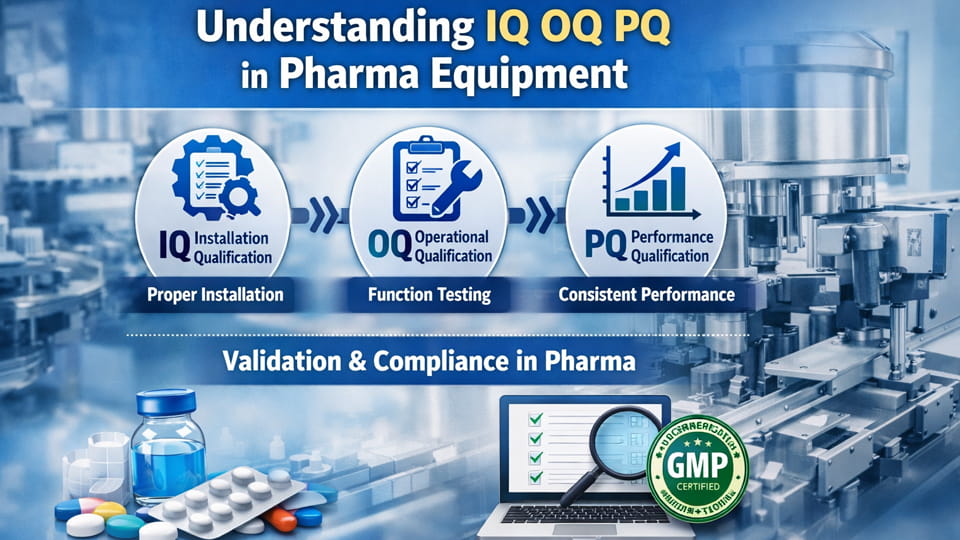
URS → QI: A Qualificação de Instalação verifica se o equipamento instalado corresponde às especificações URS. Por exemplo, A orientação da FDA afirma que o QI deve verificar se “todos os aspectos de uma instalação, utilidade, ou equipamento que possa afetar a qualidade do produto... aderir às especificações aprovadas conforme definido na URS (Por exemplo, materiais de construção)”. Na prática, isso significa verificar a tubulação, elétrico, e detalhes estruturais contra o URS.
URS → OQ/PQ: A Qualificação Operacional testa que a máquina funciona como pretendido. A FDA observa que a OQ verifica se o equipamento “opera[é] conforme pretendido em todas as faixas operacionais previstas”. A Qualificação de Desempenho mostra resultados consistentes que atendem aos critérios definidos pelo URS. Em outras palavras, em OQ/PQ você opera a máquina com materiais reais e confirma métricas (velocidade, colheita, taxa de defeito, etc.) de acordo com o URS.
Em cada etapa, protocolos de teste são rastreados até os requisitos do URS. Se o URS disser “Dispensar 100 ml ±2%”, então os testes OQ medirão o volume dispensado para atender a esse. Um URS transforma metas vagas em testes objetivos.
URS vs especificações funcionais vs especificações de design
É importante saber como esses documentos diferem:
Documento
Define (Escopo)
Autor
Especificação de requisitos do usuário (URS)
O que os usuários precisam que o sistema faça (necessidades funcionais e regulatórias).
A empresa Farmacêutica (proprietário)
Especificação Funcional (FS)
Como o sistema atenderá a URS (funções, módulos de software, características).
O URS respostas o que questões: “Que desempenho, segurança, e recursos de conformidade são necessários?”Deixa os métodos de solução abertos.
O Especificações funcionais divide o URS em funções do sistema (E.G.. “O sistema de controle deverá parar automaticamente em caso de alarme e registrar códigos de erro”).
O Especificações de projeto fornece o design real (Desenhos CAD, Código CLP, detalhes do fornecedor/fabricante).
Evite especificar excessivamente no URS. Por exemplo, não exija uma marca específica de PLC ou tipo de motor, a menos que seja absolutamente necessário. A URS deve focar nas necessidades, não detalhe do projeto. Como observam os especialistas do setor, incluir detalhes técnicos excessivos na URS pode limitar soluções flexíveis. Esses detalhes pertencem às especificações funcionais/design.
Quem é o responsável pela elaboração do URS?
Geralmente, o usuário farmacêutico (comprador) é responsável pela URS. Uma equipe multifuncional geralmente elabora o esboço:
Engenheiros de Produção/Processo: Definir o uso pretendido, rendimento, e integração de processos.
Garantia/Validação de Qualidade: Fornecer requisitos de GMP, necessidades de integridade de dados, e critérios regulatórios.
Manutenção/Engenharia: Especifique utilitários, peças de reposição, acesso de manutenção, e espaço de instalação.
Regulatório/QA: Garantir anexos ou diretrizes (Anexo 15, Anexo 1 para estéril, etc.) são abordados.
Aquisições: Coordena o formato do documento e pode esclarecer pontos técnicos.
O fornecedor do equipamento pode fornecer informações (o que é viável, desempenho típico, etc.), mas o URS final deve vir do usuário. Envolver todas as partes interessadas desde o início (produção, Controle de qualidade, engenharia, validação) é uma prática recomendada. Por exemplo, O controle de qualidade pode detectar um requisito de saneamento, e o processo pode especificar um tamanho de feed. A URS deve integrar essas perspectivas para que reflita verdadeiramente as suas necessidades.
Como escrever um bom URS farmacêutico
Siga estas etapas para criar uma imagem clara, URS testável:
Defina o uso pretendido: Comece com uma breve descrição e finalidade do sistema (E.G.. “URS para máquina de envase de líquidos na linha ABC”). Isso prepara o cenário.
Listar regulamentos/normas aplicáveis: Incluir orientações relevantes (EU GMP Annex 15/11, 21 Parte CFR 11, ESPORTE 5, etc.) para que as necessidades de conformidade não sejam ignoradas.
Seja específico e mensurável: Requisitos estaduais com valores ou testes exatos. Em vez de “alta velocidade”, especifique “mínimo 500 garrafas/hora em 80% preencher". Cada requisito deve ser objetivamente verificável.
Detalhe as necessidades do produto e do processo: Descrever variantes do produto, propriedades dos materiais, condições ambientais. Por exemplo: “Diâmetro do comprimido 6–10 mm; operar em 20–25°C, 40–60% UR.”
Especifique materiais e critérios de design: Defina claramente os materiais de contato (E.G.. SS316L), acabamentos (Rá), aulas de limpeza, etc.. Isso permite que as verificações de QI confirmem as especificações “as-built”.
Incluir utilitários e requisitos de espaço: Fonte de alimentação de documentos, pressão/fluxo de ar, qualidade da água, pesos, e quaisquer requisitos especiais de fundação ou espaço.
Descrever controles e tratamento de dados: Especifique as preferências do sistema de controle (Marca CLP, Linguagem da IHM), contagem de receitas, registro de alarme/evento (trilha de auditoria para CFR 21Part 11), etc.. Se a linha precisar ser integrada ao MES, observe isso.
Descrever recursos de segurança: Listar os intertravamentos de segurança necessários, guardando, paradas de emergência, e conformidade com as normas de segurança (CE, Ul). Não negligencie a segurança do operador (E.G.. iluminação, escadas, bloqueio/sinalização).
Plano para FAT/SAT: Indica que a máquina passará por FAT e SAT, e quais critérios de aceitação serão testados (E.G.. “Todos os pontos URS serão incluídos no protocolo FAT com resultados medidos”).
Revise e revise: Certifique-se de que todos os requisitos estejam claros, inequívoco, e rastreável. Atribua IDs exclusivos, se for útil para rastreamento. Envolva o controle de qualidade/validação para verificar se nada de crítico está faltando.
Principais práticas recomendadas: envolver usuários de todos os grupos, usar linguagem simples, e evite termos ambíguos. Um bom URS usa listas com marcadores ou tabelas, e cada item tem critérios para teste. Como disse uma fonte da indústria: cada requisito deve ser “específico e testável”. Por aqui, você pode vincular diretamente cada passo FAT/IQ/OQ a um item URS.
Erros comuns ao escrever um URS
Muito vago: Requisitos como “fácil de usar” ou “alta velocidade” sem números não podem ser testados. Sempre quantifique ou especifique critérios de aceitação.
Linguagem Centrada em Design: Escrever “PLC deve ser Siemens” ou “usar três motores” ultrapassa o URS. Mantenha o foco nas necessidades (o que, não como).
Método de verificação ausente: Se você não sabe dizer como testá-lo, precisa de esclarecimento. Por exemplo, “deve vedar adequadamente” deve incluir especificações de teste de vazamento.
Negligenciando GMP/Integridade de Dados: Esquecendo de mencionar alarmes, backup de dados, ou Parte 11 conformidade pode causar problemas de auditoria.
Ignorando utilitários/ambiente: As omissões comuns são a pressão do ar, fases de potência, aula de sala, ou mesmo peso total (carga no chão).
Ignorando limpeza/troca: Na indústria farmacêutica, CIP e troca rápida são frequentemente críticos. Omiti-los pode levar a reformulações posteriores.
Não envolver todas as partes interessadas: Se o controle de qualidade ou a produção não estiverem envolvidos, requisitos (E.G.. facilidade de limpeza, necessidades do operador) pode ser perdido.
Expectativas irrealistas: Prometer demais a produtividade ou subestimar as temperaturas pode sair pela culatra. Baseie os números em dados reais do processo.
Sem controle de versão: Tratar o URS como um rascunho editável pode confundir as equipes. Depois de finalizado, deveria ser um documento controlado.
Um URS muito genérico ou muito detalhado pode causar problemas. Apontar para claro, necessidades inequívocas do usuário.
Exemplo de URS de máquina de embalagem farmacêutica
Abaixo está um exemplo simplificado de entradas URS para um máquina de embalagem de bolha. (Os valores reais viriam de seus produtos e alvos específicos.)
Exigência
Exemplo (Máquina de embalagem de bolha)
Tipo de máquina
Máquina de embalagem blister rotativa automática
Produtos
Comprimidos (6–10mm Ø) e cápsulas (8–12mm Ø)
Material da bolha
Filme de PVC/PVDC 300 μm, ou folha de Alu/PVdC 20/30 μm
Número de faixas
4-máquina de trilha (para ciclos de bolhas)
Velocidade de saída
≥ 80 bolhas cheias por minuto
Vedação
Selagem térmica com ferramentas superior/inferior; temperatura de vedação 170–200°C; força de vedação 3kN
Mudança
Mudança de formato em < 30 minutos entre produtos
Construção
Aço inoxidável SS316L para peças em contato com o produto, Ra ≤ 0.8 μm
Sistema de controle
CLP Allen-Bradley com 10″ IHM; armazenamento de receitas por até 20 formatos
Utilitários
400 VAC, 5 barra de ar comprimido (100 NL/min), 50 Potência Hz
Segurança
Protetores e paradas de emergência em conformidade com CE; portas de acesso intertravadas
Documentação
Manual do usuário, diagramas de fiação, Protocolos FAT/IQ/OQ, documentos de calibração
Suporte de qualificação
FAT no site do fornecedor cobrindo todos os pontos URS; fornecedor fornece documentos de QI/OQ/PQ
Observação: Estes são exemplos ilustrativos. Seu URS real incluiria valores relevantes para os tamanhos dos seus produtos, classe de sala limpa, requisitos regulamentares, e plano de validação.
Máquina de embalagem de blister líquido DPP-270Pro
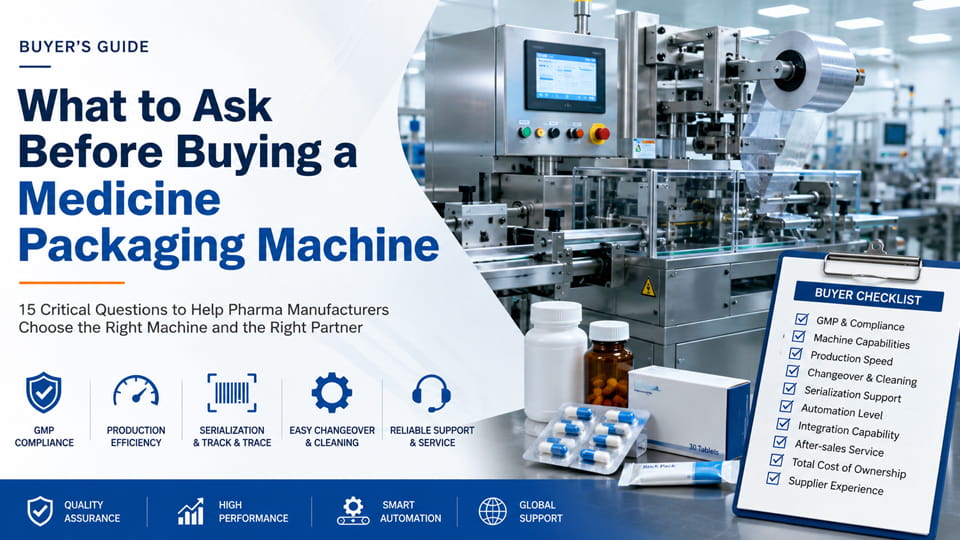
Lista de verificação da URS para aquisição de equipamentos
Antes de finalizar a URS, certifique-se de ter coberto:
Uso pretendido / etapa do processo
Tipos de produtos e formatos de embalagem
Capacidade de produção e faixa operacional
Materiais de construção e acabamentos superficiais
Recursos de design GMP/higiênico
Requisitos de limpeza e CIP
Utilidades e condições ambientais
Controles e integridade de dados (IHM, SCADA, Parte CFR21 11)
Requisitos de segurança e proteção
Documentação (manuais, desenhos, certificados)
FAT/SAT e resultados de qualificação
Manutenção, peças de reposição, e necessidades de treinamento
Uma lista de verificação completa ajuda a identificar as peças que faltam antes que os fornecedores façam uma oferta para o projeto.
Conclusão
UM Especificação de requisitos do usuário (URS) é o ponto de partida para qualquer projeto de equipamento farmacêutico. Ele define as necessidades do usuário e se torna a base para o projeto e validação de equipamentos compatíveis. Ao soletrar o que o equipamento deve fazer - com clareza, critérios mensuráveis – o URS orienta a aquisição, propostas de fornecedores, e testes de qualificação.
Para linhas de embalagens farmacêuticas, um URS forte garante seu embaladores de bolhas, contadores de comprimidos, cartonadores, e máquinas de engarrafamento fornecem o resultado necessário e atendem aos padrões de design GMP. Quando sua produção, Controle de qualidade, e equipes de engenharia colaboram no URS, você minimiza mal-entendidos e estabelece um caminho tranquilo para o FAT, QI, QO, e QP.
Se você estiver preparando um URS para uma máquina ou linha de embalagem, lembrar: defina o que você precisa, torná-lo mensurável, e vinculá-lo aos requisitos GMP. A Jinlu Packing é especializada em máquinas de embalagem farmacêutica – desde embalagem em blister e enchimento de cápsulas até linhas de embalagem e engarrafamento. Com um URS claro em mãos, podemos adaptar nossas propostas de equipamentos e suporte de validação às suas necessidades exatas.
Entre em contato com a Jinlu Packing para assistência especializada na especificação e qualificação de sua próxima máquina de embalagem farmacêutica. Nossa equipe experiente pode ajudar a traduzir seu URS em um formato compatível, solução de alto desempenho.
Perguntas frequentes sobre especificação de requisitos do usuário (URS) em Farmacêutica
O que é uma especificação de requisitos do usuário (URS) em produtos farmacêuticos?
Um URS é um documento escrito que detalha as expectativas do usuário em relação a uma máquina ou sistema antes de ele ser projetado ou adquirido.. Ele lista o desempenho, funcionalidade, e necessidades de conformidade que o equipamento deve atender. Em outras palavras, diz aos fornecedores exatamente o que o processo exige.
Por que o URS é importante na indústria farmacêutica?
A URS garante que os equipamentos sejam desenvolvidos de acordo com GMP, segurança, e requisitos de integridade de dados. Ele fornece clareza sobre o que é necessário para que os projetistas possam construir, sistemas de alta qualidade. Sem um URS claro, o equipamento pode perder requisitos importantes, levando a retrabalhos dispendiosos ou não conformidade regulatória.
Quem normalmente escreve o URS?
Geralmente as pessoas que executam o processo (especialistas em produção ou produto) elaborar o URS, com contribuições da engenharia, Controle de qualidade, e equipes de validação. Isso garante que todas as perspectivas sejam cobertas. A revisão e aprovação finais devem envolver controle de qualidade para confirmar que as necessidades regulatórias são atendidas.
Quando deve ser criada a URS?
A URS deve ser preparada antes de comprar ou construir o equipamento – logo após a decisão de que um novo sistema é necessário, e antes do projeto detalhado ou da seleção do fornecedor.
O que deve constar em uma URS?
As principais seções de um URS farmacêutico normalmente cobrem o escopo do projeto, requisitos funcionais (o que isso faz), requisitos de desempenho (quão bem isso acontece), necessidades de conformidade regulatória, integridade de dados, e critérios de aceitação. Também pode incluir seções sobre segurança, manutenção, documentação, treinamento, etc..
Qual é a diferença entre um URS e uma especificação de requisitos funcionais (IFRS)?
Um URS define o que o usuário precisa (necessidades de negócios, funções de alto nível). O FRS (ou especificação funcional) vem depois e descreve como o sistema fará isso. Pense em URS como “precisamos de saída X e precisão Y”, Considerando que o FRS detalharia a solução técnica ou fluxo de trabalho para alcançar esse objetivo. Geralmente, não duplique especificações funcionais na URS.
Como o URS está vinculado à validação (IR/WH/PQ)?
O URS é a linha de base para todos os testes de validação. Cada atividade de qualificação remonta aos requisitos da URS. Por exemplo, se o URS exigir 10,000 garrafas/hora, o QP (Qualificação de Desempenho) testará essa saída. Anexo 15 declara explicitamente que os requisitos de URS devem ser verificados durante DQ e servir como referência em todo IQ/OQ/PQ.
Um fornecedor pode escrever o URS para nós?
Embora um fornecedor possa esclarecer como atenderá aos requisitos, o URS deve permanecer propriedade do usuário. Deve refletir seu processo específico e prioridades de BPF, não apenas o que um fornecedor construiu antes. Você pode obter informações do fornecedor sobre viabilidade técnica, mas o URS final deverá ser validado pela sua equipe (Controle de qualidade/validação) para evitar preconceitos.
Um URS é exigido pelos reguladores?
Sim. Diretrizes de BPF (EU Annex 15, FDA 21 CFR, etc.) exigir especificações documentadas para equipamentos. Anexo 15 exige explicitamente um URS ou especificação semelhante no início da qualificação. De forma similar, Parte da FDA 11 e GAMP5 enfatizam ter requisitos claros e documentados. Durante auditorias, os reguladores esperarão ver um URS ou especificação para cada máquina crítica.
O que acontece se pularmos o URS?
Ignorar ou escrever um URS de baixa qualidade geralmente leva a lacunas de design e problemas de conformidade. Você pode acabar com máquinas que não atendem às necessidades de produção ou que não possuem recursos críticos de GMP. Pharmaguideline alerta que uma URS vaga causa “custos excessivos associados ao redesenho e qualificação de equipamentos devido à falta de clareza”. Sempre comece com um bom URS – é o caminho mais eficiente para uma conformidade, sistema sob especificação.
Petty Fu, Fundador da Jinlupacking, traz 20 anos de experiência para o setor de máquinas farmacêuticas. Sob sua liderança, Jinlu tornou-se um fornecedor confiável que integra design, produção, e vendas. Petty é apaixonado por compartilhar seu profundo conhecimento do setor para ajudar os clientes a navegar pelas complexidades das embalagens farmacêuticas, garantindo que eles recebam não apenas equipamentos, mas uma verdadeira parceria de serviços completa, adaptada às suas metas de produção.