Embalagem de lanche: O guia completo para tipos de embalagem, Máquinas & Soluções
Embalagem de lanche: O guia completo para tipos de embalagem, Máquinas & Soluções
Julho 22, 2026
Sem comentários
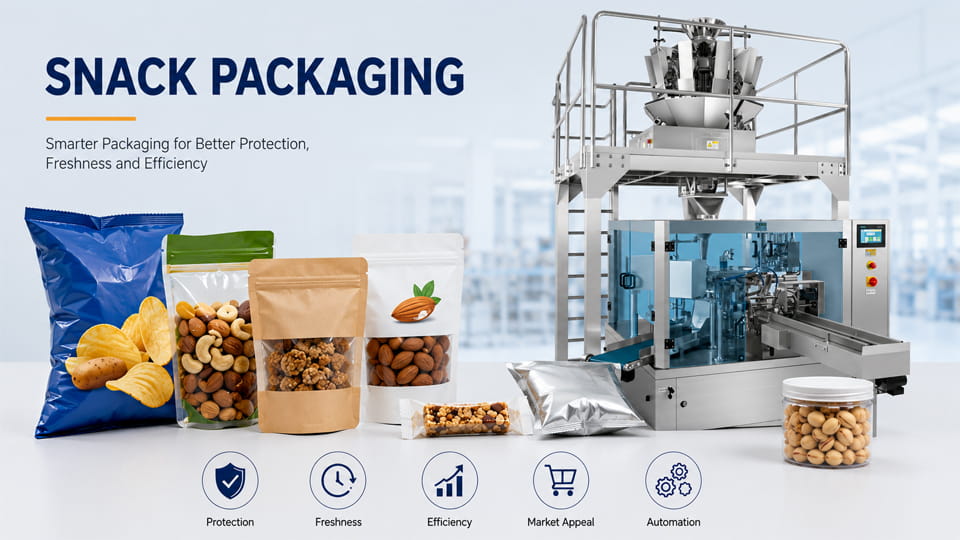
O mercado global de salgadinhos está crescendo, e também a demanda por embalagens eficazes para lanches. Na verdade, o mercado de embalagens de salgadinhos foi avaliado em mais de $20 bilhão em 2025 e está projetado para exceder US$ 21,8 bilhões em 2026. A embalagem de salgadinhos é mais do que apenas um saco ou caixa – é um sistema completo projetado para proteger a qualidade do produto e melhorar a eficiência. A embalagem certa mantém os lanches frescos e seguros (bloqueando a umidade, oxigênio, e luz), facilita o manuseio e o envio, e apresenta seu produto de forma atraente na prateleira. Enquanto isso, o formato da embalagem determina quais máquinas você precisará: desde simples linhas VFFS para chips até sistemas automatizados de embalagens pré-fabricadas para nozes e doces.
Quer você faça batatas fritas, nozes, doce, pipoca ou frutas secas, o objetivo é o mesmo: proteja seu produto, tornar a produção eficiente, e apelar aos consumidores. Mostraremos quais formatos de embalagem (Sacos de travesseiro, Bolsas de stand-up, invólucros de fluxo, etc.) são melhores para lanches diferentes, quais materiais e filmes de barreira você precisa, e como as máquinas gostam VFFS ou empacotadores pré-fabricados encaixar na linha. Isso ajudará você a comparar opções - por exemplo. escolhendo uma bolsa travesseiro VFFS econômica para batatas fritas, em vez de um stand-up pouch premium para nozes temperadas – e crie uma solução de embalagem para lanches que equilibre prazo de validade, velocidade, e marca.
O que é embalagem de lanche?
“Embalagem de lanche” refere-se às embalagens, bolsas, bolsas, e recipientes usados para salgadinhos – coisas como batatas fritas, nozes, frutas secas, biscoitos, doce, carne seca, barras de proteína, e mais. Lanches embalados são normalmente pré-repartidos por conveniência. Pacotes de lanches comuns incluem sacos ou bolsas flexíveis (Sacos de travesseiro, Bolsas de stand-up, saquetas planas), barras ou biscoitos embrulhados em fluxo, e pequenas caixas ou bandejas. Uma embalagem eficaz para salgadinhos deve proteger o produto da umidade, oxigênio, luz e contaminação, ao mesmo tempo em que oferece um atrativo, pacote conveniente. Como observa o relatório da indústria, embalagens de salgadinhos vêm em “vários tipos, dependendo do tipo de lanche, seu prazo de validade exigido, e os objetivos de sustentabilidade da marca”. Por exemplo, batatas fritas geralmente vêm em sacos de travesseiro com nitrogênio para permanecerem crocantes, enquanto as nozes premium podem ser vendidas em embalagens stand-up que podem ser fechadas novamente, e doces individuais podem estar em embalagens ou caixas torcidas. Todos esses formatos se enquadram em “embalagens para lanches”,”cada um adaptado para produtos e casos de uso específicos.
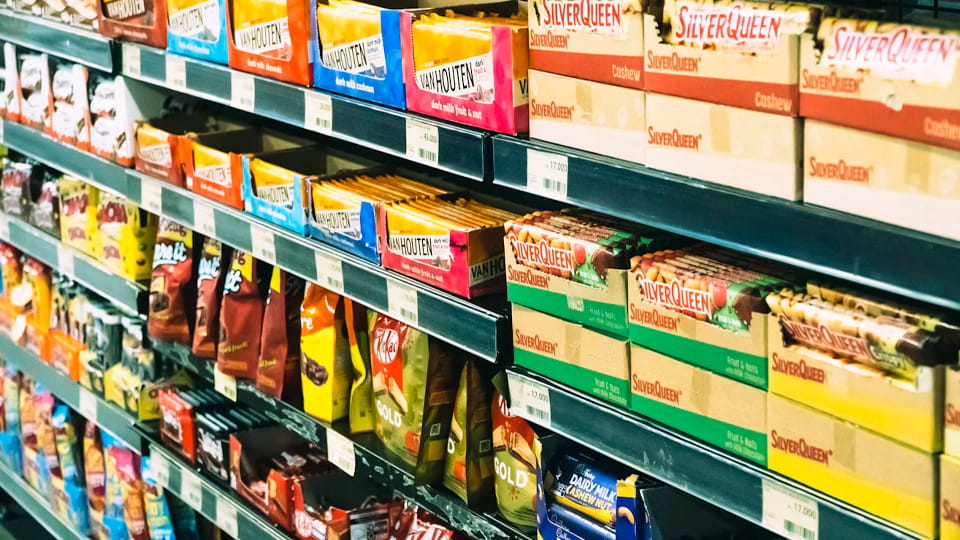
Uma loja repleta de lanches
Por que a embalagem de lanches é importante
Os salgadinhos ficam expostos ao ar, umidade e manuseio, portanto, a embalagem deve garantir frescor e sabor. A embalagem certa para lanches cria uma barreira contra o oxigênio, luz e umidade, o que ajuda os lanches a permanecerem crocantes e saborosos por mais tempo. Uma boa embalagem também garante segurança e higiene – um saco bem selado mantém os contaminantes afastados e preserva a qualidade. Ao mesmo tempo, embalagens de lanches trazem rótulos de marca e nutricionais. Um grande, bolsa colorida pode chamar a atenção do comprador na prateleira. Resumidamente, embalagem de salgadinhos é a primeira defesa da qualidade do produto e o primeiro aperto de mão com o cliente. Combina proteção funcional com impacto de marketing.
Proteja a qualidade & Frescura: Muitos lanches (fichas, biscoitos, nozes) fica velho quando exposto. A embalagem mantém o oxigênio e a umidade afastados.
Melhore a conveniência: Bolsas que podem ser fechadas novamente ou sachês de dose única facilitam o uso de lanches em qualquer lugar. Entalhes de rasgo, zíperes ou bicos adicionam conveniência.
Aumente a marca e o apelo nas prateleiras: Sacos flexíveis permitem impressão em cores. Um grande, superfície plana significa que logotipos e designs podem realmente se destacar.
Prevenir danos & Perda: Espaço de amortecimento, como o “ar” em sacos de batatas fritas (na verdade nitrogênio), evita que lanches frágeis sejam esmagados durante o transporte. Bolsas fortes ou recipientes rígidos também resistem a perfurações ou rasgos. Sem embalagem adequada, produtos racham ou vazam, levando a desperdícios e devoluções.
Prolongue a vida útil: Filmes de alta barreira e enchimento com atmosfera modificada (E.G.. descarga de nitrogênio) pode dobrar a vida útil do lanche, reduzindo o desperdício.
De acordo com especialistas em embalagens, materiais flexíveis são especialmente ideais para salgadinhos porque são leves, forte e oferece proteção de barreira enquanto mantém a impressão vibrante. De sacos de batatas fritas para festas a pacotes de nozes individuais, escolher o estilo de embalagem e o filme corretos é um passo fundamental para um lanche de sucesso.
Tipos comuns de embalagens de lanches
As embalagens de salgadinhos vêm em vários formatos. Aqui estão os estilos mais populares usados hoje:
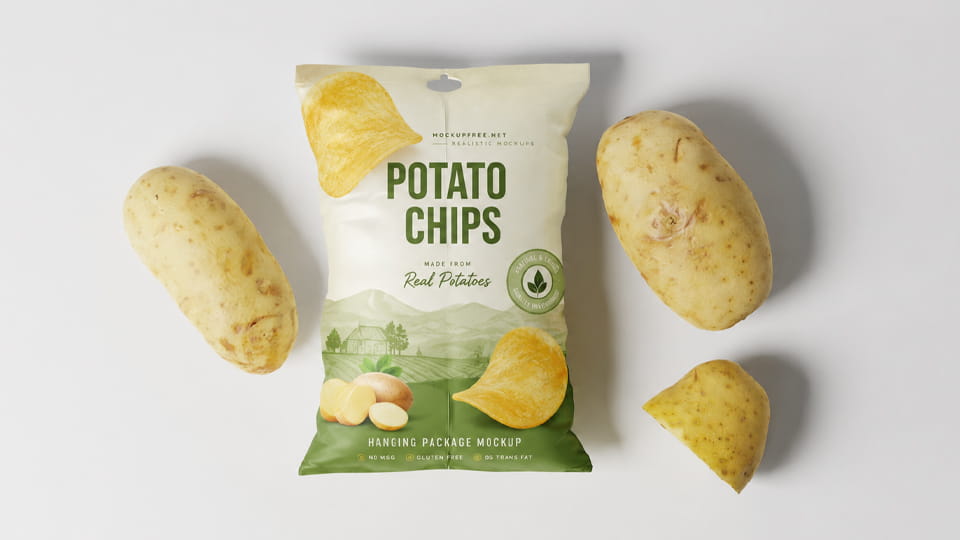
Bolsas de travesseiro: Estes são os sacos simples selados em três lados que você vê para batatas fritas, pretzels ou doces. UM bolsa de travesseiro é plano quando vazio e “incha” em forma de travesseiro quando cheio. É selado na parte traseira e na parte superior e inferior. As bolsas de travesseiro usam menos filme do que alguns outros estilos, então eles são econômicos e embalados bem. Eles são muito comum em salgadinhos – pense em batatas fritas, pretzels, pipoca e nozes. (Muitas bolsas de travesseiro também incluem recursos como orifício para pendurar ou zíper que pode ser fechado novamente.) Devido ao baixo custo do material, sacos de travesseiro são muitas vezes a escolha certa para lanches a granel.
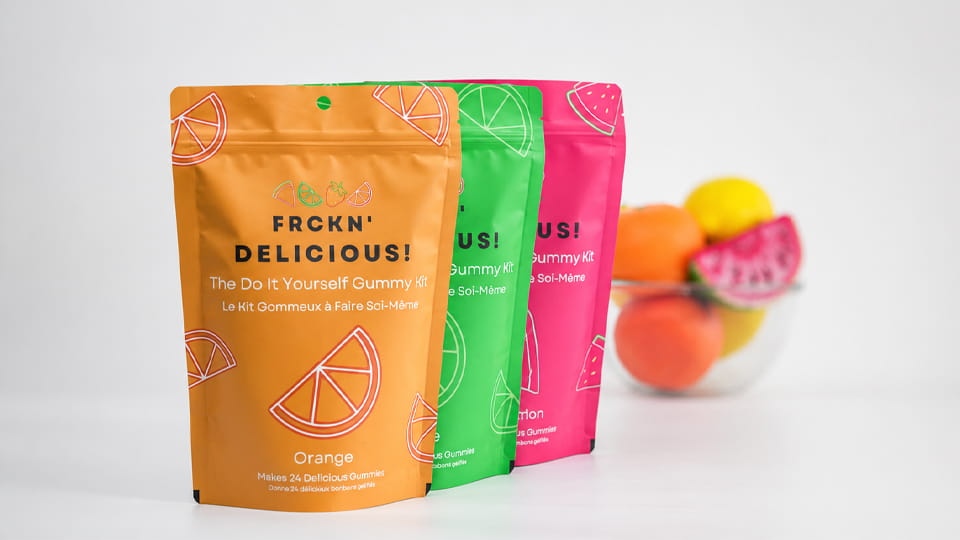
Ficar de pé (Reforçado) Bolsas: Essas bolsas têm um reforço (fundo dobrado) então eles ficam de pé em uma prateleira. Os stand-up pouches geralmente custam mais filme, mas oferecem uma aparência premium. Muitos apresentam um zip-lock ou bico para religamento. A embalagem stand-up pouch é ideal para produtos com volume extra ou que precisam de apelo nas prateleiras. Por exemplo, nozes ou misturas de trilha de alta qualidade costumam usar sacos stand-up para se destacar. Essas bolsas mantêm os lanches frescos e oferecem uma grande superfície para branding. Apesar do custo do filme um pouco mais alto, muitas marcas de salgadinhos os preferem pela maior visibilidade e conveniência.
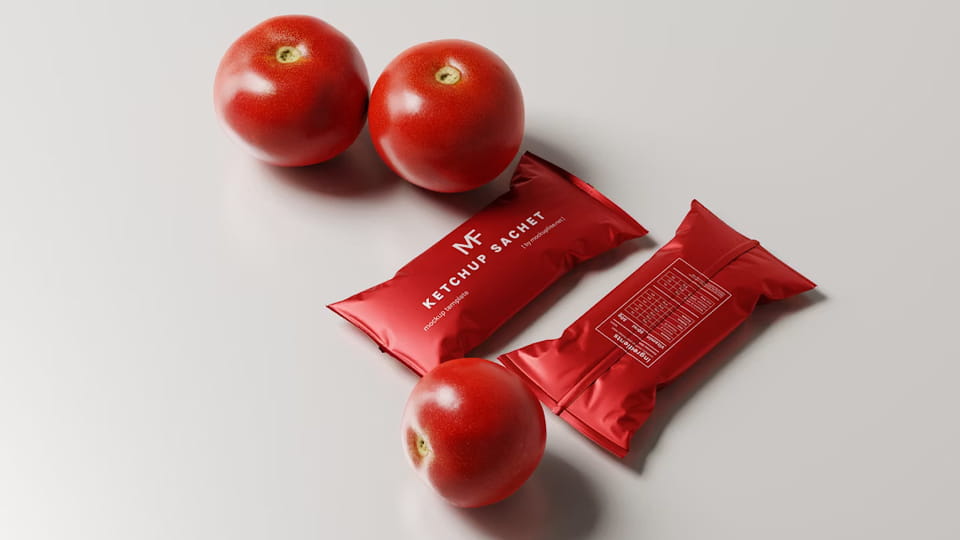
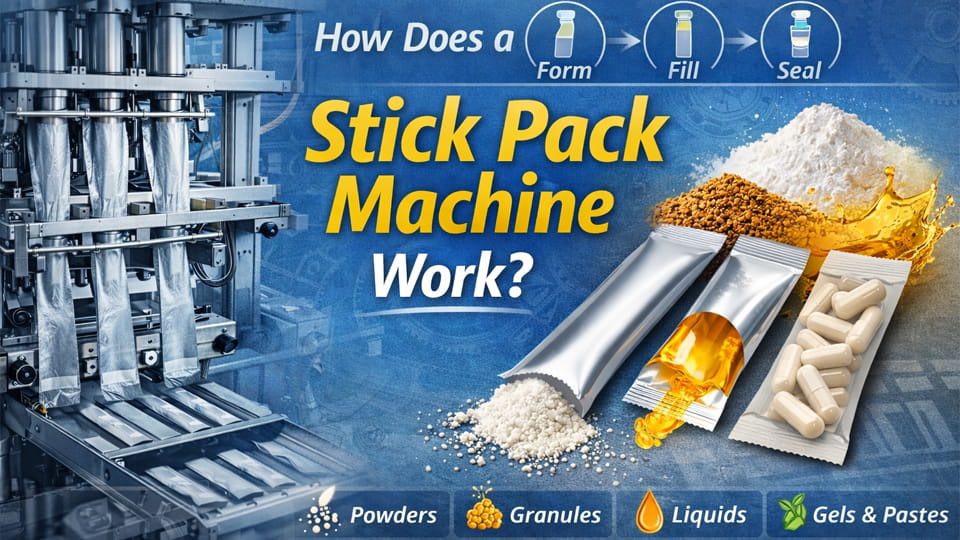
Sachês e Pacotes de Sticks: Estes são pequenos, pacotes de dose única selados em três ou quatro lados. Sachês são perfeitos para condimentos, pequenas porções de doces, ou lanches descartáveis, como tempero de carne seca. Pacotes de palitos (sachês longos e finos) são comuns para misturas de bebidas em pó ou pequenos doces. Eles usam material mínimo e são muito portáteis, mas não são resseláveis. Máquinas chamadas máquinas de embalagem de sachês ou máquinas de embalagem de palitos preencha e sele esses pacotes em alta velocidade. Os sachês geralmente são feitos de filmes laminados simples que fornecem barreira suficiente para uma vida útil curta.
Envoltório de fluxo & Invólucros de barras: Alguns lanches (barras de granola, barras de chocolate, biscoitos) use máquinas de empacotamento horizontais. Essas máquinas envolvem barras individuais ou pilhas de biscoitos em um filme apertado horizontalmente, depois sele as pontas (como a forma como as barras de chocolate são embrulhadas). Flow-wrap cria um pacote de almofadas apertado ao redor de cada barra. É rápido e funciona bem para itens sólidos.
Embalagem de bolsa pré -fabricada: Para designs de bolsas mais complexos (laminados multicamadas, bicos, fechos de correr), muitas empresas usam máquinas de bolsas pré-fabricadas. Estas máquinas carregam planas, sacos pré-formados de uma revista, abra-os, preencha o produto, então sele-os. As máquinas de bolsas pré-fabricadas lidam com qualquer coisa, desde sacos com zíper até bolsas para bebidas com bico. Eles são comuns quando a bolsa apresenta (como bicos de abertura fácil) agregar valor ao consumidor. Para lanches, como mistura para trilhas ou batatas fritas, um bolsa com zíper pré-fabricada podem ser enchidos e selados em taxas de até ~50–60 sacos por minuto com dosagem precisa.
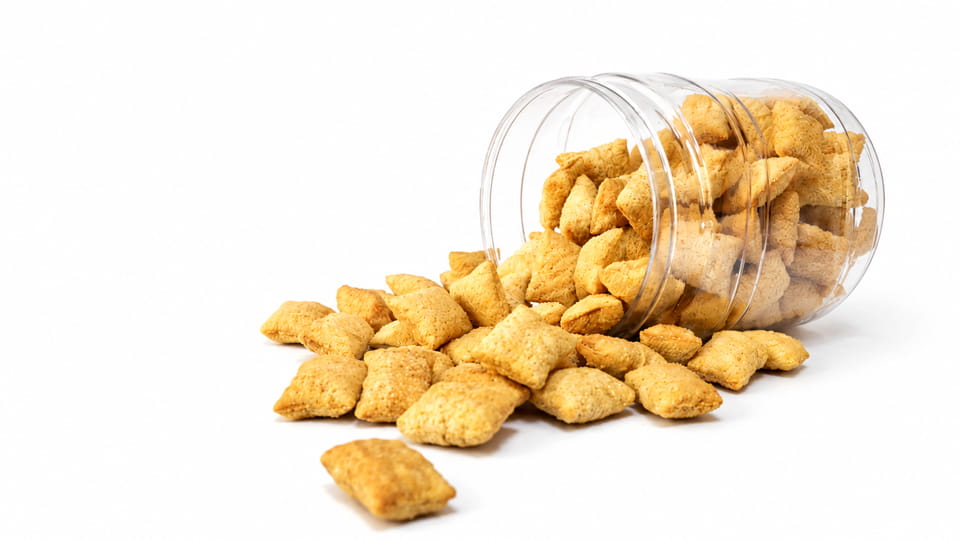
Recipientes Rígidos (Caixas, Frascos, Latas): Embora muitas embalagens de salgadinhos sejam flexíveis, alguns produtos usam caixas, latas ou potes. Por exemplo, pretzels a granel podem vir em caixas de papelão, e algumas nozes ou pipoca são vendidas em potes de plástico. Embalagens rígidas são mais pesadas e caras, mas é bom para lanches frágeis ou para reutilizar recipientes (como potes de biscoitos). No entanto, a maioria das linhas de salgadinhos de alta velocidade concentra-se em embalagens flexíveis, portanto, recipientes rígidos são menos comuns em linhas automatizadas de embalagem de salgadinhos.
Cada tipo de embalagem tem seus próprios benefícios. Sacos de travesseiro são mais rápidos e baratos; stand-up pouches oferecem fechamento e apelo de prateleira; os sachês são ideais para itens pequenos ou de dose única; e bolsas embrulhadas em fluxo servem para barras ou lanches de formato semelhante. O “melhor” tipo depende do lanche (fichas vs.. barra de granola vs.. nozes), necessidades de vida útil, prioridades de marca, e orçamento de embalagens.
Materiais de embalagem para lanches
A maioria dos lanches são feitos de filmes flexíveis – plástico laminado (e às vezes papel alumínio ou papel) que pode ser selado a quente. A escolha do material é fundamental porque os lanches precisam de proteção do ar, umidade e às vezes luz. Os materiais e laminados comuns usados em embalagens de salgadinhos incluem:
Polietileno (Pe) e Polipropileno (PP): Esses plásticos (muitas vezes em camadas) formam a barreira básica selável a quente. PE de baixa densidade (PEBD) e LDPE linear são muito comuns como camada selante interna. PP Orientado (BOPP) é usado na parte externa para impressão. Filmes de polietileno e polipropileno podem bloquear bem a umidade e fornecer boa resistência à vedação.
Poliéster (BICHO DE ESTIMAÇÃO): O filme PET adiciona resistência e propriedades de alta barreira (é uma camada “intermediária” comum em laminados). Um laminado pode ser PET // adesivo // PE, por exemplo. Esses filmes ajudam a prevenir a transmissão de oxigênio.
Filmes metalizados/folha de alumínio: Alguns filmes para lanches têm um metal fino (alumínio) camada para barreira superior de oxigênio/luz. Por exemplo, batatas fritas geralmente usam um filme metalizado ou laminado para que permaneçam crocantes. Esses filmes bloqueiam 100% de luz e umidade.
Filmes Laminados: A maioria das embalagens para lanches são laminados multicamadas que combinam os itens acima (e às vezes náilon ou EVOH). Filmes laminados mesclam camadas para oferecer durabilidade e resistência à barreira. Por exemplo, um 5- ou filme de 7 camadas pode incluir PET, alumínio, adesivo e PE. O resultado: uma bolsa durável que mantém o ar fora. Os laminados prolongam drasticamente a vida útil sem adicionar volume.
Filmes Biodegradáveis/Compostáveis: Há uma tendência para filmes à base de plantas como o PLA. Isso pode reduzir o desperdício de plástico, mas geralmente são mais caros e ainda estão amadurecendo para atender às necessidades de barreira à umidade. Algumas marcas de salgadinhos premium experimentam sacos compostáveis (À base de PLA ou celulose) para biscoitos, nozes ou batatas fritas.
Papel ou Papel Revestido: Alguns lanches (como biscoitos ou salgadinhos com sabor de chá) use bolsas de papel com um revestimento fino de plástico ou papel alumínio. Eles têm uma aparência mais natural, mas geralmente usam um forro para proteção contra umidade..
Em todos os casos, a camada externa geralmente pode ser impressa, então as marcas podem usar cores brilhantes. As camadas internas e os adesivos mantêm o ar, umidade e óleos escapem. Os requisitos de vedação da máquina também determinam o material: máquinas de alta velocidade precisam de filmes que vedem perfeitamente em altas temperaturas. Por exemplo, seladores térmicos contínuos nas linhas de salgadinhos normalmente trabalham com PE, PP, PET e filmes laminados. Na verdade, um relatório da indústria observa que os filmes modernos para lanches são geralmente laminados à base de PE ou PET para resistência e barreira.
Máquinas de embalagem de salgadinhos & Equipamento
As máquinas de embalagem transformam esses filmes e bolsas em sacos cheios de salgadinhos. Em uma fila típica de lanches, máquinas lidam com pesagem/enchimento, formação de saco, vedação e até mesmo embalagem de caixas. Aqui estão as principais categorias de equipamentos:
Formulário-Preenchimento-Selo Vertical (Vfs) Máquinas: As máquinas VFFS formam um saco a partir de um rolo de filme (geralmente travesseiro ou estilo reforçado) fazendo vedações verticais. UM Máquina VFFS então preenche (por gravidade ou com uma balança) e sela o topo. Essas linhas são muito comuns em embalagens de salgadinhos. Eles podem operar em velocidades de 30 a 200 sacos por minuto para batatas fritas, nozes e salgadinhos granulados. As linhas VFFS ocupam pouco espaço e podem integrar balanças multicabeçais ou enchedoras de copos para porcionar o lanche. Uma balança multihead cai, dizer, 100g de chips em cada saco em alta velocidade. Porque a VFFS forma bolsas na hora, é ideal para produtos de grande volume, como batatas fritas ou pipoca, onde a embalagem é simples (muitas vezes um pacote de travesseiros ou um reforço simples).
Envoltório de fluxo horizontal (HFFS) Máquinas: As máquinas de embalagem horizontal embalam lanches horizontalmente em um tubo de filme e selam as extremidades, muito parecido com embrulhar uma barra de chocolate. HFFS é frequentemente usado para itens únicos ou embalagens estilo row-pack. Por exemplo, as máquinas rodando doces, barras de granola, biscoitos ou pacotes múltiplos de biscoitos usam este estilo. De acordo com análise da indústria, Os sistemas HFFS se destacam em produtos sólidos como lanchonetes e biscoitos, correndo de dezenas até 1,500 pacotes por minuto dependendo do design. O acabamento costuma ser bem caprichado (já que é horizontal) e pode lidar com produtos mais longos ou itens agrupados. A desvantagem é que as unidades HFFS são maiores e mais complexas.
Máquinas de embalagem de bolsas pré-fabricadas: Estas máquinas lidam com sacos pré-fabricados (bolsas planas, doypacks, sacos de pé, saquetas, etc.). A máquina pega uma bolsa vazia pré-fabricada, abre com uma pinça de vácuo, preenche de cima, e então sela (geralmente com uma aleta de vedação térmica). Eles são usados quando você precisa de recursos especiais de bolsa (zíperes reutilizáveis, bicos, estabilidade laminada pesada). Por exemplo, uma bolsa com zíper vertical para mix de trilhas ou nozes costuma ser embalada dessa maneira. Máquinas modernas de bolsas pré-fabricadas (como a máquina de bolsas com zíper de Jinlu) pode atingir cerca de 50–60 sacos por minuto com alta precisão de dosagem. Eles geralmente incluem opções como extração de poeira ou descarga de nitrogênio para lanches sensíveis.
Máquina de embalagem de bolsas pré-fabricadas
Sistemas de pesagem e enchimento: Quase todas as linhas de salgadinhos possuem posto de pesagem/enchimento. Isto poderia ser um balança multicabeça para lanches secos, um copo ou enchimento de rosca para pós ou nozes, ou um enchimento de copo volumétrico. Balanças multicabeçais são especialmente comuns para cavacos, nozes e misturas para trilhas porque fornecem porções precisas muito rapidamente (frequentemente com precisão de ±0,5–2g em velocidades de até 100 pesagens por minuto). Balanças precisas evitam enchimento excessivo (sorteio de produtos) e certifique-se de que cada bolsa tenha o peso correto. Algumas linhas de salgadinhos a granel utilizam enchimentos volumétricos simples (mais barato, bom para materiais soltos, mas menos preciso) ou simples enchimentos de copos para líquidos e molhos.
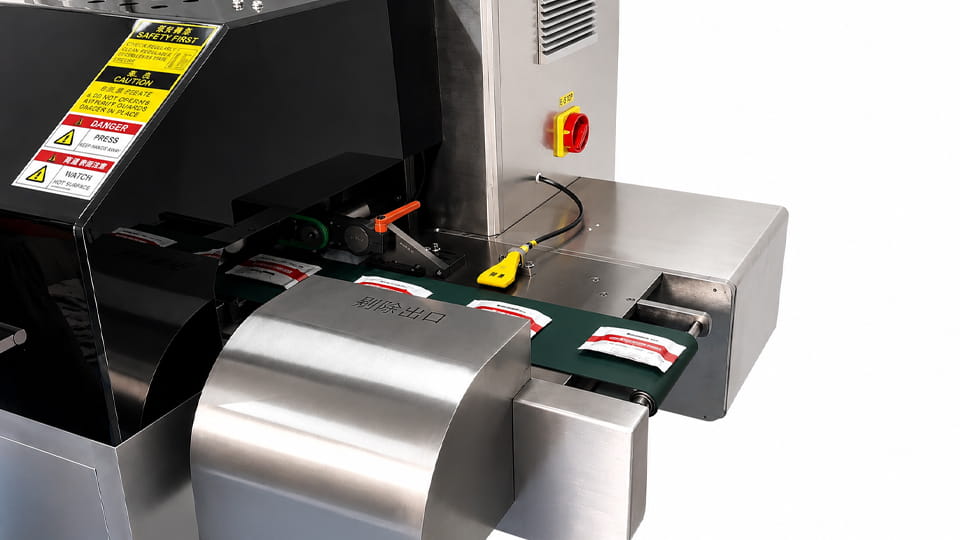
Máquinas de embalagem de sachês/bastões: Estas são máquinas verticais especializadas. Forma de máquinas de embalagem stick, encher e selar sacos longos e estreitos (como palitos de ketchup ou palitos de café). Máquinas de sachês formam pequenos pacotes planos, muitas vezes em velocidade muito alta (centenas por minuto) para porções de lanche em pó ou descartáveis (como pacotes de molho de soja, tempero, nozes em saquinhos pequenos).
Máquina de embalagem de pau de sachet
Alimentação & Transporte: Antes de encher, os lanches são frequentemente classificados e alimentados por mesas vibratórias ou transportadores para garantir um fluxo constante no enchimento. Para lanches frágeis, transportadores suaves evitam quebras. Para produtos em queda livre, como pipoca, elevadores e desviadores garantem uma alimentação consistente para a balança ou enchedora.
Selantes: Depois de preencher, os lanches precisam ser selados. Seladores térmicos (contínuo ou impulso) crie selos herméticos no material do saco. Para linhas de lanches de alta velocidade, barras de vedação contínuas operando em temperaturas em torno de 150 a 250 °C, vedam mais de 60 a 150 sacos por minuto. Essas vedações bloqueiam o ar e a umidade. Em contraste, seladores de impulso usam curto, pulsos de alta temperatura e são usados em filmes mais espessos ou linhas mais lentas.
Contando & Máquinas de engarrafamento: Nem todos os lanches são embalados em bolsas. Produtos como gomas, nozes, grãos de chocolate, jujubas, doces, e frutas liofilizadas são frequentemente embaladas em garrafas. Um contagem automática & máquina de enchimento usa sensores eletrônicos para contar cada peça com precisão antes de encher as garrafas, garantindo quantidades consistentes com desperdício mínimo de produto. Um lanche completo linha de engarrafamento também pode integrar desembaralhamento de garrafas, inserção dessecante, limite, vedação, e rotulagem, tornando-o uma solução ideal para a produção de salgadinhos engarrafados em alto volume.
Linha de engarrafamento de contagem de goma de urso JL-16R
Linhas de embalagem integradas: Muitos produtores de salgadinhos compram uma linha integrada de um fornecedor. Por exemplo, uma linha pode incluir uma balança multicabeçal alimentando uma ensacadora VFFS, então um codificador de data (para impressão de datas) e um empacotador automático no final. Linhas automatizadas podem alcançar um ROI rápido: a eliminação do ensacamento manual reduz os custos de mão de obra e as inconsistências.
Resumindo, máquinas de embalagem de salgadinhos varia de enchedoras compactas de mesa para pequenas operações até linhas automatizadas de alta velocidade para grandes plantas. O segredo é combinar o estilo da máquina com o seu produto. Como observa Wolf Packing: sistemas de embalagem de salgadinhos totalmente automáticos podem produzir mais de 60 a 150 embalagens por minuto com mão de obra mínima. Esse tipo de velocidade, combinado com pesagem e vedação precisas, garante que cada saco esteja corretamente preenchido e selado, maximizando o rendimento e a consistência do produto.
Máquinas de embalagem de salgadinhos: Do recheio às embalagens finalizadas
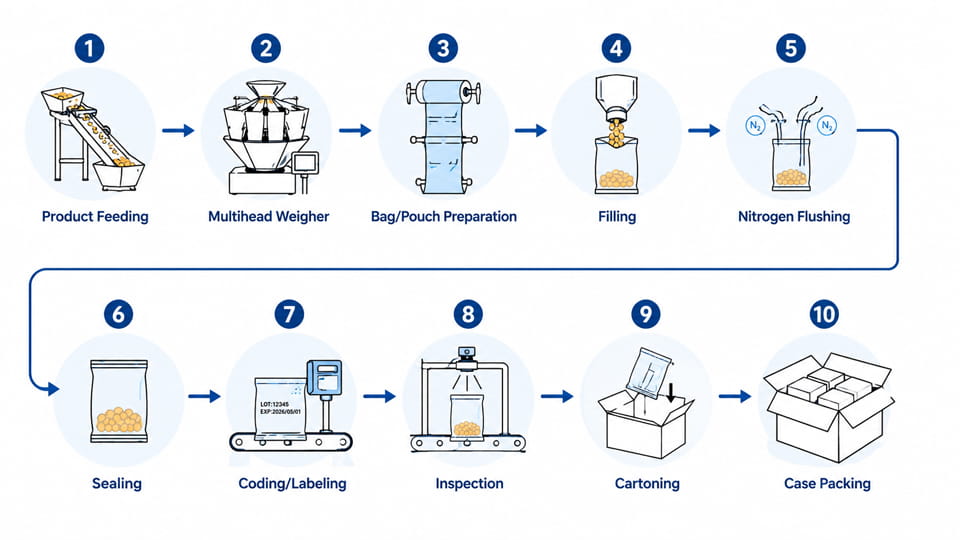
Um lanche típico linha de embalagem segue estes passos (veja fluxograma abaixo):
Alimentação de produtos: Os lanches são alimentados de um funil ou transportador para a balança ou enchedora. Às vezes, alimentadores vibratórios ou alimentadores de parafuso são usados para produtos pegajosos.
Pesagem (Balança Multicabeçal): O lanche é pesado em porções precisas. (Para lanches líquidos ou em pó, em vez disso, pode ser usada uma bomba doseadora ou um enchimento de pistão.)
Preparação de saco/bolsa: A máquina também forma um saco do filme (como em VFFS) ou pega uma bolsa pré-fabricada (como em máquinas doypack).
Enchimento: A porção pesada é colocada no saco/bolsa aberta. Várias pistas podem encher muitas malas em paralelo.
Lavagem de nitrogênio (opcional): Antes de selar, muitas linhas de salgadinhos injetam gás nitrogênio no saco para expulsar o oxigênio, prolongando o frescor.
Vedação: A extremidade aberta do saco é selada por mandíbulas de selagem a quente. As máquinas aplicam o calor e a pressão corretos para uma vedação hermética.
Codificação/Rotulagem: O saco cheio é marcado com códigos de data/lote usando impressoras jato de tinta ou codificadores a laser para rastreabilidade.
Inspeção (Verificador de peso / Visão): A sacola passa por um controlador de peso para verificar o peso. Os sistemas de visão podem inspecionar a integridade do selo ou a qualidade da impressão.
Embalagem: Grupos de sacos ou sachês podem ser recolhidos e inseridos em caixas por uma máquina de encadernação.
Embalagem de caixa: Finalmente, as caixas são carregadas em caixas de transporte ou paletes por um empacotador e seladas.
Um diagrama de fluxo de uma linha automatizada de embalagem de salgadinhos
Cada uma dessas etapas pode ser automatizada e sincronizada. O diagrama acima (um fluxograma de sereia) ilustra o fluxo desde a alimentação do produto até a embalagem final da caixa.
Escolhendo a máquina certa para o seu lanche
Nenhuma máquina serve para todos os lanches. A “melhor” máquina de embalagem depende do formato do produto, taxa de preenchimento e estilo do saco. Aqui estão algumas diretrizes:
Batatas fritas & granola (Solto, Fluxo livre): Uma linha VFFS com uma balança multicabeçal é normalmente usada. As batatas fritas caem facilmente em um saco por cima. VFFS é ótimo para alta velocidade (30–200 sacos/min) e tem uma pegada pequena. Escolha um filme com boa barreira ao oxigênio e considere uma descarga de nitrogênio para maior crocância.
Nozes & Frutas Secas: Semelhante a chips, estes funcionam bem em VFFS com uma balança. Se você quiser bolsas stand-up com zíper, use um empacotador de bolsa pré-fabricado. Algumas linhas oferecem alimentadores de pesagem a granel que lidam com grandes tiragens de sacos. A precisão é fundamental aqui – as nozes podem variar em tamanho, portanto, uma balança multicabeçal reduz o desperdício e garante peso uniforme.
Lanchonetes & Doce: Envoltório de fluxo horizontal (HFFS) máquinas brilham com barras e doces embrulhados. Eles podem embalar uma barra ou várias juntas rapidamente. Se as barras vierem em papel alumínio ou embrulhado em papel, essas máquinas podem selar bem as extremidades. Para lanches pequenos (como cachos de pipoca), um HFFS também pode formar um pacote de travesseiros horizontal.
Temperos & Molhos: Máquinas de sachês ou palitos lidam com misturas de especiarias, pós de imersão, ou molhos individuais. Essas máquinas funcionam muito rápido (muitas vezes centenas de baquetas por minuto). Eles também podem funcionar com bolsas pré-fabricadas.
Pipoca: Pipoca precisa de respirabilidade (para evitar esmagamento) e uma bolsa grande. Muitas linhas de pipoca usam VFFS com esteiras transportadoras de sacos especiais para carregar delicadamente milho pipoca. Alguns usam ensacadeiras horizontais com grandes fundos reforçados para os big bags.
Tamanho do lote & Nível de automação: Pequenos produtores podem começar com máquinas semiautomáticas ou volumétricas (Por exemplo, um enchimento de pesagem de mesa em sacos ziplock). Operações maiores tornam-se totalmente automáticas com transportadores e robótica. Linhas totalmente automatizadas podem ter apenas 1 a 2 operadores para máquinas que pesam, bolsa, selar e embalar milhares de lanches por hora.
Requisitos de saída: Se você precisar 100 sacos/minuto, definitivamente invista em máquinas automáticas. Se apenas alguns sacos por minuto, um enchimento manual ou semiautomático com carregamento manual pode ser suficiente (embora Wolf avise que a embalagem manual tem custos e ineficiências ocultos).
Material da bolsa: Algumas máquinas funcionam apenas com determinados tipos de sacolas. Por exemplo, a maioria das máquinas VFFS forma travesseiros ou sacos reforçados, mas eles não podem fazer stand-up pouches com reforços inferiores. Por outro lado, máquinas de bolsas pré-fabricadas podem lidar com praticamente qualquer formato de saco, mas apenas se o saco for pré-formado.
Orçamento & ROI: Máquinas automatizadas de salgadinhos podem custar de dezenas a centenas de milhares de dólares. No entanto, a economia de mão de obra e o aumento da produtividade geralmente compensam dentro de 1 a 3 anos para linhas de alto volume. Calcular o ROI envolve custo de mão de obra, redução de desperdícios e ganhos de eficiência – mas a experiência mostra que mesmo que apenas um 1% a redução na distribuição de produtos pode economizar milhares de dólares por ano em linhas de salgadinhos de alto volume.
Padrões da Indústria: As máquinas de salgadinhos para alimentos normalmente devem atender aos padrões sanitários (aço inoxidável, fácil de limpar) e possivelmente diretrizes HACCP/FDA se for para consumo humano. Escolha equipamentos certificados para embalagens de alimentos. Considere também a manutenção e o serviço – máquinas confiáveis mantêm as linhas funcionando sem problemas.
Resumindo, pense em suas necessidades específicas de lanche e produção. Se você estiver embalando batatas fritas ou nozes, um VFFS de alta velocidade com balanças é comum. Para barras energéticas ou doces, uma máquina de embalagem fluida ou empacotadora pode ser melhor. Para sacos de lanches mistos ou bolsas que podem ser fechadas novamente, uma máquina de bolsas pré-fabricadas é ideal. A chave é combinar tipo de lanche + tipo de bolsa + velocidade com a máquina certa. Não hesite em consultar especialistas em máquinas: eles levarão em consideração as propriedades do produto, saída desejada, e custo para recomendar uma solução.
Conclusão
O mundo das embalagens de salgadinhos oferece muitas opções saborosas. Desde simples almofadas e sachês até sofisticados stand-up pouches e flow wraps, cada estilo tem seu lugar. Materiais de embalagem flexíveis e laminados protegem o sabor, enquanto as máquinas VFFS ou HFFS de alta velocidade enchem e selam sacos com rapidez e precisão. Ao escolher o formato e o equipamento corretos da bolsa – e ao usar equipamentos modernos, linhas automatizadas – os fabricantes de salgadinhos podem manter os alimentos frescos, consistente e atraente na prateleira. Lembrar, uma boa embalagem de salgadinhos não apenas preserva a qualidade do produto, também aumenta a eficiência e a lucratividade na produção.
Quer você seja um gerente de operações experiente ou um novo comprador em busca de embaladores de salgadinhos, esperamos que este guia tenha lhe dado uma visão geral clara. Se você está pronto para melhorar seu linha de embalagem de salgadinhos, considere falar com um especialista em máquinas de embalagem. Embalagem Jinlu, por exemplo, oferece uma gama de máquinas de embalagens flexíveis (de balanças multicabeçais a VFFS e empacotadoras de bolsas) e pode ajudar a projetar uma solução personalizada. Contate-nos hoje discutir como otimizar sua linha de embalagens de salgadinhos e dar ao seu produto a proteção que ele merece.
Perguntas frequentes sobre embalagens de lanches
O que é embalagem de lanche?
A embalagem de salgadinhos refere-se ao processo de proteção, preservando, e apresentação de salgadinhos usando materiais de embalagem e máquinas de embalagem adequados. Inclui soluções de embalagens flexíveis e rígidas para produtos como batatas fritas, nozes, Pipoca, doces, gummies, frutas secas, biscoitos, e outros lanches prontos para consumo.
Que tipo de embalagem é melhor para lanches?
A melhor embalagem depende das características do produto. Os sacos de almofada são ideais para produtos de grande volume, como batatas fritas e pipocas, enquanto os stand-up pouches proporcionam melhor apelo de prateleira e capacidade de vedação. Bolsas pré-fabricadas são populares para marcas de salgadinhos premium, e garrafas são frequentemente usadas para gomas, nozes, e doces.
Quais materiais são comumente usados para embalagens de salgadinhos?
Os materiais de embalagem de lanches mais comuns incluem PE, BICHO DE ESTIMAÇÃO, BOPP, PCP, laminados de folha de alumínio, filmes metalizados, e filmes monomateriais recicláveis. O material certo depende da barreira necessária contra a umidade, oxigênio, luz, e graxa para manter o frescor do produto.
Qual máquina é usada para embalar salgadinhos?
Vários tipos de máquinas de embalagem de salgadinhos estão disponíveis dependendo do formato da embalagem. Equipamentos comuns incluem máquinas VFFS, máquinas de embalagem de bolsas pré-fabricadas, balanças multicabeçais, contando & máquinas de envase para salgadinhos engarrafados, máquinas de embalagem, máquinas de etiquetagem, e linhas completas de embalagens.
Qual a melhor máquina de embalar salgadinhos?
Não existe um único “melhor” máquina. Uma máquina VFFS é ideal para sacos de travesseiro e produção em alta velocidade, enquanto uma máquina de embalagens pré-fabricadas é melhor para embalagens verticais e embalagens premium. Para produtos engarrafados como gomas ou nozes, uma contagem automática & a máquina de envase oferece a mais alta precisão e eficiência.
Qual é a diferença entre uma máquina VFFS e uma máquina de bolsas pré-fabricadas?
Um VFFS (Selo de preenchimento de formulário vertical) máquina forma sacos de filme em rolo, os preenche, e os sela em um processo contínuo, tornando-o altamente econômico para produção em massa. Uma máquina de bolsas pré-fabricadas enche e sela bolsas pré-formadas, permitindo que as marcas usem estilos de embalagem mais atraentes, como stand-up pouches, sacos com zíper, e bolsas de bico.
Uma máquina de embalagem de salgadinhos pode lidar com diferentes produtos de salgadinhos?
Sim. Muitas máquinas modernas de embalagem de salgadinhos suportam trocas rápidas e podem embalar produtos como batatas fritas, nozes, Pipoca, doces, biscoitos, granola, grãos de café, e frutas secas. O sistema de enchimento e as configurações da máquina são ajustados de acordo com o tamanho do produto, forma, e formato da embalagem.
Por que a lavagem com nitrogênio é usada em embalagens de salgadinhos?
A lavagem com nitrogênio substitui o oxigênio dentro da embalagem por gás nitrogênio para reduzir a oxidação, ajudando os lanches a permanecerem crocantes e frescos por mais tempo. Também cria uma almofada protetora que minimiza a quebra do produto durante o transporte.
Como escolho a solução certa de embalagem de salgadinhos?
Combine a máquina com o estilo da sua bolsa e necessidades de velocidade. Se você usar sacos de travesseiro para batatas fritas, escolha um tamanho de linha VFFS para sua saída. Se você usar sacos stand-up, obtenha um enchimento de bolsa pré-fabricado que se ajuste às dimensões da sua bolsa. Considere a automação: uma linha completa pode integrar balança + enchimento + detector de metal + controlador de peso. Use guias dos fabricantes e solicite demonstrações. A melhor máquina se adapta ao seu produto, capacidade desejada, e orçamento – e não se esqueça de levar em consideração o desperdício de filme, manutenção, e facilidade de trocas à sua escolha.
Uma linha completa de embalagens de salgadinhos pode ser personalizada?
Sim. A maioria das linhas de embalagem industrial de salgadinhos pode ser personalizada de acordo com suas necessidades de produção. Dependendo do seu produto, uma solução completa pode incluir equipamento de alimentação, sistemas de pesagem ou contagem, máquinas de enchimento, equipamento de vedação, detectores de metais, controladores de peso, cartonadores, e sistemas de paletização, fornecendo um processo de embalagem eficiente de ponta a ponta.
Petty Fu, Fundador da Jinlupacking, traz 20 anos de experiência para o setor de máquinas farmacêuticas. Sob sua liderança, Jinlu tornou-se um fornecedor confiável que integra design, produção, e vendas. Petty é apaixonado por compartilhar seu profundo conhecimento do setor para ajudar os clientes a navegar pelas complexidades das embalagens farmacêuticas, garantindo que eles recebam não apenas equipamentos, mas uma verdadeira parceria de serviços completa, adaptada às suas metas de produção.