
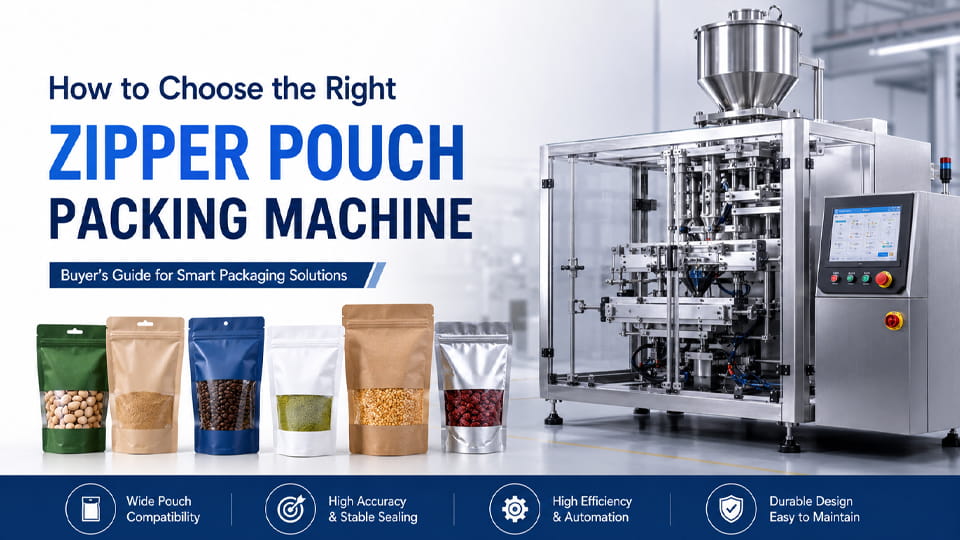
Escolhendo o direito máquina de embalagem de bolsa com zíper é uma decisão crítica para qualquer fabricante de salgadinhos, pós, líquidos ou farmacêuticos. A escolha errada pode levar ao tempo de inatividade, pesos de preenchimento inconsistentes, vedações deficientes e desperdício de produto. Em contraste, a máquina certa melhora a eficiência, qualidade do produto e lucratividade. Este guia explica o que bolsa com zíper (bolsa reutilizável) máquinas são, compara bolsa pré-fabricada vs. Vfs sistemas, e passeia pelo 7 principais fatores que você deve considerar (tipo de produto, estilo bolsa, velocidade, qualidade de vedação, Materiais, limpeza e suporte). Também destacaremos recomendações específicas do setor e armadilhas comuns a serem evitadas, concluindo com dicas práticas e contato com fornecedor (Embalagem Jinlu) para uma solução personalizada.
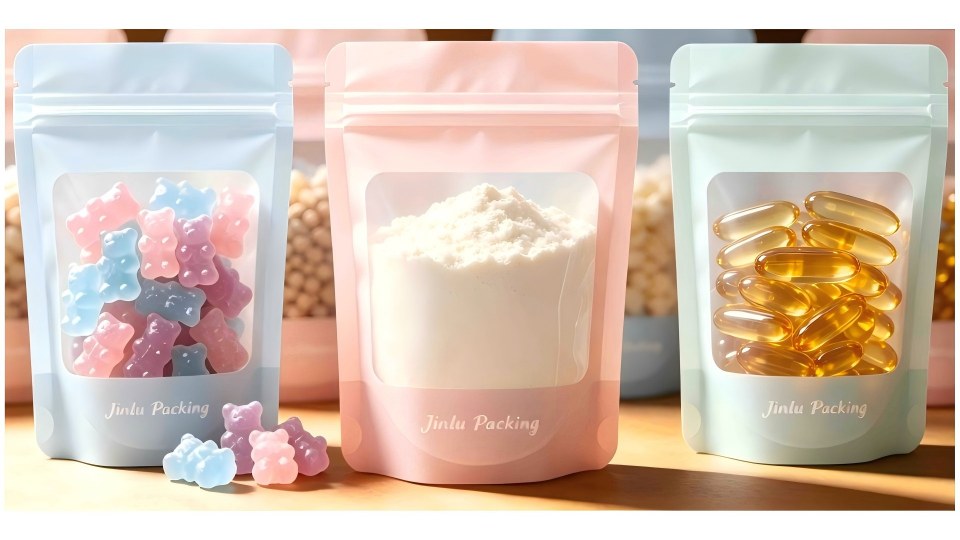
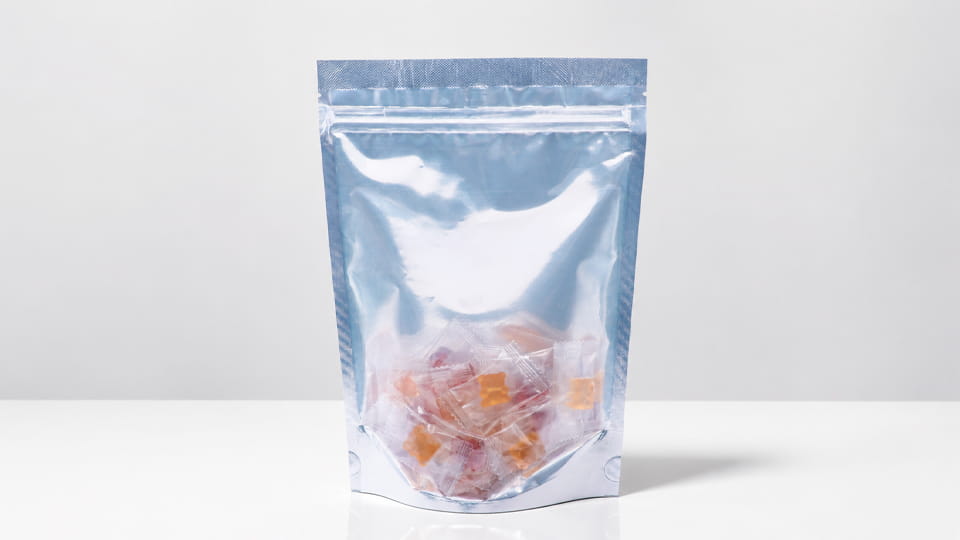
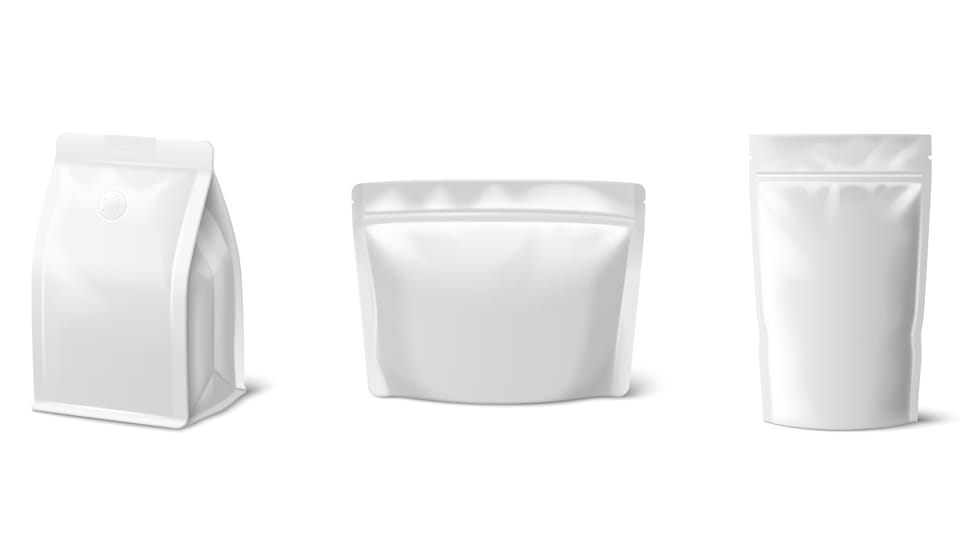
Incorporar imagens pode ajudar a ilustrar esses pontos. Por exemplo, considere a imagem abaixo de uma bolsa reutilizável pronta para ser preenchida. Máquinas de bolsas com zíper lidam com produtos como este (café, grânulos, lanches) com precisão e velocidade.
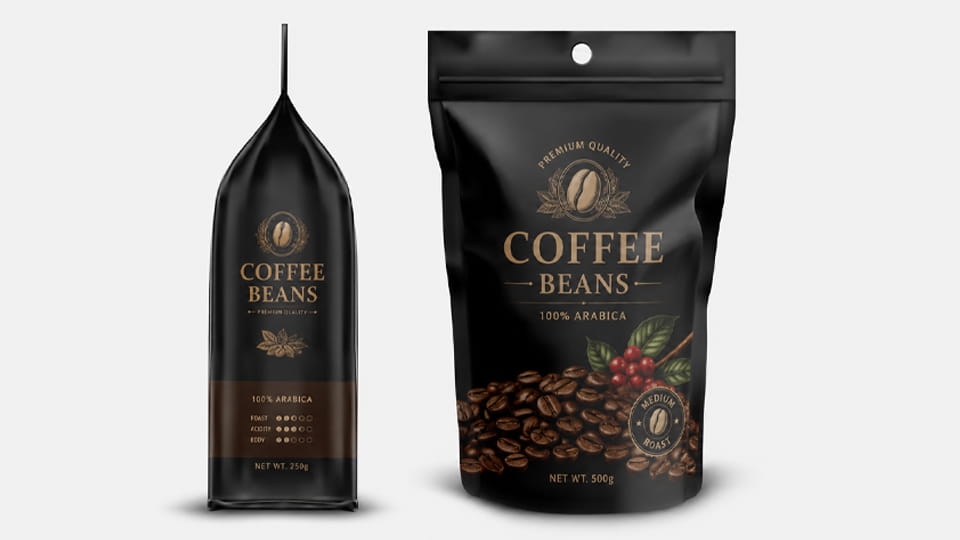
Figura: Exemplo de bolsa resselável vertical (grãos de café). As máquinas embaladoras de bolsas com zíper selecionam automaticamente, encha e feche esses sacos pré-fabricados para comida, farmacêutica e outras indústrias.
UM máquina de embalagem de bolsa com zíper (também chamada de máquina de bolsa com zíper ou máquina de bolsa com zíper) lida automaticamente pré-formado bolsas com fecho de zíper integrado. Em vez de formar sacos de filme (como em VFFS), essas máquinas pegam bolsas pré-fabricadas de uma revista, abra-os (muitas vezes com vácuo ou pinças mecânicas), preencha-os, alinhar/fechar o zíper, vedação térmica acima e abaixo do zíper, e então descarregue o pacote acabado. Resumidamente, ele “escolhe, abre, preenche, sela e entrega” bolsas prontas para venda.
Esta abordagem elimina a necessidade de formar bolsas dinamicamente, proporcionando maior controle sobre o enchimento e a vedação. É especialmente útil para pegajosos, produtos delicados ou sensíveis à umidade (como géis, pós com alto teor de gordura ou ingredientes higroscópicos) onde a estabilidade do saco e a vedação limpa são críticas. Porque a bolsa já é fabricada, você ganha um prêmio, aparência pronta para prateleira com dimensões precisas de bolsa e manuseio estável.
Os fluxos de trabalho típicos das máquinas de bolsas com zíper seguem estas etapas:
Revista Bolsa –> Recolha de bolsa –> Abertura da bolsa (ar ou pinça) –> Enchimento de Produto (peso, bombear, etc.) –> Fechamento com zíper & Selagem Térmica –> Descarga de Bolsa Terminada
Cada etapa é automatizada para velocidade e consistência. Por exemplo, As máquinas da Jinlu podem processar de 50 a 60 sacas por minuto (com alta precisão de dosagem ±0,5%), graças às balanças multicabeças e aos sistemas de dosagem de precisão. Eles também incluem frequentemente recursos como extração de poeira ou liberação de nitrogênio para pós sensíveis ao oxigênio.
[jl_youtube src=”https://www.youtube.com/embed/w6SY05JS7S4″]
Aplicações comuns para máquinas de bolsas com zíper incluem:
Como observa Jinlupacking, essas máquinas preenchem tudo, desde especiarias e proteínas em pó para molhos e rações para animais de estimação, em zíper pré-fabricado ou Bolsas de stand-up.
Existem duas arquiteturas principais para máquinas de embalagem de bolsas: Máquinas de bolsas pré-fabricadas (rotativo ou linear) e Formulário-Preenchimento-Selo (FFS) máquinas que pode lidar com formatos de bolsa com zíper (geralmente unidades verticais de formar-encher-selar). Na prática, as verdadeiras “máquinas de bolsas com zíper” quase sempre se referem a sistemas de bolsas pré-fabricadas, já que aplicar um zíper em rolo de filme em linha é complexo. Veja como os dois se comparam:
Também chamados de empacotadores de bolsas pré-formadas, essas máquinas usam sacolas pré-fabricadas com zíperes já presos. Eles normalmente entram:
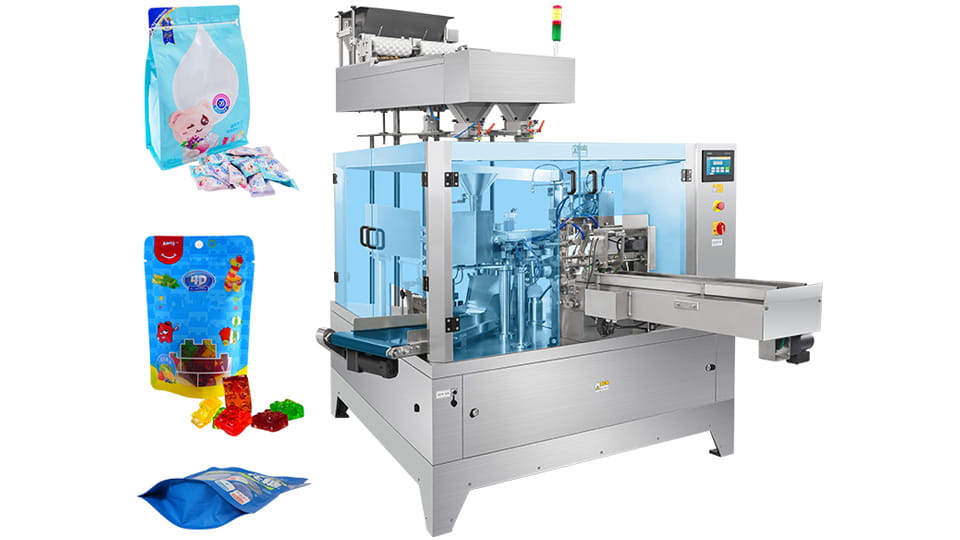
Prós de máquinas pré-fabricadas: Taxa de transferência rápida, aparência de pacote premium, estável & vedação consistente. Eles lidam prontamente com estilos de bolsas complicados – bolsas stand-up, doypacks, sacos com zíper, bolsas de bico, etc.. – muitas vezes com acessórios como aplicadores de bico ou descarga de gás. Porque a bolsa é pré-formada, problemas como tensão do filme ou má formação são eliminados, minimizando erros de vedação. Máquinas rotativas, em particular, pode integrar sistemas como 8 a 14 estações de pesagem a vácuo para um enchimento muito preciso.
Contras: Maior custo de material (sacos pré-fabricados vs filme), espaço maior, e máquinas complexas (o que pode significar maior custo de compra). A máquina deve ser dimensionada para determinadas dimensões de sacos e pode precisar de troca para tamanhos de sacos muito diferentes. O armazenamento de bolsas pré-fabricadas e o gerenciamento de estoque são considerações adicionais. Geralmente melhor para tiragens de médio a alto volume, onde a qualidade e a velocidade justificam os custos.
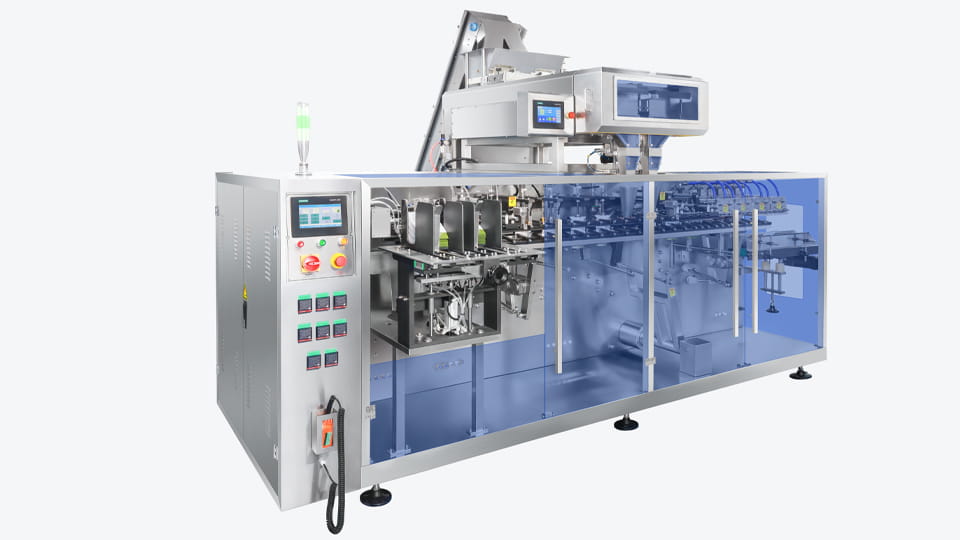
Tradicional Máquinas VFFS comece com um rolo de filme, formar uma bolsa, preencha, e depois sele-o. Alguns sistemas VFFS avançados são projetados para lidar com fechamentos de zíper incorporando uma estação aplicadora de zíper, mas estes são mais especializados. O ponto principal é que o VFFS forma o saco na hora, proporcionando flexibilidade no tamanho da bolsa e menor desperdício de filme.
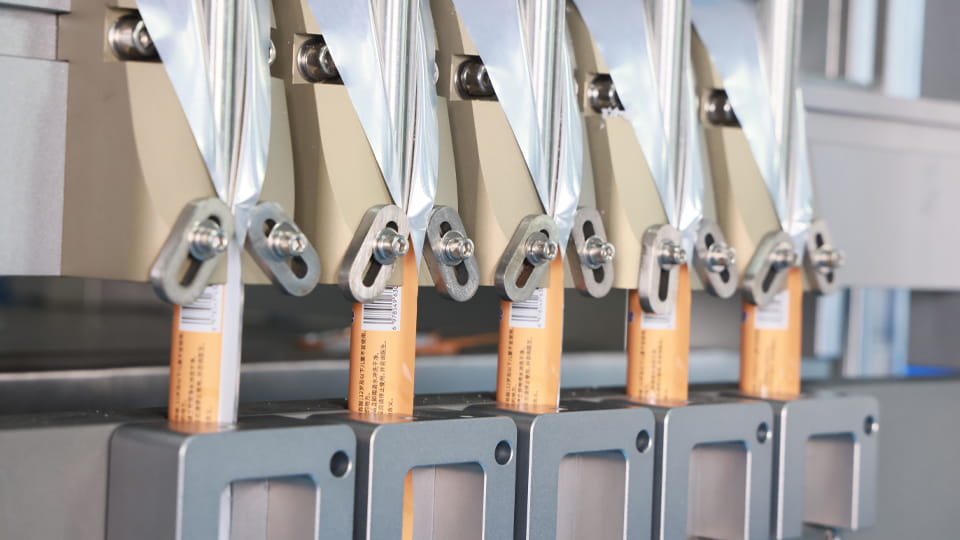
Prós do FFS: Eficiência de material muito alta (sucata mínima), menor custo de material de saco, e grande flexibilidade (ajustes rápidos para tamanho). Essas máquinas ocupam menos espaço e podem funcionar 24/7 econômico.
Contras: Mais complexo de ajustar (tensão do filme, mandíbulas de vedação, etc.), e a vedação pode ser menos confiável em produtos pegajosos ou higroscópicos, pois o filme se move. Aplicação de Zipper pode complicar a mecânica. A aparência da embalagem pode ser mais simples. O FFS é adequado para tiragens longas ou designs de bolsas mais simples; sistemas pré-fabricados visam qualidade e velocidade premium.
Abaixo está um tabela de comparação resumindo as principais compensações:
| Recurso | Pré-fabricado (Bolsa com zíper) Máquina | Vfs (Formulário-Preenchimento-Selo) Máquina |
| Fornecimento de sacolas | Usa bolsas pré-fabricadas com zíper/stand-up | Forma bolsas instantaneamente a partir de filme em rolo |
| Velocidade | Alto (E.G.. 30–60+ sacos/min) por pista | Alto (variável, frequentemente 30–100/min dependendo das pistas e do tamanho) |
| Uso de materiais | Mais materiais (pré-fabricado, filmes laminados) | Muito eficiente em termos de material (estoque em rolo, menos sucata) |
| Estilos de bolsa | Ampla gama: doypack, ficar de pé, zíper, bico | Limitado a travesseiros ou formas básicas; complemento de zíper necessário |
| Aparência | Aparência premium, forma e gráficos consistentes | Bom, mas bolsas mais simples (dobras/selos de aperto) |
| Mudança | Troca rápida para formato de bolsa, mas preciso de bolsas diferentes | Mudanças rápidas de tamanho no software, filme em mãos |
| Espaço | Maior (inclui revista bolsa, liberar, escalas) | Menor área ocupada para operações de ensacamento |
| Custo (investimentos) | Mais alto (equipamento especializado + inventário de bolsas) | Menor custo da máquina, mas maior uso de filme |
| Melhor para | Produtos pegajosos/delicados, marcas premium, vários formatos de bolsa | Execuções de grande volume, mudanças frequentes de tamanho, sensível ao custo |
| Acessórios | Pode incluir balanças com vários cabeçotes, enchimentos de bico, sistemas de gás/vácuo | Normalmente enchimentos (balança ou bombas) e ex-; acessório de zíper opcional |
| Exemplos | Vitaminas em pó em sacos zip-lock, lanches proteicos, molhos em saquinhos de bico | Pacotes de palitos, pacotes de açúcar, lanches a granel em sacos de travesseiro |
Na prática, os fabricantes costumam usar máquinas de zíper pré-fabricadas para suplementos em pó, lanches e molhos onde a apresentação e a integridade do selo são cruciais, e reservar VFFS para formulações mais simples ou embalagens menores de dose única, onde o custo é a principal preocupação.
Ao selecionar uma máquina de embalagem de bolsa com zíper, concentre-se em suas necessidades de produção. Aqui estão os sete fatores mais importantes:
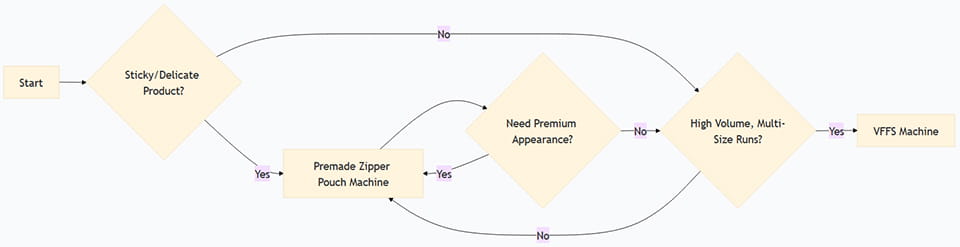
Abaixo está um fluxo de decisão exemplo para resumir a lógica de seleção:
Diferentes indústrias têm requisitos e regulamentações distintas. Veja como as máquinas de bolsas com zíper normalmente se alinham por setor:
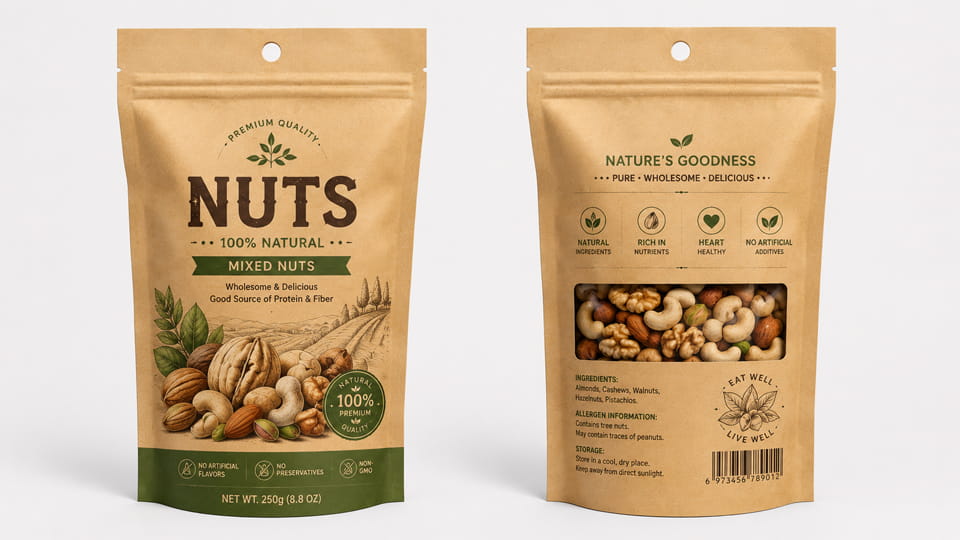
Exemplo: Um fabricante de nozes opera uma linha de bolsas com zíper rotativas de 5 vias com produção total de 250 bpm, usando alinhamento de zíper guiado por visão e um ímã integrado para detecção de metal.
Exemplo: Um produtor de nutracêuticos usa uma máquina de bolsas pré-fabricadas com estações CIP integradas e descarga de N2 para embalar pós fitoterápicos finos em bolsas com zíper resistentes a crianças.
Em cada caso, discuta seu produto com o fornecedor. Como aponta Jinlu Packing, soluções de bolsas pré-fabricadas são frequentemente escolhidas por empresas alimentícias/farmacêuticas que precisam de “selagem limpa, apresentação estável, e a flexibilidade para lidar com diferentes estilos de bolsas”.
Avaliando cuidadosamente cada fator e evitando essas armadilhas, você garantirá uma compra tranquila. Uma etapa final útil: elabore uma lista de verificação (especificações do produto, capacidade, Materiais, orçamentos) e use-o para comparar cotações. Também, solicite testes no local ou demonstrações em vídeo com seu produto real antes de finalizar.
A conveniência resselável está crescendo. Os consumidores adoram bolsas com zíper para lanches, café, comida para bebê, guloseimas para animais de estimação e muito mais. As tendências do mercado mostram uma mudança constante do uso único para stand-up pouches reutilizáveis. Este crescimento é impulsionado pela sustentabilidade (menos desperdício do que caixas), materiais melhorados (filmes de barreira que prolongam a vida útil), e marca premium (impressão vibrante em bolsas).
Análises da indústria observam que as máquinas de bolsas pré-fabricadas são cada vez mais populares porque oferecem flexibilidade (“multiplicidade de tamanhos e estilos de bolsas”) e facilidade de uso. Em particular, aparência e vedação de qualidade tornam as máquinas pré-fabricadas ideais para produtos de alta qualidade. Por exemplo, marcas de gomas de vitamina ou shakes de proteína costumam escolher bolsas stand-up com zíper em vez de pacotes de palitos para sinalizar qualidade.
Em linhas de embalagem, pré-fabricado vs FFS é um debate contínuo. O consenso: Use máquinas de bolsas com zíper pré-fabricadas na apresentação do produto, manuseio cuidadoso ou trocas rápidas são prioridades; use FFS para obter máximo rendimento e eficiência em produtos uniformes. Fabricantes podem até usar linhas híbridas (pré-fabricado para SKUs regulares, FFS para tiragens promocionais ou pequenas) para obter o melhor dos dois mundos.
Geral, espere ver mais opções de automação e alta velocidade para máquinas de bolsas com zíper. Inovações como carregamento totalmente robótico de bolsas, codificação/impressão incorporada, e saneamento melhorado (especialmente pós-Covid) estão se tornando padrão. Se você planeja uma nova linha ou atualização, considere máquinas com recursos preparados para o futuro (Conectividade IoT, atualizações de software, capacidade multi-pista).
Selecionar uma máquina embaladora de bolsas com zíper é um grande passo que afeta a qualidade do produto e a eficiência da produção. Resumindo:
Se você está pronto para finalizar uma escolha ou apenas deseja uma opinião profissional, entre em contato com Jinlu Packing. Jinlu é um fornecedor confiável de máquinas de embalagem farmacêutica e de alimentos com sede na China (com CE, Certificações cGMP). Podemos recomendar uma solução personalizada com base no seu tipo de bolsa, produto e capacidade. Solicite um orçamento ou consulta técnica para garantir que você obtenha o sistema de embalagem de bolsa com zíper certo para sua linha.
Uma ampla gama. Exemplos comuns incluem alimentos secos (lanches, nozes, café, especiarias), pós (proteína em pó, grânulos farmacêuticos), líquidos e semilíquidos (molhos em saquinhos de bico), alimentos para animais de estimação, detergentes, e mais. Essencialmente, qualquer produto sólido ou em pó que se beneficie de uma bolsa resselável pode ser manuseado por uma máquina de bolsas com zíper..
Uma máquina de bolsas pré-fabricadas usa sacos pré-formados com zíper, então omite a etapa de formação do filme. Isto produz melhor estabilidade da vedação e aparência da embalagem. Uma máquina VFFS forma cada saco a partir do filme em rolo antes do enchimento, o que é ótimo para minimizar o desperdício e durar muito, produções uniformes. Resumidamente, máquinas pré-fabricadas se destacam em embalagens premium e flexibilidade, enquanto o VFFS se destaca pela eficiência de custos para grandes tiragens.
Sim. A maioria das máquinas de bolsas com zíper pode ser configurada com diferentes módulos de enchimento. Os pós usam enchedores de trado ou balanças; grânulos/lanches usam balanças de múltiplas cabeças; líquidos ou produtos viscosos usam bombas de pistão ou bicos de pulverização. Algumas linhas suportam enchimento misto em uma única máquina adicionando um segundo enchimento. Certifique-se de que a máquina que você escolher tenha os enchimentos certos para seus tipos de produtos.
As velocidades típicas estão na faixa de 30 para 70 sacos por minuto (por pista de máquina). Sistemas rotativos de última geração podem atingir até cerca de 60 sacos/min, e configurações de múltiplas pistas multiplicam esse rendimento. A velocidade exata depende do tamanho da bolsa, sistema de enchimento, e complexidade da bolsa. Ao citar, os fornecedores geralmente especificam um intervalo; sempre esclareça se a velocidade cotada é teórica ou testada com o seu produto.
Os custos variam amplamente com base no nível de automação, velocidade, e opções. Pequenas bolsas semiautomáticas custam a partir de alguns milhares de dólares, enquanto grandes sistemas rotativos com balanças, codificadores, e a descarga de gás pode ser de dezenas ou mesmo centenas de milhares. Em vez de apenas o preço, considere o ROI: as máquinas geralmente pagam em 6 a 18 meses por meio de economia de mão de obra e maior rendimento. Solicite orçamentos completos incluindo frete, instalação, treinamento e suporte para uma comparação comparativa.
Depende do volume de produção e do custo do trabalho, mas muitas empresas recuperam o investimento dentro de 6 a 18 meses. As principais economias vêm de velocidades de embalagem mais rápidas, pesos de preenchimento consistentes, desperdício reduzido, e redução de mão de obra. Certifique-se de calcular a economia com brindes reduzidos (melhor precisão de preenchimento) e melhor qualidade (menos rejeições).
Apenas as bolsas e a preparação certas. Forneça bolsas com zíper pré-fabricadas de alta qualidade a partir de um conversor confiável (garantir a integridade do zíper e a resistência do filme). Mantenha um inventário de bolsas dimensionadas para a máquina. Prepare também ar comprimido (≥0,6 MPa) para peças pneumáticas, e uma fonte de alimentação estável. Algumas linhas também precisam de uma bomba de vácuo ou fonte de nitrogênio se estiver usando transferência de fluido ou lavagem. De outra forma, a configuração é semelhante a qualquer máquina de embalagem (nivelamento, alinhamento do quadro, verificações de segurança).
Referências:
1.Embalagem & Substâncias em contato com alimentos (FCS) -- NÓS. Food and Drug Administration
2.2025 Tendências globais de embalagens —— PMMI
3.Método de teste padrão para determinar a integridade de selos para embalagens flexíveis por inspeção visual ——ScienceDirect
4.Fornecedores de embalagens e CPGs fecham cada vez mais embalagens flexíveis —— EmbalagemDive
5.O futuro das embalagens flexíveis: Tendências, Benefícios & Inovações ——PackagingDigest