

Cápsulas cheias de líquido (também chamadas de cápsulas duras cheias de líquido ou LFHCs) são essencialmente cápsulas duras de duas peças (gelatina ou HPMC) que foram preenchidos com uma formulação à base de óleo ou líquida. Depois de preencher, a tampa e o corpo são selados – geralmente com uma fina faixa de gelatina – para evitar vazamentos. Em outras palavras, LFHCs são uma forma híbrida: uma cápsula sólida contendo uma dose líquida dentro. Em contraste, cápsulas de gel mole são feitos em uma etapa como um solteiro, concha flexível de uma só peça que já está preenchido com um líquido ou semissólido. Softgels usam gelatina plastificada (com glicerina ou sorbitol) para fazer um suave, membrana selável. Eles são normalmente usados para ingredientes muito oleosos ou solúveis – por exemplo, óleo de peixe ou vitaminas solúveis em gordura (D, E, K) quase sempre vêm em cápsulas moles.
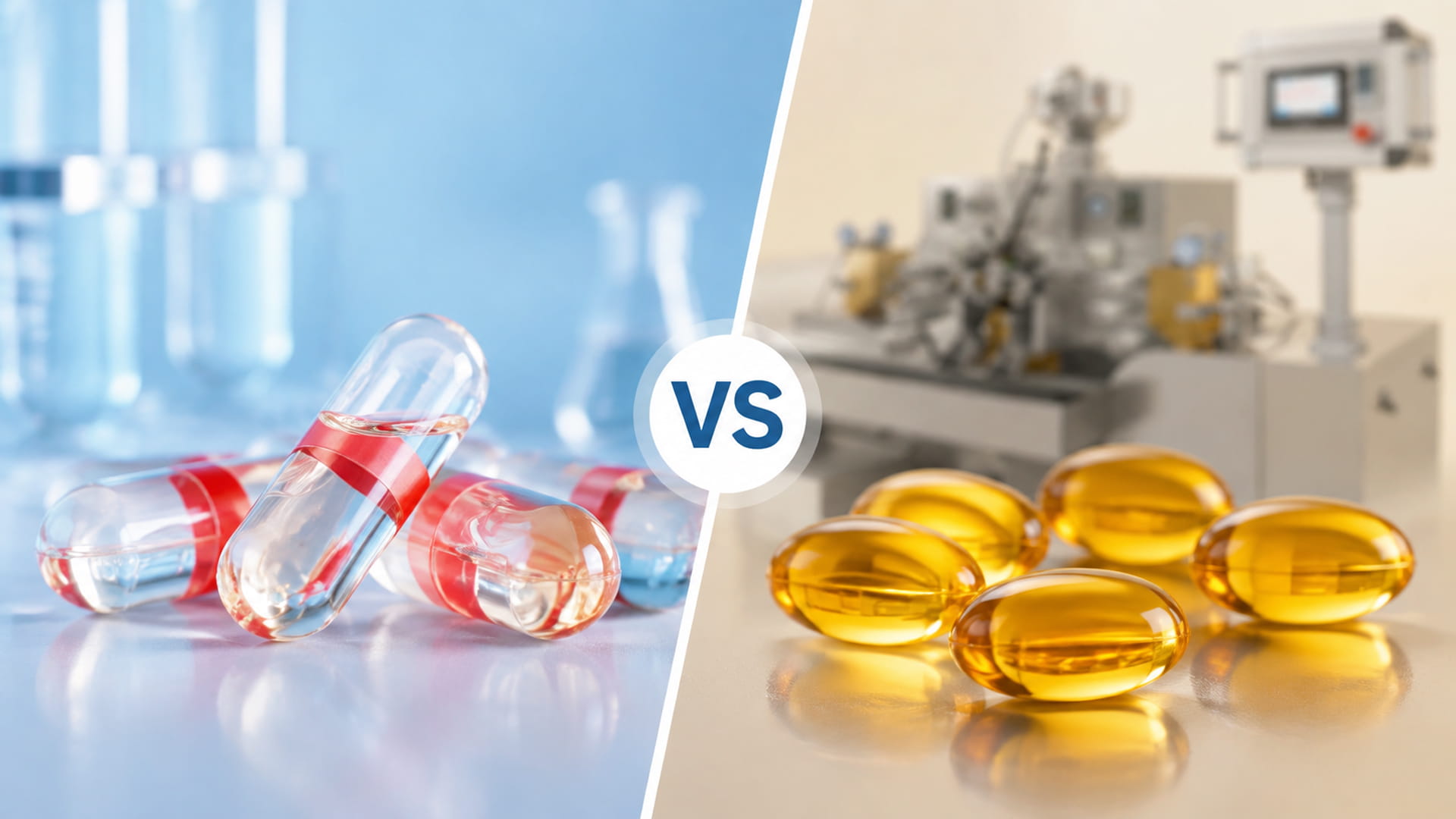
Em termos práticos, ambos os formatos podem fornecer medicamentos ou suplementos líquidos, mas o seu design e produção diferem significativamente. As principais diferenças incluem a estrutura da cápsula, materiais de concha, preenchimentos compatíveis, e etapas de fabricação. Compreendê-los ajuda os fabricantes farmacêuticos a escolher a forma certa para seus produtos. Abaixo detalhamos as principais distinções e benefícios de cada.
Cápsulas duras cheias de líquido (LFHCs) são padrão cápsulas de duas peças (boné e corpo) preenchido com uma formulação líquida ou à base de óleo após a fabricação das cascas. As cascas podem ser feitas de gelatina ou HPMC vegetal (para cápsulas vegetarianas). Em produção, uma dose precisa de líquido (muitas vezes uma solução de óleo, suspensão ou mistura autoemulsionante) é injetado no corpo da cápsula aberta, então a tampa é fechada por cima e selada. Métodos especiais de vedação garantem que nada vaze (por exemplo, aplicando uma fina faixa de gelatina ao redor da junta, chamado “selagem de banda”).
Esta abordagem em duas partes permite que os LFHCs combinem os benefícios dos líquidos e das cápsulas. Você obtém liberação rápida e alta biodisponibilidade de um líquido dissolvido, com a facilidade de engolir e mascarar o sabor que as cápsulas oferecem. Os projéteis LFHC são pré-fabricados, portanto, não é necessária a fusão dispendiosa de folhas de gelatina durante o enchimento. Por exemplo, O enchedor de cápsulas líquidas NJY-300C da JinLuPacking enche automaticamente os líquidos em cápsulas duras de tamanho #00–#4 e os sela em uma linha rápida.
Figura: Cápsulas duras cheias de líquido (cada um tem uma faixa colorida vedando a junta tampa-corpo). Estas cápsulas de duas peças contêm óleo ou líquido dentro de um invólucro sólido de gelatina/HPMC.
Cápsulas softgel (muitas vezes apenas liguei cápsulas moles) são uma pedaço, cápsulas revestidas de gel contendo enchimento líquido ou semissólido. Eles são feitos em uma máquina de encapsulamento de matriz rotativa que forma, preenche, e sela cada cápsula em uma única etapa. Na máquina, duas fitas de gelatina plastificada (gelatina misturada com glicerina ou sorbitol) são fundidos e pressionados juntos enquanto um fluxo medido de líquido é injetado entre eles. Cada cápsula é simultaneamente cortada e selada por matrizes aquecidas. O resultado é um suave, oval, cápsula hermética popularmente usada para suplementos à base de óleo (pense em pílulas de vitamina E ou ômega-3).
Softgels são ideais para óleos e líquidos sensíveis. Porque toda a cápsula é hermeticamente selada quando é formada, nenhuma etapa de vedação separada é necessária. Isso os torna muito protetores contra oxigênio e umidade. Muito óleo de peixe, vitamina D/K, e produtos de óleo botânico usam cápsulas moles por sua conveniência e estabilidade de armazenamento. Na verdade, pesquisas mostram que suplementos vitamínicos lipossolúveis e ômega-3 são mais frequentemente entregues em cápsulas moles.
Figura: Cápsulas de softgel âmbar em uma colher de chá ao lado de um frasco de comprimidos (comum para óleo de peixe ou vitamina D).
| Recurso | Cápsulas Cheias de Líquido (LFHCs) | Cápsulas gelatinosas |
| Estrutura | Duas peças (cap & corpo) | Cápsula selada de peça única |
| Material da casca | Gelatina ou HPMC (opção vegetariana) | Gelatina plastificada (gelatina + plastificante) |
| Método de fabricação | Preencha e sele (no enchimento de cápsulas + gangues) | Encapsulamento de matriz rotativa (formar-preencher-selar) |
| Custo do equipamento | Mais baixo (enchimentos de cápsulas padrão) | Mais alto (linha dedicada de softgel) |
| Escala (Quantidade mínima) | Mínimos baixos (cabe em pequenos lotes) | Geralmente é necessário um volume maior |
| Opção Vegetariana | Sim (Conchas HPMC disponíveis) | Limitado (agora algumas opções de amido/vegetais) |
| Vedação | Vedação mecânica (bandas/fusão) | Selo embutido (hermeticamente selado por morrer) |
| Risco de vazamento | Baixo (uma vez selado corretamente) | Muito baixo (sem costura para vazar) |
| Flexibilidade de Produção | Alto (pode misturar pós ou pellets com líquido) | Médio (apenas preenchimentos de líquido/pasta) |
| Aumento de escala | Fácil (usa máquinas de cápsulas padrão) | Mais complexo (secagem especializada, etc.) |
Ambas as formas entregam ativos líquidos ou à base de óleo e podem oferecer alta biodisponibilidade por apresentarem o fármaco dissolvido em um lipídio. No entanto, LFHCs usam linhas mais simples (conchas são pré-fabricadas) enquanto as cápsulas moles requerem etapas de cozimento e secagem para as fitas de gelatina.
Conclusão importante: Máquinas de cápsulas moles forma, preencher, e corte em uma única etapa (necessitando de secagem), enquanto as linhas LFHC preenchem conchas pré-fabricadas e as selam (pulando um longo estágio de cura). Como observa um guia da indústria, “As cápsulas gelatinosas curam 2–4 dias após o preenchimento. Os LFHCs não têm etapa de cura… as perdas de lote devido a falhas de enchimento são maiores para cápsulas moles”.
Cápsulas cheias de líquido oferecem diversas vantagens de fabricação e de produto:
Estas vantagens tornam os LFHCs atrativos nos mercados farmacêutico e nutracêutico.
As cápsulas gelatinosas também têm fortes benefícios que as tornam populares para muitos suplementos.:
As indústrias que usam cápsulas moles incluem produtos farmacêuticos (medicamentos à base de óleo), nutracêuticos (suplementos dietéticos), cosméticos (óleos de beleza nutracêuticos), e até produtos veterinários. Por exemplo, cápsulas softgel veganas ou halal feitas de amido/gelano estão em alta.
| Ingrediente / Preencher | Cápsula Cheia de Líquido | Cápsula Softgel |
| Óleo de peixe / Ômega-3 | ✓ Adequado | ✓ Adequado |
| CBD ou óleo de cannabis | ✓ Adequado | ✓ Adequado |
| Curcumina (Extrato de cúrcuma) | ✓ Adequado | ✓ Adequado |
| Vitamina D (óleo) | ✓ Adequado | ✓ Adequado |
| Extratos líquidos de ervas | ✓ Adequado | ✓ Adequado |
| Probióticos | ✓ (se suspenso em óleo) | Não (a umidade mata bactérias) |
| APIs sensíveis à umidade | ✓ (especialmente em cápsulas HPMC) | ✗ (casca com alta umidade) |
Ambos os tipos de cápsulas lidam bem com ativos solúveis em óleo. Óleos nutracêuticos comuns (óleo de peixe, vitamina D, extratos de ervas, CDB, etc.) são efetivamente entregues por LFHCs ou cápsulas moles.
Notavelmente, ingredientes secos ou sensíveis à umidade são melhores em cápsulas duras cheias de líquido. Por exemplo, probióticos ou APIs sensíveis à água são impraticáveis em cápsulas moles. Em contraste, As cápsulas duras de HPMC podem conter suspensões não aquosas de probióticos ou formulações muito secas, já que o HPMC tem baixa permeabilidade à umidade e ao gás. As cápsulas de softgel contêm cerca de 30% água e maior permeabilidade ao oxigênio, que pode degradar esses ingredientes.
Resumidamente, use LFHCs quando flexibilidade e produção de baixo volume são importantes; escolha cápsulas softgel para escala e apelo de prateleira premium.
Do ponto de vista do fabricante, a decisão geralmente depende da escala, investimento, e objetivos estratégicos:
A tabela abaixo resume a escolha por cenário:
| Tipo de empresa / Situação | Formato recomendado |
| Pequena startup ou R&Projeto D | Cápsulas Cheias de Líquido (quantidade mínima para pedido, flexível) |
| Linha de suplementos de nicho, <10k unidades | Cápsulas Cheias de Líquido |
| Fabricante contratado (flexibilidade) | Cápsulas Cheias de Líquido |
| Grande produtor farmacêutico | Cápsulas gelatinosas (alto rendimento, consistente) |
| Alto volume de ômega-3 ou vitaminas | Cápsulas gelatinosas |
| Produto necessitando de cápsula vegana | Cápsulas Cheias de Líquido (Conchas HPMC) |
Figura: Close-up de uma máquina de enchimento de cápsulas líquidas que distribui líquido em cápsulas.
JinLuPacking fabrica uma gama completa de equipamentos para cápsulas. Por exemplo, nosso NJY-300C enchimento de cápsula líquida linha lida com preenchimentos de líquidos, e também fornecemos máquinas de cápsulas de gel macio para produção em uma etapa. Essas máquinas atendem aos padrões cGMP para uso farmacêutico e nutracêutico.
No fim, ambos cheios de líquido cápsulas duras e cápsulas moles estão bem estabelecidos, formas farmacêuticas eficazes. As cápsulas softgel são excelentes no fornecimento de óleos e ativos solúveis em óleo com uma dissolução rápida, pacote inviolável. Cápsulas duras cheias de líquido oferecem flexibilidade, R mais rápido&Escala D, e simplicidade de fabricação. Ao compreender suas diferenças, benefícios e requisitos de produção, os fabricantes podem escolher o tipo de cápsula que melhor se adapta às necessidades químicas e comerciais de seus produtos.
Se você estiver projetando uma nova formulação ou atualizando sua linha de produção, considere ambas as opções com cuidado. Pronto para otimizar sua produção de cápsulas? Jinlu Packing oferece equipamentos líderes do setor para ambos os formatos (por exemplo, nosso NJP-1000C pode encher até 60,000 cápsulas duras por hora) e pode aconselhar sobre a melhor solução para o seu produto. Contate-nos para discutir seu projeto, solicite um orçamento, ou saiba mais sobre nossa cápsula líquida e softgel linhas de embalagem.
Sim. Enchedores de cápsulas especializados (como as máquinas de envase de cápsulas líquidas da JinLuPacking) pode injetar óleos ou líquidos em cápsulas vazias, que são então selados (E.G.. por bandas) então eles seguram o líquido com segurança. Isso cria uma “cápsula dura cheia de líquido”.
Nenhum dos dois é universalmente “melhor” – eles atendem a necessidades diferentes. LFHCs ganham em custo, velocidade, e flexibilidade (especialmente para pequenos lotes), enquanto as cápsulas moles oferecem uma vedação perfeita e um formato familiar para suplementos de óleo. A melhor escolha depende do seu material de preenchimento, volume de produção, e mercado.
LFHCs devidamente selados não vazam. Depois de preencher, a junta tampa-corpo é hermeticamente selada através da aplicação de uma banda de gelatina ou HPMC (ou usando vedação por fusão). Quando feito corretamente, as cápsulas retêm o líquido firmemente durante a secagem, armazenar, e uso. As linhas de qualidade testam e lustram cada lote para garantir a integridade.
Ambos podem oferecer excelente biodisponibilidade para ativos à base de óleo. A formulação de preenchimento (tipo de óleo, emulsionantes) geralmente determina a absorção, não é o tipo de shell. Softgels se dissolvem rapidamente (~10–20 minutos), enquanto cápsulas duras (LFHC) dissolver um pouco mais devagar (30–60 minutos). Na prática, preenchimentos bem projetados em qualquer forma podem alcançar eficácia semelhante.
Sim. Invólucros de HPMC à base de plantas são amplamente utilizados para cápsulas cheias de líquido. A baixa umidade e a estrutura forte do HPMC permitem a entrada de líquidos oleosos. Na verdade, usar cápsulas de HPMC é uma forma de oferecer uma cápsula vegetal na forma líquida, que as cápsulas de gelatina padrão não podem fornecer.
As empresas citam razões como custos de fabricação mais baixos, prazos de entrega mais curtos, e flexibilidade de formulação. Por exemplo, um R&A equipe D pode ajustar rapidamente as doses ou combinar ingredientes em LFHCs sem reequipar. Também, VFHCs permitem ampliar facilmente as linhas de produtos (já que as mesmas cápsulas podem ser preenchidas com líquidos diferentes).
Geralmente, sim. A produção de cápsulas moles requer equipamentos caros (fogões de gelatina, matrizes rotativas, secadores) e mais trabalho durante vários dias. LFHCs usam enchimentos mais simples e menos energia. Relatórios da indústria observam que os LFHCs custam de 15 a 35% menos por unidade para serem produzidos do que as cápsulas moles. No entanto, em volumes muito altos, as cápsulas moles ainda podem ser econômicas.
Ingredientes líquidos são preenchidos usando uma máquina de enchimento de cápsulas líquidas (muitas vezes um acessório ou variante de um enchimento de cápsula padrão). Por exemplo, As máquinas da série NJY da JinLuPacking usam bombas de precisão (pistão cerâmico ou microbomba) para medir o óleo em cápsulas. Essas máquinas podem atingir altas velocidades (vários milhares de cápsulas por hora) com precisão melhor que ±1%.
Principalmente não aquoso, preenchimentos à base de óleo ou à base de solvente. Exemplos comuns: óleo de peixe, óleo de vitamina E, vitaminas líquidas, extratos de óleo de ervas, emulsões, e certos sistemas autoemulsificantes de administração de medicamentos. O enchimento deve ser bombeável e geralmente não corrosivo. Líquidos à base de água são evitados (eles podem enfraquecer as focas). A viscosidade do enchimento deve ser controlada para evitar respingos ou gotejamentos durante o enchimento.
Sim. Muitas máquinas de cápsulas são conversíveis: trocando o sistema de dosagem, eles podem encher pós/grânulos ou líquidos. Na prática, a placa de dosagem de pó de um enchedor de cápsula padrão é substituída por um cabeçote de enchimento de líquido e sistema de bomba. Esta versatilidade significa que uma única linha pode alternar entre a produção de pó e LFHC.
Referências:
1.Cápsulas de gelatina dura com enchimento líquido e seladas —— Taylor & Francisco on-line
2.Cápsulas de gelatina macia (Cápsulas gelatinosas) —— Ciência Direta
3.Efeitos da temperatura nas características da fita na fabricação de cápsulas de gelatina mole —— Biblioteca Nacional de Medicina
4.Revisão abrangente sobre cápsulas de gelatina mole: Fabricação Industrial, Avanços Tecnológicos, e Perspectivas Regulatórias —— Jornal de ENTREGA DE MEDICAMENTOS & TERAPÊUTICA
5.Cápsula de gelatina dura com enchimento líquido —— Jornal de ENTREGA DE MEDICAMENTOS & TERAPÊUTICA
6.Determinação da quantidade ideal de água em massas de enchimento líquido para cápsulas de gelatina dura por meio de análise de textura e planejamento experimental —— Biblioteca Nacional de Medicina