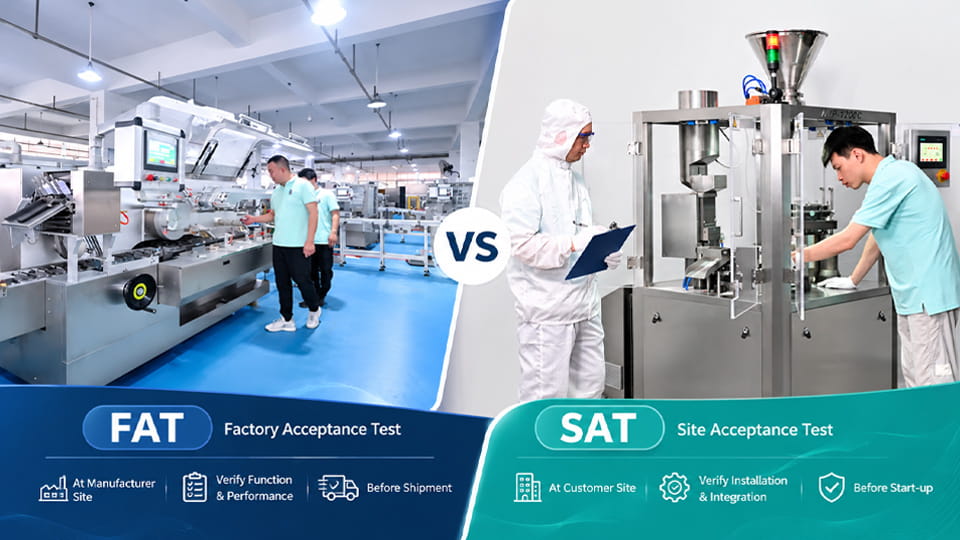
Teste de aceitação de fábrica (GORDO) e testes de aceitação do site (SENTADO) são duas etapas complementares de validação de equipamentos farmacêuticos. O FAT é feito nas instalações do fabricante do equipamento (antes do envio) para verificar se todas as especificações e funções atendem aos requisitos do cliente. O SAT é realizado após a instalação no local do cliente para confirmar se a máquina funciona corretamente no ambiente de produção real. Junto, FAT e SAT ajudam a detectar problemas antecipadamente (economizando tempo e custo) e garantir Conformidade com BPF. Este artigo explica FAT vs SAT em detalhes – cobrindo o que cada teste verifica, principais diferenças, como eles se encaixam no ciclo de vida IQ/OQ/PQ, exemplos de listas de verificação para linhas de embalagem (bolha, cápsula, comprimido, embalagem), e perguntas sobre práticas recomendadas do comprador.
O que é um teste de aceitação de fábrica (GORDO)?
UM Teste de aceitação de fábrica (GORDO) é um formal, avaliação documentada do equipamento nas instalações do fabricante, realizado antes da unidade ser enviada ao cliente. Verifica se a máquina foi construída de acordo com o acordado Especificação de requisitos do usuário (URS) e está funcionando corretamente. Durante a gordura, o fornecedor e o cliente (ou seus representantes) executar um protocolo FAT aprovado de casos de teste e listas de verificação. Os objetivos típicos incluem demonstrar conformidade com as especificações, detectando defeitos precocemente, e dando ao comprador a confiança de que “o equipamento está pronto para envio”.
O que o FAT verifica?
Em GORDURA, o foco está no desempenho independente e na adesão ao design. Geralmente inclui:
- Verificações visuais e de construção: Inspecione o conjunto mecânico, alinhamento do quadro, fiação, e qualidade de construção em relação aos desenhos. Confirme os números de série e IDs do modelo.
- Testes elétricos e de controle: Verifique as conexões de energia, Versões de software PLC/HMI, sensores e atuadores. Verifique se as telas de controle, receitas, e os alarmes respondem corretamente.
- Testes de função (Sem carga ou funcionamento a seco): Execute cada função principal da máquina (motores, unidades, alimentadores, aquecedores) em toda a sua gama. Por exemplo, velocidades do ciclo no mínimo e no máximo, testar aquecedores/rampas de pressão, e acionar intertravamentos intencionalmente.
- Verificações de desempenho: Use materiais de produção representativos, se possível. Para recheio ou máquina de embalagem, execute amostras de produtos e verifique o rendimento, precisão, mudança, e outras metas de desempenho. (É altamente recomendável usar os produtos reais do cliente durante o FAT para revelar problemas específicos do material.)
- Segurança e Intertravamentos: Testar paradas de emergência, cortinas de luz, guardas, válvulas de alívio de pressão, etc., para confirmar se todos os sistemas de segurança respondem conforme pretendido sob condições de falha.
- Revisão da Documentação: Confirme se todos os documentos necessários estão prontos: manuais de operação, diagramas elétricos e pneumáticos, guias de manutenção, listas de peças de reposição, certificados de calibração, etc..
- Critérios de Aceitação: Todos os testes são avaliados de acordo com critérios de aceitação pré-acordados (frequentemente extraído do URS). Quaisquer desvios ou pontos em aberto são registrados em uma lista de pendências para resolução.
Um FAT bem-sucedido termina com um relatório FAT assinado, detalhando os testes aprovados e listando quaisquer problemas a serem corrigidos antes do envio. Essencialmente, A FAT garante que “o sistema está pronto para ser enviado”, verificando suas funções principais sob condições controladas de fábrica.
Quando e quem ocorre a gordura?
O FAT normalmente ocorre depois que a máquina está totalmente montada, mas antes de sair da fábrica. Segue qualificação de design (se houver) e precede a entrega. Os principais participantes geralmente incluem engenheiros e técnicos de fornecedores, e representantes da empresa compradora (Engenheiros de controle de qualidade/validação, equipe de produção). A equipe do comprador deve chegar preparada, muitas vezes trazendo o URS, protocolos de teste, e quaisquer materiais especializados para executar. O FAT é a última chance do comprador detectar grandes discrepâncias sob controle do fornecedor.
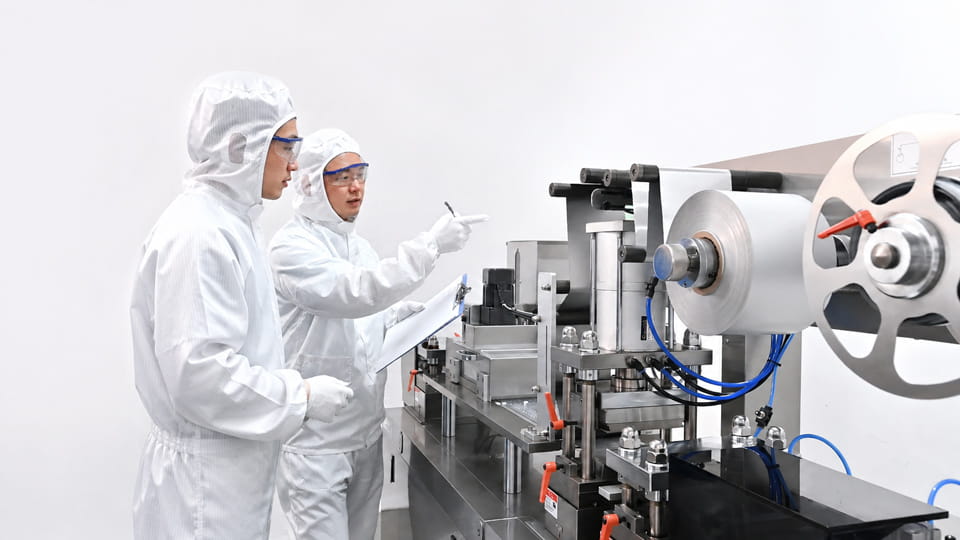
Figura: Um farmacêutico máquina de embalagem de bolha passando por testes de aceitação. Em um FAT rigoroso, cada subsistema (formação, vedação, alimentação, controles) é verificado em relação ao URS. Um SAT subsequente repete os principais testes funcionais após a instalação no ambiente de uso final.
O que é um teste de aceitação de site (SENTADO)?
UM Teste de aceitação do site (SENTADO) é um teste documentado realizado nas instalações do cliente após o equipamento ser entregue e instalado, mas antes de ser liberado para produção. O SAT verifica novamente se a máquina atende aos requisitos em seu contexto operacional real. No SAT, o equipamento é verificado quanto à instalação adequada, conexão de utilitários, integração de sistemas, e desempenho final.
O que o SAT verifica?
SAT normalmente inclui:
- Qualificação de Instalação (QI) Cheques: Verifique se o equipamento está instalado de acordo com o plano aprovado. Isso inclui confirmar a localização correta, nivelamento, utilitários (tensão de alimentação, pressão pneumática, água, etc.), aterramento, e condições ambientais. Todos os componentes e documentação da máquina devem estar presentes e instalados corretamente.
- Verificação de utilidade: Certifique-se de que os utilitários do local atendam aos requisitos da máquina. Por exemplo, medir a tensão real, pressão/fluxo de ar, temperatura da água gelada, ou pressão de vapor do fornecimento da instalação. Confirme se eles permanecem dentro da faixa aceitável especificada pela máquina.
- Teste de Integração: Verifique as interfaces com equipamentos upstream/downstream e sistemas prediais. Verifique os links de comunicação (E.G.. para LIMS, MES, SCADA) se aplicável. Confirme se os transportadores estão alinhados, a transferência entre máquinas é suave, e quaisquer alarmes em rede ou coleta de dados funcionam sob as condições do local.
- Repita testes funcionais em condições reais: Execute funções essenciais novamente, agora com a máquina conectada às concessionárias e usando materiais de produção reais, se possível. Por exemplo, execute um lote de reais comprimidos ou cápsulas através da máquina para confirmar se ela ainda atende aos critérios de velocidade e qualidade. Garantir que quaisquer ajustes feitos para as condições do local sejam eficazes.
- Verificações de segurança e ambientais: Teste novamente os intertravamentos de segurança e os dispositivos de proteção sob configurações reais de instalação. Verifique se os requisitos ambientais (aula de sala limpa, temperatura, umidade) sejam atendidas e não afetem adversamente a operação da máquina.
- Critérios de Aceitação Final: Confirme se todos os critérios de aceitação do SAT (frequentemente extraído de URS e protocolos de site) estão satisfeitos. Documente quaisquer desvios restantes em uma lista de pendências. Colete aprovações do operador e documentação formal de aceitação.
Um SAT bem-sucedido termina com um relatório ou certificado SAT assinado pelo fornecedor e pelo cliente. Fornece evidências documentadas de que “o equipamento/sistema foi entregue em boas condições e não foi afetado pelo transporte” e agora funciona corretamente no local. Na prática, um SAT completo dá confiança de que a máquina está pronta para a próxima fase de validação (IR/WH/PQ) ou produção rotineira.
FAT x SAT: 10 Principais diferenças
- Localização: FAT é feito no site do fabricante; SAT na casa do proprietário (do cliente) site.
- Tempo: GORDURA ocorre antes do envio (pós-montagem), enquanto o SAT é após a instalação (pré-comissionamento).
- Ambiente: FAT está em uma configuração controlada de fábrica (às vezes não em condições de sala limpa); SAT está no ambiente de produção real com condições ambientais reais.
- Utilitários: Em GORDURA, utilitários (ar, água, poder) podem ser simulados em valores nominais pelo fornecedor; no SAT, a máquina usa utilitários de site ativos (ar real, água, fornecimento elétrico).
- Integração: FAT testa a máquina isoladamente (às vezes com cargas falsas). Os testes SAT incluem integração com equipamentos circundantes (E.G.. carregador upstream, empacotador a jusante, sistemas de dados).
- Escopo do teste: Os scripts FAT tendem a ser mais exaustivos (verificações funcionais completas, velocidades máximas) para “resolver” problemas no chão de fábrica. Os scripts SAT se concentram na confirmação do desempenho principal sob as condições do local e na verificação de correções do FAT.
- Detalhe da documentação: Os protocolos FAT geralmente são muito detalhados com testes de itens de linha (frequentemente escrito para UW). Os protocolos SAT podem fazer referência aos resultados URS e FAT, para que possam ser mais simplificados.
- Critérios de Aceitação: A aceitação do FAT é baseada estritamente em critérios de teste de fábrica acordados antecipadamente. A aceitação do SAT inclui quaisquer critérios adicionais do site (E.G.. integração de linha completa, fatores ambientais).
- Objetivo: O objetivo do FAT é “provar” que a máquina foi construída corretamente. O objetivo do SAT é “confirmar” se ainda funciona após o trânsito e instalação.
- Impacto: Problemas encontrados no FAT podem ser resolvidos no fornecedor (menor custo). Os problemas encontrados na SAT geralmente exigem tempo de inatividade e podem atrasar a produção. Um FAT completo minimiza surpresas dispendiosas no SAT.
Resumidamente, FAT e SAT são pontos de verificação sequenciais: FAT detecta defeitos logo na fábrica; O SAT detecta quaisquer problemas remanescentes quando a máquina está no local. Ambos são cruciais para a conformidade com as BPF e a gestão de riscos.
FAT vs SAT em resumo
| Recurso |
GORDO (Teste de aceitação de fábrica) |
SENTADO (Teste de aceitação do site) |
| Onde & Quando |
Nas instalações do fornecedor, antes do envio. |
No site do cliente, após a instalação. |
| Propósito |
Verifique se a máquina atende às especificações de projeto/URS e funciona de forma independente. |
Verifique se a máquina funciona corretamente na linha de produção real (utilitários, ambiente, integração). |
| Ambiente |
Condições controladas de fábrica (utilitários do fornecedor). |
Condições reais da planta (ar real, poder, temperatura). |
| Escopo de teste |
Testes funcionais detalhados em relação às especificações do contrato; simule o processo usando materiais representativos, se possível. |
Verifique a instalação (QI), em seguida, repita a funcionalidade e o desempenho principais com o produto/configuração final; testar integração com equipamentos upstream/downstream. |
| Critérios de Aceitação |
Com base nos requisitos do usuário e no plano de teste acordado (E.G.. velocidade, precisão). |
Confirma o desempenho ajustado pelo site (E.G.. qualidade de produção consistente, parâmetros de utilidade) atender aos critérios. |
| Documentação |
Protocolo FAT formal, registros de teste, lista de pendências, relatório final do FAT. |
Protocolo SAT formal (muitas vezes mais simples), registro de desvio/lista de pendências, cancelar assinar, e rastreabilidade para URS. |
| Resultado |
“Equipamento aprovado para embarque” (ou lista de correções). |
“Máquina aceita no local” (ou lista de problemas restantes para corrigir). |
Esta tabela destaca as principais distinções: FAT tem tudo a ver com provar que a máquina foi construída de acordo com as especificações antes sai da fábrica, enquanto o SAT prova que ainda atende aos requisitos depois instalação em seu ambiente de trabalho. Ambos são normalmente exigidos sob GMP/Anexo 15 orientação.
FAT vs SAT vs IQ vs OQ vs PQ
FAT e SAT fazem parte do ciclo de vida de qualificação mais amplo para equipamentos GMP. Em um fluxo de projeto típico, você começa com a especificação de requisitos do usuário (URS) e Qualificação de Design (DQ), então prossiga para FAT, entrega, instalação, SENTADO, e finalmente IQ/OQ/PQ no local. O diagrama da sereia abaixo ilustra esta sequência:
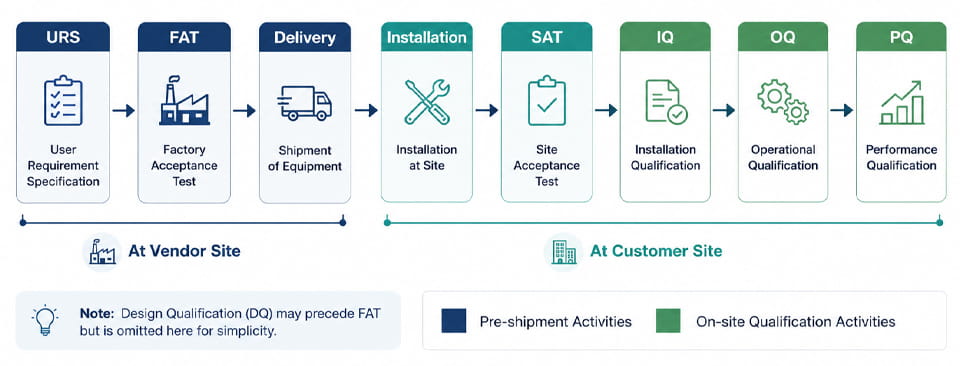
Figura: Fluxo do ciclo de vida de qualificação. Depois de definir URS, um teste de aceitação de fábrica (GORDO) é realizado no local do fornecedor. Em seguida, o equipamento é enviado e instalado, seguido por um teste de aceitação do site (SENTADO). Finalmente, Qualificação de Instalação (QI), Qualificação Operacional (QO), e Qualificação de Desempenho (QP) são executados no local (observação: DQ pode preceder FAT, mas é omitido aqui por simplicidade).
Este fluxo é apoiado pela orientação GMP. Por exemplo, sob o Anexo BPF da UE 15 e ISPE C&Práticas Q, resultados documentados do FAT muitas vezes podem ser aproveitados em QI/OQ, reduzindo a duplicação. Na verdade, As diretrizes ISO/ISPE observam que as “atividades do FAT contribuem diretamente para a Qualificação de Design (DQ) e Qualificação de Instalação (QI) evidência,”ajudando a reduzir o tempo geral de qualificação. Na prática, um FAT rigoroso com documentação adequada significa que sua equipe de QI pode reutilizar essas descobertas (E.G.. verificações de instalação já feitas) em vez de testar novamente os mesmos pontos.
Lista de verificação do protocolo FAT (Embalagens Farmacêuticas)
Um protocolo FAT abrangente para máquinas de embalagem farmacêutica normalmente inclui os seguintes elementos:
- Protocolo FAT pré-aprovado: Um documento escrito (com base na URS) que lista cada caso de teste, critérios de aceitação, e responsabilidade. Isso é aprovado pelo comprador e pelo vendedor antes do teste.
- Inspeção visual: Verifique se a máquina corresponde aos desenhos finais aprovados, sem peças faltantes ou danos. Verifique os números de série e o modelo dos componentes.
- Mecânico & Inspeção Elétrica: Confirme todos os componentes estruturais (quadros, guardas, transportadores) e componentes elétricos (motores, cabos, painéis) estão corretamente instalados e rotulados.
- Testes de Alarme e Intertravamento: Acione cada condição de alarme e verifique a resposta adequada. Ative cada intertravamento de segurança (Parada de emergência, guarda de porta, cortina de luz) para garantir que a máquina pare ou emita alertas conforme projetado.
- Verificações de controle/software: Confirme as configurações do PLC/HMI, versões de software, manipulação de receitas, e os níveis de acesso do usuário funcionam. Teste interfaces de operação e lógica de controle em relação aos requisitos.
- Verificação da calibração do instrumento: Verifique se todos os sensores e instrumentos possuem certificados de calibração válidos e estão dentro das especificações antes de usar.
- Desempenho executado com produto: Opere a máquina em todas as velocidades operacionais especificadas usando produtos representativos ou materiais de pior cenário. Meça os principais resultados (preencher pesos, rendimento, qualidade de vedação, precisão de contagem, etc.) contra critérios de aceitação.
- Demonstrações de mudança: Se vários formatos/SKUs forem necessários, demonstrar mudança procedimentos e prazos conforme contrato.
- Simulação de utilidade: Simule as condições de utilidade do local (E.G.. operar motores com tensão mais baixa, aplique pressão de ar mais baixa) para garantir que a máquina possa lidar com as variações de utilidade esperadas.
- Revisão da Documentação: Certifique-se de que todos os manuais, esquemas, guias de manutenção, e as listas de peças de reposição estão completas e entregues.
- Lista de pendências e aprovação: Documente quaisquer questões em aberto em uma lista de pendências. Depois de testar novamente as correções, incluir a página final de assinatura de “Aceitação do FAT” no relatório do FAT.
Seguir esta lista de verificação ajuda a detectar desvios na fábrica. Por exemplo, especialistas do setor alertam contra registros vagos de FAT – apenas quantitativos, dados de teste específicos do equipamento devem ser aceitos. Aceitar meras declarações de “aprovação” do fornecedor ou listas de verificação incompletas pode mascarar problemas. Sempre registre os valores medidos e rastreie-os até o número de série específico da máquina.
Lista de verificação do protocolo SAT (Embalagens Farmacêuticas)
Um protocolo SAT para máquinas de embalagem farmacêutica geralmente cobre:
- Verificações de pré-instalação: Verifique se o site está pronto (sala limpa, nível de fundação), utilitários estão em vigor (poder, ar comprimido, vazio, água), e os desenhos de instalação correspondem à máquina.
- Verificação de instalação: Confirme se todos os componentes mecânicos estão devidamente montados no local (nenhum dano do transporte). Verifique se os utilitários estão conectados corretamente (tensão, pressão, fluxo) e que as condições ambientais (temperatura, umidade, classificação) atender aos requisitos do equipamento.
- Testes de função sem carga: Execute as principais funções vazias ou com produto fictício para garantir que a fiação e os motores permaneçam intactos após o transporte. Verifique os intertravamentos de segurança mais uma vez sob as condições do local (E.G.. ar da planta em vez do ar da fábrica).
- Teste de conexão de utilitário: Meça os parâmetros reais da utilidade na máquina (E.G.. confirme a pressão e o fluxo reais do ar, atenda às especificações).
- Teste de Integração: Se aplicável, testar a comunicação entre esta máquina e o equipamento upstream/downstream (E.G.. verifique se uma máquina de contagem sinaliza corretamente ao encartuchador para indexar).
- Teste de desempenho de produção: Execute a máquina com produto real ou produto simulado (conforme URS). Por exemplo, alimente os blisters ou cápsulas reais do comprimido através da linha para confirmar que o rendimento e a qualidade são conforme necessário. Esta é essencialmente uma execução de PQ do site.
- Treinamento do operador & Entregar: Certifique-se de que os operadores possam operar a máquina. Revise os procedimentos operacionais e faça com que os operadores executem tarefas básicas sob observação.
- Resolução de problemas: Registre quaisquer desvios ou descobertas do SAT em um registro e verifique as ações corretivas. Somente depois que todos os pontos críticos forem fechados é que a máquina obtém aceitação formal.
- Aprovação final: Preencher um relatório ou certificado SAT, assine, e incluir dados de execução final. Isso se torna evidência de conformidade.
Resumidamente, o protocolo SAT reconfirma todas as funcionalidades críticas em condições reais. É o último ponto de verificação antes do comissionamento. Por exemplo, Jinlupacking observa que um SAT completo geralmente gera dados básicos que podem ir direto para os protocolos IQ/OQ, evitando novos testes de utilitários e meio ambiente.
FAT e SAT para máquinas de embalagem farmacêutica
Linhas de embalagem farmacêutica (bolha, cápsula, comprimido, máquinas de embalagem) têm sua própria ênfase em FAT/SAT. Aqui estão alguns pontos típicos:
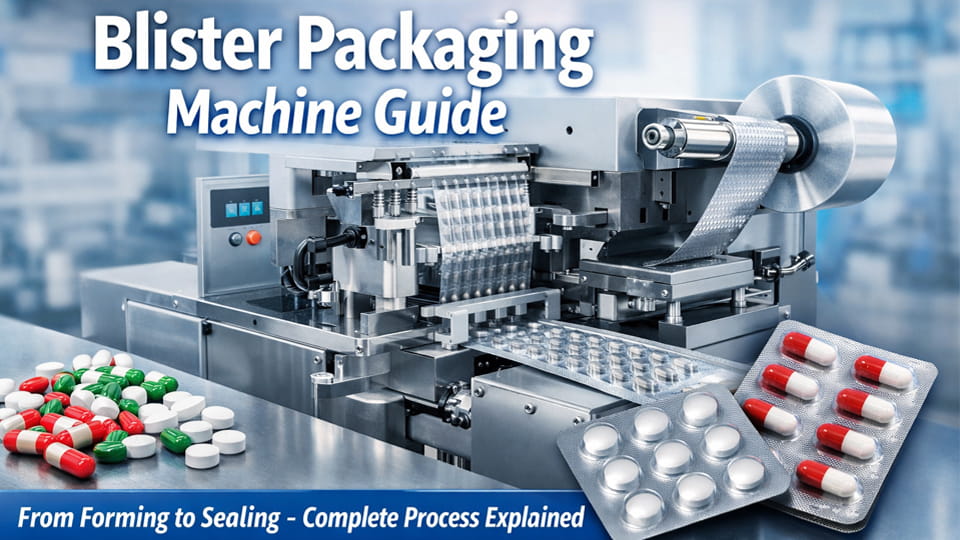
- Máquina de embalagem de bolha: A FAT deverá verificar as estações de formação e selagem. Por exemplo, medir a uniformidade da temperatura na placa de termoformação (±2°C em todo o molde) e matriz de vedação (±3°C) sob velocidades de pior caso. Teste a integridade do selo (testes de descascamento de acordo com ASTM F88). Verifique a precisão da alimentação do blister, indexação, alinhamento do filme, e que o sistema de rejeição remove bolhas malformadas. SENTADO irá então repetir esses testes com o blister e os comprimidos reais no local e confirmar que a máquina ainda atende às especificações de resistência de vedação e rendimento sob umidade/temperatura local.
- Máquina de enchimento de cápsulas: Os pontos de verificação FAT incluem orientação e alimentação da cápsula (verifique se as tampas e os corpos estão carregados corretamente), precisão de enchimento de pó (medir o preenchimento do peso na faixa baixa/alta), sistemas de detecção (verifique o alinhamento do sensor quanto a vazio, dobro, ou orientação errada), e integridade de bloqueio (garantir que as cápsulas estejam bem fechadas). Verifique a indexação da torre e a precisão do servo sem produto. SENTADO testará então a precisão do enchimento com as cápsulas e mistura de pó do cliente, e confirmar se o mecanismo de rejeição de fim de linha funciona quando ocorrem rejeições reais.
- Máquina de prensagem de comprimidos: Durante a gordura, os testes incluem calibração de ferramentas (peso do comprimido, grossura, dureza nas posições da torre), estrutura de alimentação e operação da tremonha, e consistência da força de pressão. Opere a prensa sob carga com as forças de compressão mais baixas e mais altas para verificar a velocidade do aríete. SENTADO verifica novamente as especificações do tablet usando granulação real no tamanho de lote desejado, confirma que os níveis de lubrificação e ruído são aceitáveis, e verifica portas de segurança e relés de sobrecarga no local.
- Máquinas de contagem e embalagem: Para máquinas de contagem, FAT se concentra na precisão e velocidade com produtos simulados, verificando sensores e calhas de rejeição. Para cartonadores, FAT verifica a formação da caixa, tempo de alimentação, velocidade de saída, e qualidade de vedação. SENTADO testará a operação contínua: alimentar blisters ou frascos reais em uma encartuchadora e garantir que as caixas de saída estejam corretas. Ele também verifica se a máquina de contagem e a encartuchadora estão sincronizadas corretamente (E.G.. sem garrafas perdidas).
Em todos os casos, tanto o FAT quanto o SAT verificam se a máquina funciona na velocidade especificada e produz a contagem/peso/qualidade correta com o produto real. Ignorando testes (por exemplo, não executando produto real no FAT) pode levar a falhas no SAT. Como alerta um especialista, “executar um FAT com materiais genéricos do OEM não é o mesmo que executá-lo com os seus” – se você não testar materiais reais em FAT, problemas do site geralmente surgem mais tarde.
Por que uma máquina pode passar no FAT, mas falhar no SAT?
Mesmo que uma máquina passe em todos os itens da lista de verificação FAT, ainda pode falhar no SAT se as condições mudarem. Razões comuns incluem:
- Diferenças de utilidade: A tensão, pressão do ar, ou a qualidade do fornecimento na planta pode estar fora da faixa usada no FAT. Um motor transportador pode desarmar no SAT se a tensão da linha estiver ligeiramente baixa, por exemplo.
- Mudança Ambiental: Diferenças de temperatura ou umidade podem afetar os processos. Um caso teve uma máquina de blister que passou FAT em umidade moderada (45% RH) mas falha na integridade do selo no local em 80% RH.
- Variações de produto: Se o fornecedor não usou o produto ou material de embalagem exato na execução do FAT, a máquina pode se comportar de maneira diferente com o produto real. (Aconselhamos pressionar o OEM para executar seus materiais em FAT.)
- Problemas de instalação: Erros na configuração, alinhamento, ou fixação durante o transporte pode introduzir novas falhas que o SAT deve detectar. Por exemplo, um encoder solto ou um trilho-guia empurrado podem não ser notados até o teste no local.
- Problemas de integração: A máquina pode não se comunicar adequadamente com outros equipamentos de linha ou com o sistema de controle da planta, a menos que essas interfaces sejam testadas no SAT.
- Lista de pendências não fechada: Se o fornecedor fez uma liberação parcial (E.G.. “vamos consertar isso após a entrega”), um problema de FAT não resolvido só pode surgir no SAT.
Resumidamente, FAT testa a máquina isoladamente; SAT testa no contexto. Cada diferença nas condições ou configuração do local é um modo de falha potencial. Um SAT bem executado, no entanto, é a verificação final para descobrir esses problemas antes da produção completa.
O que os compradores devem perguntar a um fornecedor sobre FAT e SAT?
Ao selecionar um fornecedor de máquinas, os compradores do setor costumam usar a prontidão FAT/SAT como um qualificador chave. Por exemplo, Guia de auditoria de fornecedores da Jinlu recomenda perguntar:
- Disponibilidade de documentos: “Você pode fornecer documentação completa do equipamento, incluindo manuais, desenhos, Relatórios FAT/SAT, e modelos de QI/OQ?”. (Um fornecedor compatível fornece isso de forma proativa.)
- Suporte à validação: “Você vai ajudar com instalação e qualificação? Você fornece suporte ou treinamento no local durante o FAT/SAT?”. (Certifique-se de enviar engenheiros para FAT e SAT.)
- Participação no Processo: “Quem vai liderar o FAT e o SAT? Minha equipe de controle de qualidade/validação pode participar ou testemunhar os testes?”
- Uso de amostras: “Você executará meu produto real e materiais de embalagem no FAT?” (Conforme observado, usar materiais reais é fundamental.)
- Tratamento de desvios: “Se algo falhar no FAT, como isso será corrigido? Você testará novamente no local antes do envio?”
- Controle de mudanças: “Como você gerencia alterações pós-pedido? Pequenas atualizações do URS podem ser acomodadas nos protocolos?”.
- Experiência & Referências: “Você entregou este modelo para outros clientes farmacêuticos? Podemos ver estudos de caso ou referências de contato?”.
- Peças sobressalentes e serviços: “Qual é a sua política de suporte de peças de reposição? Vocês oferecem garantias estendidas ou serviço local?”.
Essas perguntas ajudam a avaliar a maturidade de validação do fornecedor. Um fornecedor experiente deve responder prontamente que entrega máquinas “prontas para auditoria” com pacotes completos de FAT/SAT/IQ/OQ.
Lista de verificação de aceitação FAT/SAT
Para garantir um processo de aceitação tranquilo, os compradores podem usar esta lista de verificação rápida FAT/SAT:
- Concordar antecipadamente com o escopo: Incluir planos FAT e SAT no pedido de compra ou URS, definir exatamente quais testes serão realizados e quais critérios devem ser atendidos.
- Testes de testemunhas: Participe do FAT (de preferência pessoalmente) para verificar se cada teste é realizado. Se o testemunho remoto, garantir vídeo ao vivo de leituras.
- Use desenhos/especificações finais: Confirme se a máquina foi testada de acordo com os URS e desenhos mais recentes (não revisões mais antigas).
- Traga evidências de calibração: Garantir que os instrumentos utilizados no FAT/SAT estejam calibrados e seus certificados estejam no pacote de documentação.
- Colete dados brutos: Exigir que todos os valores medidos (pesos, forças, tensões, etc.) são gravados, não apenas marcas de “aprovado/reprovado”.
- Fechar desvios imediatamente: Qualquer discrepância encontrada deve ser corrigida e testada novamente antes da aceitação. Não aceite “resolvemos isso mais tarde” sem evidências.
- Rastreabilidade: Manter uma matriz de rastreabilidade ligando cada ponto URS aos casos e resultados de teste FAT/SAT.
- Aprovação final: Não libere a máquina até que todos os itens da lista de pendências do FAT sejam resolvidos e o relatório do FAT seja assinado. Repita para SAT.
- Verificação pré-embarque pós-FAT: Opcionalmente, realizar uma inspeção pré-embarque para confirmar que nada mudou após o FAT (Sugerimos esta verificação final após a máquina estar embalada).
- Arquivo de documentação: Mantenha cópias de todos os protocolos e relatórios FAT e SAT em seus arquivos de validação. Eles passam a fazer parte dos registros de Qualificação de Equipamentos.
Seguir essa lista de verificação evita surpresas. Por exemplo, Ver as fotos da embalagem de um fornecedor ou notas genéricas de controle de qualidade após o fato é não prova de conformidade. A evidência mais forte é um conjunto completo de registros FAT/SAT vinculados à máquina específica.
Conclusão
FAT e SAT são verificações essenciais para garantir que suas máquinas de embalagem farmacêutica tenham um desempenho confiável e estejam em conformidade com as GMP. Testando minuciosamente o equipamento nas instalações do fornecedor (GORDO) e novamente após a instalação (SENTADO), você minimiza surpresas dispendiosas e valida que todos os pontos do URS foram cumpridos.
Pronto para agilizar seus testes de aceitação? Jinlu Packing entrega equipamento de nível farmacêutico (embaladores de bolhas, preenchimentos de cápsula, Pressões de tablets, linhas de contagem e embalagem, etc.) com suporte completo a FAT/SAT. Cada máquina é enviada com um protocolo FAT/SAT completo e um kit IQ/OQ/PQ para tornar sua qualificação mais rápida e suave. Entre em contato com a Jinlu hoje para discutir seu URS e definir planos FAT/SAT para seu novo equipamento, ou visite nossas páginas de produtos para Máquinas de enchimento de cápsulas, Máquinas de embalagem de blister, Prensas para comprimidos, Máquinas de contagem, Máquinas de encadernação e mais. Nossa equipe irá ajudá-lo a planejar etapas FAT/SAT e fornecer documentação de validação pronta para uso para que seu projeto permaneça dentro do prazo e em conformidade.
Entre em contato com os especialistas da Jinlu para orientação FAT/SAT e garanta que sua nova linha de embalagem esteja pronta para validação desde o primeiro dia.
Perguntas frequentes sobre FAT vs SAT na indústria farmacêutica
Qual é a diferença entre FAT e SAT?
GORDO (Teste de aceitação de fábrica) é realizado nas instalações do fabricante do equipamento antes do envio para verificar se a máquina atende às especificações e requisitos funcionais acordados. SENTADO (Teste de aceitação do site) é realizado nas instalações do cliente após a instalação para confirmar se o equipamento funciona corretamente com as utilidades reais do local, ambiente, e sistemas conectados.
Por que o FAT é importante antes do envio de equipamentos farmacêuticos?
O FAT permite que o comprador e o fornecedor identifiquem o design, fabricação, controlar, ou problemas de desempenho antes da máquina sair das instalações do fabricante. Os problemas encontrados nesta fase são geralmente mais fáceis de investigar e corrigir porque o equipamento, equipe de engenharia, ferramentas, e o ambiente de teste estão prontamente disponíveis. Um FAT bem planejado pode, portanto, reduzir atrasos no comissionamento e evitar retrabalho desnecessário nas instalações do cliente.
O FAT é necessário antes do SAT?
FAT é comumente realizado antes do SAT, mas se é obrigatório depende do projeto, contrato, equipamento, e requisitos de qualidade. FAT verifica o equipamento antes do envio, enquanto o SAT verifica o equipamento após a instalação nas instalações do cliente. Para máquinas farmacêuticas, os dois testes podem complementar-se em vez de substituir um ao outro.
O equipamento pode passar no FAT, mas falhar no SAT?
Sim. Passar no FAT não garante que o equipamento passará no SAT. O FAT geralmente é realizado sob condições controladas de fábrica, enquanto o SAT avalia a máquina após o transporte, instalação, conexão com utilitários reais, e integração com outros equipamentos. Diferenças na fonte de alimentação, ar comprimido, condições ambientais, alimentação do produto, ou integração de linha pode criar problemas que não eram visíveis durante o FAT.
O que uma lista de verificação FAT deve incluir?
Uma lista de verificação FAT de equipamentos farmacêuticos deve ser baseada nas especificações acordadas e pode incluir a identificação do equipamento, inspeção mecânica, sistemas elétricos, Funções de CLP/IHM, alarmes, intertravamentos de segurança, operação da máquina, testes de desempenho, documentação, e critérios de aceitação acordados. Para máquinas de embalagem, a lista de verificação também pode abranger a velocidade de produção, precisão de alimentação, vedação, codificação, rejeição, e outras funções específicas da máquina.
O que uma lista de verificação do SAT deve incluir?
Uma lista de verificação SAT deve focar no equipamento após a instalação no local do cliente. Dependendo da máquina, pode incluir o status da instalação, conexões elétricas, ar comprimido e outras utilidades, operação da máquina, dispositivos de segurança, alarmes, comunicação com equipamentos upstream e downstream, desempenho de produção, e funções do operador. O SAT deve usar critérios de aceitação acordados antes do teste, em vez de depender apenas de uma demonstração informal da máquina..
Quem deve frequentar o FAT e o SAT?
O FAT geralmente envolve os engenheiros do fornecedor e os representantes do comprador (Controle de qualidade/validação, engenharia, operações). O SAT deve incluir o fornecedor de instalação ou a equipe de serviço, Controle de qualidade/validação, e a equipe de operações do cliente. Às vezes, consultores ou inspetores terceirizados são incluídos.
Qual documentação é necessária para FAT e SAT?
Cada um requer um protocolo pré-aprovado que descreve todos os testes, critérios de aceitação, e responsabilidades. Durante o teste, preencha o protocolo com dados e observações em tempo real. As entregas incluem o protocolo executado, uma lista de pendências de quaisquer desvios, e um relatório ou certificado final assinado. Para SAT, também preparar uma matriz de rastreabilidade vinculando os testes aos requisitos da URS.
Qual é a diferença entre FAT, SENTADO, QI, e OQ?
FAT e SAT são testes de aceitação, enquanto o QI e o QO normalmente fazem parte de uma estratégia de qualificação de equipamentos. A FAT verifica o equipamento nas instalações do fabricante antes do envio; SAT verifica após a instalação nas instalações do cliente. QI (Qualificação de Instalação) concentra-se em se o equipamento foi instalado de acordo com os requisitos aprovados, enquanto OQ (Qualificação Operacional) verifica se ele opera conforme pretendido em faixas operacionais especificadas. A sequência exata e a documentação dependem da estratégia de validação da empresa e dos requisitos do projeto.
O FAT faz parte da validação GMP??
FAT pode apoiar uma estratégia de qualificação e validação de equipamentos farmacêuticos, mas o próprio FAT não deve ser automaticamente tratado como equivalente à qualificação GMP. Seu papel depende do equipamento, requisitos do projeto, avaliação de risco, e sistema de qualidade aplicável. Em alguns projetos, testes FAT apropriados podem fornecer evidências documentadas que serão aproveitadas durante atividades de qualificação posteriores, reduzindo potencialmente a duplicação desnecessária quando justificado.
Referências:
1.Sistemas de automação na indústria de processos – Teste de aceitação de fábrica (GORDO), teste de aceitação do site (SENTADO), e teste de integração de site (SENTAR) —— ANSI/ISA-62381-2026 / CEI 62381:2024
2.SOP de Engenharia -FAT : Teste de aceitação de fábrica & SENTADO : Teste de aceitação do local —— farmastate.academy
3.Testes FAT e SAT em equipamentos farmacêuticos —— Scribd
4.Estudos de qualificação na etapa de aceitação SAT da lavadora de embalagens farmacêuticas —— ResearchGate
5.Lista de verificação do teste de aceitação na fábrica e no local —— Scribd





Uma resposta
É interessante como a distinção entre FAT e SAT pode impactar as operações farmacêuticas. Durante nossas inspeções de clientes, frequentemente descobrimos problemas de umidade que podem comprometer o desempenho do equipamento. Quando usamos imagens térmicas, encontramos vazamentos ocultos que podem levar a tempos de inatividade dispendiosos. Sempre aconselhamos os proprietários a considerar avaliações completas antes de finalizar a aceitação do equipamento. Você notou alguma tendência na forma como as empresas estão enfrentando esses desafios durante a fase de teste de aceitação??