×

Usługa online

💬 WhatsApp: +86 1801179332
💡
  • Dom
  • Blogi
  • Jak format opakowania wpływa na przestrzeganie zaleceń lekarskich: Przewodnik po opakowaniach zorientowanych na pacjenta

Jak format opakowania wpływa na przestrzeganie zaleceń lekarskich: Przewodnik po opakowaniach zorientowanych na pacjenta

Medication adherence – the degree to which patients take their medicines as prescribed – is a critical factor in treatment success. Yet studies show only about half of prescriptions are taken correctly, driving as much as $100–300 billion in annual healthcare costs in the U.S. alone. Poor adherence undermines patient outcomes and causes wasted therapies. Smart packaging design can play a powerful role in closing this gap. By making doses easy to access, clearly labeled, and organized by time or purpose, effective packaging formats become built‑in reminders that help patients follow their regimens. W rzeczywistości, clinical research has found that simple packaging changes can noticeably boost compliance – one meta‑analysis reported adherence rates rising from ~63% to ~71% when structured blister or pillbox interventions were used.

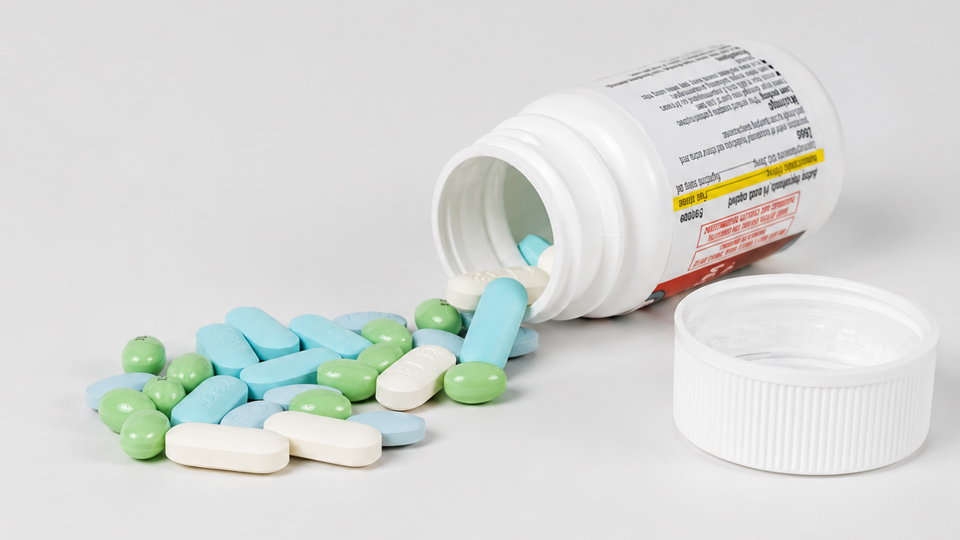
Na przykład, conventional pill bottles (see image) are convenient for dispensing but offer no inherent adherence aid. Patients often lose track of doses when pills rattle loose in a bottle. Dla kontrastu, calendarized or unit‑dose formats give visual and physical cues: empty spots in a blister card or organized compartments in a pill box show at a glance what’s been taken. Rzeczywiście, studies confirm that bottles “offer no benefit in improving adherence,” whereas dose‑specific packs – especially calendarized blister packsdirectly counteract forgetfulness. The packaging itself becomes a daily prompt. For busy or elderly patients, this can mean the difference between missed pills and a healthy treatment routine.

pills spilling out of a medication bottle

Obraz: A typical pill bottle and loose pills. Standard bottles are common but lack built-in reminders for patients.


Why Packaging Matters for Patient Outcomes

Packaging does much more than protect pharmaceutical products during storage and transportation. Dzisiaj, it also plays an important role in helping patients take medications correctly. A well-designed packaging format can simplify daily medication routines, improve the patient experience, and support better medication adherence. Research has shown that reminder packaging, such as calendar blister packs and other organized dose formats, can positively influence adherence for many patients.

Good packaging supports medication adherence in several practical ways:

  • Makes Daily Medication Easier
    Prosty, well-organized packaging reduces the effort required to manage daily medication. When taking medicine becomes easier, patients are more likely to stay on schedule.
  • Helps Patients Stay Organized
    Calendar layouts, opakowania jednodawkowe, and clearly separated doses make it easier to track medication, especially for people taking multiple prescriptions.
  • Reduces Medication Errors
    Clear labeling and individual-dose packaging help prevent missed doses, duplicate doses, and confusion between different medicines.
  • Encourages Long-Term Treatment Compliance
    Patients are more likely to continue long-term therapies when medication is convenient to use and easy to understand. Reminder packaging has been shown to support better adherence in many patient groups.

Packaging Format Influences Medication Adherence


Popular Packaging Formats that Boost Medication Adherence

Different products and patient groups benefit from different packaging formats. The following formats are widely used in pharma and healthcare to support compliance:

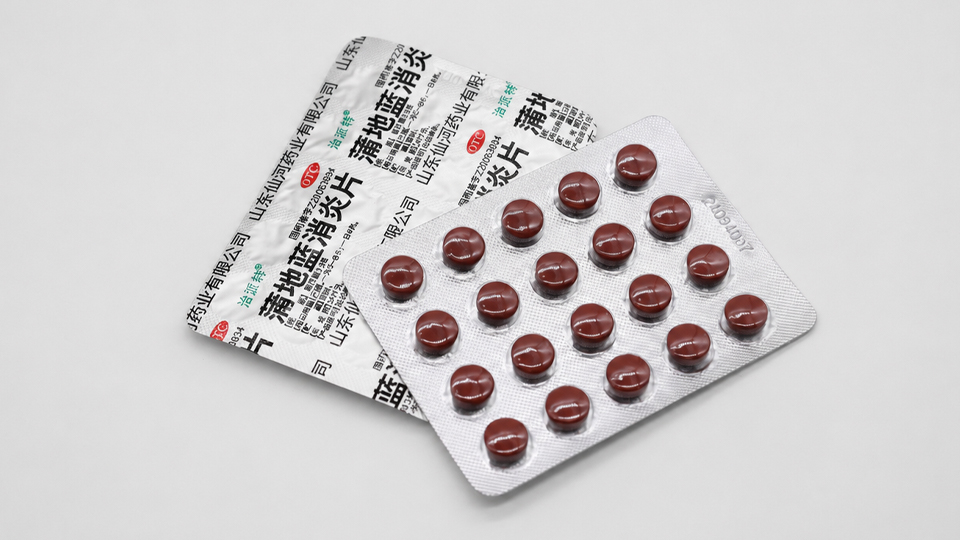
  • Unit-Dose Blister Packs. Each tablet or capsule is sealed in its own pocket (Widzieć featured image poniżej), usually against foil or card. Ten widoczne w przypadku manipulacji, one-dose-per-cavity format is ideal for precise regimens (antibiotic courses, titration schedules, itp.). Clinicians get visible confirmation that a dose was taken, and patients see at a glance which pills remain. Pakiety pęcherzy also protect each dose from moisture and contamination, helping ensure drug stability. Szczególnie, studies highlight blister packs as a “dose-prompting ‘reminder package’.” Na przykład, contraceptive pills are almost always sold in blister cards – no other format matches the need for perfect daily compliance. By printing dosing information and days of the week right on the package, blister cards turn medicine-taking into a clear, calendar-based routine.
  • Calendarized / Multi-Dose Packs. These combine several doses into a week or month of therapy. Common styles include seven‑day pill organizers and multi-strip blister calendars. Multi-dose blisters or pouches group all of a patient’s medications by day and time. Na przykład, a 7×4 strip pack might have columns for Sun–Sat and rows for morning, noon, evening, and bedtime. Multi-dose calendar packs “group medications by time of day and day of the week,” with clear compartments or labels for each dose. This layout greatly reduces confusion for people on complex regimens – they no longer have to remember how many pills to take at 8am vs. 8po południu. Research and industry reports agree that these packs “reduce cognitive load” and support caregivers. The visual layout is essentially a self-updating checklist: if a slot is empty, it reminds the user a dose is due. Pharmacists and manufacturers often use this format for chronic therapy packs, vaccination schedules, and anytime multiple drugs must be coordinated.
  • Strip Pouches and Pill Organizers. Similar to calendar packs, strip pouches (also called dose packs) are pre-made pouches or blister strips with one dose in each segment, arranged by date/time. They are fully portable (you tear off the next pouch to take it) and great for patients on the go or with variable schedules. Tradycyjny plastic pill organizers (the compartment boxes with removable lids) also belong here. Though simple, these remain a “solid option for stable regimens”. A weekly pill box or dispenser is budget-friendly and lets patients or caregivers pre-fill a week’s supply. Modern variations include color-coded trays and organizers that lock each day’s pills, making errors obvious. (Jednakże, pill organizers are often patient‑filled, so pharmacies may prefer pre-packaged blisters to ensure accuracy.)
  • Strip Vials and Ready-to-Use Medication Boxes. For some therapies (NP., krople do oczu, zastrzyki, lub płyny), adherence packaging comes in the form of single-use vials or ampoules with clear dosing instructions. These unit-dose containers eliminate measuring errors. Pre-filled insulin pens and inhalers also have design cues like dose counters that inform patients. Even with non-solid drugs, the idea is the same: one dose per container means no confusion about “how much did I take?” at each time.
  • Smart/Sensor-Enabled Packages. Technology is adding new twists. Connected blister packs with embedded RFID/NFC tags can report when a dose is removed, send reminders, or link to apps. Smart pill bottles have caps that light up or buzz if doses are missed, and log openings for caregiver monitoring. These digital features go beyond format alone, but they build on traditional packaging by making adherence a two-way street: the package can remind I record. Early research suggests even simple sensor bottles measurably improve adherence in high-risk patients.

Individual pills sealed in a blister card printed with dosing info

Obraz: Individual pills sealed in a blister card. Unit-dose blisters (often printed with dosing info) give patients a clear daily schedule and make it easy to spot a missed dose.


How Packaging Helps Improve Medication Adherence

Packaging can influence adherence in several key ways:

  • Single-dose protection. Blister packs and unit-dose saszetki isolate each dose. This ensures the right amount (dawka) is taken and keeps unused doses safe from moisture or contamination.
  • Visual cues and tracking. As patients remove pills from a blister or pouch, the remaining pills visually indicate which doses are left. Calendar blisters (with date markers) or week-by-week layouts help patients “check off” doses. Na przykład, sliding blister cards let patients literally see which tablet slots are empty. CDC research confirms this organization “organize[S] medication regimens in clear and simple ways” to boost adherence.
  • Reminders and prompts. Packaging can embed reminders: peel-off stickers for dosing days, printed schedules on packs, or even built-in alarms. Nowoczesny mądry packaging can go further: wireless pill bottles send alerts via blinking lights or texts if a dose is missed. These smart bottles have boosted adherence by ~20% in trials. Even simpler solutions like multi-compartment pill organizers (pill minders) act as daily checklists, though they require patient or caregiver input.
  • Ease of use / intuitiveness. Patient-centered design (np. easy-open tabs, color cues, intuitive dosing charts) lowers the barrier to taking meds correctly. Packaging that is hard to open or understand can itself deter patients. Dla kontrastu, blister cards with perforated tabs or QR-code labels link to instructions or digital support. The latest NFC/QR smart labels connect packaging to smartphone apps, making it easier for patients to get info and for providers to monitor adherence.

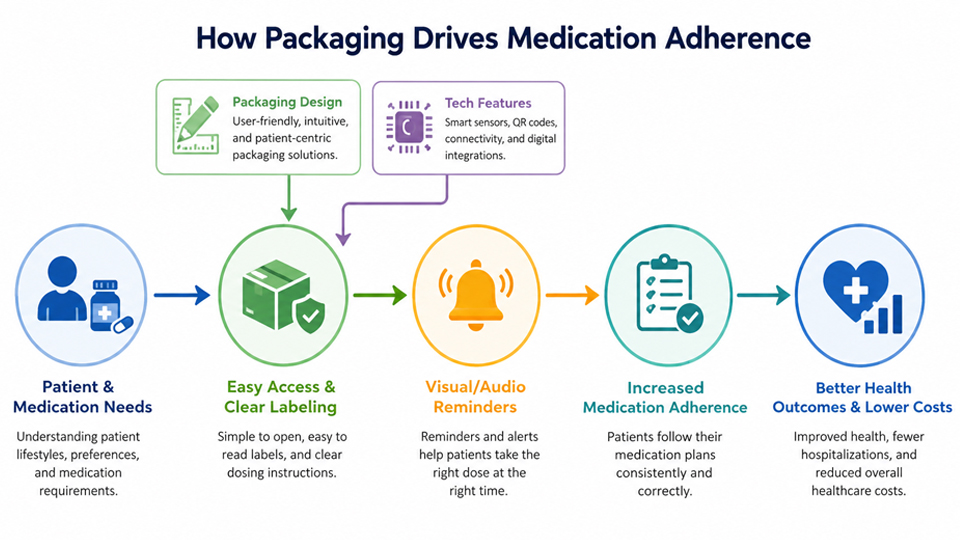
At its best, opakowanie wypełnia lukę between prescription and patient behavior. It becomes a passive “adherence partner” by organizing and reminding without requiring extra effort from the patient.

How Packaging Helps Improve Medication Adherence


Key Design Features for Patient-Friendly Packaging

Simply choosing the right format isn’t enough – the packaging must be designed for the patient. Poorly designed packages can create barriers. The best adherence-focused designs share several traits:

  • Clear Labeling and Instructions. Large-print labels, obvious drug names/doses, and printed administration times are crucial. Icons or color bands for morning vs. evening help patients with vision or literacy challenges. Packaging experts emphasize that intuitive cues (like arrows or embossed dots) and a logical layout help patients self‑manage their routine.
  • Visual Layout (Calendaring). Use of calendars or color coding aligns with how people organize time. A study notes that calendar blister packs allow patients to “see each day of the week”, which directly supports adherence. Dla kontrastu, an opaque bottle offers none of these natural reminders.
  • Child-Resistance with Adult Accessibility. Safety is non-negotiable, but overly hard-to-open packaging frustrates seniors or patients with arthritis. Packaging engineers now build child-resistant mechanisms (press/slide, squeeze-and-turn caps, itp.) into blister cards or boxes in ergonomic ways. Na przykład, some blister packs use pull-tabs or push-through foils that are easy for adults but deter children. As Keystone’s designers note, the key is balance: “Children must be kept out, but patients must be able to get in”. Achieving this balance can dramatically reduce accidental ingestions while still letting adults stick to their therapy.
  • Easy-Open and Accessible Features. Odwrotnie, people with arthritis, visual impairment or limited dexterity need help. Many packages now include easy-pull tabs, large flip lids, or textured grips. Pharmacy groups recommend features like Braille labels or high-contrast printing for elderly users. (These also reduce caregiver workload by enabling patient self-care.)
  • Built-In Reminders. The ultimate goal is that the package itself communicates schedule cues. Na przykład, blister cards often label days of week next to each pill. Some advanced calendars even mark “Time to refill” on the last doses. In pill bottles, adding timing charts or digital timers on the label can serve a similar purpose. The more the package can “talk” to the patient (through design or tech), the better patients remember their regimen.

These patient-centric design principles have the added benefit of quality compliance: jasne, tamper-evident packaging with tracking makes it easier for manufacturers to meet FDA/EMA standards while still enhancing user experience. For pharma production, investing in these features can pay off in brand trust and lower liability.

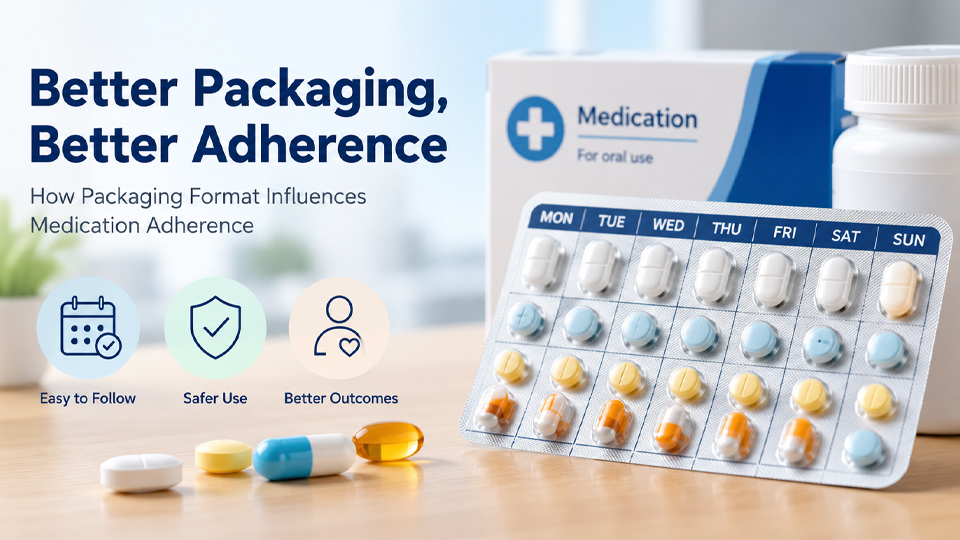
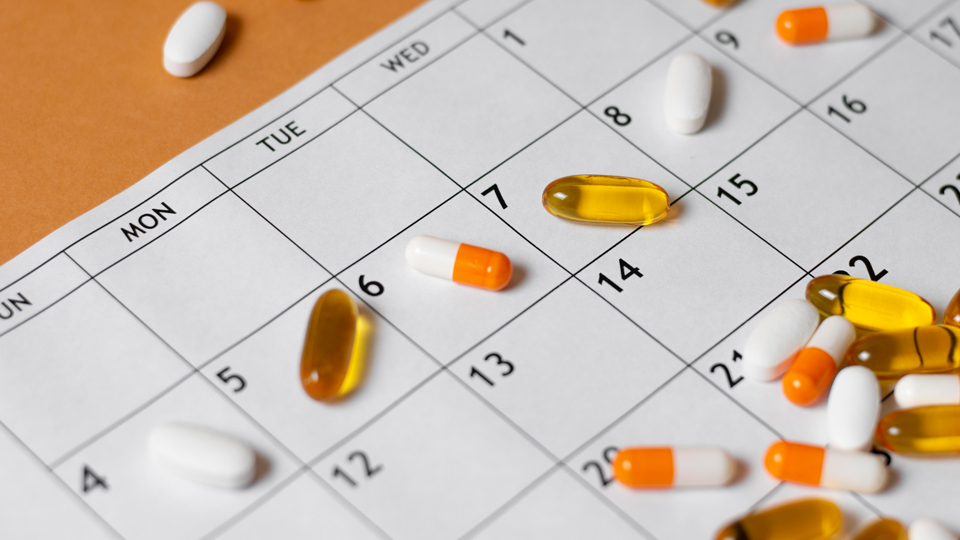
tablets and capsules on calendar


Balancing Safety, Koszt, i Zrównoważony rozwój

Adherence packaging must still meet all regulatory and cost constraints. w USA, Na przykład, child-resistant packaging is mandated by law for most prescriptions. Modern solutions often achieve compliance by incorporating safety features into the package shape (np. locking mechanisms on blister cards) rather than relying solely on bottle caps. Naraz, companies are exploring sustainable materials: paperboard calendars instead of plastic blisters, or recyclable films, which patients appreciate and which often have simpler structures. Studies show patients actually prefer eco-friendly, straightforward packaging – it looks more modern and reassuring.

On the cost side, automated packaging lines (np. high-speed blister Lub strip pack machines) have become quite efficient. Large-scale unit-dose production can cut per-unit cost and reduce waste from expired stock. For manufacturers and contract packagers, this means a high upfront machinery investment but potentially lower long-term costs and inventory losses. From the patient’s viewpoint, the improved convenience and safety justify these formats. Innymi słowy, the extra care in packaging is often offset by better health outcomes and fewer wasted drugs.


Packaging Machinery Enabling Adherence Solutions

To deliver these patient-friendly packaging formats at scale, manufacturers need reliable machines. Pakowanie jinlu offers a range of equipment tuned for adherence-focused packages:

  • Maszyny pakujące w blistry: Jinlu’s DPP-series machines form and seal blister cards at high speeds (aż do 4,800 ubytków/godz) with precise servo controls. These machines can integrate date or day coding printers and special tools for sliding/blister calendars. Because each blister pack is individually sealed, dose integrity and tamper evidence are guaranteed. (See image below.) The ability to quickly change tooling also lets pharma makers produce custom multi-week blisters or combine multiple formulations in one card, which further aids patient compliance. Na przykład, calendarized blister packs (with day-of-week tabs) are easily produced on such lines.

    Maszyna blistrowa DPP-180pro do tabletek kapsułkowych
    Maszyna blistrowa DPP-180pro do tabletek kapsułkowych
  • Stick/Sachet Packaging Machines: Do jednodawkowych proszków lub płynów, Jinlu’s multi-lane stick pack machines (Seria JL-VP) are ideal. These VFFS machines can simultaneously form, wypełnić, and seal dozens of individual stick pouches. They boast high precision (±0.02 g filling accuracy) and typical outputs of 30–40 sachets per minute per lane. This means a 6-lane machine can produce hundreds of single-dose sachets per minute – perfect for pre-measured antibiotic powders, suplementy diety, or oral solutions. Each stick pack is one dose, simplifying patient use. (The photo below shows an 8-lane stick pack machine in action.)

Maszyna do pakowania saszetek

Postać: Multi-lane stick pack machine z Jinlu Packing. It forms, fills and seals narrow sachets (Pakiety kijowe) in parallel. Each pack contains one dose (proszek, płyn, itp.), aiding unit-dose delivery and adherence.

  • Cartoning and Serialization: Po pierwotnym opakowaniu (blisters or sachets), Jinlu’s cartoning machines group doses into labeled boxes. Our cartoners can insert dose packs along with instruction leaflets or desiccants, assembling a finished box that’s easy for patients to handle. They also add serial codes or QR labels per regulatory needs. Traceability helps pharmacists verify authenticity and can link to digital adherence programs. (Zobacz Jinlu Cartoning Machine Guide for details.)

    Automatyczne opakowanie maszyny do kartonowania JL-130L
    Automatyczne opakowanie maszyny do kartonowania JL-130L
  • Kontrola & Maszyny liczące: Quality control is key for adherence – patients must trust the dose count. Jinlu’s checkweighers and vision inspection systems detect missing tablets or packaging defects in real-time. An automatic counting machine ensures the correct number of pills go into each blister or bottle. Razem, these features uphold dose accuracy and consistency – so each pack administered to a patient contains exactly the intended medication dose.

    Tablet Capsule Counting Filling Machine
    Tablet Capsule Counting Filling Machine

By combining these machines, a pharmaceutical line can produce patient-friendly packages without sacrificing throughput or quality. Na przykład, A Jinlu blister line might integrate a counting station, blister former/sealer, and a serialization printer in one continuous process. This automation maintains compliance with standardy GMP (21 CFR 211, Załącznik GMP UE 15) and ensures every pack leaving the line matches the intended prescription. W ten sposób, high-tech packaging equipment becomes the backbone of “packaging solutions for patient compliance” – enabling manufacturers to confidently supply calendars, saszetki jednodawkowe, and smart-enabled bottles at scale.


Wniosek

Podsumowując, packaging format has a proven impact on medication adherence. Thoughtful designs – from unit-dose blister cards and weekly pill organizers to smart, connected packages – make it easier for patients to take the right medicines at the right times. Real-world evidence shows that these formats substantially increase adherence rates compared to plain bottles. For pharma manufacturers and distributors, adopting adherence‑friendly packaging is both a public health service and a market advantage: it improves patient outcomes and can differentiate products in a competitive field.

Ready to enhance compliance for your customers? Jinlu Packing specializes in maszyny do pakowania farmaceutyków and solutions tailored to patient needs. Whether you need high-speed blister packing lines, automated strip pouch machines, or custom calendar pack systems, our team can help design formats that encourage adherence. Skontaktuj się z Jinlu już dziś to discuss how smart packaging design can boost your product’s performance and support better patient care.


FAQs on medication adherence

What is medication adherence?

Medication adherence refers to how closely patients follow their prescribed treatment plan, including taking the right medication, at the correct dose, and at the recommended time. Poor adherence can reduce treatment effectiveness and increase healthcare costs.

How does packaging format affect medication adherence?

Packaging format can simplify medication routines and provide visual reminders. Features such as calendar labeling, opakowanie jednodawkowe, and organized compartments help patients remember when and how to take their medicines.

Why are blister packs effective for improving medication adherence?

Blister packs separate medications into individual doses and can display the day or time for each dose. Patients can easily see whether they have taken their medicine, which helps reduce missed doses and medication errors.

Are pill bottles less effective than blister packaging?

Traditional pill bottles are convenient for storage and dispensing, but they usually provide no built-in reminder system. Patients may forget whether they have taken a dose, especially when managing multiple medications.

What are calendar blister packs?

Calendar blister packs are packaging systems that organize medications by day of the week or time of administration. They create a visual schedule that makes it easier for patients to follow treatment plans and maintain consistent medication use.

Which patients benefit the most from adherence packaging?

Adherence packaging is especially helpful for elderly patients, individuals with chronic diseases, patients taking multiple medications, and people with memory challenges. Caregivers also benefit because organized packaging simplifies medication management.

Can smart packaging improve medication adherence?

Tak. Smart packaging solutions, such as connected blister packs and electronic pill bottles, can provide reminders, track medication usage, and send notifications when doses are missed. These technologies offer additional support for long-term treatment management.

What packaging features make medicines easier to use?

Patient-friendly pharmaceutical packaging typically includes clear instructions, large and easy-to-read labels, kodowanie kolorami, calendar organization, easy-open designs, and child-resistant features that remain accessible for adults.

Why should pharmaceutical manufacturers invest in adherence-focused packaging?

Medication adherence directly impacts treatment outcomes and patient satisfaction. Pharmaceutical companies that implement adherence-friendly packaging can improve product value, strengthen brand reputation, and differentiate themselves in competitive markets.

What packaging equipment is needed to produce medication adherence packaging?

Depending on the packaging format, manufacturers may require blister packaging machines, cartoning systems, strip pouch packaging machines, and customized calendar pack production lines. Automated pharmaceutical packaging equipment ensures consistent quality and efficient large-scale production.


Referencje:
1.Packaging interventions to increase medication adherence: systematic review and meta-analysis —— Narodowa Biblioteka Medyczna
2.Packaging Improves Medication Adherence —— pharmtech.com
3.Effect of drug reminder packaging on medication adherence: a systematic review revealing research gaps —— Springer Nature
4.Electronic medication packaging devices and medication adherence: A systematic review —— Narodowa Biblioteka Medyczna
5.Do fixed-dose combination pills or unit-of-use packaging improve adherence? A systematic review. —— Narodowa Biblioteka Medyczna
6.CDC Grand Rounds: Improving Medication Adherence for Chronic Disease Management — Innovations and Opportunities —— CDC

Udostępnij ten artykuł:
Zdjęcie Drobny Fu
Drobny Fu

Drobny Fu, Założyciel Jinlupackingu, przynosi 20 lat doświadczenia w sektorze maszyn farmaceutycznych. Pod jego kierownictwem, Jinlu wyrosło na zaufanego dostawcę integrującego projektowanie, produkcja, i sprzedaż. Petty z pasją dzieli się swoją głęboką wiedzą branżową, aby pomóc klientom poruszać się po zawiłościach opakowań farmaceutycznych, zapewnienie, że otrzymają nie tylko sprzęt, ale prawdziwe partnerstwo w zakresie kompleksowych usług dostosowanych do ich celów produkcyjnych.

Spis treści

Wyślij zapytanie

Zostaw odpowiedź

Twój adres e-mail nie zostanie opublikowany. Pola wymagane są zaznaczone *

Uzyskaj bezpłatną wycenę

*Szanujemy Twoją poufność i wszystkie dane są chronione. Twoje dane osobowe będą wykorzystywane i przetwarzane wyłącznie na potrzeby rozwiązania JL.