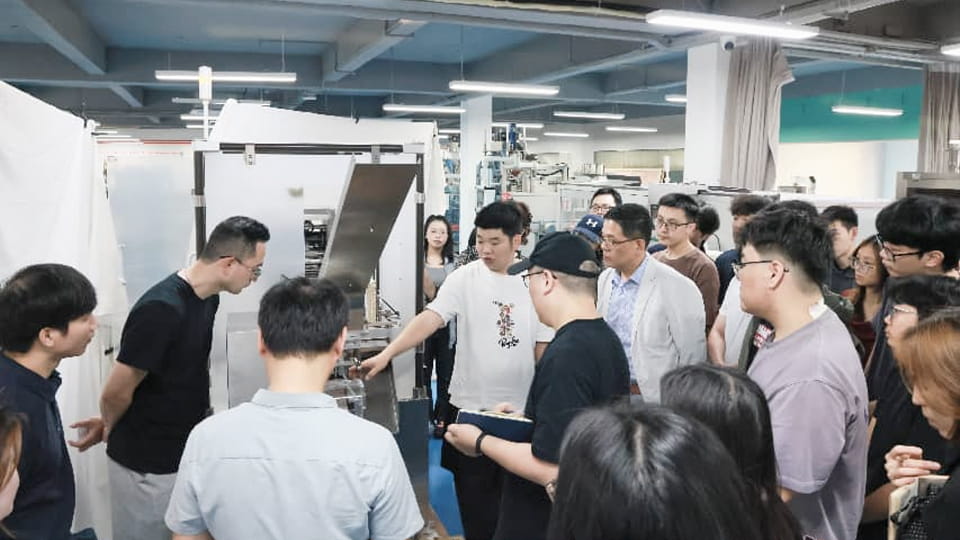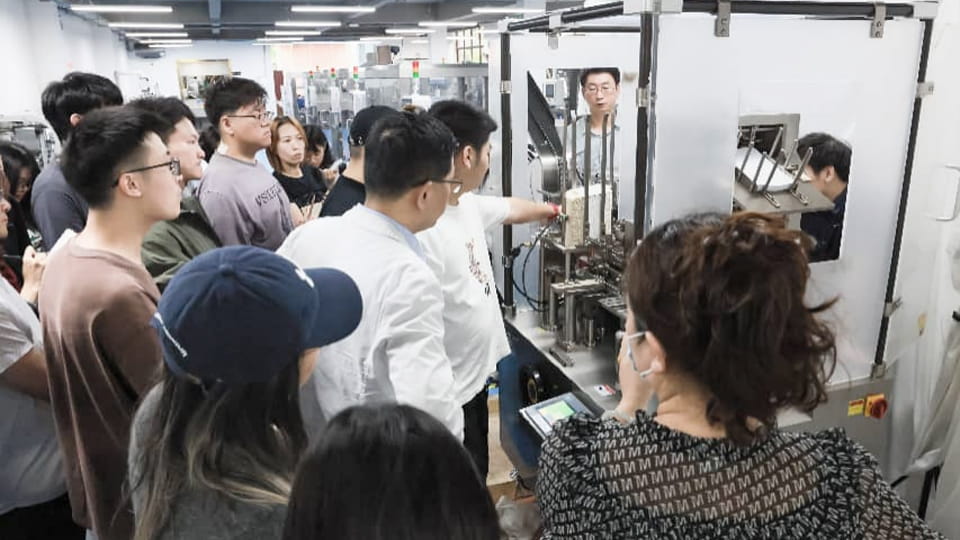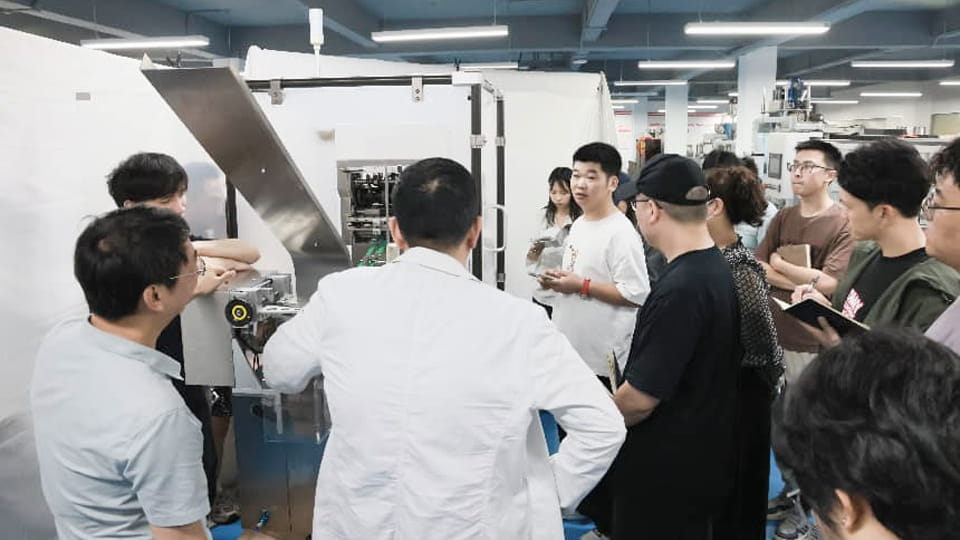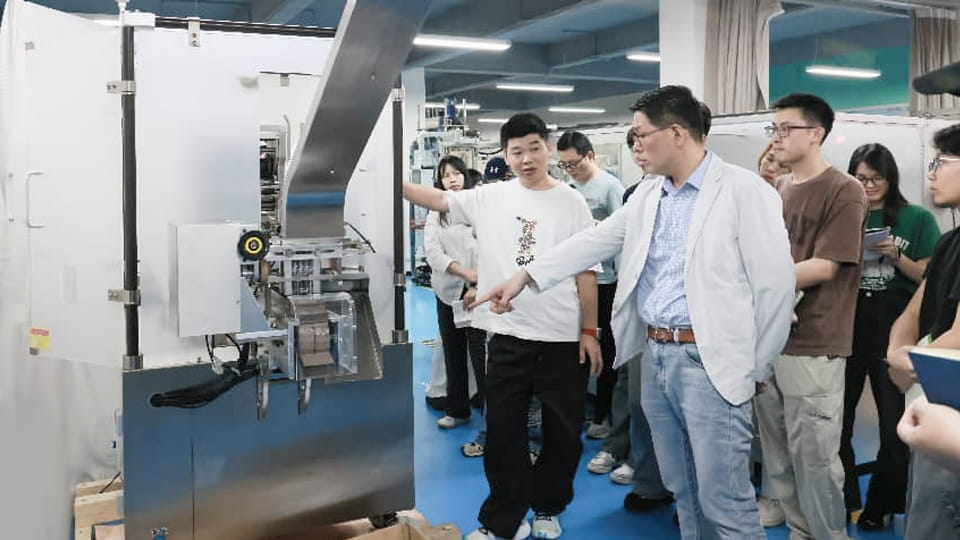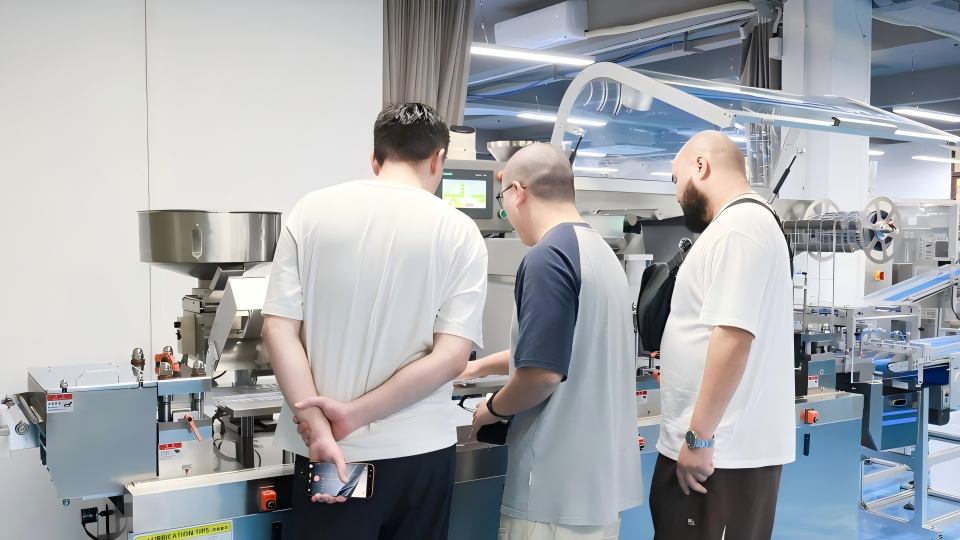
광저우, 중국 | 5월 7, 2026 – To help the business team better understand product details and respond to customer questions more professionally, Jinlupacking recently organized an internal training session on the RQ-ZH-120L Automatic Vertical Cartoning Packing Machine. The training was led by Engineer Huang and focused on the complete working process, key inspection points, and practical customer concerns related to vertical cartoning.

During the session, Engineer Huang explained the main workflow of the 120L vertical cartoning machine, including carton feeding, carton suction, carton opening, 형성, material feeding, instruction manual detection, product detection, and final carton sealing. Instead of only introducing machine parameters, the training focused more on how each station works together in real production.

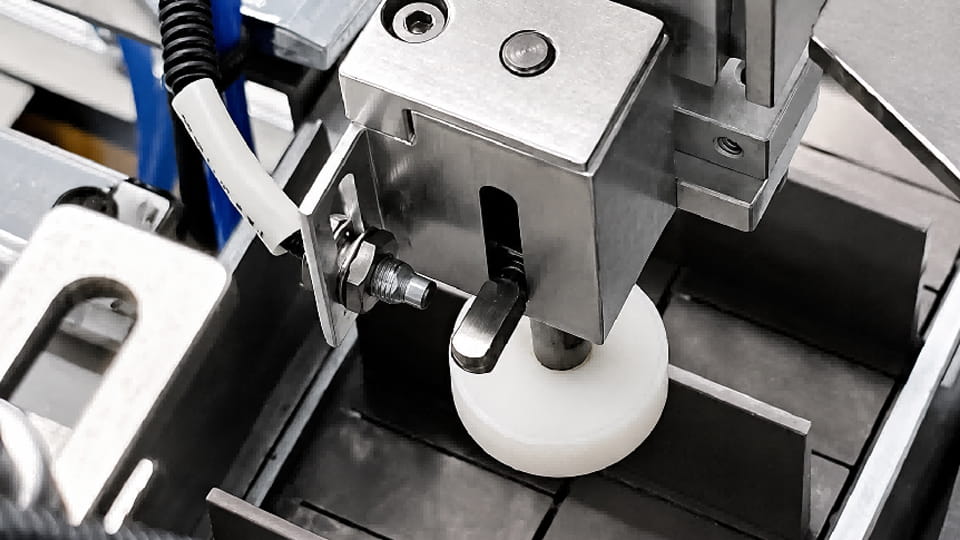
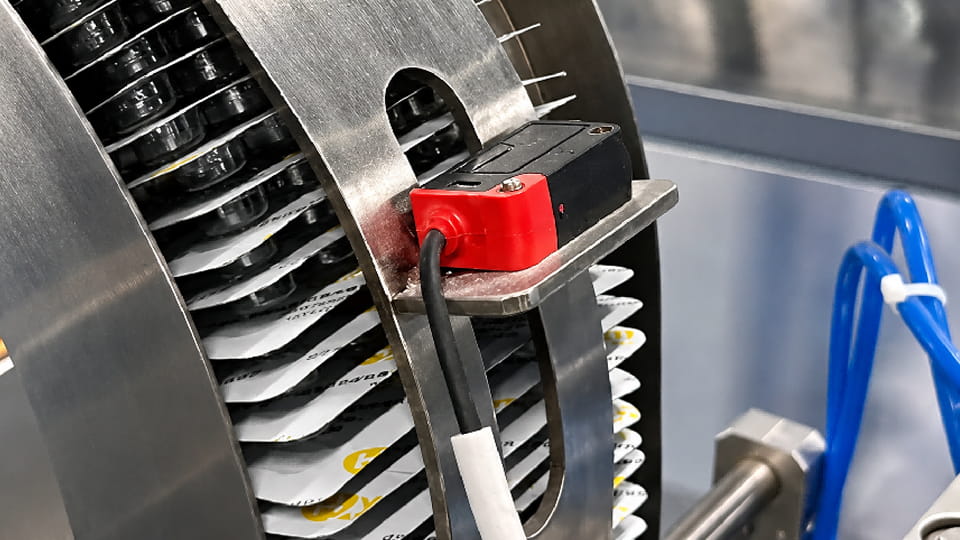
A key part of the training focused on the suction carton and forming process. The machine uses suckers and a vacuum system to take flat cartons from the carton magazine. After suction carton, the carton enters the forming station and is opened into the correct shape for loading. Engineer Huang explained that the carton in place detection is very important here. If the carton is not successfully sucked down or does not reach the forming or pushing position, the machine will not simply continue running. 대신에, it will stop the action to prevent the product from being pushed into the machine without a carton, reducing the risk of jamming, product waste or mechanical damage.

The team also learned more about the material testing and quantity detection process. Before the product is pushed into the carton, the detection points check whether the material has reached the correct position and whether the number of packages meets the set requirement. 예를 들어, if one carton should contain a fixed number of blister plates, 파우치, bottles or tubes, the sensor will check whether the product is missing, extra, or not properly positioned. If the result is abnormal, the system records this product group as unqualified and links it with the later rejection action.

These explanations helped the business team understand the role of the machine’s pneumatic-photo-electro-mechanic system more clearly. The detection is completed through sensors and electrical control, while the rejection and carton handling actions are completed through pneumatic and mechanical structures. These parts work together to improve loading monitoring and reduce manual checking pressure.

In the Q&세션, team members raised questions that often appear in customer communication, such as how to judge whether a carton is suitable for automatic opening, why missing cartons usually cause the machine to stop, how the machine handles missing products or missing manuals, and what customers should prepare before testing a cartoning machine. Engineer Huang answered these questions from both a mechanical and practical application perspective, helping the team turn technical details into customer-friendly explanations.

Through this training, team members gained a clearer understanding that a cartoning machine is not only used to put products into cartons. 더 중요한 것은, it helps ensure stable carton opening, accurate material loading, reliable manual insertion and qualified finished packaging through automatic inspection and rejection.
Jinlupacking will continue to organize practical machine training for its team. By combining engineer experience with real customer questions, Jinlupacking aims to provide faster, clearer and more professional support for global customers.
사소한 푸, 진루패킹 창업자, 가져오다 30 제약 기계 부문에 대한 다년간의 전문 지식. 그의 리더십 아래, Jinlu는 디자인을 통합하는 신뢰할 수 있는 공급업체로 성장했습니다., 생산, 그리고 판매. Petty는 고객이 제약 포장의 복잡성을 헤쳐나갈 수 있도록 깊은 산업 지식을 공유하는 데 열정을 갖고 있습니다., 장비뿐만 아니라 제품도 받을 수 있도록 보장, 생산 목표에 맞춘 진정한 원스톱 서비스 파트너십.