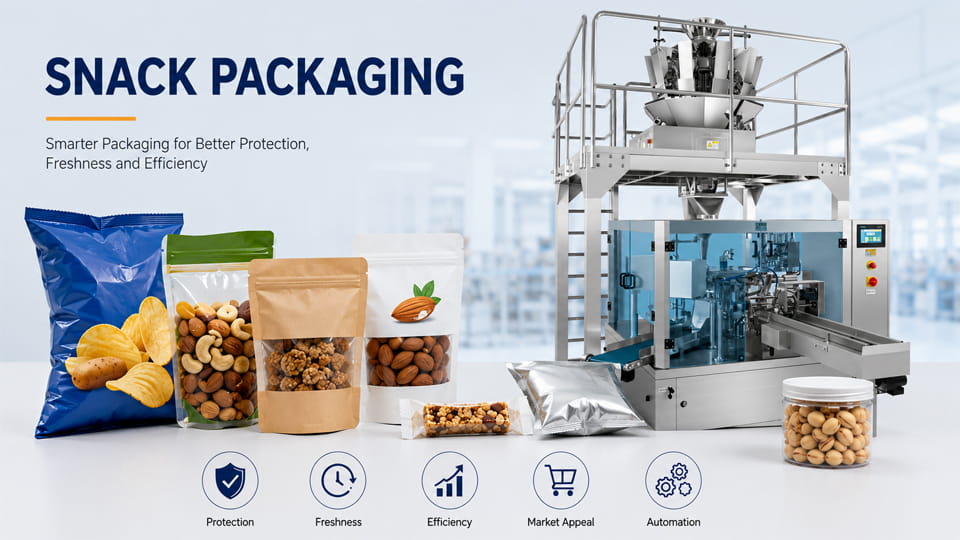
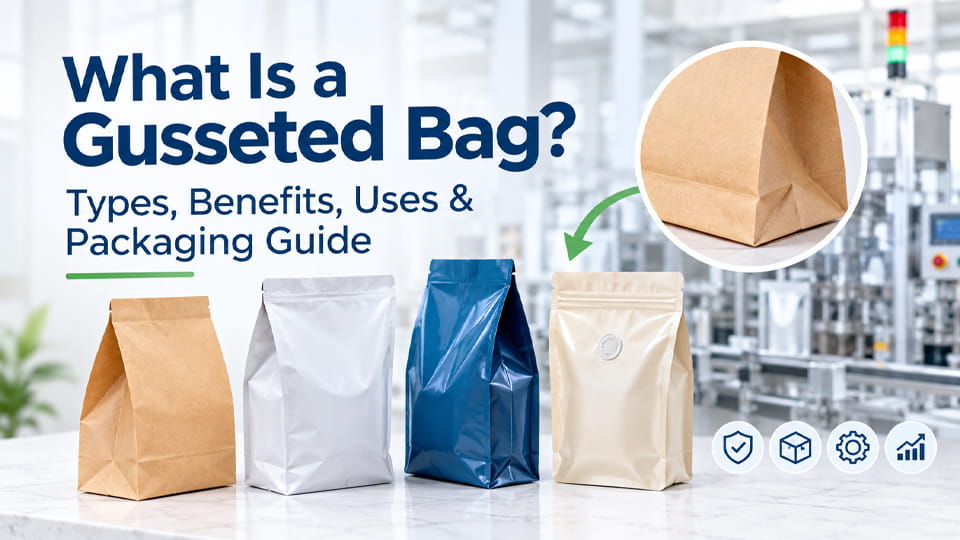
에이 gusseted bag 은 일종의 유연한 포장 that includes extra folds (마치) on its sides or bottom. These gussets let the bag expand outward when filled, so the pouch can hold much more volume and even stand upright. 다시 말해서, a gusseted bag is like a flat pouch that “opens up” to carry more product. Packaging experts note that gusseted bags “allow the bag to stand upright and accommodate more volume than a standard flat bag,” making them both space-efficient and eye-catching on shelves.
요컨대, gusseted bags combine the space of a box bottom with the flexibility of a pouch. 그것들은 의약품에서 널리 사용됩니다, 기능식품, 음식, and consumer products – anywhere you need extra capacity and stability (think coffee, 단백질 파우더, 애완동물 사료, 등.). 이 가이드에서는, we’ll explain how gusseted bags work, the different types (옆, 맨 아래, 평평한 바닥, M-gusset, 등.), 일반적인 용도, 재료, and how to choose and fill the right gusseted bag for your product – including what packaging machines to use.
What Is a Gusseted Bag and How Does It Work?
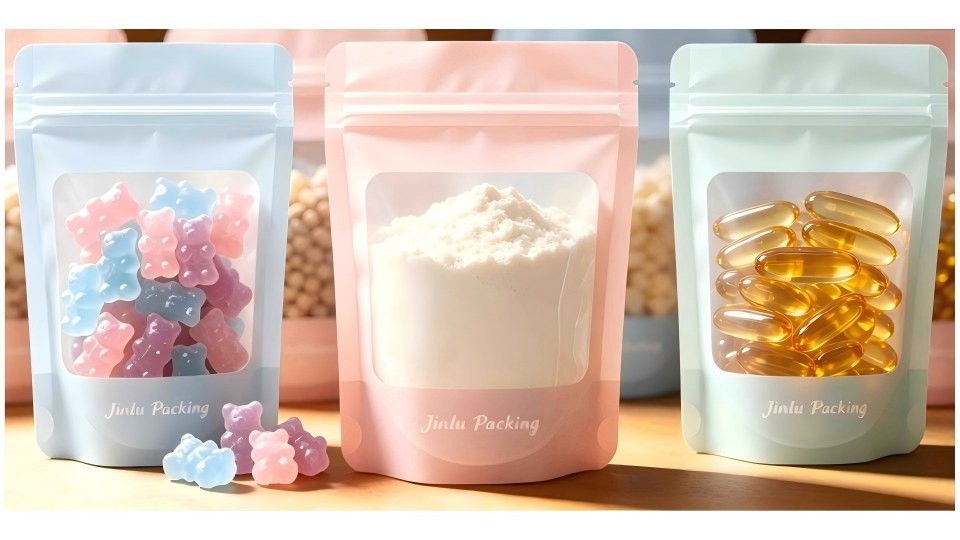
A gusseted bag (라고도 함 gusset bag 또는 gusseted pouch) has an extra piece of material sewn or folded into the sides or bottom. These gussets form expansion panels. When the bag is empty, it looks like a flat pouch. Once you fill it, the gussets unfold: 에이 side gusset expands the bag’s width, 그리고 bottom gusset unfolds to form a flat base. This simple structure gives the bag extra capacity without much extra material. 실제로, you get a 3D pouch that holds more and stands up better than a flat bag. 예를 들어, as Jinlupacking explains, gusseted bags “are specialised packaging materials distinguished by their expandable sides or bottoms” so they “stand upright and accommodate more volume than a standard flat bag”.
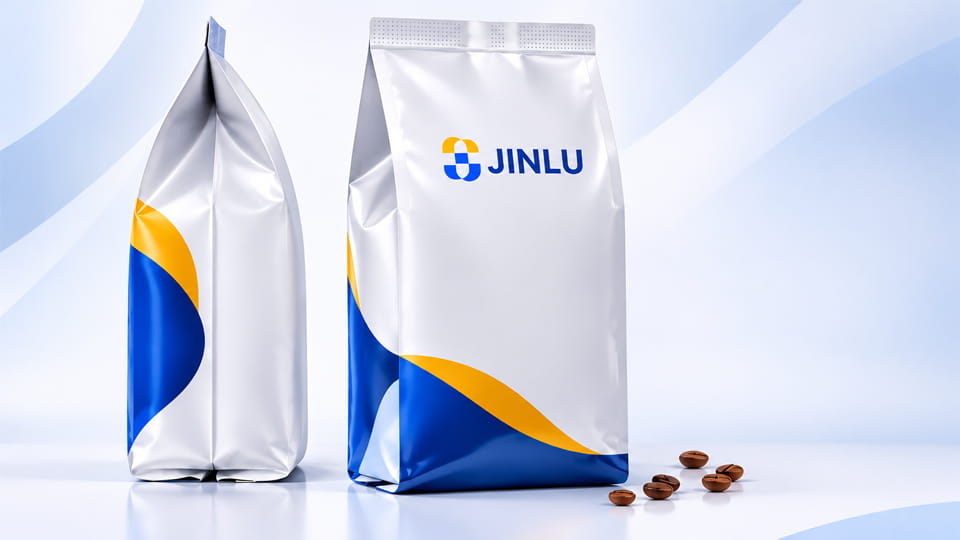
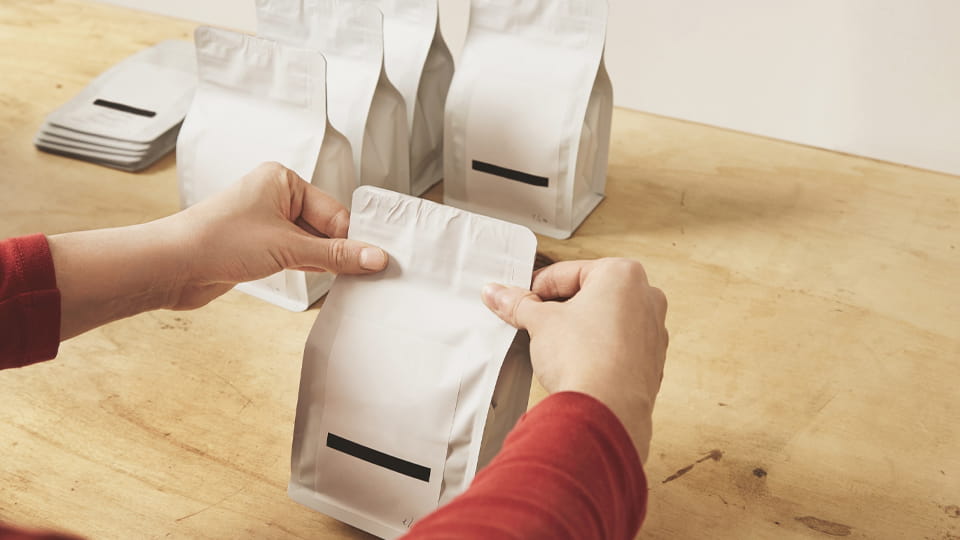
The illustration above shows a typical stand-up gusseted pouch. That extra space translates to higher capacity per bag. Compared to a flat pouch or “pillow bag,” gusseted bags don’t sit flat when full — they hold their shape. 하나의 포장 가이드 노트로, the purpose of a gusset is “to increase storage capacity without compromising durability,” making it easy to package bulkier items. This means more product per bag and a neater shelf display.
These gussets allow extra capacity. 그만큼 gusset width is literally “the depth of the expandable section” – it dictates how much the bag can balloon out to hold product. 간단히 말해서: a gusseted bag gains a “third dimension” compared to a standard flat bag. The effective 용량 of a gusseted pouch is a combination of its width, 키, and gusset depth. 예를 들어, a 6″×9″ bag with a 3″ side gusset can hold roughly twice what a 6″×9″ flat pouch can.
중요한 것은, gussets also improve 안정. A flat pouch (like a simple baggie) will flop over, but a gusseted bag – especially a bottom-gusset one – can often stand upright 채워지면. A gusseted bag “has folds on the sides, allowing it to hold more volume and sometimes stand unsupported”. This makes gusseted bags popular for shelf displays and for bulky contents (like coffee beans or large grains) that need structure.
대조적으로, 에이 flat pouch 또는 베개 가방 (with no gussets) is simpler and cheaper but holds less and must be supported by a box or standing pouch rack. With gusseted designs, you get a middle ground: more capacity and upright display without the complexity of rigid packaging.
What Are the Different Types of Gusseted Bags?
Gusseted bags come in several common formats. The gusset’s location and shape change the bag’s profile and use:
- Side Gusset Bags:These bags have gussets on both sides (left and right). When opened, they look like a tube or cylinder that widens. Side gusset pouches are still relatively slim, saving shelf space until filled. They are often chosen for coffee, 차, snacks and dry ingredients. A side gusset bag “allows expansion for greater volume” with a slim footprint. When filled, they provide extra depth for heavy or bulky products. 하지만, they may not stand up as well as bottom-gusset bags when empty.
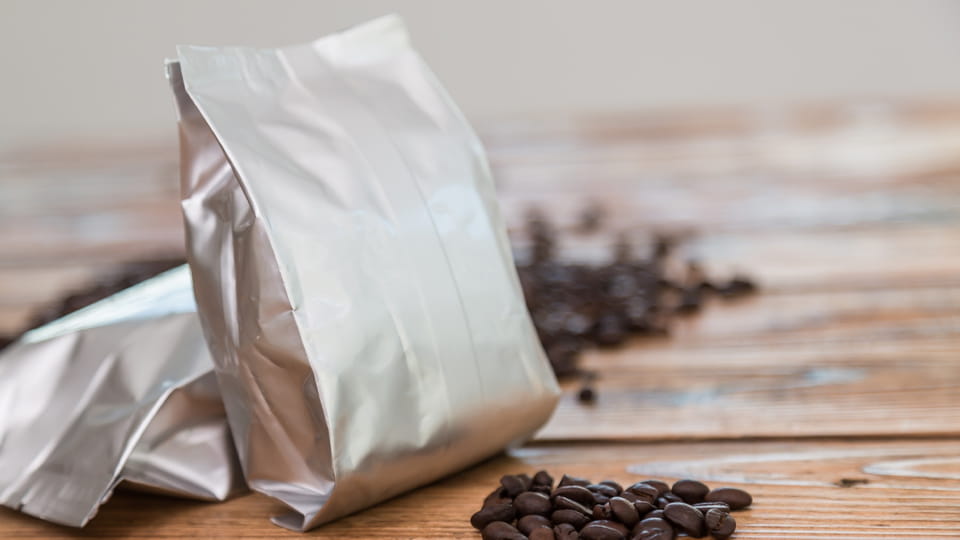
- Bottom (Base) 마치 가방:These have a gusset at the 맨 아래. 펼쳤을 때, the bottom gusset becomes a flat base, turning the bag into a self-standing pouch. Think of common stand-up coffee or soup pouches with a square bottom. These bags “expand outward at the base, allowing the package to stand upright,” which enhances shelf display. They are great for products where presentation matters (like baked goods, liquid foods, 소스) and can hold a variety of shapes (분말, 과립, 액체). The trade-off is they take up more shelf floor space when stocked and need a strong bottom seal for heavier contents.
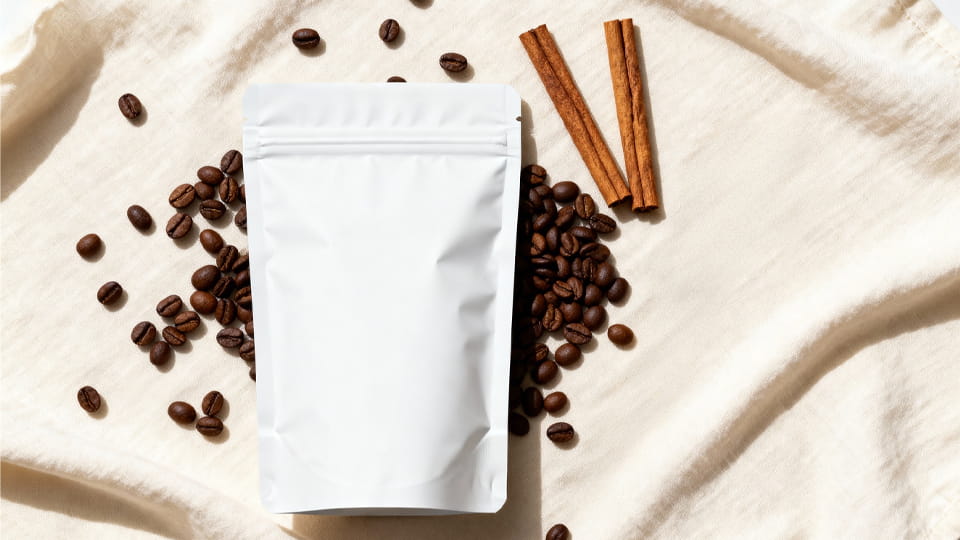
- Flat Bottom (Box) 마치 가방:A special case, often called a box pouch, has gussets on the sides and a flat, box-like base. It combines the stability of a bottom-gusset bag with expanded width. Flat-bottom gusset bags are fully rectangular (like a small box) and can stand fully upright even when empty. This design maximizes both volume and branding area – manufacturers note that box pouches “offer a larger storage capacity” and a broad surface on all sides for printing. They are ideal when you need the bag to look as stable as a box, and they often feature heavy-duty materials for maximum barrier and strength.
- Special Gussets (K-Seal, M-Gusset, 등.):There are other variations (예를 들어, “K-seal” or “M-gusset”) used in specific industries, but these are less common. 일반적으로, they involve different gusset shapes to handle very heavy loads or special form factors. We focus on the main three above since they cover most needs.
요약, 선택 side gusset vs bottom gusset depends on your priorities. Side gussets give capacity with a compact shape, while bottom gussets give a stand-up shape and premium look. 일부 제품 (like large pet food bags) even use both side and bottom gussets (like a box pouch) to maximize space.
What Are Gusseted Bags Used For?
Gusseted bags are extremely common across many industries. Any time a product needs more space inside its pouch – especially bulky, 세분형, or voluminous products – a gusseted design is a good choice. Some typical applications include:
- Coffee and Tea Packaging: One of the most classic uses. Coffee roasters love bottom-gusset (doypack) bags because they can hold a pound or more of beans and still stand upright on shelves. Often these bags include a one-way degassing valve, as noted by Jinlupacking, “allowing gases released by the coffee to escape the packaging, while keeping [그만큼] coffee beans fresh”. 비슷하게, loose tea leaves often use side-gusset or bottom-gusset bags to give volume and space for aroma.
- Snacks and Confectionery:작은 조각, 견과류, 팝콘, 사탕, cookies and other snacks frequently use gusseted bags. A stand-up pouch with a flat bottom or side gussets packs in a lot more chips than a flat pouch, and sits upright for a better display. Many candy makers use flat-bottom gusset bags so the colorful sweets fill out the pouch neatly. Clear gusset bags (with a plastic front) are popular to show off the product, while printed foil gussets protect from light and moisture.
- Pet Food and Dry Goods:Kibble, dog treats, cat litter, and large-bag bulk items often come in big gusseted poly bags. 예를 들어, an extra-large 10–20 kg pet food bag might use deep side gussets or a flat bottom so it can hold all that weight and still be somewhat stable. Industrial goods like powdered detergents and granular fertilizer can also be sold in heavy-duty gusset bags (보다 Machine Example 아래에).
- Pharmaceuticals and Nutraceuticals:Powdered supplements (단백질, 크레아틴, 비타민 블렌드), 약초 추출물, and even some bulk pills or capsule blends may use gusseted pouches. In these industries, gusseted pouches often have multiple layers for barrier protection. 하나의 가이드 노트로, you can find gusseted bags made from high-barrier films (PET/AL/PE) or foil for pharma to maintain sterility and extend shelf life. Jinlu’s packing machines note that our pouch machines meet FDA, cGMP and CE standards, making them suitable for “pharmaceutical, nutritional health products and other industries” that need tight seals.
- 분말 및 과립:From sugar, flour and spices to detergents, 분유, and industrial chemicals, any loose powder or granular product can benefit from a gusset bag. The extra space means the bag won’t burst as easily, and it can handle head pressure of heavy powder. Machines exist to fill gusseted bags with precise amounts of powder: 예를 들어, one packaging machine is designed to fill 1–2 kg powder in flat-bottom gusset pouches at around 40 부대/분. Another machine packages 500 g detergent powder in gusseted bags at ~70 bags/min. (These examples show the range: large fills for bulk powders vs smaller bag speeds.)
요약, if your product is bulky, 무거운, or needs to look substantial on the shelf, a gusseted bag is a strong candidate. Consumer-facing items (간식, 애완동물 사료, 커피) often use them for the display and volume, while industrial products (fertilizer, animal feed) use them for capacity and handling. Gusseted bags also allow custom features: 예를 들어, coffee or supplements often add resealable zippers, 눈물 노치, labels and one-way degassing valves to gusset pouches for convenience and freshness.
What Are the Benefits of Gusseted Bags?
Choosing a gusseted bag over a flat or pillow bag brings several advantages:
- Increased Capacity:The main benefit is more volume. A gusset lets the pouch grow in thickness, so you get extra internal space without making the bag taller or wider. Flat-bottom gusset bags “hold more product per square inch” of surface area. 제조업체를 위해, that can mean using less film for the same content or packing more product in the same shelf footprint.
- Better Shelf Presentation:Gusseted bags, especially bottom- or box-bottom designs, stand upright on a shelf. This improves visibility and makes for a tidier display. Customers can see branded panels and contents more easily. 예를 들어, clear side-gusset bags are often used to show snacks at point of sale. Wider gusset bags “provide greater visibility of the products inside” thanks to their shape.
- Efficient Storage & 수송:A gusseted bag packs flatter when empty but fuller when filled. When filled, their shape makes them stackable or palletizable in a more stable way. For items like coffee or grains, standing bags maximize vertical stacking. During shipping, gusset pouches often require no inner boxes – the bag itself is sturdy enough – saving on packing materials and space.
- Strong and Protective:Because they can include multiple layers (박, 애완 동물, 배리어 필름), gusseted pouches can offer excellent moisture and oxygen protection. The added seams (from gussets) can actually improve integrity. Many gusset bags are sealed with advanced heat-sealing machines and can include tamper-evident zippers or valve features for safety. In high-speed lines, a reliable gusset bag has a well-defined sealing area on the opened gusset edge, reducing chance of weak seals or leaks.
- 다양한 디자인:Gusseted bags allow more branding area (최대 5 panels in a flat-bottom bag). You can print on all faces or add windows on the front. Insert a resealable slider or valve, and you have a feature-rich package. The gusset shape itself is flexible: you can customize gusset depth to tweak bag capacity or shape, and design the pouch to open in a specific way.
요컨대, gusseted bags give you more “bang for your bag” – more content, better display, 그리고 유연성. 물론, they can be slightly more complex to produce than a plain bag, and may cost a bit more material, but for many products the trade-off is worth it.
What Materials Are Used to Make Gusseted Bags?
Gusseted bags are typically made from multi-layer flexible films 또는 라미네이트. No single material covers all needs, so designers stack layers. 일반적인 재료는 다음과 같습니다:
- PET/PE (Polyester/Polyethylene):A basic two-layer laminate. The outer PET provides a printable, stiff layer; the inner PE layer seals and contacts the product. PET/PE bags are clear or translucent, making them suitable for short-shelf-life snacks or when cost is key. They have low barrier to moisture/oxygen, so they’re best for products with quick turnover (말린 과일, 간식, 등.).
- PET/VMPET/PE:VMPET means “vacuum metallized PET” (a thin metallic coating on PET). This adds extra barrier against light, oxygen and moisture without using a full foil layer. A PET/VMPET/PE gusset bag is common for products like coffee, nut snacks or supplement powders. It’s usually shiny or opaque. It offers moderate protection (more than PET/PE), yet keeps weight and cost down.
- PET/Aluminum Foil/PE:For highest barrier needs, a foil layer is included. PET/AL/PE laminates block nearly all oxygen and light. This is used for truly sensitive products – e.g. premium coffee that must stay fresh for months, 고급 의약품, or any gusseted pouch where long shelf life (or very harsh conditions) 적용하다. The downside is cost and recyclability, but the gain is a long, stable shelf life for powders and chemicals.
- Kraft Paper/Kraft Foil/PE:Kraft paper gusset bags (often called kraft flat-bottom pouches) combine a paper exterior with inner barrier films. These look “natural” and are popular for organic foods or supplements. The kraft layer is mostly for appearance; the barrier comes from a metallized or plastic interior. Paper-faced gusset bags can still have zipper closures and are quite durable.
- Mono-material PE:더욱 더, polyethylene-only gusset bags are offered for recyclability. These use specially formulated PE films (often co-extruded) that can be heat-sealed and offer basic moisture barrier. A mono-PE gusset pouch (especially natural or opaque) is not as stiff or high-barrier as PET laminates, but it can enter PE recycling streams where available. Brands wanting a “recyclable gusset pouch” will choose this option, but must test that it still meets barrier and strength needs.
For any gusset bag, key material properties include: oxygen and moisture barrier (often measured as OTR and WVTR), heat-seal ability, 펑크 저항, and stiffness. 예를 들어, highly hygroscopic powders will need a lamination with low WVTR; oily products need grease-resistant films. Some standard LSI terms: multilayer film, 장벽 보호, heat-sealable layer, oxygen/moisture protection.
실제로, bag makers will often specify the exact laminate (예를 들어. “PET 15μm / AL 9μm / PE 90μm”) so that all required specs (and regulatory approvals like FDA or food-grade certificates) are met. 의심스러운 경우, packagers usually do lab testing with the actual product. 예를 들어, coffee requires a one-way degassing valve plus a barrier film to keep beans fresh, whereas salty snacks might only need PET/PE with nitrogen flushing.
How to Choose the Right Gusseted Bag for Your Product
Picking the ideal gusseted bag comes down to matching the bag design and material to the product’s needs and your line’s requirements. Here are the main factors:
- 제품특성:What are you packing? Is it a fine powder, 거친 과립, 액체, 또는 태블릿? For dusty powders (예를 들어. 단백질, 향료), you need strong seals and maybe an auger filler; for free-flowing granules (견과류, 염주) you might use volumetric fillers. The bag must hold the weight – a 5 kg bag of powder needs thicker film than a 50 g sample. Also consider moisture and aroma: Does it spoil quickly? Then you need a high barrier (박) or a valve. If it’s oily or aromatic, 호환성 보장 (some materials can’t handle fats without wicking).
- Bag Size and Gusset Type:Estimate the final 용량 and shape. A heavy 1 kg product might best fit in a 1 kg bottom-gusset pouch, whereas a slender 200 g product could use a smaller side-gusset bag. Select gusset depth accordingly: deeper gussets mean bigger capacity but use more film. As one guide shows, format notation differs: a side-gusset bag is measured Width × Gusset × Length, while a bottom-gusset uses Width × Length × Gusset. (예를 들어, a 6″×9″ bag with 3″ gusset is written 6×3×9 for side-gusset style.) Be sure your machine can handle the chosen dimensions.
- Barrier and Seal Requirements:Based on shelf life, decide on barrier. Short-lived, dry goods might only need PET/PE. High-risk products (like some supplements or dry tea) often use PET/VMPET/PE or full foil. Also think seal robustness: will the seals see stress? Gusseted bags often have large seal areas, so the sealing temperature, 체류 시간, and surface area must be right for that laminate.
- Add-on Features:당신은 지퍼, tear notch, spout or degassing valve? Many gusset pouches offer all these. 에이 resealable zipper is common on snacks and pet foods for user convenience. Degassing valves (as noted in coffee packs) let fermentation gases escape. Spouts (for liquids or powders) and hang holes are also possible. Decide if these are essential for your market.
- Packaging Equipment Compatibility:Crucially, ensure your chosen bag type works with your filling/sealing machinery. Some vertical form-fill-seal (Vffs) machines can 형태 and fill gusseted bags from a roll of film. Others require pre-made pouches. Jinlu’s premade pouch machines, 예를 들어, can handle premade gusseted bags with or without zippers. Check if you have (or will buy) a premade pouch filler, VFFS 기계, 아니면 둘 다. The bag’s intended fill weight and speed must match the machine’s capacity. 실제로, always test a sample pouch on your line: try filling, 폐쇄, and verifying the seal to catch any issues early.
A final key point: 규정 준수. If you’re packaging food, supplements or pharma, make sure the bag material and process meet regulations (FDA, USDA, CE, CGMP, 등. 필요에 따라). In many industries this is critical. 예를 들어, a label on Jinlu’s machine page reminds us that high-precision pouch machines “meet the production requirements of cGMP, CE, FDA, and EMA” for pharma/nutraceutical lines. So always keep quality and certification in mind when choosing materials and equipment.
How to Measure a Gusseted Bag
When ordering or producing gusseted bags, specify the dimensions clearly. A gusseted bag’s size is usually written as Width × Depth × Height (또는 Width × Height × Depth depending on type). Here’s how:
- 너비 (w):The opening width of the pouch when flat (excluding handles, 있다면). For a side-gusset bag, this is the measurement across the front when the gussets are tucked in. For a bottom-gusset bag, it’s across the top of the bag.
- Length/Height (엘):For bottom-gusset bags, this is the distance from the top opening down to the bottom (with bottom gusset folded in). For side-gusset bags, it’s the height from top to bottom (gusset folded). 다시 말해서, it’s how tall the bag will be.
- Gusset Depth (G):The key addition. This is the measurement of how deep the bag can expand on the sides or bottom. 을 위한 side-gusset 바지, you give Width × Gusset × Length (예를 들어. 6″×3″×9″). 을 위한 bottom-gusset 바지, 그것은 Width × Length × Gusset. 본질적으로, gusset depth = the fully opened fold width (half of the total expanded width on a side gusset; or depth of the box base on a bottom gusset).
- Volume and Capacity:경험상, the bag’s capacity (how much it can hold) is roughly Width × Height × (Gusset Depth ÷ 2) for side gusset, or Width × (Gusset ÷ 2) × Length for bottom gusset. (This is because the gusset depth is the double-fold width.) 예를 들어, a 6×3×9″ side-gusset pouch has an approximate filled width of 6″ + 2×3″ = 12″ when bulging out. It’s often easier to sketch or use CAD software with dimensions to calculate volume precisely.
Always double-check measurements with your supplier or packaging engineer. It’s easy to mix up the order (W×H×G vs W×G×H), so confirm: most suppliers follow the convention above (like this packaging guide does). 의심스러울 때, include a labeled diagram for your production drawing. The better your specs, the fewer errors in manufacturing.
How Are Gusseted Bags Filled and Sealed on Automatic Packaging Machines?
In modern production, gusseted bags are usually handled by automated pouch-filling machines. Two common approaches are:
- 미리 만들어진 파우치 충전 기계:As the name implies, these use 미리 만들어진 거싯 가방. The bags can come from reels or loaded by hand. The machine’s functions include bag picking (or bag feeding), opening the bag, filling the product, then heat-sealing the top (and sometimes bottom) of the bag. For gusseted bags, specialized bag holders and seal jaws accommodate the extra pleats. 진루의 미리 메이드 파우치 포장 기계 is a prime example: it can handle stand-up, 지퍼, 베개, 그리고 gusseted pouch types. It automatically loads a gusseted pouch, fills it (예를 들어. 가루로, 과립 또는 심지어 액체), 그런 다음 밀봉합니다.. Jinlu notes our machine fills products like 커피, 구미, 분말, 과립, 향 주머니, 액체, 그리고 더, achieving about ±0.4% accuracy. This kind of machine is ideal if you already source pre-made gusset pouches from a bag printer.
- 수직 형태-충진-밀봉 (Vffs) 기계:These create the bag from a roll of flat film with gusset forming attachments. 에이 VFFS 기계 can be equipped to form side gussets or create a flat bottom. In one setup, the film is folded over and seals are made so that when the product is fed in, the film unfolds into a gusseted shape. 예를 들어, 일부 멀티 헤드 계량기 or volumetric filler systems drop product into a bottom gusseter that folds a flat film into a pouch with a box bottom as it fills. Advanced VFFS can “support various pouch formats, such as flat bottom or gusseted bags, all from a single roll-fed system”. That means with the right forming plate and sealing jaws, you can go from roll stock to closed gusset bag in one pass. VFFS is often chosen when you want full automation and no pre-made bags. It works for many dry products (분말, 과립, snack items) and can reach speeds of tens to hundreds of bags per minute, depending on size and filler.
- Hybrid or Specialized Equipment:Some lines use in-line fillers (auger fillers for powder, cup fillers for granules) combined with pouch loaders or custom machinery for gussets. There are also monoblock machines specifically designed for large gusseted pouches (예를 들어, filling big 1–5kg gusseted bags). The key is to ensure the bag unfolds correctly during filling and the seal area (across the top or bottom gusset) is heated uniformly. Modern machines include sensors to check fill weight and seal integrity on the fly.
What to Check on Your Machine: Whatever approach you use, verify the following before full production:
- Bag Compatibility:The machine’s handbook should list if it supports side gusset, bottom gusset, or flat-bottom pouches. Jinlu’s machine explicitly lists “gusset” as a supported pouch type.
- Seal Conditions:Gusseted bags often have more heat-seal area (especially a bottom gusset bag has a large flat bottom seal). Make sure your jaws cover the entire seal and can provide enough pressure and heat over that area.
- 필러:Powder products usually use auger fillers on VFFS or premade machines; granules might use cup/volumetric fillers or multihead weighers. Ensure the dosing system is matched to your product’s flow.
- 전환:If you plan multiple bag sizes, verify that switching bag dimensions (and gusset depths) can be done without massive downtime. Some modern machines have tool-free changeover kits for pouch lengths and widths.
- 테스트:Always run sample bags first. Check that the gussets open fully, that the bag stands if it should, and that there’s no product leakage at the seams. Also confirm the finished bag matches your dimension specs (especially gusset depth) so volume is correct.
By coordinating bag design with the right machinery, you ensure a smooth packaging process. Jinlu Packing’s literature points out that using advanced machinery (like our pouch packers) “increases efficiency” and “ensures consistency in packaging”. 실제로, a well-set-up gusseted bag line will be fast (often dozens of packs per minute) and stable, letting you meet production goals with minimal waste.
Gusseted Bags vs Stand-Up Pouches vs Flat Pouches
It’s worth contrasting gusseted bags with two other flexible pack formats:
- 스탠드업 파우치 (도이팩):A stand-up pouch is basically a bottom-gusset gusseted bag (평평한 바닥). Every stand-up pouch is technically a gusset bag (with bottom gusset), but the term usually implies a specific style – often with a gusset that gives a true flat bottom. Gusseted bags ~할 수 있다 be stand-up (if the design includes the flat base). 하지만, not all gusseted bags automatically stand up well: a shallow side-gusset pouch without a reinforced base may still tip over if top-heavy. The advantage of a true stand-up pouch (평평한 바닥) is maximum stability.
- 평평한 (3-측면 또는 4면 씰) 파우치:These have no gussets – just a single folded sheet sealed on the sides. They are simpler and use less film, but they pack less volume and must lie flat or be supported. Flat pouches are easier on simple pouch machines but usually aren’t chosen for bulky or heavy items.
- 어느 것을 선택할 것인가?If your product is light and volume is low (예를 들어. small items, or if you just need a lightweight bag), a flat pouch may suffice. But if you need extra space or upright display, gusseted is better. Side gusset bags are good for moderate volume without needing a rigid base (예를 들어. bulk produce). Bottom gusset/flat-bottom (정정 당당한) bags are best for making the bag self-supporting (think coffee, high-volume snacks). 일반적으로, ~을 위한 분말과 과립, 거싯 가방 (side or bottom) are common because of the extra fill they can hold and the stable standing. For premium or high-end consumer goods, flat-bottom gussets also offer a “premium look”.
하나의 포장 가이드 노트로, “a gusset allows more product volume while maintaining manageable external dimensions,” which often makes gusseted packaging preferable for many markets. 실제로, talk to your packaging supplier: they will usually suggest gusseted options if they see you have leftover headspace in a flat bag, or if you need standing ability.
결론 및 다음 단계
Gusseted bags are a versatile solution whenever you need extra capacity and a professional look in flexible packaging. By adding side or bottom folds, 그들 pack more product 그리고 stand up for display, which is why they are so common for coffee, 차, 간식, 애완동물 사료, pharma powders and more. They combine efficient material use with strong shelf presence.
If you’re deciding on packaging, consider the product volume, gusset type (side vs bottom), and the needed film barrier. Work with a packaging engineer or supplier to size the bag correctly (너비, 키, 마치) and choose the right materials. Then match it to a filling machine – for example, a premade pouch filler or a VFFS machine – that can handle your gusseted bag style.
포장을 업그레이드할 준비가 되었습니다.? 그리고 Jeinlu 따기, we offer automated solutions for gusseted bag production. Our pouch-packaging machines can handle a variety of side-gusset and bottom-gusset bags for food, pharma and industrial products. We can also advise on bag materials and integrate features like zippers or valves. 지금 Jinlu Packing에 문의하세요. to find the ideal gusseted bag and filling system for your product.
FAQs on Gusseted Bag
What is the purpose of a gusseted bag?
It allows a pouch to expand (more volume) and often stand up, making it ideal for bulky or heavy products.
How is a side-gusset bag different from a bottom-gusset bag?
A side-gusset bag has folds along the sides, giving extra width; a bottom-gusset bag has a fold at the base, giving a flat bottom. The choice depends on which side of the bag you want to expand or stabilize.
Are gusseted bags better than flat bags?
“Better” depends on needs. Gusseted bags hold more and can stand up, which is often an advantage. Flat bags are simpler and cheaper but hold less and must lie flat or be boxed. Many brands pick gusseted for the extra capacity and display benefits.
Can gusseted bags stand upright?
Yes – especially flat-bottom (정정 당당한) gusset bags. If designed with a wide enough gusset, even a side-gusset bag can sit up somewhat. 일반적으로, gusseted bags have greater standing stability than flat pouches.
What products are suitable for gusseted bags?
Bulk and voluminous products: 커피, 차, 간식, 견과류, 애완동물 사료, 사탕, 작살, 분말 (단백질, 약) and many dry goods. Essentially any product where extra volume and a stable package are desired.
Are gusseted bags suitable for powder packaging?
Absolutely. 분말 (like flour, 단백질, 세정제) often use gusset pouches. The extra space prevents spillage, and many automated machines (auger fillers with gusset bag sealers) are designed for powder in gusset pouches. Just ensure the material has a good moisture barrier if the powder is sensitive.
What materials are used to make gusseted bags?
Common laminates are PET/PE, PET/VMPET/PE, PET/Al/PE, kraft/foil/PE, and mono PE. PET/PE is for low-barrier uses; PET/Al/PE (박) is for high-barrier uses. The outer layer is usually PET or kraft (for print/protection) and the inner layer is PE (for seal).
Can gusseted bags be heat sealed?
Yes, like other plastic pouches they are designed for heat sealing. The inner layer of the laminate (often PE) is heat-sealable. Sealing a gusset bag may involve slightly different jaw shapes, but modern machines account for that. As long as the films are compatible, gusseted pouches seal just as securely as flat ones.
Can gusseted bags be used with automatic packaging machines?
Yes. Premade gusseted bags run on automatic pouch packing machines (Jinlu’s premade pouch packer is an example). Gusseted bags can also be formed on VFFS machines equipped with gusset-forming tools. 두 경우 모두, ensure your machine is set up for the bag style and size you need.
How do you measure a gusseted bag?
Use the convention Width × Gusset × Length. For a side-gusset bag write W×G×L (예를 들어. 8″×3″×10″), meaning 8″ wide, 3″ gusset (each side), 10″ tall. For a bottom-gusset bag write W×L×G (예를 들어. 8″×10″×3″). Always confirm measurement order with your bag supplier and consider including a diagram.
참고자료:
1.유연한 장벽 재료의 밀봉 강도에 대한 표준 테스트 방법 —— ASTM F88
2.Gusseted flexible package with shaped sides and methods of making the same —— 구글 특허
3.열 밀봉된 유연한 식품 포장의 밀봉 무결성에 영향을 미치는 요인 이해: 리뷰 —— WILEY 온라인 도서관
4.Sealing system and method for gusseted and zippered bags —— 구글 특허
5.Method of forming a gusseted stand-up pouch —— 구글 특허
6.Method of manufacturing a bottom gusseted pouch —— JUSTIA Patents