×
온라인 서비스
✉️이메일: 💬WhatsApp: +86 18011793320
💡
  • 블로그
  • 코팅된 정제와 코팅되지 않은 정제: 차이점, 용도, 이익 & 제조 가이드

코팅된 정제와 코팅되지 않은 정제: 차이점, 용도, 이익 & 제조 가이드

Tablet dosage forms come in two basic types: 코팅 그리고 코팅되지 않은. 안 uncoated tablet is a simple compressed pill without any additional shell – just the compressed ingredients (active drug plus excipients). 에이 코팅 된 정제, 대조적으로, has a thin outer layer or shell applied after compression. This coating can be a polymer film (필름 코팅), sugar-based shell (설탕 코팅), enteric layer, or other functional film. The coating serves functions beyond look – it can protect the drug, 마스크 맛, 제어 릴리스, or improve swallowability.

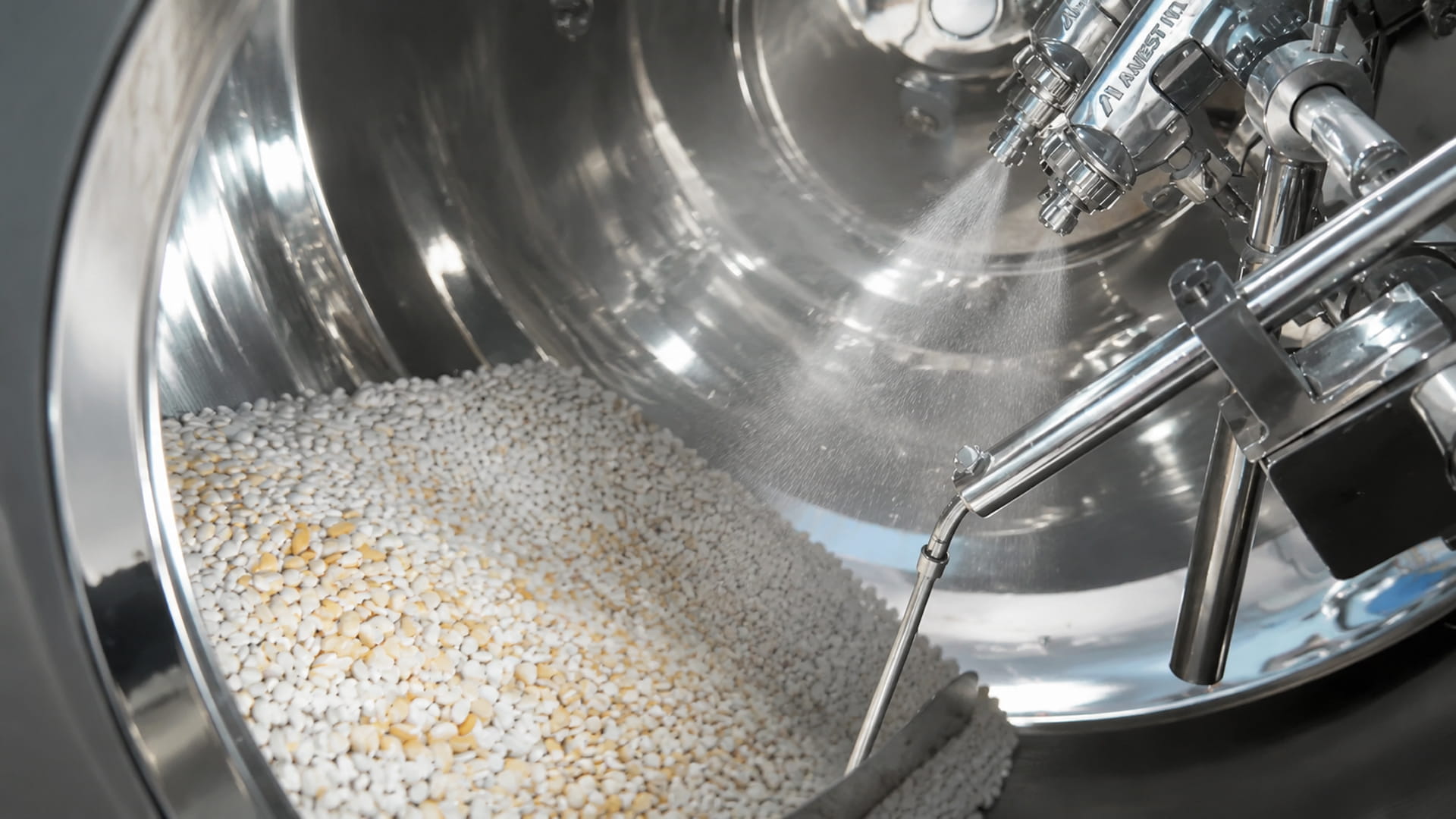
예를 들어, 수치 1 shows how a film coating machine applies a uniform polymer film to tablets, creating smooth, glossy pills. This coating can make swallowing easier and protect the tablet core from moisture and air. 대조적으로, plain uncoated tablets are matte, often chalky, and more vulnerable to the environment.

필름코팅을 적용한 고속정 코팅기

수치 1. A high-speed tablet coating machine applying a film coating. The coating adds a protective, smooth layer to each tablet, improving appearance and stability.


What Are Coated and Uncoated Tablets?

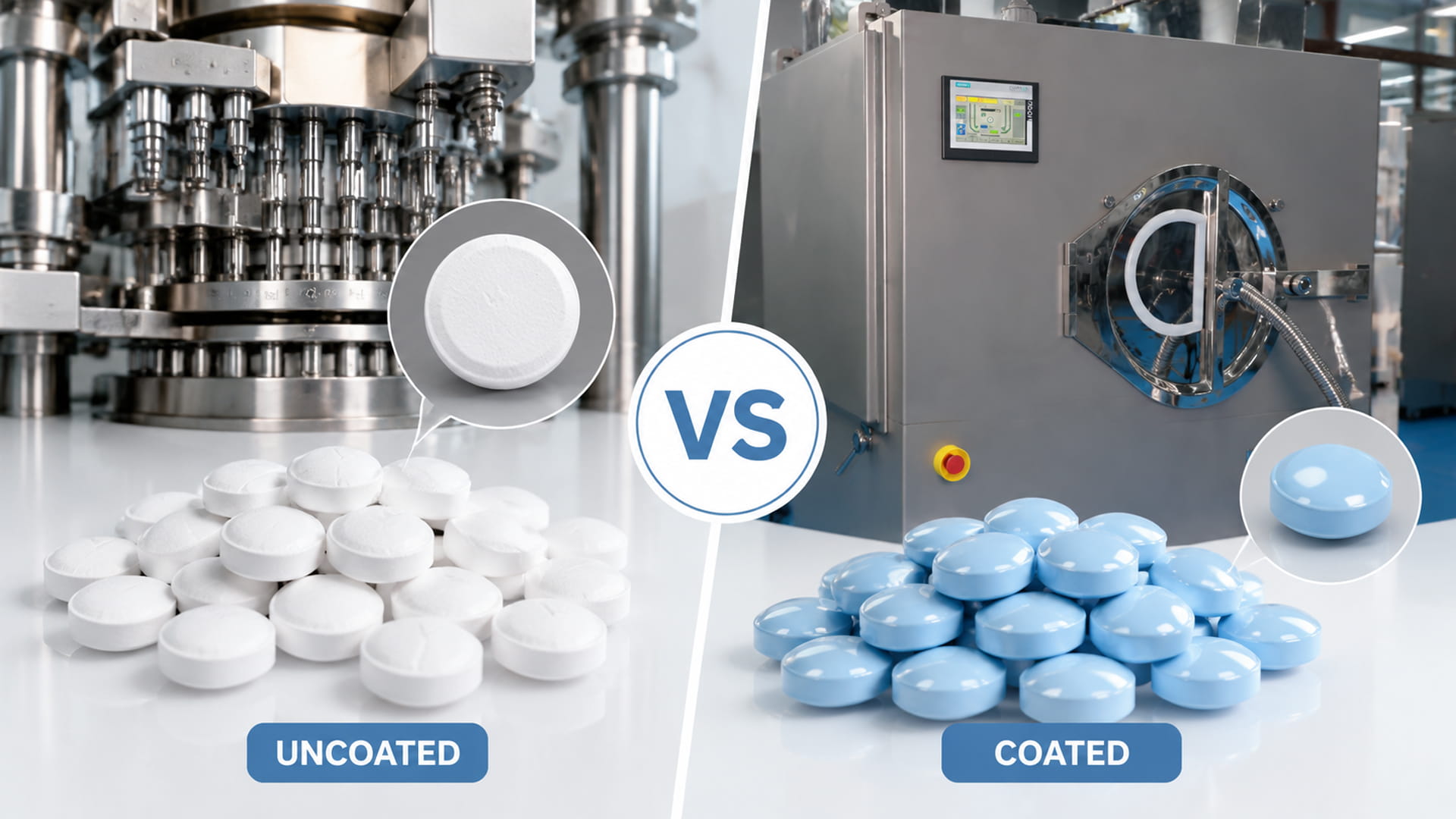
  • 코팅되지 않은 정제: These are the simplest form. 압축 후, the tablet core is left “naked” with no shell. They are quick and cheap to make. Uncoated tablets often have a rough texture and may taste bitter or feel chalky, because nothing covers the active ingredients. Without a shell, they disintegrate and release their drug immediately in the stomach. This makes them suitable when fast action is needed and there is no stability or taste issue.
  • 코팅 된 정제: These have an extra layer applied after compression. The coating could be a thin polymer film, a sugar syrup layer, or special enteric polymers. Coated tablets are usually smoother, often colorful or glossy. The coating can be functional (for protection or release) or aesthetic (for branding or easy swallowing). Common types of coated tablets include film-coated tablets, 설탕으로 코팅된 정제, 그리고 장 코팅 된 정제.

코팅 및 코팅되지 않은 정제 - 차이점

예를 들어, 에이 필름코팅정 has a thin polymer film (usually hydroxypropyl methylcellulose or similar) that doesn’t bulk up the pill. 에이 sugar-coated tablet has a thick, sweet syrup shell – more laborious to make and much heavier. 안 enteric-coated tablet uses pH-sensitive polymers so it passes through the stomach and dissolves in the intestine. Each coating type has its own pros and cons (see the table below).

코팅 유형 설명 Primary Uses
Uncoated No coating; tablet core exposed Fast release, 비용에 민감한, stable drugs
Film-coat Thin polymer film (예를 들어. HPMC) 맛 마스킹, moisture/light protection, 쉽게 삼키는, 브랜딩
Sugar-coat Thick sugar syrup layers Strong taste masking, smooth glossy finish, often in pediatrics
Enteric-coat pH-sensitive polymers (Eudragit) Protect stomach or drug; delayed intestinal release
기타 Specialized/controlled-release Sustained release, targeted delivery, 등.

테이블 1. Comparison of uncoated vs coated tablets and common coating types.


Why Are Tablets Coated?

Coating isn’t just for looks – it’s a functional step in tablet manufacturing. Pharma engineers ask, “Can the tablet perform without coating?” If yes, an uncoated tablet is simpler and cheaper. But coatings are added whenever there’s a technical benefit. Major reasons to coat tablets include:

  • 맛 마스킹: Many active drugs taste bitter or pungent. A coating hides this unpleasant taste and odor. 예를 들어, a sour probiotic or bitter pain reliever is much easier to swallow when wrapped in a tasteless film.
  • Easy Swallowing: Coatings provide a smooth, often rounded surface. Patients report coated pills “glide down” with less irritation. This can boost compliance, especially for large tablets or when treating children and seniors.
  • 안정 & 보호: Coatings form a barrier against moisture, 산소, 그리고 빛. This means sensitive ingredients (like vitamins or enzymes) stay potent longer. 수분에 민감한 약물의 경우, a coating (even a thin film) can drastically improve shelf life.
  • 통제된 방출: Certain coatings modify where and when the drug is released. 장용 코팅 delay release until reaching the intestine. Other coatings (thicker films or special polymers) can even sustain release over hours.
  • 브랜딩 & Identification: Coated tablets can be colored, 인쇄된, or polished. This not only makes them eye-catching, but also reduces dispensing errors. A distinct color or logo on a coated pill helps patients (그리고 약사) distinguish between medicines.

요컨대, coating adds functionality. It’s not done arbitrarily, but whenever taste, 안정, or release control matters. 업계 가이드 중 하나는 다음과 같습니다., “coating is introduced only when it provides a clear functional benefit”.


Advantages of Coated Tablets

Coated tablets combine durability and user-friendliness. 주요 혜택은 다음과 같습니다:

  • Improved Stability: The film or coating shields the drug core from environmental factors. This means less degradation from heat, 습기나 빛. Many API’s that degrade quickly can be safely formulated as coated tablets.
  • Masking Taste & Odor: A well-applied coating can completely hide bitter or metallic flavors. 환자 (especially kids) are far more likely to take medication that doesn’t make them grimace.
  • 더 쉽게 삼키기: The glossy surface and subtle roundness of coated tablets reduce throat friction. 실제로, this means better patient compliance – a critical factor in treatments requiring long-term therapy.
  • Better Appearance & 브랜딩: Coatings enable colorful, uniform finishes. This not only looks professional but also prevents confusion between brands. 예를 들어, one company’s pills might be blue and oval, another’s yellow and round – reducing mix-ups.
  • Flexible Release Profiles: Especially for film and enteric coatings, pharmaceutical scientists can fine-tune drug release. Enteric-coated tablets avoid stomach irritation by dissolving in the intestine, while other polymer films can delay or extend release times.
  • Reduced Dusting and Chipping: A coating holds the tablet core together, lowering breakage during packaging and shipping. This leads to fewer batch rejects and better uniformity.

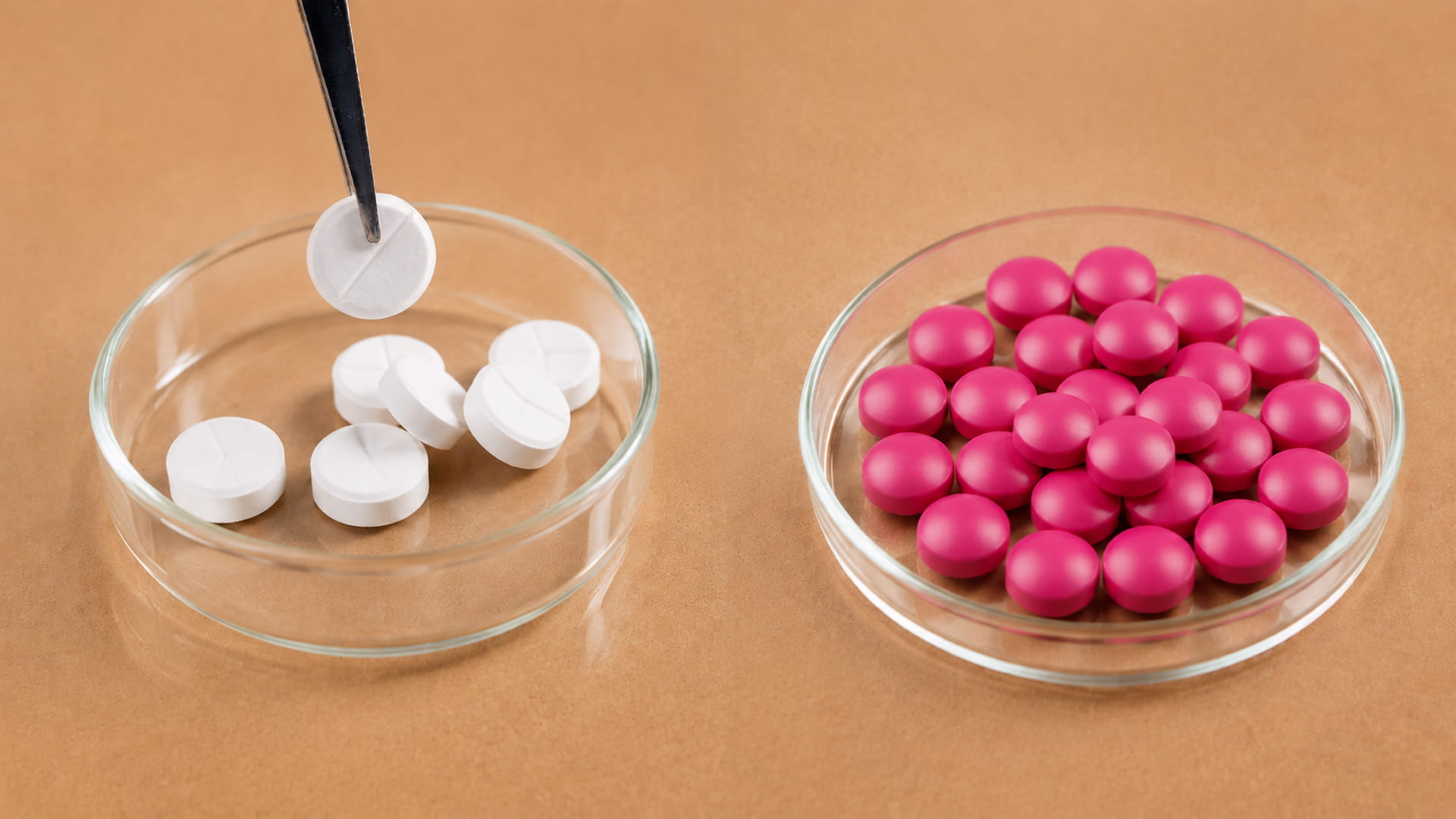
수치 2 compares an uncoated vs a film-coated tablet. The coated tablet (오른쪽) clearly has a smooth, shiny exterior that masks any imprint or roughness on the core.

수치 2. Uncoated (왼쪽) vs film-coated (오른쪽) 정제. The film-coated tablet has a smooth, uniform finish that masks the core’s color and texture. Coatings like this improve swallowability and protect the drug inside.

The benefits of coatings are easy to explain: coated tablets often “look better, 더 오래 지속, and go down easier” than plain pills. These advantages mean that even though coating adds steps and cost, it can reduce problems later (손상, 불만, early expiry). A food-supplements CMO notes that while “coated tablets involve additional materials, labor and time, coating may reduce rejected batches, 고객 불만, and post-market quality issues”. 장기적으로는, coated tablets often save money across the product lifecycle.


Advantages of Uncoated Tablets

물론, plain tablets still have their place. Uncoated tablets offer simplicity and cost-effectiveness:

  • 비용 절감 & Faster Production: Skipping coating means one fewer process step. Production time, equipment needs, and validation efforts all drop significantly. For very cost-sensitive products (예를 들어. bulk vitamins or generic drugs), this can be a major advantage.
  • Immediate Disintegration: Without any barrier, an uncoated tablet can dissolve and release its active ingredients very rapidly. This is useful when quick drug action is needed, or when the API is already palatable.
  • Simpler Quality Control: An uncoated tablet has fewer variables to monitor. There’s no risk of coating defects (like peeling or cracking), so sometimes it’s easier to ensure consistency batch-to-batch.
  • Suitable Formulations: Some formulations do not require coating at all. If the drug isn’t bitter, the blend is stable, and the tablet meets all handling specs, an uncoated version may be just fine. Industry experts say, “when a formulation is stable and palatable, uncoated tablets are often preferred due to simpler and more cost-efficient manufacturing”.

간단히 말해서, an uncoated tablet is “easy and cheap to make”. It’s a good baseline starting point in feasibility studies. The pharmacist blog also notes that uncoated tablets are cheaper and less time-consuming to produce, and they dissolve faster releasing medicine quicker.

하지만, these gains come with trade-offs: an uncoated tablet “leaves the drug core vulnerable” to environmental damage, and may be less acceptable to patients. So manufacturers weigh these factors: if coating isn’t needed, they’ll likely skip it.


Types of Tablet Coating and When to Use Them

Coatings aren’t one-size-fits-all. The industry uses several major coating types, each with specific uses and benefits:

  • 필름 코팅: The most common modern method. Tablets are sprayed with a solution of polymers (like HPMC, PVA, or Eudragit), 가소제, and pigments. This creates a thin, durable film on each tablet. Film coating is fast, 자동화된, and adds only ~2–5% weight to the tablet. It’s ideal for taste masking, moisture/light protection, and aesthetics without bulky increase. Routine medications, vitamins and supplements are often film-coated because of these balanced advantages.
  • 설탕 코팅: A traditional method using multiple layers of sugar-based syrup. The result is a thick, 사탕같은 껍질. Sugar-coated tablets have a glossy, edible finish and excellent taste masking. They have been used for multivitamins and pediatric tablets. 하지만, sugar coating is labor-intensive (many steps) and can increase tablet size by 30–50%. It’s now less common than film coating, reserved mostly for chewables or special cases where a very smooth, sweet outer is needed.
  • 장내 코팅: Uses polymers that resist stomach acid. These tablets pass through the stomach intact and dissolve in the higher-pH intestines. 장내 코팅 is vital when the drug could irritate the stomach lining (예를 들어. 아스피린, NSAID) or when the API is destroyed by gastric acid (예를 들어. some enzymes). For such use-cases, an enteric-coated tablet ensures the drug is released in the right place.
  • Special Coatings: Beyond these, there are coatings for controlled or sustained release, moisture-barrier coatings, taste-blending layers, 등. 예를 들어, a sustained-release tablet might have a water-insoluble film to slow drug diffusion, while a “color coating” might just be thin colored film for branding.

Film-coated vs Sugar-coated Tablets: 요컨대, film coatings are thin, 튼튼한, and suited for high-speed production. They have largely replaced sugar coatings because they add minimal bulk and apply quickly. 하지만, sugar coatings still deliver superior taste masking and a classic look, so they appear in products like chewable vitamins where taste is crucial.

Film-coated vs Enteric-coated Tablets: The key difference is release location. An immediate-release film coating dissolves in the stomach and often just improves swallowability or stability. An enteric coating delays dissolution until intestinal pH. 예를 들어, a heartburn medication might use an enteric coat to avoid the stomach, whereas a daily vitamin might use a regular film coat..


Tablet Coating Process Overview

How do manufacturers actually coat tablets? It’s a carefully controlled spray-and-dry operation. 기본 단계는 다음과 같습니다.:

  1. Tablet Core Preparation: 첫 번째, the tablet cores are produced by a tablet press machine (회전식 태블릿 프레스). They must be strong and robust enough to handle coating. (Tablets too soft or too brittle can crumble during coating). Ingredients like overuse of magnesium stearate or high levels of moisture-sensitive excipients are managed carefully, because these can harm the coating process. Tablets usually are slightly under-dried so that the coating adhesive sticks well.
  2. Coating Solution Preparation: Separately, the coating “recipe” is mixed. Typical film-coating formulations blend a polymer (예를 들어. HPMC), 가소제 (예를 들어. 트리에틸 구연산염), 그림 물감 (예를 들어. 이산화티타늄), 그리고 물 (or solvent). These ingredients are stirred until fully dissolved or suspended. 매끄러운 얻기, lump-free suspension is critical – otherwise spray nozzles can clog.
  3. Equipment Setup: The prepared tablets are loaded into a tablet coating machine. Common machines are pan coaters (rotating drums) or fluid-bed coaters. The coater’s parameters (기류, 온도, 드럼 속도, 살포율) are configured for the batch size and coating material. Modern coaters have stainless-steel drums with perforations, baffles for mixing, and computer controls for precision.
  4. Spray & Dry Cycles: With warm, filtered air flowing, the coating solution is sprayed as a fine mist onto the tumbling tablets. Each droplet wets the tablet surface momentarily, then heat evaporates the solvent almost immediately. This rapid dry leaves behind a very thin layer of film on each tablet. The process repeats hundreds of times (coat, 마른, 혼합, 반복하다) until the desired film thickness (often measured as % weight gain) is reached. Operators monitor weight gain and visual appearance throughout. Good machinery ensures even distribution, so all tablets get coated uniformly.
  5. 냉각 & 해고하다: Once coating is complete, tablets are cooled in the machine to set the film. Cooling solidifies the polymer matrix. Afterward, the tablets are removed, 검사를 받은, 그리고 포장. The final result is a batch of coated tablets that meet the target specifications (무게, 색상, 용해, 등).

Modern tablet production uses equipment like rotary tablet presses (for forming cores) and high-speed coating machines (for applying film or sugar shells). A tablet press can produce hundreds of thousands of uniform cores per hour. Then a specialized coating machine – basically a stainless steel drum with spray nozzles and precise airflow – applies the coating solution to the moving tablets.

Each of these steps must be tightly controlled. Too much spray or too hot air can cause defects like “orange peel” texture or peeling film. That’s why advanced coater machines (JinluPacking의 것과 같은) have automatic PLC controls, precise spray nozzles, and even real-time monitoring to adjust parameters. 결국, precision is key: every tablet must have the right coating thickness for consistent performance.


태블릿 코팅 기계 & 장비

When moving from laboratory development to commercial tablet production, choosing the right tablet coating machine becomes a critical decision. Production managers usually evaluate equipment based on coating uniformity, 용량, 자동화 수준, 청소 요구 사항, and maintenance costs. The most common tablet coating equipment includes:

  • 정제 프레스기: This is what makes the tablets before coating. 에이 회전식 태블릿 프레스 takes powder blends and compresses them into uniform tablets. Modern press machines (like JinluPacking’s ZP series) can produce hundreds of thousands of tablets per hour. They include features like pre-compression and automatic thickness control to ensure each core is consistent. Uniform cores are essential for uniform coating – any size or hardness variation can ruin the coating process.
  • 태블릿 코팅 기계: Once the cores are ready, they go into a coater. A typical pan coater is a rotating stainless-steel drum that tumbles tablets while spray guns apply the coating solution. Warm air is blown through to dry the film as it forms. Other machines include fluid-bed coaters, where tablets are suspended on an upward air stream and sprayed from above. Both types can handle film, 설탕, or enteric coatings if designed properly. 예를 들어, JinluPacking’s High-Speed Tablet Coating Machine (model JL-BG-80) can coat 60–80 kg/batch with precise controls (see Figure 3).

수치 3. An industrial high-speed tablet coating machine (similar to JinluPacking’s model). Tablets tumble inside as the coating solution is sprayed and dried. Features like baffle-type agitators and material circulation systems ensure uniform coverage and efficient coating.

Key features to look for in a coater include:

  • 균일한 혼합: Baffles or lifts in the pan ensure tablets mix well so all surfaces get coated.
  • Spray System: Precise nozzles that deliver a fine mist of coating solution.
  • 공기조화: Sealed inlets and outlets with controlled airflow to remove solvent safely and dry the film.
  • 오토메이션: PLC controls to adjust spray rate, 드럼 속도, and temperature for reproducibility.

Investing in quality equipment pays off: a good coater achieves high coating uniformity, minimal defects, and can run at higher speeds. This reduces production time and labor. 하나의 블로그 노트로, modern film coating “is faster and more consistent than ever before,” thanks to automated controls and improved machines.


코팅된 정제와 코팅되지 않은 정제: 주요 차이점 (at a Glance)

요약하자면, here are the main contrasts between coated and uncoated tablets:

  • 모습: Uncoated tablets have a rough, powdery surface; coated tablets are smooth, often colored or glossy.
  • Taste/Odor: Uncoated tablets may taste bitter; coated tablets mask unpleasant tastes and smells.
  • 삼키는 것: Coated pills (especially film-coated) are usually easier to swallow due to their slick shell.
  • 보호: Coatings shield the drug from moisture, 빛, 그리고 공기; uncoated tablets rely on external packaging for protection.
  • 릴리스 프로필: Uncoated tablets release immediately upon disintegration; coated tablets can be immediate, 지연, or extended-release depending on coating type.
  • 조작: Uncoated tablets are simpler and cheaper to produce; coated tablets require additional steps, 장비, 그리고 품질 관리.
  • 비용: Upfront cost is lower for uncoated pills; coated tablets have higher initial cost but may reduce costs later by preventing stability issues or waste.

테이블 2 (아래에) highlights these differences. Note that coated isn’t “better” across the board – it’s better when coating is needed. As one FAQ answers: “Are coated tablets always better than uncoated? No – coated tablets are used when there is a functional reason, such as taste masking or protection. When a formulation is stable and palatable, uncoated tablets are often preferred for simplicity and cost”.

특징 코팅되지 않은 정제 코팅 된 정제
Surface Matte, visible powder/granules 매끄러운, glossy or colored film
Taste/Smell Bitter or unpleasant may be noticeable Coating masks unpleasant tastes/odors
Swallowing ease Often harder, 특히 큰 것들 Easier due to slick surface
보호 (수분/빛) Requires strong packaging Film adds barrier, improves stability
약물 안정성 More vulnerable to humidity, 열 Better stability and shelf-life
Processing Complexity Simpler process, 더 적은 단계 Additional coating step required
Time/Cost Lower manufacturing cost Higher upfront cost but potentially lower lifecycle cost
릴리스 제어 즉시 릴리스 만 Can enable delayed or controlled release (장의, 지속적인)
Branding/Appearance 제한된 (plain color) Can be colorful, printed for branding

테이블 2. 코팅된 정제와 코팅되지 않은 정제: a comparison of key features.


When to Choose Coated or Uncoated Tablets

실제로, formulators and manufacturers decide based on the product’s needs. Some general guidelines:

  • Use Uncoated When:
    • The drug tastes neutral or has no strong odor.
    • The blend is physically stable (not too sticky or hygroscopic).
    • Moisture sensitivity is low, and simple packaging can suffice.
    • Cost or speed is the top priority.
    • The tablet is for short-term use where convenience isn’t a huge concern.
      예를 들어, basic mineral supplements or simple vitamins often remain uncoated. In large production runs (제네릭 의약품), skipping coating saves money and time.
  • Use Coated When:
    • The active is bitter, smelly, or otherwise unpleasant.
    • Improved patient compliance is desired (예를 들어, tablets for elderly or children).
    • Long-term stability is critical (예를 들어, moisture-sensitive botanicals or fat-soluble vitamins).
    • A specific release profile is required (like enteric coating for stomach-sensitive drugs).
    • Brand differentiation or aesthetics are important (distinctive colors, printed logos).
    • Regulatory or marketing demands (some markets prefer coated pills for consumer products).
      본질적으로, “coating is introduced only when it provides a clear functional benefit”. If the customer can justify the extra cost with better product performance or user experience, coating is the answer.

Sometimes the decision comes down to packaging: coated tablets generally fare better in bottles or jars because they shed less dust. 블리스 터 팩, either form works, but coating might allow simpler packaging. 계약 제조업체 (CMO) often ask: “Can we make this tablet uncoated?” and add a coating step only if necessary.


Can Coated Tablets Be Split or Crushed?

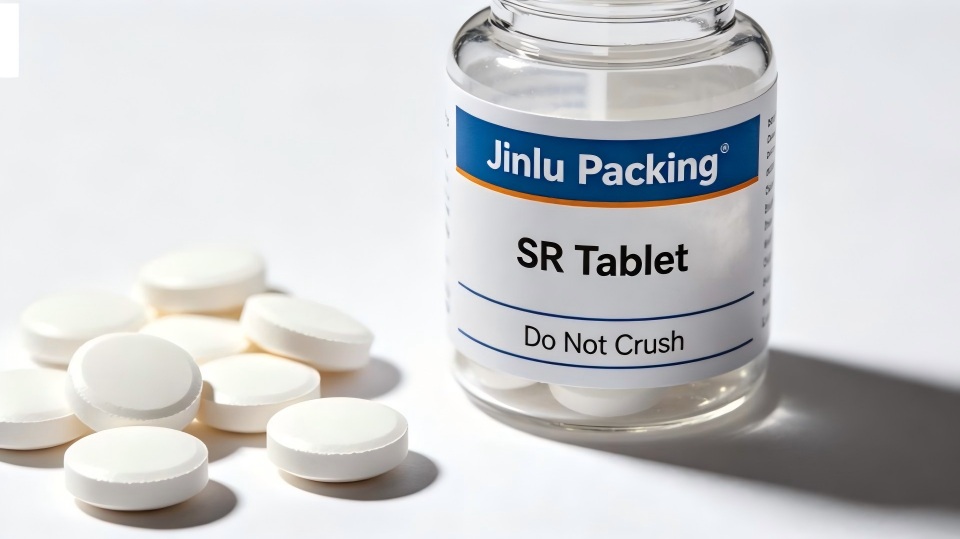
A common question is whether a coated tablet can be broken in half or ground. 일반적으로, 아니요: splitting or crushing a coated tablet defeats the purpose of the shell. A polymer coating is intended to control release or protect the drug. Crushing it exposes the drug all at once, which can alter absorption or cause irritation. 코팅 된 정제 (especially enteric or extended-release ones) should remain intact. If a smaller dose is needed, check if the tablet has a score line (some immediate-release tablets do) or ask a pharmacist. As one expert note says: “Usually not—crushing can destroy the protective layer and alter drug release. Always check with a pharmacist first”.


결론

결국, coated vs uncoated tablets is a tradeoff between simplicity and functionality. Uncoated tablets are cheaper and faster to make, but leave the drug core exposed. Coated tablets add complexity and cost, but deliver clear benefits: better stability, 맛 마스킹, 삼킬 수 있는 가능성, 그리고 브랜드 차별화. In modern pharmaceutical production, most daily-use pills (비타민, OTC 약, 기능식품) are film-coated because it strikes the right balance of protection and efficiency.

하지만, whenever the formulation allows, companies may prefer uncoated tablets for cost reasons. The key is to match the tablet type to the drug’s needs. If your product requires taste masking or controlled release, a coating is often essential. 그렇지 않은 경우, a plain tablet may suffice.

For any questions on tablet coating or to explore equipment options, reach out! Our team at JinLuPacking specializes in tablet presses, 코팅 기계, and complete tablet production lines. Whether you need a high-speed coating system for film, 설탕, or enteric applications, or advice on optimizing your tablet formulation, 우리는 도와주기 위해 왔습니다. Contact us for a quote or more information, and let’s ensure your tablets get the right finish and performance.


FAQs on Coated vs Uncoated Tablets

What is the difference between coated and uncoated tablets?

Coated tablets have an additional layer (영화, sugar or functional polymer) applied over the compressed core, whereas uncoated tablets are plain compressed pills without any outer layer. The coating serves functional purposes: it can mask taste, protect the API from moisture/light, and control release. Uncoated tablets dissolve immediately and are cheaper to make, but they expose the drug to the environment and often taste bitter.

Why are pharmaceutical tablets coated?

Tablets are coated to improve stability, patient acceptability, 성능. A coating protects moisture- 또는 빛에 민감한 API, masks unpleasant flavors, and makes the tablet easier to swallow. Specialized coatings (like enteric films) can delay release until the intestine, preventing stomach irritation. 요컨대, coating enhances the tablet’s appearance and shelf life, and can enable controlled drug delivery and better patient compliance.

Are coated tablets better than uncoated tablets?

Neither is universally “better” – it depends on the application. Coated tablets have the advantage of protection and patient appeal, but they cost more and require extra processing. Uncoated tablets are simpler, 더 빠르게, and cheaper to produce, and they release the drug quickly. For a stable, immediate-release drug where cost is priority, uncoated might be ideal. For a bitter or moisture-sensitive drug where taste masking and stability are priorities, coated is the better choice.

What are the main types of tablet coating?

The three major tablet coating methods are:
• Film Coating: Thin polymeric layer (usually water-based) applied by spray; most common today. Offers moisture protection and branding with minimal weight gain.
• Sugar Coating: Thick sugar shell built by multiple syrup layers; gives a glossy finish and masks taste well, but adds bulk and requires lengthy processing.
• Enteric Coating: A pH-sensitive film that resists stomach acid and dissolves in the intestines. This is technically a type of film coating with special polymers, used for acid-labile drugs or to avoid gastric irritation.

What are the benefits of film-coated tablets?

Film-coated tablets gain most of the key coating benefits with a thinner shell. A good aqueous film coat will protect the drug (moisture/light barrier), mask taste and odor, and improve aesthetics without significantly increasing tablet size. Film coatings dry quickly in modern coaters, giving high throughput. They can also be formulated for specific release profiles (장용성 또는 지속성) by choice of polymer.

Are uncoated tablets faster acting?

일반적으로, 예. Uncoated tablets typically disintegrate and dissolve faster because there is no barrier layer. The API is immediately exposed to gastric fluids, leading to a more rapid onset. 대조적으로, even an immediate-release film coat adds a slight delay (as the coat must dissolve first). 하지만, the difference may be small depending on the coating’s composition and thickness.

What equipment is used for tablet coating?

Common coating equipment includes:
• Perforated Pan Coaters (고속 코터): Industry-standard machines with rotating perforated drums. Heated air flows through the drum, allowing high drying efficiency and uniform coating.
• Fluid Bed Coaters: Tablets are suspended on a stream of air and sprayed from below or above. Good for pellets or small tablets with very uniform thin layers.
• Traditional Coating Pans: Large open pans used mainly for sugar coating (labor-intensive and mostly obsolete in modern pharma).
Each machine type is chosen based on batch size, tablet size/shape, and coating material. For large-scale film coating, perforated pans (like Jinlu’s tablet coating machine) are most common.

How does tablet coating affect drug release?

Coating can delay or modify drug release. An enteric coat prevents release in stomach acid, so the drug is only released in the intestine. Other special coatings (sustained-release films) contain polymers that slow penetration of fluids, stretching out the release over hours. Even non-functional film coats (for immediate release) may slow release slightly compared to an uncoated core, because the barrier must dissolve first. 따라서, coatings provide a tool to precisely tune where and how quickly the API is delivered.

Why do pharmaceutical companies use film coatings?

Film coatings are versatile and efficient. They protect the drug and improve taste/appearance with minimal processing time. Modern aqueous film coats dry quickly, which is essential for high-throughput manufacturing. They also allow addition of colors and identifiers, aiding brand differentiation. Because they can be designed for different release profiles, film coatings are a workhorse for pharma companies wanting to deliver both quality and performance in their tablets.

How do manufacturers choose between coated and uncoated tablets?

Companies evaluate multiple factors. If the drug is unstable, bitter, or needs stomach protection (장내 방출), they choose coated tablets. If the formulation is already stable, taste is acceptable, and minimizing cost is a priority, they go with uncoated. As one industry guide summarizes: use coated tablets if “you need taste masking,” “protection from moisture, light or oxidation,” or “controlled/delayed release”; choose non-coated if your formula is stable and no extra protection is needed. 본질적으로, the decision is driven by product requirements (API chemistry, 대상 릴리스, marketing needs) versus production considerations (비용, equipment availability).


참고자료:
1.Pharmaceutical Application of Tablet Film Coating —— 국립 의학 도서관
2.정제 코팅 —— Chemical Engineering University of Michigan
3.정제 코팅: Process Systems Engineering for Pharmaceutical Manufacturing —— 사이언스다이렉트
4.제약 코팅 및 다양한 접근 방식, 리뷰 —— 국립 의학 도서관
5.A Comprehensive Review on Pharmaceutical Film Coating: Past, Present, and Future —— 국립 의학 도서관
6.Pharmaceutical Application of Tablet Film Coating —— MDPI
7.Advances in Tablet Manufacturing Technologies: 장 10 – Coated tablets technologies —— 사이언스다이렉트

이 기사를 공유하세요:
사진 사소한 푸
사소한 푸

사소한 푸, 진루패킹 창업자, 가져오다 20 제약 기계 부문에 대한 다년간의 전문 지식. 그의 리더십 아래, Jinlu는 디자인을 통합하는 신뢰할 수 있는 공급업체로 성장했습니다., 생산, 그리고 판매. Petty는 고객이 제약 포장의 복잡성을 헤쳐나갈 수 있도록 깊은 산업 지식을 공유하는 데 열정을 갖고 있습니다., 장비뿐만 아니라 제품도 받을 수 있도록 보장, 생산 목표에 맞춘 진정한 원스톱 서비스 파트너십.

목차

문의 보내기

답장을 남겨주세요

귀하의 이메일 주소는 공개되지 않습니다. 필수 입력란이 표시되어 있습니다 *

무료 견적 받기

*우리는 귀하의 기밀성을 존중하며 모든 데이터는 보호됩니다. 귀하의 개인정보는 JL 솔루션을 위해서만 사용 및 처리됩니다..