
- Macchine
- Competenza
- Risorse
- Certificati
- Di
- Contatto
- Macchine
- Competenza
- Risorse
- Certificati
- Di
- Contatto
Many pharmaceutical plants hit the same wall when picking a blister packaging machine. Flat DPP machines are cheap but slow. Orders grow, e il packing line becomes the factory bottleneck. High-speed roller type machines offer more output, but they cost more, take more space, and change over slowly. For mid-large batches, neither fits well.
Most buyers first search what is blister packaging machine. In poche parole, it forms pockets from film, li riempie, seals them with foil, and cuts finished sheets. The real question is which type fits your output range. Jinlu Packing built the JL-DPH-190 Ultra Macchina per vesciche ad alta velocità to answer that question. It is an automatic blister packing machine for mid-large production. Top speed reaches 300 vesciche al minuto, with a medium footprint and cGMP compliance.
The cost of a wrong choice is not only the machine price. Downtime during changeover, rejected sheets, and idle capacity all eat margin. That is why smart buyers compare machines on total production cost, not on speed alone.
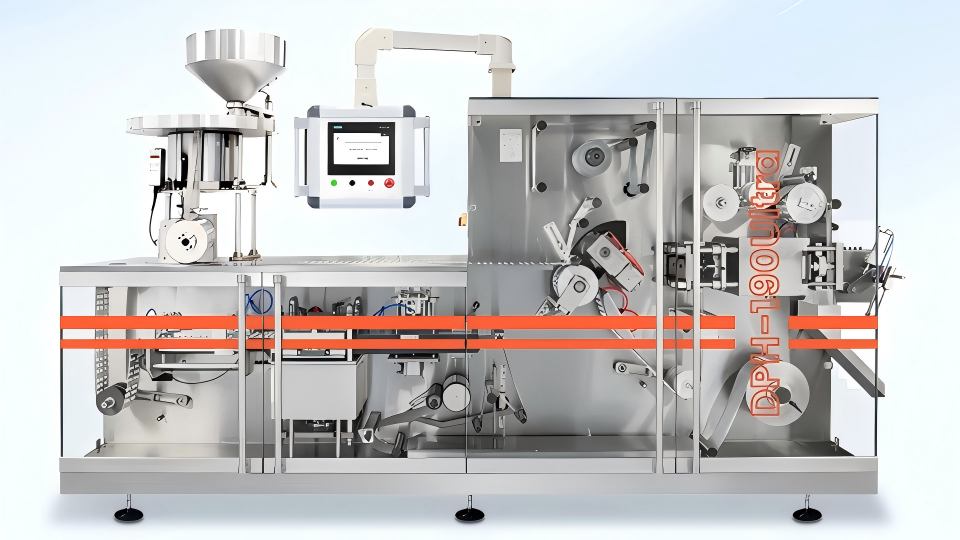
Blister Packaging Machine JL-DPH-190Ultra
Most buyers get trapped between two extremes. Understanding the trap helps you pick the right blister machine.
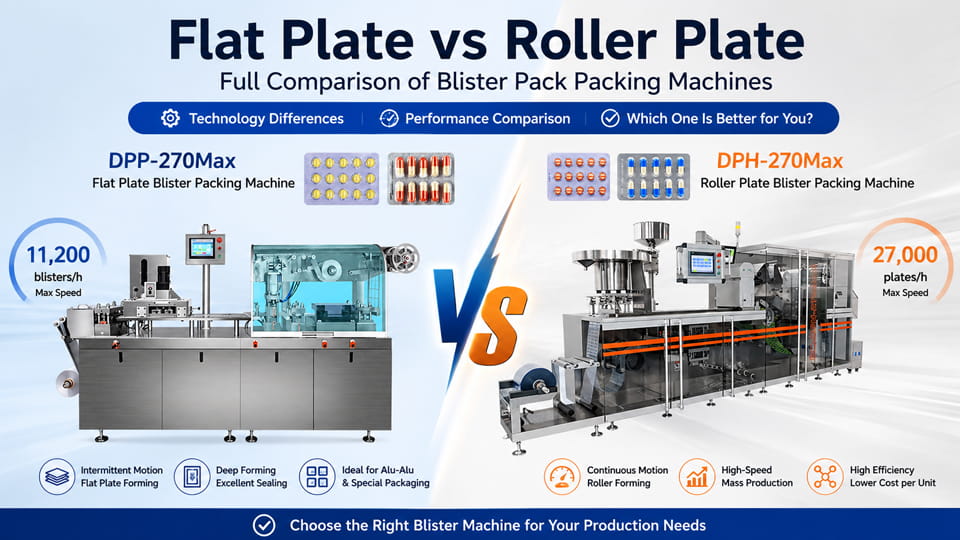
Flat blister machines typically run 60-120 vesciche al minuto. If you need to boost output up to 200-250 pacchi al minuto, you will have to purchase two or more flat plate blister machines. This involves far more than capital expenditure. Additional floor space is required to accommodate the equipment, which means doubled space and labor costs.
High-speed roller type machines fix the speed problem. Many exceed 350 vesciche al minuto. But they are large and expensive. Plants that run many products in moderate volumes often leave these blister machines idle. Paid capacity turns into wasted cost.
Among thermoforming packaging machines, the roller type type suits mid-large output best. The cost gap, Tuttavia, keeps many buyers away. That is the real selection pain. A blister packaging machine for this segment must hold steady speed and switch products quickly. It must also keep waste low.
Jinlu Packing designed the JL-DPH-190 Ultra for this middle zone. It keeps the output of a roller type machine inside a medium body. Top speed reaches 300 blisters per minute under standard conditions. You get stable high output without paying for overcapacity. Mold changes finish in 30 minuti. Material waste stays low. The machine meets cGMP rules from day one.
The unit is a third-generation model from the company. It inherits the strengths of earlier machines and adds six technical innovations. Three invention patents cover the core mechanisms.
A side-by-side table makes the choice clearer. Here is how the three machine types compare on the points that matter. When you compare blister packaging machine options, look at output range, tempo di cambio, sciupare, and compliance together.
Tabella comparativa
| Comparison point | DPP flat machine | Large high-speed roller type | JL-DPH-190 Ultra |
| Batch size fit | Da piccolo a medio, trial production | Very large | Mid-large, multi-product |
| Potenza massima | 60-120 blister/min | 350+ blister/min | 300 blister/min (3 per cut) |
| Footprint and cost | Medio, basso costo | Grande, high cost | Medio, high value |
| Cambio | Veloce | Complesso, long downtime | 30 min full mold change |
| Material waste | High edge waste | Controllato | 78% less edge waste |
| Material formats | Full range | Full range | ALU-PVC, PVC/PVDC, ALU-ALU |
| Compliance and digital | cgmp | cGMP MES/OEE/CFR21 | cGMP MES/OEE/CFR21 |
Flat blister packaging machines cannot carry mid-large output. High-speed machines carry the output but carry heavy cost. The JL-DPH-190 Ultra balances both. Per la maggior parte CDMO and pharmaceutical plants, that balance is exactly what the production plan needs.
Buyers often skip the questions that decide success. These six cover what actually matters in mid-large production.
Plants with daily mid-to-large volumes and frequent product changes fit this machine best. CDMOs and pharmaceutical companies running multiple SKUs in moderate batches gain the most. The machine removes the flat machine capacity limit and avoids the idle cost of oversized roller type units.
IL 300 blisters per minute figure is measured with 3 blisters per cut, a standard industry condition. Regular tablets, capsule, and pills in standard pocket sizes run at full speed. Formazione, sigillatura, and punching stay stable. No deformation, no jamming, no defect spike.
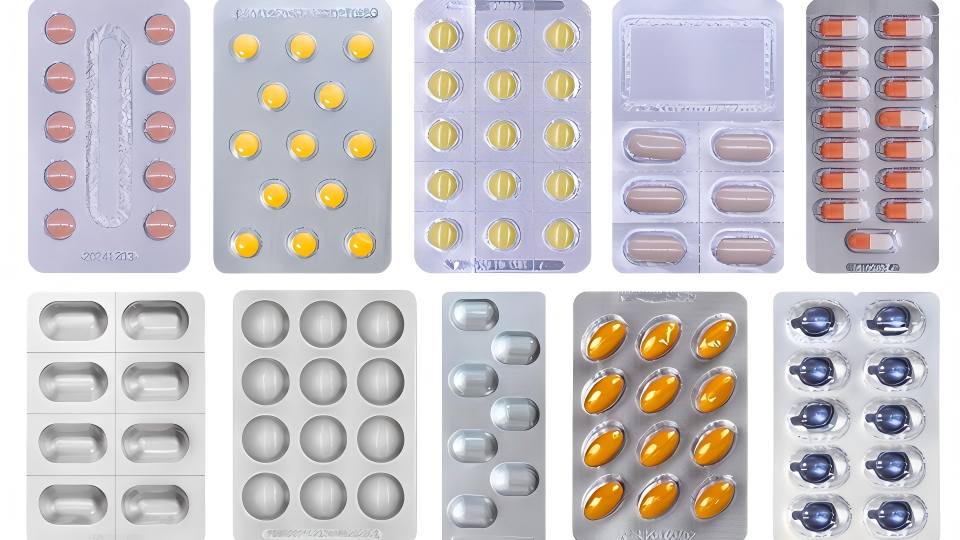
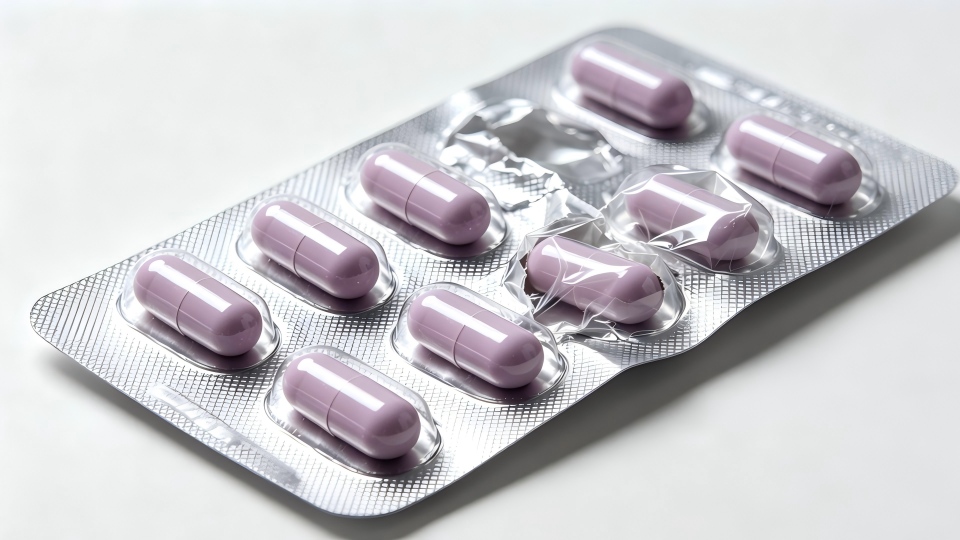
Blister Packs Finished Products
Compared with a flat DPP machine, this blister sheet making machine roughly doubles output at stable speed. Independent servo control on three stations, vale a dire, feeding station, forming station, and punching station, removes alignment drift. The staggered punch layout cuts waste edges by 78 per cento. Material saving exceeds 10 percent versus flat machines (Fonte: Jinlu Packing technical specifications).
Drawer-style slide-in molds keep changeover fast. A complete mold set change finishes within 30 minuti. Standard product changes only swap forming and punching tool sets. Switching to ALU-ALU needs four modular components. No full machine rebuild, no long downtime.
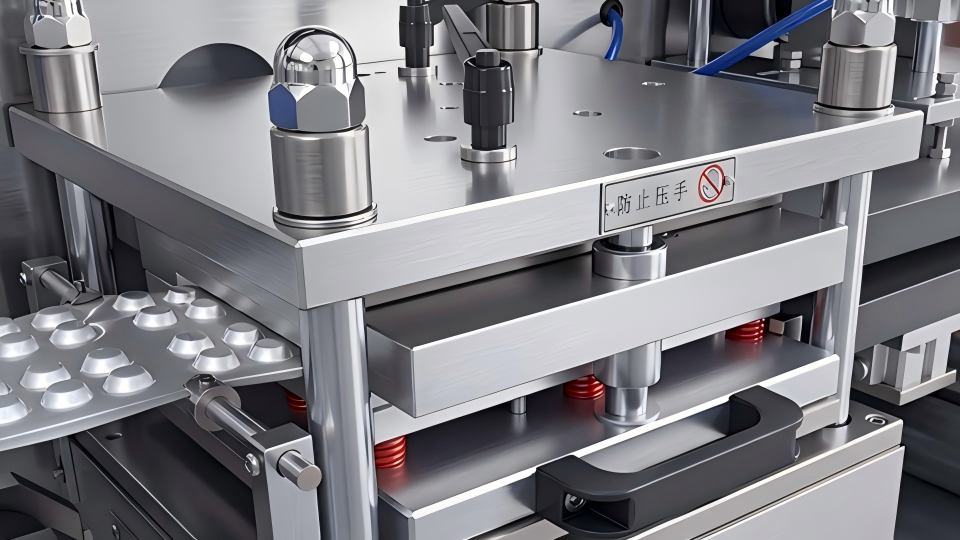
Drawer-Type Quick Mold Changeover Mechanism
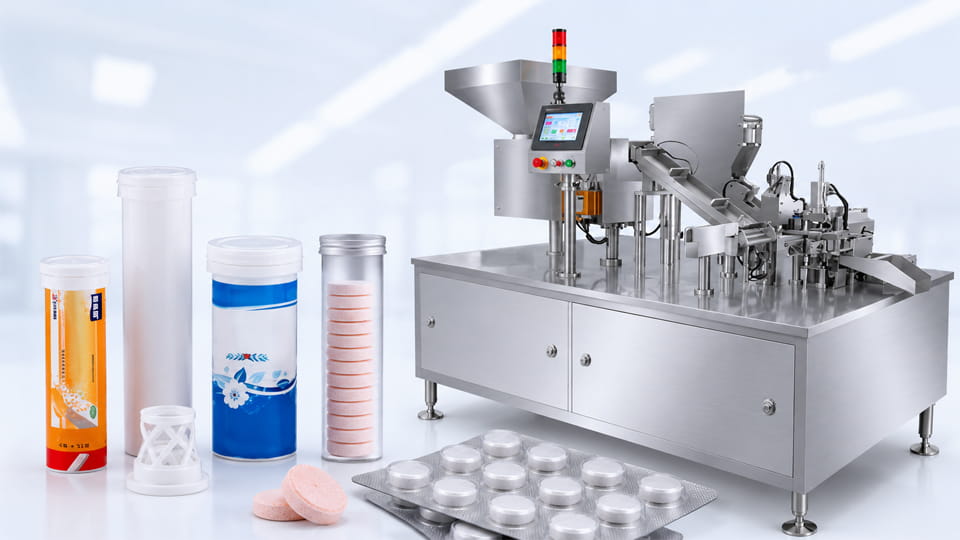
The machine covers mainstream formats. ALU-PVC, PVC/PVDC barriera contro l'umidità, and ALU-ALU double aluminum all run on one unit. PVC and PET films both work. As a pill pack machine, it handles tablets, capsule, pillole, fiale, and special shapes on one line. The same versatility supports medical device blister packaging for syringes, hardware, and other non-pharma items. Caramella, e-cigarette cartridges, and disposable syringes also pack well on this line. Una macchina, many product families.
The machine follows cGMP clean production rules. Five transparent, enclosed zones separate forming, sigillatura, trazione, codifica, and punching. All product-contact parts use 316 acciaio inossidabile. Sealing rolls use sealed bearings with no lubrication, so no oil can touch products. MES, OEE, and CFR 21 options connect the machine to your ERP. Auditors see the full trail.
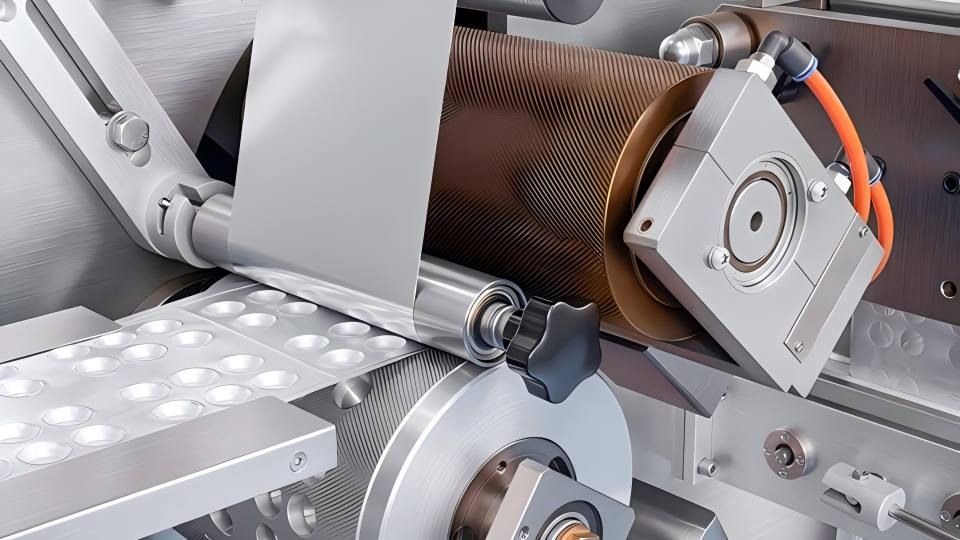
Sealing rolls use sealed bearings with no lubrication
Selection criteria only matter if the machine delivers in production. Here is the engineering behind the claims. A blister machine earns its place on the shop floor through uptime and yield.
The forming station uses a dual crank, dual cam structure. Forming pressure reaches 11 tonnellate, O 110 kn (Fonte: Jinlu Packing technical specifications). The servo drive slows near mold closing and blows air to hold the film. Pockets stay full and sharp. This stable thermoforming blister packaging works at top speed. PID zone heating with Teflon-coated plates keeps temperature even, film after film. The forming unit carries a 10-year warranty. The heating modules last more than 8 years under daily 8-hour operation.
Due sistemi di alimentazione cover every product shape. The multi-layer waterfall feeder handles round tablets, capsule, compresse quadrate, and odd shapes. It includes vibration and dust removal. Per ALU-ALU cold forming, a roller-queue feeder lines products one by one at 90 gradi. This stops multiple pills from dropping into one pocket. A three-stage dust and static removal option serves uncoated tablets. Changeover between feeders is handled by hand lever, so operators stay fast.
Aluminum foil weight changes as the roll runs down. This blister sealing machine uses a cylinder module that adjusts tension continuously. Foil stays flat, with no wrinkles or stretching. Sealing pressure is set by cylinder, not by manual screws. A reverse pre-press plate moves with machine speed and film pull, so blisters stay flat. Sealed rollers use high-temperature bearings that never need oil. The result is clean thermoformed blister packaging with sharp pockets and flat sheets.
Punching runs on servo drive. Operators set feed length on the touchscreen and fine-tune the left-right position with plus and minus keys. The staggered layout cuts waste edges by 78 per cento. It saves over 10 percent of packaging material versus flat machines (Fonte: Jinlu Packing technical specifications). When PVC or PTP film breaks, the machine stops and alarms. No wasted material keeps running. Punching dies use a multi-head modular automotive crank, so force stays balanced across the full sheet.
The machine uses three motion controllers and servo systems. One-key start, fermare, and reset simplify daily work. The whole blister machine packing sequence runs automatically, from film feeding to finished sheet output. Rated power reaches 17.5 kW, so speed holds under full load. Operating noise stays below 75 dBA.
It connects to MES, supports OEE, and offers CFR 21 opzioni. An optional Basler vision system detects missing pills, compresse rotte, doppia alimentazione, color difference, and dust leaks. A robotic arm rejects bad sheets in real time. The short-stroke arm runs 35 percent faster than older designs, with no dropped or shaken sheets. Good sheets and rejects are counted separately. Pressure and temperature are monitored. Any anomaly stops the line.
This final section explains how to choose a blister machine for mid-large output. The answer comes down to four factors. Stable speed. Cambio rapido. Low material waste. Clean compliance.
Flat machines cannot carry the volume. Oversized roller type machines waste budget. The JL-DPH-190 Ultra sits between them with a medium body and full cGMP compliance.
For multi-SKU, mid-to-large batch plants, this machine works as a complete pharma packaging machine solution. It runs ALU-PVC, PVC/PVDC, and ALU-ALU. It links to MES, OEE, ed ERP. A modern medicine packaging machine needs that level of traceability.
Mid-large output is the fastest-growing need in the blister packaging machine pharmaceutical industry segment. This pharma packaging machine answers that need with data, not slogans. Jinlu Packing provides global on-site commissioning, formazione degli operatori, and long warranty terms. Contact our engineers to run a sample test with your own product. See the right blister packaging machine for your plant before you commit.
Riferimenti:
1. NOI. Amministrazione degli alimenti e dei farmaci. 21 CFR parte 11 — Electronic Records; Electronic Signatures. Electronic Code of Federal Regulations.
2. NOI. Amministrazione degli alimenti e dei farmaci. 21 CFR parte 211 — Current Good Manufacturing Practice for Finished Pharmaceuticals. Electronic Code of Federal Regulations.
3. Commissione europea. Volume EudraLex 4, Allegato GMP dell'UE 15: Qualificazione e convalida.
4. Commissione europea. Volume EudraLex 4, Allegato GMP dell'UE 11: Computerised Systems.
5. IO. Io Q9: Gestione del rischio di qualità. International Council for Harmonisation of Technical Requirements for Pharmaceuticals for Human Use.
6. NOI. Amministrazione degli alimenti e dei farmaci. Guida per l'industria: Convalida del processo: Principi generali e pratiche, 2011.
7. ISO 11607-1:2019. Packaging for terminally sterilized medical devices — Part 1: Requirements for materials, sterile barrier systems and packaging systems. International Organization for Standardization.
8. ISO 11607-2:2019. Packaging for terminally sterilized medical devices — Part 2: Validation requirements for forming, sealing and assembly processes. International Organization for Standardization.