

- Macchine
- Competenza
- Risorse
- Certificati
- Di
- Contatto
- Macchine
- Competenza
- Risorse
- Certificati
- Di
- Contatto
Scegliere l'ideale confezionatrice per compresse effervescenti è fondamentale per i produttori farmaceutici e nutraceutici. Compresse effervescenti (come compresse di vitamina C o antiacidi) sono estremamente sensibili all'umidità, pertanto l'imballaggio deve garantire un'affidabile barriera contro l'umidità. Questa guida spiega perché gli effervescenti necessitano di un imballaggio specializzato, confronta i formati di imballaggio comuni (tubi, pacchetti di blister, bustine/strisce), e delinea il 7 fattori chiave da considerare quando si acquista una macchina. Troverai anche tabelle utili che mettono a confronto i tipi di macchine e un semplice diagramma di flusso per guidare la tua decisione. Finalmente, consulta le nostre domande frequenti e un'introduzione senza pressione sul motivo per cui le attrezzature e i servizi di Jinlu Packing potrebbero essere la scelta giusta per le tue esigenze di produzione.
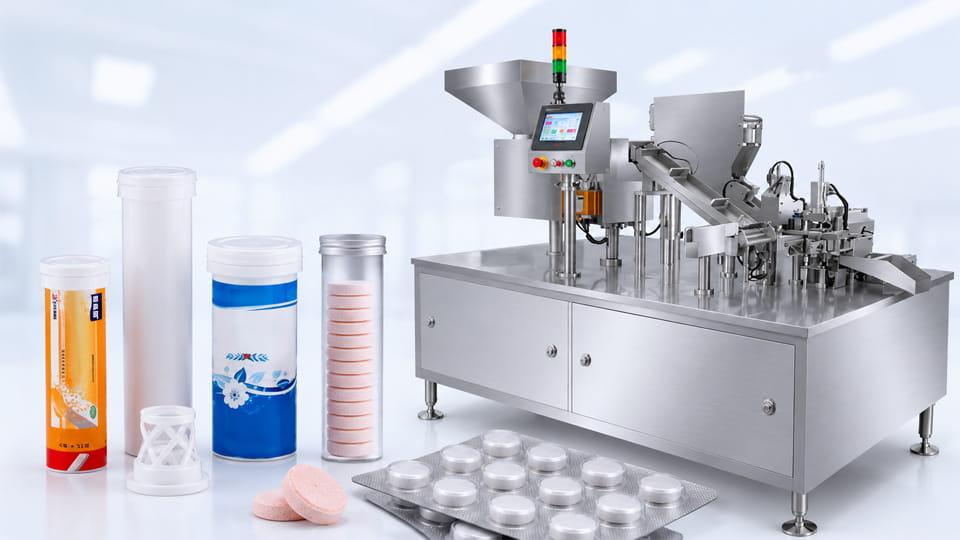
Le compresse effervescenti contengono una chimica reattiva acido-base rilascia CO₂ quando sciolto in acqua, effettuare una rapida consegna di sostanze nutritive o farmaci. Questo è ciò che crea l'effervescenza, ma significa anche che lo sono estremamente sensibile all'umidità. In pratica, anche tracce di umidità possono innescare prematuramente la reazione, ammorbidire le compresse, o ridurre la potenza. Per evitare questo, i prodotti effervescenti sono fabbricati e confezionati in condizioni di umidità molto bassa (Spesso <20–25% UR).
Inoltre, gli effervescenti sono solitamente non rivestito (sciogliersi rapidamente), quindi non c'è pellicola protettiva per bloccare l'umidità. La loro stabilità dipende interamente dalla confezione. Come nota un esperto, se entra umidità prima dell'uso, “la reazione può iniziare troppo presto” e rovinare il prodotto. Insomma, le compresse effervescenti differiscono dalle normali pillole in questo la progettazione dell’imballaggio deve dare la priorità alle barriere contro l’umidità e l’ossigeno sopra ogni altra cosa. L'obiettivo principale è mantenere le compresse completamente asciutte e sigillate, preservandone sia l'integrità che la durata di conservazione.
La chimica unica delle compresse effervescenti rende la qualità dell'imballaggio è una questione di qualità del prodotto. I motivi principali per cui un buon imballaggio è fondamentale includono:
In sintesi, selezionando quello giusto confezione di compresse effervescenti non è solo una questione di comodità o di branding: riguarda fondamentalmente protezione dell'umidità, potenza, e conformità. L'imballaggio robusto mantiene le compresse effervescenti stabili ed efficaci fino alla fine della durata di conservazione.
Le compresse effervescenti vengono generalmente vendute in uno dei tre formati di imballaggio primari: tubi (con tappi), vesciche (spesso foglio di alluminio-alluminio), o strisce/bustine monouso. Ciascuno presenta vantaggi e compromessi in termini di barriera all'umidità, convenienza, e costo.
Molti prodotti effervescenti utilizzano il rigido tubi o bottiglie (fatto di plastica, bicchiere, o metallo) con tappo a vite o a scatto. Tubi di plastica (PP o PE) sono i più comuni per vitamine e integratori. Questi contenitori spesso includono tappi twist-off che sono resistenti all'umidità o contengono un inserto essiccante interno in gel di silice. Lo garantisce la combinazione del tubo polimerico e del tappo essiccante eccellente protezione dall'umidità (l'essiccante assorbe attivamente l'umidità all'interno). I tubi in genere forniscono una forte protezione contro l'umidità, che è fondamentale per queste compresse idroscopiche.
Capacità e riempimento: I tubi sono solitamente riempiti ovunque 10 fino a ~20 compresse ciascuno (a seconda delle dimensioni della compressa e dell'altezza del tubo). Le macchine riempitrici automatiche per tubi contano e caricano questo numero di compresse per tubo.
Convenienza e marchio: I tubi sono portatili e facili da usare, facili da aprire con una sola mano, e offrono molto spazio per le etichette. I vantaggi includono la portabilità, richiudibilità, e ampio spazio per il marchio e le istruzioni. Gli svantaggi sono che possono essere più ingombranti (confezioni e cartoni più grandi) e di solito trasportano meno compresse per confezione rispetto a un blister completo.
Compresse effervescenti di fascia alta (soprattutto nei prodotti farmaceutici o nei mercati di esportazione) spesso usano Blister Alu-Alu formati a freddo. In un blister Alu-Alu, la cavità e il coperchio sono entrambi fogli di alluminio (a volte laminato su plastica). Questo crea un barriera quasi totale: nessuna luce, praticamente nessuna umidità o ossigeno possono penetrare. Jinlupacking descrive Alu-Alu come il “gold standard” per i farmaci igroscopici, ottenendo una trasmissione del vapore acqueo prossima allo zero. In pratica, I blister Alu-Alu possono prolungare la durata di conservazione più anni anche a caldo, climi umidi.
Quando usato: L'Alu-Alu è comune in Europa o nelle regioni in cui la lunga durata di conservazione è fondamentale. È ideale per formule ad alta potenza o sensibili all'umidità.
Compromessi: Lo svantaggio è il costo e le dimensioni. Il foglio Alu-Alu è costoso, e la formatura a freddo richiede processi meccanici più lenti. I blister risultanti sono spesso più grandi del 30-50% rispetto ai blister di plastica standard, il che significa cartoni più grandi e maggiore volume di spedizione. Il costo per dose può essere 2-3 volte quello delle vesciche di plastica. Quindi Alu-Alu è solitamente riservato ai casi in cui i suoi vantaggi barriera giustificano la spesa.
Confezioni a strisce (bustine di alluminio) sono un'altra opzione. Si tratta di nastri di alluminio continui sigillati su tutti i lati in buste. Punti salienti:
Figura: Le compresse effervescenti sono spesso confezionate in tubi di plastica con tappi contenenti essiccante per una forte protezione dall'umidità.
Il macchinario principale per il confezionamento delle compresse effervescenti corrisponde al formato scelto. I due tipi principali di macchine confezionatrici sono Macchine riempitrici per tubi (per tubi/flaconi) E Macchine confezionatrici in blister (per blister in alluminio). Consideriamo anche ciò che è completamente integrato Linea di confezionamento che lega insieme il conteggio, riempimento, tappatura, etichettatura, e astucciamento.
UN macchina riempitrice per tubi (a volte chiamata macchina riempitrice per compresse) automatizza il processo di riempimento di un tubo rigido con compresse, aggiungendo un tappo essiccante se necessario, e sigillandolo. Le caratteristiche chiave includono:
[jl_youtube src=”https://www.youtube.com/embed/uNKQtVIApls”]
Esempio: Jinlu JL-ZGJ-80Pro: Questa riempitrice per tubetti effervescenti completamente automatica gestisce compresse di grande diametro. Esegue l'ordinamento, conteggio, caricamento, e limitazione a velocità fino a 80 tubi al minuto (≈4800 tubi/ora), con >99.98% precisione di riempimento. Soddisfa gli standard cGMP ed è costruito in acciaio inossidabile per facilitarne la pulizia. Tali macchine rappresentano la fascia più alta delle riempitrici automatiche di tubetti.
I moderni riempitivi per tubi sottolineano precisione e affidabilità. Spesso includono una progettazione conforme a GMP (Costruzione SUS316L, sistemi chiusi) e strumenti di cambio rapido per i cambi di formato. Quando si valuta una macchina, cercare una precisione di conteggio comprovata (≥99,9%), servoazionamenti per movimenti precisi, e facile pulizia/accesso.
Piuttosto che un riempitivo autonomo, molti produttori ne distribuiscono un intero linea di confezionamento che integra apparecchiature a monte e a valle. Una tipica linea di confezionamento di compresse effervescenti potrebbe includere:
Jinlu nota che il nostro riempitivo per tubi può essere “combinato con macchine per pressione della compressa, depolveratori, E macchine astucciatrici” per una linea completamente integrata. Ad esempio, l'intubettatrice riceverà automaticamente le compresse dalla pressa a monte e alimenterà i tubetti finiti all'astucciatrice a valle, riducendo al minimo la movimentazione manuale.
Automatizzando ogni passaggio: il conteggio, riempimento, tappatura, etichettatura, astucciamento: la linea di confezionamento aumenta la produttività e la tracciabilità. I sensori in ogni fase rilevano tempestivamente gli errori, garantendo che ogni cartone esca dalla linea completamente conforme.
Per confezioni in blister Alu-Alu, UN macchina confezionatrice per blister viene utilizzato. Queste macchine termoformano o formano cavità a freddo e sigillano le compresse in blister. Punti chiave:
Se si sceglie una linea di confezionamento in blister per compresse effervescenti, bisognerebbe assicurarsi che sia classificato per materiali ad alta barriera. Il punto chiave della vendita è prestazioni di barriera contro l'umidità, non velocità. Una macchina per la formatura a freddo dell'alluminio offre la massima protezione (ingresso vicino allo zero) a scapito della produttività.
La scelta tra i tubi (con tappi essiccanti) e i blister Alu-Alu dipendono dalle esigenze del prodotto. La tabella seguente confronta questi formati in base ai fattori chiave:
| Fattore | Tubo (con tappo essiccante) | Blister Alu-Alu |
| Barriera contro l'umidità | Eccellente (essiccante + muro di plastica) | Eccellente (MVTR vicino allo zero) |
| Barriera luce/ossigeno | Tubo opaco (buon blocco della luce) | Completamente opaco (100% barriera luminosa) |
| Visibilità del tablet | Non visibile (i tubi sono generalmente opachi) | Non visibile (sventare) |
| Comodità per il paziente | Richiudibile, bottiglia portatile | Monouso per cavità (una volta rotto, andato) |
| Velocità tipica | Alto (per esempio. 60–80 tubi/min) | Moderare (la formatura a freddo è più lenta del PVC) |
| Costo per unità | Medio (tubo + cappuccio, costo materiale moderato) | Alto (pellicola costosa, 2–3× costo del materiale) |
| Vita di conservazione | Lungo (con essiccante, Spesso 2+ anni) | Molto lungo (3+ anni anche in climi rigidi) |
| Uso tipico | Vitamine quotidiane, integratori effervescenti | Prodotti farmaceutici sensibili, prodotti di esportazione |
Tavolo: Confronto di effervescente confezione del tubo (con tappo essiccante) vs. Confezione in blister Alu-Alu. Nota: I blister Alu-Alu garantiscono una chiusura quasi ermetica, mentre i tubi si affidano all'essiccante per mantenere la secchezza.
Insomma, tubi (o bottiglie) sono un formato facile da usare per il consumatore e perfettamente adeguato se combinato con un essiccante. Sono più veloci ed economici da imballare. Blister Alu-Alu vengono scelti quando è richiesta la massima barriera nonostante il costo, ad esempio, per effervescenti con prescrizione medica o in mercati che richiedono una durata di conservazione di 3 anni.
Quando si valutano le macchine per il confezionamento di compresse effervescenti, concentrarsi su queste caratteristiche cruciali: tendono anche ad essere le richieste più frequenti dei clienti:
Di seguito è riportata una tabella comparativa che riassume le scelte di materiali e imballaggi per le prestazioni di barriera all'umidità:
| Materiale/formato di imballaggio | Barriera contro l'umidità (MVTR) | Utilizzo tipico |
| Tubo di plastica (PP/PE) + Essiccante | Molto basso (con cappuccio + essiccante) | Vitamine da banco, integratori (uso quotidiano) |
| Blister Alu-Alu formato a freddo | Vicino allo zero (barriera ultima) | Effervescenti di alta gamma, mercati di esportazione |
| Blister in PVC-PVDC | Moderare (0.5–1,0 g/m²·giorno) | Compresse generiche (utilizzato se il costo dell'alluminio è troppo alto) |
| Blister in PVC (niente PVDC) | Basso (3–6 g/m²·giorno) | Non raccomandato per composti igroscopici |
| Striscia/bustina (Lamina/pellicola) | Variabile (0.5–2,0 g/m²·giorno) | Confezioni monodose o da viaggio (qualche barriera, opzioni meno che rigide) |
Tavolo: Tipica barriera all'umidità di vari imballaggi effervescenti. Anche i tubi in PP/PE si affidano al tappo essiccante per Near-Zer barriera, mentre il foglio Alu-Alu è praticamente impermeabile.
Anche con l'attrezzatura giusta, possono sorgere problemi con le confezioni effervescenti. Ecco i problemi tipici e come risolverli:
La manutenzione proattiva è fondamentale: conservare tutte le tramogge di alimentazione (compresse, tubi, berretti) pulito e asciutto, sostituire le parti usurate (per esempio. raschietti per pentole, ruote a stella) nei tempi previsti, ed eseguire batch di prova quando si modificano i formati.
Per un affidabile linea di confezionamento effervescente, Jinlu Packing offre una soluzione completa. I componenti chiave includono:
Ognuna di queste macchine è costruita secondo gli standard farmaceutici (Conforme FDA/CE, Parti di contatto SUS316L) e viene fornito con la documentazione. Scegliendo un sistema coordinato, ti assicuri che ogni passaggio dalla compressa al cartone sia ottimizzato per i prodotti effervescenti.
Scegliere il diritto confezionatrice per compresse effervescenti è qualcosa di più della semplice velocità. Si tratta di proteggere i tuoi tablet dall'umidità, garantendo la stabilità del prodotto, e il rispetto degli standard normativi. Come abbiamo discusso, le formule effervescenti sono altamente sensibili, quindi ogni aspetto dell'imballaggio: materiale, macchina, e processo – deve ridurre al minimo l’umidità e mantenere una tenuta ermetica.
In termini pratici, ciò significa scegliere una macchina (o linea) che offre una robusta gestione della barriera (tappi o fogli essiccanti), operazioni precise (conteggio e limitazione accurati), e piena conformità (Progettazione e documentazione GMP). Linee automatizzate di riempimento tubetti (con il conteggio, etichettatura, astucciamento) sono generalmente i cavalli di battaglia dell'industria effervescente di oggi.
Alla ricerca di una soluzione affidabile per il confezionamento di compresse effervescenti? Contatta Jinlu Packing oggi stesso per una guida esperta e un preventivo su misura. Il nostro team può aiutarti a scegliere la macchina giusta e a garantire che soddisfi gli standard di conformità globali, il tutto supportato da garanzie complete e supporto tecnico.
Perché la loro chimica (acido + base) reagisce anche con piccole quantità di acqua, gli effervescenti sono estremamente igroscopici. L'umidità può attivarli prematuramente, ammorbidire le compresse, o causare la degradazione dei principi attivi. L'imballaggio speciale con essiccanti e chiusure ermetiche impedisce all'umidità di raggiungere le compresse, mantenendoli potenti fino all'uso.
Dipende dalle esigenze del prodotto. Tubi (con tappo essiccante) sono popolari tra i consumatori di vitamine e integratori perché sono convenienti, richiudibile, e forniscono un'eccellente protezione dall'umidità. I blister Alu-Alu offrono una barriera ancora più forte (ingresso di umidità quasi nullo) e prolungare la durata di conservazione, che è l'ideale per prodotti farmaceutici sensibili o esportazioni di alto valore. Le bustine vengono utilizzate anche per comodità monodose, ma offrono meno barriera rispetto ai tubi o ai blister in alluminio.
I blister standard in PVC da soli di solito non offrono una protezione sufficiente dall'umidità per le compresse effervescenti. Hanno una permeabilità moderata. Se si utilizzano blister, è meglio utilizzare una pellicola laminata PVC+PVDC o un foglio completamente Alu-Alu per bloccare l'umidità. Altrimenti, l'ingresso di umidità può ridurre drasticamente la durata di conservazione.
Hai bisogno di una riempitrice per tubi per compresse effervescenti, che conta automaticamente, riempie i tubi, inserisce tappi essiccanti, e li ricopre. Cerca macchine che gestiscano le dimensioni del tuo tubo, avere la velocità desiderata (per esempio. 60–80 tubi/min), ed elevata precisione di conteggio (>99.9%). Per esempio, Il JL-ZGJ-80Pro di Jinlu si riempie fino a 80 bottiglie/min a 99.98% precisione.
La macchina “migliore” dipende dalla scala e dal formato. Per il confezionamento di tubi, una macchina riempitrice per tubi per compresse effervescenti completamente automatica (con conteggio e tappatura integrati) è ideale per volumi medio-grandi. Per blister, è necessaria una macchina blisteratrice Alu-Alu a freddo. Generalmente, dare la priorità alle macchine progettate specificamente per prodotti igroscopici, con caratteristiche come la movimentazione delicata, controllo del conteggio preciso, e design igienizzabili. Verificare che il fornitore fornisca conformità GMP e supporto per la convalida.
Utilizzare apparecchiature ad alta precisione con controlli di feedback. Le macchine moderne utilizzano servoazionamenti e sensori per confermare ogni azione. Per esempio, telecamere o sensori di prossimità possono verificare il corretto numero di tablet e la presenza di ciascun tappo. Tester dell'integrità della tenuta (decadimento del vuoto, ad esempio) può far parte del QA in corso. Il riempimento uniforme deriva anche da un buon flusso di materiale (misure antistatiche, anche l'alimentazione delle compresse). Se vedi una variazione, potrebbe indicare parti usurate o sensori disallineati che necessitano di manutenzione.
Alcune macchine sono progettate per un cambio rapido. Per esempio, Il riempitore per tubi Jinlu gestisce tubi con diametro da 23 a 29 mm (lunghezze diverse) con stampi modulari che si scambiano in ~5 minuti. Confermare sempre le parti di modifica del modello e l'intervallo di regolazione. La vera flessibilità è una caratteristica premium; le macchine economiche possono supportare solo una dimensione di tubo.
Al minimo, È richiesta la conformità GMP (per il settore farmaceutico). Cerca la marcatura CE (per l'Europa), UL o CSA (per la sicurezza elettrica nel Nord America), e ISO 9001 produzione. Se il tuo ente di regolamentazione locale (per esempio. FDA negli Stati Uniti) richiede criteri specifici (come la Parte 11 per i registri elettronici), assicurarsi che la macchina lo supporti. In pratica, scegliendo attrezzature da un produttore rispettabile (Salita, Novapack, C'è, ecc.) che pubblicizza gli standard farmaceutici è più sicuro. L'attrezzatura di Jinlu elenca CE, UL, Rohs, e conformità cGMP.
Riferimenti:
1.L'effetto dell'umidità e della temperatura ambientale sulla stabilità fisica delle compresse effervescenti nelle confezioni laminate di alluminio contenenti piccole imperfezioni —— tandfonline.com
2.Confezionamento di compresse effervescenti —— www.farmapproach.com
3.Foglio di alluminio ad alta barriera per il confezionamento di compresse effervescenti —— al-fogli
4.Gli effetti dell'imballaggio sulla stabilità di un composto sensibile all'umidità —— ScienceDirect
5.Carbonato di potassio come essiccante nelle compresse effervescenti —— ScienceDirect
6.Le compresse effervescenti diventano "Airborne".’ nei tubi —— packworld
7.Recenti progressi nella tecnologia delle compresse effervescenti: lezioni apprese e prospettive future —— ScienceDirect