

Kapsul berisi cairan (juga disebut kapsul keras berisi cairan atau LFHC) pada dasarnya adalah kapsul cangkang keras dua potong (agar-agar atau HPMC) yang telah diisi dengan formulasi berbahan dasar minyak atau cair. Setelah diisi, tutup dan badannya disegel – seringkali dengan pita gelatin tipis – untuk mencegah kebocoran. Dengan kata lain, LFHC adalah bentuk hibrida: cangkang kapsul padat berisi dosis cair di dalamnya. Sebaliknya, kapsul gel lunak dibuat dalam satu langkah sebagai a lajang, cangkang satu bagian yang fleksibel yang sudah terisi cairan atau setengah padat. Softgel menggunakan gelatin plastik (dengan gliserin atau sorbitol) untuk membuat lembut, membran yang dapat ditutup rapat. Mereka biasanya digunakan untuk bahan yang sangat berminyak atau mudah larut – misalnya, minyak ikan atau vitamin yang larut dalam lemak (D, E, K) hampir selalu tersedia dalam bentuk softgels.
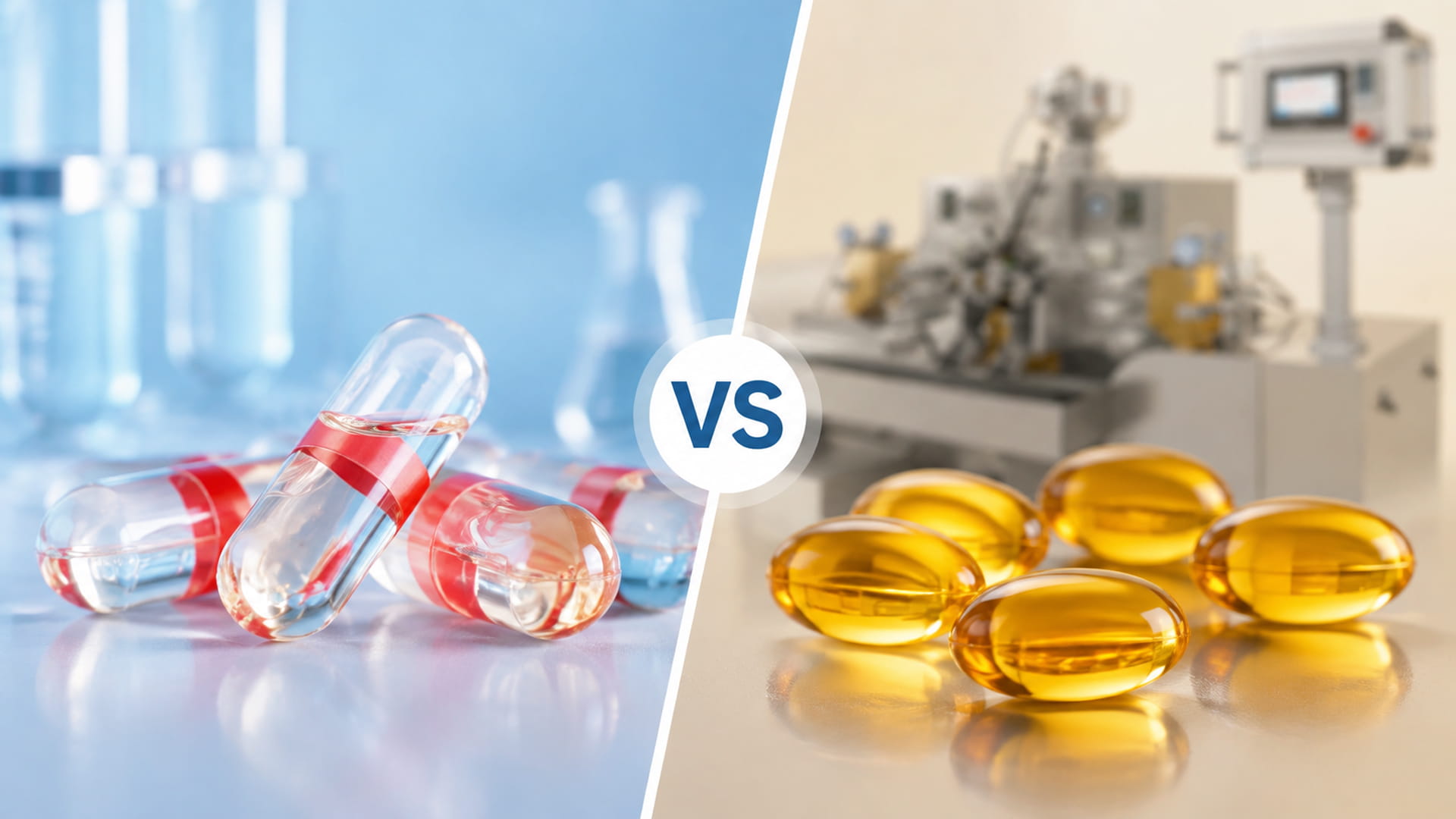
Secara praktis, kedua format tersebut dapat memberikan obat cair atau suplemen, tapi mereka desain dan produksi berbeda secara signifikan. Perbedaan utama termasuk struktur kapsul, bahan cangkang, isian yang kompatibel, dan langkah-langkah manufaktur. Memahami hal ini membantu produsen farmasi memilih bentuk yang tepat untuk produk mereka. Di bawah ini kami menguraikan perbedaan utama dan manfaat masing-masing.
Kapsul keras berisi cairan (LFHC) adalah standar cangkang kapsul dua bagian (topi dan badan) diisi dengan formulasi cair atau berbahan dasar minyak setelah cangkang dibuat. Cangkangnya bisa terbuat dari gelatin atau HPMC nabati (untuk kapsul vegetarian). Dalam produksi, dosis cairan yang tepat (seringkali merupakan larutan minyak, suspensi atau campuran pengemulsi sendiri) disuntikkan ke badan kapsul yang terbuka, kemudian tutupnya ditutup di bagian atas dan disegel. Metode penyegelan khusus memastikan tidak ada kebocoran (Misalnya, mengoleskan pita gelatin tipis di sekitar sendi, disebut "penyegelan pita").
Pendekatan dua bagian ini memungkinkan LFHC menggabungkan manfaat cairan dan kapsul. Anda mendapatkan pelepasan cepat dan bioavailabilitas tinggi dari cairan terlarut, dengan kemudahan menelan dan menutupi rasa yang ditawarkan kapsul. Cangkang LFHC sudah diproduksi sebelumnya, jadi tidak diperlukan peleburan lembaran gelatin yang mahal selama pengisian. Misalnya, Pengisi kapsul cair NJY-300C JinLuPacking secara otomatis mengisi cairan ke dalam cangkang keras ukuran #00–#4 dan menyegelnya dalam satu jalur cepat.
Angka: Kapsul keras berisi cairan (masing-masing memiliki pita berwarna yang menyegel sambungan tutup-badan). Kapsul dua bagian ini menampung minyak atau cairan di dalam cangkang gelatin/HPMC padat.
Kapsul gel lunak (sering kali hanya menelepon softgel) adalah satu potong, kapsul berlapis gel yang berisi cairan atau semi padat. Mereka dibuat pada mesin enkapsulasi mati putar yang terbentuk, mengisi, dan menyegel setiap kapsul dalam satu langkah. Di dalam mesin, dua pita gelatin plastis (agar-agar dicampur dengan gliserin atau sorbitol) dilemparkan dan ditekan bersama-sama sementara aliran cairan terukur disuntikkan di antara keduanya. Setiap kapsul dipotong dan disegel secara bersamaan dengan cetakan yang dipanaskan. Hasilnya mulus, bulat telur, kapsul kedap udara populer digunakan untuk suplemen berbahan dasar minyak (pikirkan pil vitamin E atau omega‑3).
Softgels ideal untuk minyak dan cairan sensitif. Karena seluruh kapsul tertutup rapat saat dibentuk, tidak diperlukan langkah penyegelan terpisah. Hal ini membuat mereka sangat protektif terhadap oksigen dan kelembapan. Banyak minyak ikan, vitamin D/K, dan produk minyak nabati menggunakan kapsul gel lunak karena kenyamanan dan stabilitas penyimpanannya. nyatanya, survei menunjukkan Omega-3 dan suplemen vitamin yang larut dalam lemak paling sering diberikan dalam bentuk kapsul gel lunak.
Angka: Kapsul softgel kuning pada satu sendok teh di sebelah botol pil (umum untuk minyak ikan atau vitamin D).
| Fitur | Kapsul Berisi Cairan (LFHC) | Gel lunak |
| Struktur | Dua potong (topi & tubuh) | Kapsul tertutup satu bagian |
| Bahan Cangkang | agar-agar atau HPMC (pilihan vegetarian) | Gelatin yang diplastisisasi (gelatin + bahan pemlastis) |
| Metode Pembuatan | Isi lalu segel (pada pengisi kapsul + geng) | Enkapsulasi cetakan putar (segel pengisian formulir) |
| Biaya Peralatan | Lebih rendah (pengisi kapsul standar) | Lebih tinggi (garis softgel khusus) |
| Skala (MOQ) | Minimum rendah (cocok untuk batch kecil) | Biasanya diperlukan volume yang lebih tinggi |
| Pilihan Vegetarian | Ya (Cangkang HPMC tersedia) | Terbatas (sekarang beberapa pilihan pati/sayuran) |
| Penyegelan | Penyegelan mekanis (pita/fusi) | Segel bawaan (tertutup rapat dengan cetakan) |
| Risiko Kebocoran | Rendah (setelah disegel dengan benar) | Sangat rendah (tidak ada jahitan yang bocor) |
| Fleksibilitas Produksi | Tinggi (dapat mencampur bubuk atau pelet dengan cairan) | Sedang (hanya isi cairan/pasta) |
| Peningkatan Skala | Mudah (menggunakan mesin kapsul standar) | Lebih kompleks (pengeringan khusus, dll.) |
Kedua bentuk tersebut memberikan bahan aktif berbasis cairan atau minyak dan dapat menawarkan bioavailabilitas yang tinggi dengan menghadirkan obat yang terlarut dalam lipid. Namun, LFHC menggunakan jalur yang lebih sederhana (cangkang sudah jadi) sedangkan softgels memerlukan langkah pemasakan dan pengeringan untuk pita gelatin.
Pengambilan kunci: Mesin lunak membentuk, mengisi, dan potong dalam satu langkah (memerlukan pengeringan), sementara saluran LFHC mengisi cangkang yang sudah jadi dan menyegelnya (melewatkan tahap penyembuhan yang panjang). Seperti yang dicatat oleh salah satu panduan industri, “Softgels menyembuhkan 2–4 hari setelah pengisian. LFHC tidak memiliki tahap penyembuhan… kerugian batch akibat kegagalan pengisian lebih tinggi pada softgels”.
Kapsul berisi cairan menawarkan beberapa keunggulan manufaktur dan produk:
Keunggulan ini menjadikan LFHC menarik di pasar farmasi dan nutraceutical.
Softgel juga memiliki manfaat kuat yang menjadikannya populer untuk banyak suplemen:
Industri yang menggunakan softgels antara lain obat-obatan (obat berbahan dasar minyak), nutraceutical (suplemen makanan), kosmetik (minyak kecantikan nutraceutical), dan bahkan produk kedokteran hewan. Misalnya, softgel vegan atau halal yang terbuat dari pati/gellan sedang meningkat.
| Bahan / Mengisi | Kapsul Berisi Cairan | Kapsul Softgel |
| Minyak ikan / Omega-3 | ✓ Cocok | ✓ Cocok |
| CBD atau Minyak Ganja | ✓ Cocok | ✓ Cocok |
| Kurkumin (Ekstrak Kunyit) | ✓ Cocok | ✓ Cocok |
| Vitamin D (minyak) | ✓ Cocok | ✓ Cocok |
| Ekstrak Cairan Herbal | ✓ Cocok | ✓ Cocok |
| Probiotik | ✓ (jika tersuspensi dalam minyak) | TIDAK (kelembapan membunuh bakteri) |
| API yang Sensitif Terhadap Kelembapan | ✓ (terutama pada kapsul HPMC) | ✗ (cangkang dengan kelembaban tinggi) |
Kedua jenis kapsul menangani bahan aktif yang larut dalam minyak dengan baik. Minyak nutraceutical yang umum (minyak ikan, vitamin D, Ekstrak herbal, CBD, dll.) secara efektif disampaikan oleh LFHC atau kapsul gel lunak.
Terutama, bahan kering atau sensitif terhadap kelembapan lebih baik dalam kapsul keras berisi cairan. Misalnya, probiotik atau API yang sensitif terhadap air tidak praktis dalam kapsul gel lunak. Sebaliknya, Kapsul keras HPMC dapat menampung suspensi probiotik non-air atau formulasi yang sangat kering, karena HPMC memiliki permeabilitas kelembaban dan gas yang rendah. Cangkang softgel mengandung sekitar 30% air dan permeabilitas oksigen yang lebih tinggi, yang dapat mendegradasi bahan-bahan tersebut.
Pendeknya, gunakan LFHC ketika fleksibilitas dan produksi volume rendah penting; pilih softgels untuk skala dan daya tarik rak premium.
Dari sudut pandang pabrikan, keputusannya sering kali bergantung pada skala, investasi, dan tujuan strategis:
Tabel di bawah ini merangkum pilihan berdasarkan skenario:
| Jenis Perusahaan / Situasi | Format yang Direkomendasikan |
| Startup kecil atau R&proyek D | Kapsul Berisi Cairan (MOQ rendah, fleksibel) |
| Garis suplemen khusus, <10k unit | Kapsul Berisi Cairan |
| Produsen kontrak (fleksibilitas) | Kapsul Berisi Cairan |
| Produsen farmasi besar | Gel lunak (throughput yang tinggi, konsisten) |
| Omega-3 atau vitamin bervolume tinggi | Gel lunak |
| Produk membutuhkan kapsul vegan | Kapsul Berisi Cairan (cangkang HPMC) |
Angka: Tampilan jarak dekat dari mesin pengisian kapsul cair yang menyalurkan cairan ke dalam kapsul.
JinLuPacking memproduksi berbagai macam peralatan kapsul. Misalnya, kita NJY-300C pengisi kapsul cair garis menangani pengisian cairan, dan kami juga menyediakan mesin kapsul gel lembut untuk produksi satu langkah. Mesin-mesin ini memenuhi standar cGMP untuk penggunaan farmasi dan nutraceutical.
Pada akhirnya, keduanya berisi cairan kapsul keras Dan softgel sudah mapan, bentuk sediaan yang efektif. Softgels unggul dalam menghasilkan minyak dan bahan aktif yang larut dalam minyak dengan pelarutan cepat, paket anti rusak. Kapsul keras berisi cairan menawarkan fleksibilitas, lebih cepat R&penskalaan D, dan kesederhanaan manufaktur. Dengan memahami perbedaan mereka, manfaat dan persyaratan produksi, produsen dapat memilih jenis kapsul yang paling sesuai dengan bahan kimia produk dan kebutuhan bisnis mereka.
Jika Anda merancang formulasi baru atau meningkatkan lini produksi Anda, pertimbangkan kedua opsi tersebut dengan hati-hati. Siap mengoptimalkan produksi kapsul Anda? Jinlu Packing menawarkan peralatan industri terkemuka untuk kedua format (Misalnya, NJP-1000C kami dapat terisi hingga 60,000 kapsul keras per jam) dan dapat memberi saran tentang solusi terbaik untuk produk Anda. Hubungi kami untuk mendiskusikan proyek Anda, permintaan Penawaran, atau pelajari lebih lanjut tentang kapsul cair dan softgel kami garis pengemasan.
Ya. Pengisi kapsul khusus (seperti mesin pengisian kapsul cair JinLuPacking) dapat menyuntikkan minyak atau cairan ke dalam kapsul keras kosong, yang kemudian disegel (misalnya. dengan cara mengikat) jadi mereka menahan cairan dengan aman. Ini menciptakan “kapsul keras berisi cairan”.
Tidak ada satu pun yang “lebih baik” secara universal – keduanya melayani kebutuhan yang berbeda. LFHC unggul dalam hal biaya, kecepatan, dan fleksibilitas (terutama untuk batch kecil), sementara softgels menawarkan segel yang mulus dan format yang familiar untuk suplemen minyak. Pilihan terbaik tergantung pada bahan pengisi Anda, volume produksi, dan pasar.
LFHC yang tersegel dengan benar tidak akan bocor. Setelah diisi, sambungan tutup-badan ditutup rapat dengan menggunakan pita gelatin atau HPMC (atau menggunakan penyegelan fusi). Jika dilakukan dengan benar, kapsul menahan cairan dengan erat selama pengeringan, penyimpanan, dan gunakan. Garis kualitas menguji dan memoles setiap batch untuk memastikan integritas.
Keduanya menawarkan bioavailabilitas yang sangat baik untuk bahan aktif berbasis minyak. Formulasi pengisian (jenis minyak, pengemulsi) biasanya menentukan penyerapan, bukan tipe shell. Softgels larut dengan cepat (~10–20 menit), sedangkan kapsul cangkang keras (LFHC) larut sedikit lebih lambat (30–60 menit). Dalam praktiknya, isian yang dirancang dengan baik dalam bentuk apa pun dapat mencapai kemanjuran serupa.
Ya. Cangkang HPMC nabati banyak digunakan untuk kapsul berisi cairan. Kelembapan HPMC yang rendah dan struktur yang kuat memungkinkan cairan berminyak masuk. nyatanya, penggunaan cangkang HPMC merupakan salah satu cara menawarkan kapsul vegetarian dalam bentuk cair, yang tidak bisa disediakan oleh softgel gelatin standar.
Perusahaan mengutip alasan seperti biaya produksi yang lebih rendah, waktu tunggu yang lebih pendek, dan fleksibilitas formulasi. Misalnya, sebuah R&Tim D dapat dengan cepat menyesuaikan dosis atau menggabungkan bahan-bahan dalam LFHC tanpa melengkapinya kembali. Juga, VFHC memungkinkan perluasan lini produk dengan mudah (karena kapsul yang sama dapat diisi dengan cairan yang berbeda).
Umumnya, Ya. Produksi softgel membutuhkan peralatan yang mahal (kompor agar-agar, putaran mati, pengering) dan lebih banyak tenaga kerja selama beberapa hari. LFHC menggunakan bahan pengisi yang lebih sederhana dan energi yang lebih sedikit. Laporan industri mencatat biaya produksi LFHC 15–35% lebih murah per unit dibandingkan softgel. Namun, pada volume yang sangat tinggi, softgels masih bisa hemat biaya.
Bahan cair diisi menggunakan mesin pengisi kapsul cair (seringkali merupakan lampiran atau varian dari pengisi kapsul standar). Misalnya, Mesin seri NJY JinLuPacking menggunakan pompa presisi (piston keramik atau pompa mikro) untuk mengukur minyak ke dalam kapsul. Mesin ini dapat mencapai kecepatan tinggi (beberapa ribu caps per jam) dengan akurasi lebih baik dari ±1%.
Sebagian besar tidak berair, bahan pengisi berbahan dasar minyak atau berbahan dasar pelarut. Contoh umum: minyak ikan, minyak vitamin E, vitamin cair, ekstrak minyak herbal, emulsi, dan sistem penghantaran obat pengemulsi mandiri tertentu. Isiannya harus dapat dipompa dan umumnya tidak korosif. Cairan berbahan dasar air dihindari (mereka dapat melemahkan segel). Viskositas pengisian harus dikontrol untuk mencegah percikan atau tetesan selama pengisian.
Ya. Banyak mesin kapsul yang dapat diubah: dengan menukar sistem dosis, mereka dapat mengisi bubuk/butiran atau cairan. Dalam praktiknya, pelat dosis bubuk pengisi kapsul standar diganti dengan kepala pengisian cairan dan sistem pompa. Fleksibilitas ini berarti satu lini dapat beralih antara produksi bubuk dan LFHC.
Referensi:
1.Kapsul Gelatin Keras Berisi Cairan dan Tertutup —— Taylor & Fransiskus Daring
2.Kapsul Gelatin Lembut (Gel lunak) —— Sains Langsung
3.Pengaruh suhu terhadap karakteristik pita dalam pembuatan kapsul gelatin lunak —— Perpustakaan Kedokteran Nasional
4.Ulasan Komprehensif tentang Kapsul Gelatin Lunak: Manufaktur Industri, Kemajuan Teknologi, dan Perspektif Peraturan —— Jurnal PENGIRIMAN OBAT & TERAPI
5.Kapsul Gelatin Keras Berisi Cairan —— Jurnal PENGIRIMAN OBAT & TERAPI
6.Penentuan jumlah air optimal dalam massa isi cair untuk kapsul gelatin keras melalui analisis tekstur dan desain eksperimen —— Perpustakaan Kedokteran Nasional