Permintaan global untuk Suplemen Herbal produk terus berkembang seiring semakin banyaknya konsumen yang mencari cara alami untuk mendukung kesehatan dan kebugaran mereka. Dari kapsul dan tablet hingga bubuk dan permen karet, suplemen herbal kini banyak ditemukan di apotek, supermarket, dan toko online di seluruh dunia. Seiring dengan berkembangnya pasar, produsen menghadapi peningkatan ekspektasi terhadap kualitas yang konsisten, produksi yang efisien, dan kemasan andal yang melindungi bahan tumbuhan sensitif. Praktik manufaktur yang baik dan kontrol pengemasan yang tepat juga penting untuk memastikan kualitas dan kepatuhan produk selama proses produksi.
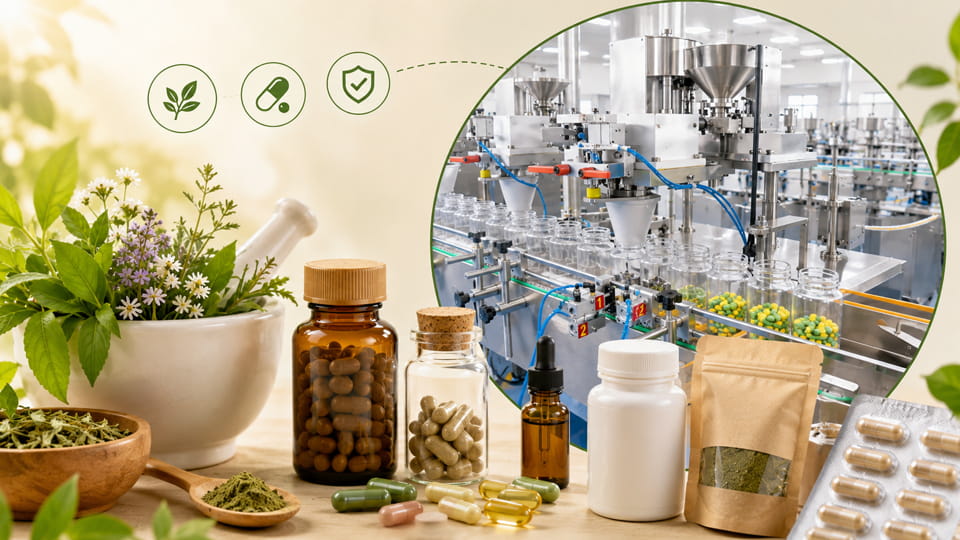
Baik Anda merencanakan lini produksi suplemen herbal baru atau meningkatkan peralatan yang sudah ada, memahami proses manufaktur adalah langkah pertama menuju pengambilan keputusan yang lebih baik. Dalam panduan ini, kita akan membahas jenis suplemen herbal yang paling umum, bagaimana mereka diproduksi, peralatan yang terlibat, dan solusi pengemasan yang membantu produsen meningkatkan efisiensi, kualitas produk, dan umur simpan.
Suplemen herbal (juga disebut suplemen botani) adalah kategori suplemen makanan terbuat dari bahan tanaman (akar, daun-daun, bunga, benih, atau ekstrak) dimaksudkan untuk menunjang kesehatan. Berbeda dengan vitamin sintetik, suplemen herbal berasal dari sumber alami. Mereka sering memanfaatkan obat-obatan herbal tradisional (misalnya. jahe, ginkgo, echinacea) dan termasuk ekstrak atau bubuk pekat. Dalam istilah regulasi, suplemen herbal diklasifikasikan sebagai suplemen makanan, bukan narkoba. Di bawah AS. sesuai hukum, produk tersebut harus mengandung bahan-bahan yang diberi label dan menghindari kontaminan (pestisida, logam berat). Bentuk yang umum termasuk kapsul, tablet, softgel, bubuk, cairan (tincture), teh dan permen karet.
Suplemen herbal bertujuan untuk “melengkapi pola makan” dengan nutrisi atau bahan aktif nabati, sering untuk dukungan kekebalan, pencernaan, menghilangkan stres, atau energi. Misalnya, bahan-bahan seperti elderberry, echinacea dan vitamin C populer untuk kekebalan, sedangkan ashwagandha dan teh hijau digunakan untuk menghilangkan stres dan metabolisme. Konsumen semakin memilih suplemen herbal karena sumbernya yang alami dan labelnya yang bersih. Pasar suplemen herbal global sedang berkembang $45.9 miliar masuk 2025 dan diproyeksikan tumbuh ~8% setiap tahunnya 2034, didorong oleh permintaan akan layanan kesehatan preventif berbasis tanaman.

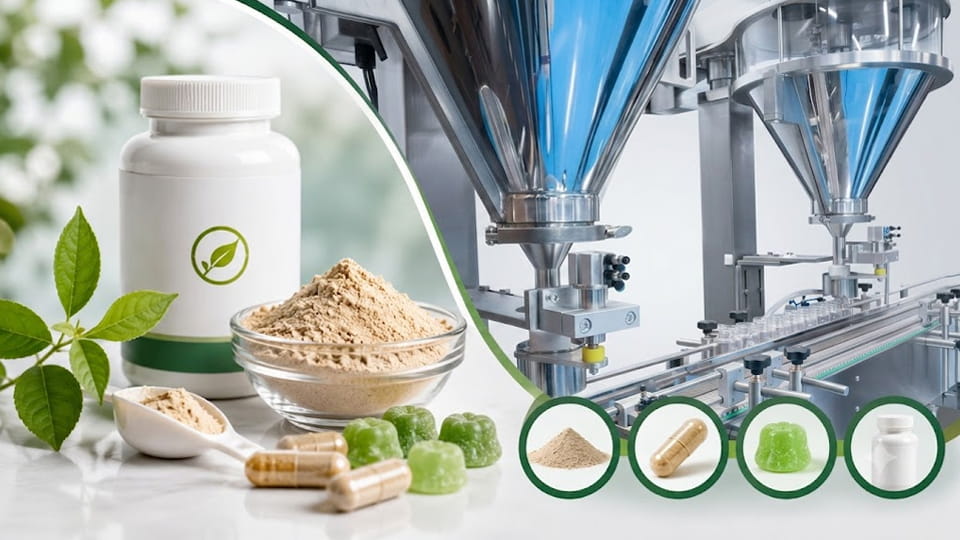
Suplemen herbal dibuat dalam berbagai bentuk sediaan. Masing-masing bentuk mempunyai kelebihan, jadi produsen memilih berdasarkan produk dan pasar. Format umum meliputi:


Suplemen herbal tersedia dalam berbagai bentuk: kapsul keras, softgel, tablet dan bubuk semuanya menggunakan bahan tumbuhan. Memilih bentuk yang tepat tergantung pada ekstrak herbalnya, kebutuhan dosis, dan preferensi konsumen.
| Formulir Tambahan | Bahan Khas Herbal | Keuntungan Utama | Kemasan Umum | Peralatan Manufaktur yang Direkomendasikan |
|---|---|---|---|---|
| Kapsul | Ashwagandha, Kunyit, Ginseng | Mudah ditelan, dosis yang akurat, melindungi bubuk sensitif | Botol, Paket blister | Mesin Pengisian Kapsul, Jalur Pengisian Botol, Mesin pengemasan blister |
| Tablet | Spirulina, Bawang putih, Thistle Susu | Hemat biaya, umur simpan yang lama, cocok untuk produksi volume tinggi | Botol, Paket blister | Mesin Press Tablet, Mesin pelapis tablet, Jalur Pengemasan Botol |
| bubuk | cocok, kelor, rumput gandum | Ukuran porsi yang fleksibel, ideal untuk campuran minuman dan campuran protein | Kantong stand-up, Paket tongkat, stoples | Pengaduk Bubuk, Mesin Pengisian Auger, Mesin pengepakan kantong premade |
| Gel lunak | Minyak Bawang Putih, Minyak Biji Rami, Minyak Primrose Malam | Cocok untuk ekstrak berbahan dasar minyak, mudah dikonsumsi | Botol, Paket blister | Lini Produksi Gel Lunak, Mesin Pengisian Botol |
| permen karet | Elderberi, Cuka Sari Apel, Kunyit | Rasanya enak, populer di kalangan anak-anak dan orang dewasa | Botol, kantong | Mesin Penghitung Gummy, Jalur Pengisian Botol, Mesin pengepakan kantong premade |
| Ekstrak Cair | Echinacea, ginkgo biloba, Akar Valerian | Penyerapan cepat, nyaman untuk dosis yang disesuaikan | Botol kaca, botol penetes | Mesin Pengisian Cairan, Mesin capping, Mesin Pelabelan |
| Kantong Teh Herbal | Kamomil, Permen, Kembang sepatu | Cara konsumsi tradisional, persiapan sederhana | Sachet, karton | Mesin Pengemas Kantong Teh Celup, Mesin Karton |
Produsen mungkin menargetkan format tertentu untuk bioavailabilitas atau daya tarik konsumen. Misalnya, suplemen herbal berbasis kapsul memiliki pangsa pasar yang signifikan (sekitar 39%) karena melindungi bahan aktif dan cepat larut dalam tubuh. bubuk (dalam toples atau bungkus stik) semakin populer untuk campuran protein atau makanan super hijau, sementara tablet tetap menjadi bahan pokok vitamin dan ekstrak herbal standar. Akhirnya, itu peralatan manufaktur (pengisi kapsul, mesin press tablet, kantong, dll.) harus sesuai dengan bentuk dan volume produksi yang dipilih.
Produsen fokus pada jamu dengan permintaan konsumen yang kuat dan dukungan ilmiah. Tumbuhan utama dalam suplemen meliputi:
Perbandingan di bawah ini memberikan gambaran singkat tentang beberapa suplemen herbal yang paling banyak digunakan dalam industri nutraceutical saat ini:
| Suplemen Herbal | Tujuan Kesehatan Bersama* | Bentuk Dosis Umum | Kemasan Khas | Catatan Manufaktur |
|---|---|---|---|---|
| Kunyit (Kurkumin) | Dukungan sendi dan inflamasi | Kapsul, tablet, bubuk | botol HDPE, Paket blister, kantong stand-up | Ekstrak kurkumin sering distandarisasi dengan agen aliran |
| Ashwagandha | Dukungan stres dan tidur | Kapsul, permen karet, bubuk | Botol plastik, Paket tongkat | Umumnya diproduksi sebagai ekstrak akar standar |
| Ginseng | Dukungan energi dan kognitif | Kapsul, softgel, ekstrak cair | Botol kuning, Paket blister | Kontrol kelembapan penting selama pengisian |
| Echinacea | Dukungan kesehatan kekebalan tubuh | Tablet, kapsul, tincture | Botol, botol penetes kaca | Sering diproduksi sebagai ekstrak kering atau ekstrak cair |
| Thistle Susu | Dukungan kesehatan hati | Kapsul, softgel | botol HDPE, Paket blister | Konten silymarin standar biasanya diperlukan |
| Bawang putih | Dukungan kesehatan jantung | Gel lunak, tablet | Paket blister, botol | Pengendalian bau dan pelapisan sering kali dipertimbangkan |
| Jahe | Dukungan pencernaan | Kapsul, bubuk, kantong teh | Sachet, kantong, botol | Kemampuan mengalir bubuk mempengaruhi akurasi pengisian |
| ginkgo biloba | Dukungan memori dan sirkulasi | Tablet, kapsul | Botol, Paket blister | Seringkali distandarisasi untuk kandungan flavonoid |
| Ekstrak Teh Hijau | Dukungan antioksidan | Kapsul, tablet | Botol, Paket blister | Perlindungan panas dan kelembapan meningkatkan stabilitas |
| Elderberi | Dukungan kekebalan | permen karet, sirup, kapsul | botol PET, botol kaca | Permen karet memerlukan peralatan penghitungan dan pembotolan khusus |
Tren di 2025 sorot suplemen yang diformulasikan untuk kesehatan kekebalan tubuh (elderberry, echinacea, seng), kesehatan wanita, dan kesehatan kognitif. Misalnya, Konsumen Inggris semakin banyak yang menggunakan kunyit, ashwagandha, kelor dan elderberry untuk kekebalan dan stres. Sumber dan formulasi bahan memerlukan kontrol kualitas: setiap ramuan harus diuji potensi aktifnya dan tidak adanya kontaminan (pestisida, logam berat) sesuai standar GMP.

Pembuatan suplemen herbal mengikuti proses multi-langkah, menggabungkan teknik farmasi standar dengan perawatan khusus untuk bahan tumbuhan. Aliran umumnya adalah: mencari ramuan mentah → pembersihan → pengeringan/penggilingan → pencampuran → pembentukan sediaan (kapsul/tablet) → kemasan. Langkah -langkah kunci termasuk:
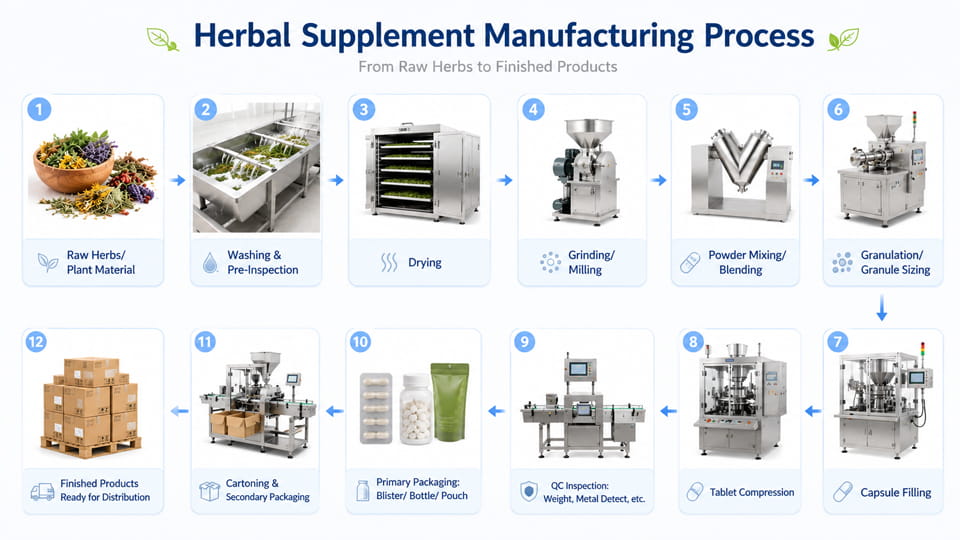
Sepanjang manufaktur, kondisi (suhu, kelembaban) dikontrol secara ketat. Banyak tumbuhan yang peka terhadap kelembapan, sehingga seluruh saluran dapat dijalankan di ruangan bersih dengan kelembapan yang dikontrol. Kemasan penghalang tinggi (aluminium foil melepuh, HDPE dengan pengering) dipilih untuk mempertahankan umur simpan.
Produksi suplemen yang berhasil bergantung pada keandalannya mesin pengolah dan pengemasan. Berikut ikhtisar peralatan utama – terutama yang ditawarkan oleh Jinlu – beserta perannya:

Angka: Mesin pengisian kapsul berkecepatan tinggi Jinlu (model NJP-1500D, 90K cps/jam). Pengisi otomatis semacam itu mengarahkan kapsul kosong, bubuk herbal meteran, padatkan isinya, dan merakit setiap kapsul yang terisi dengan akurasi ±3%..
 Angka: Mesin Press Tablet Rotary HZP-26D-40D. Pengepres tablet memampatkan butiran herbal menjadi tablet dengan berat dan kekerasan yang tepat. Mesin press Jinlu dapat menghasilkan output berlebih 260,000 tablet/jam sambil memastikan keseragaman.
Angka:Mesin Pengemas Kantong Premade. Mesin seperti itu (seperti seri GD Jinlu) dapat terbuka secara otomatis, mengisi, dan segel kantong stand-up atau ritsleting dengan bedak, butiran atau tablet, mencapai bobot pengisian yang sangat tepat.
Peralatan penting lainnya termasuk mesin cuci botol (untuk memulai botol kosong), pemberi label, Dan detektor logam. Mesin Jinlu dirancang untuk memenuhi sertifikasi global (Ce, CGMP, FDA) dan dapat disesuaikan (misalnya. dengan pengumpan vakum untuk bubuk yang sulit, timbangan kombinasi untuk campuran).
Memilih kemasan primer yang tepat mempengaruhi stabilitas, pengalaman pengguna, dan kepatuhan. Di bawah ini kami membandingkan format kemasan umum untuk suplemen:
| Format | Terbaik untuk | Keuntungan | Tantangan/Pertimbangan |
| Botol (HDPE, PELIHARAAN) | Kapsul, Tablet, Gel lunak, permen karet | Penghalang kelembaban/oksigen yang kuat; mudah diberi label; penutupan tahan anak tersedia; format yang familiar | Besar untuk pengiriman; seringkali buram (kurang dapat didaur ulang); memerlukan tutup CR dengan bahan campuran |
| Paket blister (Alu/PVC) | Tablet, Kapsul, Kaplet | Perlindungan dosis unit (setiap pil disegel); penghalang yang sangat baik (menggagalkan); anti rusak; dosis yang nyaman | Lebih mahal per unitnya; bentuk/ukuran terbatas; daur ulang foil/PVC sulit dilakukan |
| Paket Tongkat | bubuk (satu porsi), Teh | Dosis portabel yang telah diukur sebelumnya; sisa minimal; profil ramping | Sampah sekali pakai; memerlukan laminasi (tantangan daur ulang); volume kecil per bungkus |
| Sachet | butiran, Tablet Efervescent, bubuk | Paket satu porsi, seringkali larut dalam air; biaya rendah | Penghalang kelembaban terbatas; rawan tusukan; sampah sekali pakai |
| Kantong Stand-up (dapat ditutup kembali) | bubuk, butiran, permen karet, Multipak | Ringan, menghemat ruang; laminasi penghalang tinggi; ritsleting yang dapat ditutup kembali; bentuk yang dapat disesuaikan | Seringkali transparan (risiko ringan); membutuhkan pengering untuk konten yang sensitif terhadap kelembaban; ritsleting meningkatkan biaya |
| stoples / Kaleng (Kaca/Aluminium) | permen karet, bubuk, Produk unggulan | Kemampuan daur ulang yang unggul (kaca/aluminium); penghalang tinggi; dapat digunakan kembali; tampilan premium | Lebih berat (biaya pengiriman); mudah pecah (kaca); tidak tahan anak secara default kecuali mekanisme penutup ditambahkan |
| Karton Sekunder | Kapsul/Tablet dalam botol atau lepuh | Memungkinkan pengemasan massal; menambahkan penghalang untuk banyak produk; menyediakan ruang pelabelan | Menambah biaya dan material; penghalang karton lebih rendah daripada plastik (mungkin memerlukan lapisan untuk kelembapan) |
Untuk suplemen herbal, kontrol kelembaban dan oksigen adalah fungsi pengemasan yang penting. Misalnya, foil melepuh dengan penghalang tinggi atau kantong multi-lapis dapat melindungi herba higroskopis. Tahan terhadap anak-anak (Kr) penutupan seringkali diwajibkan secara hukum (terutama untuk vitamin). Pilihan yang berkelanjutan (plastik PCR, bahan yang dapat didaur ulang, kantong kompos) sedang tren yang berkembang, namun tetap harus memenuhi persyaratan keselamatan dan umur simpan.
Mesin pengemas (pengisi botol, garis melepuh, pengemas kantong) harus disesuaikan dengan format dan keluaran yang dipilih. Sistem otomatis (seperti pengemas kantong GD model Jinlu atau mesin blister seri PJ) menangani kecepatan tinggi dengan penyegelan yang konsisten, yang penting untuk farmasi kepatuhan terhadap GMP.
Bahkan dengan peralatan yang bagus, produksi suplemen dapat menemui hambatan. Berikut adalah masalah dan solusi yang sering terjadi:
Dalam semua kasus, pemeliharaan preventif dan operator berpengalaman adalah kuncinya. Pemulihan kesalahan otomatis (menolak stasiun, alarm) membantu menangkap masalah lebih awal. Misalnya, Mesin Jinlu memiliki fitur “penolakan cerdas” untuk membuang kantong yang salah isi.
Memilih peralatan pengemasan adalah keputusan strategis. Faktor-faktor yang perlu dipertimbangkan termasuk:
Dalam ringkasan, pilih mesin yang diberi peringkat untuk keluaran yang Anda inginkan dan persyaratan kepatuhan. Itu peralatan yang tepat memastikan pengisian/segel yang konsisten, memaksimalkan hasil, dan menghindari penarikan kembali yang mahal.
Pergeseran global menuju kesehatan alami telah menjadikan suplemen herbal sebagai industri besar, namun hal ini juga memerlukan manufaktur tingkat farmasi yang ketat. Mulai dari pengujian tumbuhan mentah secara cermat hingga pengisian kapsul otomatis dan pengemasan anti rusak, setiap langkah harus dioptimalkan untuk konsistensi, kepatuhan, dan kualitas. Kemajuan dalam peralatan (seperti pengisi kapsul berkecepatan tinggi, garis lepuh yang presisi, dan mesin kantong fleksibel) memungkinkan perusahaan nutraceutical untuk meningkatkan skalanya secara efisien sambil mempertahankan toleransi yang ketat.
Dalam ringkasan, produksi suplemen herbal adalah tarian kompleks dari pengetahuan botani tradisional dan teknik modern. Dengan mengikuti pedoman GMP, menggunakan mesin yang tepat, dan tetap terdepan dalam tren (menyukai kemasan berkelanjutan dan formulasi yang dipersonalisasi), produsen dapat memberikan dengan aman, produk nabati yang efektif. Untuk perusahaan yang ingin memperluas atau meningkatkan lini mereka, Pengepakan Jinlu menawarkan rangkaian pengisi kapsul yang terintegrasi, mesin press tablet, mesin melepuh, pengemas kantong dan banyak lagi – semuanya dibuat untuk produksi nutraceutical. Hubungi kami untuk mempelajari bagaimana peralatan kami dapat membantu membawa suplemen herbal Anda dari kebun herbal ke rak toko dengan kualitas dan efisiensi.
Suplemen Herbal adalah suplemen makanan yang terbuat dari tumbuh-tumbuhan, ekstrak botani, atau bahan turunan tumbuhan lainnya. Produk-produk ini umumnya tersedia dalam bentuk kapsul, tablet, bubuk, permen karet, teh, atau ekstrak cair dan dirancang untuk melengkapi makanan daripada menggantikan makanan konvensional. Tergantung pada pasar, suplemen herbal diatur sebagai suplemen makanan dan bukan obat farmasi.
Di AS, suplemen makanan (termasuk jamu) termasuk dalam undang-undang DSHEA FDA. Produsen harus mengikuti aturan cGMP FDA (21 CFR 111) untuk memastikan identitas, kemurnian, dan untuk menghindari kontaminasi. Ini berarti pengujian menyeluruh terhadap jamu mentah dan pemeriksaan dalam proses. Di Eropa dan tempat lain, standar manufaktur yang baik serupa (GMP UE, pedoman WHO) berlaku untuk nutraceutical.
Mereka datang dalam berbagai bentuk: kapsul, tablet, bubuk, cairan/tincture, permen karet, Paket tongkat, teh, dll.. Pilihannya tergantung pada sifat botani dan preferensi konsumen. Misalnya, ramuan kecil yang pahit mungkin dimasukkan ke dalam kapsul, sedangkan teh santai dijual dalam bentuk teh celup.
Proses pembuatannya biasanya mencakup beberapa langkah utama:
• Pilihan ramuan mentah
• Pembersihan dan pengeringan
• Penggilingan atau penggilingan
• Pencampuran bubuk
• Granulasi (jika diperlukan)
• Pengisian kapsul atau kompresi tablet
• Pemeriksaan kualitas
• Kemasan primer
• Kartoning dan kemasan sekunder
Pabrikan modern sering kali mengotomatiskan proses ini untuk meningkatkan konsistensi, produktivitas, dan kualitas produk.
Minimal, produsen membutuhkan peralatan pencampur, pengisi kapsul atau tablet press (tergantung pada dosis), dan jalur pengemasan. Mesin kunci termasuk: Mesin pengisian kapsul, mesin tablet putar, mesin pengemas melepuh, jalur penghitungan/pengisian botol, mesin pengemas sachet/stik, dan mesin pengepakan kantong. Misalnya, Jinlu Packing menawarkan pengisi kapsul dan pengemas kantong yang dirancang khusus untuk nutraceuticals.
Sebagian besar produsen menggunakan bahan kemasan tahan lembab seperti kemasan blister, Botol HDPE dengan segel induksi, laminasi aluminium foil, atau kantong penghalang tinggi. Lingkungan produksi yang terkendali, pengering, sistem penyegelan yang tepat, dan pemeriksaan kualitas rutin juga membantu melindungi suplemen herbal selama penyimpanan dan transportasi.
Kemasan terbaik bergantung pada jenis produk dan kepekaannya terhadap kelembapan, oksigen, dan cahaya.
Pilihan kemasan yang umum meliputi:
• Botol untuk kapsul dan tablet
• Paket melepuh untuk perlindungan dosis unit
• Kantong stand-up untuk bedak
• Tempelkan kemasan dan sachet untuk satu porsi
• Botol kaca untuk ekstrak cair
Memilih kemasan penghalang yang tepat membantu menjaga kualitas produk dan memperpanjang umur simpan.
Suplemen herbal diklasifikasikan sebagai suplemen makanan dan dapat dijual tanpa resep dokter, fokus pada dukungan nutrisi. Obat-obatan herbal (seperti Ayurveda atau pengobatan tradisional Tiongkok) sering diatur sebagai obat atau produk medis, dengan klaim menyembuhkan penyakit. Suplemen dapat meningkatkan kesehatan secara umum (misalnya. “mendukung kekebalan”) tetapi tidak dapat mengklaim dapat menyembuhkan penyakit.
Referensi:
1.Dokumen Panduan Suplemen Makanan & Informasi Peraturan—— KITA. Badan Pengawas Obat dan Makanan
2.Suplemen Makanan —— KITA. Badan Pengawas Obat dan Makanan
3.Suplemen Herbal —— KITA. Depertan
4.Pengembangan Suplemen Diet Botani yang Aman dan Efektif —— Perpustakaan Kedokteran Nasional
5.Jaminan kualitas dan keamanan suplemen makanan herbal —— Perpustakaan Kedokteran Nasional
6.Suplemen Makanan dan Herbal —— NCCIH