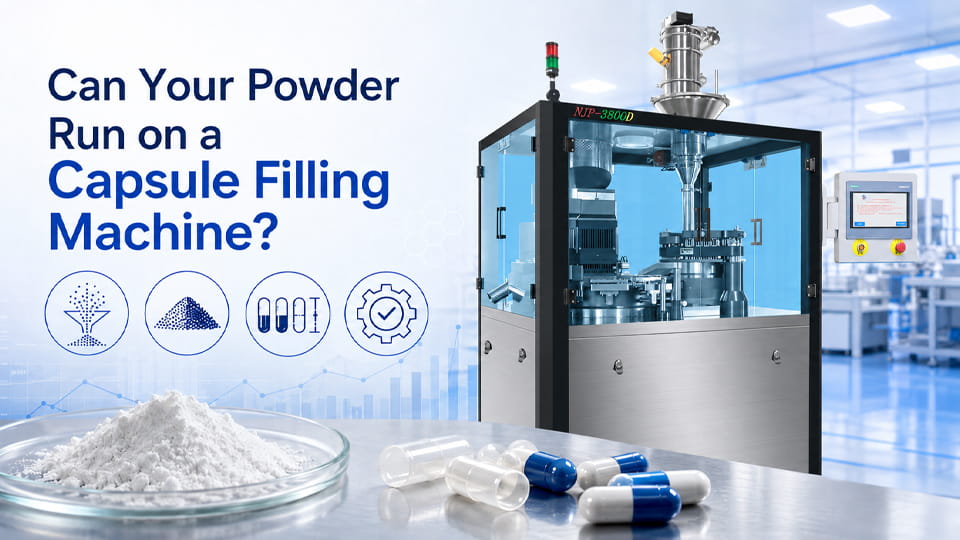

Formulasi kapsul bisa menggunakan bubuk, butiran, pelet atau tablet mini, masing-masing dengan pro dan kontra yang unik. bubuk sederhana dan umum tetapi bisa berdebu atau alirannya buruk. butiran (bubuk yang diaglomerasi) meningkatkan aliran dan mengurangi debu dengan biaya pemrosesan ekstra. Pelet adalah partikel multi-unit berbentuk bola kasar dengan aliran sangat baik dan ideal untuk formulasi pelepasan terkontrol dan kombinasi. Tablet mini (tablet kecil diisi ke dalam kapsul) memungkinkan pemberian dosis yang tepat dan beberapa API atau profil pelepasan dalam satu kapsul. Pemilihan bahan pengisi mempengaruhi keseragaman campuran, fleksibilitas dosis dan kemampuan mengalir – dan itu mempengaruhi yang mana mesin pengisian kapsul fitur diperlukan.
Panduan ini membandingkan setiap bentuk, menunjukkan betapa pentingnya pilihan material untuk produksi, dan bahkan menyediakan pohon keputusan untuk membantu Anda memilih bahan pengisi kapsul terbaik untuk produk Anda (dan dengan demikian peralatan yang tepat). Kami juga mencantumkan data formulasi utama untuk dibagikan kepada pemasok mesin kapsul saat menentukan cakupan proyek Anda.

Kapsul keras dapat diisi dengan berbagai macam bentuk padat. Berikut ini perbandingan singkatnya bubuk, butiran, pelet Dan tablet mini dalam kapsul:
| Isi Bahan | Bentuk Khas | Keuntungan Utama | Tantangan Umum |
| Bubuk (partikel halus) | Campuran kering API + eksipien | Fleksibilitas dosis tinggi; pembubaran cepat (rilis segera); formulasi sederhana. | Masalah aliran: cenderung menggumpal, memisahkan atau menjembatani; keseragaman dosis dapat terganggu. Sensitif terhadap kelembapan dan listrik statis. |
| butiran (bubuk yang diaglomerasi) | Cluster yang lebih besar dari granulasi basah/kering | Kemampuan mengalir dan kepadatan curah yang lebih baik; mengurangi debu; berat isi yang lebih seragam. Memungkinkan pemberian dosis yang kohesif. | Langkah proses ekstra: granulasi menambah biaya/waktu. Variasi ukuran partikel mempengaruhi keseragaman; bridging masih mungkin dilakukan jika dikeringkan dengan buruk. |
| Pelet (bulatan) | Manik-manik mikro berbentuk bulat (sering dilapisi) | Rilis Terkendali: dapat melapisi setiap pelet untuk pelepasan waktunya. Bentuk seragam → aliran yang sangat baik di hopper. <br>Dosis yang konsisten: diukur berdasarkan volume, tidak dihitung. | Produksi yang kompleks: memerlukan granulasi/ekstrusi dan pelapisan. Peralatan harus menangani manik-manik kecil tanpa pemisahan. |
| Tablet Mini (tablet mikro) | Tablet kecil (2diameter –4 mm) | Dosis fleksibel: gabungkan beberapa tablet mini untuk multi-API atau rilis terhuyung. Mudah ditangani seperti tablet kecil. | Menghitung tantangan: membutuhkan pengumpan khusus untuk menghitung dan menjatuhkan. Mungkin memiliki kemampuan mengalir lebih rendah dibandingkan manik-manik lepas. Membutuhkan perkakas tekan tablet yang presisi. |
Setiap materi bisa menjadi pengisian utama atau bagian dari kombinasi. Garis kapsul modern bahkan dapat mencampur bentuk dalam satu kapsul (misalnya. pelet + bubuk) untuk mencapai profil rilis yang kompleks.

Sifat fisik bahan pengisi Anda secara langsung mempengaruhi kinerja pengisian kapsul dan kualitas produk. Kemampuan mengalir, ukuran partikel, kepadatan dan kelembaban adalah faktor kuncinya. Misalnya, serbuk yang sangat halus mungkin kohesif atau berdebu (cenderung menggumpal atau menggantung di permukaan), sedangkan partikel atau pelet yang lebih besar mengalir lebih mudah. Pilihan ini juga mempengaruhi keseragaman campuran – bubuk halus dengan ukuran partikel yang tercampur dapat terpisah selama penanganan, sedangkan pelet seragam atau tablet mini mengurangi risiko tersebut.
Bahan pengisi juga mendorong ketepatan dosis dan fleksibilitas formulasi. Pelet (sering disebut “multipartikulat”) memungkinkan pola pelepasan yang kompleks dan kombinasi pelet yang berbeda dalam satu kapsul. Tablet mini memungkinkan beberapa API atau pelapis per kapsul. Sebaliknya, campuran bubuk sederhana biasanya menghasilkan satu profil pelepasan. Banyak mesin kapsul memungkinkan pencampuran berbagai bentuk, tapi setiap penambahan (misalnya. pelet + bubuk) menambah kompleksitas dan mungkin memerlukan pengumpan atau stasiun terpisah.
Akhirnya, bahan menentukan mekanisme pemberian dosis pada pengisi kapsul yang digunakan. Pengumpan auger atau cakram dan pin tamping berfungsi baik untuk serbuk yang mengalir bebas, sementara stasiun pelet atau tablet menangani partikel kaku. Kami membahas pertimbangan mesin di bawah ini.
Bubuk adalah isi kapsul klasik. Ini hanyalah perpaduan yang mengalir bebas API Dan eksipien (pengencer, tarian meluncur, dll.). Bedak bersinar saat Anda membutuhkannya sederhana, formula pelepasan segera atau dosis yang sangat dapat disesuaikan. Karena bedak punya luas permukaan yang tinggi, mereka larut dengan cepat — ideal untuk tindakan yang cepat. Dan bedak memungkinkan Anda menyesuaikan dosis: untuk pediatri, kekuatan geriatri atau variabel, Anda dapat mengatur campurannya dengan mudah.

Namun, bedak memiliki kelemahan. Kemampuan mengalir seringkali miskin: partikel halus dapat menempel di hopper atau menempel di feeder. Bahkan bubuk yang tercampur dengan baik pun dapat terpisah (partikel yang lebih berat mengendap) jika terguncang, menyebabkan variasi berat isi. Kurangnya bentuk yang pasti berarti pemberian dosis bergantung pada metode volumetrik atau tamping (cakram, vakum/udara) yang menuntut perilaku bedak yang sangat konsisten. Seperti yang dicatat oleh GMP Insiders, “Serbuk sering kali memiliki kemampuan mengalir yang buruk, membuat mereka sulit untuk ditangani”, yang dapat menyebabkan masalah dosis. Serbuk lembab atau rawan statis menggumpal, menyebabkan beberapa kapsul terisi penuh dan yang lainnya kurang terisi. Akhirnya, bedak bisa terasa tidak enak atau mengiritasi, karena mereka melepaskannya secara instan; enkapsulasi atau pelapisan dapat menutupi rasa, namun bedak tabur sendiri memberikan perlindungan yang terbatas.
Kapan harus memilih bedak: Formulasi yang memerlukan rilis segera, API dosis tinggi (berat isi yang mudah), atau fleksibilitas maksimal. Untuk obat kuat dosis rendah, bubuk bisa jadi rumit tanpa granulasi. Lab dan R&Timbangan D sering menggunakan bedak. Misalnya, Pengisi kapsul NJP-400C Jinlu (24k kapsul/jam) dirancang untuk bubuk dan butiran, menggunakan pin tamping atau cakram takaran untuk mendapatkan berat isian yang tepat.
Kiat: Kontrol ukuran partikel dan kelembapan. Gunakan gliden (misalnya. Mg stearat) untuk meningkatkan aliran. Jaga agar campuran tetap seragam dan lakukan studi aliran bubuk. Saluran berkecepatan tinggi harus melacak tren berat isi; penyebab umum variasi termasuk perubahan kelembapan, pemisahan dan cakram dosis yang aus.
butiran hanyalah partikel bubuk yang diikat menjadi butiran yang lebih besar (granulasi basah atau kering). Dengan membuat partikel lebih besar dan seragam, granulasi secara dramatis meningkatkan aliran dan penanganan. Massa butiran yang lebih besar berarti butiran tersebut mengosongkan hopper dengan lebih konsisten, dan debunya lebih sedikit. Hal ini menghasilkan bobot pengisian yang lebih stabil dan waktu henti alat berat yang lebih sedikit. GMP Insiders menegaskan bahwa “butiran menawarkan sifat aliran dan kompresibilitas yang lebih baik” dibandingkan bubuk. Butiran juga merupakan perantara yang bagus jika Anda akhirnya mengompres tablet: kapsul bisa menjadi dosis cepat, sementara butiran juga dapat dikompresi.

Pelet (di bawah) pada dasarnya adalah butiran bulat. Tetapi bahkan massa butiran yang tidak dilapisi pun membantu pengisian seragam. Untuk produsen, granulasi menambahkan langkah ekstra, tapi itu sering terbayar dengan menghilangkan jembatan. Granulator fluid-bed atau high-shear dapat menghasilkan butiran yang secara dramatis mengurangi segregasi. (Setelah granulasi, Anda dapat menyaring ukurannya untuk memastikan umpan seragam ke dalam hopper pengisian kapsul.)
Kapan memilih butiran: Gunakan butiran jika bedak dasar terasa lengket, kohesif atau mempunyai sebaran ukuran yang luas. Granulasi memastikan bobot kapsul yang konsisten terutama pada jalur berkecepatan tinggi. Butiran juga bisa digabungkan pengikat atau pelapis. Untuk kontrol pelepasan sedang, Anda bisa melapisi butiran sebagai pelet mini.
Kiat: Optimalkan ukuran butiran (biasanya beberapa ratus mikron) untuk hopper pengisi Anda. Pastikan butiran benar-benar kering dan mengalir bebas. Pengumpan getaran atau auger sering kali memberi makan butiran dengan andal, dan pengisi kapsul dengan takaran butiran volumetrik (misalnya. hopper tersegmentasi) menanganinya dengan baik. Pengisi kapsul Jinlu mengandung butiran: NJP-400C, misalnya, dinilai untuk bubuk Dan butiran.
Pelet (atau spheroid) kecil, partikel bulat — sering 0.5 ke 2 berdiameter mm — biasanya dihasilkan dengan teknik ekstrusi-spheronisasi atau pelapisan. Setiap pelet dapat dilapisi untuk mengontrol pelepasan (enterik, terlambat, dikendalikan, dll.), jadi kapsul berisi pelet ideal untuk itu rilis multipartikulat dan modifikasi formulasi. Catatan Jinlu asli, “Pelet adalah manik-manik multi-unit berbentuk bola kecil, sering dilapisi untuk pelepasan berkelanjutan”. Kapsul hanya diisi dengan pelet (juga disebut kapsul multi-partikel) dapat memberikan secara tepat, rilis yang dapat diprediksi: beberapa pelet langsung larut, yang lain nanti. Profil pelepasan multi-fase ini sulit dicapai dengan bubuk yang seragam.

Pelet mengalir dengan sangat baik karena bentuknya. Hopper dimiringkan dengan cepat dan pelet dituangkan dengan lancar ke dalam cakram takaran atau pengumpan roda bintang yang berputar. Pengisi modern sering kali memilikinya cakram bubuk tersegmentasi untuk pengisian pelet volumetrik, atau bahkan menyiram hopper yang mengukur pelet berdasarkan volume. Karena pelet relatif berat dan kasar, hanya ada sedikit debu, dan mesin bekerja dengan cepat — hingga puluhan ribu kapsul per jam.
Kapan harus memilih pelet: Bila Anda memerlukan pelepasan terkontrol atau ingin meminimalkan variasi dosis. Pelet memungkinkan Anda menggabungkan dengan segera- dan pelet pelepasan diperpanjang dalam satu kapsul untuk membuat profil pelepasan obat yang berbeda atau bertahap. Mereka sangat baik untuk obat dosis tinggi yang mendapat manfaat dari pelepasan berkelanjutan. Juga, jika formula Anda dapat menangani pemrosesan ekstra (ekstrusi, pelapisan, atau pelapisan), pelet dapat mengungguli bubuk dalam konsistensi.
Kiat: Sesuaikan ukuran pelet dengan pengisi kapsul. Pelet besar dapat mengurangi jumlah per kapsul; terlalu banyak pelet kecil dapat menyebabkan segregasi di dalam hopper. Kalibrasi pengumpan volumetrik — karena pelet diisi berdasarkan volume, bukan hitungan, pengaturan roda bintang yang akurat adalah kuncinya. Periksa apakah pelet tidak rapuh (debu). Spesialisasi Jinlu pengisian multi-partikel teknologi (tersedia pada mesin seperti NJP-1500D) menangani pelet dengan andal dan dapat menampung berbagai ukuran pelet.
Tablet mini (kadang-kadang disebut tablet mikro) adalah tablet terkompresi kecil, biasanya berdiameter 2–4 mm. Bayangkan untuk memasukkan satu atau lebih tablet yang sangat kecil ini ke dalam kapsul keras yang lebih besar. Pendekatan ini memadukan manfaat tablet dan kapsul: setiap tablet mini dapat berisi dosis yang tepat atau API yang berbeda, dan dapat dilapisi untuk pelepasan yang disesuaikan. Misalnya, satu kapsul mungkin berisi satu tablet mini Obat A pelepasan segera dan satu tablet mini Obat B pelepasan berkelanjutan. Panduan Jinlu menjelaskan bahwa tablet mini “memungkinkan produsen menggabungkan obat-obatan yang berbeda, dosis, atau rilis profil dalam satu unit”.

Tablet mini punya fleksibilitas dosis yang sangat baik. Karena mereka adalah unit terkompresi, Anda dapat menghitungnya seperti tablet: satu kapsul = 5 tablet atau 10 tablet, dll.. Hal ini membuat penyesuaian dosis total menjadi mudah. Mereka juga meminimalkan segregasi karena setiap tablet mini memiliki komposisi yang tetap. Dibandingkan dengan pelet, tablet mini seringkali memiliki porositas yang lebih rendah (sensitivitas kelembaban yang lebih rendah) Dan berat tablet yang konsisten. Sebuah penelitian mencatat bahwa bentuk multi-unit (butiran, pelet, tablet mini) “menawarkan pengendalian pelepasan obat yang efisien” dengan “antar yang lebih kecil- dan intra-variabilitas”.
Di sisi lain, memberi makan tablet mini memerlukan peralatan khusus. Pengisi kapsul membutuhkan a stasiun dosis tablet: biasanya berupa disk yang bergetar atau berputar dengan kantong yang menghitung dan menjatuhkan setiap tablet mini ke dalam badan kapsul. Hal ini menambah kompleksitas dan biaya. Juga, karena tablet mini itu padat, mengalir seperti butiran tetapi bisa macet jika tidak ditangani dengan hati-hati. Namun, pengisi kapsul modern (termasuk mesin Jinlu) menawarkan pengumpan tablet mini opsional. Memang, Jinlu menetapkan bahwa NJP-400C menerima pengisian “tablet mikro”., artinya dapat memberi makan tablet mini yang sudah jadi.
Kapan harus memilih tablet mini: Saat Anda memerlukan kombinasi dosis yang tepat atau ingin memasukkan beberapa API atau tingkat pelepasan dalam satu kapsul. Mereka populer untuk produk pediatrik atau multi-obat, di mana titrasi dosis adalah kuncinya. Gunakan tablet mini jika formulasi Anda ramah tablet dan Anda mampu membeli stasiun pengisian bahan bakar tambahan. Mereka bersinar ketika keseragaman Dan dosis tetap adalah yang terpenting.
Kiat: Pastikan semua tablet mini memiliki ukuran dan ukuran yang konsisten kekerasan. Validasi pengumpan tablet dengan bentuk tablet mini spesifik Anda. Jika menggunakan tablet mini berlapis, tangani dengan hati-hati agar tidak terkelupas. Menggabungkan tablet mini dengan pelet atau bubuk dalam satu kapsul dapat dilakukan — cukup program urutan pengisinya (jatuhkan tablet, lalu tambahkan pelet, lalu taburi dengan bedak, dll.) dan Jinlu menjelaskan.
Terkadang solusi terbaik adalah menggunakan lebih dari satu bahan. Pengisian multi-komponen dapat memberikan terapi pelepasan ganda atau kombinasi. Contoh:
Strategi kombinasi ini memanfaatkan kekuatan masing-masing bentuk. Hal ini membutuhkan jalur pengisian dengan beberapa stasiun, tetapi banyak mesin kelas atas yang mendukung hal ini. Manfaatnya adalah a bentuk sediaan kombinasi yang sebenarnya: kontrol terapeutik yang lebih baik dan pil yang lebih sedikit untuk pasien. Misalnya, anti-inflamasi dapat diberikan sebagai 2 tablet mini yang segera dirilis + 50 pelet tertunda dalam satu kapsul.
Memilih isian yang tepat tergantung pada Anda persyaratan utama: kemampuan mengalir, fleksibilitas dosis, profil rilis, penanganan, dan peralatan. Tabel di bawah memetakan faktor-faktor tersebut ke setiap material:
| Faktor / Bahan | Bubuk | butiran | Pelet | Tablet Mini |
| Kemampuan mengalir | Sedang / Rendah (bubuk halus dapat menjembatani) | Bagus (ukuran yang lebih besar mengurangi penghubungan) | Sangat bagus (bola halus) | Bagus (secara umum baik-baik saja, namun perlu penanganan yang lembut) |
| Fleksibilitas Dosis | Tinggi (rasio campuran mudah diubah) | Tinggi (sama seperti bubuk setelah granulasi) | Tinggi (campur berbagai jenis pelet) | Sangat Tinggi (menghitung tablet untuk presisi) |
| Rilis yang Dimodifikasi | Terbatas (berbaur dengan eksipien) | Mungkin (butiran berlapis) | Bagus sekali (lapisi setiap pelet) | Bagus sekali (melapisi tablet atau menggunakan tablet yang berbeda) |
| Keseragaman Konten | Sedang (risiko segregasi) | Bagus (granulasi meningkatkan keseragaman) | Sangat bagus (setiap pelet identik) | Sangat bagus (dosis yang dihitung) |
| Biaya Pemrosesan | Rendah (pencampuran sederhana) | Sedang (langkah granulasi) | Tinggi (ekstrusi + lapisan) | Tinggi (kompresi tablet + lapisan) |
| Kemudahan Pengisian Kapsul | Sederhana (tamping/cakram standar) | Lebih mudah (mengalir dengan lancar) | Mudah (pengisi volumetrik bekerja dengan baik) | Kompleks (membutuhkan stasiun penghitungan tablet) |
| Kasus Penggunaan Terbaik | Rilis segera atau formula sederhana | Menjembatani bubuk/isian rendah debu | Pelepasan terkontrol/multipartikulat | Multi-API atau dosis tepat (misalnya. terapi kombinasi) |
Faktor-faktor di atas memandu keputusan. Misalnya:
Bahan pengisi pada dasarnya menentukan mekanisme pemberian dosis dan pengaturan mesin:
Dalam setiap kasus, mempertimbangkan keakuratan dosis Dan konsistensi pakan: bubuk padat mungkin menggunakan pin tamping; bubuk halus mungkin memerlukan vakum atau auger; pelet mendapat manfaat dari presisi volumetrik; tablet mini mengandalkan desain saku yang bagus. Bagian pengukuran mesin harus dipilih agar sesuai dengan jenis pengisian.
Misalnya, itu Mesin pengisian kapsul otomatis NJP-400C dibuat untuk menangani bubuk, butiran, pelet dan tablet mini. Sistem pemberian makannya dapat disesuaikan (agitasi pneumatik, merusak, dll.) memungkinkan peralihan di antara bahan-bahan ini. Juga, itu pengisi kapsul NJP-1500D berkecepatan tinggi mencakup rentang yang sama hingga 90,000 cps/jam.
Sebelum memilih pengisi kapsul (atau menyesuaikan yang sudah ada), memeriksa sifat material ini:
Contoh: Obat ampuh dosis rendah (<10 mg) dengan aliran bubuk yang buruk adalah kasus klasik untuk granulasi atau tablet mini. Dosis tinggi, vitamin yang sensitif terhadap kelembaban (300 mg) mungkin bisa digunakan sebagai pelet berlapis untuk menghindari higroskopisitas.
Kuncinya adalah memasukkan data ini ke dalam pilihan peralatan Anda. Jinlu merekomendasikan untuk memberikan kepadatan massal produk kepada pemasok, Indeks Carr, ukuran partikel, kadar air, dan keluaran yang diinginkan. Ini memastikan prinsip pemberian dosis yang tepat (tamping pin vs dosator) dipilih.
Kini kebutuhan formulasinya sudah jelas, mencocokkannya dengan peralatan:
Contoh Diagram Alir Keputusan:

Aliran sederhana ini berkata: mengidentifikasi jenis isian Anda, lalu pilih mekanisme dan mesin umpan yang sesuai. Sepanjang jalan, mempertimbangkan sifat-sifat material. Akhirnya, pilih pengisi kapsul yang mendukung material dan hasil Anda (Jinlu menawarkan model semi dan otomatis yang sesuai dengan R&D dan produksi skala penuh).
Bahkan dengan mesin yang tepat, hati-hati terhadap ini masalah umum dalam pengisian kapsul, dan cara memperbaikinya:
Sebagian besar masalah bermula dari perilaku material versus perilaku material. pengaturan mesin. Kuncinya adalah pemantauan dalam proses. Seperti yang disarankan oleh panduan industri, perhatikan penyimpangan berat badan, periksa material apakah ada sinyal debu/jembatan, dan menyesuaikan satu faktor pada satu waktu. Simpan catatan batch yang terperinci: Variasi ukuran partikel atau kadar air bahan mentah sering kali menjadi penyebab permasalahan hilir.
Saat meminta penawaran pengisi kapsul, memberikan vendor data formulasi sebanyak mungkin. Informasi penting meliputi:
| Data untuk Disediakan | Mengapa itu penting |
| Produk & Dosis: Berat isi target, ukuran kapsul (000–5) | Menentukan volume pengisian dan kapasitas mesin yang diperlukan. |
| Kepadatan Formulasi: Kepadatan massal/sadap, Indeks Carr/Hausner | Menunjukkan aliran dan kompresibilitas. Membantu memilih nada auger dan memprediksi keseragaman pengisian. |
| Ukuran partikel: Serbuk D50 atau kisaran ukuran butiran | Mempengaruhi perilaku aliran dan risiko segregasi atau jembatan. |
| Aliran/Tekstur: Mengalir bebas vs kohesif/lengket (dan kadar air) | Sinyal membutuhkan pengumpan khusus (misalnya. getaran, fluidisasi udara) dan apakah kompresi akan bertahan. |
| Dosis Satuan: # tablet atau pelet per kapsul (jika berlaku) | Memastikan stasiun dosis mesin (saluran tablet, auger pelet) diatur untuk penghitungan yang tepat. |
| Keluaran: Tingkat produksi yang diinginkan (kapsul/jam) | Cocok dengan kecepatan pengisi (semi-otomatis vs putar) dengan kebutuhan throughput Anda. |
Memberikan rincian ini memungkinkan pemasok merekomendasikan model dan pengaturan yang tepat. Misalnya, Jinlu menyarankan untuk menyertakan Indeks Carr dan informasi kelembapan sehingga teknisi dapat menyarankan fitur untuk bubuk dengan aliran buruk. Tabel di atas (terinspirasi oleh praktik terbaik industri) harus berfungsi sebagai daftar periksa ketika berbicara dengan vendor. Tanyakan kepada mereka bagaimana mereka menangani barang-barang bendera (misalnya. “Bubuk saya sangat higroskopis” atau “Saya perlu mencampur dua pelet berbeda”).
Dalam ringkasan, bedak tidak secara otomatis menjadi yang terbaik untuk isi kapsul. Setiap opsi memiliki trade-off:
Pilihan yang tepat bergantung pada sifat obat Anda, profil rilis target, dan kebutuhan produksi. Terpenting, cocokkan bahan pengisi Anda dengan Peralatan pengisian kapsul. Aturan praktis yang bagus: rencanakan formulasi Anda terlebih dahulu, lalu pilih mesinnya, bukan sebaliknya.
Mencari solusi pengisian kapsul? Mesin Jinlu Packing mencakup semua skenario ini. Kita seri NJP mesin dapat menangani bubuk, butiran, pelet dan tablet mini. Apakah Anda memerlukan R. skala kecil&D berjalan atau produksi berkecepatan tinggi, kami dapat merekomendasikan model dan perkakas yang tepat. Hubungi Jinlu untuk mendiskusikan kebutuhan formulasi dan mesin Anda – para ahli kami dapat memandu Anda menemukan pengisi kapsul yang ideal untuk bedak Anda, butir, formulasi pelet atau tablet mini.
Kapsul keras dapat menampung berbagai macam isian – tidak hanya bubuk. Mereka mungkin mengandung bubuk kering, butiran, pelet/manik-manik kecil, atau bahkan tablet mini (plus, dengan peralatan khusus, setengah padat atau cair). Dalam praktiknya, Anda sering melihat isian multipartikel seperti pelet berlapis atau campuran pelet tablet. Catatan Jinlu asli, cangkang keras yang kosong dapat menampung bubuk, butiran, pelet atau tablet kecil, serta suspensi atau minyak. Kuncinya adalah pengisi kapsul Anda harus diatur untuk bentuk tertentu.
Granulasi memecahkan banyak masalah bedak. Dengan mengaglomerasi serbuk halus menjadi partikel yang lebih besar, kemampuan mengalir dan dosis menjadi jauh lebih dapat diandalkan. Butiran dikemas lebih padat dan mengalir lebih lancar, mencegah penghubung hopper dan debu. Mereka juga mengurangi segregasi selama pemberian makan, memberikan bobot kapsul yang lebih seragam. Jadi jika campuran bedak Anda “lengket” atau memiliki ukuran partikel yang lebar, mengubahnya menjadi butiran (basah atau kering) seringkali merupakan perbaikan terbaik. Gunakan butiran saat Anda membutuhkan kinerja pengisian yang stabil.
Pelet (manik-manik kecil) membuka kunci profil rilis lanjutan. Setiap pelet dapat dilapisi untuk pelepasan tertunda atau diperpanjang. Kapsul yang penuh dengan pelet berlapis dapat menghasilkan beberapa fase pelepasan obat (beberapa pelet larut sekarang, yang lain nanti). Pelet juga mengalir dengan sangat baik dan menghilangkan masalah pencampuran (setiap kapsul mendapat volume pelet yang konsisten). Pendeknya, pelet ideal untuk formulasi pelepasan terkontrol. Mereka memang membutuhkan peralatan khusus untuk memberi makan pelet, tapi Jinlu dan lainnya menawarkan bahan pengisi yang dioptimalkan untuk mereka.
Ya – ini disebut pendekatan “tablet dalam kapsul”.. Tablet mini (misalnya. 2–4 mm) dapat dimasukkan ke dalam kapsul menggunakan pengumpan penghitung. Ini memungkinkan Anda menentukan dengan tepat, dosis pra-kompresi di dalam setiap kapsul. Anda mungkin memiliki satu atau lebih tablet mini dalam kapsul, mungkin dikombinasikan dengan isian lainnya. Keuntungannya termasuk dosis padu padan (obat yang berbeda atau bentuk pelepasan dalam satu pil) dan variabilitas rendah. Imbalannya adalah Anda memerlukan pengisi kapsul dengan stasiun pemberian dosis tablet. Mesin Jinlu dapat menangani tablet mini (mereka mencantumkan "tablet mikro" dalam spesifikasinya).
Sangat. Banyak formulasi menggunakan kombinasi untuk mencapai pelepasan multi-fase atau menggabungkan API. Misalnya, bubuk untuk efek langsung ditambah pelet berlapis untuk efek berkelanjutan. Kapsul melewati dua langkah pengisian: pelet pertama, lalu bedak (atau sebaliknya). Mesin kapsul hanya memiliki beberapa stasiun secara seri. Setiap stasiun menangani satu formulir. Pengisi canggih Jinlu mendukung hal ini – Anda dapat “menjatuhkan tablet mini, lalu tambahkan pelet, lalu tutupi dengan bedak” dalam satu kapsul. Perhatikan saja bagaimana materi berinteraksi (misalnya. bubuk dapat mengendap di celah pelet, yang baik-baik saja jika diinginkan).
Variasi pengisian biasanya berasal dari mekanisme takaran atau bahannya. Penyebab umum:
• Perubahan aliran bubuk: penyerapan kelembaban, statis, atau denda dapat membuat kemasan bedak berbeda.
• Ketidakselarasan dosis: Disk atau pin tamping yang aus menghasilkan dosis yang tidak merata.
• Segregasi: Campuran komponen mengendap secara berbeda (partikel berat vs ringan).
• Faktor peralatan: Kecepatan roda bintang tidak sesuai dengan auger, atau kelaparan hopper ketika pengisian ulang tertunda.
Perbaikan termasuk: Mengkalibrasi dan menyelaraskan dosing disc atau tampers; menggunakan agitator/vibrator di dalam hopper; menjaga konsistensi pakan (menghindari hopper menjadi kosong); mengkondisikan bedak (pengeringan, menambahkan gliden, atau granulasi). Jalankan juga pemeriksaan dalam proses (misalnya. periksa berat kapsul secara teratur selama berlari) untuk menangkap arus lebih awal.
Aliran bubuk dapat ditingkatkan dengan beberapa cara:
• Tambahkan glidan/pelumas: Kecil % magnesium stearat atau silika koloid melapisi partikel dan mengurangi gesekan antar partikel.
• Granulasi atau menggumpal: Seperti yang dibahas, mengubah bubuk menjadi butiran secara drastis meningkatkan aliran.
• Kontrol kelembapan: Jaga kesehatan reproduksi tetap stabil; beberapa bubuk mengalir lebih baik jika sedikit dilembabkan, lainnya saat kering.
• Optimasi ukuran partikel: PSD yang sempit (distribusi ukuran partikel) menghindari denda yang ekstrim. Terkadang penggilingan API membantu.
• Penyesuaian mesin: Gunakan bantuan vakum atau ubah tamp kedalaman. Pastikan hopper memiliki getaran atau pencampuran dayung yang tepat.
Ya. Kebanyakan pengisi kapsul otomatis kelas atas memiliki pilihan pelet dan tab mini. Untuk pelet, mesin menggunakan disk dosis khusus atau hopper tersegmentasi. Jinlu secara eksplisit mencantumkan aplikasi pelet untuk model mereka (misalnya. NJP-400C, NJP-1500D dapat mengisi bahan “pelet”.). Untuk tablet mini, cari mesin dengan pengumpan tablet. Halaman produk Jinlu mencatat “tablet mikro” sebagai bahan yang dapat diterapkan, artinya model tersebut memiliki stasiun pemberian dosis tablet. Pendeknya, pastikan lembar spesifikasi atau lembar data model yang dipilih menyebutkan kemampuan pelet dan tablet mini.
Ukuran partikel mempengaruhi aliran dan volume pengisian. Serbuk halus (300 mikron) mengalir lebih baik tetapi kemasannya kurang padat (jadi lebih banyak volume diperlukan untuk dosis yang sama). Kepadatan massal/sadap memberi tahu Anda berapa banyak kapsul yang Anda perlukan untuk dosis tertentu. Misalnya, kepadatan curah yang sangat rendah berarti milik Anda 500 dosis mg mungkin tidak sesuai dengan ukurannya 3 kapsul. Pengisi kapsul harus disesuaikan dengan ukuran atau kepadatan partikel yang diharapkan; jika tidak, badan kapsul bisa tergelincir, menyumbat, atau istirahat. Selalu cirikan kepadatan dan ukuran campuran Anda (dan Jinlu merekomendasikan) sebelum melakukan ke mesin.
Kapsul multipartikulat adalah kapsul yang mengandung banyak unit kecil (pelet, manik-manik, tablet mini) bukannya satu massa bubuk. Sistem ini dihargai karena pelepasannya yang terkontrol. Setiap unit dapat melepaskan obat secara mandiri, memberikan kinetika yang lebih halus. Misalnya, kapsul multipartikulat dengan pelet berlapis dapat memberikan pelepasan yang lebih lama dengan risiko pembuangan dosis yang lebih kecil. Istilah ini juga mencakup kombinasi seperti pelet+pil dalam satu kapsul. Ini pada dasarnya adalah istilah umum untuk bentuk sediaan multi-unit dalam kapsul.
Referensi:
1.Bentuk Dosis Produsen Obat cGMPs (10/93) —— KITA. Badan Pengawas Obat dan Makanan
2.Tablet mini versus pelet sebagai sistem pengiriman pelepasan termodifikasi multipartikulat yang menjanjikan untuk obat yang sangat larut —— PubMed
3.Teknologi fleksibel untuk obat pelepasan termodifikasi: sistem pelet multi-unit (MUPS) —— PubMed
4.Pengisian bubuk menjadi dua bagian kapsul keras —— Sains Langsung
5.Pengaruh bentuk pelet dan lapisan film terhadap pengisian pelet ke dalam kapsul cangkang keras —— Sains Langsung
6.Peran Ukuran Pelet, Membentuk, dan Metode Pengisian dalam Mencapai Keseragaman Berat Isi untuk Sistem Pelet Terenkapsulasi: Perbandingan Eksperimen dan Simulasi Komputer —— Sains Langsung