

Cápsulas llenas de líquido (también llamadas cápsulas duras llenas de líquido o LFHC) son esencialmente cápsulas duras de dos piezas (gelatina o HPMC) que han sido llenados con una formulación líquida o a base de aceite. Después del llenado, La tapa y el cuerpo están sellados, a menudo con una fina banda de gelatina, para evitar fugas.. En otras palabras, Los LFHC son una forma híbrida: una cubierta de cápsula sólida que contiene una dosis líquida en su interior. Por el contrario, cápsulas de gelatina blanda se hacen en un solo paso como soltero, carcasa flexible de una sola pieza que ya está lleno de un líquido o semisólido. Las cápsulas blandas utilizan gelatina plastificada. (con glicerina o sorbitol) para hacer un suave, membrana sellable. Normalmente se utilizan para ingredientes muy aceitosos o solubles, por ejemplo., aceite de pescado o vitaminas liposolubles (D, mi, K) casi siempre vienen en cápsulas blandas.
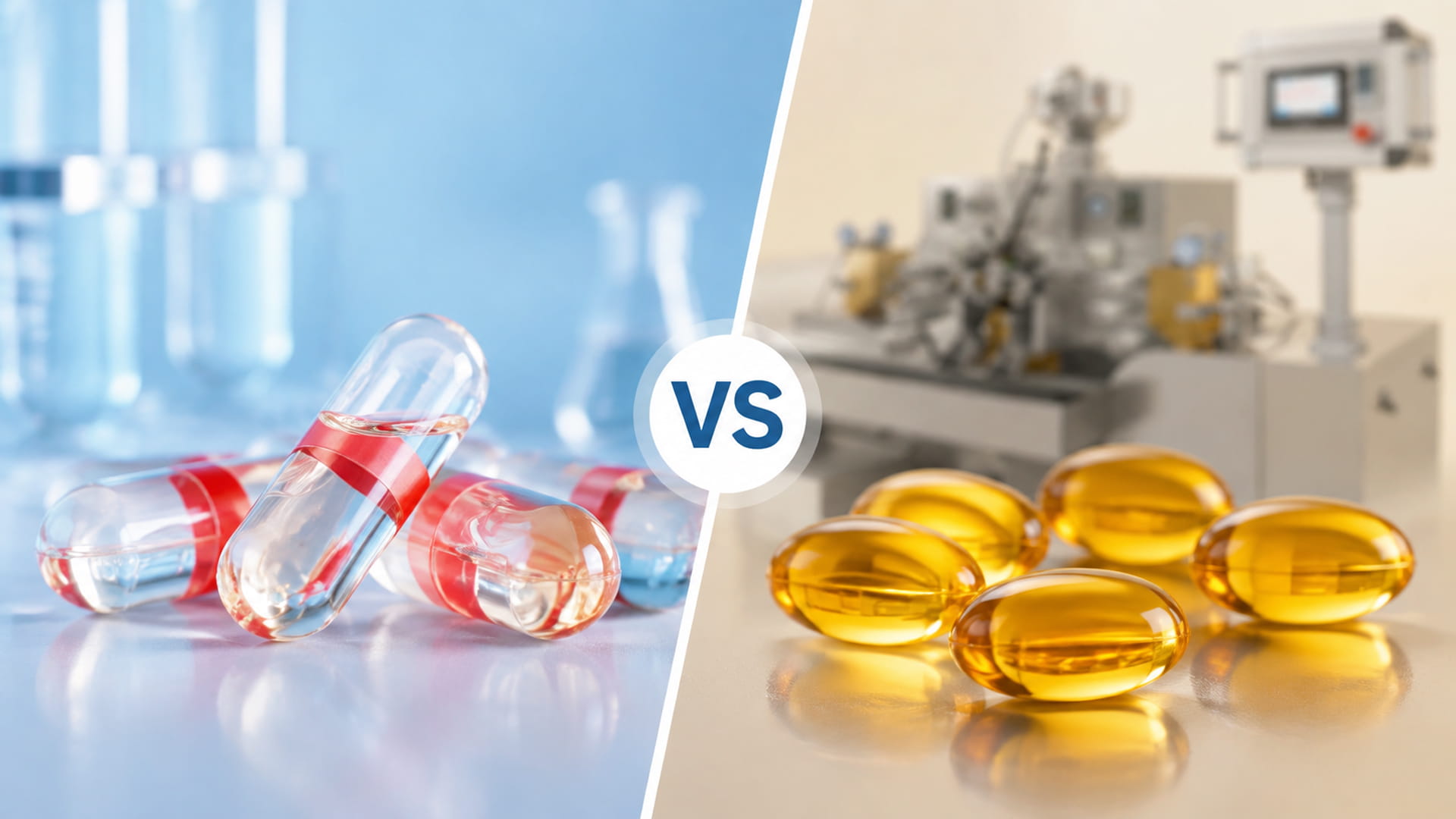
En términos prácticos, Ambos formatos pueden entregar medicamentos líquidos o suplementos., pero su diseño y producción difieren significativamente. Las diferencias clave incluyen la estructura de la cápsula., materiales de concha, rellenos compatibles, y pasos de fabricación. Comprenderlos ayuda a los fabricantes farmacéuticos a elegir la forma adecuada para su producto.. A continuación desglosamos las principales distinciones y beneficios de cada uno.
Cápsulas duras llenas de líquido (LFHC) son estándar cubiertas de cápsulas de dos piezas (tapa y cuerpo) lleno con una formulación líquida o a base de aceite después de hacer las cáscaras. Las cáscaras pueden estar hechas de gelatina o HPMC de origen vegetal. (para cápsulas vegetales). En producción, una dosis precisa de líquido (a menudo una solución de aceite, suspensión o mezcla autoemulsionante) se inyecta en el cuerpo de la cápsula abierta, luego la tapa se cierra en la parte superior y se sella. Los métodos de sellado especiales garantizan que no haya fugas (Por ejemplo, aplicando una fina banda de gelatina alrededor de la articulación, llamado “sellado de banda”).
Este enfoque de dos piezas permite a los LFHC combinar los beneficios de los líquidos y las cápsulas.. Obtienes la liberación rápida y la alta biodisponibilidad de un líquido disuelto., con la facilidad de tragar y enmascarar el sabor que ofrecen las cápsulas. Los cascos LFHC están prefabricados., por lo que no es necesario derretir costosamente las hojas de gelatina durante el llenado. Por ejemplo, La llenadora de cápsulas líquidas NJY-300C de JinLuPacking llena automáticamente líquidos en cápsulas duras de tamaño #00 a #4 y los sella con banda en una línea rápida.
Cifra: Cápsulas duras llenas de líquido (cada uno tiene una banda de color que sella la unión tapa-cuerpo). Estas cápsulas de dos piezas contienen aceite o líquido dentro de una cubierta sólida de gelatina/HPMC..
Cápsulas de gelatina blanda (a menudo simplemente llamado cápsulas blandas) son una pieza, cápsulas recubiertas de gel que contienen un relleno líquido o semisólido. Se fabrican en una máquina de encapsulación de matriz rotativa que forma, llena, y sella cada cápsula en un solo paso. en la maquina, dos cintas de gelatina plastificada (gelatina mezclada con glicerina o sorbitol) se funden y presionan entre sí mientras se inyecta una corriente medida de líquido entre ellos. Cada cápsula se corta y sella simultáneamente mediante troqueles calentados.. El resultado es un suave, oval, cápsula hermética utilizada popularmente para suplementos a base de aceite (Piense en pastillas de vitamina E o omega-3.).
Las cápsulas blandas son ideales para aceites y líquidos sensibles.. Porque toda la cápsula queda herméticamente sellada cuando se forma., no se necesita un paso de sellado por separado. Esto los hace muy protectores contra el oxígeno y la humedad.. Muchos aceites de pescado, vitamina D/K, y los productos de aceites botánicos utilizan cápsulas blandas por su comodidad y estabilidad en el almacenamiento.. De hecho, Las encuestas muestran que los suplementos de omega-3 y vitaminas liposolubles se entregan con mayor frecuencia en forma de cápsulas blandas..
Cifra: Cápsulas de gelatina blanda de color ámbar en una cucharadita junto a un frasco de pastillas (común para el aceite de pescado o la vitamina D).
| Característica | Cápsulas llenas de líquido (LFHC) | Cápsulas blandas |
| Estructura | De dos piezas (tapa & cuerpo) | Cápsula sellada de una sola pieza |
| Material de la carcasa | Gelatina o HPMC (opción vegetariana) | gelatina plastificada (gelatina + plastificante) |
| Método de fabricación | Llene y luego selle (en relleno de cápsulas + pandillas) | Encapsulación de matriz rotativa (formulario-llenado-sello) |
| Costo del equipo | Más bajo (rellenos de cápsulas estándar) | Más alto (línea dedicada de cápsulas blandas) |
| Escala (Cantidad mínima de pedido) | Mínimos bajos (se adapta a lotes pequeños) | Generalmente se requiere un mayor volumen |
| Opción vegetariana | Sí (Carcasas de HPMC disponibles) | Limitado (ahora algunas opciones de almidón/vegetales) |
| Caza de focas | Sellado mecánico (bandas/fusión) | Sello incorporado (sellado herméticamente por morir) |
| Riesgo de fuga | Bajo (una vez sellado correctamente) | muy bajo (sin costura para gotear) |
| Flexibilidad de producción | Alto (Puede mezclar polvos o gránulos con líquido.) | Medio (sólo rellenos de líquido/pasta) |
| Ampliación | Fácil (utiliza máquinas de cápsulas estándar) | Más complejo (secado especializado, etc.) |
Ambas formas administran activos líquidos o a base de aceite y pueden ofrecer una alta biodisponibilidad al presentar el fármaco disuelto en un lípido.. Sin embargo, Los LFHC utilizan líneas más simples (las conchas están prefabricadas) Mientras que las cápsulas blandas requieren pasos de cocción y secado para las cintas de gelatina..
Conclusión clave: Máquinas de cápsulas blandas forma, llenar, y cortar en un solo paso (necesitando secado), mientras que las líneas LFHC llenan carcasas prefabricadas y las sellan (saltarse una etapa de curado prolongada). Como señala una guía de la industria, “Las cápsulas blandas se curan entre 2 y 4 días después del llenado. Los LFHC no tienen paso de curado... las pérdidas de lotes por fallas de llenado son mayores para las cápsulas blandas”..
Las cápsulas llenas de líquido ofrecen varias ventajas de fabricación y de producto.:
Estas ventajas hacen que los LFHC sean atractivos tanto en el mercado farmacéutico como en el nutracéutico..
Las cápsulas blandas también tienen grandes beneficios que las hacen populares para muchos suplementos.:
Las industrias que utilizan cápsulas blandas incluyen productos farmaceuticos (medicamentos a base de aceite), nutracéuticos (suplementos dietéticos), productos cosméticos (aceites de belleza nutracéuticos), e incluso productos veterinarios. Por ejemplo, Las cápsulas blandas veganas o halal hechas de almidón/gellan están en aumento..
| Ingrediente / Llenar | Cápsula llena de líquido | Cápsula de gelatina blanda |
| Aceite de pescado / Omega-3 | ✓ Adecuado | ✓ Adecuado |
| CBD o aceite de cannabis | ✓ Adecuado | ✓ Adecuado |
| curcumina (Extracto de cúrcuma) | ✓ Adecuado | ✓ Adecuado |
| vitamina d (aceite) | ✓ Adecuado | ✓ Adecuado |
| Extractos líquidos de hierbas | ✓ Adecuado | ✓ Adecuado |
| Probióticos | ✓ (si está suspendido en aceite) | No (la humedad mata las bacterias) |
| API sensibles a la humedad | ✓ (especialmente en cápsulas de HPMC) | ✗ (cáscara alta humedad) |
Ambos tipos de cápsulas manejan bien los activos solubles en aceite.. Aceites nutracéuticos comunes (aceite de pescado, vitamina D, extractos de hierbas, CDB, etc.) se administran eficazmente mediante LFHC o cápsulas blandas.
Notablemente, ingredientes secos o sensibles a la humedad son mejores en cápsulas duras llenas de líquido. Por ejemplo, Los probióticos o los API sensibles al agua no son prácticos en las cápsulas blandas.. En contraste, Las cápsulas duras de HPMC pueden contener suspensiones no acuosas de probióticos o formulaciones muy secas., ya que HPMC tiene baja permeabilidad a la humedad y al gas. Las cápsulas de gelatina blanda contienen aproximadamente 30% agua y mayor permeabilidad al oxígeno, que pueden degradar dichos ingredientes.
En breve, Utilice LFHC cuando la flexibilidad y la producción de bajo volumen sean importantes; Elija cápsulas blandas por su escala y su atractivo premium en los estantes..
Desde el punto de vista del fabricante, La decisión a menudo depende de la escala., inversión, y objetivos estratégicos:
La siguiente tabla resume la elección por escenario.:
| Tipo de empresa / Situación | Formato recomendado |
| Pequeña startup o R&proyecto D | Cápsulas llenas de líquido (MOQ bajo, flexible) |
| Línea de suplementos de nicho, <10k unidades | Cápsulas llenas de líquido |
| Fabricante por contrato (flexibilidad) | Cápsulas llenas de líquido |
| Gran productor farmacéutico | Cápsulas blandas (alto rendimiento, coherente) |
| Omega-3 o vitaminas de alto volumen. | Cápsulas blandas |
| Producto que necesita cápsula vegana. | Cápsulas llenas de líquido (Conchas de HPMC) |
Cifra: Primer plano de una máquina llenadora de cápsulas líquidas que dispensa líquido en cápsulas.
JinLuPacking fabrica una gama completa de equipos de cápsulas.. Por ejemplo, nuestro NJY-300C llenador de cápsulas líquidas la línea maneja los llenados de líquidos, y también proporcionamos máquinas de cápsulas de gel blando para producción en un solo paso. Estas máquinas cumplen con los estándares cGMP para uso farmacéutico y nutracéutico..
Al final, ambos llenos de líquido cápsulas duras y cápsulas blandas están bien establecidos, formas de dosificación efectivas. Las cápsulas blandas destacan por ofrecer aceites y activos solubles en aceite con una disolución rápida., paquete a prueba de manipulaciones. Las cápsulas duras llenas de líquido ofrecen flexibilidad, más rápido R&escala D, y simplicidad de fabricación. Al comprender sus diferencias, Beneficios y requisitos de producción., Los fabricantes pueden elegir el tipo de cápsula que mejor se adapte a las necesidades comerciales y químicas de su producto..
Si está diseñando una nueva formulación o actualizando su línea de producción, considere ambas opciones cuidadosamente. Listo para optimizar su producción de cápsulas? Jinlu Packing ofrece equipos líderes en la industria para ambos formatos (Por ejemplo, nuestro NJP-1000C puede llenar hasta 60,000 cápsulas duras por hora) y podemos aconsejarle sobre la mejor solución para su producto. Contáctenos para discutir tu proyecto, solicitar una cotización, u obtenga más información sobre nuestra cápsula líquida y cápsula blanda líneas de embalaje.
Sí. Llenadores de cápsulas especializados (como las máquinas llenadoras de cápsulas líquidas de JinLuPacking) Puede inyectar aceites o líquidos en cápsulas duras vacías., que luego son sellados (p.ej. por bandas) para que retengan el líquido de forma segura. Esto crea una "cápsula dura llena de líquido".
Ninguno de los dos es universalmente “mejor”: satisfacen necesidades diferentes. Los LFHC ganan en costos, velocidad, y flexibilidad (especialmente para lotes pequeños), mientras que las cápsulas blandas ofrecen un sello perfecto y un formato familiar para los suplementos de aceite. La mejor elección depende del material de relleno, volumen de producción, y mercado.
Los LFHC correctamente sellados no tienen fugas. Después del llenado, La unión tapa-cuerpo se sella herméticamente aplicando una banda de gelatina o HPMC. (o usando sellado por fusión). Cuando se hace correctamente, Las cápsulas retienen el líquido herméticamente durante el secado., almacenamiento, y usar. Las líneas de calidad prueban y pulen cada lote para garantizar su integridad..
Ambos pueden ofrecer una excelente biodisponibilidad para los activos a base de aceite.. La formulación de relleno (tipo de aceite, emulsionantes) generalmente dicta la absorción, no el tipo de concha. Las cápsulas blandas se disuelven rápidamente (~10–20 minutos), mientras que las cápsulas duras (LFHC) disolver un poco más lento (30–60 minutos). En la práctica, los rellenos bien diseñados en cualquiera de las formas pueden lograr una eficacia similar.
Sí. Las cubiertas de HPMC de origen vegetal se utilizan ampliamente para cápsulas llenas de líquido.. La baja humedad y la fuerte estructura de HPMC permiten que entren líquidos aceitosos.. De hecho, El uso de cubiertas de HPMC es una forma de ofrecer una cápsula vegetariana en forma líquida., que las cápsulas blandas de gelatina estándar no pueden proporcionar.
Las empresas citan razones como menores costes de fabricación., plazos de entrega más cortos, y flexibilidad de formulación. Por ejemplo, una R&El equipo D puede ajustar rápidamente las dosis o combinar ingredientes en LFHC sin necesidad de cambiar de equipo. También, Los VFHC permiten ampliar las líneas de productos fácilmente (ya que las mismas cápsulas se pueden llenar con diferentes líquidos).
Generalmente, Sí. La producción de cápsulas blandas requiere equipos costosos (cocinas de gelatina, matrices rotativas, secadoras) y más mano de obra durante varios días. Los LFHC utilizan rellenos más simples y menos energía. Los informes de la industria señalan que la producción de LFHC cuesta entre un 15% y un 35% menos por unidad que las cápsulas blandas. Sin embargo, en volúmenes muy altos, las cápsulas blandas aún pueden ser rentables.
Los ingredientes líquidos se llenan utilizando una máquina llenadora de cápsulas líquidas. (a menudo un accesorio o variante de un llenador de cápsulas estándar). Por ejemplo, Las máquinas de la serie NJY de JinLuPacking utilizan bombas de precisión (pistón cerámico o microbomba) dosificar aceite en cápsulas. Estas máquinas pueden alcanzar altas velocidades. (varios miles de cápsulas por hora) con precisión mejor que ±1%.
Mayormente no acuoso, Rellenos a base de aceite o disolvente.. Ejemplos comunes: aceite de pescado, aceite de vitamina E, vitaminas liquidas, extractos de aceite de hierbas, emulsiones, y ciertos sistemas de administración de medicamentos autoemulsionantes. El relleno debe ser bombeable y generalmente no corrosivo.. Se evitan los líquidos a base de agua. (pueden debilitar los sellos). La viscosidad del relleno debe controlarse para evitar salpicaduras o goteo durante el llenado..
Sí. Muchas máquinas de cápsulas son convertibles.: cambiando el sistema de dosificación, Pueden llenar polvos/gránulos o líquidos.. En la práctica, La placa dosificadora de polvo de una llenadora de cápsulas estándar se reemplaza por un cabezal de llenado de líquido y un sistema de bomba.. Esta versatilidad significa que una sola línea puede cambiar entre producción de polvo y LFHC..
Referencias:
1.Cápsulas de gelatina dura selladas y llenas de líquido —— taylor & Francisco en línea
2.Cápsulas de gelatina suave (Cápsulas blandas) —— Ciencia Directa
3.Efectos de la temperatura sobre las características de la cinta en la fabricación de cápsulas de gelatina blanda. —— Biblioteca Nacional de Medicina
4.Revisión completa sobre las cápsulas de gelatina blanda: Manufactura Industrial, Avances tecnológicos, y perspectivas regulatorias —— Revista de ENTREGA DE MEDICAMENTOS & TERAPÉUTICA
5.Cápsula de gelatina dura rellena de líquido —— Revista de ENTREGA DE MEDICAMENTOS & TERAPÉUTICA
6.Determinación de la cantidad óptima de agua en masas de relleno líquido para cápsulas de gelatina dura mediante análisis de textura y diseño experimental. —— Biblioteca Nacional de Medicina