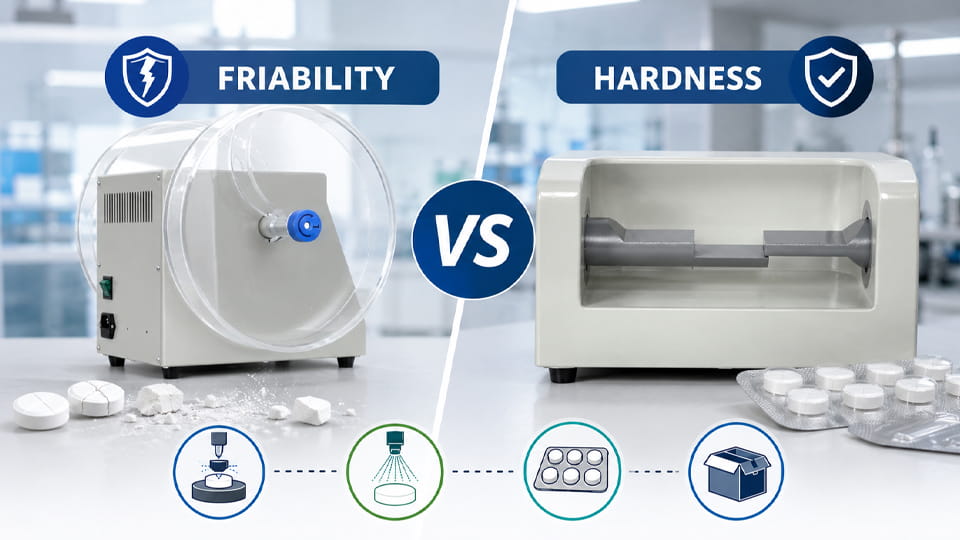
মধ্যে ট্যাবলেট উত্পাদন, কঠোরতা এবং ভদ্রতা দুটি মূল মানের ব্যবস্থা. কঠোরতা (ব্রেকিং ফোর্স) একটি ট্যাবলেট ফাটার আগে কতটা চাপ নিতে পারে তা আমাদের বলে. ফ্রেবিবিলিটি পরিমাপ করে যে ট্যাবলেটের সারফেস চিপ বা ক্ষয় করা হলে কতটা সহজে গড়িয়ে পড়ে বা পরিচালনা করা হয়. অন্য কথায়, কঠোরতা চেক অভ্যন্তরীণ শক্তি, friability চেক করার সময় পৃষ্ঠের স্থায়িত্ব. উভয় বৈশিষ্ট্যই ডাউনস্ট্রিম প্রসেসিংকে প্রভাবিত করে - ট্যাবলেটগুলিকে কীভাবে সংকুচিত করা হয় থেকে কীভাবে সেগুলি লেপা এবং অবশেষে প্যাক করা হয়. এই নিবন্ধটি ভেঙ্গে দেয় যে কেন দুর্বলতা বনাম কঠোরতা গুরুত্বপূর্ণ, কিভাবে প্রতিটি পরীক্ষা করা হয়, এবং কিভাবে তারা ট্যাবলেট কম্প্রেশন প্রভাবিত করে, আবরণ, এবং বাস্তব উত্পাদন লাইনে প্যাকেজিং গুণমান.
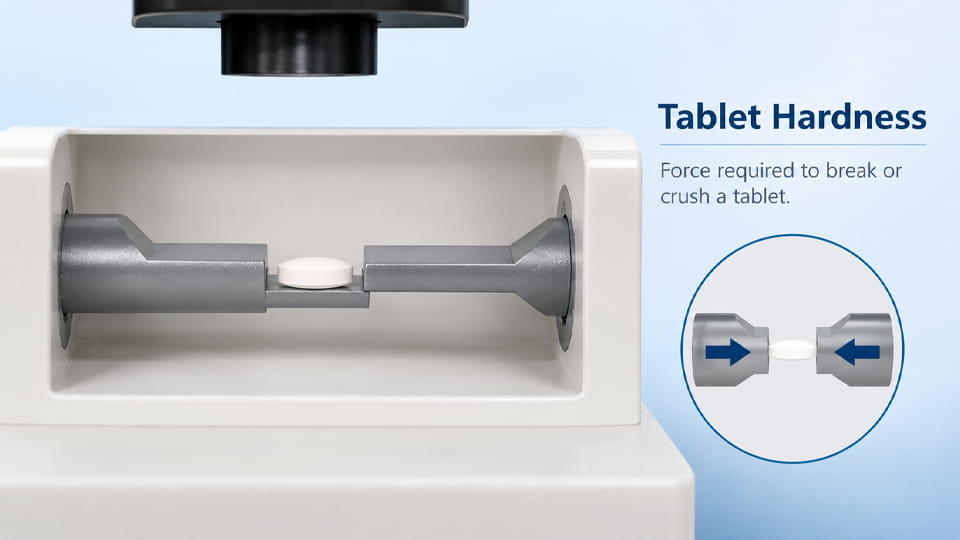
ট্যাবলেট কঠোরতা (প্রযুক্তিগতভাবে "ট্যাবলেট ব্রেকিং ফোর্স") কম্প্রেশন দ্বারা একটি ট্যাবলেট ভাঙ্গার জন্য প্রয়োজনীয় বল. অনুশীলনে, কঠোরতা পরিমাপ করা হয় ট্যাবলেটটিকে দুটি অ্যাভিল বা প্ল্যাটেনের মধ্যে রেখে এবং এটি ভেঙে না যাওয়া পর্যন্ত বল প্রয়োগ করে. আধুনিক কঠোরতা পরীক্ষক (ম্যানুয়াল বা ডিজিটাল) সর্বোচ্চ শক্তি কিলোগ্রাম বা নিউটনে পরিমাপ করুন. ট্যাবলেট ব্রেকিং ফোর্স এর জন্য গুরুত্বপূর্ণ মান নিয়ন্ত্রণ: একটি ট্যাবলেট হ্যান্ডলিং সহ্য করার জন্য যথেষ্ট শক্তিশালী হতে হবে, প্যাকেজিং, এবং বিরতি ছাড়া শিপিং. ইউ.এস. এবং ইউরোপীয় ফার্মাকোপিয়াস কঠোরতার জন্য প্রমিত পদ্ধতি নির্দিষ্ট করে (ব্রেকিং ফোর্স) পরীক্ষা. কিছু শিল্প সাহিত্য শব্দটি পছন্দ করে "ভঙ্গকারী শক্তি" উপর "কঠোরতা,যেহেতু বস্তুগত বিজ্ঞানে "কঠোরতা" এর অর্থ সাধারণত পৃষ্ঠের ইন্ডেন্টেশনের প্রতিরোধ, যেখানে ট্যাবলেট পরীক্ষা কম্প্রেশন শক্তি পরিমাপ করে.
ট্যাবলেট কঠোরতা গঠন এবং প্রক্রিয়া পরামিতি দ্বারা প্রভাবিত হয়. উচ্চতর কম্প্রেশন বল সাধারণত শক্ত ট্যাবলেট দেয়, যখন বাইন্ডার এবং লুব্রিকেন্টের মতো ফর্মুলেশন ফ্যাক্টরগুলিও কঠোরতাকে প্রভাবিত করে. উদাহরণস্বরূপ, একটি বাইন্ডার বৃদ্ধি (যেমন. PVP বা HPMC) সাধারণত ট্যাবলেট শক্তি বাড়ায়, যখন খুব বেশি লুব্রিকেন্ট (ম্যাগনেসিয়াম স্টিয়ারেট) আন্তঃকণা বন্ধন দুর্বল করতে পারে. ট্যাবলেটের আকার, আকৃতি, এবং porosity এছাড়াও ভূমিকা পালন করে: ঘন বা ঘন ট্যাবলেটগুলি ভাঙতে প্রায়শই আরও জোরের প্রয়োজন হয়.
খুব কম একটি কঠোরতা (কম কম্প্রেশন) ট্যাবলেট ঘটায় ফাটল, চূর্ণবিচূর্ণ বা চিপ সহজে. খুব উচ্চ একটি কঠোরতা, তবে, খারাপ দিক থাকতে পারে: খুব শক্ত ট্যাবলেট হতে পারে ধীরে ধীরে বিচ্ছিন্ন বা শরীরে খুব ধীরে ধীরে দ্রবীভূত হয়. খুব কঠিন একটি ট্যাবলেটও হতে পারে রোগীদের গ্রাস করা কঠিন. এইভাবে, ট্যাবলেট ডিজাইনের কর্মক্ষমতার সাথে যান্ত্রিক শক্তির ভারসাম্য থাকা আবশ্যক. অনুশীলনে, নির্মাতারা একটি গ্রহণযোগ্যতা পরিসীমা সেট করে (যেমন. 4-10 কেজি বা তার বেশি) উত্পাদনের সময় শক্তি ভাঙ্গার জন্য.
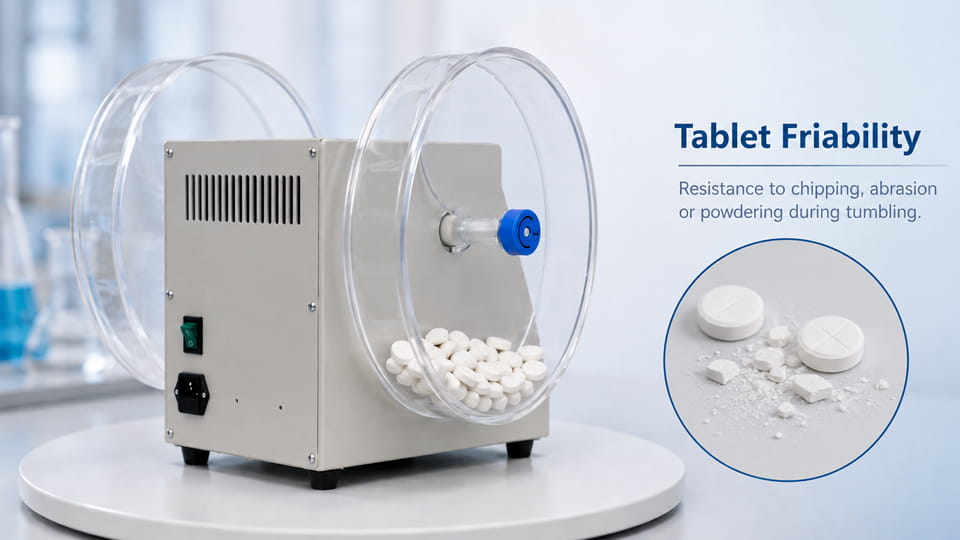
ট্যাবলেটের দুর্বলতা হল যান্ত্রিক চাপের শিকার হলে একটি ট্যাবলেট কত সহজে ভেঙে যায় বা ভর হারায় তার একটি পরিমাপ, যেমন tumbling বা প্রভাব. ভদ্রতা পরীক্ষা একটি ঘূর্ণন ড্রাম মধ্যে desusted ট্যাবলেট স্থাপন জড়িত (Roche friable), সাধারণত 25rpm এ, এবং তাদের বশ্যতা 100 বিপ্লব. প্রতিটি বিপ্লব হ্যান্ডলিং এবং পরিবহনের সময় চাপ অনুকরণ করার জন্য ট্যাবলেটগুলিকে একটি নির্দিষ্ট উচ্চতায় ফেলে দেয় এবং ফেলে দেয়. পরীক্ষার পর, ট্যাবলেট সংগ্রহ করা হয়, এবং কোন আলগা ধুলো সরানো হয়. ওজন কমানোর শতাংশ নির্ধারণের জন্য ট্যাবলেটগুলি আগে এবং পরে ওজন করা হয়, যা হিসাবে রিপোর্ট করা হয় ভদ্রতা. উদাহরণস্বরূপ, দ্য ইউএসপি <1216> এবং Ph.Eur. মনোগ্রাফ এই পদ্ধতি বর্ণনা করে.
কম friability, ট্যাবলেটটি ঘর্ষণ বা চিপিংয়ের জন্য তত বেশি প্রতিরোধী. একটি গ্রহণযোগ্য friability সীমা প্রচলিতভাবে ≤1.0% ওজন হ্রাস. যে ট্যাবলেটগুলি এই থ্রেশহোল্ডের চেয়ে বেশি হারায়, অথবা পরীক্ষার সময় দৃশ্যত ফাটল বা ভাঙ্গে, friability মানদণ্ড ব্যর্থ. ট্যাবলেট friability বিশেষভাবে ঠিকানা পোস্ট-কম্প্রেশন স্থায়িত্ব - এটি আবরণ প্যানে শারীরিক চাপের ট্যাবলেটগুলিকে অনুকরণ করে, পরিবাহক, বোতল ফিলার, ফোস্কা লাইন, এবং প্যাকেজিং. ট্যাবলেটের প্রান্তে চিপস হিসাবে উচ্চ দুর্বলতা প্রকাশ পায়, দৃশ্যমান ফাটল, বা অতিরিক্ত ধুলো. ফ্রেবিবিলিটি এইভাবে প্যাকেজিং এবং হ্যান্ডলিং দৃঢ়তার সাথে ঘনিষ্ঠভাবে যুক্ত একটি গুণমান বৈশিষ্ট্য.
এই পরীক্ষাগুলি একই রকম শোনায় কিন্তু বিভিন্ন চাপের তদন্ত করে. সহজ কথায়:
দুটি ট্যাবলেট কল্পনা করুন: একটি এ পরীক্ষা করা হয়েছে 20 kP (কিলোপন্ড) ক্রাশ ফোর্স এর (খুব কঠিন) এবং একটি এ 5 kP (নরম). আপনি মনে হতে পারে 20 kP ট্যাবলেট অবিনাশী, কিন্তু যদি এর প্রান্ত ভঙ্গুর হয়, এটি এখনও একটি ফ্রেবিবিলিটি ড্রামে 2-3% ভর হারাতে পারে - গ্রহণযোগ্য সীমার দ্বিগুণ. অনুশীলনে, একটি ট্যাবলেট হতে পারে "অত্যন্ত কঠিন - চূর্ণ করার জন্য উল্লেখযোগ্য শক্তির প্রয়োজন - তবুও আশ্চর্যজনকভাবে ভঙ্গুর।". এই দেখায় কেন উভয় পরীক্ষা প্রয়োজন. নীচের সারণী পার্থক্যটি সংক্ষিপ্ত করে:
সংক্ষেপে: কঠোরতা প্রতিরোধ করে নিষ্পেষণ, যখন friability resists চিপিং. একটি শক্তিশালী ট্যাবলেট ডিজাইন উভয়ই ভারসাম্য বজায় রাখে: এটা ধুলো ছাড়া প্রেস এবং মেশিন বেঁচে থাকা আবশ্যক, এখনও সঠিকভাবে দ্রবীভূত.
| প্যারামিটার | ট্যাবলেট কঠোরতা (ব্রেকিং ফোর্স) | ট্যাবলেট ফ্রেবিলিটি |
|---|---|---|
| এটা কি পরিমাপ | একটি একক প্রয়োগ করা শক্তির প্রতিরোধ (কম্প্রেশন বা টান) ফ্র্যাকচার ঘটাচ্ছে | বারবার ঘর্ষণ প্রতিরোধ, প্রভাব, এবং চিপিং (গড়িয়ে পড়লে ওজন হ্রাস) |
| সাধারণ স্ট্রেস টাইপ | ব্যর্থ না হওয়া পর্যন্ত এক-বার বড় কম্প্রেসিভ বা তিন-পয়েন্ট নমনীয় লোড | একাধিক গড়াগড়ি/পতন (সাধারণত 100 ঘূর্ণন) হ্যান্ডলিং শক অনুকরণ |
| মূল উদ্দেশ্য | ট্যাবলেটের ব্রেকিং শক্তি মূল্যায়ন করুন (কম্প্রেশন অধীনে গঠন দৃঢ়তা) | পরিবহণের সময় স্থায়িত্ব মূল্যায়ন করুন, আবরণ, এবং প্যাকেজিং |
| টেস্ট আউটপুট | ব্রেকিং ফোর্স ভ্যালু (যেমন. নিউটন বা কেপিতে) | পরীক্ষার পরে শতকরা ওজন হ্রাস (এবং ক্ষতির জন্য চাক্ষুষ পরিদর্শন) |
| গুণমান লিঙ্ক | কম্প্রেশন প্যারামিটার সেট করে; ট্যাবলেটগুলি জোর করে ফাটবে না তা নিশ্চিত করে | প্যাকেজিং লাইন সেটিংস সেট করে; ট্যাবলেটগুলি আবরণ/পরিবহন টিকে থাকা নিশ্চিত করে |
| অন্য পরীক্ষা দ্বারা প্রতিস্থাপনযোগ্য? | না. বিভিন্ন মানসিক চাপ; তার নিজস্ব পরিমাপ প্রয়োজন. | না. বিভিন্ন পরীক্ষার যুক্তি; কঠোরতা পরীক্ষা প্রতিস্থাপন করতে পারে না. |
উপরের টেবিলটি হাইলাইট করে কঠোরতা এবং ভঙ্গুরতা বিভিন্ন দিক পরিমাপ করে. কঠোরতা (ব্রেকিং ফোর্স) একটি এককালীন স্ট্রেস পরীক্ষা, যেখানে friability পরীক্ষা পুনরাবৃত্তি নিম্ন স্তরের শক. গুরুত্বপূর্ণভাবে, একটি ট্যাবলেট হতে পারে কঠিন কিন্তু ভঙ্গুর বা তদ্বিপরীত. উদাহরণস্বরূপ, উচ্চ ব্রেকিং ফোর্স সহ একটি ট্যাবলেট এখনও হতে পারে ভদ্রতা পরীক্ষায় ব্যর্থ যদি এর প্রান্তগুলি সহজেই চিপ হয় বা যদি অভ্যন্তরীণ বন্ধন অসম হয়. সংক্ষেপে, কঠোরতা এবং ভঙ্গুরতা সম্পর্কযুক্ত কিন্তু বিনিময়যোগ্য নয় - উভয়কেই মূল্যায়ন করতে হবে.
ট্যাবলেট কঠোরতা পরীক্ষকরা একটি একক ট্যাবলেটে একটি নিয়ন্ত্রিত বল প্রয়োগ করে যতক্ষণ না এটি ভেঙে যায়. একটি সাধারণ পরীক্ষক মধ্যে, দুটি সমতল anvils (প্লেট) ট্যাবলেটটি ধরুন - একটি স্থির, একটি চলন্ত. পরীক্ষক বিরতিতে বল রেকর্ড করে. ম্যানুয়াল পরীক্ষক (মনসান্টোর মত বসন্ত ভিত্তিক) এবং আধুনিক ডিজিটাল পরীক্ষক (লোড সেল এবং ইলেকট্রনিক রিডআউট সহ) সাধারণ. ইলেকট্রনিক পরীক্ষক সুনির্দিষ্ট প্রদান করে, পুনরাবৃত্তিযোগ্য পরিমাপ এবং প্রায়শই একই সাথে ব্যাস এবং বেধ পরিমাপ করে. পরীক্ষার সময়, কারণের মত ট্যাবলেট অভিযোজন (ফ্ল্যাট-ফেসড ট্যাবলেটের জন্য) বা বিশেষ ফিক্সচার (অস্বাভাবিক আকারের জন্য) সামঞ্জস্যপূর্ণ ফলাফল নিশ্চিত করতে সাবধানে নিয়ন্ত্রিত হয়. পরিমাপ করা ব্রেকিং ফোর্স মান নিয়ন্ত্রণকে জানায়: ব্যাচগুলি শুধুমাত্র তখনই গ্রহণ করা হয় যখন কঠোরতা সেই ফর্মুলেশনের জন্য নির্ধারিত সীমার মধ্যে পড়ে.
ক ভঙ্গুর বা ফ্রেবিবিলিটি টেস্টার হ্যান্ডলিং অনুকরণ করতে একটি স্বচ্ছ ড্রামে ট্যাবলেটের একটি নমুনা ফেলে দেয়. মূল পদক্ষেপ (USP/Ph.Eur প্রতি) হয়: 1. একটি ট্যাবলেটের নমুনা ডাস্ট করুন এবং ওজন করুন (যেমন. 6.5 g বা 10 ট্যাবলেট). 2. ভিতরে একটি উত্তোলন ট্যাব সহ একটি ঘূর্ণায়মান ড্রামে ট্যাবলেটগুলি রাখুন৷. 3. জন্য 25rpm এ ঘোরান 100 বিপ্লব (4 মিনিট). 4. ট্যাবলেট সরান, আলগা ধুলো অপসারণ, পুনরায় ওজন করা. 5. হিসাব করুন % ওজন হ্রাস: .
যদি কোনো ট্যাবলেট ফাটল বা ভাঙা গড়িয়ে পড়ার পর, ব্যাচ অবিলম্বে ব্যর্থ হয়. অন্যথায়, যদি মোট ওজন হ্রাস হয় >1%, পরীক্ষাটি তিন প্রতিলিপিতে পুনরাবৃত্তি করা হয় এবং একটি গড় ব্যবহার করা হয়. অনুশীলনে, পাসিং ট্যাবলেটগুলি ন্যূনতম চিপ বা ধুলো দেখায়. ভদ্রতা ফলাফল লেপ এবং প্যাকেজিং আগে সিদ্ধান্ত গাইড: উচ্চ ক্ষতি সংস্কার বা প্রক্রিয়া পরিবর্তনের অনুরোধ করে.
পরীক্ষা পদ্ধতি uncoated ট্যাবলেট অনুমান. লেপযুক্ত ট্যাবলেটগুলিও পরীক্ষা করা যেতে পারে, কিন্তু শেলের কারণে তাদের প্রায়শই কম দুর্বলতা থাকে. বিপরীতে, উজ্জ্বল বা অত্যন্ত ছিদ্রযুক্ত ট্যাবলেটগুলির পরীক্ষার সময় বিশেষ আর্দ্রতা নিয়ন্ত্রণের প্রয়োজন হতে পারে. ট্যাবলেট আকার এবং আকার আছড়ে পড়া আচরণকে প্রভাবিত করে; অনিয়মিত আকারের জন্য, এলোমেলো আন্দোলন নিশ্চিত করতে ড্রাম বেস ~10° কাত করা যেতে পারে. সব ক্ষেত্রেই, বাধ্যতামূলক মান (ইউএসপি, Ph.Eur.) যন্ত্র এবং পদ্ধতি নির্দিষ্ট করুন. আধুনিক ল্যাব প্র্যাকটিস এছাড়াও কঠোরতা এবং দুর্বলতা পরীক্ষকদের ক্রমাঙ্কন পরীক্ষা করে এবং নিয়মিত রেফারেন্স ট্যাবলেটগুলির সাথে QC চালায়.
উভয় বৈশিষ্ট্য গঠন এবং প্রক্রিয়াকরণের উপর নির্ভর করে. মূল কারণগুলির মধ্যে বাইন্ডারের ধরন/ঘনত্ব অন্তর্ভুক্ত, কম্প্রেশন বল, এবং ট্যাবলেট আকৃতি. উদাহরণস্বরূপ:
কারণ অনেক ভেরিয়েবল ব্যাপার, নির্মাতারা একক মানের পরিবর্তে লক্ষ্য পরিসীমা সেট করে. আছে কোন সার্বজনীন "নিখুঁত" কঠোরতা; এটা পণ্যের উপর নির্ভর করে ডোজ ফর্ম, উদ্দেশ্য ব্যবহার, এবং প্যাকেজিং. একটি চর্বণযোগ্য ভিটামিন এবং ক ফিল্ম-লেপা ব্যথানাশক ওষুধের সর্বোত্তম কঠোরতার মাত্রা ভিন্ন হতে পারে, এমনকি তাদের ওজন একই.
ট্যাবলেট প্রেসে কম্প্রেশন স্টেজ মূলত কঠোরতা নির্ধারণ করে. অনুশীলনে:

সংক্ষেপে, কম্প্রেশন প্যারামিটার এবং ফর্মুলেশন অপ্টিমাইজ করা অপরিহার্য. জিনলুপ্যাকিংয়ের সমস্যা সমাধানের গাইড নোট হিসাবে, "যদি ট্যাবলেট খুব নরম হয়, তারা চিপ করতে পারে, বিরতি, বা উচ্চ friability প্রদর্শন. খুব কঠিন হলে, তারা আবরণ প্রতিরোধ করতে পারে বা ধীরে ধীরে দ্রবীভূত হতে পারে।". কম্প্রেশন বল এবং বাইন্ডার বিষয়বস্তু টিউনিং দ্বারা, নির্মাতারা ট্যাবলেটগুলির জন্য লক্ষ্য রাখতে পারে যা কঠোরতার উপর অতিরিক্ত শুট না করে প্রক্রিয়ার চাপ সহ্য করে.
ট্যাবলেট আবরণ (ফিল্ম বা চিনির আবরণ) মূল ট্যাবলেটের শক্তির প্রতি খুবই সংবেদনশীল. লেপের সময়, ট্যাবলেটগুলি একটি ঘূর্ণায়মান প্যানে গলে যায় এবং তাদের উপর দ্রবণ স্প্রে করে. এই টাম্বলিং যান্ত্রিক চাপ এবং আর্দ্রতা প্রযোজ্য. এখানে কঠোরতা এবং ভঙ্গুরতা কীভাবে কার্যকর হয় তা এখানে:
একবার ট্যাবলেট চাপা এবং লেপা হয়, তারা সরানো প্যাকেজিং লাইন - ফোস্কা মেশিন, কার্টোনার, বা বোতল ভর্তি লাইন. ট্যাবলেট শক্তি এখানেও অত্যন্ত গুরুত্বপূর্ণ:

লেপ এবং প্যাকেজিংয়ের চাহিদা পূরণ করে এমন উচ্চ-মানের ট্যাবলেটগুলি অর্জন করতে, এই পয়েন্ট মনে রাখুন:
অনুশীলনে, লক্ষ্য হল একটি ট্যাবলেট "হ্যান্ডলিং বেঁচে থাকা যথেষ্ট কঠিন কিন্তু এত কঠিন নয় যে এটি দ্রবীভূত পরীক্ষায় ব্যর্থ হয়।". অনেক নির্মাতা চার্ট কম্প্রেশন বল, কঠোরতা, এবং রিয়েল টাইমে প্রবণতা প্রথম দিকে স্পট করার জন্য ভদ্রতা (উদাহরণস্বরূপ, কঠোরতা হঠাৎ প্রবাহ পাউডার ফিড বা আর্দ্রতা পরিবর্তন সংকেত হতে পারে).
সংক্ষেপে, কঠোরতা এবং ভঙ্গুরতা একই মুদ্রার দুটি দিক ট্যাবলেট মানের জন্য. কঠোরতা কম্প্রেশনের অধীনে ট্যাবলেটের মূল শক্তি নিশ্চিত করে, যখন friability ঘর্ষণ বিরুদ্ধে পৃষ্ঠের দৃঢ়তা gauges. সঠিকভাবে সুষম, তারা গ্যারান্টি দেয় যে ট্যাবলেটগুলি চিপ বা ভাঙা ছাড়াই লেপ প্যান এবং প্যাকেজিং মেশিনের মধ্য দিয়ে যায়. খুব নরম ট্যাবলেটগুলি ধুলো এবং আবরণের ত্রুটি তৈরি করবে, যখন খুব শক্ত ট্যাবলেটগুলি আবরণ সমাধানকে প্রতিরোধ করতে পারে বা দুর্বল রোগীর অভিজ্ঞতা অর্জন করতে পারে.
ফার্মা প্রস্তুতকারক এবং প্যাকেজিং ইঞ্জিনিয়ারদের জন্য, উভয় পরীক্ষায় মনোযোগ দেওয়া গুরুত্বপূর্ণ. আপনার মানের চেকপয়েন্টগুলিতে ভঙ্গুরতা এবং কঠোরতা পরীক্ষাকে একীভূত করা নিশ্চিত করুন, এবং প্রয়োজন অনুসারে ফর্মুলেশন/কম্প্রেশন সামঞ্জস্য করুন. তাই করে, আপনি ব্যয়বহুল প্রত্যাখ্যানগুলি হ্রাস করবেন এবং আপনার মসৃণ অপারেশন নিশ্চিত করবেন ফোস্কা প্যাকিং লাইন, কার্টোনিং মেশিন, বা বোতলের লাইন.
আপনার ট্যাবলেট উত্পাদন এবং প্যাকেজিং লাইন অপ্টিমাইজ করতে প্রস্তুত? জিনলুপ্যাকিং-এর দলের ফার্মাসিউটিক্যাল কম্প্রেশন এবং প্যাকেজিংয়ের কয়েক দশকের অভিজ্ঞতা রয়েছে. আপনি একটি প্রয়োজন কিনা উচ্চ গতির ট্যাবলেট প্রেস, deduster, অথবা একটি কাস্টম ফোস্কা প্যাকেজিং সমাধান, আমরা আপনার ট্যাবলেটগুলি প্রেস থেকে রোগী পর্যন্ত অক্ষত থাকা নিশ্চিত করতে সাহায্য করতে পারি. আমাদের সাথে যোগাযোগ করুন আমাদের মেশিন এবং দক্ষতা কিভাবে আপনার উৎপাদন লক্ষ্য সমর্থন করতে পারে আলোচনা করতে.
না. কঠোরতা (ব্রেকিং ফোর্স) একটি একক লোডের নিচে একটি ট্যাবলেটকে ফ্র্যাকচার করার জন্য প্রয়োজনীয় বল পরিমাপ করে. ফ্রেবিলিটি বারবার ঘর্ষণে ট্যাবলেটের স্থায়িত্ব পরিমাপ করে, হিসাবে প্রকাশ করা হয় % একটি ড্রাম পরীক্ষায় ওজন হ্রাস. তারা বিভিন্ন বৈশিষ্ট্য মূল্যায়ন.
হ্যাঁ. একটি ট্যাবলেটের উচ্চ ব্রেকিং ফোর্স থাকতে পারে (কঠিন) কিন্তু এখনও প্রান্তে চিপ যদি এর কণা বন্ধন দরিদ্র হয়. এই ধরনের ট্যাবলেট গড়িয়ে পড়লে সহজেই ভেঙে যেতে পারে, ফলন উচ্চ friability. বিপরীতে, মাঝারি কঠোরতা সহ একটি ট্যাবলেট আকৃতি-মজবুত হলে ভঙ্গুরতা অতিক্রম করতে পারে. সুতরাং উভয় পরীক্ষা প্রয়োজন.
সাধারণ ইন্ডাস্ট্রি স্ট্যান্ডার্ড হল ≤1.0% ওজন কমানোর পর ফ্রীবিলিটি টেস্টিং. অনেক নির্মাতারা সাধারণ ট্যাবলেটের স্পেসিফিকেশন হিসাবে 0.5-1% সেট করে. কিছু পণ্য (যেমন. খুব বড় বা অস্বাভাবিক ট্যাবলেট) বিশেষ মানদণ্ড থাকতে পারে, কিন্তু 1% একটি সাধারণ নির্দেশিকা.
কঠোরতা উল্লেখযোগ্যভাবে দ্রবীভূত প্রভাবিত করতে পারে. একটি অত্যধিক শক্ত ট্যাবলেট ধীরে ধীরে বিচ্ছিন্ন হতে পারে, ড্রাগ রিলিজ বিলম্বিত. নিয়ন্ত্রক পরীক্ষায় দেখা গেছে যে খুব শক্ত ট্যাবলেট (উচ্চ শক্তিতে সংকুচিত) ট্যাবলেট ম্যাট্রিক্স খুব টাইট কারণ দ্রবীভূত বৈশিষ্ট্যের বাইরে পড়তে পারে. বিপরীতে, একটি খুব নরম ট্যাবলেট দ্রুত বিচ্ছিন্ন হতে পারে কিন্তু অকালে ভেঙ্গে যেতে পারে. সর্বোত্তম কঠোরতা ভাঙা ছাড়াই সময়মত বিচ্ছিন্নতা নিশ্চিত করে.
সাধারণ কারণগুলির মধ্যে অপর্যাপ্ত বাইন্ডার অন্তর্ভুক্ত, অনুপযুক্ত দানাদার আর্দ্রতা, অপর্যাপ্ত কম্প্রেশন, অতিরিক্ত লুব্রিকেন্ট, এবং ভঙ্গুর excipients. উদাহরণস্বরূপ, খুব কম বাইন্ডার উপাদান বা অতিরিক্ত শুকনো দানাযুক্ত ট্যাবলেটগুলি আরও দুর্বল হতে থাকে. একটি সাধারণ সমাধান হল ফর্মুলেশন সামঞ্জস্য করা (যেমন. আরো কার্যকর বাইন্ডার) বা ভিজা দানাদার এবং শুকানোর প্রক্রিয়াটি অপ্টিমাইজ করুন.
সবসময় নয়. উচ্চ সংকোচন সাধারণত কঠোরতা বাড়ায় এবং প্রাথমিকভাবে দুর্বলতা কমাতে পারে, কিন্তু এর সীমা আছে. অতিরিক্ত বল ক্যাপিং হতে পারে, স্তরায়ণ বা পরিবর্তিত দ্রবীভূত. এছাড়াও, যদি ফর্মুলেশন ত্রুটিপূর্ণ হয় (যেমন. দরিদ্র বাঁধাই), শুধুমাত্র চাপ আপ ক্র্যাঙ্কিং ভঙ্গুরতা সমাধান নাও হতে পারে. ফর্মুলেশন এবং ফোর্স উভয়কে একসাথে অপ্টিমাইজ করা ভাল.
কারণ তারা বিভিন্ন যান্ত্রিক চাপকে মোকাবেলা করে. কঠোরতা নিশ্চিত করে যে ট্যাবলেটটি একটি একক ক্রাশিং ফোর্সে বেঁচে থাকতে পারে (কম্প্রেশন এবং কাটার জন্য গুরুত্বপূর্ণ), যখন friability নিশ্চিত করে যে এটি বারবার আঘাতে বেঁচে থাকতে পারে (আবরণ জন্য গুরুত্বপূর্ণ, হ্যান্ডলিং, এবং প্যাকেজিং). শুধুমাত্র উভয়ের মূল্যায়ন করে নির্মাতারা আত্মবিশ্বাসী হতে পারে যে ট্যাবলেটগুলি সমগ্র উত্পাদন এবং ডেলিভারি চেইনের মাধ্যমে অখণ্ডতা বজায় রাখবে.
সরঞ্জাম নকশা সমালোচনামূলক. উদাহরণস্বরূপ, উচ্চ-গতির কার্টোনাররা ট্যাবলেটগুলিকে আস্তে আস্তে সেন্সর এবং কুশনযুক্ত চুট ব্যবহার করে (প্রভাব উপর ভাঙ্গন প্রতিরোধ). মসৃণ বাঁক সহ ভ্যাকুয়াম পরিবাহক শক কমায়. বোতলজাত লাইনে প্রায়শই নমনীয় টিউব এবং ধীর ট্রানজিশন থাকে. ভালোভাবে ডিজাইন করা ট্যাবলেট হ্যান্ডলিং সিস্টেম কম্পন কমায়, ফোঁটা, এবং ঘর্ষণ, সরাসরি ভাঙ্গন এবং ধুলো উত্পাদন কমায়.
তথ্যসূত্র:
1.ট্যাবলেট কঠোরতা পরীক্ষা —— উইকিপিডিয়া
2.আমি 4 QB পরিশিষ্ট 9 ট্যাবলেট friability – বৈজ্ঞানিক নির্দেশিকা —— ইউরোপিয়ান মেডিসিন এজেন্সি
3.Q4B পরিশিষ্ট 9: ট্যাবলেট ফ্রেবিলিটি সাধারণ অধ্যায় —— মার্কিন যুক্তরাষ্ট্র. খাদ্য ও ওষুধ প্রশাসন
4.ট্যাবলেট যান্ত্রিক বৈশিষ্ট্য এবং বাইনারি মিশ্রণের জন্য একটি ভবিষ্যদ্বাণীমূলক পদ্ধতির উপর নির্ভরতা —— বিশেষজ্ঞরা @ মিনেসোটা
5.ট্যাবলেট ফ্রিবিলিটি এবং ইন ভিট্রো দ্রবীভূত করার উপর আর্দ্রতা এবং পেষণ শক্তির প্রভাব —— উইলি অনলাইন লাইব্রেরি