How to Control Low-Dose Tablet Content Uniformity: مزج, Flow, تغذية & Sampling
How to Control Low-Dose Tablet Content Uniformity: مزج, Flow, تغذية & Sampling
أكتوبر 10, 2026
لا تعليقات
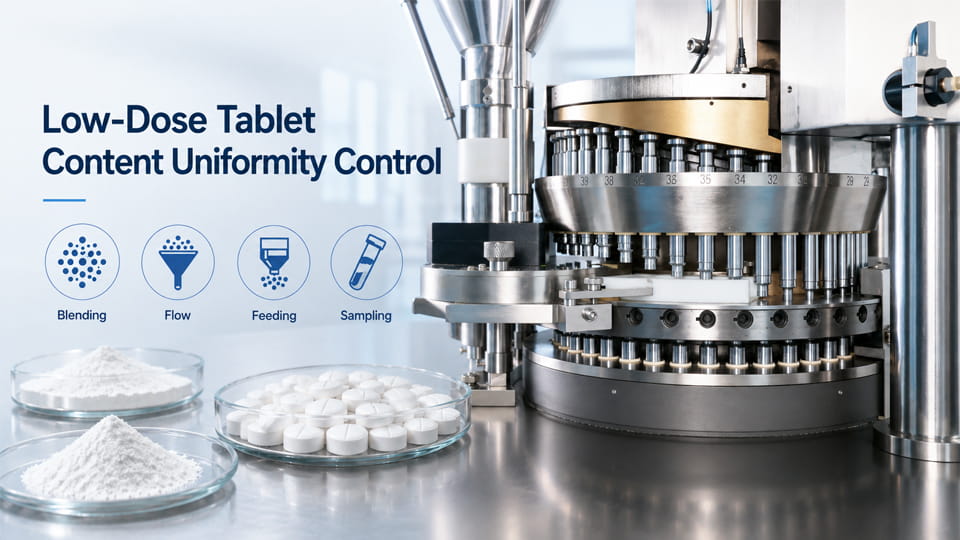
Ensuringتوحيد المحتوىin low-dose tablets is crucial for safety and efficacy. With potent actives present at very low percentages, even minor mix variations can cause some tablets to have too much API and others too little. The key to solving this problem is a systematic focus onمزج, تدفق المسحوق, تصميم المغذية, و أخذ العينات. This guide cuts to the chase with practical tips for each step, so your tablets meet USP <905> standards and keep patients (and auditors) happy.
Why Uniformity Matters in Low-Dose Tablets
Low-dose tablets, حيث العنصر الصيدلاني النشط (واجهة برمجة التطبيقات)may be less than 1–2% of the mix, pose a challenge: every pill must contain almost the same tiny amount of drug. المبادئ التوجيهية التنظيمية (جامعة جنوب المحيط الهادئ <905>) reflect this importance. على سبيل المثال, content uniformity tests تتطلب ذلك 10 tablets have between 85% و 115% of label claim API, with a relative standard deviation (تحديد وضع اللاجئ) ≤6%. If one tablet fails, you must test 30 أكثر! في الممارسة العملية, uniformity means patient safety and product quality. As experts note, توحيد المحتوى“ensures that a consistent dose of the API is maintained between batches”. بعبارات واضحة: uniform mixing keeps tablets effective and safe, especially if a patientsplits a tablet in half – each half should have the correct dose.
Why is this hard? Imagine blending a large container of powder where the API is a tiny fraction. Any uneven mixing or segregation (settling by size or density) can skew the dosage. The end goal of blending is clear: “to produce a homogenous blend of a sample that accurately represents the ratios of the components”. بعبارة أخرى, every small scoop of blend should mirror the full recipe. Failing that, you risk inconsistent tablets that could be out of spec or even unsafe.
الوجبات الجاهزة الرئيسية:From the start, treat content uniformity as a design goal. Aim for a blend that is truly uniform in API distribution. This mindset guides every decision, from equipment choice to process checks.
Best Practices for Uniform Blending
Achieving a homogeneous blend is the foundation of low-dose tablet uniformity. في الممارسة العملية, follow these blending strategies:
Choose the right blender and mode.Not allالخلاطاتare equal. Gentle tumbling blenders (الخلاطات على شكل حرف V, double-cone mixers) or low-shear ribbon blenders are often used for low-dose solids. The blender’s size and shape must fit the batch (too large can under-blend, too small can overload). According to industry experts, “the type of blender needs to be appropriate for the materials” and whether the process is batch or continuous. الأصغر, intensive blenders or multistage mixers may be needed if the API is extremely potent or cohesive.
Pre-blend or space out additions.Rather than dumping all ingredients at once, start by diluting the API. على سبيل المثال, blend the API with part of the excipients (على سبيل المثال. lactose or MCC) أولاً. This “pre-blending” step helps spread the active more evenly before adding the rest of the mix. إذا كان ذلك ممكنا, let API fines agglomerate with a small amount of excipient (for example by layering or adding a fine binder) to reduce segregation. Each blend sequence should aim to evenly distribute the API early in the process.
Optimize mixing time (not too little, not too much).Insufficient mixing leaves unmixed pockets; over-mixing can cause demixing. There’s an optimum blending time for every formulation. Under-blending “does not allow materials to achieve a homogenous mix,” while overblending can actually cause segregation. As Darren Andrews (Raman spectroscopy expert) ملحوظات, simply running the blender longer is not always better. Monitor the blend – for example by sampling – to find the sweet spot where uniformity plateaus.
Consider continuous mixing.For some low-dose products, continuous blenders (cyclones, screw feeders, or V-blenders integrated inline) provide better uniformity. They constantly add and mix ingredients, which can reduce batch-to-batch variation. Continuous blenders often use dynamic mixing elements that shear the powder gently, helping distribute the API. If using continuous systems, ensure a well-sealed feed and controlled feeding rates.
Use proper excipients.سواغcan aid blending. Choose excipients with good compatibility: similar particle size and density as the API can prevent segregation. Spray-dried lactose, مركز عملائي, or starch are common carriers. Some manufacturers usegranulation techniques (high-shear or fluid bed) to coat API onto carrier particles, converting a low-dose mix into a higher-dose granule. This granulation can drastically improve uniformity at the cost of an extra step.
Monitor blend quality. حيثما كان ذلك ممكنا, test the blend mid-process. This can be as simple as taking a sample with a blending thief and analyzing it (with HPLC or UV, as needed). Even better, use a Process Analytical Technology (بات) tool: near-infrared (NIR) or Raman probes can be mounted on the blender to measure content in real-time. The goal is to detect any variation early – if the blend is already off-spec, you can stop and remix before tableting. “Testing the blend during or after blending” is recommended to avoid pressing an out-of-spec mix.
في ملخص, blending for low-dose uniformity means careful formula and process design. Use the right equipment, dilute the API effectively, and verify the mixture before moving on. Proper blending lays the groundwork so that downstream steps like feeding and compression aren’t fighting a bad mix.
آلة خلاط من النوع V
Improving Powder Flow
Even a well-mixed powder blend can bottleneck at the tablet press if its flow is poor. For uniform tablet filling, the blend must flow smoothly from the hopper into the press feeder and dies. Here are key ways to improve flowability:
Optimize particle characteristics.Flow improves with bigger, more spherical particles. بخير, flaky or angular powders tend to clog and clogging leads to uneven fills. على سبيل المثال, one study found that microcrystalline cellulose with highercircularity (rounder particles) showed significantly better flow (and even faster dissolution). If an API is very fine or static-charged, you might partiallygranulate itor add a coarse carrier to avoid dust clouds and bridging.
Add flow enhancers (رقصة مزلقة).Small amounts (عادة <1%) of silica (مثل ثاني أكسيد السيليكون الغروي) or powdered lubricants (على سبيل المثال. ستيرات المغنيسيوم, though too much can slow dissolution) are often added to aid powder movement. These “glidants” coat particles and reduce cohesion, improving hopper discharge. على سبيل المثال, fumed silica is a classic choice to reduce inter-particle friction. Use sparingly: overdosing glidants can reduce tablet strength or cause cap issues.
Control moisture and temperature.Humidity can make powders stick and clump. Keep the environment and formulation dry (within the API’s stability limits). If necessary, handle powders at controlled RH or use dehumidified feed hoppers. بصورة مماثلة, static charge (common in low-humidity conditions) can be mitigated by antistatic agents or grounding.
Use agitators or vibrators if needed.Gravity hoppers can get “bridges” if the powder arched. Vibration pads or air-fluidizing valves under the hopper can help prevent arching. For especially difficult flows, أ vibratory feed frameon the tablet press can ensure powder moves steadily into dies. (These use a motor-driven shaker to nudge powder forward.)
Choose the right filler geometry.A larger hopper or feeder opening can reduce hang-ups. For very cohesive blends, a forced-feeder screw (اوجير) instead of a gravity-feeder may give a more consistent fill by actively pushing powder into the dies.
في الممارسة العملية, test flow properties before production. Simple measures like angle of repose or Hausner ratio can predict flow troubles. Always remember: anything that hinders smooth flow will cause variationin fill volume. The goal is a steady, uninterrupted feed of powder so each tablet starts from the same volume of blend.
Ensuring Consistent Feeding to the Press
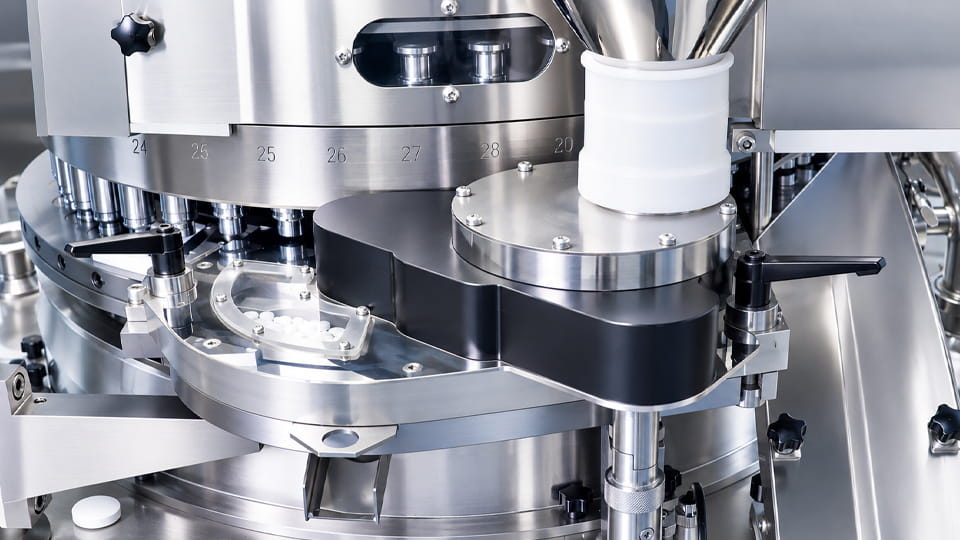
The final step before compression is getting powder into the die uniformly. Even with a perfect blend and flow, a poor feeder can ruin content uniformity. The tablet press feeder (often part of the pill presser or an attached feed frame) must meter a consistent powder volume for each punch cycle.
Gravity vs. forced feed.As Jinlu explains, tablet presses usegravity feeders أو paddle/force feedersto move powder from the hopper to the die. Gravity feeders rely on natural flow; paddle feeders use rotating paddles to push powder. For low-dose formulations with marginal flow, أ المغذية القسرية (with paddles or augers)typically gives better consistency. Gravity is fine if your mix flows easily; خلاف ذلك, mechanical feeding can eliminate “capping” or “starvation” issues.
Design of the feed frame. إطار التغذية (on a rotary tablet press machine) should evenly distribute powder to all dies. Make sure paddles (إذا استخدمت) are clean and the frame is level. Some tablet presses allow for a double feed frame – one for coarse fill, another for fine correction – which can improve uniformity when using a coarse pre-fill.
Weigh loss feedback systems.Modern tablet machines often have weight-loss monitoring. The tablet compressor measures how much powder leaves the hopper (by weight change) and adjusts the feeder to hit a target rate. This kind of automated control maintains a precise feed rate, reducing the chance of “underweight” or “overweight” tablets due to flow fluctuation.
Prevent segregation at the feed.Avoid any dead zones in the hopper where powder might sit and then dump. The feeder should move a thin, even curtain of powder across the dies. If you see systematic variation (على سبيل المثال. every nth tablet is off), check the synchronization of the feeder with the turret. أيضًا, keep the feed frame free from static or dust buildup which can clump. Proper feeder design and alignment “prevents material segregation and ensures consistent tablet quality”.
باختصار, consistent feeding is aboutتسيطر عليها, regular filling of each die. Tune the feeder speed (or paddle speed) to the desired output (tablets/minute). If you double output, you may need to increase the fill depth or speed to keep fill volume steady. A well-fed tablet press is the last line of defense before compression: if the same volume of mix enters each die, content uniformity follows naturally (assuming the blend was good).
Effective Sampling and Testing
No matter how good your process, يجب عليك أن verify content uniformity. Proper sampling and analysis confirm that your low-dose tablets truly meet standards. Here’s how to make it robust:
Use strategic sampling plans.Simply taking 10 adjacent tablets (لكل USP <905>) may not catch local variations. Industry experts recommend more structured plans. Common approaches includeأخذ عينات عشوائية, stratified sampling, أو systematic sampling:
Random Sampling:Select tablets at random points throughout the batch to avoid bias.
Stratified Sampling:Divide the batch into sections (على سبيل المثال. مبكر, وسط, end) and sample from each. This checks for segregation that might happen over the run.
Systematic Sampling:Take every Nth tablet (على سبيل المثال. every 50th) as it comes off the line, giving an even spread.
By sampling across the batch, you gain confidence that uniformity holds everywhere. جامعة جنوب المحيط الهادئ <905> method only requires 10 أقراص (وحتى 30 إذا لزم الأمر), but remember that more samples provide more assurance. في الحقيقة, regulators are encouraging testing larger numbers when possible to improve confidence.
Sampling during blending (خياري).Some manufacturers test the blend before compression. Removing small samples from the blender at intervals (with a thief) and analyzing them can catch mix issues early. This is more common in continuous processes or in R&د.
الأساليب التحليلية.The traditional approach is to dissolve each sampled tablet and assay the API (via HPLC or UV spectrophotometry). While accurate, these methods are offline and time-consuming. Modern plants may useat-line or in-line spectroscopy (NIR or Raman). These allow non-destructive, rapid checks of tablets as they run. على سبيل المثال, an NIR probe can scan each tablet or the blend, instantly predicting API content without solvents. This enables real-time monitoring – if a drift is detected, you can stop and correct before making tons of bad tablets.
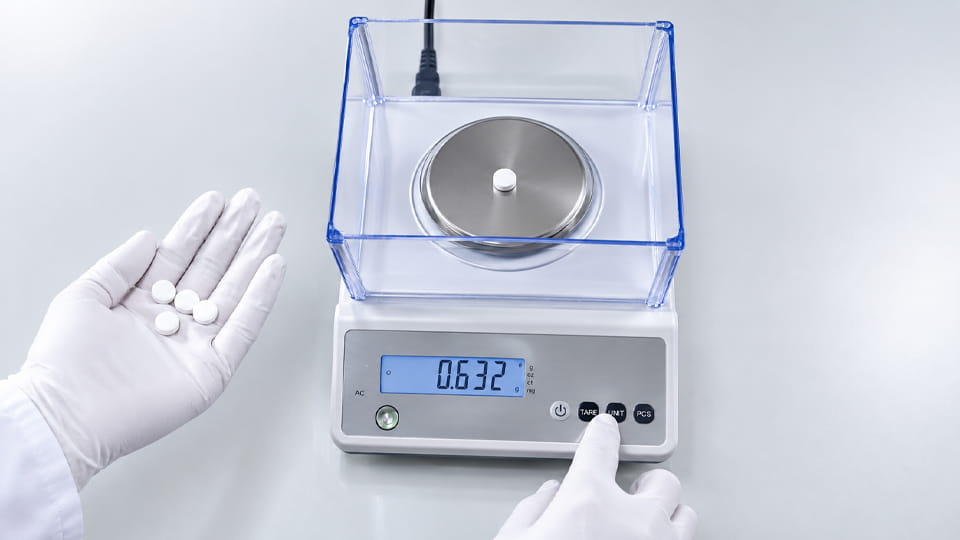
Calculate acceptance carefully.After assay, apply USP <905> criteria: 10 tablets must fall within 85–115% of label claim and RSD ≤6%. إذا لم يكن كذلك, test 20 more tablets (for a total of 30) and meet the expanded criteria. Keep in mind that content uniformity testing is destructive and costly, so optimizing the process to pass quickly is vital.
Maintain records.Document every sample location and result. Good documentation proves to auditors that you followed the plan. If any batch fails, the records show exactly what went wrong (blend test, feed check, إلخ.) and can justify investigations or batch rejection.
Effective sampling is the final check. Even the best processes need verification. By sampling smartly and using rapid analytic methods, you ensure every batch of low-dose tablets truly meets the “uniformity” promise to patients.
الخلاصة والخطوات التالية
Controlling content uniformity in low-dose tablets requires attention at each stage. Blend thoroughlywith the right equipment and techniques, improve powder flowwith good excipients and flow aids, optimize feedersto meter a steady fill, و sample wiselyto verify uniformity. في الممارسة العملية, these steps work together: a homogeneous blend will flow better and feed more consistently, making sampling results favorable.
By following these best practices and understanding the root causes of segregation and mix variation, you can dramatically reduce uniformity failures. If you’re upgrading equipment or troubleshooting issues, consider solutions like continuous blending systems, advanced feed frames, or inline PAT tools. Remember to keep your operators trained – a “simple” hopper adjustment or blending time change can have big effects on uniformity.
If you need help implementing these tips or sourcing reliable tablet press and processing equipment, التعبئة جينلوcan assist. ملكنا يضغط قرص دوار عالي السرعةand custom blending solutions are built to maximize uniformity even with challenging formulations. Visit our website orcontact our specialiststo discuss your low-dose manufacturing needs. معاً, we’ll ensure each tablet meets its dose with confidence.
FAQs on low-dose tablet content uniformity
Why Is Content Uniformity Difficult in Low-Dose Tablets?
Low-dose tablets contain relatively small amounts of API, so small variations in its distribution can cause significant differences in individual tablet content. Poor blending, powder segregation and inconsistent feeding can all contribute to content uniformity problems.
Can Tablets Pass Weight Variation Testing but Fail Content Uniformity?
نعم. Tablet weight can remain consistent even when the API is unevenly distributed throughout the powder blend. Weight variation alone cannot confirm that each tablet contains the correct amount of API.
How Can You Improve Content Uniformity in Low-Dose Tablets?
Start by optimizing the blending process, controlling powder segregation and maintaining consistent die filling. Verify the results through representative sampling and appropriate content uniformity testing.
What Causes Powder Segregation During Tablet Manufacturing?
Powder segregation can result from differences in particle size, كثافة, shape and flow behavior. It may occur during material transfer, hopper discharge, feeding or die filling, even when the original blend was uniform.
Does a Force Feeder Improve Low-Dose Tablet Content Uniformity?
A force feeder can improve die filling when gravity feeding is insufficient. لكن, it cannot correct an uneven blend or eliminate all segregation risks, so feeder settings should be evaluated with the actual formulation.
Does Longer Blending Time Always Improve Content Uniformity?
لا. Insufficient blending can leave the API unevenly distributed, while excessive blending or subsequent material handling may promote segregation in some formulations. The appropriate blending time should be established through process development and supported by blend uniformity data.
How Should Manufacturers Sample Powder Blends for Uniformity Testing?
A sampling plan should represent the batch and account for potential differences between sampling locations. Manufacturers should evaluate sampling bias, analytical variability and the suitability of the sampling method rather than relying on a single sample.
How Can Manufacturers Detect Powder Segregation Before Tablet Compression?
Evaluate blend uniformity at representative locations and investigate changes during material transfer and hopper discharge. Particle-size analysis and flow-property measurements can help identify risks, but they do not replace appropriate blend uniformity testing.
Can NIR or Raman Spectroscopy Monitor Tablet Content Uniformity?
نعم, NIR and Raman spectroscopy can support blend or tablet content monitoring when suitable measurement methods and validated calibration models are available. Their performance depends on the formulation, instrument configuration and intended application.
How Is Low-Dose Tablet Content Uniformity Evaluated Under USP ?
USP evaluates dosage-unit uniformity using the applicable procedure and acceptance criteria, including the acceptance value (ل). Manufacturers should consult the current official USP–NF chapter and applicable product requirements rather than relying on a simple fixed percentage range alone.
بيتي فو, مؤسس شركة Jinlupacking, يجلب 20 سنوات من الخبرة في قطاع الآلات الصيدلانية. تحت قيادته, لقد نمت Jinlu لتصبح موردًا موثوقًا به يدمج التصميم, إنتاج, والمبيعات. بيتي متحمس لمشاركة معرفته العميقة بالصناعة لمساعدة العملاء على التغلب على تعقيدات التعبئة والتغليف الدوائية, ضمان حصولهم ليس فقط على المعدات, ولكن شراكة خدمة متكاملة حقيقية مصممة خصيصًا لأهداف الإنتاج الخاصة بهم.