أ scored tablet only appears ready to split, but the truth is, a score line alone doesn’t guarantee perfectly equal halves. جهاز لوحي شكل, مقاس, سماكة, والصلابة, along with how its score line is made, all determine how it will fracture. في الممارسة العملية, a functional score must be engineered – not just stamped on – so that patients (or pharmacists) can reliably break the pill into equal doses. على سبيل المثال, having a score line helps patients take half the pill to adjust dosage or ease swallowing, and regulators even insist that generic and brand products use matching score lines to ensure dose consistency. باختصار, the answer is: sometimes – but only with proper design and testing. As pharmaceutical experts note, split tablet halves يجب still meet pharmacopeial uniformity standards; splitting often introduces weight variation that can affect dose accuracy.

A score line does not guarantee an even split. هندسة الكمبيوتر اللوحي, القوة الميكانيكية, score design, tooling and compression consistency all influence how a scored tablet fractures, while splitability testing determines whether the resulting portions actually provide the intended fractional dose.
Before diving into splitability factors, let’s review what a score line means. في صناعة الأجهزة اللوحية, أ score line or breakmark is an intentional groove pressed into the tablet. أ functional score is designed so the tablet can be cleanly divided into equal halves under normal use – typically by finger pressure or a simple splitter. (على النقيض من ذلك, a decorative score or merely an imprint may make the tablet look attractive but isn’t meant for reliable splitting.) Thanks to patient-centered design, many tablets today include a score to improve flexibility: “Scored tablets let patients adjust dosage or make swallowing easier by taking half the pill,” as a JinLu industry guide explains. بشكل ملحوظ, pharmaceutical regulators also push for consistent scoring – meaning generic versions must replicate the innovator’s score line – so that dose adjustment works the same way across brands.
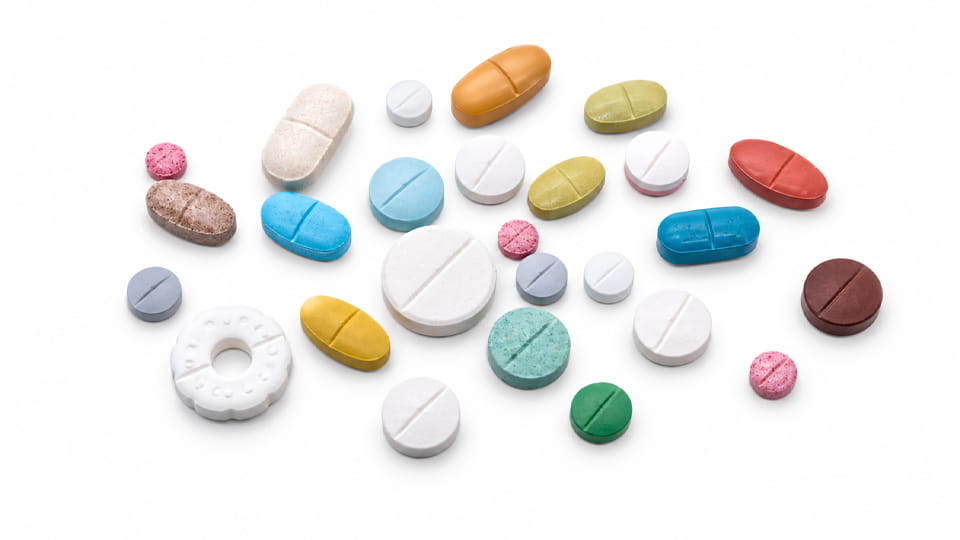
شكل: Various tablets with different shapes, الأحجام, and score lines. Designing tablet form (شكل, أبعاد, score) is a deliberate balance of manufacturing ease, استخدام المريض, and brand needs.
As shown above, tablets come in many shapes (دائري, بيضاوي, كبسولة, إلخ.) and some have a score line. This variety isn’t random – the shape and size of a tablet affect both swallowing comfort و القوة الميكانيكية. على سبيل المثال, ثنائي التحدب (على شكل قبة) الجهاز اللوحي يقاوم الكسر بشكل أفضل من الجهاز المسطح, since its rounded surface distributes stress more evenly. بصورة مماثلة, elongated or capsule-shaped tablets can split differently than circular pills. على العموم, tablets with a longer length-to-width ratio (oblong shapes) tend to split more predictably along the long axis, while very round tablets may be tougher to half evenly. قرص سماكة and curvature also influence how a crack propagates. باختصار, certain shapes are inherently easier or harder to split: مستوي, thick, or very large tablets often require higher force and may break unevenly, whereas moderately thin or elongated tablets often fracture closer to the score line.
Beyond shape, قرص صلابة (القوة الميكانيكية) is a key factor. Too ناعم, and the tablet will crumble or chip when breaking; أيضاً صعب, and it may resist splitting or shatter unexpectedly. في التصنيع, formulators must target a hardness “sweet spot.” For example, imatinib (Gleevec) scored tablets are pressed to a hardness that allows splitting by a pill cutter – but each split half still meets dose requirements. Regulators recommend testing tablets at both the low and high ends of the intended hardness range to ensure all splits remain within specs. في الممارسة العملية, this means adjusting the compression pressure and formula to yield consistent hardness. Most immediate-release scored tablets will have moderate hardness so they hold their shape but still break predictably.
Even with the right shape and hardness, ال geometry of the score line itself is crucial. Factors include the depth, عرض, and shape of the groove, and whether it’s pressed on one or both sides of the tablet. A deeper or double-sided score tends to make the tablet easier to split (lower fracture force), but if it’s too deep it can weaken the tablet or cause parts to flake off. A shallow or narrow score may require excessive force. من الناحية المثالية, a functional score is deep enough to guide a straight break, but not so deep that it prematurely cracks or spoils the tablet during handling. Tablet engineers often design a V-shaped or curved groove to concentrate stress in the middle of the tablet. The alignment and precision of the punch and die used to create the score also matter: a precise tool ensures each tablet’s score is identical. باختصار, تصميم جيد scored tablet will have a smooth, centered fracture path right where the score is.
في المقابل, if the score is poorly placed or uneven, the pill may veer off the line when snapped. على سبيل المثال, if one side of an oblong tablet is convex and the other is flat, a single-sided score might produce asymmetrical halves. That’s why tooling quality is so important – a tiny misalignment in the punch can shift the fracture line. (انظر لدينا tablet tooling guide for more on punch types that support scoring.) في الممارسة العملية, manufacturers verify their score design by mechanical testing (انظر أدناه) and may even adjust press speed or lubrication to improve break accuracy.
All of the above factors come together during compression. حديث قرص دوارة الضغط (such as those built by JinLu) with precise tooling is essential. The tablet press applies compression force to the powder blend, forming the tablet and impressing the score. Operators must set the الضغط المسبق و الضغط الرئيسي forces correctly: pre-compression often helps particles settle, reducing lamination, while the final compression sets the tablet hardness. Uniform fill depth and consistent force across all punches ensure each tablet has identical dimensions and density, which in turn makes splitting more uniform from one tablet to the next.
أدوات عالية الجودة (اللكمات ويموت) is especially critical for scored tablets. على سبيل المثال, a “D”-form or flat-bottom punch can produce a consistent cross-sectional area. If the tool surface around the score line is polished and the corners are well-defined, the break line will be sharp and precise. Many manufacturers also use split tooling (a special punch with a groove) for scored tablets to control how the halves separate. Keeping the tooling well-maintained (no burrs or wear) is a must – even a slight imperfection at the score edge can cause a chunk to chip off. في الممارسة العملية, جينلو pre-compression and tablet press guide shows how stability in compression parameters helps achieve consistent splitability.
As tablets exit the press, they should be handled gently. Automated take-off and polishing systems must be set so as not to crack the scored tablets prematurely. Even small knocks or high-speed tumbling can break scores improperly. في ملخص, machine and process controls must be tuned alongside tablet design. If a scored tablet is difficult to split, it’s often a symptom that the آلة الضغط اللوحي settings or tooling need adjustment (على سبيل المثال. too high force, or vibration during ejection). A production engineer will typically review run data (وزن الكمبيوتر اللوحي, صلابة) when investigating split issues, ensuring the process stays tight.
Before a scored tablet goes to market, rigorous testing proves it will split properly in the patient’s hands. Regulatory guidance makes clear that split tablets must meet the same standards as full tablets, which means manufacturers perform a series of splitability tests:
Each of these tests yields data to prove the scored tablet is “functional.” If a batch shows failing uniformity or large mass loss, the design or process must be revised. As one review warns, splitting can introduce significant variability: “tablet fragments should comply with content/mass uniformity requirements… splitting may result in weight variation in each tablet half which may jeopardize clinical outcome”. بعبارة أخرى, a good scoring design requires matching tablet formulation (to resist crumbling) and careful test data to back it up.
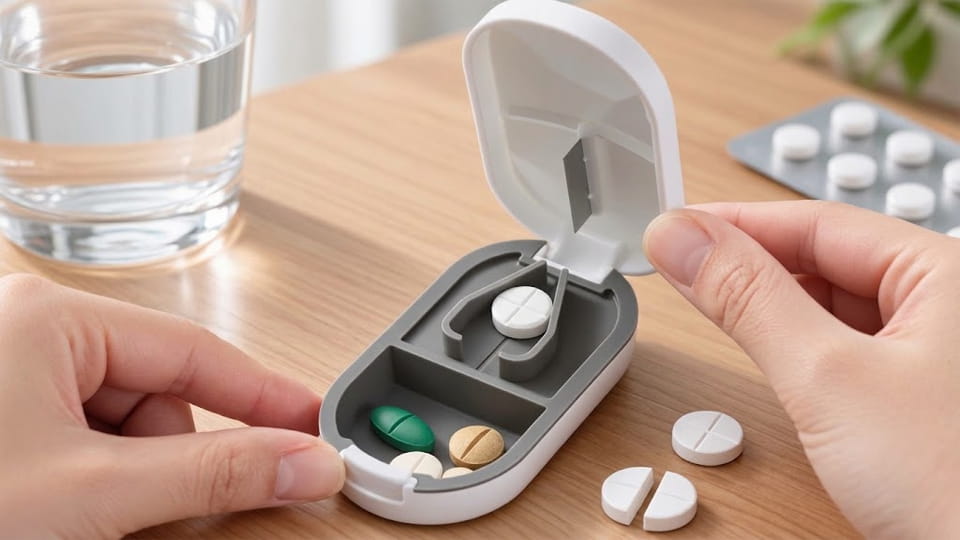
شكل: Example of a scored tablet split in a pill cutter. Each half must be weighed and tested to ensure dose accuracy.
Even with all the right design, real-world splits can still be imperfect. وتشمل الجناة المشتركة:
| مشكلة | Likely cause | What to check |
|---|---|---|
| Tablet breaks away from score | Score geometry or punch alignment | Score position and tooling |
| One half is consistently heavier | Geometry or asymmetric fracture | Tablet dimensions and score configuration |
| Tablet chips during splitting | Excessive friability or unsuitable score | صلابة, friability and score depth |
| Splitting force is too high | Excessive crushing resistance or shallow score | Hardness range and score geometry |
| Results vary between batches | Compression or fill inconsistency | وزن, compression force and tooling |
| Hand splitting performs poorly | Tablet geometry or user force | شكل, curvature and hand-splitting method |
When troubleshooting, a process engineer will re-measure tablet dimensions, صلابة, and try splitting multiple tablets by hand and with a cutter, comparing weight of left vs right halves. They may even observe the fracture under magnification. غالباً, fine-tuning the score depth (with a new punch) or tweaking the lubrication (to ensure even filling) solves the problem.
للمصنعين, iterative testing during development is key: split prototypes at various hardness levels and scores to gather data. حتى أن بعض الشركات تستخدم simulation tools to predict fracture points. في النهاية, the goal is a “design space” where every tablet in spec splits acceptably.
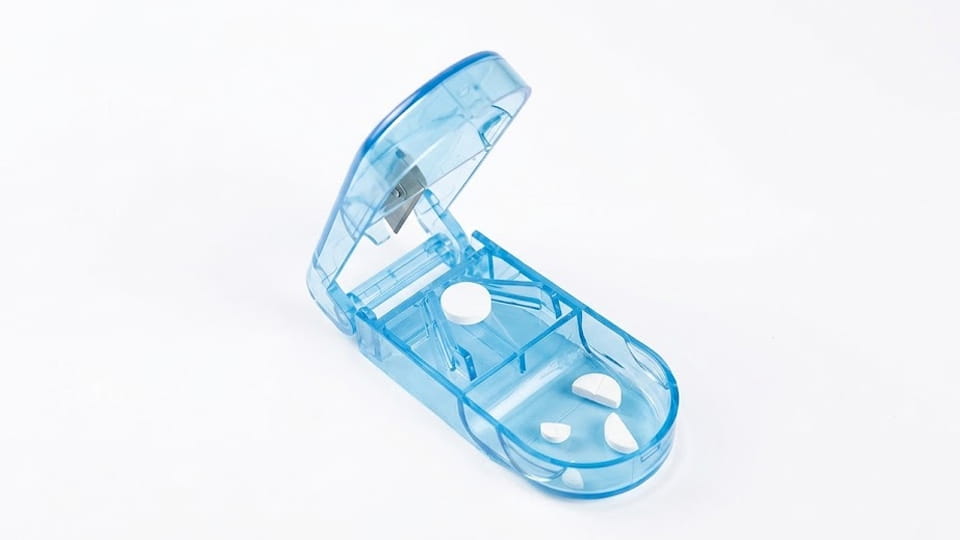
شكل: A simple manual pill cutter (أزرق) is often used to ensure a repeatable split along the score. Testing should include both manual and mechanical splitting to mimic patient use.
Based on experience and guidelines, here are practical tips to enhance scored tablet performance:
These steps ensure the final product truly meets the promise of the score line. A well-split tablet improves patient trust – no one likes guessing if two halves are equal!
ختاماً, a visible score line is just the start; achieving an evenly split tablet requires sound science and engineering. اليمين tablet shape and size can make splits more predictable (على سبيل المثال. curved, thin tablets split more easily than thick flats). A balanced صلابة و binder system prevents crumbling. A precisely cut score groove guides a clean break. And comprehensive الاختبار (اختلاف الوزن, توحيد المحتوى, القابلية للتفتيت, الحل, استقرار) verifies that each half meets quality specs. By considering these factors – from powder flow to pilot split tests – manufacturers can deliver functional scored tablets that give the intended dose after splitting, with confidence.
Manufacturers and procurement teams should note: selecting the right tablet press and tooling is key. High-quality press machines (such as JinLu’s precision rotary presses) provide the control needed over compression and scoring. If you’re facing splitability issues, review your equipment settings and tooling as well as formulation.
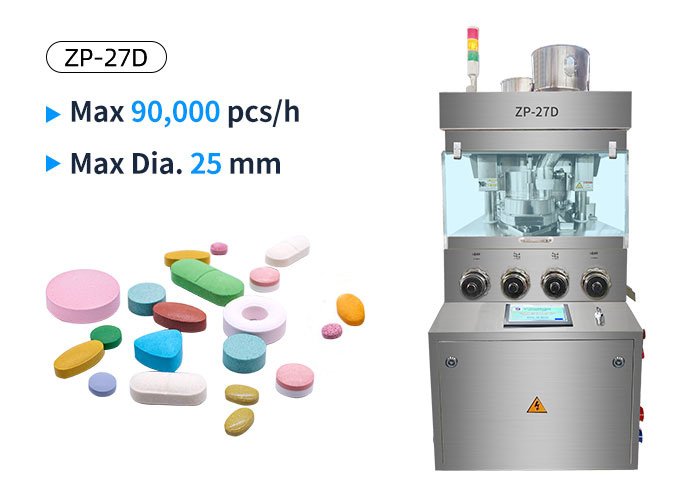
Ready to improve your scored-tablet process? Consult with our JinLu experts to optimize your tablet press setup or tooling design. اتصل بنا for case-specific guidance or to test sample batches on our equipment – we’ll help ensure your scored tablets truly split evenly.
Stay compliant, deliver accuracy – make your scored tablets count. For customized solutions in tablet manufacturing and testing, request a consultation or demo from JinLu Packing today.
نعم, but a score line alone does not guarantee an even split. شكل التابلت, صلابة, score geometry, الأدوات, and manufacturing consistency all affect splitability.
نعم. Tablets that are too hard may resist splitting, while tablets that are too soft may chip or crumble. Splitability should be evaluated across the intended hardness range.
نعم. Score depth and geometry influence where the tablet fractures and how much force is needed to split it. The score must be optimized with the tablet’s shape and mechanical strength.
Common causes include off-center scoring, unsuitable tablet geometry, hardness variation, inconsistent compression, tooling problems, and tablet friability.
Typical evaluation includes splitting tablets by hand and with a tablet splitter, then assessing loss of mass, القابلية للتفتيت, and the uniformity of the split portions.
نعم. Splitability should be demonstrated at both the low and high ends of the validated hardness range to confirm that the tablet remains functional throughout production.
A functional score is a deliberately designed break line that allows the tablet to be divided as intended while maintaining acceptable uniformity and product performance after splitting.
نعم. شكل التابلت, سماكة, curvature, and dimensions affect stress distribution and fracture behavior, so the score design must be matched to the tablet geometry. Health Canada specifically recommends evaluating tablet and break-line geometry for scored products.
The split portions can be evaluated for dosage-unit uniformity using appropriate pharmacopeial methods. The test should represent how the tablet is intended to be split by the user.
Only when the formulation and product labeling allow it and splitting does not compromise drug release. For modified-release scored tablets, the split portions may need to demonstrate an appropriate release profile in addition to dosage-unit uniformity.
مراجع:
1.Tablet Scoring:Nomenclature, وضع العلامات, and Data for Evaluation —— ادارة الاغذية والعقاقير
2.Quality Attributes of Tablets Labeled as Having a Functional Score —— جامعة جنوب المحيط الهادئ <1705>
3.Prediction of the ease of subdivision of scored tablets from their physical parameters —— مجلات
4.Breaking of scored tablets: a review —— مجلات
5.Key Technical Aspects Influencing the Accuracy of Tablet Subdivision —— مجلات
6.Split Tablet Studies —— ادارة الاغذية والعقاقير