×
الخدمة عبر الإنترنت
✉️البريد الإلكتروني: 💬واتساب: +86 18011793320
💡
  • بيت
  • مدونات
  • كبسولات مملوءة بالسوائل مقابل الكبسولات الطرية: الاختلافات الرئيسية, فوائد, عملية التصنيع & كيفية الاختيار

كبسولات مملوءة بالسوائل مقابل الكبسولات الطرية: الاختلافات الرئيسية, فوائد, عملية التصنيع & كيفية الاختيار

كبسولات مملوءة بالسوائل (also called liquid-filled hard capsules or LFHCs) are essentially two-piece hard-shell capsules (الجيلاتين أو HPMC) that have been filled with an oil-based or liquid formulation. بعد التعبئة, the cap and body are sealed – often with a thin gelatin band – to prevent leaks. بعبارة أخرى, LFHCs are a hybrid form: a solid capsule shell containing a liquid dose inside. على النقيض من ذلك, كبسولات هلامية are made in one step as a أعزب, flexible one-piece shell that is already filled with a liquid or semi-solid. Softgels use plasticized gelatin (with glycerin or sorbitol) to make a soft, sealable membrane. They are typically used for very oily or soluble ingredients – for example, fish oil or fat-soluble vitamins (د, ه, ك) almost always come in softgels.

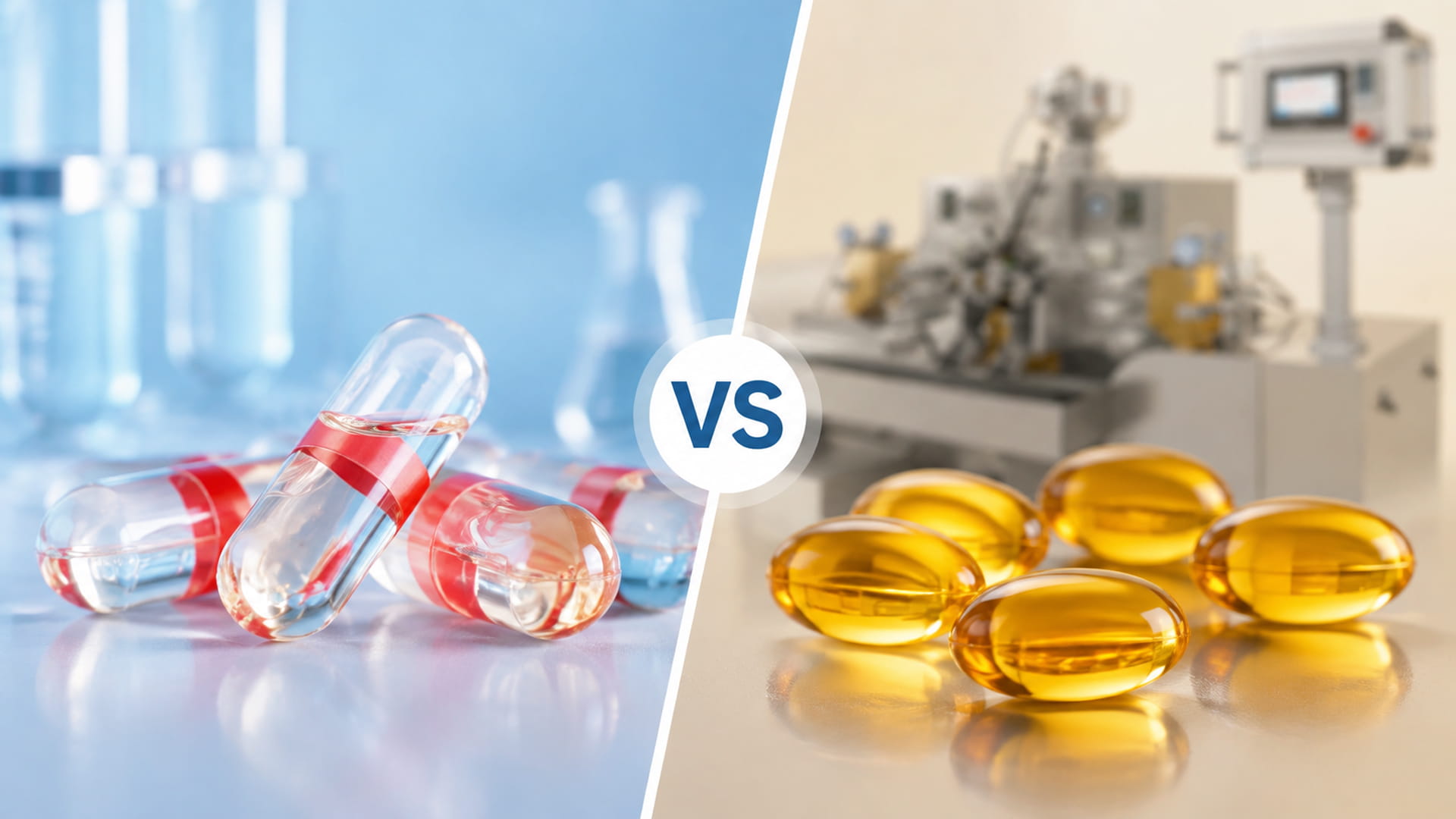
كبسولات مملوءة بالسوائل مقابل الكبسولات الطرية

من الناحية العملية, both formats can deliver liquid drugs or supplements, but their design and production differ significantly. Key differences include capsule structure, مواد القشرة, compatible fills, وخطوات التصنيع. Understanding these helps pharma manufacturers choose the right form for their product. Below we break down the main distinctions and benefits of each.


What Are Liquid-Filled Capsules?

Liquid-filled hard capsules (LFHCs) هي القياسية two-piece capsule shells (الغطاء والجسم) filled with a liquid or oil-based formulation after the shells are made. The shells can be made of gelatin or plant-based HPMC (for vegetarian capsules). في الإنتاج, a precise dose of liquid (في كثير من الأحيان محلول الزيت, suspension or self-emulsifying mix) is injected into the open capsule body, then the cap is closed on top and sealed. Special sealing methods ensure nothing leaks (على سبيل المثال, applying a thin gelatin band around the joint, called “band sealing”).

This two-piece approach allows LFHCs to combine the benefits of liquids and capsules. You get the quick-release and high bioavailability of a dissolved liquid, with the easy swallowing and masking of taste that capsules offer. LFHC shells are pre-manufactured, so no costly melting of gelatin sheets is needed during fill. على سبيل المثال, JinLuPacking’s NJY-300C liquid capsule filler automatically fills liquids into size #00–#4 hard shells and band-seals them in one fast line.

Liquid-filled hard capsules (each has a colored band sealing the cap-body joint)

شكل: Liquid-filled hard capsules (each has a colored band sealing the cap-body joint). These two-piece capsules hold oil or liquid inside a solid gelatin/HPMC shell.


What Are Softgels?

كبسولات هلامية (often just called كبسولات هلامية) نكون قطعة واحدة, gel-coated capsules containing a liquid or semi-solid fill. They are made on a rotary-die encapsulation machine that forms, يملأ, and seals each capsule in a single step. In the machine, two ribbons of plasticized gelatin (gelatin mixed with glycerin or sorbitol) are cast and pressed together while a metered stream of liquid is injected between them. Each capsule is simultaneously cut and sealed by heated dies. والنتيجة هي على نحو سلس, بيضاوي, airtight capsule popularly used for oil-based supplements (think vitamin E or omega‑3 pills).

Softgels are ideal for oils and sensitive liquids. Because the entire capsule is hermetically sealed when it’s formed, no separate sealing step is needed. This makes them very protective against oxygen and moisture. Many fish oil, vitamin D/K, and botanical oil products use softgels for their convenience and shelf stability. في الحقيقة, surveys show Omega-3 and fat-soluble vitamin supplements are most often delivered as softgels.

Amber softgel capsules on a teaspoon next to a pill bottle

شكل: Amber softgel capsules on a teaspoon next to a pill bottle (common for fish oil or vitamin D).


كبسولات مملوءة بالسوائل مقابل الكبسولات الطرية: الاختلافات الرئيسية

  • هيكل الكبسولة: Liquid-filled hard capsules are قطعتين units – a cap and body – that are joined after filling. The cap can in principle be removed (قبل الختم), making them reopenable in the filling line. Softgels are a قطعة واحدة sealed pouch with no separable parts. Once a softgel is formed, it’s hermetically sealed and can’t be opened without breaking the shell.
  • Shell Material: Hard capsules are made of gelatin or vegetarian polymer (مثل HPMC) بالإضافة إلى الماء, without added plasticizers. Softgel shells contain gelatin مع الملدنات (على سبيل المثال. glycerin or sorbitol) to keep them elastic. This means softgel shells are softer and more pliable, whereas hard capsule shells are firmer and dry.
  • أنواع التعبئة: Standard hard capsules typically hold مساحيق جافة, حبيبات, mini-tablets or pellets. في المقابل, softgels contain سائل, القائم على النفط, or semi-solid يملأ. Liquid-filled hard capsules bridge the gap: they use a hard capsule shell but are filled with liquid or suspension, similar to what softgels hold. في الممارسة العملية, softgels handle pure oils and solutions; LFHCs can also accept suspensions or combination fills (على سبيل المثال. tiny tablets plus oil).
  • عملية التصنيع: Hard capsule production is a two-step process. أولاً, قذائف كبسولة فارغة are formed (by dipping molds in gelatin), then later filled and sealed. Softgels are made in a single continuous process on a rotary-die machine: molten gelatin sheets are cast, meet at a filling station where the liquid is injected, and then the capsules are cut and sealed in one motion. في ملخص:
    • كبسولات صلبة (LFHC): Shells are pre-made; filling and sealing are done later (liquid is pumped into each capsule body, then cap is put on and sealed).
    • الكبسولات الطرية: Shell formation, تعبئة, and sealing happen together on a specialized machine.
  • Drying/Curing: Softgels require post-fill drying. The freshly-made softgel shells are moist and need to be tumbled and then tray-dried for hours to reduce moisture to the target level. This curing can take 2–4 days in total. Liquid-filled hard capsules do not need this drying step: once filled and sealed, they can move straight to inspection or packaging.
  • Hermetic Seal: Softgels have a continuous hermetic seal by design (the two gelatin layers fuse completely), giving them very low oxygen permeability. LFHCs must use special sealing: typically a thin gelatin band or fusion at the cap-body joint. A band seal provides a strong barrier against leaks, though it is a mechanical patch rather than a continuous shell.
  • Production Equipment: Softgel manufacturing requires expensive rotary die encapsulation lines, climate-controlled rooms, and skilled operation. LFHC production can use standard كبسولة ملء آلات (with an added liquid pump) which are simpler and often already available in-house. في الحقيقة, a typical LFHC line can run a complete batch in a single day, whereas softgels need multi-day gelatin preparation and drying cycles.
  • Regulatory/Marketing: Because LFHCs use قذائف نباتية (مثل HPMC) by default, they easily meet vegan/halal standards. Traditional softgels (الجيلاتين البقري/الخنازير) نكون لا halal/vegan, unless using specialty fish gelatin or non-gelatin alternatives. Softgels are widely recognized in the supplement market (consumers expect fish oil in softgels, على سبيل المثال), while LFHCs look like standard capsules and can be customized in color and printing.
ميزة Liquid-Filled Capsules (LFHCs) الكبسولات الطرية
بناء قطعتين (كاب & جسم) One-piece sealed capsule
Shell Material Gelatin or HPMC (vegetarian option) Plasticized gelatin (الجيلاتين + الملدنات)
Manufacturing Method Fill then seal (on capsule filler + العصابات) Rotary die encapsulation (نموذج ملء الختم)
Equipment Cost أدنى (standard capsule fillers) أعلى (dedicated softgel line)
حجم (MOQ) Low minimums (fits small batches) Usually higher volume required
Vegetarian Option نعم (HPMC shells available) محدود (now some starch/veg options)
ختم Mechanical sealing (banding/fusion) Built-in seal (hermetically sealed by die)
Leakage Risk قليل (once sealed properly) منخفض جدًا (no seam to leak)
مرونة الإنتاج عالي (can mix powders or pellets with liquid) واسطة (only liquid/paste fills)
Scale-Up سهل (uses standard capsule machines) أكثر تعقيدا (specialized drying, إلخ.)

Both forms deliver liquid or oil-based actives and can offer high bioavailability by presenting the drug dissolved in a lipid. لكن, LFHCs use simpler lines (shells are pre-made) whereas softgels require cooking and drying steps for the gelatin ribbons.

Liquid-Filled Capsules and Softgels with a glass of water


Manufacturing Process Comparison

  • Liquid-Filled Capsules: Two-piece shells are pre-fabricated. In the filling line, empty capsules are separated, bodies are filled via metered pumps, then caps are attached and the seam is sealed by banding or fusion. هنالك no multi-day curing step. Finished capsules go straight to inspection and packaging. This streamlined process (fill one day, seal same day) makes LFHC production very fast.
  • الكبسولات الطرية: The process starts with making a gelatin melt: الجيلاتين (plus glycerin/sorbitol and colorant) is mixed into a molten syrup. Two ribbons from this gelatin mass are formed on heated drums. ملء السائل (زيت, تعليق, إلخ.) is injected between the ribbons, and the ribbon is cut/sealed into capsules. حاسمة, each softgel batch must then dry for 2–4 days before packaging to stabilize its moisture. This drying period adds time and requires controlled humidity rooms. Quality control can only occur after drying (longer lead time).

Key takeaway: Softgel machines استمارة, يملأ, and cut in one step (necessitating drying), while LFHC lines fill pre-made shells and seal them (skipping a lengthy curing stage). كما يشير أحد دليل الصناعة, “Softgels cure 2–4 days post-fill. LFHCs have no curing step… batch losses from fill failure are higher for softgels”.


Advantages of Liquid-Filled Capsules

Liquid-filled capsules offer several manufacturing and product advantages:

  • Improved Bioavailability for Tough Drugs: LFHCs excel at delivering poorly soluble, low-dose or potent actives. Formulating the API in an oil or lipid solution enhances solubility and absorption compared to a powder. على سبيل المثال, heat-sensitive or waxy compounds can be dissolved in oil and quickly absorbed, often leading to a faster or stronger effect.
  • Flexible Development & الجرعات: Adjusting dose strengths is easy with liquids. You simply change the concentration of active in the fill. This “quick and simple dose adjustment” makes R&D faster and scale-up smoother. A company can fill the same capsule shell with different concentrations as needed, streamlining clinical and commercial batch changes without new tooling. Prototype batches can even be done in-house with benchtop fillers rather than expensive softgel pilot lines.
  • أسرع, Lower-Cost Production: Since hard capsule shells are made separately, LFHC production avoids the multi-day gelatin cooking/drying of softgels. An LFHC batch (يملأ + ختم) can be completed in ساعات or a single day, versus 3–4 days for a softgel line. The equipment is simpler (standard capsule filling machine with a liquid pump). هذا يعنى lower capital investment, بصمة أصغر, and higher output per shift. There’s also minimal waste: softgel lines can lose up to ~40% of the gelatin web to trim, whereas LFHCs waste virtually none of the shell material.
  • Better Product Stability: LFHC shells (وخاصة HPMC) have lower moisture and oxygen permeability than softgel gelatin shells. HPMC capsules can support very dry fills and block moisture ingress. When combined with hermetic band sealing, LFHC products often have a longer shelf life and are more stable in harsh conditions. من الناحية العملية, the reduced water content and permeability preserve sensitive oils or vitamins better over time.
  • Combination Formulations: Because they are two-piece, LFHCs can combine multiple forms in one capsule. You can put a tablet, بيليه, or powder along with the liquid fill. على سبيل المثال, a single capsule might hold an oil-based vitamin E liquid and a separate dry tablet of herbal extract. This multi-particulate flexibility is not possible in a one-piece softgel. It lets companies create innovative fixed-dose combos or keep product families with one dosage form.

These advantages make LFHCs attractive in both pharmaceutical and nutraceutical markets.


Advantages of Softgel Capsules

Softgels also have strong benefits that make them popular for many supplements:

  • Excellent Oxygen/Moisture Barrier: The hermetic seal of a softgel (the two ribbons are fused) means almost no air or water penetrates. This is ideal for oxygen-sensitive oils (على سبيل المثال. زيت السمك, فيتامين د) because it prevents oxidation. Many manufacturers trust softgels to keep oils fresh and odor-free for longer.
  • High Bioavailability: Like LFHCs, softgels deliver actives in liquid form, which often boosts absorption. The liquid or self-emulsifying fills can provide rapid drug release in the GI tract. Studies show softgels dissolve in ~10–20 minutes, making the active quickly available.
  • سهولة البلع: الكبسولات الطرية لها ملمس ناعم, rounded shape and slip down easily with water. This can enhance patient compliance, especially for larger doses. Many people find softgels more pleasant than hard pills.
  • Premium Appearance and Customization: Softgel shells can be made opaque, colored, or shaped for branding. على سبيل المثال, tri-color or unique shapes can distinguish a product line. This “cosmetic” advantage adds perceived value on retail shelves.
  • Versatile Liquid Fills: Softgels can hold complex formulations – oils, تعليق, or even dissolved powders – without issue. They can encapsulate delicate botanical extracts (على سبيل المثال. زيت اتفاقية التنوع البيولوجي, aloe vera) or oil-soluble vitamin blends. الناعمة, pliable shell also masks unpleasant tastes or odors of the fill.
  • Consumer Familiarity: Softgels are an industry-standard for popular supplements (زيت السمك, vitamin E, prenatal vitamins, إلخ.), so consumers often expect and accept this format.

Industries using softgels include المستحضرات الصيدلانية (oil-based medications), المغذيات (المكملات الغذائية), مستحضرات التجميل (زيوت التجميل المغذية), and even veterinary products. على سبيل المثال, vegan or halal softgels made from starch/gellan are on the rise.


Which Ingredients Are Best for Each Capsule Type?

مكون / يملأ كبسولة مليئة بالسائل Softgel Capsule
Fish Oil / أوميغا 3 ✓ Suitable ✓ Suitable
CBD or Cannabis Oil ✓ Suitable ✓ Suitable
الكركمين (Turmeric Extract) ✓ Suitable ✓ Suitable
فيتامين د (زيت) ✓ Suitable ✓ Suitable
Herbal Liquid Extracts ✓ Suitable ✓ Suitable
البروبيوتيك (if suspended in oil) لا (moisture kills bacteria)
Moisture-Sensitive APIs (especially in HPMC capsules) (shell high moisture)

Both capsule types handle oil-soluble actives well. Common nutraceutical oils (زيت السمك, فيتامين د, مقتطفات العشبية, اتفاقية التنوع البيولوجي, إلخ.) are effectively delivered by either LFHCs or softgels.

بشكل ملحوظ, dry or moisture-sensitive ingredients are better in liquid-filled hard capsules. على سبيل المثال, probiotics or water-sensitive APIs are impractical in softgels. في المقابل, HPMC hard capsules can hold non-aqueous suspensions of probiotics or very dry formulations, since HPMC has low moisture and gas permeability. Softgel shells contain about 30% water and higher oxygen permeability, which can degrade such ingredients.


Which Industries Prefer Each Format?

  • كبسولات صلبة مملوءة بالسوائل: Widely used in المغذيات و المستحضرات الصيدلانية, especially for new or small-batch products. Startups or الشركات المصنعة للعقود often favor LFHCs for R&D flexibility and lower initial cost. They’re also used in مستحضرات التجميل (nutraceutical beauty products) و veterinary supplements where ingredient flexibility is needed.
  • الكبسولات الطرية: Favored by large pharmaceutical and supplement companies producing high-volume, established products. Many omega‑3, multivitamin, and prescription oil medications come as softgels due to their consumer recognition and shelf-life. Softgels are also standard for any liquid prescription drug where hermetic sealing is critical.

باختصار, use LFHCs when flexibility and low-volume production matter; choose softgels for scale and premium shelf appeal.


Which Is Better for Manufacturers?

From a manufacturer’s point of view, the decision often depends on scale, investment, and strategic goals:

  • New or Small Producers: Liquid-filled capsule lines have lower startup costs and smaller equipment needs. Because they use standard capsule fillers (with a liquid dosing unit), the same machines can serve existing powder capsule processes with a simple changeover. This keeps capital investment low. أيضًا, LFHCs require smaller minimum orders and shorter lead times, making them ideal for limited runs and fast market entry.
  • Large Producers or High-Volume Products: الكبسولات الطرية, though costlier to set up, shine when volumes are huge. High-speed rotary die machines can churn out thousands of softgels per minute once commissioned. For very high-demand items (على سبيل المثال. top-selling fish oil brands), the per-unit cost of softgels can eventually be lower despite higher overhead. The hermetic sealing also means less risk of manufacturing rejects from leaks.
  • Contract Manufacturers: Many CMOs offer both options today. They may steer clients toward LFHCs for early-stage or niche products (due to quick turn-around), and toward softgels for blockbuster formulations that justify dedicated lines.

The table below summarizes the choice by scenario:

Company Type / Situation Recommended Format
Small startup or R&D project Liquid-Filled Capsules (low MOQ, مرن)
Niche supplement line, <10k units Liquid-Filled Capsules
الشركة المصنعة للعقد (المرونة) Liquid-Filled Capsules
Large pharmaceutical producer الكبسولات الطرية (إنتاجية عالية, ثابت)
High-volume omega-3 or vitamins الكبسولات الطرية
Product needing vegan capsule Liquid-Filled Capsules (قذائف HPMC)


Equipment Required

  • For Liquid-Filled Capsules: معيار capsule-filling line (either semi or fully automatic) يستخدم, مع أ liquid filling attachment. Key equipment includes a ماكينة تعبئة الكبسولات السائلة (على سبيل المثال. JinluPacking’s NJY-300C or NJY-1000C) that meters and injects the oil into empty capsules. بعد التعبئة, أ banding machine applies a gelatin (أو HPMC) seal around the capsule seam. أخيراً, dryers and polishers finish the line. JinLuPacking offers dedicated ماكينات تعبئة الكبسولات السائلة that integrate pumps, الفوهات, and banders on one platform.
    Close-up of a liquid capsule filling machine dispensing liquid into capsulesشكل: Close-up of a liquid capsule filling machine dispensing liquid into capsules.
  • For Softgels: كامل rotary die آلة تغليف الكبسولات الطرية هناك حاجة (على سبيل المثال. JinLuPacking’s softgel line), along with associated units. The softgel line includes a gelatin mixer/pelletizer, تذوب الجيلاتين, طبول الصب, rotary die module, and conveyors. بعد التغليف, the capsules enter a tumble or drying tunnel (for 24–72 hours) و أ polishing/sorting machine. Softgel equipment investment is significant, but it produces finished capsules in one flow.

    منظر جانبي لآلة تغليف الكبسولات الطرية
    شكل: منظر جانبي لآلة تغليف الكبسولات الطرية

JinLuPacking manufactures a full range of capsule equipment. على سبيل المثال, ملكنا إن جي واي-300 سي حشو الكبسولة السائلة line handles liquid fills, and we also provide soft gel capsule machines for one-step production. These machines meet cGMP standards for pharmaceutical and nutraceutical use.


خاتمة

في النهاية, both liquid-filled كبسولات صلبة و كبسولات هلامية are well-established, أشكال جرعات فعالة. Softgels excel at delivering oils and oil-soluble actives with a quick-dissolving, حزمة واضحة للتلاعب. Liquid-filled hard capsules offer flexibility, faster R&D scaling, and manufacturing simplicity. من خلال فهم اختلافاتهم, benefits and production requirements, manufacturers can pick the capsule type that best fits their product’s chemistry and business needs.

If you’re designing a new formulation or upgrading your production line, consider both options carefully. Ready to optimize your capsule production? Jinlu Packing offers industry-leading equipment for both formats (على سبيل المثال, our NJP-1000C can fill up to 60,000 hard capsules per hour) and can advise on the best solution for your product. اتصل بنا لمناقشة مشروعك, طلب عرض أسعار, or learn more about our liquid capsule and softgel خطوط التغليف.


FAQs on Liquid-Filled Capsules vs Softgels

Can hard capsules be filled with liquid?

نعم. Specialized capsule fillers (like JinLuPacking’s liquid capsule filling machines) can inject oils or liquids into empty hard capsules, which are then sealed (على سبيل المثال. by banding) so they hold the liquid securely. This creates a “liquid-filled hard capsule.”

Are liquid-filled capsules better than softgels?

Neither is universally “better” – they serve different needs. LFHCs win on cost, سرعة, والمرونة (especially for small batches), while softgels offer a seamless seal and familiar format for oil supplements. The best choice depends on your fill material, حجم الإنتاج, and market.

Do liquid-filled capsules leak?

Properly sealed LFHCs do not leak. بعد التعبئة, the cap-body joint is hermetically sealed by applying a gelatin or HPMC band (or using fusion sealing). عندما يتم ذلك بشكل صحيح, the capsules hold the liquid tight during drying, تخزين, والاستخدام. Quality lines test and polish each batch to ensure integrity.

Which capsule type has better bioavailability?

Both can offer excellent bioavailability for oil-based actives. The fill formulation (oil type, المستحلبات) usually dictates absorption, not the shell type. Softgels dissolve quickly (~10–20 min), while hard shell capsules (LFHC) dissolve slightly slower (30–60 min). في الممارسة العملية, well-designed fills in either form can achieve similar efficacy.

Can HPMC capsules hold liquid?

نعم. Plant-based HPMC shells are widely used for liquid-filled capsules. HPMC’s low moisture and strong structure allow oily liquids inside. في الحقيقة, using HPMC shells is one way to offer a vegetarian capsule in liquid form, which standard gelatin softgels cannot provide.

Why do supplement companies choose liquid-filled capsules?

Companies cite reasons like lower manufacturing costs, فترات زمنية أقصر, and formulation flexibility. على سبيل المثال, ر&D team can quickly adjust doses or combine ingredients in LFHCs without retooling. أيضًا, VFHCs allow extending product lines easily (since the same capsules can be filled with different liquids).

Are softgels more expensive than LFHCs?

عمومًا, نعم. Softgel production requires expensive equipment (gelatin cookers, يموت الدوارة, مجففات) and more labor over multiple days. LFHCs use simpler fillers and less energy. Industry reports note LFHCs cost 15–35% less per unit to produce than softgels. لكن, at very high volumes softgels can still be cost-effective.

Which machine is used for liquid capsule filling?

Liquid ingredients are filled using a liquid capsule filling machine (often an attachment or variant of a standard capsule filler). على سبيل المثال, JinLuPacking’s NJY series machines use precision pumps (ceramic piston or micro-pump) to meter oil into capsules. These machines can reach high speeds (several thousand caps per hour) with accuracy better than ±1%.

What liquids can be filled into capsules?

Mostly non-aqueous, oil-based or solvent-based fills. Common examples: زيت السمك, زيت فيتامين ه, الفيتامينات السائلة, herbal oil extracts, المستحلبات, and certain self-emulsifying drug delivery systems. The fill must be pumpable and generally non-corrosive. Water-based liquids are avoided (they can weaken seals). Fill viscosity should be controlled to prevent splashing or dripping during fill.

Can capsule filling machines fill both powder and liquid?

نعم. Many capsule machines are convertible: by swapping the dosing system, they can fill powders/granules or liquids. في الممارسة العملية, a standard capsule filler’s powder dosing plate is replaced with a liquid fill head and pump system. This versatility means a single line can switch between powder and LFHC production.


مراجع:
1.كبسولات جيلاتينية صلبة مملوءة ومختومة بالسائل —— Taylor & فرانسيس اون لاين
2.كبسولات جيلاتينية ناعمة (الكبسولات الطرية) —— ساينس دايركت
3.Temperature effects on ribbon characteristics in soft gelatin capsule manufacture —— المكتبة الوطنية للطب
4.Comprehensive Review on Soft Gelatin Capsules: Industrial Manufacturing, Technological Advancements, and Regulatory Perspectives —— Journal of DRUG DELIVERY & THERAPEUTICS
5.كبسولة جيلاتينية صلبة مملوءة بالسائل —— Journal of DRUG DELIVERY & THERAPEUTICS
6.Determination of the optimal amount of water in liquid-fill masses for hard gelatin capsules by means of texture analysis and experimental design —— المكتبة الوطنية للطب

شارك هذه المقالة:
صورة ل بيتي فو
بيتي فو

بيتي فو, مؤسس شركة Jinlupacking, يجلب 20 سنوات من الخبرة في قطاع الآلات الصيدلانية. تحت قيادته, لقد نمت Jinlu لتصبح موردًا موثوقًا به يدمج التصميم, إنتاج, والمبيعات. بيتي متحمس لمشاركة معرفته العميقة بالصناعة لمساعدة العملاء على التغلب على تعقيدات التعبئة والتغليف الدوائية, ضمان حصولهم ليس فقط على المعدات, ولكن شراكة خدمة متكاملة حقيقية مصممة خصيصًا لأهداف الإنتاج الخاصة بهم.

جدول المحتويات

أرسل استفسارك

ترك الرد

لن يتم نشر عنوان بريدك الإلكتروني. تم وضع علامة على الحقول المطلوبة *

احصل على عرض أسعار مجاني

*نحن نحترم سريتك وجميع البيانات محمية. سيتم استخدام بياناتك الشخصية ومعالجتها فقط لحل JL.