Pharmaceutical R&D lab buyers often start shopping for a blister packaging machine with one simple goal: seal tablets or capsules into blister packs. But packaging capability is only the basic requirement. Samples produced in research labs support stability studies, stress testing and packaging process validation. These samples, alongside full test records, form part of regulatory submission dossiers. Sample integrity, blister seal performance and batch traceability directly shape R&D conclusions and audit outcomes. Vì lý do này, pharma packaging machine selection for lab settings demands broader evaluation beyond simple packing functions. Teams must assess construction materials, thiết kế hợp vệ sinh, operator safety, cleaning protocols and more.
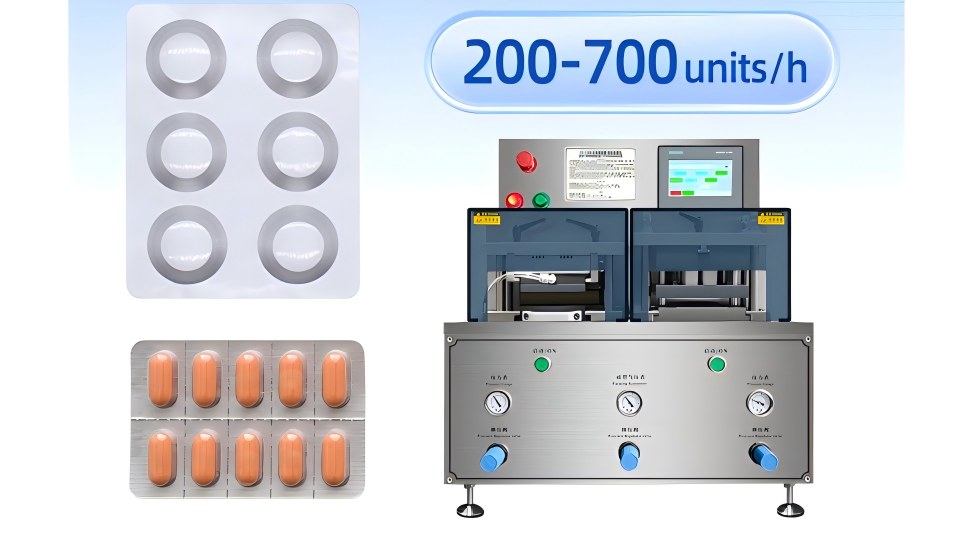
Before committing to any lab-scale small blister machine, pharma teams need a clear checklist. Each point targets common risks that can derail stability tests or audit readiness.
Research labs run within controlled clean zones. Machine surfaces repeatedly contact disinfectants and cleaning agents. Poor material resistance leads to rust or flaking coatings. Released particles will contaminate test samples. Qualified materials must resist corrosion, limit substance leaching and allow easy cleaning. 316L stainless steel is widely adopted for product-contact parts in pharmaceutical packaging. It withstands acid and alkaline cleaners and restricts metal ion leaching. 7000-series aerospace aluminium delivers high strength at low weight and works well for non-contact structural frames.
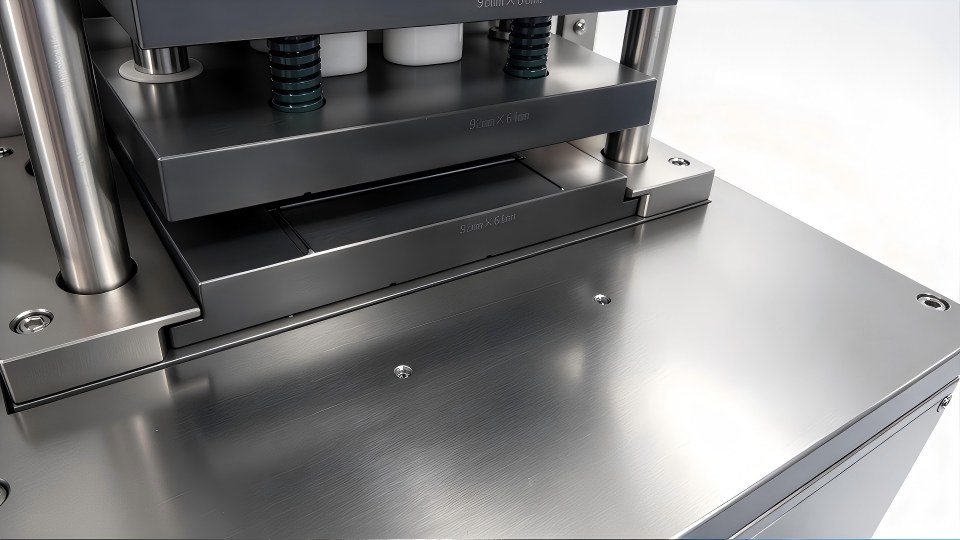
Blister forming moulds and heat sealing stations touch tablets and packaging films directly. Rough surfaces scratch films and trap powder residue during forming and sealing. This creates visual defects and cross-contamination risks. Buyers should review material density and surface finishing. dày đặc, smooth surfaces cut powder adhesion and lower carry-over risks between test batches for blister pack medication.
A key trait of the R&D lab workflow is frequent product changeovers. Operators must complete full cleaning after every trial batch to stop cross-contamination. Hard-to-dismantle structures or hidden dead zones trap leftover powder, skewing test sample data. Cleanability also determines whether your team can successfully execute cleaning validation, a standard focus during GMP audits for pharmaceutical packaging solutions.
Heat sealing and cutting stations create two major hazards on any blister packing machine. Sealing plates reach high operating temperatures, and cutting assemblies generate sharp shearing motion. Many users in pharma packaging labs are formulation scientists rather than full-time machine operators. Enclosed guarding and physical isolation are necessary to prevent burns and pinch injuries.
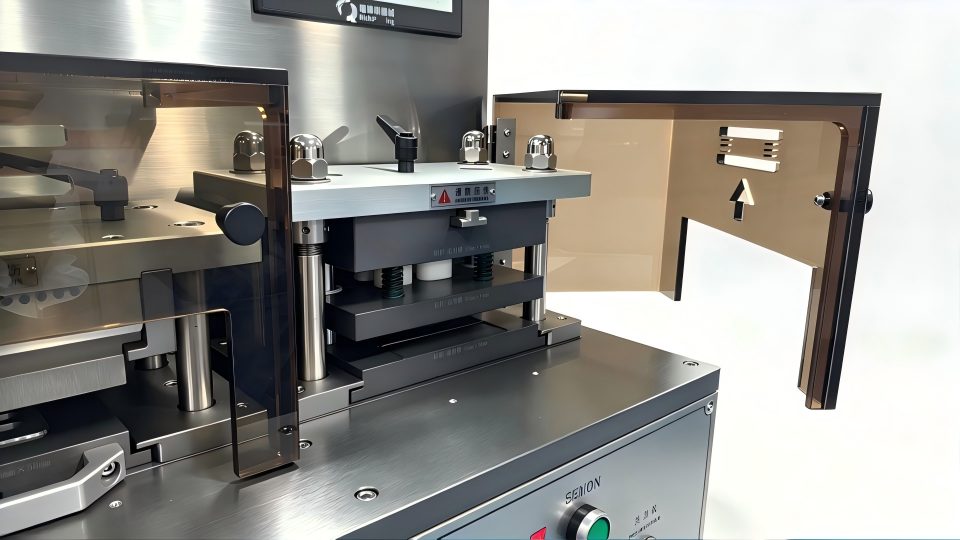
Nearly every new formulation in lab development requires a dedicated mould set. Changeover frequency is far higher than on full production lines. Traditional moulds need hand tools and skilled manual alignment; a single swap may take hours and halt all trial work. Không có công cụ, fast-release mould design directly improves throughput when running multiple formulations on one blister packaging machinery.
Seal integrity defines the reliability of your blister pack medication. Poor seals let test samples absorb moisture or oxidise during stability testing. The resulting data cannot represent real shelf-life performance and invalidates your study. Seal plate design controls even pressure and consistent bonding. Integrated batch marking also ensures traceability for every finished blister card used in medicine packaging.
Most medical laboratory rooms have limited bench space. Full-scale industrial thermoforming packaging machines are bulky and hard to install. R&D batches are small, so high production throughput brings no benefit. Nhỏ gọn, small-footprint blister machine designs match low-volume trial workflows and fit standard lab layouts.
| Evaluation Item | Core Requirement for GMP-Aligned R&D Use | LDPP-140H Compliance & Design Feature | Kiểm toán / Stability Test Impact |
| Wetted Part Material | Kháng ăn mòn, low leachable & extractable, compatible with cleanroom disinfectants | 316L stainless steel for product-contact zones; 7000-series aerospace aluminium for non-contact frames | Minimises sample contamination risk, supports cleaning validation |
| Bề mặt & Component Finish | Trơn tru, non-porous surface; no dead zones for powder accumulation | High-density, hard-anodised moulds with polished contact surfaces | Reduces cross-contamination between different trial formulations |
| Khả năng làm sạch & Disassembly | Easy tear-down, không có kẽ hở ẩn, compatible with standard lab SOPs | Tool-free modular cassette mould design, accessible internal structure | Validated cleaning records can be generated for regulatory dossiers |
| An toàn vận hành | Isolated high-temperature sealing and cutting stations, physical guarding | Fully enclosed safety housing for heat seal and cutting modules | Protects formulation scientists, reduces safety non-conformances during inspection |
| Mould Changeover Speed | Fast swap to support frequent formulation screening | Slide-in cassette mould system, tool-free swap within ~2 minutes | Shortens downtime between R&D trial batches, accelerates stability study |
| Heat Seal Consistency & Truy xuất nguồn gốc | Uniform seal pressure, integrated batch identification | Wreath-pattern heat seal plate + built-in batch coding on seal station | Prevents moisture ingress; full traceability for every blister pack medication |
| Dấu chân & Lab Compatibility | Compact size, công suất thấp, suited for limited cleanroom bench space | 640mm × 580mm × 700mm, 118kg (The machine can be equipped with an optional operating console.) | Fits standard R&Phòng thí nghiệm D, hospital compounding units without special civil layout |
Every design choice on this lab-scale small blister machine targets the unique pain points of formulation teams. It is built around the practical daily demands of pharmaceutical packaging trials.
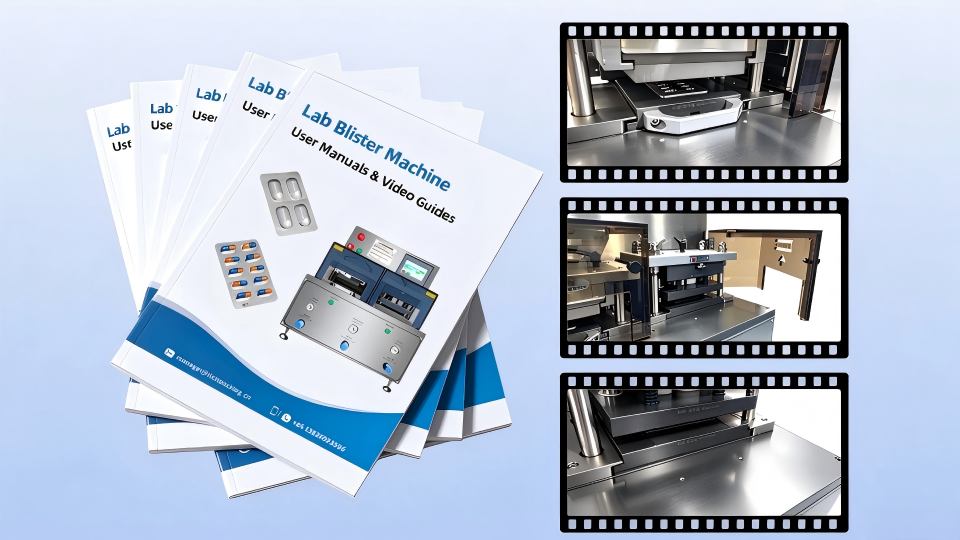
LDPP-140H combines 7000-series aerospace aluminium and 316L stainless steel. All product-wetted and structural parts resist repeated disinfection and limit extractables, suitable for long-term use inside clean R&D lab environments.
All heat and cutting work zones are fully enclosed and physically separated from users. Hot sealing plates and cutters are not exposed during normal runs. Scientists can run the blister packaging machine independently with greatly reduced burn and cut hazards.
Moulds use a slide-in cassette design. Operators pull the whole module out and lock replacements in place without spanners or adjustment tools. Standard changeover finishes in roughly 2 phút. Moulds are high-density alloy aluminium with hard anodising, built for repeated swapping in pharmaceutical packaging development.
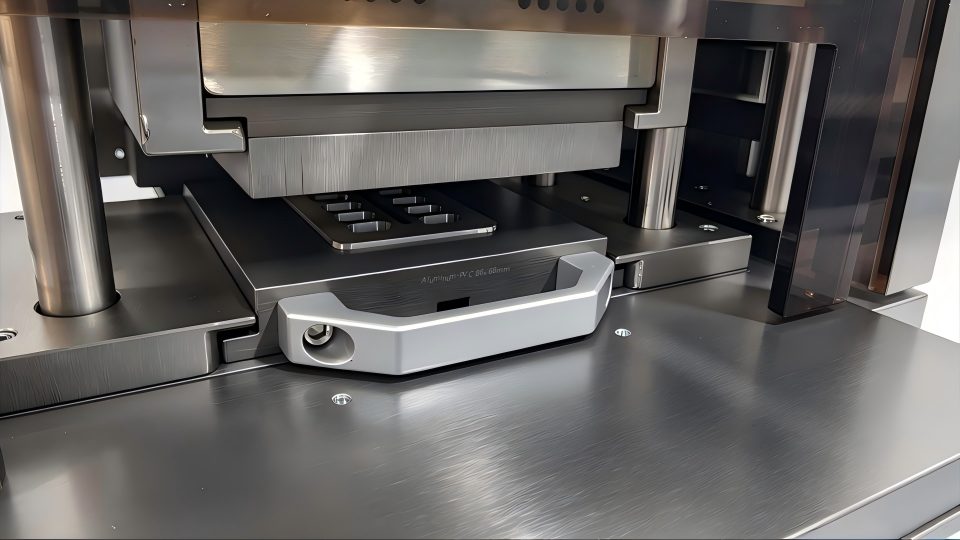
The patterned sealing plate spreads clamping pressure evenly across the film. It creates tight, uniform seals with clean visual finish. Batch marking is integrated into the sealing station, so each finished blister pack medication carries traceable identification for stability studies.
Overall dimensions: 640mm × 580mm × 700mm, total weight only 118 kg. This blister pack machine sits directly on a lab bench and does not need a dedicated standalone equipment bay. It uses low power and keeps routine maintenance simple. (The machine can be equipped with an optional operating console.)
One host machine supports both Alu-PVC and Alu-Alu film formats, covering two dominant pharmaceutical packaging materials for validation work. It accommodates size 000 ĐẾN 5 viên nang, tròn, oval and irregular tablets plus small medical device packaging. Hình thành, sealing and cutting run in one continuous workflow.
One common misunderstanding needs clarification first. GMP describes a full quality management system for drug manufacturing. No individual machine holds a standalone “GMP certificate”.
A machine is fit for pharma packaging work only if its design enables cleaning validation, blocks cross-contamination, preserves sample traceability and reduces human error. LDPP-140H follows this principle across material selection, sealed guarding, quick-release moulds and batch coding. It is built as GMP-oriented pharmaceutical packaging solutions.
Regulatory inspectors do not focus on brand names during site audits. They verify whether your equipment enables your documented quality processes: can cleaning validation be performed reliably? Are contamination controls present? Can batch records link to physical samples? A GMP-aligned blister packing machine removes many audit weaknesses before your submission.
Growing generic drug consistency evaluations, modified new drug applications and hospital preparation projects make packaging research and stability data mandatory submission content. Regulators enforce stricter rules around data integrity and sample traceability. A lab-scale small blister machine is no longer just a tool to wrap pills; it is the first quality control checkpoint inside your R&D lab.
Choosing pharmaceutical packaging hardware for formulation labs balances materials, mechanical build and usability. Basic packing function confirms if the machine works. Hygienic material design decides if it can be trusted for regulated samples. Safety and serviceability decide if your team can run it smoothly day after day. LDPP-140H answers all seven evaluation points above and serves as a practical option for small batch trial runs in pharmaceutical packaging, formulation and medical laboratory settings.
GMP applies to the complete drug quality system, and machines cannot receive independent GMP certification. LDPP-140H uses GMP-oriented design. It uses 316L stainless steel and aerospace aluminium, enclosed safety guarding, fast-clean mould assemblies and built-in batch marking. These features support cleaning validation, contamination control and traceability required for pharma packaging audits.
316L stainless steel resists chemical cleaners and limits metal leaching, the standard material for product-contact pharmaceutical packaging parts. 7000-series aerospace aluminium delivers high rigidity with lighter weight for non-contact frames. This mix balances corrosion resistance, low extractables and a portable compact build for a blister packaging machine.
Đúng. LDPP-140H is compact modular equipment. Its footprint measures 640mm × 580mm × 700mm and weighs 118kg. It sits directly on standard lab worktops without dedicated machine space and suits cramped research labs and hospital formulation units.
KHÔNG. The cassette-style mould system slides out and locks back without hand tools. Standard swap time takes roughly 2 phút. This design is purpose-built for the frequent product changeovers common on a lab-scale small blister machine.
The wreath-style textured plate distributes sealing pressure evenly. It creates reliable, consistent seals for blister pack medication and leaves a neat visual finish. Integrated batch printing adds traceability essential for stability test samples.
Đúng, the unit supports both film formats for packaging process validation. It handles size 000–5 capsules, shaped tablets and small medical device blister packaging. It fits small trial batches for pharma R&D, supplement development and hospital preparations.
Tài liệu tham khảo:
1.Khối lượng EudraLex 4, Phụ lục EU GMP 15: Trình độ chuyên môn và xác nhận. Ủy ban Châu Âu—— Ủy ban Châu Âu
2.Khối lượng EudraLex 4, Phụ lục EU GMP 11: Hệ thống máy tính. Ủy ban Châu Âu —— Ủy ban Châu Âu
3.ISO 11607, Packaging for Terminally Sterilised Medical Devices. —— ISO