
การแยกแคปซูล (ดึงหมวกออกจากร่างกาย) เป็นขั้นตอนสำคัญในเครื่องบรรจุแคปซูล, และความล้มเหลวในขั้นตอนนี้ทำให้เกิดการหยุดทำงานและของเสีย. สาเหตุที่พบบ่อย ได้แก่ แคปซูลชำรุดหรือไม่สามารถทนต่อยาได้, แรงดันสุญญากาศไม่เพียงพอ, และการปรับค่าทางกลที่ผิดพลาด. ปัจจัยอื่นๆ เช่น ความชื้นของแคปซูลที่ไม่ถูกต้องหรือการสะสมตัวของไฟฟ้าสถิต ก็ส่งผลต่อการแยกตัวเช่นกัน. บทความนี้จะอธิบายกระบวนการแยกแคปซูลและระบุสาเหตุทั่วไป 10 ประการที่ทำให้การแยกล้มเหลว, พร้อมด้วยคำแนะนำในการแก้ไขปัญหาและป้องกัน.
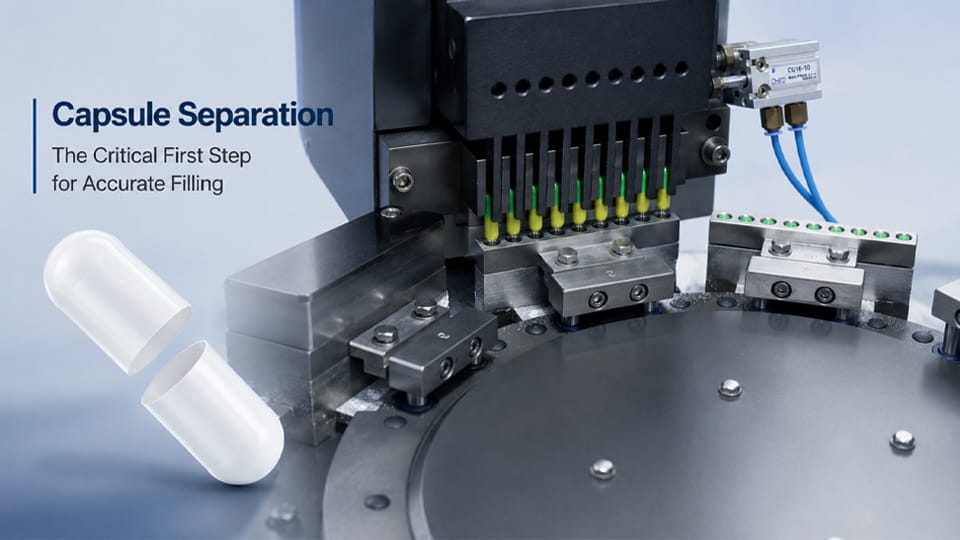
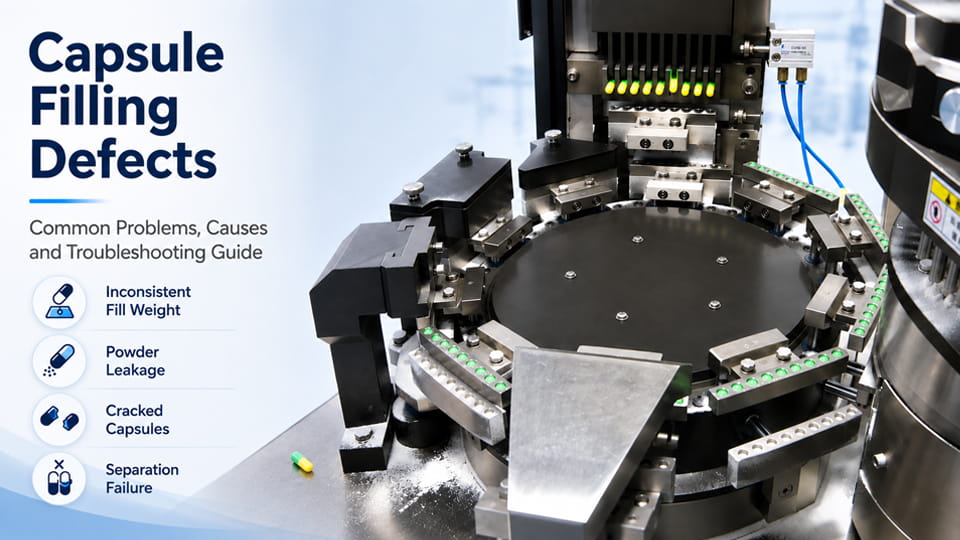
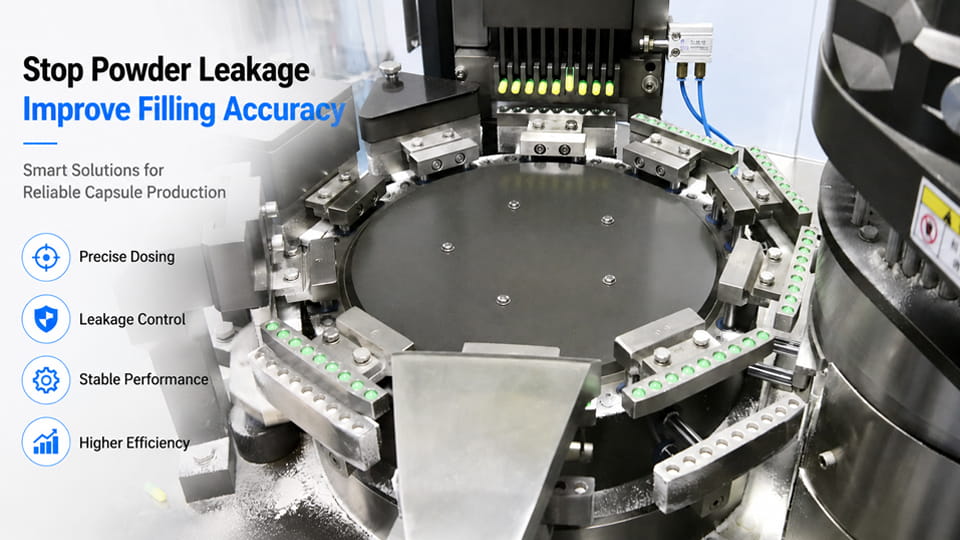
ฟิลเลอร์แคปซูล ใช้สุญญากาศเพื่อแยกฝาแคปซูลออกจากตัวเครื่อง. ในสถานีคัดแยกแคปซูล, แคปซูลเปล่าจะถูกวางในถาดโดยให้หงายแคปขึ้นและคว่ำตัวลง. ปั๊มสุญญากาศจะดูดแรงดูดไว้ใต้ถาด, ดึงตัวแคปซูลลงไปที่แผ่นปรับตำแหน่ง, ซึ่งแยกร่างกายออกจากหมวก. ผลลัพธ์ที่ได้คือการแยกที่สะอาดหมดจด: ฝาครอบจะอยู่ที่อุปกรณ์ด้านบนและเบาะนั่งจะอยู่ที่อุปกรณ์ด้านล่าง.
ในวงจรที่ประสบความสำเร็จ, ฝาครอบและตัวแคปซูลแต่ละอันจะอยู่ในตำแหน่งของตนโดยไม่มีความเสียหาย. แรงดันสุญญากาศที่เหมาะสมเป็นสิ่งสำคัญ: การดูดน้อยเกินไปไม่สามารถดึงร่างกายออกจากกัน, และสูญญากาศมากเกินไปอาจทำให้แคปซูลแตกหรือใส่ผิดที่. การจัดตำแหน่งถาดและโมดูลจะต้องแม่นยำเพื่อให้ฝาปิดและตัวเครื่องอยู่ในตำแหน่งที่ถูกต้องในรูเครื่องมือ.
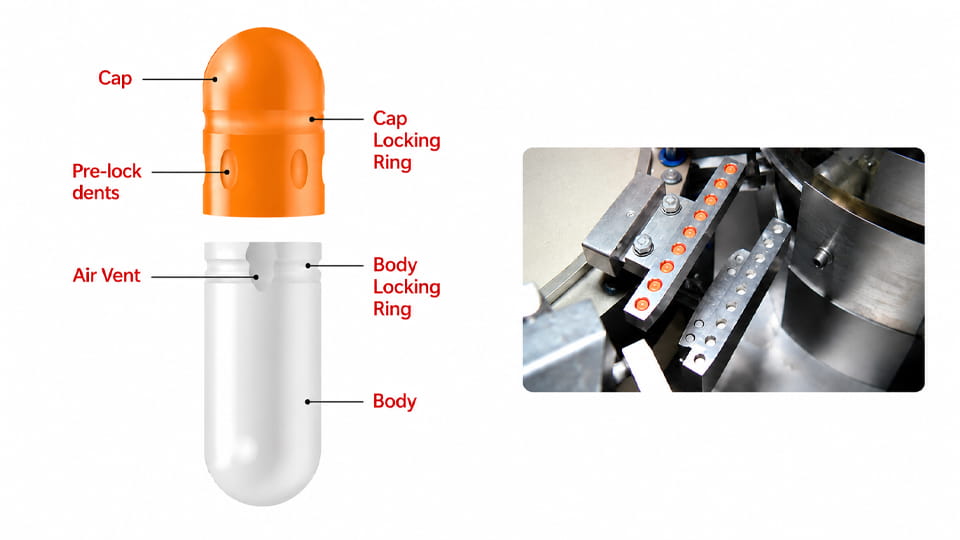
มาดูสาเหตุที่พบบ่อยที่สุดที่หมวกไม่สามารถดึงออกจากตัวได้อย่างหมดจด. เพื่อความชัดเจน, เราหารือถึงสาเหตุที่เป็นไปได้สิบประการ:
แคปซูลที่ชำรุดหรือไม่ทนทานเป็นสาเหตุหลักของปัญหาการแยกตัว. แคปซูลที่บิดเบี้ยว, บิดเบี้ยว, หรือมีฝาปิด/ตัวไม่พอดีอาจแยกไม่เนียน. ตัวอย่างเช่น, แคปซูลที่มีความยาวไม่เท่ากัน, เปลือกหอยงอ, หรือข้อบกพร่องจากการผลิตอาจติดอยู่ระหว่างการเก็บสูญญากาศ. แคปซูลที่อ่อนเกินไปหรือเปราะเกินไปก็ล้มเหลวเช่นกัน: เปลือกที่เปราะอาจแตกร้าวแทนที่จะหลุดออก, ในขณะที่เปลือกที่นิ่มเกินไปอาจพังหรือยังคงติดอยู่.
สารละลาย: ใช้แคปซูลคุณภาพสูงจากซัพพลายเออร์ที่มีชื่อเสียงและตรวจสอบความคลาดเคลื่อนของมิติ. เปลี่ยนแคปซูลที่มีรูปร่างผิดปกติหรือข้อกำหนดภายนอก. ขอรายงานความแม่นยำด้านมิติและความชื้นจากผู้จำหน่ายแคปซูลของคุณเพื่อให้มั่นใจถึงความสม่ำเสมอ.
แรงดันสุญญากาศที่มั่นคงถือเป็นสิ่งสำคัญสำหรับการแยกสาร. หากปั๊มสุญญากาศอ่อน, หมวกและตัวเครื่องจะไม่ถูกดึงออกจากกัน. ปัญหาสุญญากาศทั่วไป ได้แก่ การรั่วในท่อหรือท่อ, ปั๊มที่ล้มเหลว, ตัวกรองอุดตัน, หรือความสามารถในการดูดไม่เพียงพอ. ตัวอย่างเช่น, ท่อสุญญากาศที่ร้าวหรือเมมเบรนตัวกรองอุดตันจะลดการดูดลงอย่างมาก. เครื่องจักรหลายเครื่องใช้ระบบสูญญากาศแบบวงแหวนน้ำ; หากการไหลของน้ำหล่อเย็นต่ำเกินไป, สูญญากาศที่มีประสิทธิภาพลดลง.
สารละลาย: ตรวจสอบมาตรวัดสุญญากาศและตรวจสอบระบบสุญญากาศทั้งหมด. ซ่อมแซมหรือเปลี่ยนท่อที่แตกร้าว, ทำความสะอาดหรือเปลี่ยนตัวกรองที่อุดตัน, และตรวจสอบให้แน่ใจว่าปั๊มมีขนาดถูกต้อง. วัดสุญญากาศที่ตัวเครื่อง (ไม่ใช่แค่ที่ปั๊มเท่านั้น) เพื่อตรวจสอบว่าเป็นไปตามข้อกำหนดของ OEM. ผู้ปฏิบัติงานบางรายเริ่มต้นด้วยการตั้งค่าสุญญากาศที่ต่ำลงและค่อยๆ เพิ่มขึ้นจนกระทั่งแคปซูลแยกออกจากกัน, เพื่อหลีกเลี่ยงการดูดมากเกินไป. การติดตั้งวาล์วหรือเกจระบายสุญญากาศที่สถานีเติมน้ำมันสามารถช่วยหมุนระดับสุญญากาศที่เหมาะสมที่สุดได้.
โมดูลการแยก (รองเท้าสูญญากาศ) ต้องมีความสูงที่ถูกต้องสัมพันธ์กับถาดแคปซูล. หากช่องว่างระหว่างแผ่นสูญญากาศและโมดูลแคปซูลใหญ่เกินไป, สุญญากาศจะรั่วและจับตัวเครื่องได้ไม่ดี. เช่นเดียวกัน, หากถาดหรือจานไม่เรียบ, แคปซูลบางอันจะไม่เกิดการผนึกใต้แท่นดูดฝุ่น. ในทางปฏิบัติ, สิ่งนี้มักจะปรากฏขึ้นเมื่อร่างกายไม่ได้ถูกดึงลงหรือหมวกและร่างกายยังคงเชื่อมต่อกัน.
สารละลาย: ปรับความสูงของเครื่องแยกแคปซูลตามสเปคของเครื่อง, สร้างการผนึกแน่นรอบวงแหวนแคปซูลแต่ละอัน. ตรวจสอบและทำความสะอาดแผ่นแยกและพื้นผิวโมดูล, กำจัดเศษหรือผงที่อาจยกแผ่น. ตรวจสอบให้แน่ใจว่าหมุดหรือสปริงแบบยืดไสลด์ทำงานได้เพื่อให้เพลตสัมผัสกับถาดแคปซูลในแนวตรง.
แคปซูลต้องตรงกับการตั้งค่าของเครื่องทุกประการ. ใช้ผิดขนาด (ตัวอย่างเช่น, #00 ใน #0 เครื่องจักร) หมายความว่าเครื่องมือจับยึดไม่ถูกต้อง. แคปซูลขนาดใหญ่เกินไปไม่สามารถนั่งได้, และอันที่เล็กเกินไปก็จะไม่ปิดผนึก, ทำให้เกิดการรั่วไหลของสุญญากาศ. แม้จะมีขนาดระบุที่ถูกต้องก็ตาม, จำนวนมากอาจแตกต่างกันไป: ชุดแคปซูลอาจไม่สามารถใช้งานได้เล็กน้อยเนื่องจากความแตกต่างในการจัดเก็บหรือการผลิต.
สารละลาย: ตรวจสอบว่าคุณใช้งานเครื่องตามขนาดแคปซูลที่ระบุ. ตรวจสอบแคปซูลที่เข้ามาด้วยคาลิเปอร์เพื่อให้แน่ใจว่าอยู่ในเกณฑ์ที่ยอมรับได้. หากคุณเปลี่ยนขนาดแคปซูล, สลับถาดที่มีขนาดเหมาะสมและจัดแนวเครื่องใหม่ตามนั้น. จัดรูปแบบเครื่องมือของเครื่องให้ตรงกับขนาดแคปซูลเสมอ.
การสึกหรอเมื่อเวลาผ่านไปอาจทำให้เกิดความผิดพลาดในการแยกชิ้นส่วนได้. ส่วนแคปซูลที่สวมใส่, บูช, หรือหมุดอีเจ็คเตอร์อาจจัดแนวแคปซูลไม่ตรงหรือไม่สามารถดึงได้อย่างเหมาะสม. เช่น, หมุดอีเจ็คเตอร์ที่สึกหรอซึ่งดันตัวแคปซูลอาจไม่สูงที่ถูกต้องอีกต่อไป, ทำให้ร่างกายติดอยู่. ในทำนองเดียวกัน, หากมีการสึกหรอของแท่งจัดตำแหน่งหรือพุ่มไม้, โมดูลสามารถเลื่อนออกจากการจัดตำแหน่งได้.
สารละลาย: ตรวจสอบและเปลี่ยนชิ้นส่วนที่สึกหรอตามกำหนดเวลา. รายการสำคัญ ได้แก่ อีเจ็คเตอร์ (การล็อค) หมุด, พุ่มไม้จัดตำแหน่ง, รางป้อนอาหาร, และซีลสูญญากาศ. ตรวจสอบให้แน่ใจว่าแผ่นป้อนแคปซูลและลิฟต์เคลื่อนที่ได้อย่างราบรื่น. หล่อลื่นชิ้นส่วนที่เคลื่อนไหวด้วยน้ำมันเกรดอาหารตามที่แนะนำ. ตัวอย่างเช่น, การขันหรือสร้างแท่งรองรับและตัวกั้นให้แน่นขึ้นใหม่สามารถคืนแนวที่ถูกต้องได้.
การสะสมของฝุ่นและผงเป็นสาเหตุที่พบบ่อย. ผงที่ตกค้างบนพื้นผิวโมดูลแคปซูลจะเพิ่มการเสียดสีและสามารถป้องกันไม่ให้แคปซูลอยู่ใต้แท่นดูดฝุ่น. ในกรณีที่รุนแรง, ชั้นของผงอาจปิดกั้นรูแคปซูลทั้งหมด, ทำให้ร่างกายไปจับกับสารตกค้าง.
สารละลาย: ทำความสะอาดโมดูลด้านบนและด้านล่างบ่อยๆ, อย่างน้อยทุกวัน, เพื่อขจัดคราบผง. ใช้แปรงแห้ง, อากาศอัด, หรือเครื่องดูดฝุ่นเพื่อล้างรูและพื้นผิว. หากฝุ่นละเอียดหรือเหนียวมาก, ลองเพิ่มเครื่องดูดควันแบบเฉพาะจุดหรือม่านอากาศเพื่อดักจับ. การดูแลโมดูลให้สะอาดจะช่วยป้องกันความล้มเหลวในการแยกสารที่เกิดจากการสะสม.
แคปซูลจะต้องมีความชื้นที่เหมาะสม. แคปซูลเจลาตินต้องการความชื้นประมาณ 13–16%, ในขณะที่ HPMC (ผัก) เป้าหมายแคปซูล 3–8%. เมื่อแคปซูลแห้งเกินไป, พวกมันเปราะ. ด้านล่างประมาณ 13% (เจลาติน) หรือ 3% (HPMC), แคปซูลอาจแตกหรือแตกได้เมื่อดึงด้วยสุญญากาศ. ในทางกลับกัน, หากแคปซูลชื้นเกินไปหรือมีความชื้นสูง, แคปซูลเจลาตินจะบวมและเหนียว, ทำให้หลุดออกได้ยาก.
สารละลาย: ควบคุมความชื้นในการจัดเก็บและห้องบรรจุ. เก็บแคปซูลไว้ในโกดังแห้งและนำไปไว้ในถุงปิดผนึกตามสภาพห้อง. ในระหว่างการผ่าตัด, รักษาพื้นที่บรรจุให้มีความชื้นปานกลาง (ความชื้นสัมพัทธ์ประมาณ 45–60%) ใช้เครื่องเพิ่มความชื้นหรือเครื่องลดความชื้นตามความจำเป็น. ตรวจสอบปริมาณความชื้นของแคปซูลและหลีกเลี่ยงการใช้ชุดที่แห้งหรือมีความชื้นเกินกว่าที่กำหนด.
ประจุไฟฟ้าสถิตอาจทำให้แคปซูลติดกันหรือติดเครื่องได้, เอาชนะการแยกสูญญากาศ. ในอากาศที่แห้งมาก, แคปซูลได้รับไฟฟ้าสถิตอย่างรวดเร็ว. ทั้งแคปซูลเจลาตินและ HPMC สามารถเกาะติดได้หากชาร์จ. ไฟฟ้าสถิตทำให้เกิดปัญหา เช่น หมวกและตัวเครื่องติดด้านข้าง, หรือแคปซูลกองซ้อนกันแทนที่จะแยกออกจากกันอย่างหมดจด.
สารละลาย: ใช้มาตรการควบคุมไฟฟ้าสถิต. การเพิ่มความชื้นโดยรอบช่วยได้ (ตามที่กล่าวไว้ข้างต้น). นอกจากนี้, ติดตั้งเครื่องเป่าลมหรือแท่งไอออไนซ์ใกล้กับตัวป้อนแคปซูลและโซนการแยกเพื่อทำให้ประจุเป็นกลาง. กราวด์โครงเครื่องจักรและเครื่องมือ. ขั้นตอนเหล่านี้ช่วยกระจายการสะสมของไฟฟ้าสถิต ดังนั้นแคปซูลจึงไม่เกาะติดระหว่างการแยก.
การใช้งานเครื่องเร็วกว่าที่แนะนำอาจทำให้การแยกสารไม่เสถียร. ที่รอบต่อนาทีที่สูงมาก, แคปซูลจะมีการสั่นสะเทือนมากขึ้นและมีเวลาพักอยู่ใต้ฐานรองสูญญากาศน้อยลง. ซึ่งอาจทำให้ฝาปิดกระเด้งหรือวางแนวไม่ตรงขณะใช้สุญญากาศ. การเร่งความเร็วมากเกินไปยังทำให้เกิดความเยื้องศูนย์หรือการสึกหรอเล็กน้อย, ส่งผลให้รถติดบ่อยขึ้น.
สารละลาย: ปฏิบัติตามหลักเกณฑ์ด้านความเร็วของผู้ผลิต (รอบต่อนาที). หากเกิดปัญหาการแยกตัวที่ความเร็วสูงขึ้น, ลดมันลงเล็กน้อย. เครื่องจักรสมัยใหม่สามารถปรับความเร็วได้ด้วยการควบคุมความถี่. ค้นหาความเร็วที่เร็วที่สุดที่ยังคงให้ผล 100% การแยกได้สำเร็จ. โดยปกติแล้วการชะลอตัวลงเล็กน้อยจะช่วยแก้ปัญหาได้โดยไม่ส่งผลกระทบอย่างรุนแรงต่อปริมาณงาน.
การบำรุงรักษาที่ละเลยมักเป็นสาเหตุให้เกิดความล้มเหลวในการแยกหลายครั้ง. ตัวอย่างเช่น, ตัวกรองสุญญากาศสกปรก, สลักเกลียวหลวม, หรือโอริงที่หายไปอาจมองเห็นได้ชัดเจนเมื่อการแยกตัวขาดเท่านั้น. โดยไม่มีการตรวจสอบเป็นประจำ, การสึกหรอและการสะสมตัวสามารถสะสมได้.
สารละลาย: ดำเนินการกำหนดการบำรุงรักษา. ตรวจสอบเกจวัดสุญญากาศ, ท่อ, และกรองทุกวัน. ทำความสะอาดฝุ่นจากทุกพื้นผิวทุกกะ. รายสัปดาห์หรือรายเดือน, ถอดและทำความสะอาดจานจ่ายสารอย่างล้ำลึก, หมุดตอก, และโมดูลแคปซูล. ทุก ๆ 200–300 ชั่วโมง, หล่อลื่นแบริ่งและตรวจสอบบูช. เก็บบันทึกปัญหา หากล็อตแคปซูลบางล็อตมีสัญญาณการสึกหรอ, เปลี่ยนอะไหล่ใหม่. การดูแลป้องกันช่วยให้มั่นใจถึงประสิทธิภาพที่มั่นคง.
ก่อนจะรื้อสิ่งใดออก, ผู้ปฏิบัติงานมักจะสามารถวินิจฉัยปัญหาการแยกชิ้นส่วนได้โดยการสังเกตอาการ. ตารางด้านล่างเชื่อมโยงอาการทั่วไปเข้ากับสาเหตุที่เป็นไปได้และการแก้ไขด่วน:
| อาการ | สาเหตุที่เป็นไปได้ | แก้ไขด่วน |
| หมวกและลำตัวติดกัน | สูญญากาศต่ำ; ช่องว่างคั่นขนาดใหญ่; แคปซูลเหนียว | เพิ่มสุญญากาศ; ตัวคั่นที่ต่ำกว่า; เปลี่ยนแคปซูล |
| ศพถูกขับออกมาว่างเปล่า (หมวกติดกาวอยู่ด้านบน) | ปัญหาปั๊มสุญญากาศ; เซ็นเซอร์กระตุ้นผิดพลาด | ตรวจสอบเกจวัดสุญญากาศ; ตรวจสอบเซ็นเซอร์ |
| ฝาแคปซูลหายไปหรือติดอยู่ในถาด | โมดูลไม่ตรงแนว; ยึดแบบคงที่ | ปรับแนวโมดูลใหม่; เพิ่มไอออไนเซอร์ |
| ตัวแคปซูลแตกหรือผิดรูป | สูญญากาศมากเกินไป; การดำเนินการเร็วเกินไป | ลดการเกิดสุญญากาศ; ทำให้เครื่องช้าลง |
| แป้งรั่ว ที่สถานีแยก | การวางแนวไม่ตรง; แมวน้ำที่สวมใส่ | จัดตำแหน่งแผ่น; เปลี่ยนซีล |
| อัตราการปฏิเสธแคปซูลสูง | ข้อใดข้อหนึ่งข้างต้น; เซ็นเซอร์ปฏิเสธผิดพลาด | ตรวจสอบและแก้ไขสาเหตุที่แท้จริง |
อาการเหล่านี้บ่งบอกถึงปัญหาที่ซ่อนอยู่. ตัวอย่างเช่น, หากเครื่องดันแคปซูลที่ยังอยู่ในสภาพสมบูรณ์ออกมาอย่างสม่ำเสมอ (แสดงว่าร่างกายไม่เคยแยกจากกัน), มุ่งเน้นไปที่สูญญากาศ, ช่องว่าง, หรือคุณภาพแคปซูล. หากร่างกายแตกร้าวบ่อยๆ, พิจารณาว่าสุญญากาศอาจแรงเกินไปหรือปรับชิ้นส่วนไม่ถูกต้อง.
เมื่อเกิดปัญหาความแตกแยก, ใช้วิธีการแก้ไขปัญหาอย่างเป็นระบบ. ผังงานด้านล่างแสดงลำดับการตรวจสอบเชิงตรรกะ:
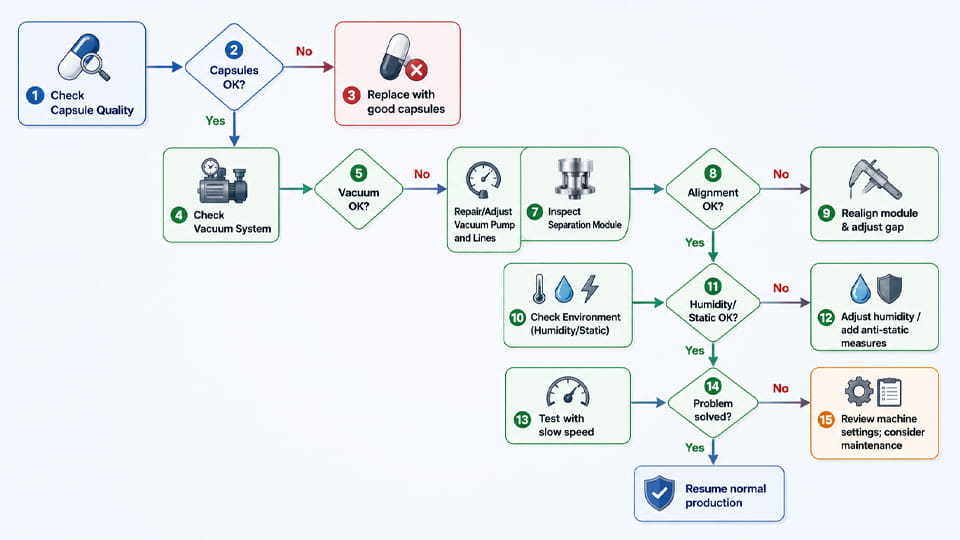
ในทางปฏิบัติ, เริ่มต้นด้วยการแก้ไขที่ง่ายที่สุด (ชุดแคปซูล, การตั้งค่าสูญญากาศ) ก่อนที่จะรื้อฮาร์ดแวร์. จากนั้นตรวจสอบการจัดตำแหน่งทางกลของถาดและเพลต. ใช้ผลการทดสอบแต่ละครั้งเพื่อเป็นแนวทางในขั้นตอนต่อไป. ซึ่งช่วยลดการลองผิดลองถูกให้เหลือน้อยที่สุดและระบุสาเหตุที่แท้จริงได้อย่างมีประสิทธิภาพ.
การป้องกันย่อมดีกว่าการรักษา. เพื่อหลีกเลี่ยงปัญหาการแยกจากกัน:
โดยการนำแนวทางปฏิบัติที่ดีที่สุดเหล่านี้ไปใช้, สามารถหลีกเลี่ยงข้อผิดพลาดในการแยกได้หลายอย่าง. การทดสอบการทำงานเป็นประจำและการปรับเปลี่ยนเชิงรุกนำไปสู่การผลิตที่มั่นคง.
ความล้มเหลวในการแยกแคปซูลเกิดขึ้นจากหลายแหล่ง: คุณภาพแคปซูล, ประสิทธิภาพสูญญากาศ, การปรับเชิงกล, สิ่งแวดล้อม, และกิจวัตรการบำรุงรักษาล้วนมีบทบาท. เมื่อการแยกจากกันล้มเหลว, เริ่มต้นด้วยการตรวจสอบสภาพของแคปซูลและกำลังสุญญากาศ, จากนั้นจึงตรวจสอบการจัดตำแหน่งและความสะอาดอย่างเป็นระบบ. การใช้ระบบการบำรุงรักษาที่มีระเบียบวินัยและการควบคุมสิ่งแวดล้อมจะช่วยลดข้อผิดพลาดเหล่านี้ได้อย่างมาก.
หากคุณประสบปัญหาการแยกกันอยู่บ่อยๆ, พิจารณาอุปกรณ์ของตัวเอง. ผู้ผลิตแคปซูลของ Jinlu Packing ได้รับการออกแบบมาเพื่อการแยกสารที่เชื่อถือได้ด้วยระบบสูญญากาศที่แข็งแกร่งและคุณสมบัติการปรับเปลี่ยนที่ง่ายดาย. ตัวอย่างเช่น, ดู NJP-400C และ เครื่องบรรจุแคปซูลอัตโนมัติ NJP-3800D บนเว็บไซต์ของเรา, ซึ่งมีการควบคุมสุญญากาศขั้นสูงและการจัดตำแหน่งที่แม่นยำเพื่อลดข้อผิดพลาดในการแยกสาร.
ความล้มเหลวในการแยกแคปซูลมักเกิดจากคุณภาพของแคปซูลไม่ดี, แรงดันสุญญากาศไม่เพียงพอ, การปรับเครื่องไม่ถูกต้อง, เครื่องมือที่สวมใส่, การสะสมของผง, หรือขนาดแคปซูลไม่ตรงกัน. ในหลายกรณี, ปัญหาเป็นผลมาจากการตั้งค่าเครื่องจักรและสภาวะของเปลือกแคปซูลรวมกัน แทนที่จะเป็นข้อผิดพลาดเพียงจุดเดียว.
ใช่. คุณภาพของแคปซูลเป็นหนึ่งในปัจจัยที่สำคัญที่สุดที่ส่งผลต่อการแยกแคปซูล. แคปซูลที่มีขนาดไม่สอดคล้องกัน, ความชื้นมากเกินไป, การเสียรูป, หรือความคลาดเคลื่อนในการผลิตต่ำอาจไม่สามารถแยกออกได้อย่างถูกต้อง, แม้ว่าเครื่องบรรจุแคปซูลจะทำงานอย่างถูกต้องก็ตาม.
อย่างแน่นอน. ระบบสูญญากาศมีหน้าที่ดึงตัวแคปซูลออกจากฝาในระหว่างกระบวนการแยก. หากแรงดันสุญญากาศต่ำเกินไป, ไม่เสถียร, หรือถูกฝุ่นหรือตัวกรองอุดตัน, ตัวแคปซูลอาจแยกออกได้ไม่หมด, นำไปสู่การเติมข้อผิดพลาดหรือการหยุดทำงานของเครื่องจักร.
เริ่มต้นด้วยการตรวจสอบคุณภาพและขนาดของแคปซูล. จากนั้นตรวจสอบระบบสุญญากาศ, รวมถึงปั๊มสุญญากาศด้วย, ตัวกรอง, ท่อ, และพื้นผิวการปิดผนึก. ต่อไป, ตรวจสอบความสูงของตัวคั่น, การจัดตำแหน่งเครื่อง, และการวางแนวแคปซูล. ในที่สุด, ทำความสะอาดเครื่องอย่างทั่วถึงและทดลองเดินเครื่องก่อนกลับมาผลิตต่อ.
แคปซูลเจลาตินที่แข็งส่วนใหญ่จะทำงานได้ดีที่สุดเมื่อเก็บไว้ที่ความชื้นสัมพัทธ์ประมาณ 35, ซึ่งโดยทั่วไปจะช่วยรักษาความชื้นของเปลือกโดยรอบ 12. แคปซูลที่แห้งเกินไปอาจเปราะได้, ในขณะที่แคปซูลที่ชื้นมากเกินไปอาจนิ่มและติดกัน, เพิ่มความเสี่ยงของความล้มเหลวในการแยก.
โดยทั่วไปแคปซูล HPMC มีความไวต่อไฟฟ้าสถิตและความชื้นในสิ่งแวดล้อมมากกว่าแคปซูลเจลาติน. ในสภาพแวดล้อมการผลิตแบบแห้ง, การสะสมของไฟฟ้าสถิตอาจทำให้ฝาปิดและตัวเครื่องเกาะติดกัน, ทำให้การแยกจากกันยากขึ้น. การรักษาความชื้นที่เหมาะสมและการใช้มาตรการป้องกันไฟฟ้าสถิตสามารถปรับปรุงประสิทธิภาพได้อย่างมาก.
ใช่. การใช้เครื่องบรรจุแคปซูลเร็วกว่าที่แนะนำจะช่วยลดเวลาในการวางแคปซูลได้, การแยกสูญญากาศ, และการวางตำแหน่ง. หากคุณภาพแคปซูลหรือสภาพเครื่องไม่สามารถรองรับการทำงานที่ความเร็วสูงได้, ความล้มเหลวในการแยกมีแนวโน้มมากขึ้น.
การทำความสะอาดตามปกติควรดำเนินการหลังจากทุกชุดการผลิตหรือการเปลี่ยนผลิตภัณฑ์. รูสูญญากาศ, ส่วนแคปซูล, แผ่นแยก, และชิ้นส่วนที่สัมผัสกับผงควรได้รับการตรวจสอบและทำความสะอาดอย่างสม่ำเสมอ. การบำรุงรักษาเชิงป้องกัน—รวมถึงการตรวจสอบประสิทธิภาพของสุญญากาศ, เปลี่ยนส่วนประกอบที่สึกหรอ, และการปรับเทียบการตั้งค่าเครื่อง ควรเป็นไปตามกำหนดการบำรุงรักษาของผู้ผลิต.
ใช่. ส่วนแคปซูลที่สวมใส่, แท่งนำทาง, บูช, แผ่นแยก, และส่วนประกอบเครื่องมืออื่นๆ สามารถลดความแม่นยำของตำแหน่งและประสิทธิภาพการซีลสุญญากาศได้. การเปลี่ยนชิ้นส่วนที่สึกหรอทันเวลาจะช่วยรักษาการแยกแคปซูลให้มีเสถียรภาพและคุณภาพการบรรจุที่สม่ำเสมอ.
วิธีที่ดีที่สุดในการป้องกันปัญหาการแยกแคปซูลคือการรวมแคปซูลคุณภาพสูงเข้ากับการบำรุงรักษาเครื่องจักรอย่างเหมาะสม. รักษาระบบสุญญากาศให้อยู่ในสภาพดี, ทำความสะอาดเครื่องอย่างสม่ำเสมอ, รักษาอุณหภูมิและความชื้นที่เหมาะสม, ใช้ขนาดแคปซูลที่ถูกต้อง, ตรวจสอบชิ้นส่วนที่สึกหรอเป็นระยะ, และฝึกอบรมผู้ปฏิบัติงานให้ปฏิบัติตามขั้นตอนการปฏิบัติงานมาตรฐาน. โปรแกรมการบำรุงรักษาเชิงป้องกันสามารถลดการหยุดทำงานและปรับปรุงประสิทธิภาพการผลิตโดยรวมได้อย่างมาก.
อ้างอิง:
1.วิธีการแยกตัวและฝาแคปซูล —— พัทสแนป ยูเรก้า
2.กลไกการแยกฝาแคปซูลอัตโนมัติและตัวแคปซูล —— Googleสิทธิบัตร
3.เครื่องแยกสมดุลสูญญากาศแบบแคปซูลสำหรับเครื่องบรรจุ —— Googleสิทธิบัตร
4.อุปกรณ์สำหรับปรับฐานและฝาของแคปซูลเจลาตินชนิดแข็ง —— Googleสิทธิบัตร
5.การแก้ไขปัญหาการแยกแคปซูล: ทำตามห้าขั้นตอนเพื่อลดของเสียและการหยุดทำงาน —— แท็บเล็ตแคปซูล.com