
Pharmaceutical metal detectors are specialized inspection machines used throughout drug manufacturing lines to catch any stray metal in tablets, capsules or powders. ในแง่ง่ายๆ, they act like high-tech “airport scanners” for pills – automatically scanning every unit to ensure purity. Because even a tiny piece of steel or aluminum could threaten patient safety and regulatory compliance, these detectors have become essential equipment on modern tablet and capsule lines. They monitor products in real-time, alerting operators and triggering automatic ejection of any contaminated item before it reaches packaging. This process dramatically reduces risk: ตัวอย่างเช่น, a pneumatic pusher can reject metal-contaminated tablets at >99.99% ประสิทธิภาพ, ensuring only pristine medication makes it out of the factory.
Metal contamination can enter a pharmaceutical process at many points – from worn punches and mixers to tiny bits of rusty agitator or broken packaging wire. Because we cannot see or feel metal shards by eye, an electronic inspection is vital. Modern detectors use high-frequency electromagnetic coils to sense ferrous and non-ferrous metal equally, giving clean tablets or capsules a “free pass” while flagging any contaminant. The result is a safe, compliant product that meets cGMP and pharmacopeial standards for purity.
Large-scale pharmaceutical production often features stainless-steel conveyor lines equipped with in-line detectors. These high-speed conveyors feed tablets (or capsule vials) under a metal-detection head, scanning each piece without slowing down the line. By integrating seamlessly with machines like rotary tablet presses or capsule fillers, a pharma metal detector can inspect hundreds of thousands of pills per hour. เช่น, advanced systems can handle up to 30,000 เม็ดต่อนาที, while maintaining ultra-high sensitivity (on the order of 0.2–0.4 mm metal particles).
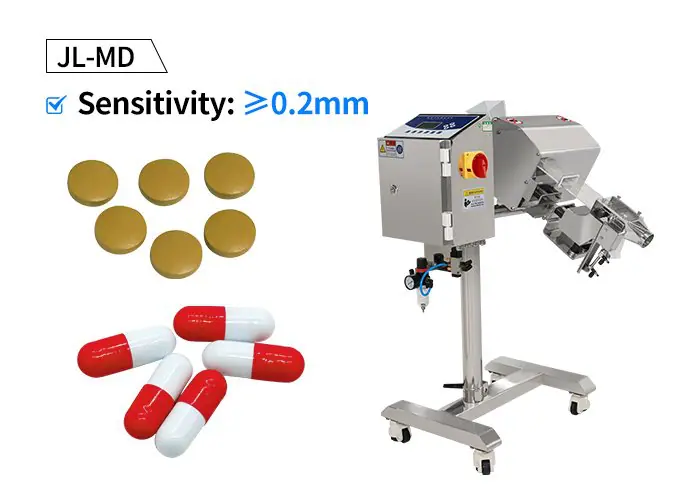
Pharmaceutical facilities use metal detectors as a core quality control step – think of them as a final safety net. Contamination from screws, valve fragments, pigment minerals, or even catalyst particles can make their way into products during mixing, การทำเม็ดเล็ก, or compression. Left unchecked, these metal shards can cause serious injury if ingested. Regulatory bodies like the FDA and international pharmacopeias expect manufacturers to implement such checks. Metal detector systems help companies comply with good manufacturing practices (CGMP) and avoid recalls or fines by catching unsafe batches before shipping.
Compared to manual inspection or even X-ray systems, metal detectors offer a balance of speed, sensitivity and cost-effectiveness. They can run inline on tablet or capsule lines at full production speeds with minimal footprint. They can detect sub-millimeter fragments of iron, copper or stainless steel – even non-magnetic 316L stainless – when properly calibrated. And because they gently scan products (no crushing or harmful radiation), they preserve delicate tablets and blister packs. The bottom line: a pharmaceutical metal detector helps ensure patient safety, protect brand reputation, and prevent costly line shutdowns.
เครื่องตรวจจับโลหะทางยาส่วนใหญ่ใช้การเหนี่ยวนำแม่เหล็กไฟฟ้าและการประมวลผลสัญญาณสมัยใหม่. ในทางปฏิบัติ, เครื่องตรวจจับแต่ละเครื่องมีคอยล์ตัวส่งตั้งแต่หนึ่งตัวขึ้นไปและคอยล์ตัวรับที่ตรงกันซึ่งจะสร้างสนามแม่เหล็กที่สั่นผ่านอุโมงค์หรือช่องรับแสง. เมื่อผลิตภัณฑ์ที่ไม่ใช่โลหะผ่านไป, สนามยังคงไม่ถูกรบกวน. แต่หากเป็นโลหะเจือปน (เหล็กหรืออโลหะ) เข้าสู่สนาม, มันทำให้เกิดกระแสเอ็ดดี้เล็กๆ ที่รบกวนทั้งแอมพลิจูดและเฟสของสัญญาณที่ได้รับ. ระบบอิเล็กทรอนิกส์ของเครื่องตรวจพบความผิดปกตินี้, แจ้งว่าผลิตภัณฑ์มีการปนเปื้อนทันที.
ลำดับการตรวจจับโดยทั่วไปสามารถสรุปเป็นขั้นตอนได้:
[jl_youtube src=”https://www.youtube.com/embed/MKcGJwORkdc”]
Most of this occurs in fractions of a second. ตัวอย่างเช่น, as described by one manufacturer, a tablet flows through the detector “via a small passage with a cowbell-shaped swivel” at the bottom; when metal is sensed, that swivel rapidly channels the bad pill into a rejection bin. ในทางปฏิบัติ, the entire sensing-and-eject cycle takes only milliseconds, so a machine can easily keep up with very high output rates.
Pharmaceutical-grade metal detectors include features tailored to drug production:
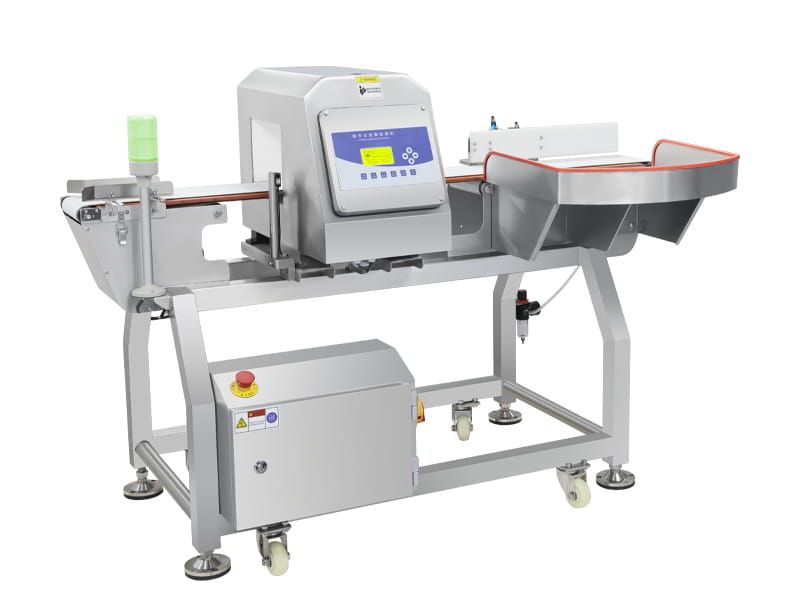
คุณสมบัติเหล่านี้แปลไปสู่คุณประโยชน์ที่ชัดเจน: ผู้ผลิตปฏิบัติตามมาตรฐานความปลอดภัยที่เข้มงวดอย่างมั่นใจ, หลีกเลี่ยงการทำงานซ้ำด้วยตนเองหรือการเก็บแบทช์, และประหยัดค่าใช้จ่ายด้วยการป้องกันการเรียกคืน. เนื่องจากการตรวจจับโลหะได้รับการยอมรับจากผู้ตรวจสอบว่าเป็นการควบคุมเชิงป้องกันที่สำคัญ, การใช้เครื่องจักรเหล่านี้แสดงให้เห็นถึงความมุ่งมั่นต่อคุณภาพที่หน่วยงานกำกับดูแลคาดหวัง.
การผลิตแท็บเล็ต: หลังจากผสมและบดเป็นเม็ด, แท็บเล็ตถูกบีบอัดด้วยการกดความเร็วสูง. ที่นี่สวมชุดเจาะ, กรอบป้อนหรือไม้พายนวดอาจทำให้เกิดตะไบที่หลงเหลือได้. การวางเครื่องตรวจจับโลหะที่ กดแท็บเล็ต ออก (มักจะอยู่ใต้เครื่องกำจัดแท็บเล็ต) จับชิ้นส่วนโลหะก่อนการเคลือบหรือบรรจุภัณฑ์. หลายสายการผลิตยังใช้เครื่องตรวจจับหลังดรัมเคลือบ. โดยพื้นฐานแล้ว, เกือบทุกกระบวนการย่อยมี “จุดควบคุมวิกฤต” JinLuPackingเอกสารประกอบของตัวตรวจจับมีการใช้ตลอด: จากการป้อนวัตถุดิบไปจนถึงบรรจุภัณฑ์ขั้นสุดท้าย, ให้เหมาะสมกับแต่ละเฟส. อุปกรณ์ตรวจจับในสายแท็บเล็ตรับประกัน "การปฏิเสธแบบเรียลไทม์" โดยระบบจะคัดกรองแท็บเล็ตอย่างต่อเนื่องและกำจัดแท็บเล็ตที่ไม่ดีออกไปทันที, สามารถกำจัดยาเม็ดที่ปนเปื้อนได้ ≥99.99%.
การผลิตแคปซูล: แคปซูลนำเสนอความซับซ้อนอีกชั้นหนึ่ง. แคปซูลเป็นส่วนประกอบ (เปลือก + เติม), ดังนั้นแคปซูลเดี่ยวจึงสามารถซ่อนอนุภาคภายในผงหรือบนผนังเปลือกได้. เครื่องตรวจจับยามักจะให้ "การป้องกันแบบ 3 มิติ" โดยจะตรวจสอบพื้นผิวของเปลือกและสิ่งที่อยู่ภายในไปพร้อมๆ กัน. เครื่องตรวจจับที่วางอยู่หลัง ฟิลเลอร์แคปซูล (และเครื่องขัด) จะจับโลหะที่ติดอยู่ในเนื้อหาหรือเปลือก. ดังแหล่งบันทึกแห่งหนึ่ง, การตรวจสอบแบบเต็มมิตินี้ทำให้มั่นใจได้ว่า “สินค้าทั้งหมดที่ออกจากโรงงานจะอยู่ในสภาพสมบูรณ์” 100% ปราศจากโลหะมากเกินไป,” ลงไปที่ <0.2 อนุภาคมม. กล่าวอีกนัยหนึ่ง, การตรวจสอบขั้นสุดท้ายก่อนบรรจุภัณฑ์ทำหน้าที่เป็น "ประตูนิรภัย",” รับรองว่าจับได้แม้แต่เศษที่มองเห็นได้ยาก.
[jl_youtube src=”https://www.youtube.com/embed/U1KbW9XeHK8″]
มีทั้งแบบเม็ดและแบบแคปซูล, โดยทั่วไปเครื่องตรวจจับโลหะจะจับคู่กับระบบคัดแยกแบบอัตโนมัติ. หากมีเสียงนาฬิกาปลุกดังขึ้น, การระเบิดของอากาศหรือแผ่นปิดดีดออกจะเบี่ยงเบนยูนิตที่ชำรุดเพียงตัวเดียว; เส้นที่เหลือยังคงวิ่งต่อไป. ระบบอัตโนมัตินี้เข้ามาแทนที่การตรวจสอบด้วยตนเองอย่างอุตสาหะ และรักษาปริมาณงานได้อย่างราบรื่น ซึ่งสำคัญมากเมื่อสายการผลิตสามารถส่งออกได้มากกว่าครึ่งล้านโดสต่อชั่วโมง.
หัวใจของเครื่องตรวจจับโลหะในยาคือหัวตรวจจับ. มาทำลายฟิสิกส์กันง่ายๆ: ลองนึกภาพสนามแม่เหล็กที่สั่นอยู่เต็มอุโมงค์เครื่องตรวจจับ. เมื่อมีเศษโลหะ (แม่เหล็กหรือสื่อกระแสไฟฟ้า) เข้า, มันบิดเบือนสนามนั้น. โดยพื้นฐานแล้ว, การปรากฏตัวของโลหะจะกระตุ้นให้เกิดสนามแม่เหล็กที่ตรงข้ามกัน (กระแสน้ำวน), ซึ่งคอยล์ตัวรับจะรับเป็นสไปค์หรือเฟสชิฟต์. ระบบจะเปรียบเทียบสัญญาณนี้กับข้อมูลพื้นฐานที่เรียนรู้ของผลิตภัณฑ์ปกติของคุณอย่างต่อเนื่อง, ทำเครื่องหมายสิ่งใดก็ตามที่โดดเด่น.
อุปกรณ์ตรวจจับบางรุ่นใช้ความถี่การทำงานความถี่เดียวที่ปรับให้เหมาะสมกับความไว, ในขณะที่ขั้นสูงกว่านั้นกวาดหรือใช้หลายความถี่พร้อมกัน. การตรวจจับหลายความถี่ช่วยแยกแยะโลหะจากพื้นหลังที่ซับซ้อน เป็นต้น, aluminum foil blisters produce a different pattern across frequencies than a little piece of steel. Digital signal processing then isolates true contaminant signals. Phase-tracking algorithms compensate for the “product effect” (many pharmaceuticals contain salts, moisture or metal in formula) so you don’t get nuisance rejects.
The machine’s electronics can also often determine if the contaminant is magnetic or non-magnetic. This helps in troubleshooting and quality logs. But regardless of type, the core idea is always the same: a metal fragment = a changed signal = instant rejection.
When adding a metal detector to a pharma line, a few practical points matter. อันดับแรก, detectors are made to be hygienic and durable. Look for FDA- or CE-approved units. เช่น, หลายรายการสร้างขึ้นตามมาตรฐาน IP66/NEMA4X (กันฝุ่นและกันน้ำได้อย่างสมบูรณ์) และผลิตจากสแตนเลสขัดเงา 316L. ช่วยให้พวกเขารอดพ้นจากขั้นตอนการทำความสะอาดอันเข้มงวด.
ที่สอง, เอกสารการปฏิบัติตามข้อกำหนดเป็นสิ่งสำคัญ. โรงงานยามักจะต้องใช้ชุดตรวจสอบ IQ/OQ/PQ กับอุปกรณ์ใหม่. อุปกรณ์ตรวจจับชั้นนำได้รับการตรวจสอบล่วงหน้าสำหรับชิ้นส่วน 21CFR 210, 211, 11, ฯลฯ. เมื่อระบบเป็นไปตามมาตรฐาน GMP “ทันทีที่แกะกล่อง”,” ช่วยลดอาการปวดหัวด้วยคุณสมบัติ.
ที่สาม, เครื่องตรวจจับจะต้องตรงกับความเร็วในการผลิตและผลิตภัณฑ์ของคุณ. หากไลน์ของคุณทำงาน 100,000 เม็ด/นาที, เลือกรุ่นที่ได้รับการจัดอันดับสำหรับปริมาณงานนั้น. ตรวจสอบรูรับแสงของเครื่องตรวจจับด้วย (ขนาดหัว) เหมาะกับแท็บเล็ตหรือแคปซูลของคุณ - ช่องเปิดที่ใหญ่เกินไปจะทำให้รู้สึกไว. ผู้ผลิตหลายรายนำเสนอรุ่น "เครื่องตรวจจับโลหะแท็บเล็ต" มาตรฐานและ "เครื่องตรวจจับแคปซูล" ที่มีขนาดอุโมงค์ต่างกัน.
สุดท้ายนี้, แนวปฏิบัติที่ดีรวมถึงการสอบเทียบเป็นประจำกับชิ้นทดสอบ. เครื่องตรวจจับยาส่วนใหญ่รองรับบล็อกทดสอบในตัว คุณจึงตรวจสอบความไวได้อย่างง่ายดาย. เพื่อให้แน่ใจว่าเครื่องจะคอยติดตามขีดจำกัดการตรวจจับที่จำเป็นสำหรับแท็บเล็ตหรือแคปซูลของคุณ.
การใช้เครื่องตรวจจับโลหะในยาและเวชภัณฑ์ทำให้เกิดข้อได้เปรียบที่ชัดเจนแก่ผู้ซื้อและผู้ผลิตทั่วโลก:
โดยรวม, a well-chosen pharma metal detector (ไม่ว่าจะวางตลาดเป็นเครื่องตรวจจับโลหะแบบแท็บเล็ตหรือรุ่นอุตสาหกรรมทั่วไป) กลายเป็นส่วนที่ขาดไม่ได้ของสายการบรรจุยาสมัยใหม่ มั่นใจอย่างเงียบๆ ว่าทุกโดสจะปลอดภัยก่อนออกจากโรงงาน.

ในสภาพแวดล้อมทางเภสัชกรรมที่มีการควบคุมอย่างเข้มงวดในปัจจุบัน, มั่นใจในความปลอดภัยและความบริสุทธิ์ของทุกแท็บเล็ต, ชุดแคปซูลและผงไม่ได้เป็นเพียงแนวปฏิบัติที่ดีเท่านั้น แต่ยังเป็นสิ่งจำเป็นทางธุรกิจอีกด้วย. ด้วยการเติบโตของตลาดโลกที่คาดหวัง เนื่องจากผู้ผลิตทั่วโลกนำระบบคุณภาพอัตโนมัติและเทคโนโลยีการตรวจจับขั้นสูงมาใช้มากขึ้น, บทบาทของเครื่องตรวจจับโลหะทางเภสัชกรรมในการผลิตยามีความสำคัญมากเท่านี้มาก่อน. ตามการคาดการณ์ของอุตสาหกรรม, the market for metal detection in pharma is projected to expand steadily in the coming years, driven by stringent quality standards and rising demand for contamination-free medicines.
Whether you’re producing high-speed tablet lines, capsule formulations, or API powders, integrating reliable metal detection ensures your process aligns with global compliance requirements, protects end-users, and preserves your brand integrity. A well-implemented system minimizes costly recalls, reduces waste, and increases efficiency — giving you a measurable operational advantage.
A pharmaceutical metal detector is an in-line inspection machine designed specifically to detect and reject metal contaminants (ferrous, non-ferrous, and stainless steel) in pharmaceutical products like tablets, แคปซูล, and powders before packaging and shipment. These systems help ensure product safety and compliance with quality standards.
These detectors use electromagnetic coils to create a magnetic field. When a product passes through, any metal contaminant disrupts this field, triggering a signal that the system interprets as contamination. The machine then activates a reject mechanism to remove the contaminated item.
They can inspect a range of materials including tablets, แคปซูล, API powders, เม็ด, and other solid pharmaceutical forms. Some systems can be configured to work with liquids or semi-finished products as part of quality control.
การปนเปื้อนของโลหะอาจเกิดจากเครื่องจักรที่สึกหรอ, อุปกรณ์การประมวลผล, หรือสายการบรรจุ. การตรวจจับและการถอดชิ้นส่วนโลหะจะช่วยปกป้องความปลอดภัยของผู้ป่วย, ปกป้องชื่อเสียงของแบรนด์, และช่วยให้ผู้ผลิตปฏิบัติตามมาตรฐานการกำกับดูแลระดับโลก.
เครื่องตรวจจับยาขั้นสูงสามารถระบุอนุภาคโลหะที่มีขนาดเล็กมากได้ ซึ่งมักจะลงไปถึงระดับนั้น 0.2 มม. สำหรับเหล็กและ 0.3 มม. สำหรับโลหะที่ไม่ใช่เหล็ก – ขึ้นอยู่กับรุ่นและการตั้งค่า.
ใช่, ระบบสมัยใหม่จำนวนมากสามารถตรวจจับได้ทั้งสองประเภท และมักจะแยกความแตกต่างระหว่างเศษโลหะที่เป็นแม่เหล็กและไม่เป็นแม่เหล็ก โดยไม่ทำให้ผลิตภัณฑ์เสียหาย, ช่วยเหลือการแก้ไขปัญหาและการรายงานคุณภาพ.
Metal detectors are typically placed after tablet presses, capsule fillers or dedusters, and just before packaging to ensure that finished products are free of metal contamination before they reach final packaging or distribution.
ใช่. By catching metal contaminants reliably, these systems help manufacturers meet cGMP requirements and support compliance with regulatory bodies such as the FDA and other international standards.
Look for machines with high sensitivity, robust reject mechanisms, hygienic stainless-steel design, การควบคุมดิจิทัล (product profiling and memory), and easy integration with existing lines. คุณสมบัติเหล่านี้ปรับปรุงความแม่นยำในการตรวจจับและสนับสนุนขั้นตอนการผลิตที่มีประสิทธิภาพ.
โดยการตรวจจับสิ่งปนเปื้อนตั้งแต่เนิ่นๆ และคัดแยกสิ่งปนเปื้อนโดยอัตโนมัติ, เครื่องตรวจจับโลหะช่วยลดความเสี่ยงที่ผลิตภัณฑ์ที่ปนเปื้อนจะเข้าถึงลูกค้า, จึงลดการเรียกคืนที่มีค่าใช้จ่ายสูง, การปกป้องความปลอดภัยของผู้ป่วย, และการรักษาชื่อเสียงของบริษัทของคุณ.
อ้างอิง:
1. ขนาดตลาดและการคาดการณ์ของเครื่องตรวจจับโลหะทางเภสัชกรรม — ปัญญาการวิจัยตลาด.
2.การตรวจจับโลหะทำงานอย่างไรในกระบวนการทางอุตสาหกรรมและเภสัชกรรม — METTLER TOLEDO
3.การจัดลำดับความสำคัญของเครื่องตรวจจับโลหะสำหรับการกำหนดสูตรยาสำเร็จรูป: การผลิตที่ปลอดภัย, สินค้าที่มีคุณภาพ – วารสารโลกด้านการวิจัยและการวิจารณ์ขั้นสูง
4.เครื่องตรวจจับโลหะยา (พีเอช) – ผลิตภัณฑ์แม่เหล็ก, Inc

