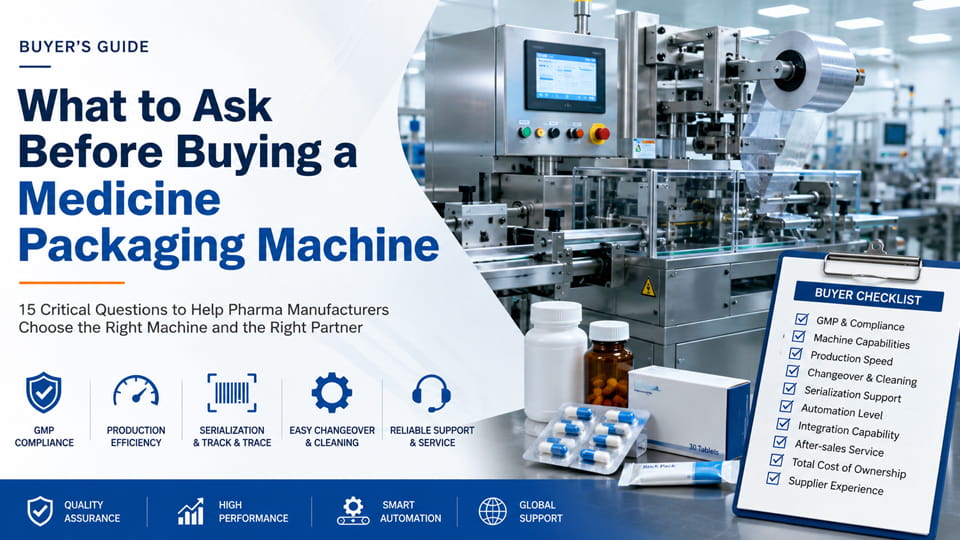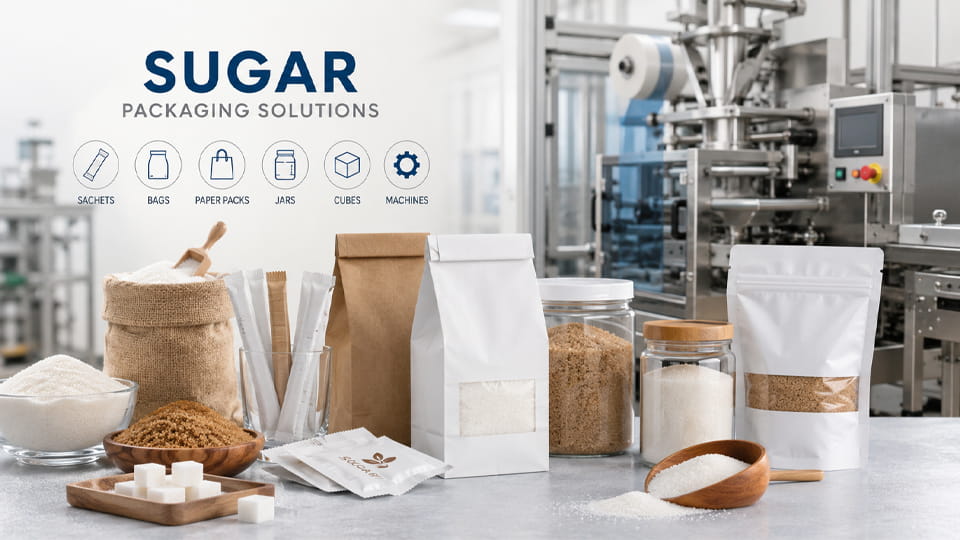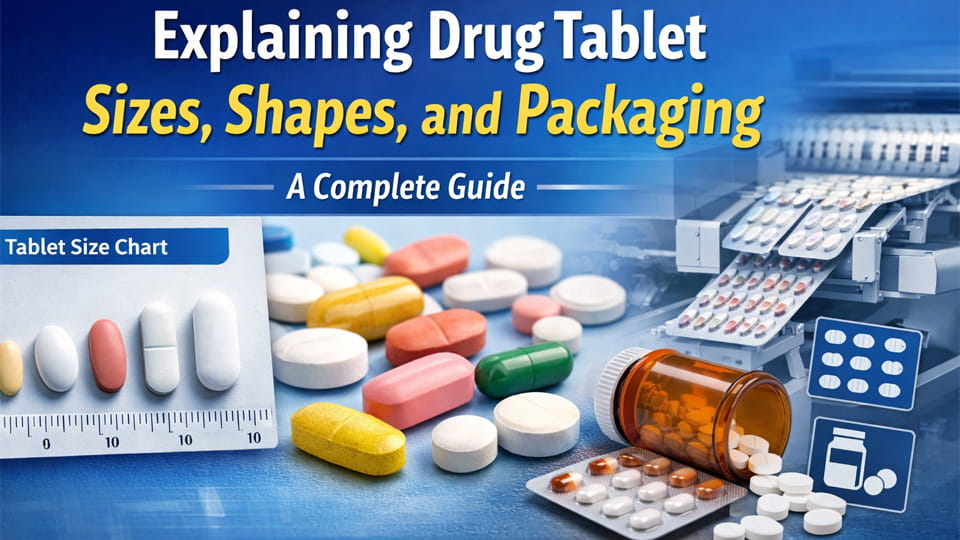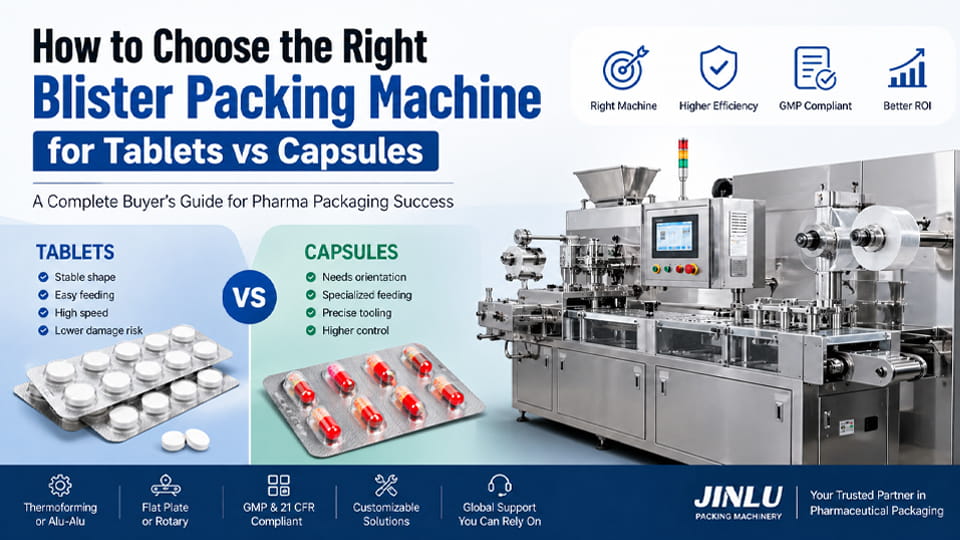

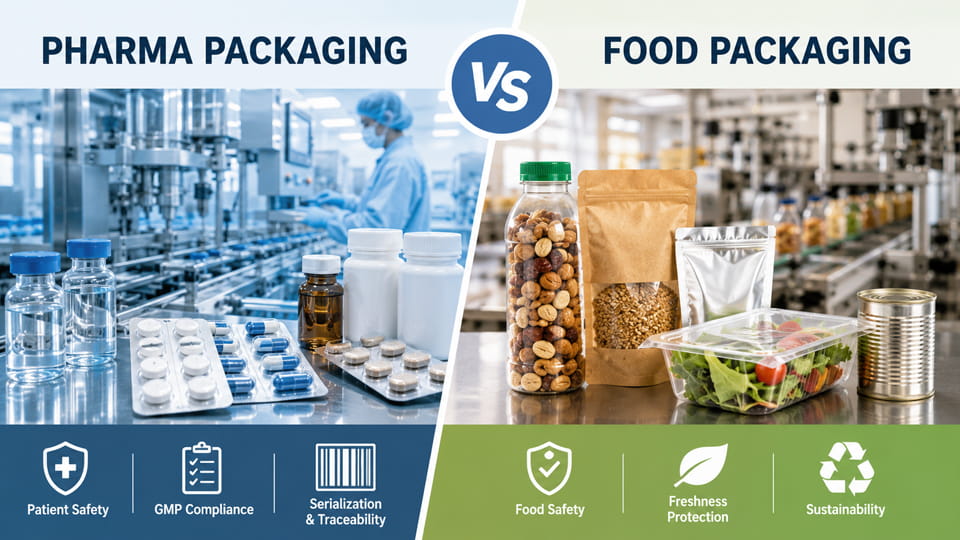
Właściwe opakowanie ma kluczowe znaczenie dla ochrony produktów i konsumentów. Opakowanie farmaceutyczne (zwane także opakowaniami leków) obejmuje wszystkie kontenery, przybory, oraz urządzenia zamykające i zabezpieczające leki. Daje pewność, że lek pozostaje bezpieczny, stabilny i niezanieczyszczony od momentu wyprodukowania do dostawy. Aktualna Dobra Praktyka Produkcyjna FDA (CGMP) przepisy wymagają, aby procesy pakowania leków i sprzęt spełniały rygorystyczne kontrole jakości. Dla kontrastu, opakowania do żywności chroni żywność przed zepsuciem i zanieczyszczeniem, dostarcza informacji o wartościach odżywczych i składnikach, oraz wspomaga dystrybucję i budowanie marki. Opakowania na żywność muszą być zgodne z przepisami dotyczącymi bezpieczeństwa żywności (np. Dopuszczenia FDA do kontaktu z żywnością) i wdraża programy bezpieczeństwa żywności, takie jak HACCP, aby zapobiegać zagrożeniom. Krótko mówiąc, oba systemy mają na celu zapewnienie bezpieczeństwa i prawidłowego oznakowania produktów, jednak opakowania farmaceutyczne podlegają bardziej rygorystycznym przepisom dotyczącym sterylności i identyfikowalności, podczas gdy opakowania żywności kładą nacisk na działanie barierowe, wygoda, i informacje dla konsumentów.
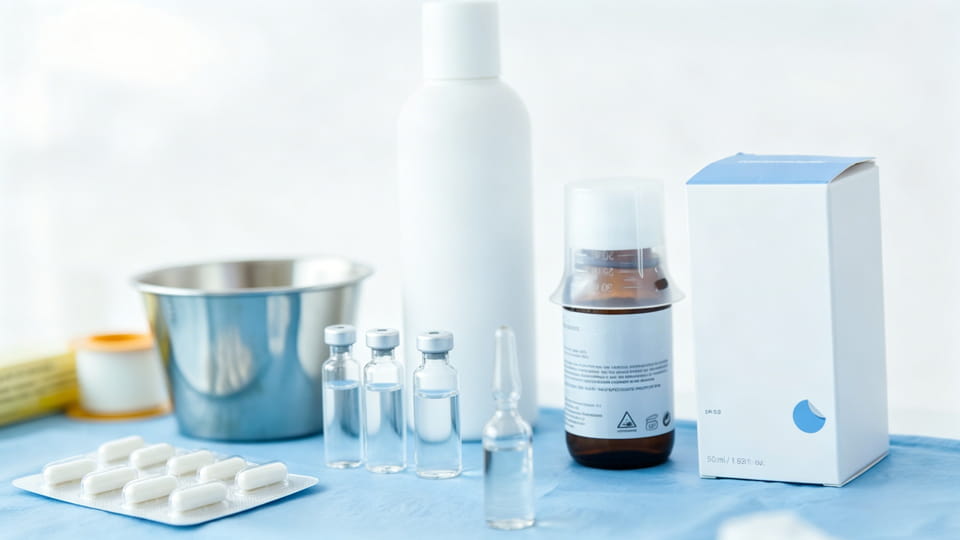
Opakowanie farmaceutyczne składa się z podstawowy, wtórny, i trzeciorzędne warstwy opakowania. Opakowanie podstawowe ma bezpośredni kontakt z lekiem (np. pęcherze, butelki, fiolki, ampułki) i stanowi pierwszą barierę dla wilgoci, światło, i tlen. Na przykład, sztywne butelki ze szkła oranżowego chronią tabletki wrażliwe na światło, natomiast aluminium – tworzywo sztuczne Pakiety pęcherzy szczelnie zamykaj każdą dawkę, aby zachować moc. Opakowanie wtórne grupuje jednostki podstawowe (np. umieszczanie blistrów lub butelek w zadrukowanych kartonach) i dodaje miejsce na etykietę, instrukcje, i plomby sabotażowe. Kartony pełnią także funkcję amortyzującą produkty podczas transportu. Opakowanie trzeciorzędne obejmuje kontenery do transportu masowego (pudełka, skrzynie, palety) wykorzystywane do magazynowania i transportu. Każdy poziom pakowania posiada funkcje: podstawowa forma pojemnika dozującego, wtórny zapewnia informację i umiarkowaną ochronę, i trzeciorzędna zajmuje się logistyką masową.
Jinlupacking zauważa, że opakowania farmaceutyczne muszą przechowywać leki stabilny i sterylny, często w zabezpieczenie przed dziećmi lub zabezpieczenie przed manipulacją formaty, jednocześnie przekazując informacje dotyczące dawkowania i bezpieczeństwa.
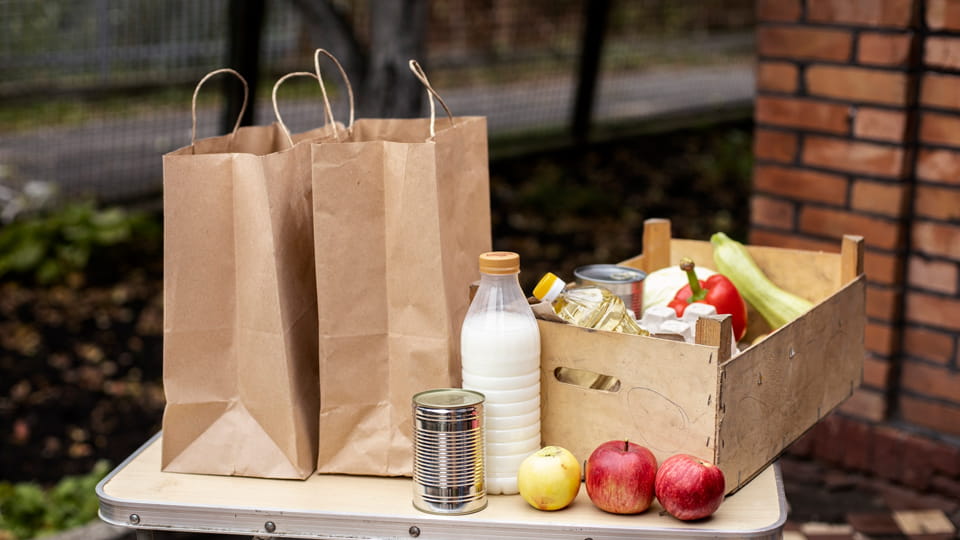
Opakowania na żywność służą do chronić, utrzymywać, i poinformować. Główne funkcje to utrzymanie świeżości żywności, zapobiec zanieczyszczeniu lub zepsuciu (przez wilgoć, tlen, mikroby), oraz zapewnienie etykietowania i brandingu wartości odżywczych/składników. Typowe formaty opakowań do żywności obejmują butelki i słoiki, elastyczne woreczki, kartony, puszki, tace, i filmy. Na przykład, ketchup może być dostarczany w zamykanych butelkach PET lub jednorazowych saszetkach foliowych. W przypadku przekąsek często stosuje się wielowarstwowe torebki lub torby z tworzywa sztucznego/folii, które równoważą koszt z odpowiednią barierą dla wilgoci/tlenu.
Chociaż obie branże starają się zapobiegać zanieczyszczeniom, opakowania żywności często traktują priorytetowo wygoda i koszt konsumenta. Na przykład, torebki na żywność wykorzystują proste folie i mają na celu możliwość ponownego zamknięcia lub lekką konstrukcję, podczas gdy w farmaceutykach można stosować cięższe materiały, aby uzyskać maksymalną barierę i trwałość.
Niezależnie od rodzaju produktu, skuteczne opakowanie musi:
Na przykład, Jinlu zwraca uwagę na farmaceutyczne materiały opakowaniowe (szkło, plastikowy, folia) są wybierane ze względu na swoje właściwości ochronne, zgodnie ze ścisłymi normami nietoksyczności i odporności na manipulacje. Opakowania na żywność mają także na celu ochronę (np. folia plastikowa na chipsy ziemniaczane) ale równoważy koszty i atrakcyjność marketingową.
| Funkcja | Opakowania farmaceutyczne | Opakowania na żywność |
| Podstawowe cele | Chroń skuteczność i sterylność leku; zapobiec zanieczyszczeniu lub pomyłkom. Zapewnij dokładne dozowanie (kalibracja zliczeń/dawek). | Zachowaj świeżość, zapobiec zepsuciu, zapewnić porcjowanie; chronić przed skażeniem drobnoustrojami/zarodkami. Zapewnij prawidłowe informacje o wartościach odżywczych/alergenach. |
| Standardy regulacyjne | Ścisła zgodność z GMP (FDA 21 CFR 210/211, UE GMP EudraLex Vol.4, ISO 15378). Cały proces pakowania jest walidowany i dokumentowany. | Regulowane przepisami dotyczącymi bezpieczeństwa żywności: Dopuszczenia FDA do kontaktu z żywnością, HACCP (programy wstępne dotyczące warunków sanitarnych), i standardy takie jak BRCGS/ISO 22000. Etykiety wstępnie zatwierdzone zgodnie z Przewodnikiem dotyczącym etykietowania żywności FDA. |
| Identyfikowalność | Wysoki: numery partii/partii na każdym opakowaniu, serializacja (unikalne kody kreskowe) dla rodowodów narkotykowych (np. DSCSA w USA). Umożliwia pełną identyfikowalność/wycofanie. | Umiarkowany: kody partii lub daty do wycofania; nie jest wymagane w każdym urządzeniu w większości regionów (z wyjątkiem kodów zbiorczych). Ograniczona serializacja (rzadko zgodnie z prawem). |
| Oczywiste | Zwykle tak: plomby zabezpieczające, folia blistrowa wyraźnie pękająca w przypadku otwarcia, specjalne czapki (zabezpieczone przed dziećmi lub lekami). | Często tak w przypadku niektórych produktów spożywczych (np. puszki, pokrywki jogurtowe), ale wiele opakowań żywności ma podstawowe plomby. Funkcje wskazujące manipulację (uszczelki termiczne) powszechnie na słoikach i pokrywkach. |
| Czysty pokój / Higiena | Krytyczny: Sprzęt często w kontrolowanych środowiskach (pomieszczenia czyste) aby uniknąć cząstek/mikrobów. Stal nierdzewna (SUS316L) powierzchnie, Filtracja HEPA. | Wymagana konstrukcja higieniczna, ale zwykle ogólnie przeznaczony do kontaktu z żywnością (żadnej rdzy, łatwe zmywanie) zamiast pomieszczeń czystych klasy 100 tys. Konstrukcja sanitarna zapobiegająca zanieczyszczeniu krzyżowemu alergenami lub drobnoustrojami. |
| Walidacja/kontrola jakości | Obowiązkowa kwalifikacja sprzętu i walidacja procesów (IR/WH/PQ) zgodnie z przepisami FDA/UE. Procesy pakowania sprawdzone pod kątem sterylności i konsystencji. | Walidacja w sensie HACCP: kontrolować punkty krytyczne. Sprzęt jest czyszczony/sprawdzany, ale formalna weryfikacja (IQ/OQ) nie jest standardem. Kontrola jakości koncentruje się na mikrobiologii i alergenach. |
| Przybory | Klasa farmaceutyczna: np. Szkło typu I, tworzywa sztuczne medyczne, pokrycie z folii aluminiowej, gumowe korki, specjalne pęcherze. Testowany pod kątem substancji ekstrahowalnych/wymywalnych (aby zapewnić brak szkodliwej migracji). | Dopuszczony do kontaktu z żywnością: PE, ZWIERZAK DOMOWY, PP, folia aluminiowa, tektura. Musi posiadać aprobatę FDA do kontaktu z żywnością. Niższe wymagania dotyczące czystości niż w przypadku produktów farmaceutycznych; nacisk regulacyjny na limity migracji i alergeny. |
| Etykietowanie | Szczegółowe etykiety: nazwa leku, wytrzymałość, dawkowanie, ostrzeżenia, partia/partia, wygaśnięcie, instrukcje. Przepisy wymagają precyzyjnego oznakowania i przeglądu (np. Kody NDC). Często drobnym drukiem. | Panel faktów żywieniowych, składniki (malejąco na wagę), waga netto, deklaracje alergenów, marka/marketing. Musi spełniać FD&C Wymagania ustawy (brak wstępnej zgody FDA na etykietę, ale ścisłe wytyczne dotyczące formatu). |
| Przypomnijmy, ryzyko | Bardzo wysoka stawka: wszelkie zanieczyszczenia mogą zaszkodzić pacjentowi. Wycofanie produktów jest kosztowne i ściśle kontrolowane ( FDA wymaga powiadamiania o wycofaniu seryjnym). Często wyciągane są całe partie. | Znaczące ryzyko (incydenty związane z bezpieczeństwem żywności), ale wpływ jest zazwyczaj węższy. Przypomina skupienie się na konkretnych partiach; odpady opakowaniowe są bardziej tolerowane. |
| Standardy wyposażenia | Sprzęt musi być zaprojektowany zgodnie z cGMP: łatwe do czyszczenia/sterylizacji, powierzchnie nierdzewne, zminimalizowane martwe strefy. Zwykle w ramach CIP (Czyszczenie na miejscu). Np. maszyny blistrowe z próżnią, sterylne linie rozlewnicze. | Projekt sanitarny: stal nierdzewna, żadnych pułapek bakteryjnych. Opcje CIP lub mycia. Np. Linie VFFS, formanci, wypełniacz spełniający normy sanitarne USDA/FDA. Projekt skupia się na zapobieganiu psuciu się. |
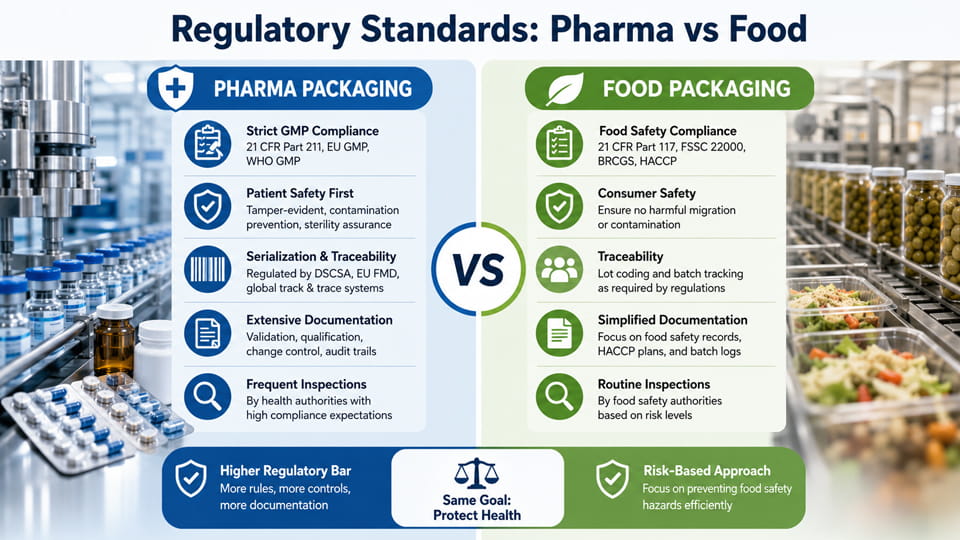
Te porównania to podkreślają opakowania farmaceutyczne jest znacznie bardziej uregulowane i kontrolowane. Na przykład, Wytyczne cGMP FDA wymagają, aby linie pakujące leki korzystały z zatwierdzonych procesów i materiałów, które okazały się bezpieczne. W przeciwieństwie do tego, opakowania do żywności przestrzega szeroko zakrojonych kontroli higieny i bezpieczeństwa (Programy wstępne HACCP) zamiast walidacji serii w stylu farmaceutycznym.
Opakowania farmaceutyczne podlegają przepisom przepisy farmaceutyczne GMP. w USA, Tytuł 21 Zestaw części CFR 210–211 aktualnej Dobrej Praktyki Produkcyjnej (CGMP) wymagania dotyczące „opakowania” leku (opakowanie). Oznacza to metody, sterownica, udogodnienia, i sprzęt używany do pakowania leków muszą zapewniać bezpieczeństwo produktu i wytrzymałość na etykiecie. Europa korzysta GMP UE (EudraLex tom. 4) z podobnymi zasadami. Dodatkowo, ISO 15378:2017 to światowy standard stosujący ISO 9001 Zasady QMS dotyczące pierwotnych materiałów opakowaniowych produktów leczniczych. ISO 15378 wyraźnie odnosi się do kontroli zanieczyszczeń, redukcja ryzyka, i zgodność z przepisami w zakresie produkcji materiałów opakowaniowych.
Dla porównania, opakowania żywności muszą spełniać przepisy dotyczące bezpieczeństwa żywności. FDA wymaga, aby wszystkie materiały przeznaczone do kontaktu z żywnością były wstępnie zatwierdzone (poprzez powiadomienie o kontakcie z żywnością lub GRAS). Sprzęt pakujący w zakładach spożywczych przestrzega zasad higieny i zapobiegania zanieczyszczeniom zgodnie z HACCP i dobrymi praktykami wytwarzania żywności FDA. Plan HACCP traktuje sprzęt i materiały opakowaniowe zgodnie z: programy wstępne - Na przykład, obiekty i sprzęt muszą spełniać wymogi projektowania sanitarnego i procedur czyszczenia. Standardy jak Materiały opakowaniowe BRCGS Lub ISO 22000 (zarządzanie bezpieczeństwem żywności) również zastosować. W przeciwieństwie do narkotyków, etykiety i opakowania żywności nie wymagają wstępnego zatwierdzenia przez władze, ale musi być zgodny z przepisami dotyczącymi etykietowania (składniki, odżywianie, itp.) kiedy na rynku.
Podsumowując, opakowania farmaceutyczne są objęte nakazowy regulamin (szczegółowe wytyczne, audyty certyfikatów), mając na uwadze, że opakowania żywności podlegają przepisom zapobiegawczy systemy bezpieczeństwa (HACCP, standardy GFSI) oraz atesty materiałów przeznaczonych do kontaktu z żywnością. Ta różnica wpływa na wybór wielu materiałów i sprzętu (patrz tabela powyżej).
Opakowanie przybory różnić się: pojemniki farmaceutyczne często wykorzystują wysoką czystość, podłoża obojętne. Typowe opakowanie podstawowe farmaceutyczne obejmuje Szkło typu I fiolki (na zastrzyki), tworzywa sztuczne klasy farmaceutycznej (HDPE, PP, PETG), i laminaty wielowarstwowe (Blistry z folii PVDC/Al). Wybiera się je tak, aby uniknąć wszelkich substancji wymywanych, które mogłyby wchodzić w interakcję z lekiem. Rzeczywiście, ekstrahowalne i wymywalne (chemikalia migrujące z plastiku/folii) stanowią poważny problem w farmacji. Producenci leków muszą przetestować opakowanie, aby upewnić się, że zamknięcie pojemnika jest szczelne (CCI) oraz aby wszelkie substancje wymywalne pozostały poniżej progów toksycznych. Wytyczne FDA zalecają rygorystyczne testy CCI (np. zanurzenie barwnika, spadek ciśnienia) do sterylnych opakowań pozajelitowych w celu zapewnienia szczelnej ochrony.
Materiały do pakowania żywności (polietylen, polipropylen, ZWIERZAK DOMOWY, tektura powlekana, aluminium, itp.) są również testowane pod kątem migracji (często zgodnie z przepisami takimi jak WE UE 1935/2004). Jednakże, próg dla testów bezpieczeństwa jest na ogół niższy niż w przypadku produktów farmaceutycznych. Na jedzenie, FDA nadzoruje „Wykaz substancji mających kontakt z żywnością” – m.in. wszystkie polimery i tusze muszą być zatwierdzone przez FDA. Opakowania do żywności zazwyczaj nie przechodzą testów CCI, ponieważ sterylność nie jest wymagana; Zamiast, może zostać poddany testom prowokacji mikrobiologicznej w celu określenia okresu przydatności do spożycia lub badaniu migracji dodatków.
W rzeczywistości: opakowania farmaceutyczne wymaga ściślejszej kontroli substancji ulegających ekstrakcji/ługowaniu. ISO 15378 wyraźnie obejmuje ograniczenie ryzyka zanieczyszczenia szkła, plastikowy, guma, oraz materiały aluminiowe stosowane w opakowaniach leków. Opakowania na żywność koncentruje się na właściwościach barierowych i zgodności z przepisami dotyczącymi kontaktu z żywnością, ale pozwala na większą różnorodność materiałów (a nawet treści pochodzące z recyklingu) ponieważ ryzyko spożycia jest niższe, a toksyny regulowane na bezpiecznych poziomach narażenia. Na przykład, butelki z wodą (ZWIERZAK DOMOWY) są powszechne, mając na uwadze, że leki rzadko byłyby butelkowane z plastiku innego niż farmaceutyczny.
Same maszyny odzwierciedlają te wymagania. Sprzęt do pakowania farmaceutycznego muszą być zaprojektowane dla GMP: stal nierdzewna (często 316L), gładkie powierzchnie, uszczelnione wały napędowe, minimalne szczeliny, i łatwość czyszczenia. Często obsługują CIP i instalują filtry HEPA w obszarach aseptycznych. Typowe maszyny farmaceutyczne obejmują:
Dla kontrastu, maszyny do pakowania żywności są zoptymalizowane pod kątem objętości i czystości: często mają większą przepustowość (torbę w kilka sekund) i zbudowany z myślą o szybkiej sanitacji (Możliwość CIP lub mycia). Typowy sprzęt do pakowania żywności obejmuje:
Na przykład, Maszyny do pakowania gotowych torebek Jinlu są wszechstronne w przypadku żelek, proszki lub płyny, i posiadają certyfikat GMP, Ce, Zgodność z FDA. W przeciwieństwie do tego, typowa linia przekąsek może wykorzystywać wielotorowe VFFS z komponentami przeznaczonymi do kontaktu z żywnością.
Poniżej znajduje się prosty schemat blokowy ilustrujący, w jaki sposób producent może wybrać maszyny pakujące w oparciu o rodzaj produktu i wymagania:
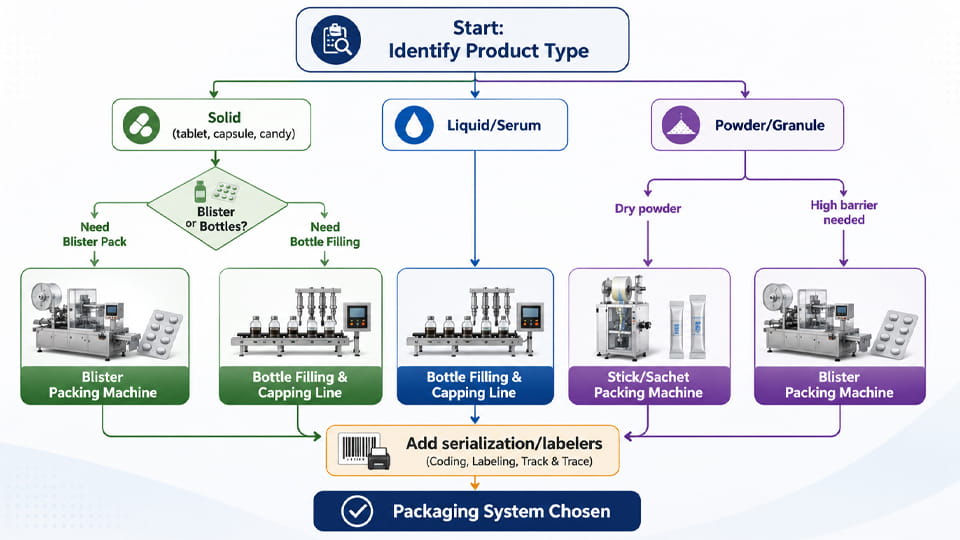
Ten przepływ podkreśla: wybierz opakowanie format (blister vs butelka vs torebka, itp.) w oparciu o formę produktu i potrzeby w zakresie stabilności, następnie wybierz odpowiednią linię maszynową. Na przykład, Tablety wrażliwe na temperaturę mogą powodować użycie pęcherze zimne zamiast butelek (aby zapewnić barierę tlenowo-wilgociową).
W projekt, maszyny farmaceutyczne często są wyposażone w większą automatyzację czyszczenia i identyfikowalności. Na przykład, wypełniacze do preparatów iniekcyjnych prowadzone pod kapturami z przepływem laminarnym, podczas gdy przenośniki żywności mogą pracować otwarte w chłodni. Obydwa muszą spełniać standardy higieny, ale surowość i walidacja różnią się.
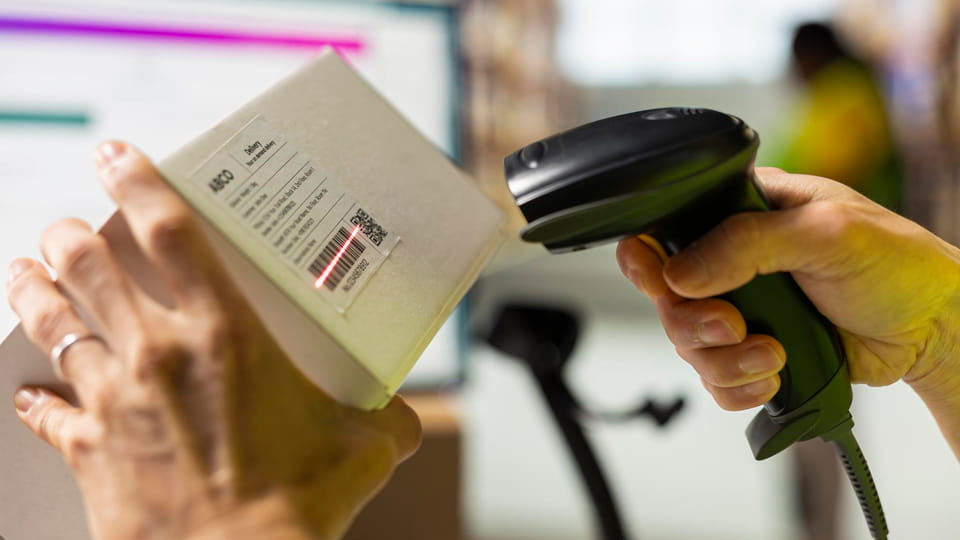
Opakowania farmaceutyczne wymagają niezwykle precyzyjnego etykietowania i śledzenia. Na każdym opakowaniu leku zazwyczaj widnieje dokładna nazwa produktu, wytrzymałość, numer partii, Data ważności, a czasami unikalne kody seryjne do celów śledzenia i śledzenia (np. pod USA. Ustawa DSCSA). Wytyczne FDA narzuciły serializację wielu leków, wymagające unikalnych kodów kreskowych na opakowaniach jednostkowych. Dzięki temu można prześledzić wycofaną partię każdego artykułu. Dla kontrastu, etykiety opakowań żywności muszą zawierać listę składników, panele żywieniowe, i masę netto zgodnie z przepisami FDA, ale serializacja poszczególnych jednostek generalnie nie jest wymagana (może z wyjątkiem niektórych suplementów lub rynków).
Zabezpieczenie przed manipulacją jest również silniejsze w przypadku leków – każdy blister lub fiolka często ma plombę, która ulega zniszczeniu po otwarciu. Jinlu zauważa, że seryjne kody kreskowe i plomby zabezpieczające przed manipulacją na każdym urządzeniu są standardem w branży farmaceutycznej w celu zapobiegania podrabianiu. W jedzeniu, stosowane są opaski i plomby zabezpieczające przed manipulacją (np. pierścienie zabezpieczające na butelkach po napojach, zgrzewarki indukcyjne na zakrętkach), ale żywność jednorazowa może opierać się wyłącznie na nienaruszonych pieczęciach (jak saszetki zgrzewane na gorąco) z mniej formalną serializacją.
Systemy identyfikowalności w farmacji są bardziej cyfrowe (elektroniczne rejestry partii, Dokumentacja GMP). Identyfikowalność żywności koncentruje się na partii i pochodzeniu (dla bezpieczeństwa pomyśl „od pola do stołu”.) ale często jest mniej szczegółowy na poziomie konsumenta. Podsumowując, Pharma Packaging inwestuje znaczne środki w technologię serializacji na linii produkcyjnej (drukowanie i skanowanie kodów kreskowych), podczas gdy linie żywnościowe kładą nacisk na szybkość etykietowania i zapewnienie wszystkich wymaganych informacji (np. ikony alergenów, fakty żywieniowe) jest wydrukowany poprawnie.
Obie branże zmierzają w kierunku bardziej ekologicznych opakowań, ale sterowniki i rozwiązania są różne. W farmaceutykach, istnieje nacisk na ograniczanie ilości odpadów i stosowanie, tam gdzie to możliwe, materiałów nadających się do recyklingu/biodegradacji. Na przykład, producenci badają monomateriał folie blistrowe i karton z recyklingu do opakowań wtórnych. Jednym z trendów jest zastępowanie drukowanych wkładek papierowych informacjami cyfrowymi w celu oszczędzania papieru. Jednakże, wszelkie zmiany muszą nadal spełniać wymogi stabilności, dlatego innowacje często zaczynają się na poziomach drugorzędnych lub trzeciorzędnych.
W jedzeniu, zrównoważony rozwój często oznacza lekkie opakowanie, materiały kompostowalne, i ograniczenie jednorazowego plastiku. Wiele regionów uchwala przepisy zakazujące niektórym rodzajom materiałów nienadających się do recyklingu. Szczególnie, saszetki z przyprawami (woreczki foliowe/tkankowe) są wycofywane na niektórych rynkach przez 2030 na rzecz rozwiązań alternatywnych nadających się do ponownego napełniania lub recyklingu. Największe marki spożywcze również poszukują folii monomateriałowych nadających się do recyklingu. Obie branże cenią zmniejszenie śladu węglowego, jednak firmy farmaceutyczne muszą zrównoważyć cele ekologiczne z nadrzędną potrzebą ochrony produktu.
(Wzrastać): „Zrównoważony rozwój jest głównym trendem: firmy projektują opakowania z materiałów nadających się do recyklingu lub biodegradacji i redukują nadmiar opakowań. Na przykład, Papiery kartonowe obecnie często zawierają materiały pochodzące z recyklingu, a folie monomateriałowe są wybierane w celu łatwiejszego recyklingu.”
(Przewodnik po ketchupie): „Marki dbające o środowisko szukają lżejszych produktów, opcje nadające się do recyklingu. W rzeczywistości, w niektórych regionach wycofuje się nawet jednorazowe saszetki z przyprawami 2030, popychając producentów w kierunku zrównoważone etui lub rozwiązania do wielokrotnego napełniania.”
Tendencje te oznaczają, że sprzęt również może się dostosować: maszyny, które radzą sobie z tworzywami sztucznymi pochodzącymi z recyklingu, lub linie zaprojektowane w celu łatwiejszej wymiany materiałów stają się cenne.

Przy wyborze sprzętu do pakowania produktów farmaceutycznych lub żywności, Rozważ następujące czynniki:
W rzeczywistości, współpracować z producentami (tak jak Pakowanie jinlu) analizować te czynniki. Na przykład, Zespół inżynierów Jinlu może polecić zintegrowane napełnianie butelek & linia do kartonowania na nowy dodatek, lub modułowe rozwiązanie do pakowania w woreczki na specjalny syrop.
Jinlu Packing specjalizuje się w rozwiązaniach w zakresie opakowań „pod klucz” dla produktów farmaceutycznych I produkty spożywcze/odżywcze. Nasze maszyny zostały zaprojektowane tak, aby spełniać rygorystyczne standardy GMP (Ce, FDA, Certyfikaty ISO) oferując jednocześnie elastyczność. Kluczowe zalety obejmują:
Z 30+ lat w maszynach do pakowania produktów farmaceutycznych, Jinlu cieszy się zaufaniem liderów branży w dostarczaniu sprzętu, który bezpiecznie I skutecznie pakuje zarówno leki, jak i żywność. Skontaktuj się z nami, aby omówić działanie naszych maszyn (tak jak Maszyny pakujące w blistry, Maszyny liczące, Maszyny kartonowe, Opakowanie saszetki, Lub Gotowe wypełniacze do torebek) może spełnić Twoje cele produkcyjne.
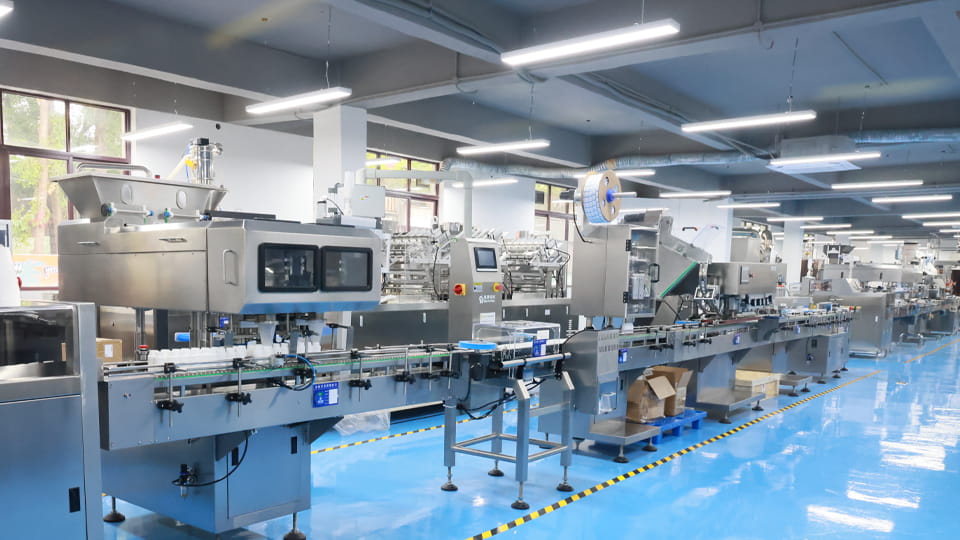
Podsumowując, Opakowania farmaceutyczne a opakowania spożywcze mają różne priorytety, mimo że oba mają na celu ochronę produktów. Opakowania farmaceutyczne kierują się rygorystycznymi przepisami GMP i kładą nacisk na sterylność, identyfikowalność, i integralność bariery. Opakowania żywności kładą nacisk na bezpieczeństwo żywności (zapobieganie psuciu się/zagrożeniom) i praktyczność (koszt, wygoda) zgodnie z zasadami HACCP i kontaktu z żywnością. Wybory materialne, projekt maszyny, i etykietowanie odzwierciedlają te priorytety: linie farmaceutyczne często działają w kontrolowanych środowiskach z serializacją, chwila linie żywnościowe pracować z dużą prędkością dzięki projektowi sanitarnemu.
Poprzez zrozumienie tych różnic, inżynierowie zajmujący się pakowaniem i kupujący mogą wybrać odpowiednie rozwiązania. Na przykład, producent leków może wybrać linię blistrów o wysokiej barierowości ze zintegrowaną serializacją, aby spełnić wymagania FDA i UE. Producent przekąsek spożywczych może wybrać wielotorowy system VFFS ze względu na wydajność, upewniając się, że folie są zatwierdzone przez FDA. Obaj mogą znaleźć odpowiednią technologię: Jinlu Packing oferuje maszyny zbudowane dla obu światów, od blistrów zgodnych z GMP do elastyczne systemy torebek. Ostatecznie, spełnienie wymagań bezpieczeństwa i jakości produktu końcowego – przy jednoczesnym przestrzeganiu zasad każdej branży – jest kluczowym celem każdego systemu pakowania.
W przypadku opakowań farmaceutycznych priorytetem jest ścisła sterylność i zgodność z przepisami. Zwykle wiąże się to z wyższą barierą, materiały klasy medycznej i zabezpieczenia przed manipulacją w celu ochrony leków zgodnie z zasadami cGMP. W opakowaniach do żywności priorytetem jest świeżość i bezpieczeństwo (zapobieganie psuciu się/zagrożeniom) zgodnie z przepisami HACCP i przepisami dotyczącymi kontaktu z żywnością, często przy użyciu lżejszych lub nadających się do recyklingu materiałów.
Ustawa o bezpieczeństwie łańcucha dostaw leków (DSCSA) i podobne przepisy wymagają unikalnych numerów seryjnych na poszczególnych opakowaniach leków, aby umożliwić śledzenie w łańcuchu dostaw. Pomaga to zapobiegać podrabianiu leków i pozwala na precyzyjne wycofanie produktów z rynku. Takie wymagania nie istnieją w przypadku większości produktów spożywczych, dlatego śledzenie serializowane na ogół nie jest wykonywane na poziomie jednostki w opakowaniach żywności.
Niektóre maszyny (jak opakowania typu blister lub wypełniacze do torebek) może być stosowany w obu branżach, jeśli jest odpowiednio oczyszczony i zatwierdzony. Na przykład, Maszyny blistrowe Jinlu pakują zarówno tabletki, jak i porcje żywności (dżemy, przekąski) poprzez zmianę materiałów i ustawień. Jednakże, sprzęt musi być dokładnie odkażany pomiędzy użyciami i może wymagać modernizacji (jak dodatkowe filtry HEPA lub dokumentacja GMP) aby spełnić standardy farmaceutyczne.
w USA, wszystkie elementy opakowań żywności muszą być substancjami dopuszczonymi do kontaktu z żywnością, zatwierdzonymi przez FDA (FCS) przed marketingiem. Oznacza to dowolny plastik, powłoka, atrament, lub klej mający kontakt z żywnością musi znajdować się na liście FDA lub zostać zgłoszony. Etykiety i opakowania muszą być również zgodne z zasadami etykietowania żywności FDA (lista składników, fakty żywieniowe). Producenci żywności stosują HACCP i GMP, aby zapewnić bezpieczne procesy pakowania.
Wybierz w oparciu o potrzeby produktu i produkcji. Gotowe opakowania do torebek używają wstępnie zadrukowanych, wielokrotnego zamykania i doskonale nadają się do produktów specjalistycznych lub produktów o wysokiej barierowości (np. witaminy, soki) z szybkimi przesiadkami. Maszyny VFFS formują worki na bieżąco z folii rolkowej i wyróżniają się dużą szybkością, duże serie standardowych produktów (przekąski, proszki) przy niższych kosztach materiałów. Oceń format swojej torby, potrzeby w zakresie przepustowości, i wymagania dotyczące elastyczności przy podejmowaniu decyzji.
Referencje:
1.Aktualna Dobra Praktyka Produkcyjna (CGMP) Regulamin | FDA -- NAS. Administracja Żywności i Leków
2.21 Część CFR 211 – Podczęść G – Kontrola pakowania i etykietowania —— Instytut Informacji Prawnej
3.Opakowanie & Substancje mające kontakt z żywnością (FCS) -- NAS. Administracja Żywności i Leków
4.Dobre praktyki produkcyjne i dystrybucyjne —— Komisja Europejska
5.Aktualne dobre praktyki produkcyjne (CGMP) dla Żywności i Suplementów Diety -- NAS. Administracja Żywności i Leków